Read Long and Prosper

“Live long and prosper,” Mr. Spock was (or will be, depending) known for saying. Many of us know the regimen for healthy living: don’t overindulge on the food and drink. Get some exercise. Try to eat the right foods. Sleep once in a while. When we go to the doctor’s office, it’s generally a physical cause that we want explained or treated. It seems, however, we might have been overlooking a way to live longer. Reading. An article from last month’s Tech Times explains that book reading—sorry folks, reading this doesn’t count—correlates to longer life, according to a Yale study. The article by Alyssa Navarro explains that concentrated reading for three-and-a-half-hours a week can be connected to living longer. Those of us who read may not have that fringe benefit in mind, but it does stand to reason.

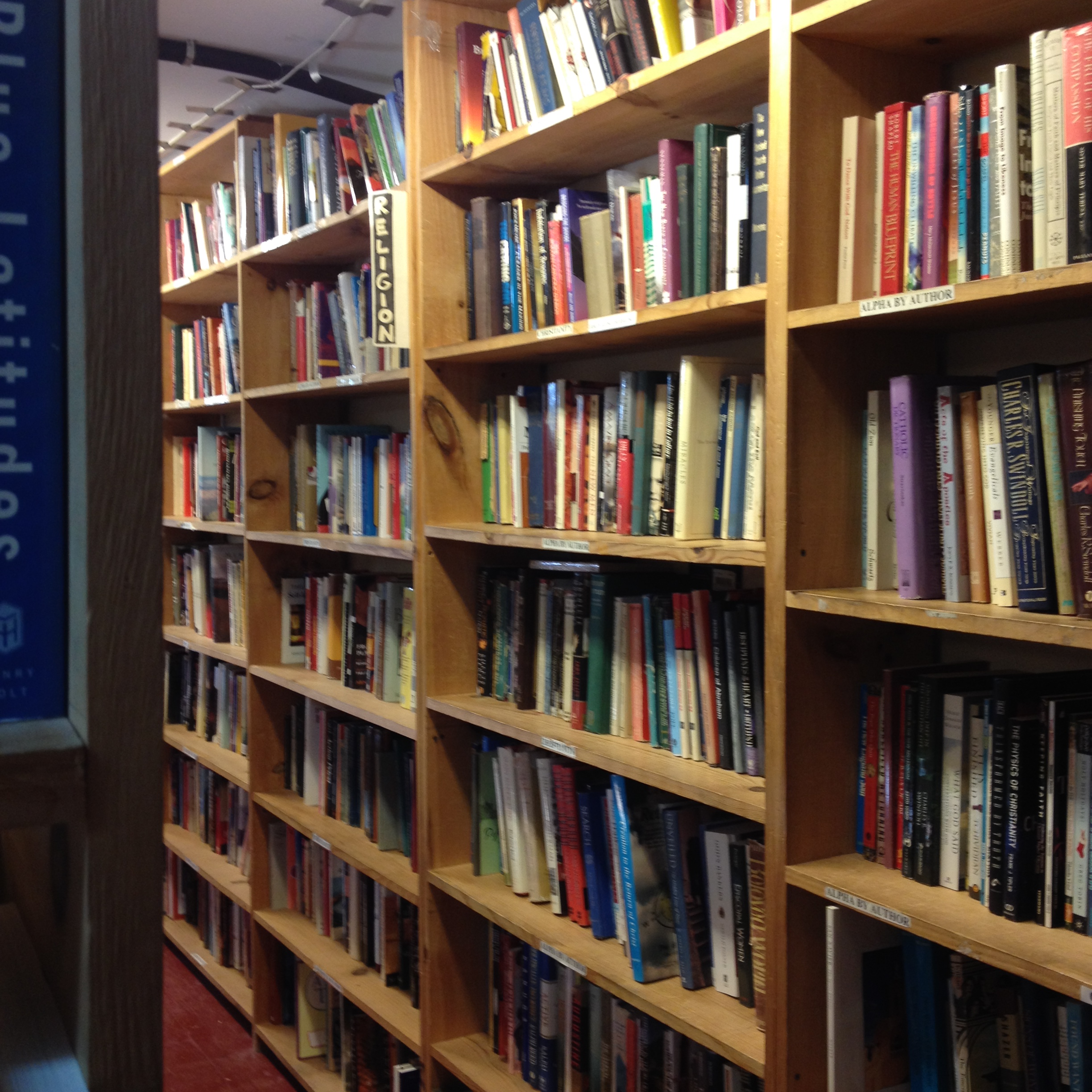
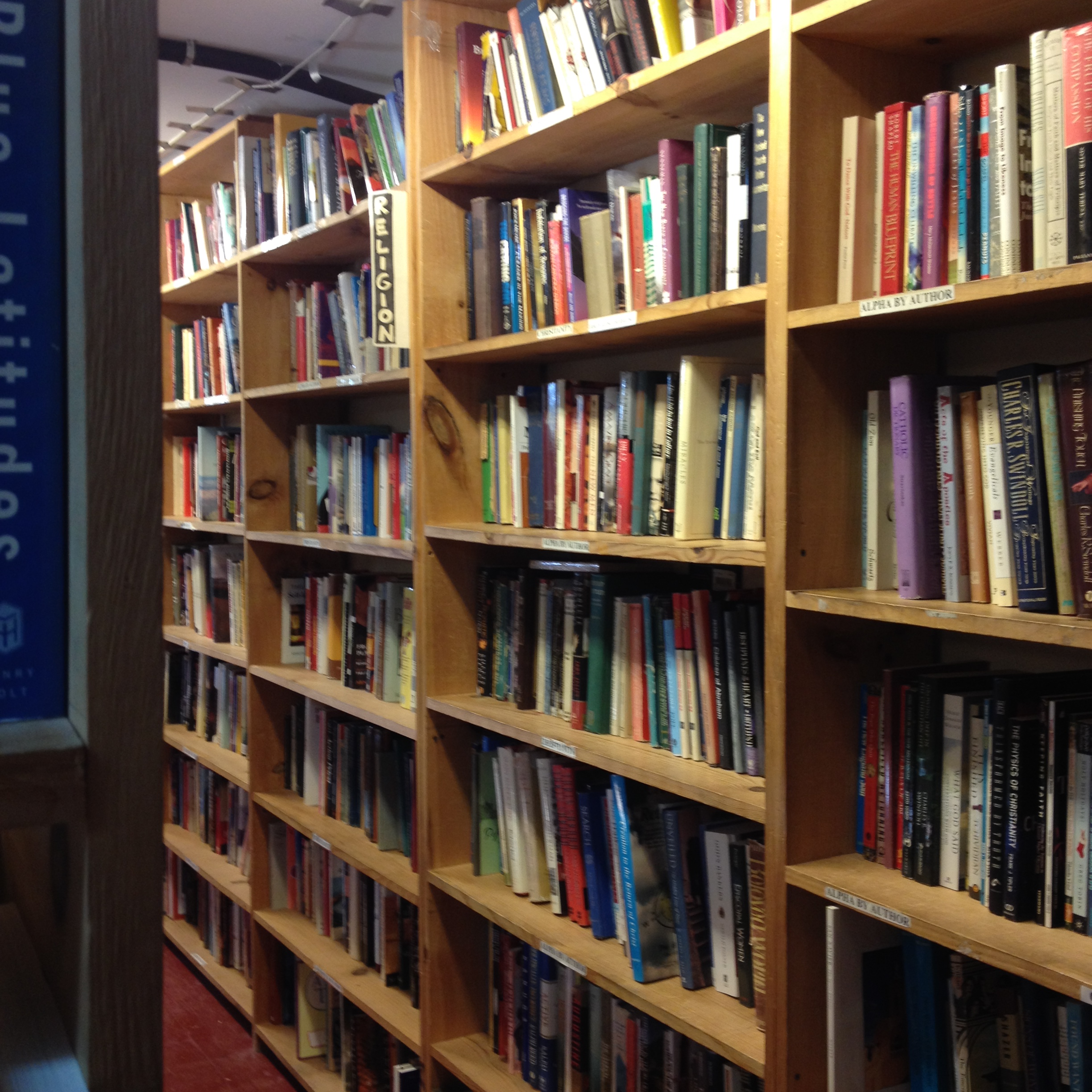
img_2947

Since people love correlates that sound alike, the way that we describe aspects of our lives is often quantity verses quality. In terms of quantity, consciousness seems to drive us to claim as much life as possible. It’s hard to let go. Connoisseurs, however, often prefer quality to quantity. While there may well be other options than these two q’s, it seems to me that those of us who read tend to do it for the quality issue. Quantity may be a fringe benefit. My job requires a long commute most days, and I bury myself in books. If I pick one that really captures my interest, I’m amazed at how quickly even an intractable commute can go. On those days I work at home, I have to admit, I miss the reading time. I try to read with the same level of concentration when I power the laptop down, but there is something about being in a situation where you’re forced to read that somehow enhances the level of concentration. It’s training, I suppose. We often think that once we’ve figured out how to read then it’s just a matter of doing it. To really get into a book, however, requires effort.

If I’m at home and I sit down for a marathon reading session, I inevitably get sleepy. Since I awake quite early this isn’t something I think I need to see my doctor about. Of course I get sleepy on the bus, but I’ve seen how ridiculous most people look when they sleep in public, and I don’t want to be one of those. If the book I have is a good fit, I barely notice how tired I am, surrounded by my aluminum walls and the wheels that go round and round. Maybe that’s because my mind is elsewhere. I don’t commute for my health. On the days when I don’t take the bus I try to get out and jog. My healthcare regimen, I think, could use a little more book reading. At least that’s as good an excuse as I can come up with for what many people, ironically, consider a kind of illness. May we “bookworms” read long and prosper.


Hi Ho, Hi Ho

I’ve been writing about reading. No surprises there, I suppose. My wife recently introduced me to BookRiot, and I wish I had more time to spend there. A recent post by Aisling Twomey describes how reading on her Tube commute helps keep her sane. Here is a good case of convergent evolution—I came to the same conclusion after about a week of what turns out to be about three hours a day commuting to New York City. We didn’t move to my current location to work in Manhattan. My job was in nearby Piscataway. It was only when a headhunter found me a job at Routledge that I began the daily trip. The problem is I get terribly car sick. To this day I can’t read in a car. Some days I can’t read on the bus either. Gradually, however, I trained myself to do it, and the results have been worth it. Ms. Twomey has read over fifty books this year on her London commute. I suspect my commute is a bit longer since I’ve read a few more than that. Still, we tilt against the same windmill, so we need to appreciate the dedication it takes.

I was talking to someone the other day who was complaining about cell phones. She said, “I used to read a lot. I worked in a book store. It was great.” Her cell, she said, gave her a stiff neck from constantly looking down. And a sore thumb from swiping and texting. And yet, she lamented, she just couldn’t stop. Books may well be a vice. I’m as bad as any addict. I have no idea how many books I’ve read in my life: the number is in the thousands rather than the hundreds, I know. And even the books I regret, I don’t really regret. Reading is a coping mechanism.

img_0670

One of the things that the traditional ancient religions all have in common is books. Not all of them treat sacred texts the same way, but they all have some form of sacred writing. There was an implicit sense, I believe, from the first stylus on clay, that something truly special was going on here. Holy, even. Writing is one of the great joys of life. Reading is another. Both are sacred professions. In a way it seems a shame to have to be forced into a commute in order to find time to read books. Still, the constant flow of new material has a life-saving quality to it. I can’t imagine spending fifteen concentrated hours a week texting. I don’t know that many people to text. The ones I do know I know through their books. And they’re very good company on a long ride.


Philosophies of Reading

I like my Starter. For those of you unaccustomed to New Jersey Transit buses and their ways, a Starter is a person who makes sure the buses scheduled to arrive at her or his gate do so on time. It’s not a job for the faint-hearted. If a bus is late, or AWOL, the Starter takes the heat from angry would-be passengers. Since they’re present “on the ground,” angry people lash out with their frustration. My regular Starter recognizes me. I’m usually early in my line, so I appear about the same place most days. My routine is, well, routine. I get to the Port Authority Bus Terminal, pull out my book, and read. Starters can’t really get involved in anything like a book because their job requires constant interruptions. Even when no buses are coming in because of an accident in the Lincoln Tunnel, they still have to answer questions and hold up the occasional crucifix. My Starter came to me the other day, as I was reading, and asked me what I thought of an incident four days earlier. To put this in context, the incident happened on Friday. I was there for it, in my usual spot, and this was Tuesday. Clearly it still bothered the Starter that someone had come out and yelled at him for not getting us a bus on time.

I sympathized. Starters can’t materialize objects. If they could, they wouldn’t be Starters. Yet, I realized as I turned back to my book, that I had lost some reading time. I don’t mind helping out my Starter, but it occurred to me that there are a couple of different philosophies behind reading while waiting for, and on, the bus. Many people, I suspect, read to pass the time. I don’t know what they’re reading, since much of it is on a flat device, but knowing that research reading is nearly impossible on the bus, I suspect they are just reading to make the weary time go quicker. Others, I know, read for content. For me, reading is very seldom passing time. I read because reading is what I want to do.

Commuting behavior isn’t conducive to my life choices. No longer do people sit quietly on the bus, respecting that inherent violence of awaking before 4 a.m. to try to get to the city before traffic inevitably makes you late. Devices make their unmuted bodily noises and glare in your face. The guy next to you pulls out his wide-screen laptop, while tapping away on his phone. Or pulls our her iPad to watch a movie with fast-paced images splashing in your face. The book is demanding company. Your time, your attention, your concentration are required to get the most out of it. I don’t mind supporting my Starter. I feel for the ennui of my fellow commuters. I also crave time alone with my books.

IMG_0899


And a Literate New Year

One of the most common criticisms of religion, among its detractors, is that it is “uninformed.” I suspect that this is intended to critique the education of those who adhere to religion. It is not too often, however, that you see those who disdain religion giving credit where credit is due. Reading, for example. Although reading has changed in its accidents and character over the millennium, it remains the case that texts—what would eventually evolve into books—were originally a religious creation. Once writing moved beyond keeping track of things like how many cattle a person owned, and grew into literature, that literature was based on religion. We recognize many of these stories as myths today, but that does not devalue them. They are our earliest stories. For many literate people throughout history, their initial reading material was the texts of their religion. One of the purposes behind public education was to teach children to read the Bible. Religion and reading naturally go together.

Now that a new year is upon us, many websites are offering reading challenges for the new year. Long ago I gave up on resolutions. I figured if I noticed something wrong in my life, I wouldn’t wait until January to fix it. Nevertheless, the start of something new is inspiring and full of hope. So it was when my wife showed me Modern Mrs. Darcy’s 2016 Reading Challenge, I gladly accepted. Like many reading challenges, the goals are based on about a book a month—twelve titles for the year. My personal goal is to get over one hundred books read this year, but I like the challenge to read particular kinds of books. On this particular challenge, for example, are books that intimidate you, or that you’ve previously abandoned. Books, such as many of us have, that we own but have never read. Although we may not know what it is yet, a book published this year.

Apart from being a kind of religious activity, promoting literacy is surely one of the best ways to address social ills. Those who read learn to consider the viewpoints of others. I disagree with a great deal of what I read, but I would not wish not to have read it. “Iron sharpens iron,” as one old book says. To put it in modern terms, the only stone hard enough to cut diamond is diamond. Reading material that engages critical faculties is like that. Even so, reading books that are simple or fun also offers bonuses. A guilty pleasure read is one of my favorite rewards. For our own sakes, for the sake of the world itself, I hope that everyone takes up a reading challenge, no matter how modest, as a way of celebrating a new year and, I truly believe, a better tomorrow.

DSCN5025


Solstices

Most cultures outside of the tropics, where the difference in lengths of days is noticeable and portentous, there is a celebration of the winter solstice. This day, of all in the year, is the shortest and tomorrow there will be more light than there was today. That light will continue to grow until the summer solstice when the slow decline back to darkness begins. Religions have their rituals for a reason, and the slow turn of the seasons is perhaps behind all major holidays, in some way. So as the seasons shift, we look for signs of light. And what a portentous year it has been. When we open the Monday morning paper to find out that the wrong Miss Universe (as if earth corners the market on beauty) was crowned, it rings of unspeakable darkness. Is it not equally dark that we still parade women before the camera to judge them by their appearance? Is it not a lack of light that says women have to flash thigh and cleavage in order to be as important as the tuxedo-covered males who ogle them? The days are short, my friends.

And if we can rip our eyes from one stageshow to another, the Republican candidates continue to engage in a battle of silliness that would make Caligula smile. Have we lost our ability to face serious issues? Just the other day I was commenting to my wife that publishing has a difficult time because reading is something few people seriously engage any more. I hope I’m not coming across as judgmental, since I like a good diversion as much as the next guy. Still, thinking through something that is not simple, where the answers are always more gray than either black or white, is becoming more essential in surviving a culture that finds what razor you shave with more important that how many people an assault rifle can take out at one go. For a nation with access to the resources we have, shouldn’t we think of ways of getting people to engage with sustained thought once they leave college? To bring back the light?

IMG_0149

Light comes in many forms. The sun is a symbol as well as an astronomical body. Artificial light, however, predominates in a world where nature tells us to slow down once in a while and sleep a little more. Only at the equator are all things equal. In days when it is suggested that reflecting photons in a mirror might conceivably produce real photons, and thus more light for the universe, I find it hard to sleep. Too much is happening for any one person to keep track of it all, and to have my few hours of sunlight occluded by the shenanigans of the media and its factotums feels like the longest night is indeed upon us. It is, for those with hope, also the beginning of light.


Fun with Dick and Jane

Occasionally somebody will ask me what the purpose of this blog is. I’ve read enough blogs myself to admit the question itself puzzles me. Those of us who are driven to write (and I know some of my readers can verify this—I’ve been a writer all my life, no matter what my job) are all Pontius Pilate. The reference is in the Bible, if you are unfamiliar with the allusion. Anyone uncomfortable with ambiguity will not find much satisfaction here. Our society likes to believe the truth comes in two shades only—black and white. Our society really should get out more. Even “black-and-white” pictures are actually shades of gray. Some people believe we should stick to our assigned roles, but a person is larger than the job society will allow her or him. Religions have often called this embiggening a “soul,” others have recognized it as “personhood.” No matter what you call it, an individual defined only by their job is mere shadow-play.

Back when I was teaching I always told my students that we are taught to read so early that we soon do it unconsciously. Yet, somewhere below the surface we know different materials hold different reading requirements. It is my sincere hope that the Constitution is not read with the same expectation as the sports page. For those who are willing, however, profundity can even be read in road signs. Reading is a two-way street: we bring to it nearly as much, if not more than, we take away. Truths may be out there, but no one down here can lay claim to their totality. If such were the case, there would be no need of elections, or more than one publisher. Bibles, properly speaking, have no covers.

Writing is an end in and of itself. Those few untrammeled moments of each day when the demands of work or responsibility lessen their grip just a bit, and the universe seems to welcome your thoughts. My experience of life from rather humble family circumstances has been that those better off like to tell you what to do. I have never been a boss, nor do I ever really want to be. My dreams are more vapid, vacuous, and vivacious. In my writing I can actually have fun. After I lost my long-term teaching post a career counselor told me that I had to separate myself from my job. Every day there are those who try to undo that sage advice. A blog is nothing more than a tall ship and a star to steer her by. If you can figure out what that means, please let me know.


Book Me

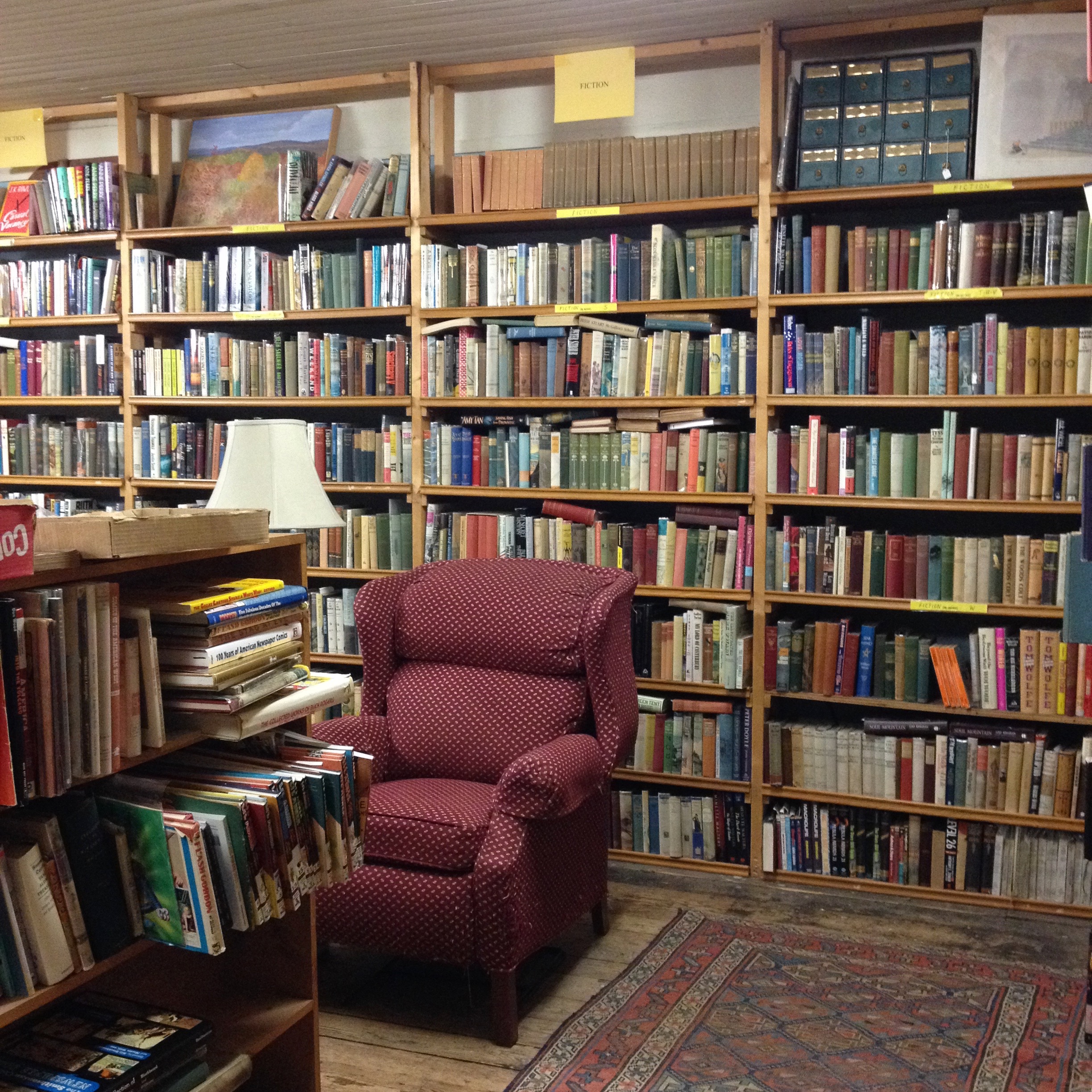
I’m a reader by nature. I grew up, however, with television. I recall somewhat precisely when reading really grabbed me. Starting in fifth grade I began to stash cheap books in an old duffle bag in the room I shared with my brother. We lived in humble circumstances and bookshelves were a luxury, but I kept my precious books together so that I could always find the one I wanted. Eventually I upgraded to a suitcase made out of what appeared to be cardboard. This fascination with books would stay with me my entire life. So would the television side of my education. When I wasn’t watching cheesy B movies or World Federation Wrestling, I was watching documentaries. A few weeks ago, I posted about a documentary site on the web, and I have discovered another site as well, Documentaryz.

One of the benefits of the web is the access to free information. I regret not having the time to watch all the quality material that can be found with a bit of poking around. Documentaryz has several categories of shows available including, as befits this blog, religion titles. The documentary has clearly become an art form as well as a source of information. The problem with the web, however, is so little material is peer reviewed. I can imagine a better world where political speeches and sermons would have to stand before a board of peers to justify their often phantasmagorical claims. A world where someone can make no claims to special knowledge because an old man laid hands on his head or because he has too much money and wishes to run other people’s lives.

So it is that I come back to my books. On the bus, or in the airport, or train station, I often feel hopelessly outmoded as I sit among people with beeping, chirping, or rhythm-and-blues spewing devices. I sit holding a book. It’s bulky, and sometimes requires both hands to keep open. It doesn’t make any noise. I am the librarian of public transit. Sometimes well-wishers suggest that I might cull the herd a bit, get rid of some of the books I’ve spent a lifetime gathering. I think back to a little kid in a stuffy room with a duffle full of paperbacks and I realize that books are a lifestyle choice. They are a part of me. As much as I enjoy watching documentaries, I begin and end my day with books. It may be a parody or some bizarre irony, but the only room in our apartment without books is the bathroom. They are not the waste products, but the stuff of life itself.