Out of Time

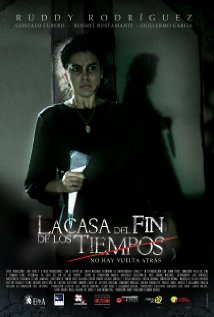
I don’t know about you, but I seldom think of Venezuelan cinema.  I feel a strange satisfaction, however, that the highest grossing movie produced in that country was a horror film.  It’s possible to find The House at the End of Time in streaming services, with subtitles.  And it’s worth doing.  It’s a movie that will stay with you.  Intricately plotted and having a lot of heart, it’s a story of loss and redemption.  After an apparent break-in at her house, Dulce is accused of killing her husband and son, and is sent to prison.  We’re shown, however, that she found her husband already dead, or nearly so, and that her son had been stolen away by a mysterious force.  After three decades, given her age, she’s released to house arrest.  A neighborhood priest becomes interested in her case, believing that she’s innocent.  It’s the house, it seems, that is haunted.  Previous families who lived there experienced similar fates.

I won’t spoil it for you, but this is a horror film with heart as well as smarts.  It also explores the life of the poor and learning to live with past mistakes.  It’s a story about a family.  Unlike many horror movies, the protagonists aren’t “all things being equal,” middle-class people.  In this regard, it reminds me of The Orphanage and The Devil’s Backbone—also both Spanish-language horror films.  And there’s a verisimilitude about the poor as the ones suffering the effects of haunting.  Now even that has become a trendy commodity.  A house haunted sometimes increases in value as ghosts become gentrified.  Obviously, ghosts can haunt anyone, but there’s almost a parable aspect to them.  Sometimes ghosts are all that the poor have.

That may be one of the reasons that The House at the End of Time is also Venezuela’s most internationally distributed movie.  And the reason that an American production company is working on a remake (presumably in English).  The ghosts here aren’t what we’ve come to expect, but religion plays a large part in the movie since the priest pays special attention to Dulce.  The reason why is eventually explained, but he is a non-judgmental cleric.  He attempts no exorcism.  Instead, he researches and seeks to find an explanation for what is happening at this most unusual house.  Catholicism is a large part of the culture in Venezuela, and I do hope that the remake doesn’t remove it.  A sympathetic cleric is often difficult to find.  And in this case, one that really pays off.


Hunting

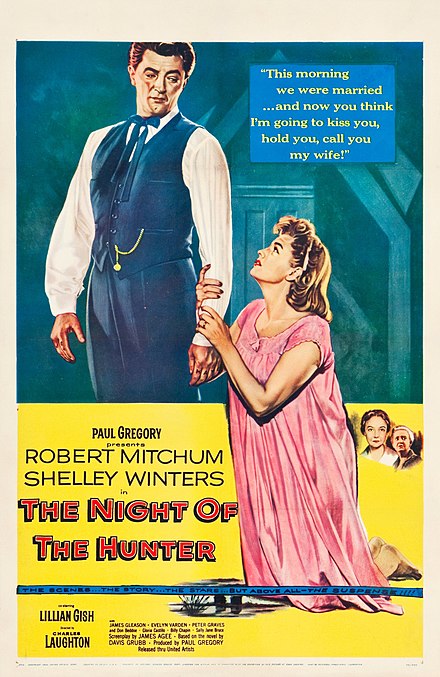
Every once in a while, I see a movie I should’ve seen a long while ago.  The Night of the Hunter is one such film.  Knowing little about it, I watched and was floored.  Not only could I have used it in Holy Horror (oh boy, could I have!), it uncovered a bit of cinema history for me.  Even just the words “love” and “hate” tattooed on Harry Powell’s knuckles have been referenced in so many places that I felt like I’d been missing a vital clue all along.  Since the movie’s now available on free streaming services, there’s no reason not to see it.  Although not generally considered horror, it is one of the genuinely scary movies of the period.  And it’s a strong blend of religion and horror, even if classified as a “thriller.”

Taking inspiration from a true story, the “Bluebeard” character of Harry Powell is a serial killer.  Styling himself as “the preacher,” he murders widows for their money.  An avowed misogynist, he’s driven purely by greed and love of violence.  Yet everyone accepts him—except children—for what he says he is during the Depression era.  He gives sermons, sings hymns, and leads revivals and even his victims come to believe what he says about himself.  This is such a good commentary on the thoughtless acceptance of religion that it’s no wonder that it was a flop in the fifties.  Since then it has become considered one of the greatest movies of all time by many.  The seamless weaving of terror and religion hearkens once again to the wolf in sheep’s clothing.  Some lessons we never seem to learn.  Nobody likes to admit to having been fooled.

In character, the closest comparison I could make would be Cape Fear, which stars the same Robert Mitchum as villain.  That movie I saw in time to include in Holy Horror.  In this one, the only adult who seems capable of seeing through Powell’s lies is a religious widow who informally adopts stray kids during the Depression and raises them with the Bible.  She also keeps a shotgun handy, just in case.  The image of the preacher slowly approaching, singing “Leaning on the Everlasting Arms,” is the stuff of nightmares.  I suspect that one reason that seminaries developed in the first place is that the laity weren’t encouraged to trust self-proclaimed religious teachers.  Of course, the town turns on the preacher once they learn, because of the children, who he really is.  If, like me until today, you haven’t seen Night of the Hunter, I can recommend it.  Especially if you have an interest in how horror and religion cooperate so nicely.


May I?

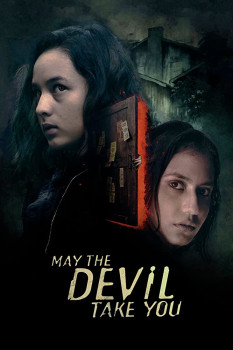
The thing about horror is that it’s an intensely personal preference.  Some people really like a movie while others find it, well, meh.  When the nights begin to lengthen you get lots of curated lists (I’ve never been asked to do any, but I’m working on one anyway) suggesting October viewing.  One such list that a friend sent me appealed to me because it was for movies on Netflix.  Since that’s one of the few streaming services to which I have access, it makes the movies seem free.  This particular list recommended May the Devil Take You, a 2018 movie from Indonesia.  The almost polite title suggests it wasn’t named in English.  In any case, I didn’t really find this one particularly scary and in part that was because of the apparent incongruity of the culture and the monster.  I knew that Indonesia was a highly Muslim majority country, and I know Islam also recognizes the Devil.  Still, Satanism feels kind of out of place here.

The story isn’t terribly deep: a man makes a deal with the Devil, through one of his dark concubines, to become rich, in exchange for the souls of his family.  His wife is the first to go, but he remarries a retired actress who has three children, two young adult.  His only biological child, from his first marriage, Alfie, feels herself estranged.  (It’s unclear to me whether the youngest daughter of the second wife was also biologically his, but it seems so.)  When the father falls into a serious, undiagnosed illness, the children, and actress, all converge on the house where the pact was made.  Of course they open the basement door—locked and with warnings posted—where the Devil’s concubine waits.  The actress becomes possessed and the two older daughters, Alfie and her stepsister, try to fight it off, only to have the stepsister become possessed.  She kills her brother and intends to kill Alfie and her own young sister as well, but the latter two manage to overcome her.

The plot is a bit convoluted but the basic story is maybe too familiar—make a deal with the Devil and all Hell will break loose.  I also wonder if some of the lack of real impact here comes from the subscript translation.  I don’t know how this is done, but I suspect it’s not dissimilar from Google translate.  That may be fine for academic purposes, but it does seem to lead to stilted dialogue among a group of twenty-somethings trying to fight the Devil in Indonesia.  My personal October list is more moody.  Seasonal.  And by no means complete.  The only way to find the movies, it seems, is trial and error via curated lists.


Another Ghost Story

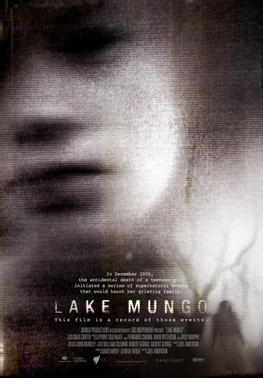
Quiet horror films are sometimes thoughtful little gems.  I’d completely missed Lake Mungo when it came out.  An Australian indie, it’s a mostly gentle ghost story that leaves you with an eerie feeling, and perhaps a little sad.  Ghosts can be so resonant.  Yet the Poe-esque death of a beautiful woman—a teen, in this case—makes it kind of poetic.  The Palmer family is having a Christmas picnic (remember, southern hemisphere) at Ararat, where there’s a dam that allows for swimming.  The two teens, Mathew and Alice, go into the water but only Mathew comes out.  It takes some time for search and rescue divers to locate the body.  Filmed as a mockumentary, the movie slowly adds details that make it all seem much more complex than an accidental drowning.

Alice, it turns out, has a life that her family knew nothing about.  As various family members see her ghost, and even try to document it with cameras, their own motivations emerge.  Mathew, wanting to help his parents cope, fakes a couple of photos and films suggesting his sister is still at the house.  Everyone in the family experiences ghostly noises and a presence and they even consult a psychic, but nothing definitive comes to light.  They do learn that Alice was more troubled than she ever let on.  It was while at camp at the eponymous Lake Mungo that her own ghost came to her in a premonition of her death.  Finally, the Palmers decide to move but in their final photograph of the house, a shadowy Alice can be seen remaining inside.

Ghosts are, by their very nature, religious.  The deal with that universal that all religions address—what happens after death.  The Palmer family is traumatized, but as the closing credit scenes make clear, Alice has really been there.  The one church scene has some of their religious friends say that they don’t know how to comfort a family that doesn’t attend church.  There’s a lot going on here.  Even the name Ararat and the dam have meaning.  This quiet, haunting film is not dissimilar from A Ghost Story, in some respects.  Both reflect on the loss that a death has on loved ones, making them quite poignant because this is so very true of being human.  Horror films can be a source of wonder rather than the slashers they’re generally assumed to be.  I learned about Lake Mungo by word of mouth and I’m glad to have learned of it since, although fiction, it has something true to say.


Keep Them Open

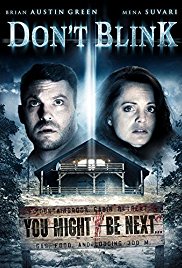
“To be is to be perceived.”  That was the summary of Berkeleyian philosophy we were taught in college.  In other words, not to be perceived is not to exist.  So, Don’t Blink kind of runs with that idea.  Before getting started, a spoiler: close your eyes if you don’t want to know something important.  Okay, so no explanation is given.  Ten friends (a lot of names to remember) drive to a resort that is so remote that you arrive with the fuel tank on empty.  The friends explore the resort but there’s nobody there.  Clearly people were there, just shortly before, but they’re all gone.  And then the friends start disappearing, but only when nobody sees them.  That’s the Berkeleyian angle.  The last survivor never does figure out what is going on, although the authorities seem to be aware that something’s up.  For those of us easily ignored, this is a scary movie.

It’s also another potential film for Holy Sequel.  After her boyfriend vanishes, one of the girls finds a Bible and begins claiming that God is punishing their sins.  Given that these are all millennials, this kind of thinking starts to get on the others’ nerves.  It’s not a major event in the film but it reinforces, as so many factors do, that religion and horror aren’t ever very far apart.  And in case you’re wondering, no, she’s not the survivor.  Neither does she suggest this might be the “rapture.”  During said event, the righteous disappear, not twenty-somethings with a weekend of sex on their minds.  The director, Travis Oates, is apparently a Hitchcock fan, so some elements fit into that sensibility.

I only found out about the movie because a friend suggested that it might be good beginner horror.  There are a couple of pretty intense scenes, but overall there’s not a ton of blood and guts.  There aren’t any jump startles, just a dread that continues to grow throughout.  I’m pondering how the Bible is being presented here.  It’s used as an apotropaic device—as protective magic.  Because the Bible is divine, it has, so the belief goes, the power to prevent harm.  Ultimately, in the world of this movie, nothing has that ability.  Although the Bible’s there, the message is pretty nihilistic.  Kind of like thinking about the heat death of the universe.  Still, the acting is good and the premise, although Vanishing on 7th Street also covered the idea of people just disappearing, is engaging.  Even though it doesn’t answer the question of why, or how, it is a movie that underscores the philosophy of George Berkeley as having perhaps been onto something.


Something Somewhere

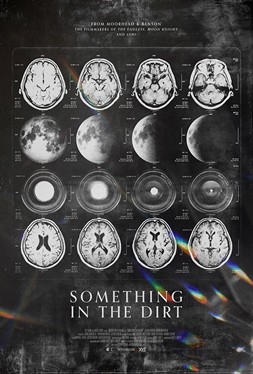
A friend suggested I might like Justin Benson and Aaron Moorhead films.  An unusually intellectual type of horror, these movies challenge perceptions of reality and are tied together with one or two thematic elements.  Something in the Dirt is their most recent offering and as far as existential horror goes, it’s a winner.  The storyline, as with their other films, plays with alternative realities bleeding over into what we think of as everyday life.  There’s a lot going on in this one that will keep you guessing until the end, and even after that.  Levi, a ne’er-do-well, awakes in his cheap apartment in LA and meets his neighbor, John, just outside.  Even this initial meeting has a sense of the surreal about it, but the two strike up a conversation, each trying to weigh the other’s truthfulness.

Levi’s apartment begins to show elements of paranormal happenings.  Neither he nor John have professional careers, so they figure they can use their off times to make a documentary about the phenomena to sell to maybe Netflix, setting them for life.  They each start coming up with theories about what is happening from ghosts to extraterrestrials to Pythagoreans building Los Angeles on an occult geometric pattern.  Ultimately they seem to settle on two basic forces of nature: electromagnetism and gravity.  Both are distorted in this apartment.  Meanwhile, each learns that the other isn’t quite what he seems to be.  Levi has a history of arrests that he downplays.  John is the member of an evangelical, apocalyptic group, but he’s also gay and claims to have made a ton of money that he donated to the church.  (Religion and horror, folks!)  Neither really trusts the other but synchronicities keep occurring, preventing either one from just ending the project.

They bring in occasional experts who have varying degrees of skepticism regarding whether the two are faking what they capture on camera.  After all, they include reenactments along with their actual footage.  I won’t spoil the ending here, but it is pretty much what a seasoned viewer of Benson and Moorhead might appreciate.  These movies are so unusual and so full of hard thinking that it seems odd that they aren’t discussed more often.  If I understand correctly, there is only one remaining film where they appear as writer, director, producer, editor, and director of photography that I haven’t seen.  They are the kinds of movies that if you binge on you’ll either end up enrolling in a graduate program in philosophy or spending the rest of the day blowing dandelion seeds into the wind.  Or maybe there’s something in all this.


Haunted Space

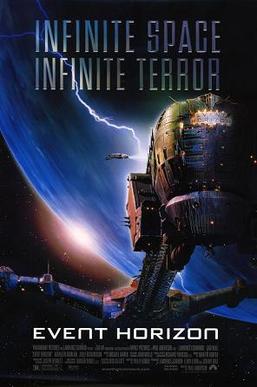
A haunted house film set in space.  That’s what I thought and then read the same words in a published description of what the writer and director were going for.  In that way it was a clear success, but in others it struggles.  The premise is good, if jarring.  Space travel, which is the most scientific of scientific enterprises (there’s a reason the rest of us say, “I’m not a rocket scientist”) collides with the traditional supernatural.  The results are worth pondering.  Event Horizon has become a cult classic, and like many older films, has been more positively reevaluated in recent years.  So the crew of Lewis and Clark is on a rescue mission to the ship Event Horizon, in a decaying orbit around Neptune.  Neptune’s atmosphere provides lightning for this haunted house.  The crew learns that Event Horizon has been through a black hole and has returned sentient.  Its crew has no survivors and it won’t allow Lewis and Clark to either escape or to destroy it.

Those of us who watch horror looking for religion—and even general viewers—can’t help but notice that Event Horizon ended up in Hell and returned.  It plagues the rescue crew with hallucinations of their regrets and failures.  Weir, the scientist who designed Event Horizon, is more or less possessed and stops at nothing to save the ship, which has brought Hell back to this dimension.  Again, it’s a bit jarring, like vampires in space.  (Yes, I know it’s been done.)  There’s even a point where Weir informs one of the crew that the crewman doesn’t believe in Hell.  Heck, they’re in outer space on a ship technology built.  But what if there is a spiritual reality—“dimension,” in the film’s lingo—out there?  What if some traditional religions are right?

The movie’s not apologetic, but it’s offering a reminder that to be human is to be spiritual.  No matter how much science “proves,” there’s always potentially more “outside.”  Hell in Event Horizon is beyond the bounds of the universe.  It is another place but a place it is.  It costs some of the crew their lives, but does it claim their souls?  Event Horizon is one of those movies that the studio ordered severely edited, and for which the edited footage was lost.  Movies ever only show us what directors, producers, and studio execs want us to see.  People crave stories.  And when a movie, like Event Horizon, raises more questions than it answers, viewers want to know—what really does happen in a haunted house in space?


Some Body

Many period movies are reevaluated and found better than originally critiqued.  (It feels strange to write that about a 2009 movie, but that was a decade and a half ago.)  I’d read about Jennifer’s Body before, but the title put me off from watching it.  Then, of all places, the New York Times recommended it last year during one of their autumnal forays into the horror genre.  Interestingly, it’s a possession movie with a few twists.  Demons are quite malleable monsters, of course.  So Jennifer and Anita (Needy) are best friends.  Jennifer is the girl all the guys want, and Needy, well, isn’t.  One night they go to hear a band at a local bar, and Jennifer leaves with them.  We later find out—spoilers about to appear—that their intention is to sacrifice a virgin to Satan to help them succeed as an indie rock band.  Jennifer’s no virgin, though, and demonic transference took place—i.e., Jennifer is possessed although the band gets their boost.

Then Jennifer has to eat people (high schoolers, of course) to survive.  She eventually tells Needy all of this, and her friend researches the occult and realizes her former friend is seriously dangerous.  And she decides to stop her.  I won’t give away the ending (it was only 15 years ago), but I will say that the overall result is somewhat unusual for a demon movie.  There’s plenty of religious imagery, but nothing really explicitly showcased.  For example, Needy’s mom has religious paraphernalia around the house.  There are no clergy in the story and Needy teaches herself what she needs to know about dispatching demons.  In other words, it’s a strangely secular possession movie.  And in the end demonic ability leads to justice.

The critical reappraisal is largely based on the feminist message and complexity of female relationships in the movie.  Both written and directed by women, those aspects aren’t unexpected.  And the movie is a horror comedy.  The funny parts tend to come from aspects of the dialogue since the acting is played straight.  This isn’t so much a scary movie as it is a smart one, which is probably why the Times critic recommended it.  Demons aren’t always scary monsters in horror, and what you end up being afraid of here is that the relationship between Jennifer and Needy might end since it seems to be the foundation on which two young women’s lives are built.  Is it a good movie?  Well, it’s not bad.  I tend to lean on the side of the reappraisers—it still has something to say. 


Prey Again

Let’s begin with the title.  Final Prayer was released in the United States as Borderlands.  I still found it on a free streaming service under its UK title, and I’m glad I did.  The movie falls under a a few different categories—cinéma vérité, found footage, and folk horror come immediately to mind.  The story follows a set of three very different Vatican-sent investigators, promotors of the faith, to check out a miracle claim in Devon.  I was a little confused at first, assuming this was an Anglican church, being in England.  One of the investigators, Deacon, a religious brother (monk not associated with a monastery), Gray, a techie who has some basic beliefs, and Mark, a priest technically in charge.  There’s tension between the men and between them and the locals.  The parish priest believes God appeared during a baptism at the parish that was being filmed by a family member.

The investigators come up with plausible explanations for the “miracles” caught on tape, but they also find some phenomena that are difficult to explain.  The local priest, distraught that they are disproving the “miracle,” jumps from the church tower, killing himself.  Mark, taking this as an admission of guilt for a hoax, closes the investigation.  Deacon, however, refuses to give up and calls in Fr. Calvino, who mentored both he and Mark.  Calvino believes the church was built on pagan sacred ground and it must be purified.  The ceremony, however, doesn’t end the way it was expected to.  All the while, the locals are—mostly passively, but at times overtly—hostile to the team.  Calvino’s revelation of the pagan background, however, makes clear that at least some of the locals haven’t given up pagan ways.

There are a number of elements worthy of commentary here.  It seems likely that a longer piece will be necessary to cover much of it.  A discussion in the local pub between Deacon and Gray, before calling in Calvino, raises the central question.  Gray, as a layman, suggests that pagans had to be worshipping something they believed was real before Christians came along.  He wonders if intruders (Christians, in this case) were unwelcome by this earlier deity.  Deacon, who is skeptical, but who’s come to believe that a former priest was involved in pagan worship, resists such thinking.  The ending makes clear what’s been going on, but getting to that point does involve quite a lot of religious discussion.  Horror and religion go naturally together, as I often opine, and this is a particularly good example of their common labor.


Opposites?

Not having the money to subscribe, I limit myself to the daily headlines of Publishers Weekly.  When physically in the office in New York City, it circulated among editors in print form.  I do miss that.  The weekly is a great place to stay informed of what’s going on in the book world.  Interestingly, the headlines—which are often linked together newsletter-style—noted that the annual preview of religion books was on the way.  This was followed by “On the exact opposite side of the publishing spectrum, Orbit has launched its fourth imprint, Run for It, capitalizing on the horror boom.”  So there it was staring me in the face.  Religion and horror are exact opposites.  Now, I can’t expect even experts in publishing to be aware of all the trends, but the religion-horror connection has been alive and growing for a few years now and those of us who publish books in it might dispute the “exact opposite side” designation.

Photo by Thomas Park on Unsplash

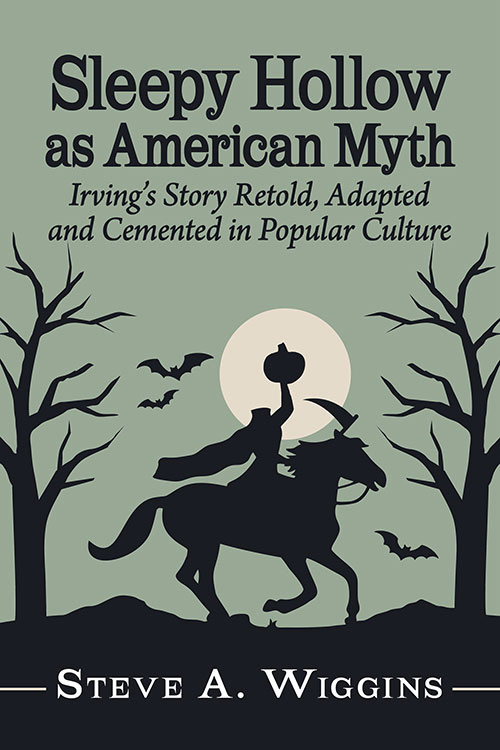
Horror and religion are closely related.  Many in the religion camp would want to deny that, but those who know horror know that religion quite often wanders in.  More than that, religion often drives the horror.  They’re not so much exact opposites as they are playmates.  Rather like the Bible depicts God being the chum of Leviathan.  (Who is, after all, a perfectly good monster.)  While my own humble efforts are frequently overlooked, the last four books I’ve written explore different aspects of religion and horror.  This includes my forthcoming Sleepy Hollow book.

Even if you’re not a fan of horror movies, if you pay close attention religion is not the opposite of horror.  We have this mental image of religion as a pure and holy thing in and of itself.  We don’t often stop to think that religions are invented by humans.  Yes, they are often in response to what believers see as divine stimuli, but the way that they are conducted is part of our human ingenuity.  They are considered good because of their emphasis on love and positive virtues.  If you watch enough horror you’ll notice that the menace is often a threat to love.  In other words, horror too emphasizes the value of love.  It’s a perception problem that sees horror as the opposite of religion.  Simplistic categories are often necessary to get through life—that’s why we stereotype.  Those of us who like to stop and think through things can gum up the works.  Even a headline in a magazine we like can lead us to wonder about the deeper implications and the biases they perpetuate.


Singing Darkly

Euro-horror has become one of the more profound sub-genres of film.  I can’t recall who it was that recommended A Dark Song—set in Wales although filmed in Ireland—but it was immediately obvious I was in for a treat.  Dealing with Gnosticism, occult, and demonic manipulation (I wish I had the script!), it takes on the big issues of death, loss, and forgiveness.  The premise begins chillingly enough.  A woman rents an isolated country house for an entire year, paying in advance so there will be no disturbances.  She brings in an accomplished occultist to let her speak to her dead son again.  The two don’t know each other and this ritual will take many months, during which they will not be able to leave the house.  Neither really trusts the other, but Joseph (the occultist) tells Sophia that she must obey everything he says if she wants the ritual to work.  Once they begin they cannot stop until it reaches its conclusion.

Sophia hasn’t revealed the real reason she wants to summon her guardian angel.  She wants revenge on those that used the occult to murder her son.  The truth Sophia kept from Joseph requires them to restart, so he drowns her in the bathtub and then uses CPR to revive her.  As they grow increasingly tense, a fight breaks out where Joseph is accidentally impaled on a kitchen knife.  With only bandages and whiskey to treat the wound, they press on, but Joseph dies leaving the ritual unfinished.  Sophia can’t escape but after being tormented by demons, her guardian angel arrives.  Her request is actually wanting the ability to forgive.

This profound story has many twists along the way, but a scene that I would like to consider is where Joseph tells Sophia “Science describes the least of things… the least of what summat is. Religion, magic… bows to the endless in everything… the mystery.”  The suggestion that science is indeed correct, but limited.  Religion goes beyond science, however, to the world of possibility.  The movie suggests these two worlds intersect.  After Joseph dies Sophia can’t escape that other world until its rules have been met.  And when she does reenter the world of science, what happened in the world of magic has lasting effects on her.  A Dark Song is one of those movies that will haunt you after watching.  The Euro-horror of the last decade or so has been incredibly profound, showing the promise of what horror can be.


Carnival Days

Carnival of Souls has been receiving renewed attention of late, so I decided to watch it again to see if I’d missed something the first time.  Indeed, I had. Carnival of Souls is one of those low-budget movies that was really never considered worth much until reevaluation started to take place several years after it was released (1962).  As a snapshot of an era, it offers a view of how horror and religion interact.  The story, in case you’re unfamiliar, follows Mary Henry, a young woman who’s a professional organist.  Even here a few things stand out.  She went to college, she relies on no man to support her.  And she views church work, as an organist, to be “just a job.”  This is pretty incredible on its own, but I’m getting ahead of myself.  Her car is nudged off a narrow bridge by a couple of guys out hot-rodding.

From the beginning the viewer is clued in that she drowned, although this isn’t made explicit until the end.  She makes her way to Salt Lake City where she’s been offered a job as an organist in an Episcopal church.  She “sees dead people” and becomes fascinated by an abandoned carnival on the shore of the Great Salt Lake.  The priest at first notes that she plays music to elevate the soul.  Later, however, after the dead man she keeps seeing unnerves her, she plays eerie music on the church organ (during practice) and the priest realizes that she’s not a believer.  He fires her on the spot.  Apart from getting the ethos of the Episcopal Church about right, this in itself is interesting.  The playing of creepy music is enough to lead to the loss of a church job.

John, the guy who won’t stop trying to score with her, wonders at one point if viewing church work as “just a job” doesn’t give her nightmares.  These attitudes, from only about six decades ago, seem terribly remote by today’s standards.  Many clergy have doubts about their faith.  Many don’t really believe what their church actually proclaims.  The movie shows a society that has an almost magical view of the church.  You can probably even take the “almost” out of that last sentence.  While the Bible’s not mentioned or quoted, the idea of a lost soul finding no home in the church is a telling bit of commentary.  Intentional or not.  Carnival of Souls will never be my favorite horror movie, but it has pre-echoes of Night of the Living Dead and a sincerity that invites consideration.  I can see why it’s gained renewed interest.


Shifting Gears

The question’s very basic: do you pay with cash, or by watching commercials.  When it’s the same three commercials the whole way through—for products you’d never buy—just paying the cash may seem the better option.  But it’s too late for that.  It’s the Graveyard Shift.  There’s no doubt  that Stephen King is responsible for the ideas for more horror movies than probably any other single individual.  I’d read his story, “Graveyard Shift,” many years ago.  I was warned, though, that this was one of the least favorite of his adaptations, and that’s a pretty low bar.  Still, it was just a matter of sitting through the same commercials over and over.  And one of them was more entertaining than the movie.  Of course, I don’t really watch for entertainment.  This is a learning opportunity.

Let’s start with the basics: You need at least one sympathetic character.  Okay, you kinda like Jane, because she shows basic humanitarian traits.  And Carmichael.  Then you want a plot that makes some sense—what is Warwick’s motivation?  The writing is particularly bad.  If there’d been a bit more intentional camp, this might’ve made a reasonable horror comedy.  I mean, you’ve already got the empty aluminum cans being fired by slingshot.  As it is, it’s played straight with an evil foreman, rats everywhere, and a giant bat in the basement.  By the end you’re kind of rooting for the bat.  And whose idea was it to use voiceovers of the sub-par dialogue over the closing credits?  Is this so bad that it’s good?  I’m having trouble deciding.

Although set around the fourth of July I wouldn’t call this holiday horror.  Nevertheless, there are some moments of religious imagery that pop out.  The graveyard sinking in the river has a listing statue of Jesus near the start of the film.  And the exterminator—the only real camp in the flick—narrates how in Vietnam they pinned victims down, like Jesus, to feed them to the rats.  The final couple of minutes—well earned, I assure you—have Hall fighting the wicked foreman with the jawbone of an animal (one has to assume an ass), inexplicably among human bones (some still in their coffins).  And his slingshot ultimately killing the giant (bat).  The references are to Samson and David, respectively.  Perhaps this movie’s an indictment of capitalism, since the basement cleanup is on Independence Day.  Or maybe it’s just tired horror tropes on a break.  (Having one of the characters reading Ben in the diner was a nice touch.)  It may become a holiday tradition after all.


Under Bite

Religion and horror have long been bedfellows.  And quite companionable ones at that.  I’ve written a longer piece that I’ve not yet managed to wedge into a book about how the earliest Universal monster movies all involve religion in some way.  Maybe some day it will come out into the light.  In the meantime, I submit, for your consideration, The Cult of the Cobra.  This 1955 horror film was one of a series of movies about shapeshifting.  We’ve recently seen The Leopard Man on this blog, and before that Cat PeopleCult of the Cobra, set in amorphous “Asia” to start, involves the invented religion of the Lamians.  A group of US Airmen pay a Lamian to watch a woman transform into a cobra in an “Asian” ritual.  They’re revealed by trying to take a photograph—they’d been warned that if they were discovered the cobra would hunt them down and kill them.

Convinced this is all superstition, despite one of them dying the next night from a cobra bite, they return to New York City and civilian life.  The cobra woman follows them to carry out her mission.  She’s killed, however, before getting the last two.  What’s so interesting here is the discussion of belief that takes place throughout the movie.  Americans can’t believe in some “cult”—it’s clear from the start that anything not western is cult—but none of them show any inclination to church, or crosses, or even references to God or the Bible.  The only religion shown is that of the Lamians.  The cobra woman falls in love with one of the Airmen and tries to explain that she’s coming to doubt something she’s believed all her life.  She’s caught between religious duty and the experience of falling in love.

The movie failed to impress critics and was largely dismissed as a knock-off of Cat People.  There’s too quick a judgment here, however.  One of Universal’s earlier monsters had encountered a non-western religion but became much more famous for it.  The Mummy was based on “ancient Egyptian” religion.  Indeed, the whole story is premised on it.  The Cult of the Cobra, however, engages with the religion.  As jingoistic as it is, it nevertheless tries to represent “the cult” as a religion taken seriously by an exotic group of believers.  “Lamians” seems to have been borrowed from Greek mythology, however, where lamia were demon-like devourers of children.  I write about them in Nightmares with the Bible.  This isn’t a great movie by any stretch, but it shouldn’t be dismissed either.  It’s an important piece of the puzzle of how religion and horror interact in film.


Horror History

Trying to make sense of life has perhaps been my only real vocation.  As I continue to work on horror-themed books, reasonable people ask why I keep doing this.  It’s a question I ask myself.  The other day, while working on one of these projects, I had a realization.  The narrative I’d been playing in my head is that I grew up watching monster movies and then, apart from a few slip-ups, fell off the wagon again after my career malfunction.  That’s largely true but I suddenly remembered that seminary was actually another period of my life when I watched a lot of horror.  Regular readers know that I’m intrigued by the connection between religion and horror, but I’d forgotten how early this started with me.

A friend, nameless here, was a fellow seminarian and a total cinephile.  He and I would watch movies together quite a lot.  As I was recollecting which ones, it suddenly struck me that many of them were horror films.  And it wasn’t just this unnamed friend.  Another anonymous comrade frequently talked me into theatrical horror.  He’d go with his girlfriend (something I lacked at the time) but he liked to chat about the movies with me and often invited me along.  So it was that I was watching horror into the mid-to-late eighties.  I stopped, pretty much cold turkey, when I married.  It seemed that the therapy horror was offering was no longer needed.  Life settled into a happy, if weird existence stretching several years into Nashotah House.  This was the locus of said malfunction.

Losing my only full-time teaching post led directly to watching horror again.  My wife had to take a job out of state.  We crammed ourselves into an apartment after having a four-bedroom house.  Jobs were not coming my way, no matter how low I aimed.  Horror was cheap therapy.  What’s more, it’s remained a hobby ever since.  (Read into that what you will.)  People who know me personally (but who don’t frequent this blog) are often surprised to learn that I watch horror.  I don’t act like someone who does.  At least according to this usual, prejudiced image of the horror fan.  What’s more, the friends who share this fascination are nice people.  I was recently asked to speak about Holy Horror to a senior seminar at Transylvania University (it’s in Kentucky).  The students all seemed to be upstanding, bright young people.  They, however, like horror.  I don’t know their stories, but I’m guessing that they’re probably quite interesting.  They’re just beginning to try to make sense of life.