Unholy Conception

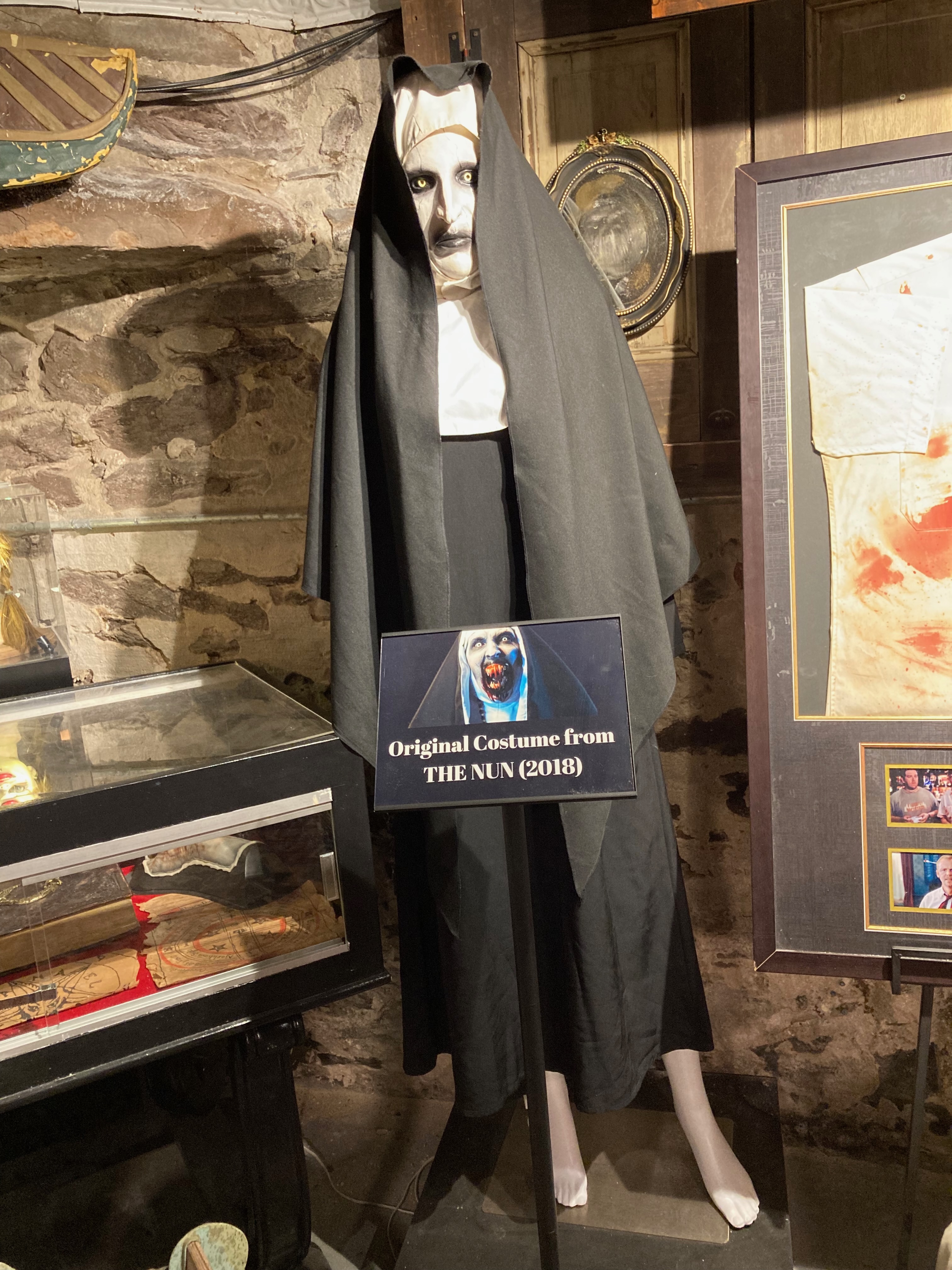
Religious horror is difficult to get right.  Immaculate received reasonably positive reviews, and did well enough at the box office.  Its message of women being forced into reproductive roles unwillingly is certainly timely.  Viewers with religious training, as well as experience viewing quite a lot of horror, might be less impressed.  The basic premise isn’t bad: a convent in Italy, which has one of the nails from Jesus’ crucifixion, is using the biological material on the nail to genetically engineer a new messiah.  The movie follows the novice/nun Sister Cecilia, a virgin, as she joins the convent and discovers that she’s pregnant.  The entire community—apart from a jealous nun and a friend trying to warn Cecilia—welcomes the news, presenting Cecilia as the new Mary.

The convent, which has a history of torture, realizes that Cecilia might be reluctant.  Past sisters have, and she isn’t the first immaculate conception the resident priest (a former biologist) has engineered.  Realizing, by the second trimester, that something sinister is going on, Cecilia tries to escape but is caught and confined, and her soles are branded to prevent her from running away.  After killing the Mother Superior, a Cardinal, and the resident priest, she does escape, gives birth, and kills the baby.  It’s not difficult to see the social commentary involved, but this is body horror and it’s not about gross outs.  It is pretty tense and has several scary moments, but the plot leaves some rather large holes that might following it difficult.  It’s never explained, for example, how the genetic material ends up inside Cecilia without her knowing it.  For those who’ve spent years reading about Marian devotion, this is not an unexpected question.

Although this would be a candidate for Holy Sequel, there’s just something off about the religious elements of the film.  Having never been a nun, I can’t say for sure, but the convent life (apart from the engineering a messiah) seems inaccurate.  And although the Bible is quoted, it’s presented in an almost Protestant way.  The underlying religious imagery feels slightly askew.  Judging from what critics have said, that doesn’t seem to bother many viewers.  If you’re going to make a religious horror movie, it is possible to get away without doing your homework.  In the end, however, it shows.  The acting is quite good and the theological message is worth arguing over, but like many other religious horror films, it has been weighed in the scales and found wanting.


Special Delivery

Deliver Us is a horror movie intentionally built around religion.  It hasn’t been discussed much on the sites I frequent, but I suspect that it should be more.  Yes, it gets aspects of religion wrong, but then most religious horror does.  And it leaves a lot unexplained.   Again, most religious horror also does.  The cinematography is bleak and beautiful, evoking a winter chill.  The story is built around a made up prophecy, but do I really need to say it a third time?  Fr. Fox is a Catholic priest in Russia and a former exorcist.  Like Fr. Karras, he doesn’t believe in demons, but his bishop really wants him to go to a convent to check out a possible genuine miracle.  Fr. Fox is about to become Mr. so he can marry his pregnant girlfriend.  Since she has to go to Estonia for a while, she encourages him to do this one last thing for the church.

Meanwhile, signs are occurring that the end times are arriving.  In the convent a secret society called Vox Dei is harvesting prophecies from people’s backs.  What sways Fox to go is that a renowned cuneiformist, Cardinal Russo, is there.  Fox wrote his dissertation on “alphabetic cuneiform”—that’d be Ugaritic, folks.  Not explaining where they got the human-skin scrolls, Russo needs Fox’s help in figuring out the language (it turns out to be cuneiform Zoroastrian).  The miracle is a weeping Madonna statue, but there’s also an immaculately pregnant nun.  She has twins in her, one the Messiah and the other the Antichrist.  Fox doesn’t believe any of this but when he learns that the Cardinal is going to kill the babies to prevent the end of the world, Fox convinces him to give up the wicked plan and they escape with the nun.

This is enough to give you a flavor of the movie.  I won’t give up the resolution but I will say it ends up revolving around the end of the world.  In general this is a pretty intelligent movie.  It borrows quite a lot from other films, including The Omen and The Shining, but it is fun to watch (if you don’t mind a bit of gore).  The tension mounts as Vox Dei tries to find the escaped priest, Cardinal, and nun and there are some legitimately scary scenes.  It was written and directed by Lee Roy Kunz, who also plays Fox.  I do think this deserves more in-depth consideration and had it been out in time, and had I known of it, I would’ve included it in Holy Horror.


Low Stakes

Elsewhere on this website I refer to myself as an “unfluencer.”  This quasi-serious attempt at humor does bear a kernel of truth.  It’s difficult to get your voice heard on the internet.  By the time I began blogging, vlogging had already become a thing and people prefer watching to reading.  (I do have a few YouTube videos out there, but they take an awful lot of time to put together and I’m kinda busy trying to write obscure books.)  The reason I mention this at all is to make a point.  People sometimes wonder why a guy who has a doctorate in religious studies wastes his time with horror.  There’s a good reason.  People will pay attention when the stakes are low.  Is horror important?  I think it is, but most people don’t.  Genre fiction is easily dismissed as being off in fantasy land, despite the growing number of voices suggesting we should be paying attention to how it influences (unfluences?) religion.

Those who delve in such blue collar things sometimes grow to be taken seriously.  I suspect—since I wouldn’t know—that it’s a matter of sticking with it long enough, and producing enough content that people have some standard for comparison.  And the interesting thing is, you often notice fascinating features along the way.  While working on my next book the other day, I realized a major gap in the study of history of religions.  I can’t say what it is here, of course, because someone without a 9-2-5 may scoop me.  But the gap is clearly there.  And I would never have noticed it if I weren’t spending my time writing about low-stakes monsters.

I’m a blue-collar thinker pretty much through and through.  Talking it over with my brother the other day, I realized that despite the years and years of higher education, I was brought up working class and I look at the world through those lenses.  When I was actually a professor that began to change, but in retrospect, I think that’s why my students liked what I did in the classroom.  I wasn’t some child of privilege handing down tired observations meant to impress other children of privilege.  I’m just a peasant trying to figure things out.  I can point to no highly educated forebears—neither of my parents finished high school.  No, I have been fortunate enough to have clawed my way through three higher degrees only to realize that people only listen if the stakes are low enough.  And I’m alright with that since I get to spend the time with my beloved monsters.


Not Afraid

It’s something many of us do.  Trying to explain why, while religious, spiritual, and moral, we find horror fascinating.  I read Brandon Grafius’ Lurking under the Surface, and when I learned about Joseph Haward’s Be Afraid: How Horror and Faith Can Change the World, I figured I’d better read it too.  Haward is a British Baptist minister who seems to support progressive causes.  He also enjoys horror.  He even finds it prophetic.  I have to admit that when I read the foreword by John E. Colwell I was afraid that this would be one of those books.  You know, the kind that only half-likes horror because their religion tells them so.  Colwell is no horror fan, and his foreword doesn’t set the tone for what follows.  Haward finds horror homiletical.

When I was young I used to see movies and analyze them theologically with my friends.  This was in college and seminary, mostly.  We’d discuss the implications of movies—sometimes horror—and how they fit into our Christian worldview.  This book is like that.  It’s Haward’s reading of various horror films, some television, and some novels, integrating them into his theological outlook.  The book is more about theology than it is about specific horror films, although it does mention quite a few.  The discussion is sometimes hard to follow because the paragraphs are so incredibly long and the style is very theological.  I got the feeling that Haward would be an interesting person to have a conversation with.  His book didn’t really do it for me, however. Some things are simply better in person. (I do know Brandon Grafius, and enjoy our talks.)

I’m not into horror for the violence.  Haward tends to point to that element, but I’m generally looking for the mood.  And avoidance.  Also when I was young I learned the truism, “He who lives to run away, lives to run another day.”  I like to think that I’m brave, but violence really bothers me.  My family finds me a contradiction; I won’t watch movies that are based on “true events” unless they’re speculative.  I don’t need reminding that people can be horrible to each other.  I know that from scanning the headlines and from watching the election results.  No, I use horror to help me cope.  And it works best when I know there’s something supernatural going on.  I’ve grown out of theologizing about movies.  I took plenty of theology courses in college and seminary, but they seemed a bit too abstract to be helpful.  Then I’d go out with my friends and watch a horror movie on the weekend so we could talk about it.  There’s a bit of that nostalgia here.


Not Friendly

A ghost-revenge story, online.  Unfriended is one of those low-budget horror films that manages to be remarkably effective through the acting and its overall verisimilitude.  It’s also a kind of parable about the dangers of living our lives online.  The only problem is that technology is moving so fast that a ten-year old movie looks outdated.  The scary thing is many people are online even more, especially since the pandemic that came a few years after the movie was released.  Six high-schoolers are chatting on Skype (see what I mean?).  A friend in the group died by suicide a year ago because of an embarrassing video posted of her on YouTube.  Even a mature viewer like me can easily recall how deeply peer pressure cut in high school.  It’s a difficult time for all of us.  In any case, an unidentified person has joined the call and makes threatening comments via chat.

Of course, there are multiple apps (we called them programs long ago) running and nearly the entire movie is on the screen of one of the kids’ laptops.  In real life I was waiting for my low battery warning to come on, because I was watching it on a laptop, and all the notices that appeared on the upper right-hand corner made the thing look real.  Naturally enough, the kids start getting killed off.  Since this is horror their deaths are shown, if briefly, on screen and mostly they’re bizarre.  Hovering in the background is a webpage that warns against opening and answering messages from the dead.  As Blaire (whose screen we’re seeing) comes to realize that the unknown person is the girl who died by suicide, Laura (the dead friend) forces them to play a game of Never Have I Ever.  This leads to dissension and fighting as confessions come out and friends begin dying.

There’s a heavy moral element involved—the teens are being “punished” for typical teen behaviors.  Interestingly, toward the end I noticed that Blaire had a crucifix on her bedroom wall.  The kids don’t talk about religion at all (something I did do as a teen) but they all have a moral sense of what they did wrong.  The webpage about not answering online messages from the dead suggests confessing your sins, if you do open such a message.  Blaire tries to confess, but she has a secret that’s kept until the very end, so I can’t say what it is here.  I wouldn’t want to be unfriended for providing a spoiler.


Non-Believer

Heretic may be the ultimate horror and religion movie.  It’s also a film you may need to see multiple times to follow the all-important dialogue.  It’s a movie that would’ve been front and center in Holy Horror.  And it’s deceptively simple.  As I’ve written many times before, I try to know very little about a film before I watch it.  This if often difficult with the internet and people wanting to tell you about the latest cinematic marvel.  I managed to watch Heretic knowing only that it was about two Mormon missionaries visiting a potential convert.  If you want to leave your level of knowledge at that point before seeing the movie you might not want to read on.  You have been warned.

e two women in on an inclement evening, assuring them his wife is in the next room.  He then, ever so innocently, questions them about their beliefs and about religion in general.  The missionaries grow increasingly concerned that there is no wife and that Mr. Reed (Grant) has been toying with them.  They find themselves locked in his house as he unrelentingly questions them and asking them what, and why, they really believe.  Charmingly he assures them they can leave at any time, but they have to pick a door—the lady and the tiger-like—marked either belief or disbelief.  (Both lead to the same place, and it’s not out.)  Using a trick he attempts to get them to die by suicide.  When they refuse, he kills one of them but the other discovers the truth, “the one true religion.”  I won’t tell you what it is.

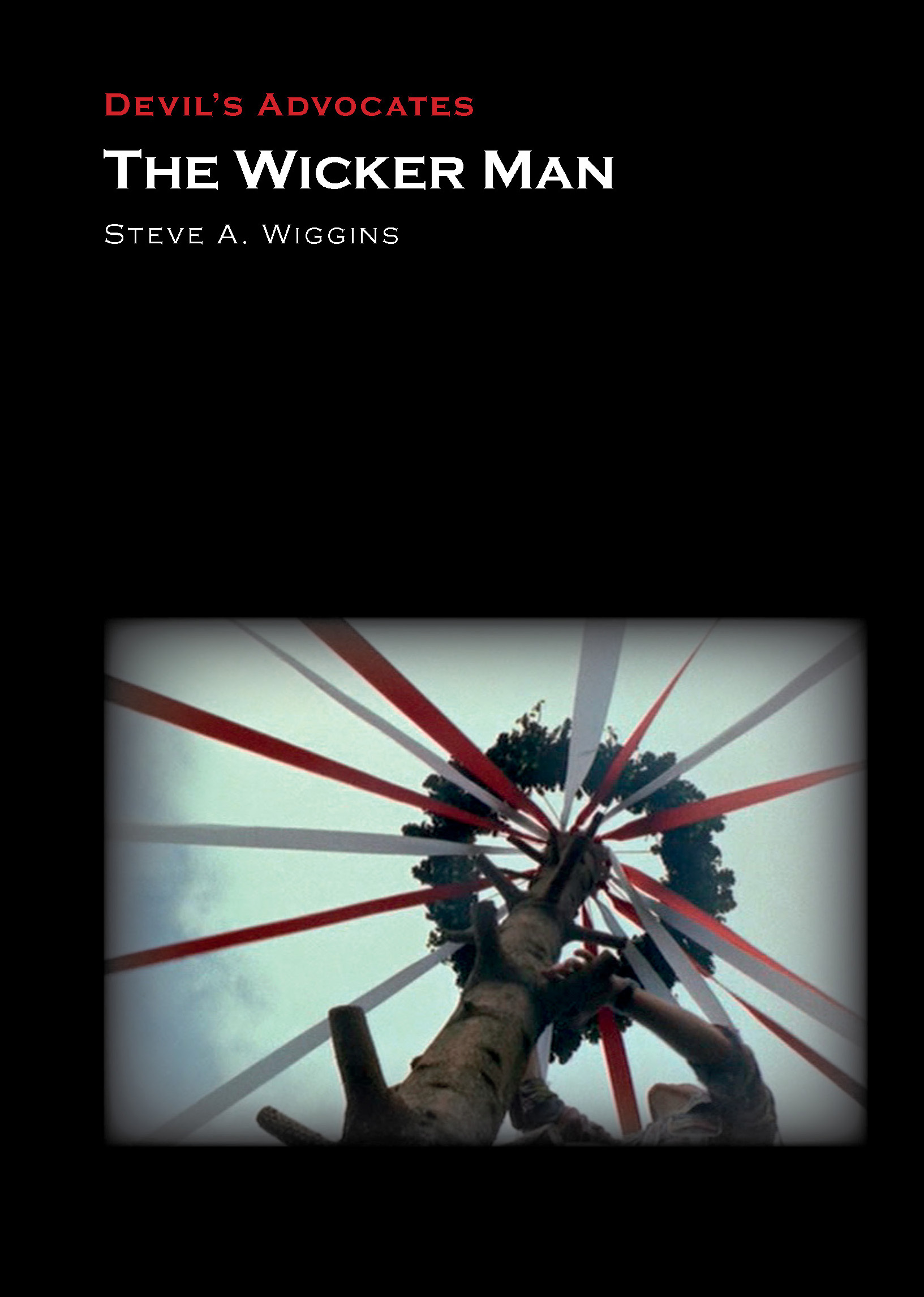
The film is remarkable in that there is no horror without religion.  I made a similar argument about The Wicker Man, in my book on the movie.  When we ask ourselves what makes a horror film scary, seldom is the answer overtly “religion.”  Usually it’s a monster of some description.  Or the threat of annihilation.  Or plain old death.  Religion can be scary.  In fact, it has historically been the nepenthe for death and sorrow in this life.  Some would trace the origin of religion to that very phenomenon.  I’ve been writing for years on this blog that religion and horror belong together.  They overlap.  They blend.  They, on occasion, may be the same thing.  Heretic displays that clearly.  If I haven’t spoiled it for you, I highly recommend it.  I can honestly say it’s the first movie that has literally given me nightmares, in many, many years.


Dusk’s Early Dark

It may be the strangest vampire movie ever, and that’s saying something.  To understand this, you have to realize that I read as little as possible about a movie before seeing it.  I try to avoid trailers, and recommendations from well-wishers play a big part in my choices.  I came across From Dusk till Dawn in a couple of online lists and when I saw it was Quentin Tarantino and George Clooney, I doubted the vampire part.  Indeed, for the first twenty minutes to half hour I was convinced I’d stepped into Pulp Fiction 2.  (Tarantino wrote it, after all.)  Those kinds of movies unnerve me, and just when I was wondering if I’d made a mistake, it became a monster movie.  An action horror film.  Lots of vampires and, surprisingly lots of talk about God.

In case you haven’t seen it, Clooney and Tarantino are brothers out on a crime spree.  Harvey Keitel is an ex-minister out on a road trip with his teenage kids.  After his wife’s death, he lost his faith although he still believes in God.  (Classic theodicy.)  The criminals abduct the family to get them into Mexico where they’ve made a deal with a guy.  They meet at about the most salacious strip club you can imagine, one that caters only to truckers and bikers.  It turns out that the staff and strippers are all vampires and they prey on the patrons.  Okay, so the story doesn’t hold together.  Clooney’s character, which is hardly the sort you’d want anywhere near you, tells Keitel’s that unless he re-finds his faith none of them will make it out alive.

There’s quite a bit of humor packed into the over-the-top fight scene, including dialogue about how to defeat vampires.  A couple of the patrons, it turns out, are pretty adept at that sort of thing, but the human holdouts keep getting bitten and have to be killed.  Finally, the titular dawn arrives, leaving just Clooney and the minister’s daughter alive.  I couldn’t help but to be reminded of Willy’s Wonderworld, in overall story arc, but the two are completely different in tone.  The fact that the movie is 28 years old and that I’d only heard of it recently really surprised me.  Especially since religion is so heavily involved in the story.  Not only that, but the message about religion, in service of the story, is that belief is good.  And this from a murderer and a thief.  Strange indeed, but not easily forgotten.


Old Dracula

Francis Ford Coppola’s Bram Stoker’s Dracula is one of the “old movies” about which I posted some time back.  I’ve seen it at least a couple of times, and I wrote a previous blog post about it (October 11 2009).  This is a film about which I have conflicted feelings.  It has immense visual appeal and it influenced a tremendous number of followers.  It also did exceptionally well at the box office.  Since 1992 was a year in which I’m pretty sure I saw no movies in the theater (finishing a doctorate, moving back to America, and commuting weekly from Champaign-Urbana to Nashotah House drained my time and energy.  Besides, still being fairly newly married, I had not transitioned to horror movies again (that’s a different story, also involving Nashotah).)  Being a former literalist, when I first saw it I resisted the title since it takes significant liberties with Stoker, but the overall story is probably the closest of any vampire movie I’ve seen.

The strengths of the movie include its interaction with religion.  Vlad begins by renouncing God and becoming an agent of evil, stabbing a cross, and drinking the literal blood that pours out.  A number of Stoker’s own religious elements are also portrayed, and the ending brings God back into the picture, implying a kind of redemption for the defeated vampire.  The stylishness and opulence of the movie also make for engaging viewing.  It doesn’t have the gothic feel that it might—there seem to be some almost Burtonesque elements to it and some of the casting decisions feel ill fitting.  Anthony Hopkins just doesn’t do it for me as Van Helsing.  His one-liners feel out of place, and his interpretation of Van Helsing as a whole doesn’t resonate with me.

I do like Gary Oldman’s Dracula, however.  He’s right up there with Lugosi (but not quite at that level).  The conflicted vampire is an appealing character—much more intriguing than the pure evil kind.  This Dracula forsakes God because church rules about suicide keep his Elisabeta out of Heaven.  Even now the rulings seem not to allow for much nuance.  At heart, the vampire is a religious monster.  Fear of the crucifix may go back to Bram Stoker, but this movie tries to give it a backstory.  It’s a question of theodicy—why bad things happen to good people, essentially.  This is probably the biggest reason people end up turning away from religion, and it’s something theologians ponder.  While it isn’t my favorite vampire movie, Bram Stoker’s Dracula is stylish and accurate to a degree.  But it also turns back the pages a bit further than Stoker’s book does.


Car Talk

Body horror isn’t my favorite sub-genre, but Titane (French for titanium) had been recommended in several places.  Body horror directed by women takes on a particular cast, especially since pregnancy is, I imagine, kind of scary.  Certainly from a male perspective it can be, so I suspect such major body changes must involve some psychological adjustments for women as well.  The story is strange.  Alexia, after a childhood car accident, has a titanium plate in her skull.  After being released from the hospital, she starts to really love cars.  I mean, really love.  She works as a car model and ends up making love to her showroom car one night.  After that she becomes pregnant.  Emotionally distant from most people, including her parents, she becomes a serial killer.  She’s not a complete sociopath, however, because she realizes this is wrong.

Wanted by the authorities after killing everyone at a house party, she tries to change her identity by cutting her hair, breaking her nose, and wrapping her torso in body tape to pass herself off as a man.  A firefighter chief whose son has been missing for a decade, believes Alexia is his son and he takes her in.  She won’t speak, which he supposes is part of the trauma.  He gives Alexia work among the other firefighters, who are generally sexist and not a little suspicious.  Especially since the chief gives Alexia preferential treatment even though she doesn’t know what she’s doing.  In one scene he tells the firefighters he is God to them and Alexia is his son.  One of the firefighters quips later, that Jesus is white and gay.  (Alexia is pretty and the broken nose only makes her appear androgynous.)

Her painful pregnancy, which involves motor oil, eventually forces her father to acknowledge that she’s not his son, but the lonely man still vows to care for her.  When it’s time to give birth the baby is part titanium (as is Alexia’s distended belly).  She dies in childbirth but her “father” accepts the hybrid baby as his own.  This art-house Euro-horror won several awards.  Exploring issues of both sexism and women’s body changes during pregnancy—particularly an unwanted one—the movie has something to say.  And it’s something that a male writer-director simply couldn’t do.  There are no jump-startles here, and the horror is a slow dread as the viewers’ sympathies tend to be with Alexia.  The first murder we’re shown is when a fan attempts to make love to her (it doesn’t go as far as rape), despite her lack of interest.  She has a motivation and it doesn’t seem evil.  And, of course, there’s a good deal of fantasy at play.  Like most Euro-horror, it leaves you thoughtful.


Finding Vampires

Parents always dread when their child will ask them the inevitable question: where do vampires come from?  A number of people have undertaken to answer that question, and Mark Collins Jenkins attempts it with aplomb.  Vampire Forensics: Uncovering the Origins of an Enduring Legend is quite a romp through the fields of the undead.  Ranging from the chewing dead through epidemics, Montague Summers, movies, Varney the vampire, the origin of the word “vampire,” where zombies come from, and practices of dealing with corpses, this study may not convince the reader that the mystery has been solved, but it will provide lots of information.  I’ve been pondering vampires lately, and this book ties many of these loose threads together well.  Jenkins has a talent for beginning a chapter on an apparently unrelated topic and then weaving it into the growing, ever expanding vampire tapestry.

I’ve read, many times, that vampires have ancient origins.  That really depends on how you define “vampire.”  This book explores those ancient roots, but unflinchingly points out that our modern idea of the walking dead drinking the blood of the living springs from the Balkan peninsula, largely in the eighteenth century.  This isn’t a strictly chronological study, and it isn’t limited to Europe and the lore that grew from that region between Asia Minor and Western Europe.  That doesn’t stop Jenkins from going back further in history.  It was a journey on which I learned much.  I also confess that I was nearly grossed out a time or two.  The vampire requires a stout constitution to study.  Interestingly, it seems that the word “vampire” might’ve derived from a word denoting “heretic.”  Religion and horror belong together, as I’ve said many times.

There’s always a danger with wide-ranging studies, since it’s not possible to turn a specialist’s eye toward all the cultures and historical periods under scrutiny.  Those who’ve tried it, such as James Frazer (of Golden Bough fame), come to be viewed with suspicion by later specialists.  (I discuss this in my little book on The Wicker Man, by the way.)  Jenkins does rely on Frazer a time or two.  Writing a general history on this subject almost necessitates that, however.  Even with the internet and “experts” being those who can gather the largest followings, academia has rightfully demonstrated that to get the real story you need to bury yourself with resources around a very small subject and be willing to live and breathe it for years.  Even then you might get it wrong.  But I digress.  This is a fine study of vampires and their possible origins.  It was a learning experience for me and I now have a better idea how to answer that dreaded question.


Finding a Spot

Sometimes you’re not born among your tribe.  I live where I’ve moved out of economic necessity, not where my family’s located.  My family’s not quite sure what to make of me anyway, so I seek my tribe.  At first it was among the United Methodists, but when I was in seminary they let me know what they really thought of me.  The Episcopalians seemed more welcoming to my academic aspirations and my doctorate led me to believe my tribe was those who studied ancient West Asian religions.  I wrote papers, led conference sections, knew people.  When I had to step out of academe, however, they tended to fall away.  (Ironically my most-read work, according to Academia.edu, is my dissertation, revised edition.  It has had over 8,000 views.)  I still have many scholar friends, but I’m clearly no longer part of the club.

That’s why I turned to horror (as a field of study).  I was seeking my tribe.  I wasn’t at all sure Holy Horror would get published.  I was encouraged when The Journal of Religion and Popular Culture published “Reading the Bible in Sleepy Hollow.”  Then I discovered other academics (still not part of the club) were studying religion and horror.  Ironically, it was people on the horror side, rather than the religion side, who made me feel most welcome.  In the meantime, I wrote some horror stories (still do) but the fiction publishing tribe seems to be at war against the rest of the world.  You can’t breach their bulwarks.  I’ve been trying for a decade and a half.  So I continue to write books that move more toward horror, and move away from religion.  Still, hard-core horror fans don’t really pay much attention to my books, still I try, but as an outsider.

Since Sleepy Hollow as American Myth is in production, I’m working on my next projects.  I’ve been indulging in fiction again, where I’d really rather be, for a host of reasons, but unless I succeed as a double agent, I’ll remain unpublished.  My tribe, I think, would welcome more nonfiction like I’m writing.  These books haven’t been selling well, but they may eventually get referenced.  Now, many years after the fact, the ancient West Asian studies tribe cites my work and asks me to contribute more.  I’m afraid that island was abandoned years ago, former tribe-mates.  I was lonely and so I rowed across the ocean into horror territory.  If you’re looking for a tribe too, I’ll be glad to try to introduce you around.


Going Below

Indiana Jones in National Treasure, in found-footage horror format.  That’s the feel of As Above, So Below.  Only Jones is a woman.  There’s plenty of religious imagery in this movie, but the story’s not that great.  One of the reasons is that it’s too difficult to swallow, although it does score serious points on the claustrophobia scale.  At the beginning I wondered if I was going to make it through since Dr. Dr. Scarlett Marlowe’s cell phone is constantly moving as she continues her father’s search for the philosopher’s stone.  Surviving the situation in Iran, the remainder of the film takes place in Paris, especially the catacombs.  My level of impressedness went up when I learned that the movie really was shot in the catacombs.  Unfortunately it didn’t really help the story.

Alchemy, as part of esoterica, is purposefully difficult to understand.  Marlowe is continuing her dead father’s search for the philosopher’s stone that can change things into gold.  Her friend George (who repairs the clockwork for the bells at Notre Dame) is forced into the catacombs with her and her cameraman Benji.  They’re led by three Parisian cataphiles and some shots look like they were lifted directly from Indiana Jones and the Last Crusade, including the use of her father’s notebook.  Instead, the group enters the gates of Hell.  There are lots of scary things down there, many of them unexplained.  Some reflection reveals that they are all having to confront their pasts—or at least some of them are.  One of the cataphiles is killed before we learn her secrets.  And one of the survivors has no real backstory.  Six go in and three come out.

The movie plays with some interesting ideas, but it’s hard to swallow that an actual bona fide archaeologist would go on an illegal treasure hunt.  And that she knows of a secret chamber in the catacombs that has remained undetected by specialists.  I began scratching my head.  And when the group (or some of them, anyway) begin finding artifacts from their personal pasts in the catacombs, credibility is strained even further.  The idea that it’s important to come to terms with your past is a good one.  But once the young people begin dying and the rest have to keep going deeper and deeper to get out, the illusion is broken by Marlowe just dashing back to get a different stone to save George.  If it were just a matter of popping back, wouldn’t they have tried that earlier?  There are some Bible quotes, making this a candidate for the also unlikely Holy Sequel.


The Next Phase

Sometimes I get things backwards.  You have to understand that in the pre-internet era finding information was somewhat dicey.  Those of us from small towns had limited resources.  The movies I saw were on television, with a rare trip to the theater being a treat.  Books, on the other hand, could be had for a quarter or less at Goodwill.  There I found the sci-fi horror Phase IV by journeyman writer Barry N. Malzberg.  I knew there was a movie, which I hadn’t seen, and I assumed it was based on this novel.  Actually, the book was a novelization of the movie.  But it’s more complex than that.  The movie was based on an H. G. Wells story, screen-written by Mayo Simon, then novelized. That novelization made a real impression on me as a kid and I knew that I would eventually have to see the movie.

Some scenes from the novel were still alive to me before watching the film.  It occurs to me that maybe you don’t know what it’s about.  Intelligent ants.  Some cosmic event boosts ant intelligence and two scientists are sent to Arizona to sort it out.  A local family ignores an evacuation order, and when one of the scientists destroys the oddly geometric anthills, a war is on.  (I remembered the destroying the anthill scene.)  The war is both of might and wits.  Meanwhile the family is attacked—I remembered the scene of the ants eating the horse—with only a young woman surviving.  She’s found by the scientists after the first pesticide is released.  The ants attack, intelligently, the research station.  We never do see the expected ants popping out of Dr. Hubbs’ infected arm, but it’s clear by the end that the ants have won and we’re living in Phase IV.

A few observations: this is a scary movie, even if seventies’ fare.  The sci-fi elements dampen the horror down a bit, but it is still scary.  And it also references religion.  I watched the movie a few weeks after seeing The Night of the Hunter for the first time.  What does a Depression-era serial-killing preacher have to do with ants?  The hymn, “Leaning on the Everlasting Arms.”  Now, there’s a project out there for someone inspired by (if such a thing exists) Holy Horror.  Is there a discernible pattern of how hymns are used in horror?  I suspect there is.  That hymn is used so differently in these two movies that I’m convinced something deeper is going on.  If you’re interested, the idea’s free for the taking.  I’ve just spelled out two of the movies for you.


Out of Time

I don’t know about you, but I seldom think of Venezuelan cinema.  I feel a strange satisfaction, however, that the highest grossing movie produced in that country was a horror film.  It’s possible to find The House at the End of Time in streaming services, with subtitles.  And it’s worth doing.  It’s a movie that will stay with you.  Intricately plotted and having a lot of heart, it’s a story of loss and redemption.  After an apparent break-in at her house, Dulce is accused of killing her husband and son, and is sent to prison.  We’re shown, however, that she found her husband already dead, or nearly so, and that her son had been stolen away by a mysterious force.  After three decades, given her age, she’s released to house arrest.  A neighborhood priest becomes interested in her case, believing that she’s innocent.  It’s the house, it seems, that is haunted.  Previous families who lived there experienced similar fates.

I won’t spoil it for you, but this is a horror film with heart as well as smarts.  It also explores the life of the poor and learning to live with past mistakes.  It’s a story about a family.  Unlike many horror movies, the protagonists aren’t “all things being equal,” middle-class people.  In this regard, it reminds me of The Orphanage and The Devil’s Backbone—also both Spanish-language horror films.  And there’s a verisimilitude about the poor as the ones suffering the effects of haunting.  Now even that has become a trendy commodity.  A house haunted sometimes increases in value as ghosts become gentrified.  Obviously, ghosts can haunt anyone, but there’s almost a parable aspect to them.  Sometimes ghosts are all that the poor have.

That may be one of the reasons that The House at the End of Time is also Venezuela’s most internationally distributed movie.  And the reason that an American production company is working on a remake (presumably in English).  The ghosts here aren’t what we’ve come to expect, but religion plays a large part in the movie since the priest pays special attention to Dulce.  The reason why is eventually explained, but he is a non-judgmental cleric.  He attempts no exorcism.  Instead, he researches and seeks to find an explanation for what is happening at this most unusual house.  Catholicism is a large part of the culture in Venezuela, and I do hope that the remake doesn’t remove it.  A sympathetic cleric is often difficult to find.  And in this case, one that really pays off.


Hunting

Every once in a while, I see a movie I should’ve seen a long while ago.  The Night of the Hunter is one such film.  Knowing little about it, I watched and was floored.  Not only could I have used it in Holy Horror (oh boy, could I have!), it uncovered a bit of cinema history for me.  Even just the words “love” and “hate” tattooed on Harry Powell’s knuckles have been referenced in so many places that I felt like I’d been missing a vital clue all along.  Since the movie’s now available on free streaming services, there’s no reason not to see it.  Although not generally considered horror, it is one of the genuinely scary movies of the period.  And it’s a strong blend of religion and horror, even if classified as a “thriller.”

Taking inspiration from a true story, the “Bluebeard” character of Harry Powell is a serial killer.  Styling himself as “the preacher,” he murders widows for their money.  An avowed misogynist, he’s driven purely by greed and love of violence.  Yet everyone accepts him—except children—for what he says he is during the Depression era.  He gives sermons, sings hymns, and leads revivals and even his victims come to believe what he says about himself.  This is such a good commentary on the thoughtless acceptance of religion that it’s no wonder that it was a flop in the fifties.  Since then it has become considered one of the greatest movies of all time by many.  The seamless weaving of terror and religion hearkens once again to the wolf in sheep’s clothing.  Some lessons we never seem to learn.  Nobody likes to admit to having been fooled.

In character, the closest comparison I could make would be Cape Fear, which stars the same Robert Mitchum as villain.  That movie I saw in time to include in Holy Horror.  In this one, the only adult who seems capable of seeing through Powell’s lies is a religious widow who informally adopts stray kids during the Depression and raises them with the Bible.  She also keeps a shotgun handy, just in case.  The image of the preacher slowly approaching, singing “Leaning on the Everlasting Arms,” is the stuff of nightmares.  I suspect that one reason that seminaries developed in the first place is that the laity weren’t encouraged to trust self-proclaimed religious teachers.  Of course, the town turns on the preacher once they learn, because of the children, who he really is.  If, like me until today, you haven’t seen Night of the Hunter, I can recommend it.  Especially if you have an interest in how horror and religion cooperate so nicely.