Receive History

Sacred texts, without readers, are mere artifacts. While so evident as to be trite, this truth lies behind the area of biblical studies called reception history. Perhaps from the earliest days that some books were considered holy, those who studied them wondered primarily what the original author meant. That was, after all, why the texts were preserved as special—they possessed a quality that other writings lacked. Over the centuries this perspective gained nuance and sophistication. (Despite what some secularists say, the study of the Bible can be quite scientific. Some of it is so technical that even specialists have a difficult time following it.) Until last century, however, one aspect remained unchallenged. The goal was to reach what the original author meant. The enterprise of exegesis is geared toward that end. Strip away the reader to get to the writer.
thumb_IMG_2069_1024Meanwhile sacred texts, such as the Bible, continue to develop their own lives in culture. While today’s facile use of the Bible in politics may seem to be something new, the use of Scripture in government is as old as this nation. It easily goes back to European explorations of text, and perhaps even to Asian exegesis before then. Even though the founders of the United States were unquestionably Deists, for the most part, they also were biblically literate. Even the Enlightenment recognized that the Bible held a privileged place in western civilization. Perhaps it was not the only sacred text, but it was a sacred text to many thousands, or millions, or people. Such a pedigree is wasted only with great loss to all. Enter reception history.

In the days of ecclesiastical hegemony, the church, however defined, had the right to interpret Scripture. With the growth of literacy and education the possibility of understanding the Bible spread to any who could read, or had ears to hear. We have only to glance around to see the ramifications of that today. While students may not know who Moses was in the Bible, they can tell you Christian Bale played him in a recent blockbuster. They may not know that Noah was 600 years old when the flood came, but they can tell you he was a troubled, if not somewhat psychotic, devotee of God. At least in popular culture. And that is merely the thinnest veneer of the surface. The idea of sacred texts remains embedded in our worldview. It would seem that if we want to understand ourselves, reception history will unearth vital clues.
News Work

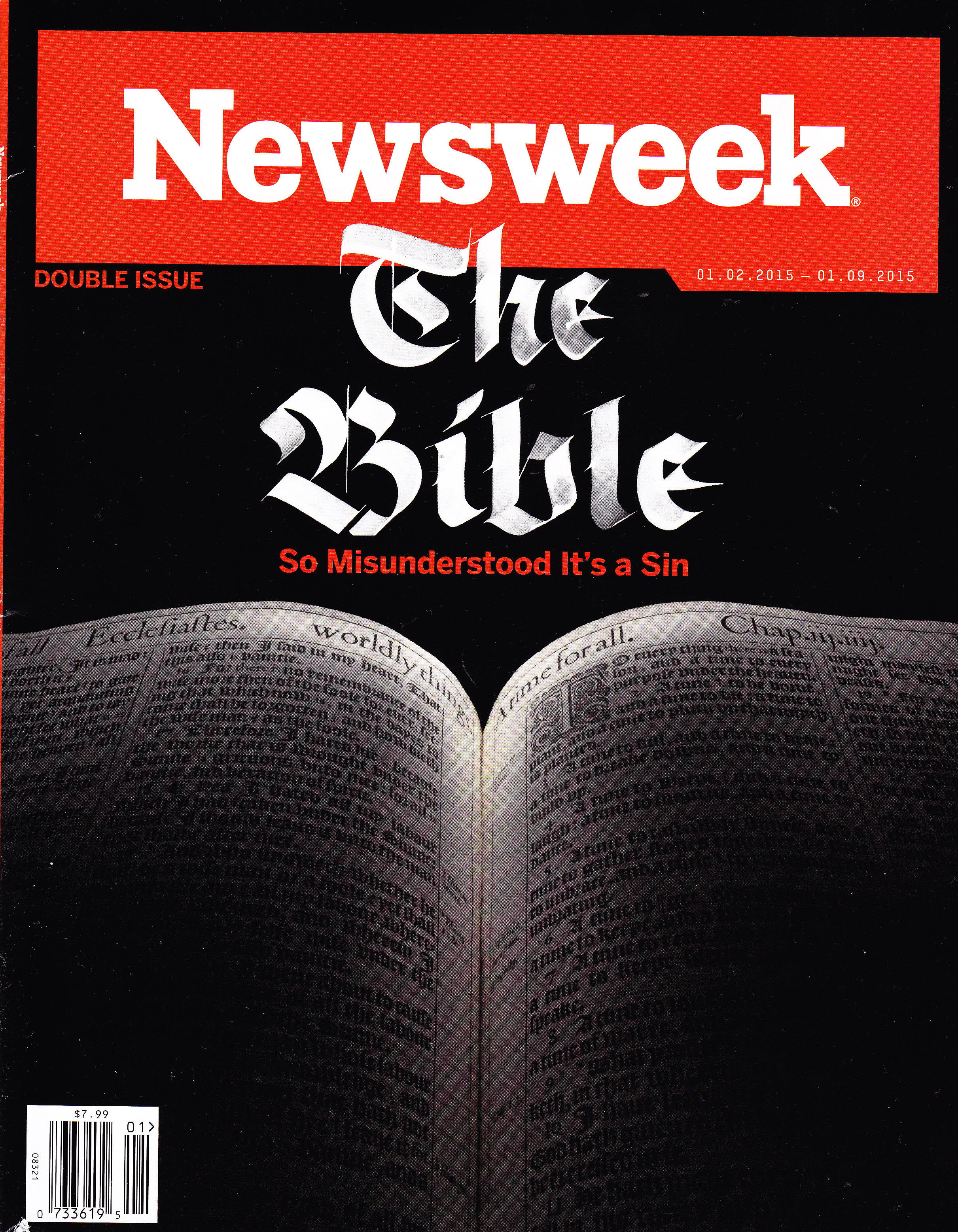
Bible_0001I’m confused. (Well, no surprises there.) I just read the cover story in last week’s Newsweek, “The Bible: So Misunderstood it’s a Sin,” by Kurt Eichenwald. No, the story didn’t confuse me. Nor did the fact that the Bible appeared on the cover of a major news weekly. What confused me is that the article says nothing new. Well, no doubt it will be new to many readers. The fact is, however, that anyone with a serious degree in biblical studies (and believe it or not, there are so many of them that jobs can’t be found for them all) knows all of this stuff already. What’s more, they have known it for decades. Scholars tend to write for other scholars. Some see the best-selling trade titles by publishers like Harper Collins making the New York Times bestseller list and imagine that their monograph on the obscure meaning of an obscure word in an obscure verse of a book that most people don’t even know is in the Bible will do the same. It won’t. Most academic monographs sell in the hundreds (not thousands or millions) and at the low end of the centuries mark at that. They are bought by libraries and read by peers only. In them we argue (for yes, I have written such books) important points that can only be understood by those with specialist training, and think we’ve changed the world. Newsweek gives the lie to that.

Long ago it became clear that scholars were failing to connect with the average person. That is the person who turns on the television and hears and sees the people Eichenwald shows to be impostors, and believes them. They are, after all, on television. The biblical scholars who know that these obvious fallacies are simple-minded are too busy trying to get tenure in a market—yes, a market—that finds education an annoying necessity. We won’t hire anyone without a college degree any more, and so we need universities. Universities, however, won’t hire without signs of erudition, including books that most people on the search committee can’t understand because they specialize in something different. Oh, and those studies must be published. Whether they are read or not is merely, well, academic.

Meanwhile the public doesn’t know that biblical scholars have long ceased debating the age of the world, the flood, the resurrection, or the end of the world. Scholars have bigger concerns on their minds: how am I going to teach more courses and still produce those learned disquisitions that a dozen of my closest colleagues will read and rebut? And serve on all those committees? And participate in the branding of the university, because, we all know that people will buy a trusted brand? Meanwhile on center stage are politicians who know nothing about the Bible beyond the fact that it brings down votes, big time, and they are telling us what they think it should say. Chances are most scholars of the Bible won’t read Newsweek to find the answers. I didn’t even know about it until a friend mentioned it on Facebook. Like most people I’m just too busy to notice. And a little confused.


Foundation and Empire

Foundation_gnomeIn a childhood full of science fiction I’m sure I read much material that was too sophisticated for me. After all, I grew up in a working-class family where politics amounted to lambasting the incumbent because things still weren’t getting any better. Even the conservative super-hero Ronald Reagan was mostly remembered for the government-issue cheese we received for free. We called it “Reagan Cheese.” In that setting much of Isaac Asimov’s Foundation trilogy must have been far beyond me. Still, I dutifully plowed through all three volumes as any budding science-fiction nerd was expected to. It was a required piece of the curriculum along with Frank Herbert’s Dune. Heinlein’s Stranger in a Strange Land would have to wait until adulthood. I remember rooting for the cosmic empire—the symbol of law and order—unaware that similar systems would eventually find me as a fifty-something, educated man unemployable for years at a time. Science fiction doesn’t bestow the ability to see the future.

Then I read a recent issue of Books and Culture, the bi-monthly publication review by Christian Century. An article by Philip Jenkins, reviewing a book I’ve not read, started off with a reference to Asimov’s trilogy. Suddenly I found myself transported hundreds of miles and two-score years from Midtown Manhattan to rural western Pennsylvania in barely adequate housing, holding Foundation and Empire close to my face. Jenkins, a noted historian of religion, was pointing out that Asimov often drew from Gibbon’s Decline and Fall of the Roman Empire and based his character of the Mule—those of you who’ve read the trilogy remember him, I’m sure—on Mohammed. The thought had never occurred to me that the science-oriented mind of Asimov would ever delve into religion for inspiration. Still, with the little I recall of the story, it does seem to add up.

In fact, much of science fiction is deeply dependent on religion. Science fiction dares to dream of the future, and no matter how technical that future becomes, the religious are still there. Last century bold claims were made that we’d be living in the twilight years of religion by now. Mid-term elections fueled by religious fervor prove the pundits wrong yet again. Organized religion, fledgling or fully adult, is a political animal. Religion and politics are both about how we interact with one another as a society. It may seem that the concepts behind religious thought are unsubstantiated myths that transcend the mechanistic world in which we live. Even so, they continue to drive revolutions large and small. And somewhere in the attic I still have my copy of the Foundation trilogy ready to be seen by grown-up eyes. Or better yet, through the credulous eyes of a child.


Beyond Redemption?

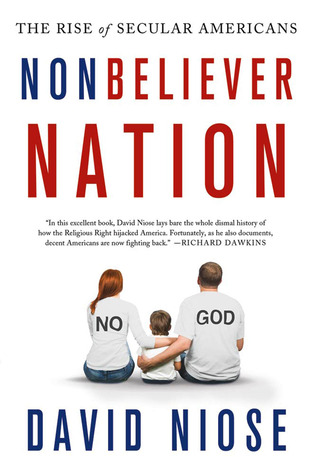
NonbelieverNation The Roman emperor Gaius, it is said, was insane. He perpetrated such antics as declaring war on the North Sea, making his horse a senator, and appearing in public dressed as various gods. Better known as Caligula, Gaius is often presented as evidence of the decadence that would eventually lead to the fall of the Roman Empire. Civilization, we’re told, has progressed enormously since then. We put people on the moon, and we carry in our pockets technology that appears, to mere mortals, as if it’s magic. We have elected an African-American to the White House and men have magnanimously granted females the right to vote. Oh how far we’ve come! And yet, in the midst of our self-congratulation, we have not one, but a plethora of high-ranking politicians in all three branches of the government who believe the world is only 6000 years old. They firmly believe Jesus will return on a white horse (presumably to be made a senator) any day now. And there will be a massive battle of good (us, or at least some of us) versus evil (those not evangelical in orientation) that will lead to the end of the world. And they are easily elected. Is that a knowing smile I see on Gaius’ face?

David Niose, president of the Secular Coalition for America, has written an important book entitled Nonbeliever Nation: The Rise of Secular Americans. Before you run for your shotguns, be assured that Niose is—like most secularists—not trying to do away with religion. Secularity is all about the founding principles of this country: freedom of conscience, the right to believe what we will. Or won’t. Up until the 1950’s the secular aspect of this country was taken more or less for granted. Tellingly, Niose opens his book by looking at the presidential elections of 1912 in which not one of the four candidates had a problem with evolution and even the most religious of them was very much a moderate. A century later and we have rampant Fundamentalists well funded and ready to push other nations toward initiating Armageddon. “Well, they started it!” And still, secular Americans are consistently portrayed as insidious snakes in the garden, trying to destroy everything.

It is difficult to read Nonbeliever Nation and not feel embarrassed as we see the promise of an advanced nation winding back its clock to the point that the educated are presented as ignorant at best—or more likely, evil. Where churches and corporations are increasingly difficult to tell apart, and where basic civil liberties for women and gays are still considered somewhat suspect, as if they hadn’t cleared the desk of the Big Man upstairs. Yes, he does have a beard and a son. And yet, despite the message of that putative son—known as a pacifist with radical ideas about social equality—the faithful bar the way for the oppressed while building the most massive arsenal in the world’s history. Rome, they say, was not built in a day. It didn’t even fall until 476, but already in the first century, large cracks had begun to appear. The difference is that America is far more religious. Does that give us any better chances, or worse? Read David Niose and decide. And, since global warming is real, the North Sea will eventually win in the end.


Nazis with Bibles

Some years back, when the Internet was young, I had just learned about email. Even today it seems incredible that only twenty years ago we still sent physical letters to communicate, and that we used paper maps and telephone books to get information. The main problem with email then was that not everyone was on it. I signed up for an Ancient Near East/Biblical studies discussion group. My barren inbox (being a scholar at a non-prestige school) was suddenly full every day. New discoveries, research ideas, online debates. It was all very exciting. Then someone voiced the fraught question: should we ignore the research of scholars who were later revealed to have been Nazis? The rancor raised forced the moderator of the discussion group eventually to make this a forbidden topic. Because I could not keep up with the inundation of emails and because of the vitriol (do people use the world vitriol anymore?) on the Internet universe, I eventually unsubscribed. Nothing raises hackles like Nazis. Especially in the field of biblical studies, which, naturally enough, revolves around issues of Jewish interest. I saw a blog post recently which brought this whole episode back to mind.

Photo from German Federal Archives, Wikimedia Commons

Photo from German Federal Archives, Wikimedia Commons

The issue of political conviction and professional neutrality is a vexed one. Critical study of the Bible began, to a large extent, in German universities. Biblical studies in higher education was mainly a Christian enterprise, and many of the questions were, well, only academic. If someone was a Nazi, did he (and they were pretty much all he’s) have a hidden agenda? Today the question of agenda is often raised with conservative biblical scholars. Can someone who believes in the Virgin Birth and in Moses parting the Red Sea really interact critically with the biblical text? Just throw that question out there and watch the fun. (It helps if it is tossed out on a blog that actually has readers, rather than my insignificant efforts here.) Who can make the claims for true objectivity? Can a Nazi correctly parse that verb? Do one’s political views gainsay one’s credibility?

We are all children of our environment. Even the most empirical of scientists will admit that true objectivity is not what it seems. We are not, after all, gods. And even the gods seem to have distinct tastes. Evil done in the name of politics seems slightly less heinous than evil done in the name of religion, but people are people and we have convictions sprouting out all over the place. Nobody intentionally believes falsehoods. Motivations are notoriously difficult to untangle. Can’t we all be professional about this? Emotions, however, do play favorites. If there’s any doubt, consider the question of using a person as an experimental subject with no regard for what they feel. We know it’s wrong. We won’t allow it. Of course, that’s in an ideal world. Right now there are more pressing matters at hand, such as how to hire more adjuncts without destroying our credibility. It’s not a matter of wanting to hurt others, it’s just good business. Everything else is merely academic.


It’s My Body

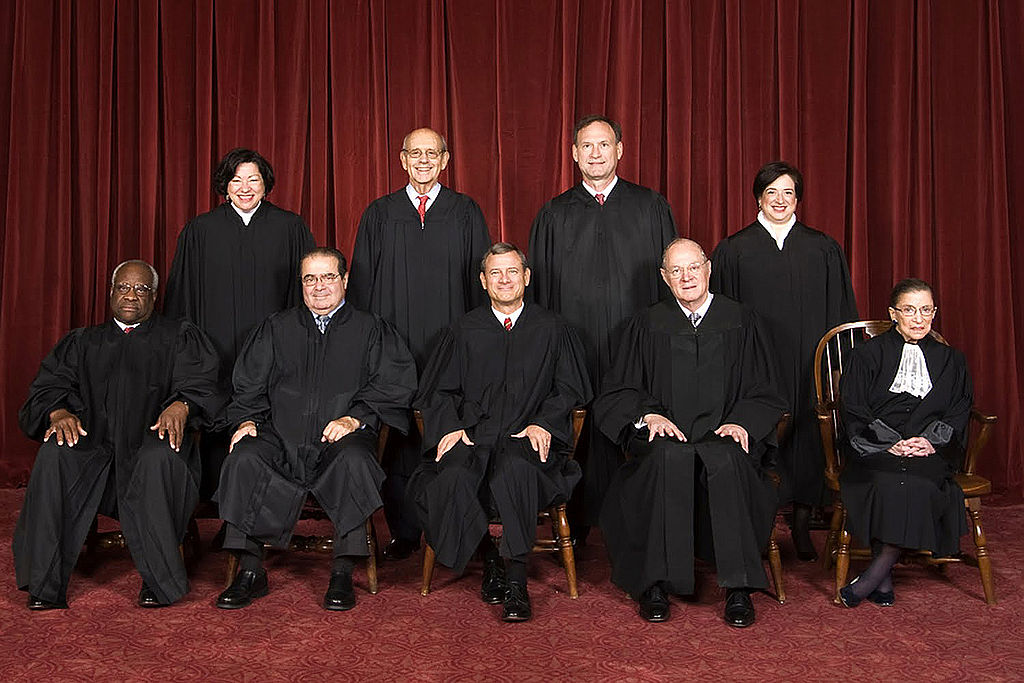
Those who believe mythology is dead have to look no further than the Supreme Court. Amid pictures of women protesting religious freedom to be told what to do with their bodies, the Court decided that employers may withhold rights to birth control under the rubric of religious belief. The ones who raise the issue, however, biologically never carried a baby to term. One gender making decisions for the other. We all know that the official stance of Roman Catholicism, closely followed by radical Evangelicalism, is that God intended sex only for procreation. Those women who find themselves on the receiving end of unwanted conception are helpless in the eyes of the law, depending on who their employer is. Blind justice indeed. Obamacare is intended to help level the playing field. Too few people have any real control over what medical treatment they can afford. I know more than one fixed-income person who suffers chronic pains due to lack of adequate treatment. I also know people who have used the system for plastic surgery before a trip to the beach. It seems that your employer now has the right to decide—but only if you’re a woman, and only if it involves what might be euphemistically called your “private parts”—what care you deserve.

Legislating morality, we religion majors debated even when I was back in college, cannot be effectively executed. If you presume there is a God, then enforced obedience is no obedience at all. Even conservative undergraduates could see that. Now our “Supreme” Court, with its male majority, has followed the lead of closely held corporations (doublespeak for certain patriarchal, Evangelically based companies) and declared that half the humans in America don’t deserve the same health care as the other half. The reason? Closely held companies don’t want women to have access to birth control. Our courts strike a blow against freedom and justice for private religious interests.

Within days of one Christian denomination declaring that gay marriage will be—should be— sanctioned, our own judiciary sides with the right of upper management in private corporations to discriminate based on gender. At least the owners of Hobby Lobby and Conestoga can sleep better at night knowing that they’ve prevented women from having their basic rights upheld. And metaphorically crawling into bed with closely held corporations are a male majority of supreme court justices who believe one man’s religion (yes, man’s) has the right to overturn the freedom of his employees. With the blessings of a male God. A situation like this prevailed, it seems to me, until 1863, also with the backing of scripture. Only in those days the argument was, I believe, that God is clearly Caucasian.

Looks balanced...

Looks balanced…


Devil’s Advocate

At fives and sixes, the Pope who gave us the devil's advocate.

At fives and sixes, the Pope who gave us the devil’s advocate.

When two people in completely isolated incidents tell me the origins of the term “Devil’s advocate” within a week, I figure it’s time to do a post about it. We’re all familiar with the term, and we know that it means taking the point of view of the “bad guy,” just for argument’s sake. In fact, the Devil’s advocate may not believe his (usually it is a he) own arguments, presents them to make sure the results are correct. The Devil’s advocate was an official office in Roman Catholicism beginning in the late 16th century. The actual title was Promoter of the Faith and the reason such an office was necessary was that so many people had been put forth as potential saints that the church experienced an embarrassment of riches. Canonization, the process of becoming a saint, has a number of hurdles to clear for the would-be paragon. Claims, often extraordinary, were made for miracles associated with the favored ones and the Devil’s advocate was intended to research and present contrary evidence. This made it more difficult to achieve sainthood, but in theory, at least, kept the number of candidates down to only the most deserving. There was no literal devil involved.

Those of us who grew up Protestant often had recourse to only faulty knowledge of Catholicism. We were sometimes taught that it was based on magic, what with the priest speaking in Latin and making mysterious motions with his hands. That meant, for some, that Catholics seemed particularly gullible and would believe things the rest of us wouldn’t. The Catholic Church, however, has often providing its own policing. Not as eager as Pentecostals to accept mundane miracles, when a pareidolia-inspired leakage of water or an anomalous burning of toast occurs, the Catholic Church is quick to debunk claims of miracles just because an underpass stain or a bit of bread looks like a famous religious figure. If you squint enough. The Devil’s advocate was a similar safeguard.

On the opposite side of the equation, I’ve often heard sermons among some evangelical groups claiming that we’re all saints. (Their membership, that is.) Who shouldn’t claim the name when they walk the walk? Many of these saints fail to inspire in the way of those of yore. Some of the beloved cultural heroes that keep coming back in various forms have saintly origins: Santa Claus and Saint Valentine are two that come to mind at this time of year. Some Protestants who may not have been perfect, however, should somehow qualify. Martin Luther King, Jr., another figure of the winter season, by his contributions to justice issues, might be one who would qualify. I’m sure there are many others. The fact is that making a principled stand against the wickedness that sometimes passes for the status quo is difficult and leaves one open to criticism and resentment. A Devil’s advocate might be just what society needs when looking to make saints out of mere mortals.


Tweeting Treason

Partisan politics can be very depressing. Religion seldom helps. Good ol’ boys hepped up on Jesus and lynchings creep me out a bit, especially when they’ve got political ambitions. Florida’s continual struggle with reality reawakened this fear when I read, in a Huffington Post story about Joshua Black’s recent tweet. A Republican candidate for the state house, Black is a former street evangelist who allegedly tweeted that a hanging is the way to solve, in his not-so-humble opinion, ills in the White House. To be fair, Black suggests that a trial for war crimes should precede the stout rope, but I’m afraid I’ve lost faith in due process. Anyone who’s tangled with the evangelical version of justice knows that there’s just no way to win. And yet, despite the many compromises on the political front, the religious right takes any excuse to make ever more outlandish claims.

Looking back over the history of Christianity, I wonder where hatred entered the mix. Jesus, according to the Gospels, had a temper but he never suggested the death penalty for his political enemies. Even standing before Pilate and Herod, he didn’t trump their human political ambitions with the divine trump card to win earthly power, hands down. As I recall, the early evangelists spent quite a bit of time huddled in dark corners for fear of the rule of government. They didn’t suggest hanging Tiberius, although one has to wonder what even the Romans made of Caligula. There were, no doubt, multiple Christianities as play in those early centuries, but the biblical picture, the one that evangelicals claim as their own, shows the true believers frightened and utterly subservient to the dictates of empire.

That haircut will never pass Evangelical muster

That haircut will never pass Evangelical muster

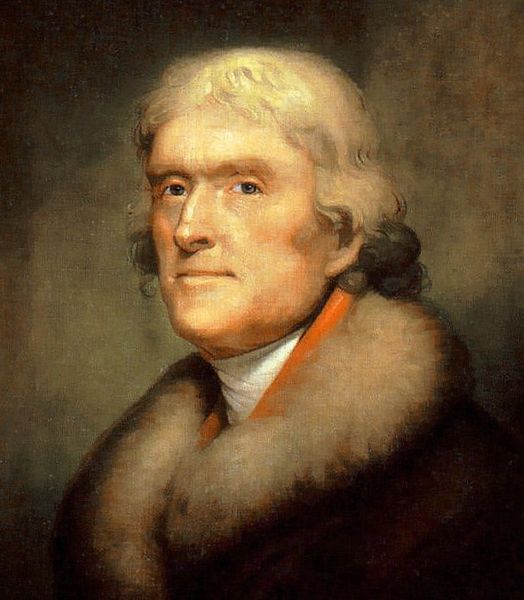
Constantine may be the most important figure in western history. The religions we recognize as Christianity today may have largely been crafted by Paul of Tarsus, but they would never have become the foundation of empire without Constantine’s conversion. The Christianization of the Roman Empire grew into the immense power of the Vatican in the Middle Ages, and fueled the political ambitions of colonists to this land that they claimed theirs by manifest destiny. And our presidents, no matter their personal predilections, have become more and more Christian ever since. Thomas Jefferson could not be elected in today’s political climate. Even Jefferson repented of having held slaves. There was a time when accusing a law-abiding president of war crimes would itself have been considered treason. A lot of water has passed under the Watergate since then, and partisan politics now holds hands with an uncompromising Christianity that suggests the death penalty is more to be desired than health care for all.


The Devil Made

Some things you just don’t mess with. Just in case. For a variety of reasons, not least of which is lack of biblical support, many Christians no longer believe in Satan, or “the Devil.” As I written before, the Hebrew Bible has no such diabolical character and he seems to have been devised from an old Zoroastrian dualistic belief system when he finally does appear. In other words, Satan is not among the core beliefs of the Judeo-Christian tradition. Nevertheless, according to an Associated Press story the Satanic Temple is petitioning to have a statue of Satan placed on the capitol grounds in Oklahoma City. The action was prompted by the placing of a Ten Commandments monument in this public space, and, invoking the freedom of religion clause, the Satanic Temple has decided to play tit for tat. Either religion is free, or it’s not.

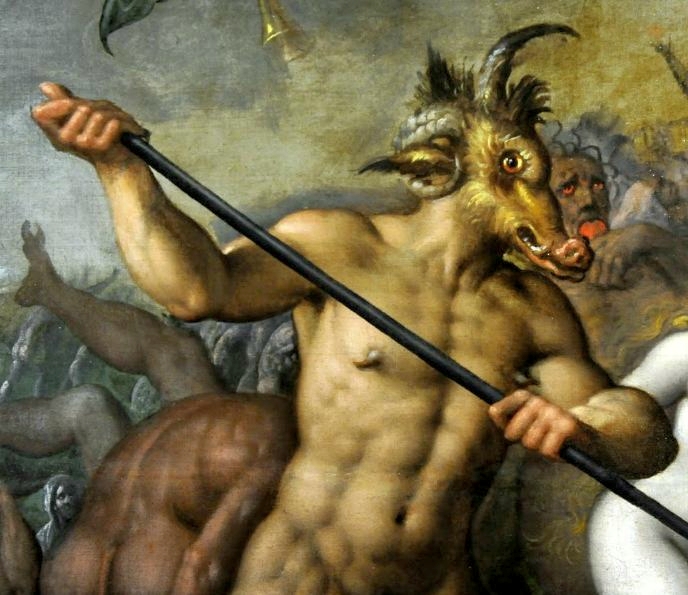
Backer_Judgment_(detail)Although the Satanic Temple claims to be sincere in its beliefs, the group’s website indicates that it understands religious belief in a metaphorical way, and that it wishes to parse superstition from religion. This envisions revising Satan as an “icon for the selfless revolt against tyranny,” according to the AP story. The commissioned monument includes a Baphomet-style Satan (goat head and beard, wings and pentagram—you get the picture), that features—sure to raise the ire of Oklahomo sapiens—children gathered around the dark lord. It will double as a seat where individuals may sit on Satan’s lap, although I’m not sure what they might be asking for. Various representatives of the Sooner State say they’re all for religious freedom, but Satan just has no place in the conservative breadbasket of the nation.

Provocation occurs on both sides in this trial of wills. Justice can be realized without Moses’ top ten on every courthouse lawn. The Code of Hammurabi demonstrates that. People are capable of enacting justice without God, or the Devil, telling them to do it. The triumphalism of religion is the heart of the issue. In a world daily aware of those outside the neighborhood, finding that other religions exist and thrive is an affront to the “one true faith,” whatever it may be. It may be that Jews, Christians, and Muslims have no problems with the ten commandments. Other religions might. Leading with having “no other gods before me” starts the conversation off on an awkward tone. The solution may be as simple as amending the commandments to add just one more. If we can see our way to doing that I have one that I’d like to propose: “thou shalt not let thy religion cause childish behavior.”


Religious Education

The elephant in the room is exposed in a New York Times op-ed piece last week. “Indoctrinating Religious Warriors,” by Charles M. Blow, puts a finger squarely on the pulse of the ailing science stance of American religious believers. Noting that the Republican party has made no secret of its attempt to capture conservative votes by touting the religious intolerance of the theological right, Blow points out that more Republicans now believe that humans were created separately from animals than accept the scientific fact of evolution. And not just human origins suffer—our future will as well. The same mentality attends denial of global warming and advocating against fair treatment of committed, loving couples (depending solely on the visible sexual equipment). It is all of a piece. Blow points out that white, evangelical Protestants make up only 18 percent of the US population, but 43 percent of the Republicans who are classified as staunchly conservative. This imbalance leads to one of the world’s wealthiest nations being sidetracked from serious global issues while we continue to debate whether the Bible in inerrant or not.

I would add a further note of concern to what Blow says: higher education refuses to take religion seriously. As a life-long sideliner who has never been permitted fully into the halls of academe, I have watched as business schools have grown from the rubble of religion departments that have at best stagnated—when they have not been actively dismantled. In the worst case scenarios, universities have closed such departments down. With the exception of evangelical institutions. Very large departments of confessionally indoctrinated religionists thrive across the country. I am not the only religion scholar to have been kicked out of the academy for an intellectually honest approach. The wider society, with eyes wide shut, has decided that religion is a passing fancy while statistics indicate the exact opposite. We as a society will continue to be manipulated by religions as long as we continue to pretend they don’t pose a real concern.

Religion serves a purpose.

Religion serves a purpose.

Nor does castigating all religion, as Richard Dawkins, Sam Harris, and the late Christopher Hitchens do/did, solve any problems. Science itself appears to indicate that religion is part of the human condition, as surely a product of evolution as our opposable thumbs. Basic psychology would dictate that such direct challenges to religion will only result in retaliation. In fact, this is something that I recall learning from kindergarten. Until our society learns to go back to school and study the four R’s—yes, religion has to be there among the basics—we will continue to suffer from those who have vested interest in using religion for their own ends while those who could educate us on the subject continue to suffer the cut jobs of those who might be part of the solution. Charles Blow wonders if he is being too cynical. I suggest that he’s not nearly cynical enough.


Fateful Dreams

Popular historians love a good coincidence. I suppose it is a way of reading order into a chaotic world where many events, in the final analysis, just don’t make sense. Perhaps academic historians shy away from coincidental events—after all, they contain a whiff of the improbable about them, and academics can admit no greater force driving our efforts toward a civil existence. The rest of us, however, like to note them. This week contains the anniversaries of a couple of significant landmarks of United States history, and they may somehow be related. November 19 marked the 150th anniversary of the Gettysburg Address while November 22 is the 50th anniversary of John F. Kennedy’s assassination. The events, a century and three days apart, stand for transitions in American society, and the implications of both still linger on as unfairness and fear continue to haunt our hopes for a future where all might indeed be considered created equal—and not just all men, but all people—and where optimism might edge out cynicism in the political world.

486px-Abraham_Lincoln_November_1863Of course, both Lincoln and Kennedy died at the hands of assassins. America has never been terribly comfortable with dreamers. The century that separated the Gettysburg Address from Kennedy’s tragic death was not enough time to swing the ship of state around to bring about a world of dreams. Unfortunately, war also defined both presidencies. The dream of a world at peace has been more difficult to attain than a human desire for such a world would seem to merit. If we all (or most) want a world at peace, why can’t we bring it about? Unfortunately, it seems that a basic sense of justice is lacking.

500px-John_F._Kennedy,_White_House_color_photo_portraitPerhaps it is a coincidence that many of the world’s religions stress the concept of a just society. By far the majority of the world population associates itself with one form of religious belief or another. Not all religions get along, however. Many of the conflicts that have erupted into wars have had a basis in differing religions. Power is easily seized from dreamers, religious or not. Watching modern elections is a terribly sobering event. We don’t advertise what we might accomplish, but rather what is so wrong with the other guy so that we win by a paltry default. Victory for whom? And why consider it a victory? A friend once suggested that Christians should start out as bishops and eventually be promoted to the level of laity. I thought it was a brilliant idea that could be applied to politics as well. Think of it: elected officials as servants of the people. Of course, by coincidence, I am a hopeless dreamer.


Heat’s Up

800px-GISS_temperature_2000-09_lrg

I must admit being perplexed. Days ago, although many of us have long known it to be true, climate scientists announced unequivocal evidence that human activity is responsible for global warming. I have perhaps been naive in my supposition that the “full speed ahead and damn the torpedoes” approach of some fundamentalist groups that welcome anything that speeds along the apocalypse, has played a major role. Maybe it was because so many politicians openly sided with such groups that that I supposed the two concepts to be connected. I suspect, however, that it may be something much more insidious. How can any intelligent person refuse to admit the facts when the consequences are nothing shy of catastrophic? How can elected officials turn a blind eye to the desolation of their own planet? It must be more than simple ignorance. But what?

Those in my generation—however we are currently classed—have been declared to be those attempting to make up for the excesses of the “me generation.” I’m not sure who the “me generation” is, but I know when I see individuals who allow their personal gain to endanger everything that has come along since the Sumerians invented the wheel, I feel a little queasy. What could the Zeitgeist have been that infected so many minds with such a godlike sense of entitlement? We call the younger demographic the “entitlement generation,” but when I taught them in college, they were much more environmentally conscious than many elected officials. They at least could see beyond their own wallets. They take pride in recycling.

It would seem to me that even if (and it doesn’t) the Bible suggested that the world itself would end to bring about a better one, we assume too much divine prerogative when we proactively destroy the only ground upon which we stand. Has any religion ever been so truly shortsighted? And that’s asking quite a lot, if you think about it. Or is religious faith just an excuse to gather wealth at the expense of others? Does God want you to be rich? If so, it would seem, God would also want you to act responsibly. According to a report in The Guardian, there is no longer any question that the climate blame lies with us. Perhaps now that the smoking gun is on the table we will do the right thing. But then again, I admit to being perplexed. Maybe it’s just my generation. Or maybe I’m just hopelessly naive. I’m entitled.


No Singing Matter

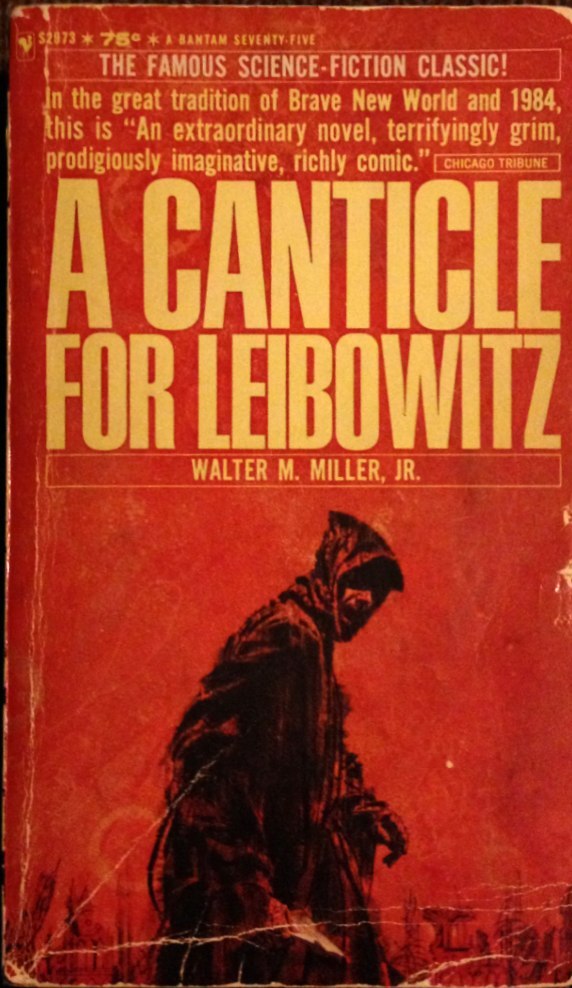
Canticle for LeibowitzA Canticle for Leibowitz, by Walter M. Miller, Jr., is one of those books that I read years ago, and when I picked it up again found that I remembered very little of it. I suppose this is one of the hazards of extensive reading—some important things get lost in the noise. I recall having read A Canticle for Leibowitz when I was a grad student at Boston University, and I remembered the detail of a grocery list being taken for holy writ in a post-apocalyptic world where, in a strange reincarnation, monks have once again become the guardians of knowledge. Little else remained. Perhaps part of the reason is that the book requires more experience with the church than I had in those days. One might suppose a seminarian would have about as much ecclesiastical experience as one might need. Not so. It did teach me, however, to read provocative books.

Like most dystopias, there is a deep bleakness to A Canticle for Leibowitz. In the light of recent developments in the papacy, the book is remarkably prescient. In the final pages of the final section, a radiation-sick woman and her young child, in constant pain, seek the government sponsored euthanasia camp. Abbot Zerchi, however, condemns this as a sin against God. Doctrine takes the place of compassion, and only moments later the final atomic strikes wipe the abbot and his monks off the earth forever. Yet there are monks on a spaceship, ensuring that any future planets will have the same uncompromising doctrine planted there as well. For a book published in 1959, it sounded incredibly contemporary. Miller’s anger still echoes throughout. The church builds societies that destroy themselves. A cycle of futility.

I wonder what the result would be if more people read such stories. It is, of course, easy enough to shut out any implications we don’t like and claim it is all a silly piece of fiction. The problem is that Miller is not too far off base. Our civilization does own much to its religious institutions. Those institutions sometimes have considerable trouble relinquishing control when society finds its grounding in science and technology. It is difficult to believe divine proclamations from above in the age of the space telescope. Yet, even so, we still elect to power politicians who look back millennia for the instructions on how to treat those of other genders or races. To do so, as Miller recognized, is to begin building bombs all over again. And even old Ecclesiastes declared that there is, in a Leibowitzian twist, nothing new under the sun.


Disorganized Religion

In an Advice column in last week’s Chronicle of Higher Education, subtly pseudonymed Madalyn Dawkins contributed a piece entitled “Dodging the God Squad.” Dawkins, the wife of a senior college administrator, is an atheist and she shares anecdotally the woes of non-believing administrators everywhere. Even in state universities administrators must not reveal their lack of belief because powerful donors may withdraw their support or other administrators may bring them down. This leads Dawkins to posit a “God Squad” that silently polices university administrators, ensuring a kind of conventional belief structure. Of course, with any covert operation speculation must be involved. Dawkins notes that instructors may declare themselves non-believers with few consequences, but for administrators the game is much more political.

Doubtlessly covert religious groups exist; we discover them all the time. In this case, however, I wonder if Dawkins has wandered into that territory some of have written about for years but to which most academics are blind: the world is actually a very religious place. I sympathize with Dawkins. Those who are educated cannot unlearn what they’ve discovered on their academic journeys. What they often do, however, is suppose that others have kept apace. I see this all the time in the public posturing of the other Dawkins, Sir Richard, that is. Railing against belief as if it is a disease, he doesn’t seem to understand why the unwashed masses don’t get some kind of flu shot of the mind and destroy this pesky infection. What academics sometimes—often—forget is that religion serves many valuable functions in people’s lives. In a world where the privileges of an academic lifestyle are rare and becoming rarer, the disparity is only going to increase. There is no “God Squad.” There is society and there is academia.

I’ve been around the quad a time or two. I know that academic administrators often see no reason to study religion. Many of them are non-religious, as I’m sure many people know. Supposing that all others share their views, however, they cancel funds for the study of religion (one of the departments hardest hit by the “it doesn’t lead to a job squad”), as if silencing the rational voices in this discussion will make the phenomenon go away. Higher education exists for the sake of society. Those who are educated can help to educate others and slowly, slowly progress will ensue. Some of us have tried patiently to do just that over our years in the classroom. I never belittled a student’s religious belief. I did try to raise questions, and I tried to teach students to raise their own questions. My positions, however, were repeatedly cut out from under me by eager administrators. There is no God Squad. For the sake of us all, however, it would be best if administrators acted like this mythology is really true.

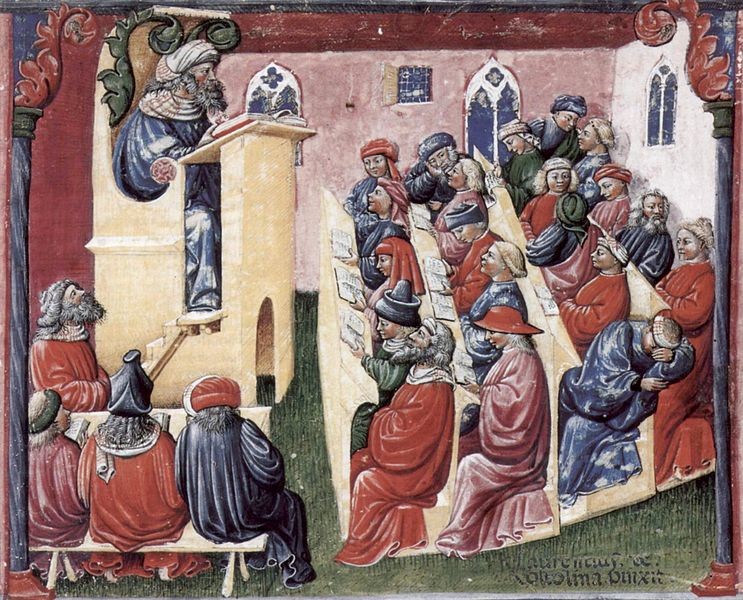
An early view of higher education.  Literally.

An early view of higher education. Literally.


Slippery Logic

Last week NBC reported on a baby in Tennessee. Babies in Tennessee, one might suppose, are pretty common. This one, however, was given a name stricken down by the courts. Child Support Magistrate Lu Ann Ballew declared that the baby could not be named “Messiah.” Apart from the statement that this is a title and not a name (don’t tell Judge Reinhold, please), the judge (not Reinhold) demonstrated her biblical illiteracy by stating that the title messiah has, “only been earned by one person and that one person is Jesus Christ.” Oh well, this is the Bible Belt, after all. Nevertheless, I would expect someone so deep in the Bible Belt to know the actual Bible a little better.

“Messiah” derives from a Hebrew word meaning “anointed one.” Its meaning is somewhat more literally along the lines of “smeared with oil,” for that is what anointing is. The title is used for several people in the Bible, not just one. Aaron, for one, was anointed. David was anointed as king, as were several other characters, including ill-fated Saul. And let’s not forget where Isaiah says clearly of Cyrus II, king of Persia, that he is “his anointed,” i.e., Yahweh’s anointed, in Hebrew, “his messiah.” Not Jewish, not Christian, Cyrus was a good old Zoroastrian. And he was just one in a long line of messiahs.

Where's your Messiah now? Oh, there he is.  (Photo by Persian Light.)

Where’s your Messiah now? Oh, there he is. (Photo by Persian Light.)

I’m not doubting Judge Ballew’s reasoning that it might be in the best interest of the child not to have such a controversial name. I do doubt, however, that it would be in the best interest of that child that he be raised being taught that evolution is a myth and special creation six thousand years ago is science. I do doubt that it is in his best interest to be taught that homosexuality is a sin and that it is something that only people have ever done because of their “fallen nature.” I do doubt that it is in the child’s best interest to be raised believing that if a woman is pregnant that a male-dominated government has the right to decide whether she carries the baby to term, no matter what. And once that baby is born, I do not believe it is the government’s right to decide on what his or her name shall be. And I expect that all the people named “Jesus” out there would agree. And Judge Reinhold.