Political Insantorum

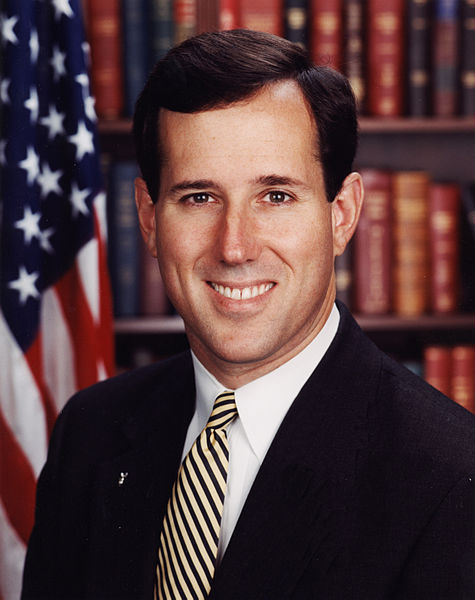
Some weeks it is Thursday before I get a look at Tuesday’s newspaper. It has been one of those weeks. On the op-ed page of the New Jersey Star-Ledger is a piece by Harvard professor Noah Feldman on the somewhat surprising rise of Rick Santorum in the melee otherwise known as the GOP nomination process. The intolerant Catholic (Santorum, not Feldman) has surprised many with his appeal to the Evangelical Protestant camp, the traditional enemies of anything popish. As Feldman points out, if you add up Santorum, Bachmann and Perry, you get the equivalent of a 2008 Iowa Huckabee with Romney staying about where he was back then. This calculus of political doublespeak points to a very basic, fundamental lie at the heart of it all: none of the candidates is a theologian, but they act one on TV. Santorum’s Catholicism is blurring with Huckabee’s Baptist sensibilities in a way that should make even the most profane Reformer shudder. Baptists supporting a Catholic? This marriage can’t end happily.

I am no politician. I’m not even a political science student. As someone who has kept a weather eye on religion for over forty years, however, it is clear that “Christianity” in America is a house built on shifting sands. For a nation founded on the notion of religious freedom, an awfully large number of citizens sure want to limit the options. Freedom of religion is the choice whether to sit on the right hand side of the aisle, or the left (with the former being strongly urged). Freedom of religion can be frightening because no one has all the answers. And politicians, who regularly distance themselves from the rest of us, send their children to private schools to underscore the fact. Is it not so, Mr. Santorum?

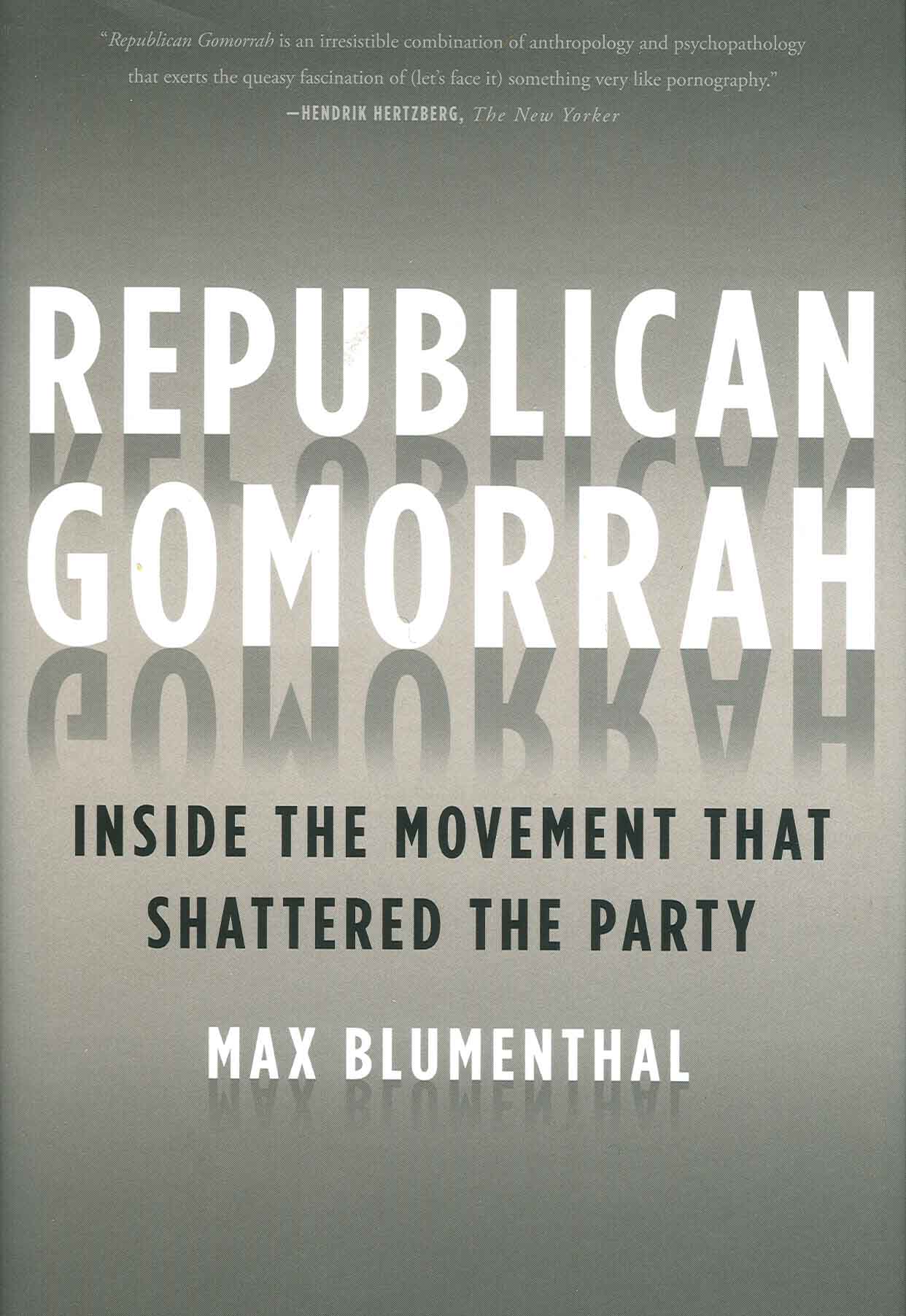
Those who want to take their dogma to the White House should make sure it’s at least paper-trained first. Feldman notes that Roe v Wade gave the initial push of Evangelical toward Catholic. I am reminded of the excellent book Republican Gomorrah by Max Blumenthal—those who are interested in the real roots of the overly emotional secret lives of blastoplasts should read this book. Suffice it to say that some very interested parties really didn’t care much until a particular quasi-celebrity decided to make a cause célèbre of the issue. Now the way to the seat of power is paved with unwanted pregnancies. It is high time politicians got their hands out of their pockets and off their Bibles and started using them to help the average person again. In fact, it might not hurt if they had to be an average person before running to represent them. But then, they wouldn’t be able to afford private school for their kids, would they? Mixing with hoi polloi takes more fortitude than a congress full of representatives can muster after all their pampered rearings.

Indiana Wants Me

The conservative evangelical Christian camp sometimes makes blogging on religion just too easy. The paper this morning reveals yet another evangelical, abstinence-only soap-boxer being caught with his boxers down. Indiana Representative Mark Souder is stepping down because of an extra-marital affair. To fill in the gaps on other such evangelical infidelities, I recommend Max Blumenthal’s Republican Gomorrah.

No, I do not rejoice in such revelations. The suffering of families brought on by such blatant hypocrisy cuts me deeply. The lesson we should all be learning from this is that self-righteousness is a sham. For all their faults, the more liberal factions of society are ready to admit that people are people and not cookie-cutter angels. They are inclined to admit that temptations exist, yet statistics demonstrate their marriages tend to be more secure and less plagued with infidelity. I tend to think it is because evangelical teaching has lost sight of what is truly important: people have always been, and still are, people. The belief that God has made one class of people better than others, and that saying sex doesn’t exist gives you the right to live in a pre-Edenic fantasy world, the Neo-Con is in very deep denial. No wonder many evangelicals distrust psychology!

I often ponder why this disconnect should exist at all. It seems that evangelicalism has been singularly poor at providing the tools to cope with reality. If temptation doesn’t exist for the blessed, then why bother developing strategies to deal with it? When the newspapers come out, it is easier to cast the first stone at the liberal media for airing dirty laundry than it is to examine your own hamper. Yet even the Bible itself has one important character criticizing the religious establishment as whitewashed tombs. No, I do not respond with glee to the sad outing of Mark Souder. I simply wish evangelicalism would truly advocate the honesty upon which it claims to be based.


Constantine’s Dilemma

A time-honored adage educates each generation not to discuss religion or politics in polite company. The reasons for this are transparent; both religion and politics tend to be fiercely held belief systems and clashes between differing parties seldom end without scars and regrets. I recently read Max Blumenthal’s Republican Gomorrah: Inside the Movement that Shattered the Party. Initially my impression is that this book ought to be required reading for members of any political party so that they might find documented evidence of whence the real power struggles lie. It is known by anyone with a modicum of political savvy that the past several presidential elections have been decided on the success of courting voters of the evangelical variety of Christianity. What Blumenthal reveals and other sources confirm is just how intermixed religion and politics have become.

One of the most important books of last year

This is a very thorny issue. America was founded as a nation advocating religious freedom and also as a nation that would open its leadership to any qualified (more-or-less) candidate. Clergy have historically served in politics, but presidential candidates who are actively ordained and practicing their office have been rare. Not so rare in recent years, however, are those who forsake the adage and boldly proclaim their faith as a key to garnering votes. This has led to a public interest and scrutiny of what used to be the extremely private life of an individual. Religious beliefs, quietly held, motivate many people – presidents and politicians included. The difficulty Blumenthal highlights erupts when the genuinely religion-driven charge for political office with the hopes of implementing policy based on their personal faith. Americans have taken a new interest in discovering what the Church of Jesus Christ of Latter Day Saints is all about with the recent candidacy of Mitt Romney. We covered that religious landscape in Religion 101. Reading Blumenthal, however, I learned something new about Sarah Palin’s religious convictions.

Deemed “the Third Wave” movement (see also Bruce Wilson’s article in the Huffington Post), Palin’s religion is a variety of Christianity I’d never heard of even with a lifetime in the field of religious studies. What seems clear from the sketchy information available is that the putative wave began in the 1980s (when I was too busy studying religion to notice) with the work of Rev. C. Peter Wagner. Its goal, according to its theologians, is the takeover of first the church and then the world. Not just metaphorically. Since Palin told reporters, according to today’s paper, that she is seriously considering a run for the presidency in 2012, I wonder if it is time for all of us to go back to school and learn a little more about this variety of religious belief. I’m old enough to remember a time when politics was politics and religion was religion, and ne’er the twain did meet. That day is gone, and Americans will find it necessary to learn about religions again to discover the sometimes hidden motives behind politicians’ decisions. Max Blumenthal’s book is an excellent primer, but frankly, I long for the days I still recall when politics and religion had separate, securely locked bedrooms.


Sacraments and Sea Cucumbers

Directly across the fold from each other on pages 4–5 of today’s New Jersey Star-Ledger are two articles that my brain comprehends as related by more than mere proximity. On page 4 the headline reads, “In sunless depths, marine life thrives.” In an Associated Press article bi-lined New Orleans (where many of my colleagues are currently enjoying the Society of Biblical Literature annual meeting), scientists reported that over 17,000 deep-seas species have been found below the point where sunlight ends. What was thought to be a barren zone just decades ago, it turns out, is teeming with organisms adapted to living without light.

One page 5 the headline reads “Bishop admits barring Kennedy from sacrament.” In a ploy that has become distressingly frequent of late, the Roman Catholic bishop claims that Representative Kennedy’s political views on abortion effectively excommunicate him. I find it unconscionable that clergy feel that they have the right to direct public policy when they are not publicly elected officials. Any clergy attempting to coerce officials democratically elected are guilty of abusing their putatively divinely appointed trust. The millions of Catholic laity who privately support freedom of choice they may rhetorically chastise from the pulpit or by some papal bull but they do not deny them the sacrament. Let’s be honest here, this is about politics, not theology.

I have been reading Max Blumenthal’s Republican Gomorrah, perhaps the scariest book I’ve ever read. In it Blumenthal demonstrates how the Catholic Church got onto the pro-life bandwagon in the intricate political maneuverings of the “Religious Right.” They quickly learned techniques up to and including lying to get their agenda across. It should distress all members of a democracy that their leaders are being led by dishonest clerics of all stripes. Those who mix their religious views with politics seek to end the religious freedom that allowed them to be born in the first place. They practice late-term religious freedom abortion.

What does this have to do with the wondrous world of the great deeps? They represent, to my mind, two forms of life that thrive far from the enlightening rays of the sun.