Unverified

Dear Google Scholar and ResearchGate,

Thank you for listing me as a scholar on your website.  I am pleased that my academic publications interest you.  I am writing to you today, however, about your verification process.  Neither of your sites will verify me since I do not have an email with a .edu domain.  Now, I fully realize that even adjunct instructors are often given a university or college email address.  This is so students and administrators can reach them.  Speaking as a former adjunct instructor at both Rutgers University and Montclair State University, I can verify that such an email address does not verify your scholarship.  It is a means of communication only.  It does not verify anyone (although it may come in handy if you need to contact someone internally).

For large companies with a great deal of resources, I am surprised at your narrow view of both “scholar” and “verification.”  I earned a doctorate at Edinburgh University before email was widely used.  I taught, full-time, for over a decade at a seminary that did not request any .edu emails until well into my years there.  I taught for a full academic year at the University of Wisconsin Oshkosh.  Had you requested “verification” earlier (pardon me, you may not have existed then), I would have been able to contact you from nashotah.edu, uwosh.edu, rutgers.edu, or montclair.edu.  Your choice.  However, since you only decided to begin your online resources after I had moved into publishing, where the emails end in a .com domain, you were simply too late.  The thing about technology is that it has to keep up.

I hardly blame you.  My doctoral university was opened in 1583, long before today’s giants were twinkles in the eyes of the likes of Bill Gates or Steve Jobs.  Scholars used to write these artifacts, called “books” on paper.  They sent them through a service called “the mail” to publishers.  I know all of that has changed.  The fact is, however, that I have published six scholarly books, and several articles.  I am still writing books.  I am simply wondering if you can answer the question of when I became unverifiable because of my email address?  I have a website that details my educational and professional history.  Academia.edu has not asked me to verify myself and my profile there gets a reasonable number of hits.  My question is when are you going to catch up with the times?  Many, many scholars do not work at .edu-domain institutions.  Of course, nobody knows who we are.  Thank you for your kind attention.

Unverified  


Bibliographer for Hire

Why is bibliographer not a job?  Why can’t a person make a living categorizing knowledge?  I ask this because I see YouTube videos of people saying your job should be what you enjoy doing.  What if you enjoy creating bibliographies?  You see, my research methods are a bit unconventional.  They kind of have to be since I have no institutional support for my writing, and yet I want it to be intelligent and informed.  That means I have to locate my own sources and inevitably, when I’m compiling a bibliography, I’m happy.  Even if it means ferreting out obscure sources and trying to learn where something was originally published, I’m still at the top of my game.  (Yes, this is one of those things that the longer you’ve been doing it, the better you get at it.  These days it means learning to engage the internet for research.  Since it’s more of a money-making venture geared towards entertainment, that can be tricky.)

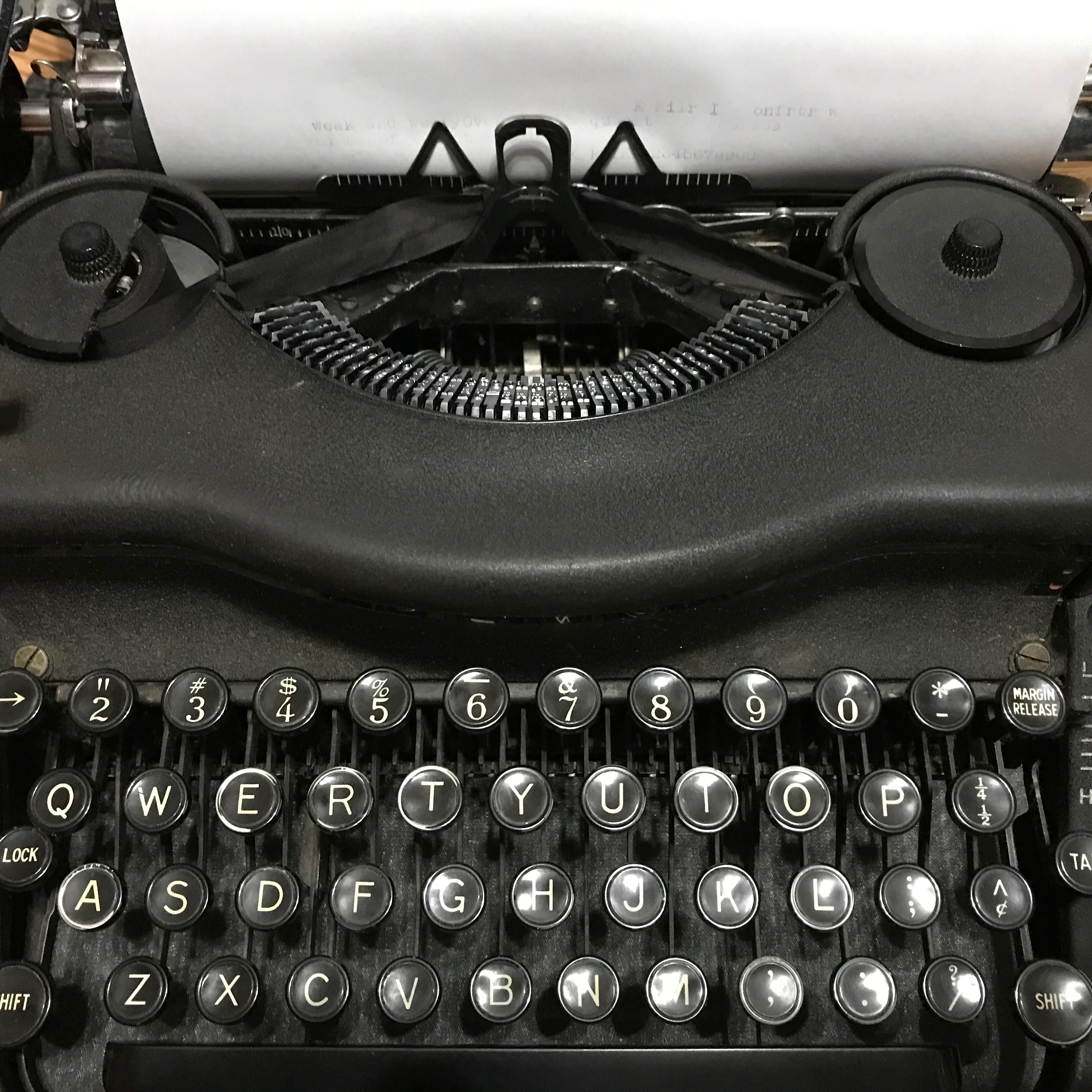
I remember those days of typing out bibliographies by typewriter, smearing White-Out all over, or trying to use that ribbon stuff that was supposed to be able to type over mistakes.  My friends and fellow students hated bibliographies.  Secretly, and perhaps perversely, I was enjoying myself.  You see, a bibliography is gathered knowledge.  When I finish reading a nonfiction book, particularly one where I want to do further reading myself, I go through the bibliography.  I want to know the origins of ideas.  There’s an irony here since my last few books have featured quite a few of my own ideas supported by what I’d read.  And I know that unless I provide a precise footnote, anyone who might read my work might wonder “how I know” what I’m writing.  It’s increasingly becoming one of those “pay attention to your elders” sort of thing, I guess.

But the bibliographies I could compile!  The really tricky part when writing The Wicker Man was the word limit.  I know authors who struggle bringing the bibliography down to required length, and I feel for them.  I really do.  You see, a bibliography is a record of what it took to get me to write this book.  These are the things I was reading, pondering.  Or found along the way.  There’s an art to a bibliography as well.  Some topics seem to attract authors with last names beginning with a certain letter, for instance.  Or others seem to have a dearth of another letter.  I may be the only person who finds such things fascinating, but can’t that be a paying job?  It is most interesting work, and categorizing knowledge is a full-time job.  If only it was a paying one.


Finding the Source

I need to know the origins of things.  Call it a sickness if you will, but I’m compelled to trace things to their source.  This is why I went on to earn a doctorate, and it’s a trait that hasn’t left, despite my career malfunction.  My interest in origins was recently reawakened by the citation, in a book, of a source that was incomplete.  I turned to the internet, of course.  I found the source, reprinted on a Tumblr page, for which I was grateful, but there was no proper citation there either.  Instead, a link to another webpage, which itself consists of yet another link.  Even after pages of googling, I was no closer to finding the source.  This is why I miss libraries.  You were there with books, some of them centuries old, looking at the source.  Outside the academy this rarely happens.  Particularly when you work 9-2-5.

The internet age is one of taking someone else’s word for it.  That’s why it’s important to establish credibility.  The website where I found the information—the top ranked site on both Ecosia and Google—had old books as the background, but no “about” page.  Who had put this information here and where did s/he get it?  The item I was looking for was from the 1700s.  I don’t have a print copy lying around and I was wondering what the source was—a book?  A journal article?  A newspaper?  An actual archive?  And why can’t Google find it in a library?  I know the source actually exists because I also found it referenced in a reputable print book, but one with inadequate citation.  Some of us were cut out for this kind of thing.  Constitutionally researchers.  But you have to work to live.

One of the greatest pieces of advice ever is to stay curious.  It helps keep a mind active, even a 9-2-5 one.  I’ll keep looking for this mysterious source.  I’ll check out likely references in the bibliography.  I’m sure that other people have the same compunction not to take someone else’s word for it.  Particularly not an anonymous poster on some website.  Especially in this day of AI lies.  One of my high school teachers once said that a reputation for being trusted is something you earn by lifelong cultivation.  If people know you are a reliable source, they will believe the things you say.  Anonymous information can be helpful from time to time, but without knowing the source I always remain skeptical.  And curious.


Unique?

Is it embarrassing, or simply confirmation?  It used to be considered embarrassing to show up at an event dressed identically to someone else, if it wasn’t intentional.  It was considered, in some way, a slight on your personal expression.  This happened to me while still commuting when another employee and I had worn a very similar shirt for an event at work.  (He was more embarrassed than I was, for the record.)  What often feels more embarrassing to me is when I notice something I’ve never seen anybody else write about, get it all written up, and then discover that someone posted something similar on the internet someplace.  It has happened more than once—indeed, many times.  I feel embarrassed for not having known about the observation, no matter in how an obscure virtual a corner it was kept.

Perhaps these are just growing pains for the terminally curious.  Some of us constantly observe things we find curious, and start to connect the dots.  Someone else might’ve gone over this conundrum before, the way you pick up a waiting room magazine only to find the crossword puzzle already done.  What gives me hope in such circumstances are twofold facts: that someone else has spotted this confirms my observations, and that my interpretation is different from theirs.  My great fear, however, is that someone might think I’ve plagiarized.  This is a mortal sin for academics.  I would simply note that many of us read lots of stuff without noting where, and that I would remember if I intentionally lifted an idea from something somebody else pointed out.

I’m sure there are many examples of this on this blog.  Apart from posts that reflect an experience unique to yours truly, that is.  It’s getting tricky to say anything that hasn’t been said.  A recent newsworthy event occurred that called for comment from someone with my background.  By the time I’d scrawled a first sentence about it, others had written, and posted, full articles conveying what I would’ve had to say about the thing.  Embarrassing.  It has also made publishing much harder.  Even small, independent publishers in the non-academic sector only consider books sent from agents.  And agents are nothing if not aloof.  Too many submissions from too many wannabes.  Is there anything unusual, remarkable, here at all?  I’d say it’s my perspective.  Others can string words together.  Others can even buy the same cheap shirt that I purchase.  But they don’t see it from my angle.  Of that I’m certain.  Ask anybody else who’s made a similar observation.  They’ll confirm it.


Why Write Then?

People far smarter and more prominent than yours truly have pointed this out, generally in vain: academic writing is driving itself extinct.  And some of us will not mourn it, if it does.  You see, academics are taught to write with an erudition and pomposity that satisfies dissertation committees made up of people who had to do the same.  This academic hazing generally obscures otherwise interesting observations.  Now thoroughly indoctrinated, academics go on to write their next book, and their articles, in this same turgid prose that obfuscates mightily.  To what purpose?  So that those critics higher on the food chain won’t be tempted to take on this morsel, preferring instead some “popularizer” who actually knows the craft of writing?

Poor writing is poor writing.  Those of us who’ve graded undergraduate papers have spent many red pens (I used to use green, so as not to be so negative) correcting bad stuff.  Why then do we give in to writing even worse ourselves?  I’m not proud.  I’ll admit that I’ve read academic books I really didn’t understand.  And it wasn’t because I’m not properly trained.  It’s because the writing was so full of jargon and “scholar X said but scholar Y rebutted”s that I get lost in the jungle.  One of the things repeatedly said about my teaching, back in the day, was that it was effective because I could explain complicated things in ways people could understand.  Isn’t that the purpose of publication in general?  Too many scholars write only for other scholars.  Not that there’s anything wrong with that, but if they wrote clearly maybe some of the rest of us could get in on the conversation.

I’m sure I’m not the only one to get really excited about a book.  The topic doesn’t matter.  Shivering with anticipation you order it and await its arrival, staring out the window awaiting the postie or the Amazon van.  It arrives and you caress it a little before opening it.  Then you find it’s written in academese.  You struggle to get through it, uncertain that you’ve really learned anything at all.  Except how not to write.  Those in higher education lament that the system is crumbling.  One of the reasons, I contend, is that nobody can understand what they’re saying.  What’s wrong with writing for the average, educated person?  Do you need sixteen five-syllable words in one sentence?  Look, I bought your book because I already believed in you.  If you make me regret my spending you can be sure that I’ll be purchasing someone else’s books from now on.


The Addiction

I’m an addict.  It runs in the family.  My addiction, though, is learning new things.  Research, it seems, comes naturally to some and not to others.  Like any other activity, some people love it and others, well, don’t.  I think I knew this about my young self, but I didn’t have any context in which to frame it.  Jobs were seen as a kind of necessary evil—you had to do something so someone would pay you and you could buy food and pay the rent.  Nobody in my family could say, hey, that research interest of yours could become a career.  The impetus for even going to college came from a minister who changed my life in many ways, and his encouragement was seconded by several of my teachers.  Many of those I went to school with just stayed in the area and found jobs.

So I get onto a topic and begin to research it.  You soon come to know what Lewis Carroll meant about tumbling down rabbit holes.  It leads to Wonderland.  Always I’m surprised at how little I know.  I’ve learned some new things and that which I thought I knew proves to have been so minuscule that I wonder at my boldness of even trying to write books.  I guess I believe in giving back.  The other day someone asked me to write a follow-up to Weathering the Psalms.  As I told him, that was my plan when I was employed as a researcher.  What happened to my “career” led to my renewed interest in horror.  It just made sense in the light of circumstances.  When that happens, what can you do?  Research it.

There’s a sense, I suppose, in which you end up where you’re meant to be.  If I’d stayed in higher education I’d have had precious little motivation to write about horror and religion.  I had three or four vital research agendas, depending on where I might end up.  I’d have been happy to stay with my semitic goddesses.  I had a second book on that topic well underway.  Fully employed with an optimistic future, I’d given up watching horror.  So much so that I ignored The X-Files when it was running.  So the addiction changes specifics over time, but the drive to learn more underlies it.  Even this morning I learned some mind-expanding things, for me at least.  And I know I will keep coming back although it may cause problems for my career and it gets me nowhere in the larger scheme of things.  I’m helpless when I know my fix is as close as a book.


Sabbatical Request

I don’t know when I became one of them.  It seems that I was pretty busy in my early teaching days, and starting a family.  I didn’t feel, however, that every single minute was programmed down to the second.  I had time for writing, vacation, and family, as well as work.  The other day when I was sending out those reminders to authors that their books are a bit (years) overdue, I realized just how busy they are.  Then I took a moment and considered that I’m not sure how I became one of them.  The people who are too busy.  Clearly buying a house was a big part of it.  I’d been pretty busy before, but now I need to invent time in order to get everything done.  The staycations I allow myself end up with feelings of guilt for all that’s been left undone.

Maybe it doesn’t help that I can see the neighbors out my office window.  When I see one of them weed-whacking or mowing during the day, I think I need to do the same.  But I’m also out of string for the whacker.  I really need to get to Lowes so I can stock up—last time they had only one spool left, which is probably why I ran out.  To get to Lowes I need a weekend.  Preferably not one with temperatures in the high nineties.  And without meetings cutting into weekend time.  And when it’s not raining.  Time is slippery.  Even as I work I often have other things—many other things—I have to do running through the back of my mind.  How did I become so busy?

Speaking only for myself, there’s nothing I’d rather be doing than reading and writing.  I do these daily only by carving out inviolable time for them.  It is costly time, I know, but to me it’s beyond price.  Thinking of these colleagues too busy to submit their books, I think back to my own professor days.  There’s no doubt that I read and write more now than I did then.  There were times (grading, accrediting body visits, commencement, etc.) when there simply wasn’t time to do anything else.  Many colleagues mention health issues on top of all this.  Academics, as those who supply (partially, but responsible for a goodly number of) books, the number published each year truly boggles the mind.  I would try to figure all this out, but I’m afraid I simply don’t have the time.


Search and Research

Woe to those who live to research but who have no professorship!  I have been prone to research since about high school, driven by the need to know.  Almost Wesleyan in my need for certainty, I have always been inclined to check things out.  It took college and a doctorate to teach me the necessary research skills.  It took years of teaching for me to learn how to frame questions on my own.  And it took years of being shunned by the academy to realize that as I’ve been pursuing my personal research agenda that I lack the time to fulfill it.  I’m a slow learner.  Yet I can’t give it up.  The thought process that led to Holy Horror was a kind of epiphany.  I could write a book without reading every last thing about the subject.  The problem, however, would always be time.  I’ve read an awful lot about horror media and I’m only beginning to scratch the surface.

I’m not totally naive.  Okay, I’m pretty far along on that path sometimes, but I want my readers to know that I understand movies and television are made for money.  It’s a business, I know.  But I’m an artist at heart and I like to think the creators are fond of their characters.  Writers are advised to drown their darlings, to put their protagonists on a cliff and then throw rocks at them.  And I also understand that money can make you do even worse to them.  Of course, I’m still thinking about Dark Shadows.  For me it’s been a rediscovery of my childhood.  And just how much time I’d need to make sense of just one television series with a five-year run.  There’s far more information on the web on Dark Shadows than I was able to find in print on Asherah for the years of my doctorate.

And the expense involved.  Plus, it’s only early April and the lawn needs mowing!  I’m still wearing a heavy jacket some days but the grass is always greener.  Period.  What a time to fall into a research reverie!  I need a sabbatical but they don’t have those in the 925 world.  And I need a professor’s salary to be able to afford the media required.  The Dark Shadows series alone has over 1200 episodes.  House of Dark Shadows introduced the fear of the cross to my understanding of Barnabas Collins.  My world has been shaken and to settle it I need research.  What I have, however, is work starting in just a few minutes.

Now watch this, for time is fleeting

The Campus Library

Perhaps it’s an odd kind of nostalgia.  Many people can’t wait to be done with school and get on with “life.” Some of us remain fixated at the learning stage and society used to shuffle us into colleges and universities where we could be safely ignored.  One of the refrains in the very long song that is this blog has been the lack of a university library.  Although I’ve tried to get to know the academics in the Lehigh Valley really only one has made an effort to befriend me and when I was asking him about library access he actually did something about it.  Such acts of kindness are rare and require a kind of thinking that takes into account the circumstances of the academically othered.  I’ll be forever grateful.

It’s been a long time since I’ve been in a college or university library.  Many are protective and/or restrictive, as if knowledge is only for those academically employed.  I had to look up a couple of references for an article I was writing.  My colleague checked with his institution and yes, I was welcome to come in and use their collection.  The night before going to campus I had a series of nightmares of various librarians barring my attempt to get to the books.  I’d been trying to get there (in real life) for weeks.  Between family work schedules, the occasional weekend blizzard, and the library being closed for spring break, it ended up taking about six weeks to find the time to drive there, negotiate parking, and look up the references.

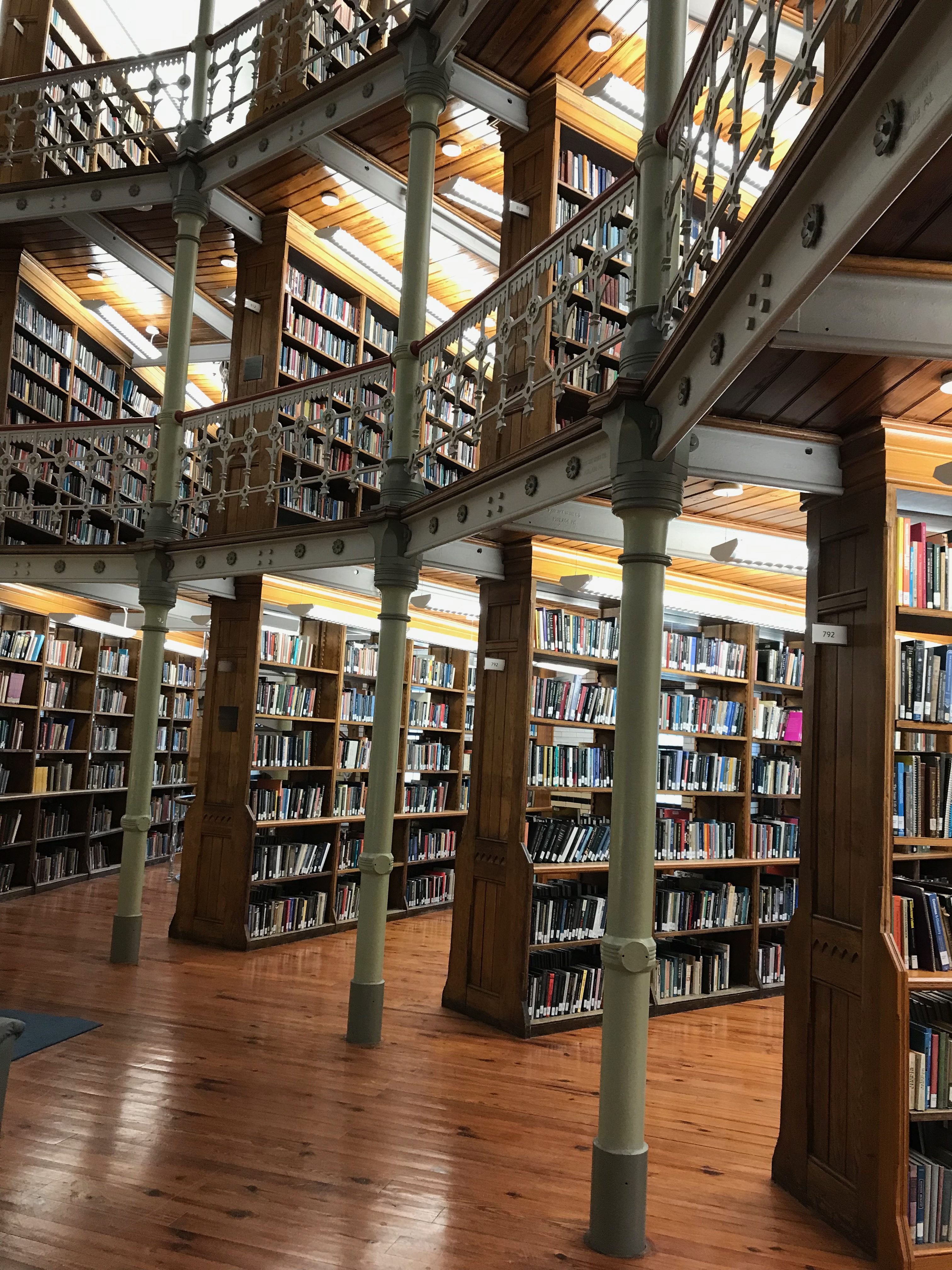
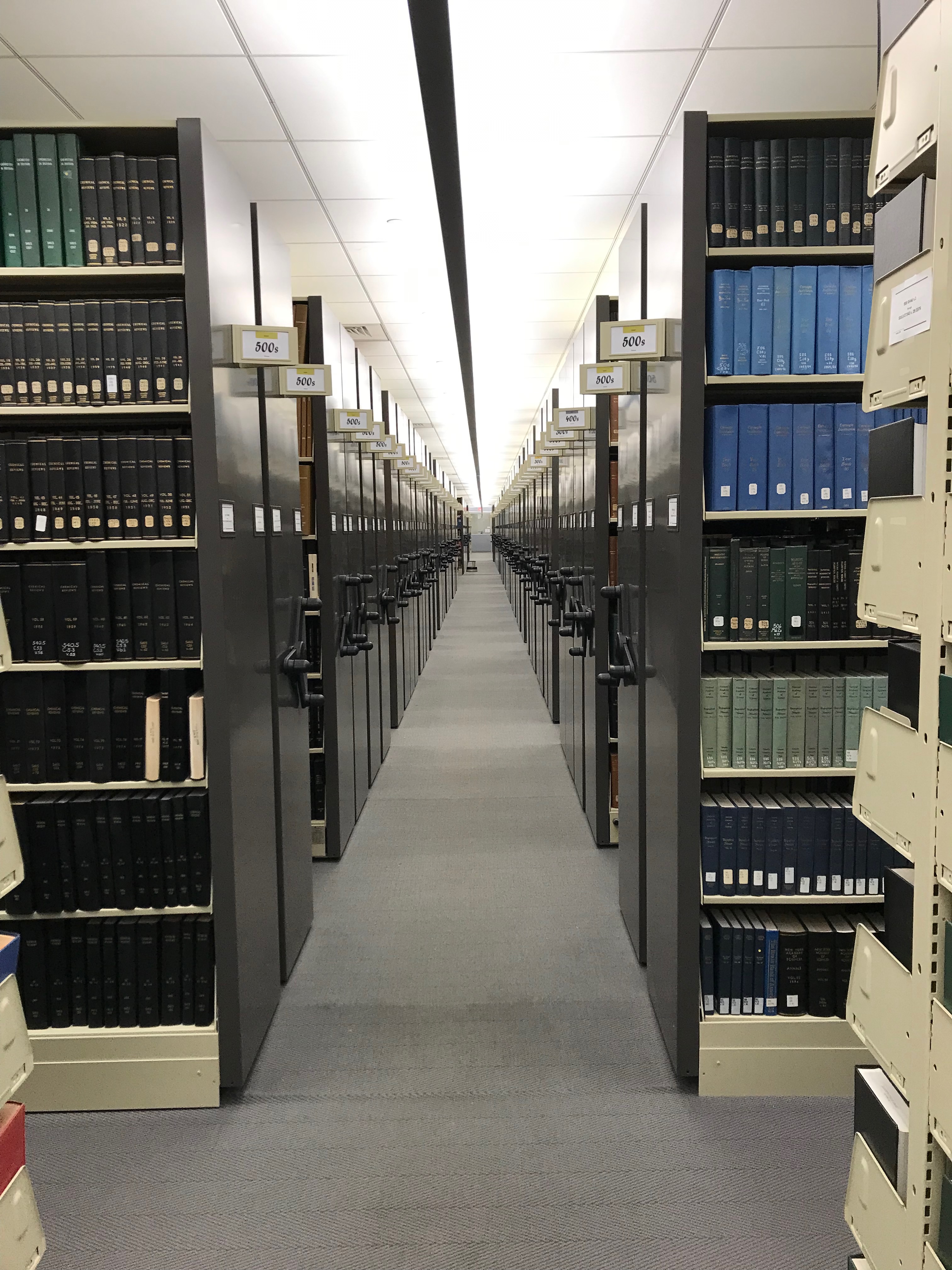
Everyone has a place they belong.  Mine has unwaveringly been the college campus.  It is home to me, even if it doesn’t recognize me.  I’d almost forgotten the feeling of being let loose in the stacks.  It was a Saturday morning and there was almost nobody else there.  As early as Grove City College I cherished the feeling of spending time in the library.  Few other students were hanging out there, but those of us who belong on campuses know that being surrounded by books is the only place that will ever feel like home.  Having looked up my references I wished that I had more to do.  I’d been to both the Dewey and the Library of Congress sections and, being a weekend, I had much else to do.  Stepping back out onto campus I was filled once again with a poignant nostalgia.  Getting to where you know you belong is a lengthy journey.


The Mystique of Research

One thing that many people may not understand about research is that those trained in it are basically learning how to find stuff out.  It doesn’t matter what the subject is, research is a matter of learning what’s available to help you understand that particular subject.  Typically it involves becoming familiar with the classic “standard books” on the topic then branching out.  Even the internet, however, has its limitations when it comes to trying to find out what’s available.  My curiosity extends far beyond the religion I often blog about.  I write about religion because I’ve studied it all my adult life.  When I discover a new area of interest, or rediscover it, I often wonder how to get the salient books on the topic.

Amazon isn’t a bad place to start, but they don’t have everything.  I’ve run searches on its powerful algorithms that come up with no results.  Bookfinder.com is great for locating out of print material, but it also depends on you knowing what to search for.  WorldCat and Google Books also help.  The one thing you really need, however, is time.  Research requires a lot of time.  You find a book on the subject and read.  Then you look up the sources the author used.  Search the names of other authors to find out what they’ve written.  Watch publishers’ catalogues for the new books they’re producing.  Read journals to see who’s writing on what.  It’s like a never-ending treasure hunt.  It’s beguiling and addictive.  But it’s limited to few full-time—those who are paid to find things out.  The rest of us make what time we can.

Prior to the internet we had, it seems, a lot more certainty.  Much of that certainty was false, but it was nevertheless firmly believed.  Many people despise researchers because they challenge what we’ve always believed about the world.  As if the truth were known x number of years ago and hasn’t changed at all since then.  We want things to stay the same—we want our wallets in the same place we’ve always put them so we can find them when we need them.  Then your told there’s new, virtual currency but you have to mine it.  I know many people who don’t even own computers.  Research opens new worlds, but not all people are natural explorers.  Some prefer to stay close to home and near to the certainties they learned growing up.  Others are restless and have to learn more.  And perhaps go places where we don’t even need our wallets.


Used or New?

A recent post on a used book got me to thinking.  Back when I was acting like a trained researcher my reading was very specialized and focused.  Even so, my personal reading was eclectic.  I think that’s the result of having been raised poor.  With no bookstore in our town, and no Amazon (or Bookshop.org), book purchasing was catch as catch can.  Since my fortunes haven’t dramatically increased in life (long story), my purchasing habits have remained pretty much the same.  I’ll buy used books or movies if I can.  Since these are about the only things I buy, they loom large in my mind.  And the thing about buying used is that it’s often opportunistic.  I can pretend it’s intentional and say I’m trying to be well-rounded, but the fact is I try to save money where I can.

This really struck me as I was reading something written by a film maker.  Now, I’ve penned two books about horror films, and I tend to watch them quite a lot.  What struck me about what I was reading was just how many films the writer knew.  Academics can be that way—knowing everything about a subject.  When researching my first book, A Reassessment of Asherah, I read everything I could find in pre-internet days about the goddess.  That is a thoroughly researched book.  When you’re a graduate student your job is to become as familiar as possible with your subject, no matter the language of the research (within reason).  As just an editor my movies and my books are a matter of what I find in my eclectic life.

I often imagine what my life would be like if I could’ve remained a professor.  In those days I read fewer full books—research is often a matter of reading only the parts relevant to your project—and certainly less fiction.  I was never a well-paid academic, teaching at a small school that considered on-campus housing a large part of the compensation package.  I didn’t buy many books then, either.  Some of the most important ones were, you guessed it, used.  I wonder if I would’ve ever have shifted my interest back to horror.  During those days I didn’t need horror (it was a gothic campus and I was beginning family life).  Since then I’ve become an even more eclectic person.  My fascination with geology began then and still comes back when the stars are just right.  And even they, I suspect, might be remnants of even older, used stars.

Photo credit: NASA

Graphic Graphomania

You can spot them fairly easily.  Graphomaniacs.  Perhaps it’s a bit closer to the surface when you work in publishing, but the person who writes too much can run risks.  Some authors turn out a book every few months.  While this may be okay for potboilers, for academics it is seldom possible to do this well.  Research and reflection take a long time.  Those who churn out book after book sometimes wonder why their works don’t sell.  Graphomania has to be reined in.  Horses have to be held.  I’m sympathetic, actually.  If you write every single day you’ll soon end up with a surplus.  So much so that your computer will tell you to empty some stuff out or it’ll go on strike.  I had to order a new terabyte drive this week exactly for that reason.

To free up some additional space on my laptop I went through the many, many folders that have essays, book drafts (both nonfiction and novels), stories, blog posts, etc.  While I didn’t throw them away, I had to clear them off my working disc.  As I did so I realized that the great majority of these writings will never see the light of day.  There are really a lot of them.  Part of the problem is you never know what you’ll feel like writing when you get up in the morning.  Sometimes the best ideas come after a wretched night’s tossing and turning.  Well-rested you can get up to a brain so content that it doesn’t have much to say.  Or that story you started yesterday may seem dumb today.  That nonfiction book that burned with passion just last week may now seem lame.  My fear is that by moving them off my hard disc they’ll become forgotten.

The terabyte drive is a thing of wonder.  It can hold so much information.  I have to go back and hook it up to my laptop to find it, however.  Out of sight, out of mind.  I’ll move on to other things.  I honestly can’t count the number of projects I have going.  Graphomania can be a problem.  This blog is a daily outlet, and you, my faithful few readers, are saints for coming back.  In my attic, next to the brick wall of external hard drives, are folders full of handwritten material.  Many of them are stories that are complete, but that haven’t been transcribed.  Some writers suggest flooding the market with your stuff.  Others of us know that graphomaniacs are feared in some quarters, and so we keep our own counsel.

Photo credit: NASA


Pay Per View

One of the things editors can teach academics is that the latter should pay more attention.  Especially to the world of publishing.  An erstwhile academic, I learned to go about research and publication in the traditional way: come up with an idea that nobody else has noticed or thought of, and write about it.  It is “publishing for the sake of knowledge.”  (Yes, that is Gorgias Press’s slogan, and yes, it is one of my hooks—marketing, anyone?)  The idea behind this is that knowledge is worth knowing for its own sake.  Researchers of all kinds notice details of immense variety and there’s always room for more books.  Or at least there used to be.  The world of publishing on which academics rely, however, is rapidly transforming.  Money changes everything.

The world has too many problems (many of them generated by our own species) to pay too much attention to academics.  Universities, now following “business models” crank out more doctorates than there are jobs for employing said wannabe profs, and those who get jobs pay scant attention to knock-on changes in the publishing world.  Just the other day I was reading about “pay per use” schemes for academic writing that, unsurprisingly, came up with the fact that most academic books and articles lose money.  If someone has to pay to read your research, will they do it?  Especially if that research is on a topic that has no obvious connection with the mess we’re busy making of this world?  Probably not.  Publishing for the sake of knowledge is fast becoming a dusty artifact in the museum of quaint ideas.

For those still in the academic sector that means that research projects now have to be selected with an economic element in mind.  “Would anyone pay for this?” has to be one of the questions asked early on.  The question has to be answered honestly, which requires getting out from beyond the blinders of being part of the privileged class of those who are paid to think original thoughts.  Academia has followed the money.  A capitalistic system makes this inevitable.  How can you do business with an institution that doesn’t play by your accounting rules?  And academic publishers, which have difficulty turning a profit due to low sales volume, are bound to play along.  This situation will change how we seek knowledge.  More’s the pity since some of the things most interesting about the world are those that nobody would think to pay to view.


Searching Again

Research can be addictive.  Those who know me are generally aware of how I can’t let ideas go.  I suppose this is necessary for those who write books—concentrating on one subject for a long time is mentally taxing and can lead to early loss of interest.  Those of us inclined to embrace this activity live for the thrill of uncovering new ideas and making connections that we’d overlooked.  My work on Nightmares with the Bible is a case in point.  Before submitting this book proposal I’d done a lot of reading on the subject of demons.  This is a dark topic, but those of us who live in temperate zones spend quite a bit of time without daylight, so I might think of this as a kind of therapy.  Or an excuse to do research.

Here’s often what happens: I’ll be writing along when suddenly a new question pops into my head.  Why was this or that the case?  The internet makes amateur research quite easy, but as someone raised on solid scholarly food, I need to check my sources.  When a professor I would’ve headed to the library with interlibrary loan slips in my hand.  These days I tend to turn to my own books and lament that I don’t have just the right one (there’s a reason, you see, that there are so many tomes in this house).  I try to find workarounds and used copies.  Perhaps I’ll pick up an adjunct class or two to be given library access again.  Meanwhile, the idea, like an ear worm, is burrowing into my conscious mind.  Until it’s time to go to work.

That great eight-hour stretch of day drains my energy.  Indeed, many employers count on taking the best you have to offer and making it their own.  What you do with “the rest of your time” is up to you.  Thing is, research is a full-time job.  Fortunately some of what I learn while on the clock will help me with my own research agenda.  The overlap isn’t especially strong, but now and again something I read in a manuscript will sync with what I do in the pre-dawn hours before I commit myself to the time-clock.  It’s a strange way to do research.  Back at Nashotah House I’d use the summers to follow the clues laid before my mind and, as long as I went to chapel, it was considered part of my employment.  Now it’s considered an avocation.  I can’t help myself, though.  Personal research is not part of the job description, but I’m an addict when it comes to learning new things.


Contracting Something

Book contracts make me happy. After slipping from higher education into the limbo of editing, it took a few years before realizing that not all books have to be academic monographs. For the past couple of years I’ve been silently writing a book intended for general readers. The subject will remain hidden for now, but a contract for the book has arrived and I’m happy. As my friend Marvin says, “for a man being published is about the closest you can come to giving birth.” There’s a bit of truth to that. Several months of thoughts growing in your head finally culminate in a full developed form, capable of surviving outside the confines of your protective mind.

The motivation for many academics to write is “publish or perish.” In my career track I both published and perished. The thing is, I write because I read. It seems unfair to read so much and not to share a bit of what I’ve learned. If you read this blog regularly you know that I have a restless intellect—the kind of thing that in the old days would’ve made you a professor. I no longer have access to university libraries with their arcane journals and massive collections, but reading on the bus is its own kind of research. (Anyone who’s tried to write notes on a bus, however, knows that the research is limited strictly to what can be remembered after a wearisome 90-minute-plus ride in stop-and-go traffic.) A few years back I decided to start writing up what I’d been observing. Slowly a book was formed. The process is not a swift one.

Many people question the ability of editors to write books. No, seriously. Agents are generally only interested in professors, celebrities, and journalists, not those who may have been one of the above once upon a time. That’s why this book contract feels like a small victory. Weathering the Psalms was written for other professors while I was still one myself. A lot has happened since then. I’ve read hundreds of books in the intervening years. Slow study that I am, it took some time before I realized I could begin to analyze all of this and write it in a way the average educated reader could find engaging. Agents declined the project, but now I’ve found a publisher who believes. When you work on your own, like many authors do, finding just one believer is sometimes all that it takes.