Dark Shadows Indeed

Part of my childhood died today. Like millions of others, I have been eagerly anticipating Tim Burton’s new Dark Shadows movie to wash the treacle of Twilight from the vampire’s mouth. Barnabas Collins was the epitome of the conflicted gentleman vampire, fully aware of and repulsed by his curse. After school I would religiously sit in front of the black-and-white television and watch the waves crashing into the cliffs of Maine as the moody story began to unfold in daily episodes. So when I read this morning that Jonathan Frid had died, I knew the vampire had found peace at last. And I was sad.
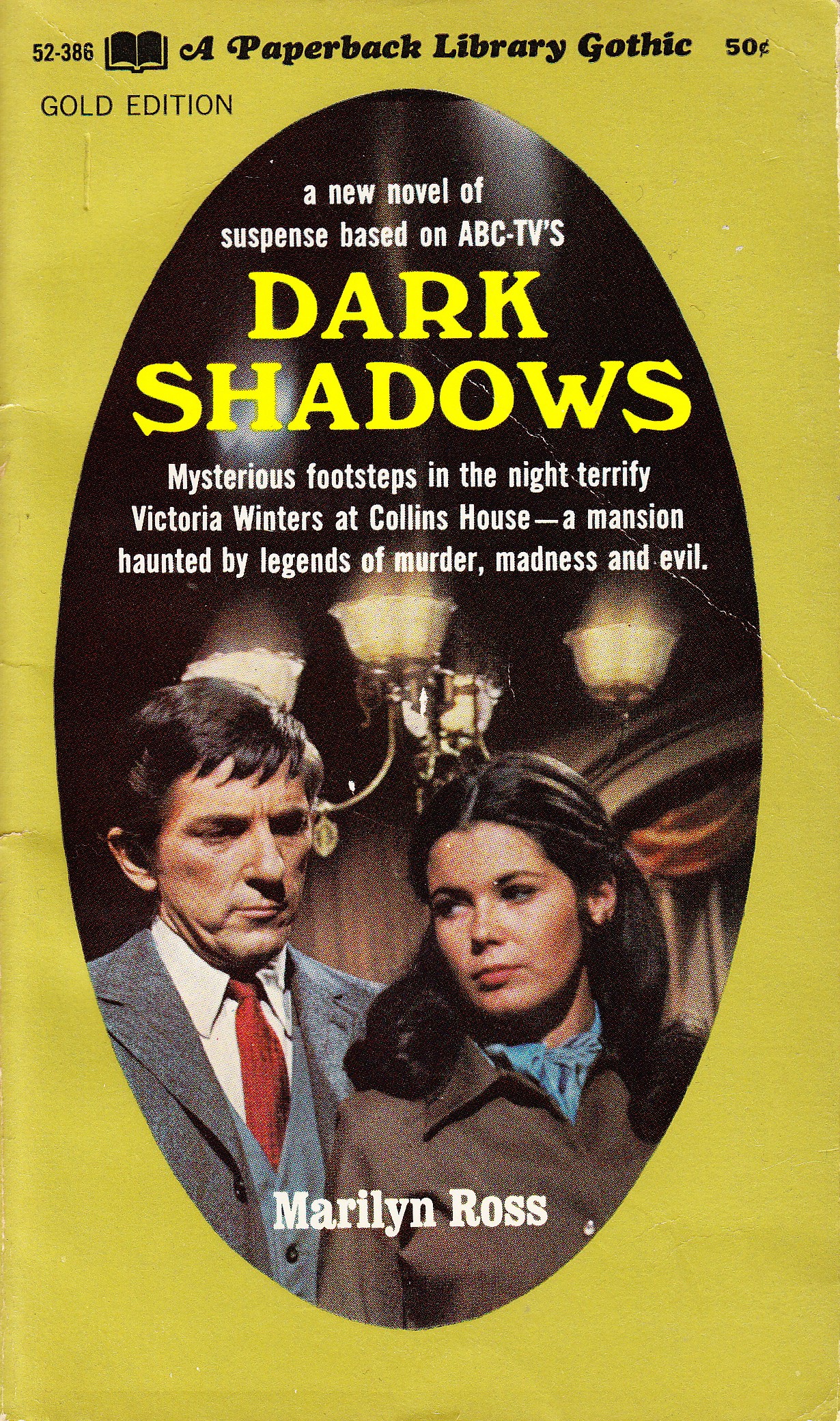
Although I’ve read scholarly analyses of monster fascination, nothing sets me back to childhood so directly as my beloved monsters. I don’t know why I feel a thrill in my chest and my pulse quickens when monsters appear before me. Perhaps it is a child’s way of coming to grips with a world beyond his or her control, or perhaps it was my way of dealing with a broken family. Lacking a father figure in life, I was fascinated by the gentle care and predatory nature of Barnabas Collins. He really did care, but he still had to bite you in the neck to survive. To my pre-adolescent mind, Jonathan Frid was Barnabas Collins. When I grew old enough for gothic novellettes, I consumed the serialized Dark Shadows books by Marilyn Ross, no matter how predictable or trite. I was reading about my heritage.

I have no doubts that Johnny Depp will portray a believable Barnabas Collins next month. Jonathan Frid, it is said, was consulted and was often present on the set of the new movie as it was being filmed. His turn to portray the tortured ancestor of the Collins family had lapsed, but he was the original. What is the draw of the vampire if not life after death? And although Jonathan Frid is gone, next month I will stand in line to see the resurrection of the vampire on the large screen.
Rising to The Abyss

The name James Cameron has become almost synonymous with epic, large-scale adventures that suggest improbable world with stilted dialogue. The first Cameron film I watched with the awareness of his direction was Titanic. Last night I watched The Abyss for the first time. Of course, I’d heard quite a bit about the film since its release over two decades ago, and I had to satisfy my curiosity. The Abyss turns out to be a prognostication for Titanic as well as Avatar, what with the fascination Cameron has for sinking ships, friendly aliens, and impossible love reconciled. In fact, many of the characters presented in The Abyss appear to reincarnate in Cameron’s latter films under different names, but in similar circumstances. The reason the film is worth mention on a blog about religion is its heavy reliance on traditional Christian imagery of the afterlife, projected into the abyss (turning Dante on his head).

When the crew of Deep Core investigate the sunken submarine USS Montana, crew member Jammer sees what he thinks is an angel and goes into shock that lands him in a coma (just to awake at the right time to save the day). The theme of personal sacrifice and resurrection (the Christ syndrome, we might call it) is acted out by both Lindsey Brigman and her husband Bud. Lindsey drowns herself so that she can be resuscitated, with the intention of saving both herself and her estranged husband. In his turn Virgil (aka Bud-everyone get the subtle reference to Dante here?) disarms a nuclear warhead (by snipping a single wire!) by diving beneath the capacity of his oxygen supply, texting his now adoring wife that he knew it would be a one-way ticket down. Then the aliens arrive. The whole light at the end of the tunnel trope becomes factual as the aliens-angel hybrids flutter over and take Virgil to safety. In case you missed the biblical references, they part the water and you get the strange suspicion that Moses is lurking behind the scenes somewhere.

Of course, some of these ideas will be fresher in viewer’s minds from Titantic and Avatar, but the theme of resurrection following self-sacrifice is a staple of Hollywood. It is the right combination for a feel-good movie, even if it ends up being sad. Perhaps it is the mark of living in a secular nation that has its origins in a Christian worldview. The battle of our religious status as a nation rages on, but the fact is, no matter how free we are with our religion, we will flock to movies where the protagonist willingly sacrifices him(less frequently her)-self with the reward of new life. This is not a Cameron trope, it is a United States self-image on the large screen. The technical gaffs of the underwater world of The Abyss may be many, but the film captured the imagination of many Americans, paving the way for the enormous success of Titanic and Avatar. Despite our tough exterior and willingness to start wars, we like to think of ourselves as the ultimate Christians.


Zombie Reality

The origins of zombies notwithstanding, they are the autumnal monster of choice in a post-modern society. They are the symbol of secular resurrection—no faith commitment is required, no pristine, moral lifestyle. Resurrection happens to you by accident, a chemical, a disease, cosmic radiation—whatever the cause it is not divine. And the zombie is fair game for the release of violent aggression; already dead, there is no moral imperative to keep them alive and well. Each year the mass of zombie walks increases where children and adults alike become the living dead for a day. Macabre? Indeed. It seems that the very word “macabre” may have come into English from Hebrew. Hebrew words are based (mostly) on triliteral roots, words with three unchanging consonants. The Classical Hebrew word for “grave” is based on the root q-b-r. The prefixed m is often the preposition “from.” Macabre, morphed through Latin and French, could go back to the root meaning “from the grave.” Literally, the source of zombies.

Resurrection is among the most poignant of human hopes. Religions often assure us that death is not final, but we can never know that this side of the veil. Those we love go away, we hope, to a better place than this. It is no surprise that the largest zombie walk in the country is in Asbury Park. We can imagine better. Why can’t God?

According to Wade Davis, there is a powder that vodoun priests use to zombify a person. This involuntary treatment does not actually prolong life, nor does it really resurrect the dead. It is, like many religious treatments, a show of faith. In The Serpent and the Rainbow Davis describes how psychosomatic attacks span the globe. All they require is belief. If a person believes in curses or the evil eye, the results can be physical and fatal. We create our own reality. Over the weekend I watched What the Bleep Do We Know? again. I sometimes showed this movie to my classes. Here physicists and gurus together affirm that we create our own reality moment by moment.

Zombies have migrated from the realm of religion to secular society. It is hard to imagine our modern world without them. They are cut from the same cloth as All Souls Day, reminding us of our mortality and suggesting that there might be something more. It is a reality we create ourselves.


Always Against Us

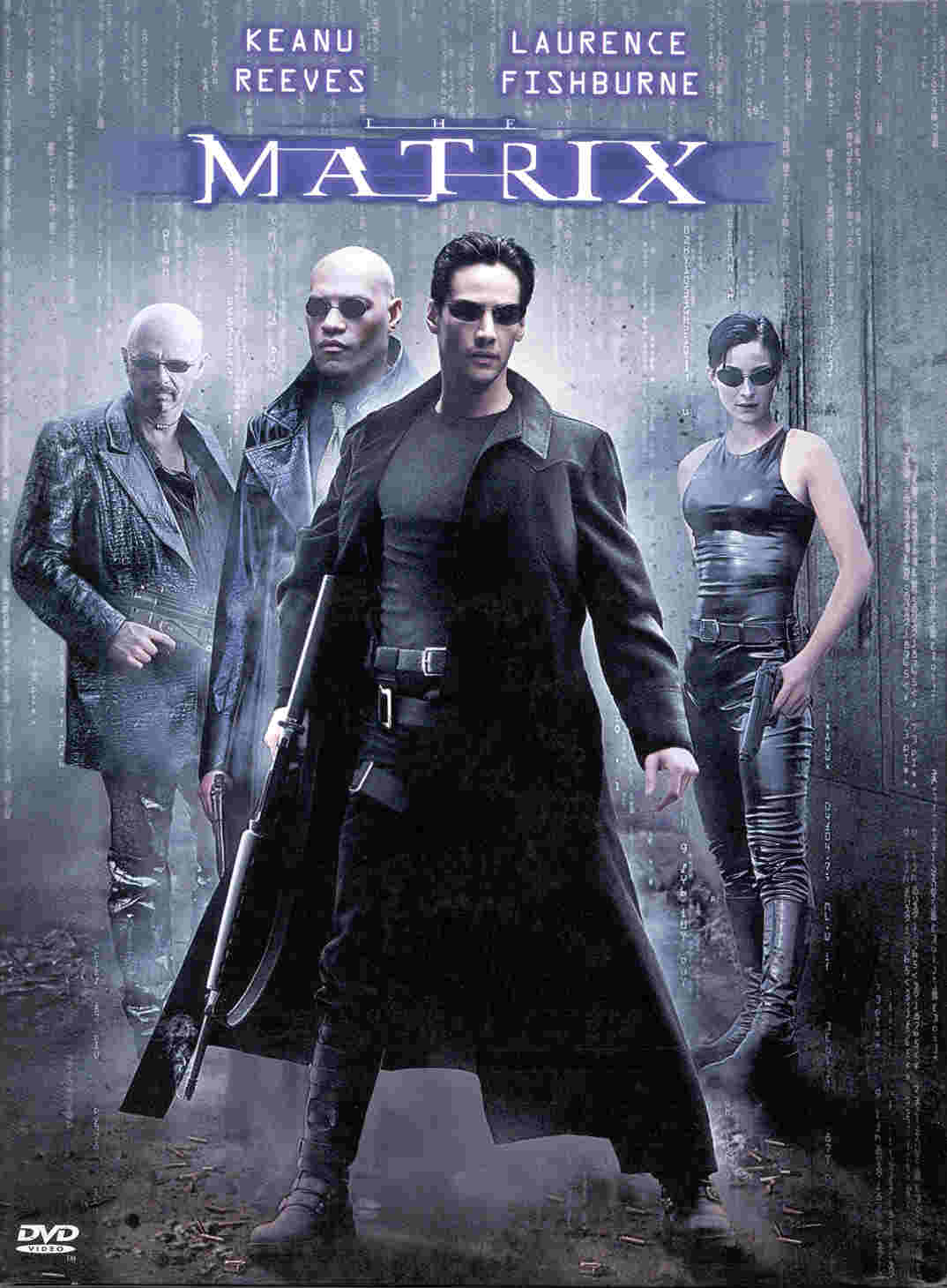
In one of the coolest homework assignments ever, my daughter was supposed to watch The Matrix. Her digital electronics class makes constant reference to the movie, so her teacher decided that in order to “get it,” those who hadn’t seen the movie should watch it. I know the film has many nay-sayers and some of the acting may not attain the highest standards, but it remains among my favorite movies. At Nashotah House, early in the dawning millennium, many students watched the film religiously. One student had it on his laptop and a small knot of his classmates would gather around just about every morning to watch before my class began. I was a bit put off by the claims that it was a “New Testament allegory,” but I have come to realize that without resurrection, the film industry in this country would be dead. American audiences (especially) crave the possibility of coming back. And even though I’m as much a sucker for a good love story as the next guy, that resurrection scene isn’t the highlight of the movie. Not by a long shot.

The Matrix has always been one of my favorites because of the basic premise: what if the world is not real? I’ve been plagued by that question for about as long as I can remember. When, in my first philosophy class, I learned about naïve realism, my worldview shifted. Who’s to say what’s real? And if someone decides to shoot me to shut me up, the lights might go out, but will there be anything left behind? Not that I believe I’m a source of energy for evil robot overlords (I get too easily chilled to believe that), but I often think about the tenuousness of it all. Our reality changes when we fall asleep, and each day we assume that a continuity is the same as the essence of our existence. There’s no way to check it, however, and I’m not entirely convinced. That’s why I like The Matrix so much. Someone else understands my deep fear that none of this is real.

The moment when Neo refuses to leave, but turns to fight Agent Smith, Trinity asks Morpheus what is happening. Morpheus responds, “He’s beginning to believe!” That line always gets me. The idea that something out there actually tips the balance on the side of good creates a longing so deep that it hurts. When I wake up the next morning, however, I see the headlines bring more suffering, more status quo ante-Christ. The last thing I want to see on the front page is Chris Christie’s face first thing in the morning. It can be a very cruel world. In one of Morgan Freeman’s Through the Wormhole episodes, a scientist suggests that a Matrix-like world may match our reality. God, the scientist suggests, may be a programmer and has coded us to live in a virtual world. The tapping of my fingers is just an algorithm. I’m not yet beginning to believe that. But if I ever do I’ll be forced to conclude that our programming deity has either a wicked sense of humor, or is just plain wicked.


Dead Wood

nurse log

Whether it makes a sound or not, when a tree falls in the forest it joins that great cycle that embraces all living things. Decomposition is as much a part of life as conception. Rotting logs provide homes and minerals and nutrients to other living creatures. Although the individual life is over, life as a whole goes on. Nowhere is this more evident than in nurse logs. Nurse logs are those trees that directly host seedlings after they die. While examining such a nurse log yesterday my daughter said, “It’s life after death.” Resurrection. The more I reflected on nature’s resurrection, the more selfish the human concept seemed to become. We want—and some of our religions offer—individual resurrection, the continuance of me, not mere life.

Nature has no theology. In its immediacy and pragmatism, creatures live without pondering what it means, striving to pass on the gift of life they’ve been given through their offspring to keep the cycle going. Evolution may shape forms into new varieties along the way, but we are more amoeba than angel. We are part of something larger than ourselves. Unfortunately our society has evolved to emphasize individual drive over collective effort. We don’t want to tax the ultra wealthy, for they are where we all want to be. It is the poor who are sacrificed on the unholy altar of this thinking that truly reflect what nature intends for us to be.

To justify our selfish outlook humans made gods in their image, adding prerogative to perfidy. Somehow we deserve more than others—longer life and even more life after that. Evolution has, in its non-directional way, distorted the picture by providing us with inordinately parsimonious attribution of souls, according to theologians. Nature belies our paltry attempts at self-deification. Quietly in the forest a tree dies, offering its life for those that will come after. The nurse log knows the true meaning of resurrection, while we fumble to gain more for ourselves, backed by the religions we’ve invented.


Resurrection From the Crab

My daughter loves cats. We have, however, lived in apartments since having been forced from our four-bedroom house at Nashotah. That means we’ve been at the mercy of various landlords for our choice of allowable animal comfort. Most landlords disallow cats and dogs, so we’ve gone the route of caged or terrarium pets. Birds, reptiles, and arthropods are fascinating but hardly cuddly. All three taxes share the phenomenon of molting, and once out of their artificial environments they are also all difficult to get back in. Our current non-embraceable companions are hermit crabs.

If early Christians had known of hermit crabs, I am sure they would have used them as symbols of the resurrection. (They could have used Baal as well, but that was a non-starter I’m afraid.) Our adventure began in a mall. The salesman told us, in broken English, that they would live two or three years, with proper care. We purchased one and were chagrined when it died shortly after, just when my daughter was hosting her cousin for a week-long visit during the summer. Shocked and tear-stained, we went back to the mall for a replacement crab. Later that week, crab number one (Sparky by name) suddenly reappeared. What we assumed was the corpse of Sparky was only his (or her – I have no idea how to tell) molted exoskeleton. It hung limply out of the shell like a deflated crab, but inside a new incarnation was preparing its epiphany.

This drama has enacted itself many times. This past week Sparky’s companion really died. Since the crabs are not the center of attention during the holiday season, I was the only one with this esoteric knowledge. The pile of legs and vacant shell were a little gruesome, but tucked into the corner of an out-of-the-way aquarium, they attracted no other attention. I resolved to bury the little guy. Today as I prepared to take care of his crustacean cadaver, I was astounded to find him (or her) alive and well and inhabiting a different shell. Resurrection. Our crabs have outlasted their projected livelihoods and are into their sixth year with us. Every time one dies, he (or she) comes back. If they couldn’t use Baal or Adonis, early Christians might well have caught on to the symbolism of the humble hermit crab.

I was dead, but now I am alive


Zombie Walks

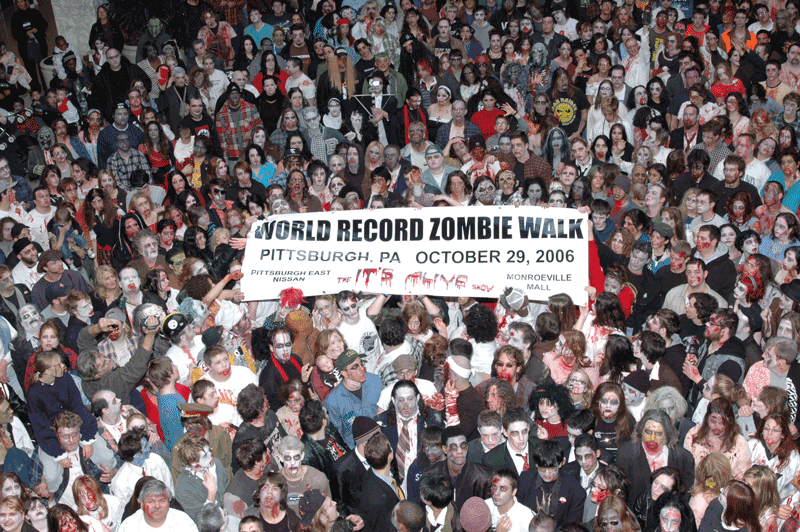
As October nears its creepy climax, signs of the macabre have become abundant. A trend that has reached new heights in recent years is the zombie walk. Various cities or regions host large groups of brainless, reanimated corpses in parade (rather like a Tea Party, I should imagine) to welcome in the darker half of the year. In a most unconventional display of cultural unity, groups of strangers meet for the purpose of sharing their fascination with the undead. Given the inherent potential for overly enthusiastic participation, these events are usually held during daylight hours and are becoming as accepted as trick-or-treating on Halloween.

Fear of death is sublimated in a conquest of the same with less definitiveness than traditional resurrection, but with a more gritty and graphic triumph of life. Organized religions have had difficulty maintaining numbers in much of the “developed world” while this new danse macabre has taken on a life of its own. Many find claims of divine authority in institutions that refuse to make clean breaks with sex scandals or threats of Quran burning somewhat disingenuous, while nobody questions the motives of zombies. They simply do what it takes to survive. An honest zombie stumbles toward eternal life.

Credibility is less easily commanded than it had been in former times. While many voices, such as Tea Partiers’, are claiming the need to erase the sixties and seventies and subsequent decades from the calendar so that the authoritarian Father can be returned to power, thinking people are asking what the plan might be. Is it time to break down that putative wall between church and state and declare America a plutocratic, evangelistic Republic? Never mind that inevitable conflicts will break out over who has the right to set doctrine and public policy – most citizens will be found out walking with their fellow zombies, welcoming in the darkening season.