Hungry Madness

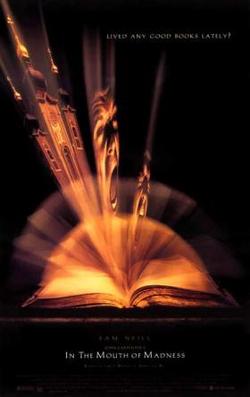
It’s been on my wishlist of movies to watch for a few years, In the Mouth of Madness.  A tribute to Lovecraftian horror, as well as a probing of insanity, it is a heady mix.  In keeping with my usual rules for movie watching, I hadn’t pre-read anything about it that would give away the plot.  Coming to it fresh, a number of things stood out.  There were some very good scenes and parts of the movie made me want to like it a lot.  It is a great movie for religion and horror analysis, and in that regard it’s much better than Prince of Darkness (despite Alice Cooper).  In fact, had I been able to see it years ago, it would’ve been included in Holy Horror.  That itself is noteworthy since two of John Carpenter’s other movies were in it: The Fog and the aforementioned Prince.  I suppose I should provide a little summary (if possible) in case you haven’t seen.

Trent is an insurance investigator, and a hardened skeptic.  A horror writer who outsells Stephen King, Sutter Cane, has gone missing and Trent’s sent to investigate.  He discovers that Cane is in a town that doesn’t exist (Hobb’s End) and that his books are not fiction.  In fact, Trent is a character in one of his novels.  When people read his latest book, In the Mouth of Madness (a title adapted from Lovecraft), they go insane and begin killing others.  The plot gets a bit busy because people are starting to transform into slimy, Lovecraftian monsters and this reality, if the book is read, or movie watched, will spread to all of humanity, leading to our extinction.  A bit too ambitious, the plot can’t hold all this weight, but it really isn’t bad.  There’s just too much going on.

The religion elements come in because Cane has holed himself up in an unholy church.  He refers to his latest novel as the “new Bible.”  “More people,” he says, “believe in my work than believe in the Bible.”  He later refers to himself as God.  I haven’t seen all of Carpenter’s films, but there seems to be a trajectory of his earliest major films being his best.  Halloween and The Thing are classics.  The Fog isn’t bad.  When he brings religion into his stories, as in The Fog, things begin to cloud over a bit.  Prince of Darkness doesn’t deliver a believable Devil.  In the Mouth of Madness doesn’t quite hang together well enough.  It’s not a bad movie, though.  It has given me some ideas for another book, if I can stay sane long enough to write it.


Colorful Space

Lovecraftian horror translates to film unevenly.  Even when it’s successful, as in Color Out of Space, it really isn’t that close to reading Lovecraft.  “The Colour Out of Space” is among my favorite Lovecraft stories.  To me, it feels perhaps his closest to Poe, and Poe is my personal muse.  I knew that it couldn’t be made cinematic without changing things a bit, and that it would be pretty gnarly.  I was correct on both counts.  In very broad brush strokes, the movie follows the story: a colorful meteorite on an isolated farm begins changing the crops and the people who live there.  Instead of crumbling, however, they are struck by the color and become other.  The mother and her youngest son, for example, are fused together creating one of the most cringe-worthy scenes I’ve watched in a long while.  The movie emphasizes family, even when things go horribly awry.

Defying Lovecraft’s well-known avoidance of focus on female characters, the movie’s focal point in Lavinia accords with Poe’s concern for threats against beautiful women.  She’s the teenage daughter of the family and the film opens with a scene where she uses Wicca to try to heal her mother of cancer.  The love between Nathan (Nicolas Cage) and his wife is movingly shown.  The movie was recommended to me during a conversation about Nicolas Cage in horror.  Maybe it’s because he’s in so many movies in total, I’d never really considered him a scream king, but he’s nailed the role quite capably, with the notable exception of The Wicker ManColor Out of Space is pretty extreme body horror but the movie is artistically done.  You almost don’t mind feeling violated in that way because of the visual appeal of the non-horror focused parts.

The acting is uniformly strong.  In a nod to Lovecraftian fans, Lavinia uses the Necronomicon as the basis for her Wiccan rites.  Some of the scenes seem to reference Evolution and others eXistenZ.  Transforming the action from Lovecraft’s setting in the early twentieth century to the early twenty-first is done pretty well.  The family is isolated when the meteorite prevents electronics, including cars, from working.  The movie does offer some alien creatures, unlike Lovecraft’s basic story.  And these creatures point to a planet with tentacly beings that naturally tie this story into the Cthulhu mythos.  Lovecraft’s own story doesn’t make this move, but of course, the Cthulhu mythos only really developed among his fans.  In all, Color Out of Space exceeded my expectations, even though it was a box office flop. 


Bad Taste

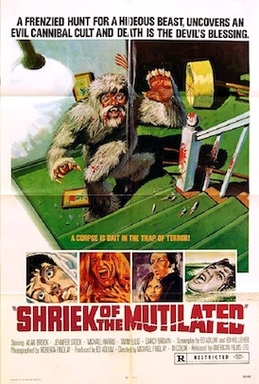
There is a reason for watching bad movies, apart from the fact that they’re often found streaming for free.  Sometimes that reason is that they’re so bizarre that they’re almost surreal.  And sometimes the circumstances surrounding them are equally strange.  Michael Findlay’s Shriek of the Mutilated was included in the set of movies I bought for Zontar: Thing from Venus.  Not one to be wasteful, I’m finally dutifully watching these before allowing myself to purchase new fare.  Given the fact that this had a theatrical release, I’m surprised that it’s not compared more often with Ed Wood’s oeuvre.  In any case, this is a very convoluted story and spoilers will follow.  You’ve been warned.

An international group of demon worshipping cannibals have a member who’s a professor that takes students on a “yeti hunting” expedition every few years.  The students are all killed but one, so that the yeti story can continue.  Viewers (if any) aren’t clued in to this until the last few minutes of the film but early on you can spot the cannibal theme.  So four students in the professor’s Mystery-Machine-like van, go on a hunt while staying with a “colleague.”  Naturally the students start getting killed.

Using some of the worst dialogue ever written, the clueless coeds keep allowing themselves to be led into situations no sane person would.  The chosen “survivor” discovers the plot and is amazed that the creature was (blindingly obviously) a guy in a suit trying to scare them to death.  The cannibals prefer their meat with no bruises.  Much more could be said about the ineptitude of the movie but it ends up having an interesting, if tragic, coda.

Michael Findlay, who made exploitation films with his wife Roberta, was actually sliced to death in a helicopter accident on top of the (then) Pan Am Building in Manhattan.  This happened three years after this movie was released.  In those three years he’d directed eight more films, so his last movie before being mutilated was not the one in my Beast collection.  Quite often when I watch bad movies I have trouble finding any discussion of them at all.  Shriek of the Mutilated is discussed at some length in two books—not surprisingly published by McFarland (they have great pop culture titles).  Until I discovered this movie, in with ten others in a collection, I’d never heard about it.  Of course, the theatrical release was for drive-ins and was limited to Texas, Florida and California.  There can be a lot of information to dig out when people stoop to talking about bad movies.


Not the Witch

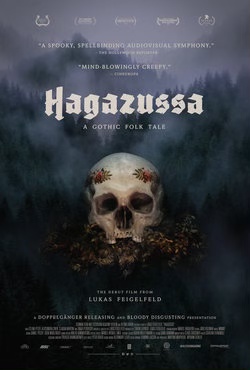
Hagazussa came to my attention from, I believe, the New York Times.  In the autumn normally staid news sources start suggesting horror films to watch.  Subtitled A Heathen’s Curse, this new Euro-horror (filmed in German) immediately reminded me of Robert Egger’s The Witch, but with a lot less plot.  It’s a moody and disturbing story of the life of an outcast young woman in the sixteenth century.  Raised by a poor, goat-herding mother, Albrun watches her mother die of the Black Death, when Albrun’s a tween.  She continues living in her childhood home, with a daughter whose origin, like that of Albrun, is never explained.  The locals shun her as a witch but a seemingly friendly villager befriends her before turning against her and betraying her.  After this neighbor, and then others, die, Albrun drowns her infant daughter after eating a toadstool in the woods.  She then bursts into flames atop a hill in the Alps.

As folk horror, the movie is more about the haunted landscape than about an intricately plotted story.  There’s nevertheless a great deal of symbolism used, including much regarding Eve—apples, serpents, and goddesses all play a part.  Locals fear pagans, and the church interior lined with bones reminded me strongly of St. Stephen’s Cathedral in Vienna, where plague victims’ bones fill the underground vaults.  Seeing such a place reminds you forcefully of your insignificance.  Hagazussa is an art film as well as folk horror, and it appeals to gothic sensibilities.  There’s very little dialogue.  Indeed, the loneliness of Albrun is a major aspect of this moody, atmospheric work.  Such stories always remind me of how difficult life was for those who had to try to scratch a living from the land.  Existence was tenuous at best.  Especially for women alone, as determined by Christian society.

The movie left me reflective.  It also underscored how religion and horror tread the same paths repeatedly.  The village priest tells Albrun that sacrilege must be cleansed, even as he hands her her mother’s skull, polished and decorated.  He wearily admits that he struggles to led the community.  Indeed, Albrun’s new “friend” castigates Jews and heathens, even as she takes part in the robbing of Albrun’s livelihood.  Witches, as “monsters” were invented by the church as fears reached out to point to new sources.  Even if they had to be fabricated at the expense of innocent people.  Fear operates that way still, as anyone who watches political ads knows.  It’s easier to persecute than to educate, it seems.  In the end, Albrun burns up and we realize we’ve just watched a parable.


Another Ghost Story

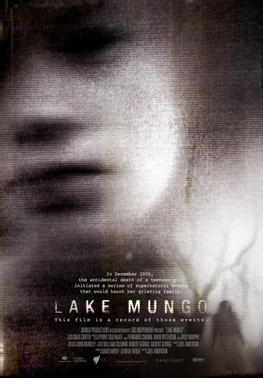
Quiet horror films are sometimes thoughtful little gems.  I’d completely missed Lake Mungo when it came out.  An Australian indie, it’s a mostly gentle ghost story that leaves you with an eerie feeling, and perhaps a little sad.  Ghosts can be so resonant.  Yet the Poe-esque death of a beautiful woman—a teen, in this case—makes it kind of poetic.  The Palmer family is having a Christmas picnic (remember, southern hemisphere) at Ararat, where there’s a dam that allows for swimming.  The two teens, Mathew and Alice, go into the water but only Mathew comes out.  It takes some time for search and rescue divers to locate the body.  Filmed as a mockumentary, the movie slowly adds details that make it all seem much more complex than an accidental drowning.

Alice, it turns out, has a life that her family knew nothing about.  As various family members see her ghost, and even try to document it with cameras, their own motivations emerge.  Mathew, wanting to help his parents cope, fakes a couple of photos and films suggesting his sister is still at the house.  Everyone in the family experiences ghostly noises and a presence and they even consult a psychic, but nothing definitive comes to light.  They do learn that Alice was more troubled than she ever let on.  It was while at camp at the eponymous Lake Mungo that her own ghost came to her in a premonition of her death.  Finally, the Palmers decide to move but in their final photograph of the house, a shadowy Alice can be seen remaining inside.

Ghosts are, by their very nature, religious.  The deal with that universal that all religions address—what happens after death.  The Palmer family is traumatized, but as the closing credit scenes make clear, Alice has really been there.  The one church scene has some of their religious friends say that they don’t know how to comfort a family that doesn’t attend church.  There’s a lot going on here.  Even the name Ararat and the dam have meaning.  This quiet, haunting film is not dissimilar from A Ghost Story, in some respects.  Both reflect on the loss that a death has on loved ones, making them quite poignant because this is so very true of being human.  Horror films can be a source of wonder rather than the slashers they’re generally assumed to be.  I learned about Lake Mungo by word of mouth and I’m glad to have learned of it since, although fiction, it has something true to say.


Burial Zone

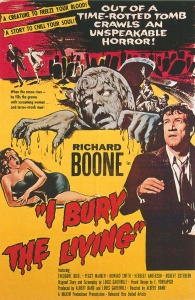
I don’t always believe the statistics.  Numerically, the number of horror films—depending on how the term is defined—declined into men (and sometimes women) in rubbery suits in the 1950s.  Indeed, it’s often opined that had not Hammer joined the horror business in the mid fifties that the genre born only twenty-something years earlier might’ve died out.  There seem to have been some good horror films made then, though, even if overlooked because of their B status.  A friend recently directed me to I Bury the Living, after reading my post about Carnival of Souls.  I have to confess to having never heard of I Bury the Living.  (Stephen King mentions it in Danse Macabre.)  Produced as a B movie it was itself buried among the various other efforts of the late fifties.  It’s not a bad movie, however.  In fact, it’s better than the title might lead you to believe.

The plot is something of a period piece—a well-respected department store supports a cemetery committee for Immortal Hills, the town’s graveyard.  Robert’s turn as chairman of the committee arises and he tries unsuccessfully to get out of the duty.  The caretaker, Andy, doesn’t want to retire, but he’s aging out.  The movie, however, revolves around the map.  The sold plots are marked with white pins while the plots already occupied have black.  When Robert accidentally puts black pins into newly purchased plots and the couple dies, he believes he’s cursed with an ability to kill those he black pins.  He substitutes a black pin for a white one at random.  The person dies.  In all, seven people succumb.  Convinced he’s murdered them, Robert decides to bring them back to life but putting the white pins back.  Only at this point does Andy confess that he’s been killing the victims in retaliation for being forcefully retired.

The ending is a little weak, but the psychological tension as it builds up is believable.  One critic compared it to an extended episode of The Twilight Zone, a comparison that has also been made for Carnival of Souls.  I would concur with that observation.  Although Twilight Zone wouldn’t air for another year, that kind of unsettling tale was already in the air.  No zombies appear, but the palpable belief that they might is what really makes the horror work in this instance.  The first half is an eerie story, but when Robert sticks in that first white pin a shift takes place.  Of course, modern viewers have been primed by Night of the Living Dead, so we know the possibilities.  Perhaps the power of Night gives life to older movies.  After all, anything can happen in the Twilight Zone.


Dancing with King

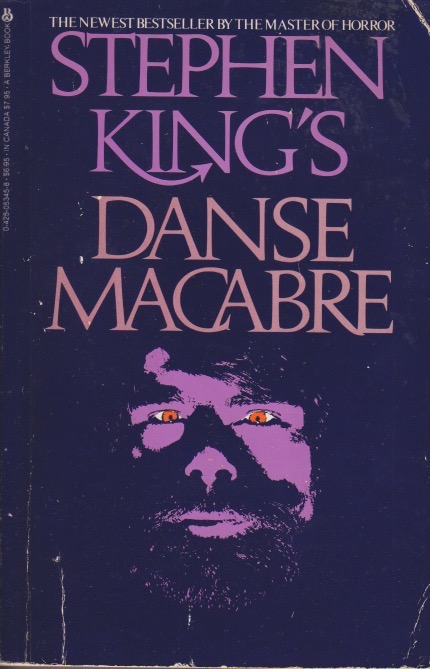
There are books you wait too late to read, but which you read at just the right time for you.  That’s how I feel about Stephen King’s Danse Macabre.  This book is endlessly cited in more academic treatments of horror and I knew I should read it.  And one thing I immediately appreciated is that even early in the eighties King expressed my long-term concern: many genres fall into horror.  He, perhaps rightly, considers horror a subspecies of fantasy.  Or course, fantasy has come to mean something quite different in the intervening half-century.  Still, the reader is treated to thrillers, sci-fi, and weird fiction.  There’s also a dose of the gothic and speculative as well.  King sets his four classes of monsters early: the vampire, the werewolf, the thing without a name (Frankenstein’s creature), and ghosts.  These are all very broadly conceived.

It will become clear in coming weeks, for anyone who’s interested, that the movies I “review” here have been influenced by King’s list.  And in the longer term, the books as well.  And I tend to agree with King’s antipathy toward television, although I disagree with his assessment of The Twilight ZoneDanse Macabre is a book of its time, of course.  I would be curious as to the master’s reaction to such more recent classics as The X-Files.  I loved that he treated Ray Bradbury as a sometime horror author and it becomes clear that each of us finds different things scary.  The thing was, I found myself anticipating my too scarce reading time each day for the month it took me to read the book.  I often start books that I soon find myself approaching with a kind of duty to finish.  Love him or not, King is a talented writer and will keep you coming back, just like birds to a feeder.

I learned that King, too, appreciates bad movies.  He grew up about a decade and a half before I did, but the small-town culture I experienced as a child was not so different, although Sputnik was already up and the Cold War already on.  I guess what I find so engaging here is that this is a guy who speaks my language.  My tastes differ, of course, but there’s something comforting about whiling away the pre-dawn hours with a guy who can say “The Thing” and you know immediately what that vague phrase means.  And it was strangely reassuring to be reminded that the world of the seventies, which I experienced as a teenager, was just as scary as the world is right now.  And if King ever looked me in the eyes, I think he’d recognize something about me, although a sometimes critical fan.


Teaching Horror

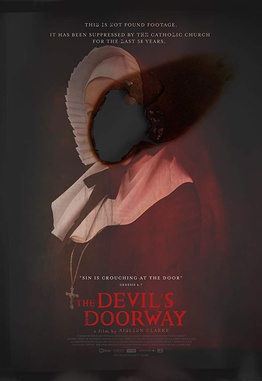
Critics who complain that Aislinn Clarke’s The Devil’s Doorway has nothing new really have no appreciation for parables.  An Irish found-footage film, The Devil’s Doorway is, as it clearly states, a lament over the Magdalene Laundries in Ireland.  I’d never heard of these institutions that existed until less than 30 years ago.  Founded by the Catholic Church, these “asylums” were places where women in trouble were essentially treated as slave labor.  Women, who often have difficulty hiding the results of sexual promiscuity (something men more easily get away with), were put to work in these reformatories.  I don’t know if the conditions were as bad as presented in the movie, but they provide a springboard into a perfectly serviceable horror film.  The horror tropes may be familiar, but that’s true of most horror of these days.

Two priests are sent to a Magdalene Laundry to investigate a reported miracle of a bleeding statue of Mary.  Please pardon my invocation of Alice Cooper here, but “Only Women Bleed” would be appropriate to consider.  Fr. Thomas, older and skeptical, doesn’t believe in miracles while Fr. John, the “techie” (it’s set in 1960) films the proceedings.  The priests uncover layer after layer of hypocrisy and deceit.  The Mother Superior, who shows no deference to the priests, insists that many of the pregnant women that have passed through the asylum were impregnated by clergy.  But there’s more.  As the statues bleed, a young woman, a pregnant virgin, is found kept in a dungeon.  Ghosts of murdered children cavort through the night.  A satanic niche for a black mass is discovered.  And the pregnant virgin is also possessed by a demon.  There’s a lot going on here.

To mistake all of this as “just a horror movie” is to miss the point.  Such is the way with parables.  Clarke, the director, was an unwed mother at 17 who realized that, had this happened a few years earlier, she could well have found herself confined to a Magdalene Laundry.  The movie doesn’t, it seems to me, condemn Catholicism per se.  For example, the two priests documenting the activities seem to be good people.  Fr. Thomas, as it turns out, had been born in this selfsame institution.  Raised as an orphan, he became a priest who, not surprisingly, doesn’t believe in miracles.  He too, was a victim.  Religious horror serves many purposes.  Often the very unfamiliarity of religion itself can drive the fear.  Another purpose, however, is to educate.  The Devil’s Doorway educated me, and I appreciate the parable.


Okay, Look Now

When you think of Daphne du Maurier’s film adaptations, Alfred Hitchcock probably pops to mind.  He shot Rebecca, Jamaica Inn, and The Birds, based on her works.  One non-Hitchcockian adaptation is Don’t Look Now, by Nicolas Roeg.  I’d made the decision to read the story first—which was a good idea—but it was long enough back that I couldn’t recall many details.  This was also good.  Don’t Look Now was the main release by British Lion, in Britain, with the B movie, The Wicker Man, as its follow-up.  While writing a book about the latter movie I’d wondered why this one was chosen as for lead billing.  It’s certainly more mainstream, and an art film in many ways.  Typically labelled a “thriller,” it’s also called “horror,” causing me to question the relationship between the two.  In any case, the movie.

Since this was released in 1973 I won’t worry about spoilers.  The film is a fairly faithful adaptation of du Maurier’s story as well.  Laura and John Baxter are in Venice, trying to recover from the accidental drowning of their daughter.  John has work there, restoring a church—there’s plenty of religious imagery—and Laura befriends two older women.  They’re sisters and one of them is blind but also psychic.  Heather, the psychic, claims to see their drowned daughter and Laura finds relief and comfort from hearing about it.  John is skeptical, but, Heather claims, he also has psychic abilities.  John begins to think he’s seeing their daughter still alive and she leads him down isolated alleys—this is dangerous because there’s a serial killer on the loose.  John then thinks he sees Laura with the women after she has flown back to England to attend to their son at his boarding school.

Movies, like stories, are open to interpretation.  Mine is that the psychic phenomena in the film are portrayed as real.  I had the same impression from du Maurier’s story.  Much like The Wicker Man, appreciation for Don’t Look Now has grown over the years.  It was fairly well received upon release, but is now considered even better than it was at the time.  Maybe not as essential as some Stephen King movies, it is nevertheless believed to be one of the more important films on the horror palette.  I’d been prompted to watch it by several references I’d recently come across.  Typical for me, however, I took it in the wrong order, having seen The Wicker Man years ago.  Classics back then, it seems, took longer to be recognized.


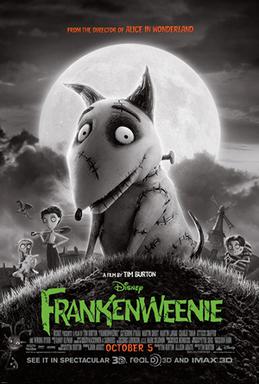
Why Weenie?

Often I ponder how incredibly influential Frankenstein has been.  Even those who don’t care for horror instantly recognize the creature and what he represents.  (At least partially.)  Tim Burton thought of tying Mary Shelley’s story to a pet dog in Frankenweenie.  This was a black-and-white, live-action short released in 1984.  It wasn’t aired much before being locked in Disney’s famous vault.  It wasn’t really what Disney was known for.  Ironically, then, in 2012 Disney released a feature-length version, also black-and-white.  This one was stop-motion animation, however, inspired by Burton’s Corpse Bride characters, at least to a point.  At its core the story of a bereft boy bringing his dog back to life, the original showed the mayhem introduced by crossing the border between life and death.  Not too different from what Shelley was intimating some century-and-a-half before.

The remake, or reboot, was feature length and had to develop the plot a bit.  Along the way there are numerous nods to other horror films.  Critics have noted that horror is an amazingly self-referential genre.  Comedy horror delights in parody.  So, as a Vincent Price-like science teacher inspires Victor with the concept of reanimation via electricity, the boy decides to resurrect his pet.  Other school children find out about the undead Sparky and decide to make their science fair projects reanimated pets.  Or sea monkeys, in a clever take-off on Gremlins.  Naturally, the other pets lack Sparky’s good will, not raised out of love, but out of a desire to win a competition.  One student’s resurrected turtle becomes a Godzilla-like kaiju, allowing for winks at Jurassic Park.  The cat-bat reminded me, anyway, of Gremlins 2.

Ultimately, the story comes to the same resolution as the original short.  Of course, this isn’t scary horror.  Comedy horror is an odd genre.  It permits darker-themed elements to play against fun and fantasy.  Frankenweenie isn’t really laugh-out-loud material, and if you’ve seen the previous version the story arc is already known.  Still, it’s an effective movie.  Although it made millions at the box office, it wasn’t as many millions as Disney has come to expect.  But it is quintessential Burton.  It also has a moral attached—that even scientists need to pay attention to love and the motivation for learning.  The parents at the PTA meeting are scandalized by what science does, in a bit of real-life parody as well.  So Frankenweenie came across as pretty good to me.  I like monster movies.  It did lack, however, the emotional impact of the original.  Of course, the tale of a boy and his dog is its own kind of archetype, I suppose.


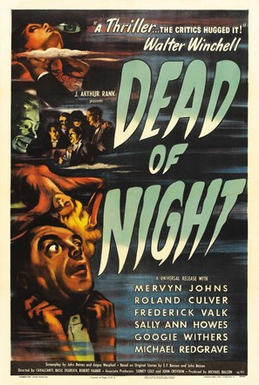
Influential Horror

Media has a tremendous effect on society.  We all know that, and every four years elections prove it time and again.  Like an infinite loop or Mobius strip.  The Brits knew this well.  During the Second World War (which we seem eager to repeat), it was against the law to produce horror films in the UK.  Such things can demoralize, don’t you know, old chap?  The first British film to claim horror’s reopening was Dead of Night, released in 1945.  Germany had surrendered in May and Dead of Night, like a breath being held, was released in September.  Although hardly scary by today’s standards, it was an enormously influential film.  It’s an anthology with a framing story that ties all the pieces together.

Walter Craig is an architect called to visit a farmhouse that requires renovation.  Upon arriving, although he’s never been before, all the people at the house are familiar to him from a recurring nightmare he has and vaguely remembers.  He feels that something bad will happen since his dream seems to be a premonition.  Meanwhile, each of the guests tell their own uncanny stories.  Since this is horror, we know that the nightmare will exact its due.  Craig ends up murdering one of the guests before waking in bed.  It was his nightmare.  He receives a call to come to a farmhouse that requires renovation.  When he arrives it reminds him that the nightmare is about to play out in real life.

The movie influenced many others.  The most famous segment—a ventriloquist that goes mad when his dummy takes over—was fuel for many haunted doll stories.  One of the tales was based on a real-life murder than had taken place in Britain in 1860.  As I learned from Wikipedia, however, the most stunning effect the movie had was on cosmology.  You may remember from science class that a debate about the origin of the universe was fought between two models: the Big Bang theory and the Steady State theory.  What they don’t teach in science class is that Fred Hoyle developed the Steady State theory based on this movie of the recurring loop of a nightmare that the dreamer is helpless to escape.  I’ve been saying for years that horror is due a lot more respect than it’s given.  These movies, as an integral part of the media, do have a very real effect on the world around them.  Dead of Night is a good example of that.  And it’s still a bloody good film, after all these years.


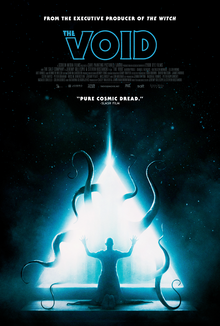
Filming the Void

Once you move away from major studios, it turns out that Lovecraftian horror is rather prevalent.  Seeing that The Void was rated higher than many offerings on FreeVee, well, why not.  It was compared to the intellectual works of Benson and Morehead, but to me it matches more closely with Older Gods.  Like many movies in this genre, The Void isn’t easy to follow and having commercial interruptions doesn’t help.  (In movies made for television, directors know to offer cues at specified times to allow for a break.  I’m not sure that those at FreeVee, or Tubi, or Plex, or their ilk, or even Hulu, know how to do this well.)  So there are these mysterious cultists—somehow “new religionists” just doesn’t seem to cut it—who apparently want to bring about the apotheosis of their leader in a rural setting. 

Meanwhile a local sheriff finds a young man fleeing from a couple of guys who are killing people and takes him to the hospital.  This hospital, however, is being closed down and there’s only a skeleton crew there to handle emergencies until it can be decommissioned.  Once the guys trying to kill the young man arrive, the hospital is surrounded by the cultists.  By the way, there will be spoilers—just saying.  It never is adequately explained how these killing guys know who these cultists are, unless it happened so fast that I missed it.  In any case, all trapped in the hospital there’s the problem with a monster that has tentacles (Lovecraftian) that takes over the body of a nurse, then a tries to get a state policeman.  Lots of axes and gunfire, and the numbers in the hospital are reducing.

It turns out that the kindly old doctor is the leader of the cult and he’s trying to raise the old gods so that he can bring his daughter back to life.  The sheriff, who’s been the protagonist all along, knocks said doctor into the eponymous void, leaving only two people alive in the hospital.  It’s not really explained where the cultists, who made it into the hospital, went.  Nevertheless, this is a good example of horror and religion (which is ironically Lovecraftian).  The doctor’s unconventional religion is the cause behind the hospital mayhem, and, apparently the killings being conducted by the interlopers are attempts to stop it.  As a horror film it’s effective, if a bit disjointed.  It seems that there’s still a lot to unpack from films that try to bring Lovecraft’s ideas onto the silver screen, major studio or not.


Though This Be Madness

Shakespeare could turn a phrase, alright.  Along with the Bible he’s one of the two most unwittingly quoted sources in the English language.  But he liked to borrow ideas.  Writers have always done this, and it came home to me again watching Robert Egger’s The Northman.  My wife and I intended to see it in the theater two years ago—life gets too busy even to get out to a movie, it seems.  So we had to settle for Amazon Prime.  In any case, I don’t read about films in advance and I avoid trailers when possible.  I couldn’t help hearing, however, that it was a viking revenge story.  Still, it wasn’t until my wife said, “Isn’t this like Hamlet?” that I made the connection—Amleth.  Hamlet.  Scandinavian. Danish.  Okay, so The Northman is based on the legend of Amleth which is the direct basis for Shakespeare’s Hamlet.

Like all of Egger’s feature films so far this one is meticulously researched and very moody.  More than once it made me glad that we live in a civilized society, such as it is.  Those of us who were the runts of our family litters know that bigger kids often get their way by dint of physical intimidation.  The vikings—and this was a good representation of a berserker—took what they wanted because they could.  But Amleth couldn’t have what he really wanted.  He witnessed, as a child, his uncle murder his father, the king.  Said uncle takes the throne and the queen and Amleth vows revenge, but what can a young boy do?  Then as an adult, he’s told by a seer that he made a promise so the viking heads home to exact revenge.

The Northman really isn’t a standard horror movie, although Egger’s previous two films fall into the genre fairly handily.  His next project is Nosferatu, after all.  And The Northman isn’t a retelling of HamletHamlet was a retelling of Amleth, and this is another retelling.  Those who’ve been following Egger’s rise know that his films are intelligent and melancholy and literate.  They also have a way of disturbing that peaceful acquiescence that comes after viewing a less thoughtful movie.  It would probably have made even more of an impact had we been able to get to it in a theater.  If it weren’t for Shakespeare most of us probably wouldn’t know the story of Amleth, but Norse mythology has a way of remaining relevant, despite the fact that we tend to credit the ideas to others.  Just check the name of the day of the week and see if that’s right.


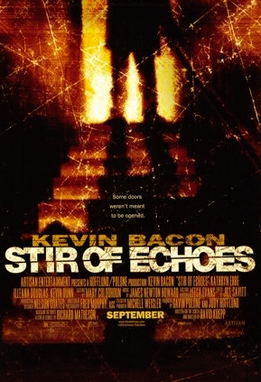
Mind Echoes

One of the things that must be frustrating about making movies is that so much competition exists.  Even when you hit on a great idea, such as using a Richard Matheson novel for a story basis, others might be producing something similar.  This isn’t unique to movies, of course.  Some of us have had the experience while writing books.  For those of us who watch movies online, rather than in theaters, the timing differential can still warp perspectives.  I’d not heard of Stir of Echoes until I stumbled onto a website that lists horror movies that have a little something extra.  While watching it I couldn’t help but think of The Sixth Sense, which I also saw at home, but quite a few years earlier than Stir of Echoes.  The acting in the latter is quite good.  The haunted kid pulls this off effectively.  And Kevin Bacon and Kathryn Erbe do a great job as parents (actor-wise).  Spoilers follow.

If you’ve intuited that the child sees dead people, you’re not far off.  It’s actually only one dead person and it’s not a Shyamalanian counsellor.  But the spooky part is his dad begins to see them too, after he’s been hypnotized by his sister-in-law, who’s an amateur.  At its heart the story follows the traditional trope of the undiscovered murder.  It does a good job of hiding the perpetrators until near the end.  The build-up is good also, with Bacon portraying Roy Neary-like obsession (interestingly, they’re in similar professions) quite well.  

The scary part, for me, was the sense that you’re not in control of your own mind.  There’s perhaps just a little too much possibility here.  We tend to think we own our minds, but what if they’re really just on loan?  I remember reading, as a high schooler, that religious people are difficult to hypnotize.  Hypnosis is still not well understood.  The larger fish in the pond is consciousness itself, which we really can’t even define.  We do know that memories are altered with time, and we can demonstrate this to ourselves by rewatching an old movie and seeing what we got wrong.  I suspect that’s why Stir of Echoes is so effective as a horror film—taking us into the realm of mind exposes us to so much that we really don’t understand.  And since ghosts seem to be pretty believable, well, the combination works.  Stir of Echoes is unsettling and a cut above much of what’s available for free streaming.  So if you’re in the mood for a ghost story, this might just fit the bill.


Nun too Soon

Following a horror franchise from the beginning is a rarity.  At least it is for me.  Now that I’ve seen The Nun II, I’m caught up on the Conjuring universe, for now.  I’ve written an article, still awaiting publication, on the Catholicism in this cinematic universe, and The Nun II has me wondering: how hard is it to find out the basics about Catholicism?  The movie is okay for big-budget horror, but not great.  The Catholicism in it feels like it’s imagined by writers who speculate on what it might be without ever, say, attending a mass to find out.  And the demon Valak isn’t exactly rank and file either.  The idea of using St. Lucy’s eyes as a relic was, however, pretty creepy.

So, after The Nun, Sr. Irene has gone to a convent in Italy.  A series of bizarre clerical deaths sweeps across Europe and all the Vatican can think to do is send the one young nun who’s faced this demon before.  No priest this time because Fr. Burke is dead, rather laconically stated.  Sister Debra sneaks along and the two nuns find themselves facing a demon that immolates priests because it can’t find a relic it wants that will make it even more powerful—the eyes of St. Lucy.  Said eyes are buried in a ruined chapel in a Catholic girls’ school in Aix-en-Provence.  This is the school where Frenchie (from The Nun) now works as a handyman.  We all know he was somehow possessed at the end of that film.  The girls’ school used to be a winery and Valak is defeated when the nuns consecrate a pool of wine that banishes the demon.

At this point in time, the Conjuring universe has grossed over two billion dollars.  All of the films are explicitly religion-based horror.  Putatively in a Catholic setting, they feel like Protestants trying to guess what Catholicism must be like.  At least they feel that way to me.  The Nun sequence in particular, has demons responding to defenses that would not, in a Catholic world, work.  As much as I may disagree on the theology, nuns can’t consecrate wine.  And it turns out that Sr. Irene is a descendant of St. Lucy, one of the virgin martyrs.  Although that title is sometimes given as an honorific, it does generally mean that such saints had no progeny.  Death by thurible is fairly clever, though.  Like all the films of the franchise, The Nun II is worth watching, but it fails to convince on the religion front.  It just doesn’t feel Catholic.