American Revolution

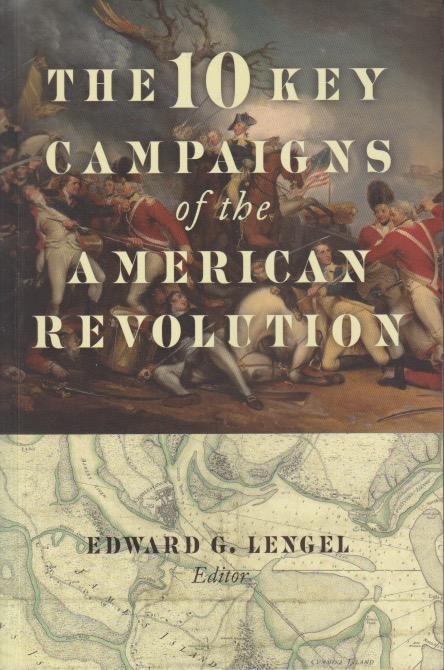
In these days when America seems to be a nation purely for purposes of stoking Trump’s ego, and the Supreme Court agrees that’s our purpose, many of us are looking for some sense of balance.  I think that was behind, at least subtly, our family trip to Valley Forge this summer.  It was there that we purchased The 10 Key Campaigns of the American Revolution, edited by Edward G. L’Engel.  Now, I’m no fan of reading about wars; I’ve always believed that “rational” beings could come up with better ways of resolving differences.  Some guys like to fight, I know.  And in the case of American liberty we had a king who only wanted to use America for his personal glory.  Wait.  What?  In any case, I would not likely read a book about war, but I feel I need to find some connection to the country that existed before 2016.

My wife and I read this book together.  It is an edited collection, which means that the chapters are uneven.  Some military historians like to get down to the details whereas I prefer a wider sweep.  Nevertheless, as a whole the book gives a pretty good sweep of what happened during those revolutionary years.  Starting with Lexington and Concord, prior to the Declaration of Independence, and moving through the campaign to take Quebec, the loss of New York City, the battles of Trenton and Princeton, Ticonderoga and Saratoga, Philadelphia, Monmouth, the battles in and around Charleston, and finally, Yorktown, the essays give an idea of the breadth of the fighting.  The authors also make the point that this was a civil war, the first of at least two in this country.

Americans have, until the internet, learned to get along with those who are very different.  Now we hang out in clusters of those like us and hate everyone else.  That’s one of the reasons why, living many years in New Jersey, that we unplugged and got out to see these sites.  I visited Lexington when I lived in Boston, and we visited the scene of the battles at Princeton and Monmouth, as well as Washington’s Crossing, when we were in Jersey.  We’ve been to New York City and Philadelphia, of course, but these cities have changed much, showing what can happen when people cooperate instead of being divided against each other.  The same is true of Charleston, which we visited a couple years back.  Although not my favorite book of this year, strangely this one gave me hope.  Maybe America can overcome this present crisis as well.

Historic Crossing

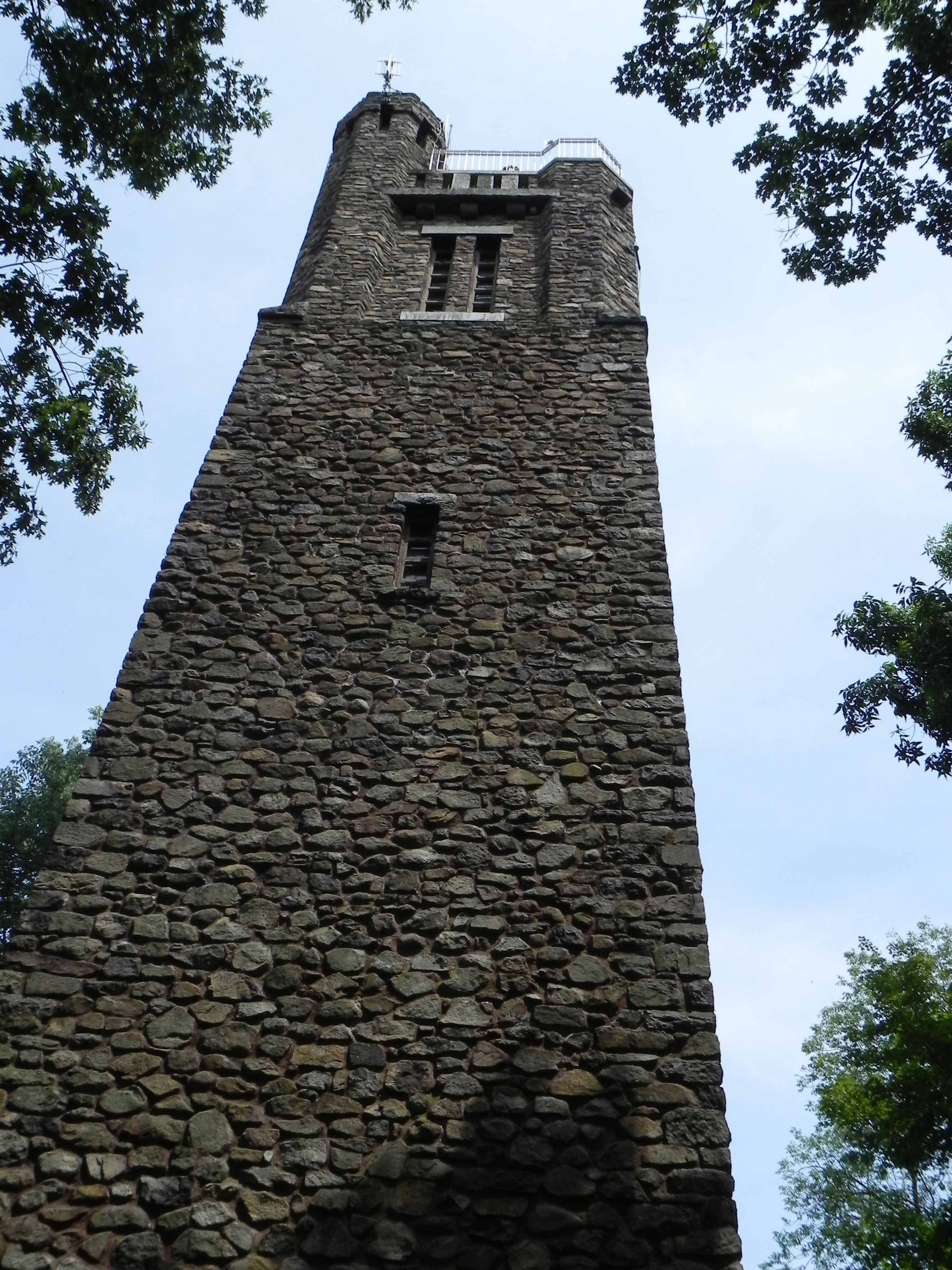
If Washington crossed the Delaware, I figured, so could I. Of course, I have a car and I was going from New Jersey to Pennsylvania, but history doesn’t always repeat itself precisely. In New Jersey, the landing side of the crossing, a modest park marks the spot, along with plenty of space for outdoor activities. Pennsylvania, meanwhile, has a tripartite park which includes sculptures, an historical village, and a tower. The tower was built from 1929 through 1931 in commemoration of the momentous crossing. My mother visited the site as a teenager, some few years after it opened. On a mission to recapture part of her childhood, I made a visit to see a bit of history, and also to experience the great views. As far as towers go, this one isn’t the tallest, but in Bucks County, it is among the highest points and you can see for many miles on a clear day. On the top of the tower I overheard a man explaining to his family that Washington built the tower in the 1700s and that it was used in the Revolutionary War. He lamented that it would be easy to be trapped on top of the tower, and urged his kids to imagine what it would have been like.

DSCN4865

My thoughts went to the Bible. We’ve come to know through archaeology and comparative sources that many of the events portrayed as history are about as accurate as having Bowman’s Tower built by a long-deceased George Washington. And yet we continue to teach children that stories for which no evidence exists are history. We don’t always have a good grasp on how to tell the difference. In the United States George Washington is nearly divine in reputation. His travels are attested on an almost omnipresent scale; even my childhood home of Franklin, a tiny burg near the Ohio border in Pennsylvania, saw visits from the general. I grew up knowing little of the history of the man who would become the first president. I did know, however, that he’d crossed the Delaware.

History is not so easy as it seems. What “actually happened” on the ground may not offer much meaning to those who seek it. Only when the events become story—sometimes sacred story—do we start to get a sense of why the Bible has such a grip on a large swath of the human race. It is story with no apology. Its historicity is far beyond recoverability: who saw the creation of the world? Even the events in the human timescale were written, for the most part, centuries after the occurrence, with all the liabilities that entails. Built by members of the Washington Crossing Park Commission, the park I’m visiting intends to demonstrate the importance of a singular event that led to the freedom of an entire nation. Indeed, the crossing of the water to free a nation has a distinctly biblical feel to it. And even if that first exodus never happened, we tell our children it did, and we have no less a figure than George Washington building a tower to prove it.


Buttons and Bows

I don’t remember what year it was, but I remember precisely where. On one of my countless trips out back—to or from school, to burn the paper garbage, pet the dog, or wander in the woods—I noticed something poking out of the dirt. The path between my step-father’s house and garage was well-traversed, and a little rise there was bald at the top, and what I saw emerging from its underground lair was round and dull. I’ve always had fantasies of buried treasure, so it is difficult to pass by anything suggesting a coin on the ground. This turned out to be a button. Not a regular, button, however. This was clearly military, and old. It was just appearing from a long rest under the ground and I didn’t know how long my step-father had lived in that house, but it had obviously been many years. There was no internet those days, but it soon became clear from my amateur researches that this was a Civil War era button. It still had a scraggly bit of dark blue thread attached. I never bothered to dig to see if the rest of the soldier was there.

Western Pennsylvania, while far from the striking Revolutionary history of the eastern part of the state, had seen its share of military transients. George Washington had established a fort in nearby Franklin, where I was born, and I was sure that more than a few Civli War soldiers had tromped through this area, although it was far from Gettysburg. I treasured that button and kept it with the very small coin collection I had amassed. It just so happened that our minister was also a coin collector. He took me to coin shows and we would sometimes exchange old pennies. One day he told me about his button collection. I mentioned my find, and he showed a great interest. In fact, he promised he’d complete my wheat-back collection from 1909 to 1958 in trade for my button. He ended up with my button, but never finished my penny series before some bishop shipped him off to another parish. History had slipped through my fingers.

Repeating patterns

Repeating patterns

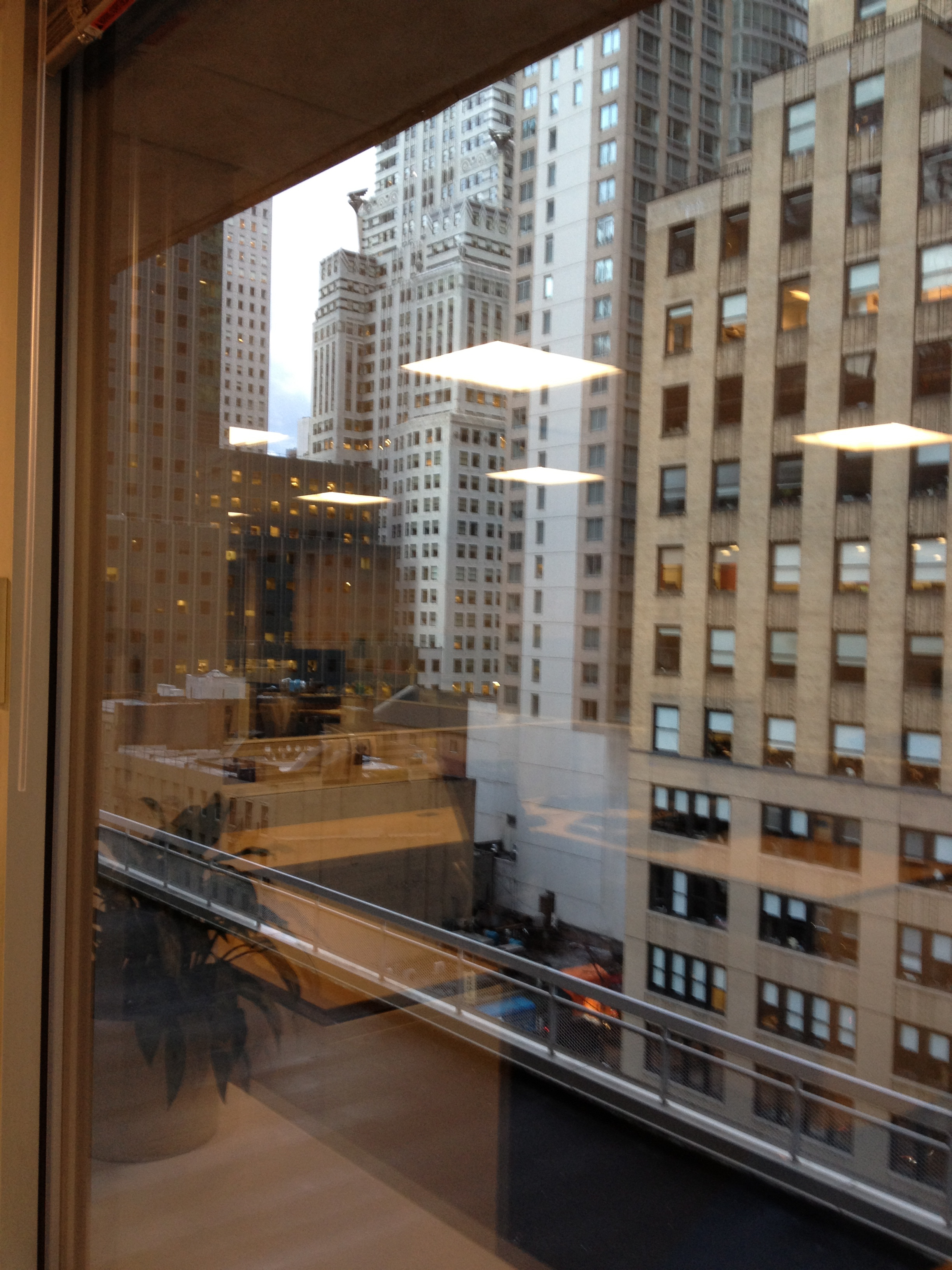
Patterns are reinforced by repetition. One of the severe beauties of Manhattan is the rows and rows of identical windows. Patterns also persist in time. I stopped collecting coins ages ago, but I still squirrel away any wheat-back that lands in my pocket. Even in average condition a “wheatie” is worth double its face value. But face value is not always what it seems. Value lies in that in which we invest ourselves. I followed my mentor to seminary only to find myself traded off for many a finer specimen. Uncirculated, likely. This particular piece had been scuffed and banged against others so long that the patina warned that more might be hidden than meets the casual eye. And somewhere in rural western Pennsylvania there may be a dusty corpse just waiting to be discovered. Victims of war come are sometimes just beneath the surface.