Material Whirled

With the moon and Jupiter waltzing slowly so high in the sky, radiating such brilliance early in the morning over this past week, it is understandable how ancient people came to see the gods as material objects. The course of progression seems to have been physical gods to spiritual gods: the earliest deities ate, drank, made love, fought. They were of the same substance as humans, or at least of the same psychological makeup. The Egyptians, Zoroastrians, and Greeks all toyed with ideas of beings of “spirit”—non-corporeal entities that did not participate in our material world, but were able to influence it. In the world but not of it. The tremendous gulf between great goddess and material girl was born. Today that concept is taken for granted, especially in western religions. We are locked into physicality while God is free to come and go.

Many religions respond to this by suggesting that we should look beyond the physical to the majesty hidden from biological eyes. And yet, physical creatures that we are, we are drawn back to material means to demonstrate our spirituality. One of the perks of working for a publisher is the constant exposure to new ideas. At Routledge I have been learning about the rising interest in material religion: the manifestation of religion through physical objects and rituals. This aspect of religious life easily devolves into a cheapening of faith into mass-produced, religious knickknacks and kitsch. Some mistake this for the real thing. While living in Wisconsin, my family used to visit the spectacular Holy Hill, the site of a Carmelite monastery atop a large glacial moraine. On a clear day you can see Milwaukee from the church tower. It is a large tourist draw.

No visit to such a shrine would be complete without the obligatory stop at the gift shop. Even the non-believer feels compelled to buy some incredibly tasteless artifact to keep them grounded in reality. Many of the items—giant glow-in-the-dark rosaries, maudlin mini-portraits of the blessed virgin Mary (BVM as the insiders call her, not to be confused with BVD) and the crucified Lord on all manner of crosses, line the walls and shelves. This commercialization is not limited to the Catholic tradition. Evangelical groups realize the importance of branding as well, passing out cheap merchandise (or better, selling it) with Bible verses emblazoned on it. These signs of faith sell themselves, but they blur the sacred distinction between human and divine. Does religion point to a reality behind the physical? This is its claim, but what is the harm in making a bit of cash on the side, just in case?

Biblical Sex

Legislation covering female reproductive health maintenance has finally passed. Even in a nation where equality is highly touted, women will have, until 2013, been treated as more expendable than men. A few years back I read Mary Roach’s Bonk: The Curious Coupling of Science and Sex. There I learned that even as of the publication date of her book, many aspects of the female reproductive system were still poorly understood. The reason: lack of interest by (mostly) male scientists. Of all the great equalizers of humanity, it might be expected that religions would step in to champion the cause of citizens routinely treated as objects and chattels. Instead, the opposite has been the case. Most religions, and even until the last century Christianity in the forefront of them, relegate women a secondary status to men. Religion is all about power. Now that legislation will allow women basic reproductive rights without extra fees, Catholic hospitals are concerned about the implications. “They defied the bishops to support President Obama’s health care overhaul. Now Catholic hospitals are dismayed the law may force them to cover birth control free of charge to their employees.” Thus begins an article in today’s paper by Ricardo Alonso-Zaldivar of the Associated Press.

Instead of cheering equality, the church is muttering about medieval conceptions of conception. The entire idea that life begins at conception was not even possible in the biblical world where sex did not involve sperm and ova—such things were unknown in those days. The Bible has a few clues to when human life begins, and generally it is thought to be at first breath. Semen should not be wasted, however, since it was thought to be the full set of ingredients to grow new people. The uterus was simply a waiting area, a comfy place to grow with regular womb service. Men were the creators, women were the deliverers. That idea of reproduction formed the basis for all biblical and other ancient legislation on the subject. Comprehending “conception” as now scientifically understood, was only possible with the invention of the microscope. In response, a sexually underdeveloped church decided that the new data strengthened the male hold on ecclesiastical authority. Once the seed is planted, there’s no uprooting allowed. What male, after all, has ever had to carry an unwanted pregnancy to term?

Female religious leadership was recognized in many early societies, and even in some branches of early Christianity. No legitimate rationale exists for saying half the human race is disqualified on the grounds of basic hardware. After all “male and female created he them.” Concerns of “purity” for an age when menstruation was not understood could be marshaled to the cause of male supremacy. That mystery was solved when conception became clear. An unequal result emerged nevertheless. Since women couldn’t be discounted on genetic grounds, they could on the basis of “impurity.” And here we are two thousand years after pre-scientific Christianity was conceived, still waiting while a coterie of all-male bishops castigates normal health care for females. Believers like to suppose that their leaders receive special word from the mouth of God. Those leaders tremble in the face of true equality for the very first word the Bible has to say on the subject is “So God created man in his own image, in the image of God created he him; male and female created he them.”

Who's superfluous here?


Reverend Sanders?

According to the Associated Press yesterday, Yenitza Colichon was sentenced to 18 months’ probation for child neglect and cruelty. The charges stemmed from a 2007 religious ceremony in which her seven-year-old daughter was made to watch a chicken sacrifice in New Jersey, and the girl was fed the animal’s heart. The practice is part of the Palo Mayombe religion of central Africa. This whole incident highlights the vital question of when religion crosses the line into child neglect. Many of us bear scars—some psychological, some physical—from our religious upbringings. It has been concluded by psychologists that children do not possess the level of abstraction necessary to deal with religious concepts until they are about the age of twelve. Parents, often fearful of eternal consequences should their children depart the one, true faith (whatever that is), begin religious instruction early, often passing their children off to others who are in no real sense an expert in the religion itself.

The United States embraces, on paper, the concept of freedom of religion. Rightly, it seems, the strong arm of the state will step in when a child is endangered or neglected. The unanswered question is at what point does this neglect or endangerment occur? Authorities turn a blind eye if the faith is time-honored, and, especially, if it is of European/American extraction. Typically of the monotheistic variety. What is standard practice for other religions, as this case demonstrates, may be called into question. Sacrifice is also at the heart of the Judeo-Christian tradition. Sublimated into different forms for both political and theological reasons, those of us in that tradition have abstracted sacrifice to bloodless words on a page. When we see red, child neglect and cruelty are cited.

Religions frequently make extreme claims over the lives of their adherents. Most religions relax such claims for children, but others continue ancient practice that is tacitly condoned. Sometimes those permissible rites cause real physical pain and scars. If under the hand of a moyel, okay; if scarification in African tradition, not okay. Religions denigrating personal achievements of the young, setting them onto a path of failure, okay; religions ritually killing animals, as even the Bible demands, not okay. Without making any judgment on specific religious outlooks, the reality of lingering effects remains. Are the terrors of Christian nightmares inspired by tales of Hell any less cruel than watching a domesticated animal die? Is eating a chicken heart any less unusual that fish on Fridays? Is being unfamiliar with a religion grounds for dismissing its authenticity or claim for equality? Some of us find animal sacrifice distasteful, but if we proclaim a tidy sacrifice each Sunday, and share it with our children, that particular rite/right is protected by law.

What would (wiki-commons) chickens do?


Stranger Tides

Yo, ho, ho and a plate of spaghetti

The closest I’ve come to appreciating pirates is the command of the Flying Spaghetti Monster that its devotees must wear pirate costumes. Nevertheless, being only human, I was curious about the fourth installment of Disney’s Pirates of the Caribbean series although the old storyline had mercifully died out. This weekend my family joined a handful of others still showing interest and went to watch Captain Jack Sparrow’s antics on the silver screen. Perhaps it was because this movie actually followed, loosely, an actual book instead of a theme-park phantasmagoric pastiche, but I found the movie surpassed my expectations. I’m discussing it here because of the heavy dose of religious concepts brought into the story by the inclusion of a missionary.

In typical Pirates fashion, the character introductions are unconventional, and so it is with Philip, the missionary. Tied to a mast on Blackbeard’s ship as a kind of human talisman, the poor man is cut down by Sparrow and a crewman during a mutiny. The crewman declares to Philip, “You are either for us or against us!” to which the missionary replies, “I am neither with you, nor am I against you!” The crewman asks Sparrow if that is possible, to which Captain Jack replies, “He’s religious, I believe it’s required.” This was possibly the funniest line in the movie, but it was so because of the underlying truth. The sarcasm here is directed at a representative of a church that will ultimately lead to the destruction of eternal life. Granted, the agents of that destruction are Catholic, presumably.

Once the fountain of youth is discovered and Blackbeard and Barbossa engage in their swordplay, Spanish troops arrive and promptly destroy the pagan fountain declaring that the church (presumably Catholic) is the only means to eternal life. The Protestant missionary, meanwhile, in an act of self-sacrifice returns to free a misunderstood mermaid. (This is Disney, after all.) The dialogue is difficult to remember from a single viewing, but the addition of religious elements beyond the supernatural lent a gravitas to this final Pirate film that the others lacked. Even placed among the fantastic, the religious elements grounded it in a reality where faith, sacrifice, and fortitude became intrinsic to the story. I doubt I’ll head off to the Spanish Main any time soon, but I appreciate movies that offer a bit of substance along with their entertainment on that transatlantic crossing.


Palm Versus Palm

“Mankind [sic] has managed to accomplish so many things: We can fly!” The words are not mine, but, depending on whether he was standing or sitting when declared, the Pope’s or God’s. In his Palm Sunday sermon yesterday the Pope addressed the issue of technology. Acknowledging flight a mere century after it began is breakneck speed for the Roman Catholic Church, but the concern behind the sentiment is real enough. Can religious systems survive the full onslaught of the technological revolution? As one small sample of the larger picture, ethics must react to increasing advanced technological scenarios. Raymond Kurzweil’s proposed Singularity where human and machine are fully integrated is perhaps an extreme example, but by no means the most extreme. Without fully understanding the context, our technical ability has soared way beyond our capacity to foresee implications. Believe it or not, many people alive today cannot use personal computers, have no palms, no cells. Sounds like they might be living free.

Palm Sunday is a day of tradition, heavily freighted as the start of Holy Week (in the Western tradition; of course, many Christians think it is a little too early some years, but that’s for a different post). Fronds from actual trees are waved as the Pope speaks. In the crowd palms are also being utilized to send the news home that one is waving a palm in the presence of the Pope. Traditional Christianity can survive with only the most rudimentary of tools. Religion, from the available evidence, began in the Paleolithic Era – earlier, I am pretty sure, than even the first integrated circuit. With its iron grip on the human psyche, religion is not about to disappear. Instead, technology is either ignored or embraced by it. As long as religions rely on human participation, however, technology will need to be reckoned with.

It's still a date (or palm)

The fact is technology has changed the perception of the world for many, especially in the western world. Even the revolution in Egypt earlier this year was conceived on the Internet. All the indications point to increased usage of technology rather than its imminent demise. Yet religious leaders still enjoin us to wave palm branches. Virtual Church websites abound where the faithful can wave electronic fronds and nary a tree will be harmed. Sermons, discussion groups, Bible readings, prayers – they can all be dispensed through wireless networks and modems. While many traditionalists turn from such ideas in disgust, it would behoove us all to pay attention. With the Vatican now onto the fact that we are flying, within mere decades we might receive a divine message on – oh, wait a minute – I’ve got mail!


O Tenn Won’t You See?

Truth goes to the highest bidder. In the United States the highest bidder is the party with the numbers to get elected. Truth by democracy. Once again Tennessee is flirting with Creationism, if not having already climbed into bed with her. High school biology teachers nationwide are afraid to take on the issue directly; many of them are told by their clergy that the concept itself is anti-Christian. This is what happens when mythological needs go unanswered. No one has yet deciphered why human brains evolved the capacity to believe in outside agency beyond the realm of nature. Many Fundamentalists use the phenomenon as proof of their pre-decided answers, despite their willingness to utilize this evolved Internet to spread their ideas. If evolution is false the Internet does not exist.

The larger issue here is the fact that educators have, by-and-large, dismissed the impact of religion. Particularly in higher education. Everyone has their own religion, we don’t discuss it because someone will become offended, and we pretend that, gosh-darn-it, people are just too smart to believe all that. Meanwhile millions of tax-payer dollars are wasted on cases continually going to court where one subset of one religion insists that its mythology has a right to be taught as science. Even the Fundamentalist’s strange bed-fellows in other conservative issues, the Roman Catholic Church, has stood up and put on its slippers. This one is not a matter of opinion, ecclesiastical or otherwise.

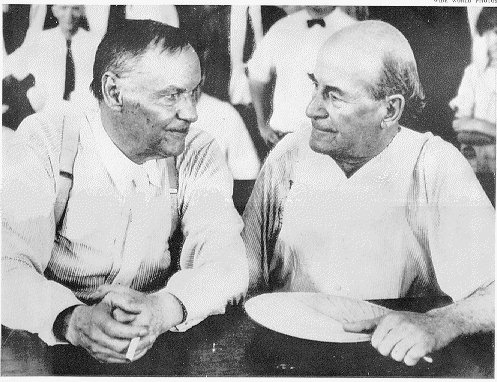
But religious folk understand that if they elect the right candidates, the issue can be forced again and again. The Creationist tactics are evolving to fit the situation. Meanwhile, not only religion, but also the study of history is largely dismissed as irrelevant. It is history that demonstrates the birth, growth, and current goals of the movement. The Scopes Monkey Trial was nearly ninety years ago, but it may as well have not taken place yet. If William Jennings Bryan had been smart, he’d have waited until his cohort had had time to carefully sow their seeds, water, weed, and fertilize them (using the oldest known material to ensure growth – plenty of manure) and then take it to legislators. The results are as predictable as the sunrise over our flat earth.

Seems just like tomorrow...


Freedom or Religion

Reform seems to be in the air. Its effectiveness varies from location to location, but what remains constant is the impact on religion. Or religions’ impacts on those dissatisfied with its application. As Syria begins to follow Egypt and Libya, a sense that the authoritarianism imposed by religious ideals is somehow flawed is sublimated in the news, yet clearly present. Regimes, be they Islamic, Christian, Hindu, or any other belief system, count on unquestioned authority to maintain control. Even the Catholic Church has been toying with reform – quietly, slowly – for any admission of change calls into question the authoritarian roots of power. Once that basis begins to crack, freedom has a chance to emerge.

In American society where freedom has perhaps blossomed most fully, there should be no surprise that a religious backlash is underway. In many ways liberty and religion stand at odds with each other. Religions make universal claims, drawing authority from none other than the One who started it all. Freedom begins at the ground and works its way up. Humans are natural followers, flock animals. Remember, Jesus said he was like a shepherd. When the shepherds apply the crook a little too liberally, even the sheep begin to plot. In many nations of the Middle East, the faithful have been kept in poverty and subservience. The Berlin Wall, however, was in the minds of the intimidated.

The United States has even backed the cause of the oppressed overseas, attempting to break up dictatorships that began before I was old enough to remember. And yet in our own backyard the Religious Right continues to make America like a western version of Syria or Libya. A nation of people under the rule of legislated morality that certain distorted versions of the Christian gospel advocate. Prevent equal rights to women and minorities by keeping the seat of power within the WASP community, although you may have to bring in some Catholics and Mormons to assist with the cause. The eyes of the world are on the Middle East, for any whiff of freedom, however faint, is cause for hope.


Crossing Italy

“Poor men wanna be rich, rich men wanna be king, and a king ain’t satisfied ‘til he rules everything” – sage words of a young Bruce Springsteen. Of course, “man” may well apply to institutions as well as individuals. According to a recent story in the New Jersey Star-Ledger, the European high court has ruled that it is appropriate for public schools in Italy to decorate their classrooms with crucifixes. While this may not seem unusual for the heavily Roman Catholic nation, indeed, the homeland of the church itself; nevertheless it reveals much of the nature of religion. Religions, like Springsteen’s human characters, want to take charge of everything. Partial rule just isn’t good enough in a business that deals with absolutes.

Not every citizen in Italy is Roman Catholic. Some are not even Christian. State sponsored schools bearing the insignia of the church’s glory days send a message that can be heard from the highways to the backstreets: Christianity rules! If we wheel the world around a few degrees further we will find similar rhetoric in nations like Iran, only the specific brand of religion has changed. The message is distressingly familiar: Islam rules! There was a time when the church could likely be called the only true superpower in Europe. We remember that time now as the Dark Ages.

As campaigns for next year’s elections in the United States are pumping up, we are hearing quite a bit about candidates’ religious convictions. That which used to be a private affair has become an emblem emblazoned on a flamboyant flag declaring “Gott und Ich” to the world. Worse, the religions are being used to score votes. Once in office, that religion will return to its flaccid state and politics will be business as usual. The populace, however, has trouble seeing through this. Religion is injected with such emotional freight that leaving it out of elections – or classrooms – is like abandoning a helpless infant. As they nail their crucifixes to the walls of public schools in Italy, I’ll be over here with Bruce surveying these badlands.


Zounds

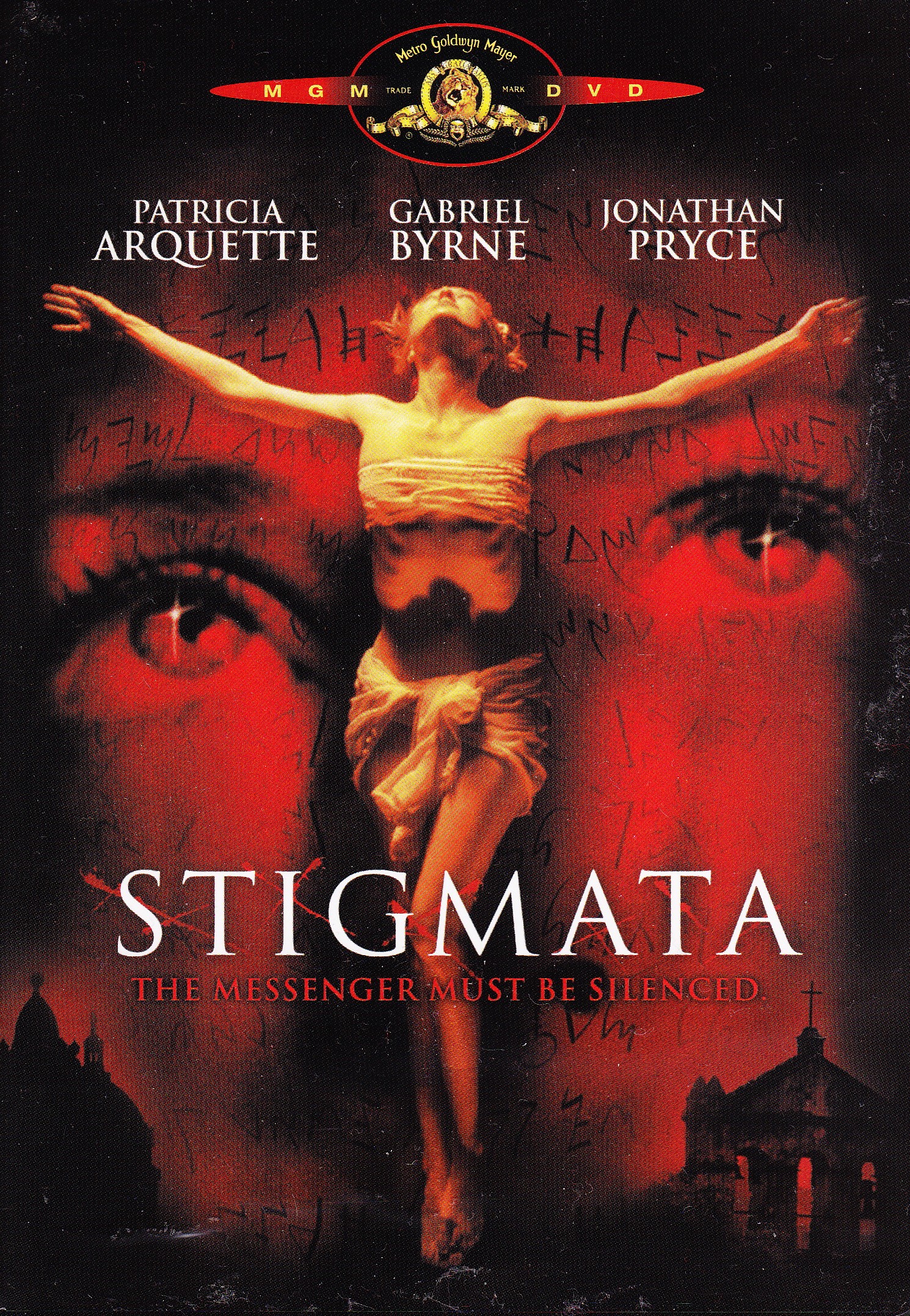
Back in my first exposure to state university life in Wisconsin, I frequently received eager guidance from students on religion in the media. After having taught in a seminary where interest in the world beyond ecclesiastical walls was rare, this exposure to wider interpretation was welcome. One of the movies suggested to me by helpful undergraduates was the then fairly contemporary Stigmata. My interest in horror films was burgeoning again after my nightmarish experience at Nashotah House, so I watched the movie with renewed appreciation for the abuses presented on the part of the established church. I rewatched Stigmata this past weekend and a number of features stood out as apposite for this blog.

As always in movies, liberties are taken with reality. Stigmata presents the Gospel of Thomas as a serious threat to Catholicism. Of course, even the Gospel of Judas made a public splash back in my Oshkosh days, but the great Titanic of the church remained steadily afloat. The contents of the Bible are secure and non-negotiable for the vast majority of Christianity. There is no more room within its black leather binding for further revelations. The movie also presents a woman – an atheist, no less – as being the vehicle for a truth she can’t understand. In the masculine citadel of the Catholic Church she must be silenced, in an overly dramatic way, of course. The message seems to be that religion is unwilling to learn from secular women, even if they bear the truth.

The critics were not kind to the movie, but I found it a strangely religious film. The premise behind it advocates the reality of Christianity, only the Jesus of history is occluded behind a great mask of human tradition. Enamored of power, the church decides what will be revealed to the masses since control is more important than truth. A woman cannot correct the false belief of men, since a masculine god has given manly instructions to a male institution. Underneath it all, however, is a virgin Mary weeping real human blood as half of humanity is simply disregarded by the half that retains its abusive strength. Perhaps the commentary was a little too close to home, even for the (mostly male) critics.


If You Ash Me

It was a familiar British voice on the BBC that first introduced me to the concept of Dismal Days. As a very frugal couple newly married and living abroad for the first time, my wife and I had little entertainment other than the radio. Doctoral candidates didn’t have time for television, and besides, in Britain you had to pay for a television license in addition to the electricity it would cost to watch it. We didn’t even use our pathetic wall heater in winter. When the BBC 4 announcer mentioned that it was a medieval dismal day, my wife and I exchanged bemused glances. The concept has become part of our mental warehouses. Today is not a medieval dismal day in that sense, but Ash Wednesday brings a dreariness all its own. As a young Fundamentalist I didn’t know about this particular day, but when I attached myself to the local Methodist congregation I learned a history lesson.

Methodists descended directly from Anglicans (Church of England). And as I learned in my ill-fated Nashotah House days, some Anglicans believe they never really separated from Rome. Ash Wednesday has now become a widely recognized day of mourning and repentance (as if all days weren’t such) and for many years I submitted to the ashes. It was always with wonder, however, since Jesus purportedly said not to show any outward signs when you are lamenting. I wondered where the tradition began. The earliest references to Ash Wednesday date from the papacy of Gregory the Great, in the eighth century of the Common Era. It is just like the Middle Ages to add drear to an already dark and cheerless season. Lent was originally intended for reflection, but in the macabre mind of the Dark Ages it became an excuse for utter misery.

Dismal Days are actually far older. In origin we again have the Romans to thank, although they blamed the Egyptians. In Roman society two days each month were deemed infortuitous to begin important ventures. In fact, the word “dismal” derives from the Latin for “evil days.” The idea that certain days are especially gloomy is a hangover from superstition that many rational people have now completely disregarded. Many of those rational people, however, will be spotted today with ashes on their otherwise hygienically cleansed foreheads.

Why not buy in bulk?


Shake Your Booty?

The Roman Catholic Church has been making headlines again. Yesterday’s newspaper afforded two headlines to the great mother church – or maybe I should say “pleasant parent church.” The first story regards the Pope’s new book, Jesus of Nazareth-Part II, due for release next week. In it the Teutonic Vater exonerates the Jewish people for the death of Jesus. The embarrassing mastodon in the room, however, is why the church ever blamed the Jews in the first place. From the beginning Christian theology declared Jesus’ death part of God’s master plan. It also provided a convenient excuse for centuries of hate crimes that continue to this day. Believers, however, are quick to justify God’s actions, even when the Bible tentatively raises its own objections. In my prophet’s course, many students had trouble accepting the fact that the story of Micaiah ben-Imlah in 1 Kings 22 indicates that God sanctions lies in the mouths of prophets for a larger divine purpose. Perhaps we should also look for Micaiah ben-Imlah-Part I on the bookstore shelves soon.

The second article, already making its rounds on the Internet, concerns a new translation of the Bible. Shaking the traditional word “booty” from its vaunted position, the Ash Wednesday Bible calls it “spoils of war.” I was pleased to see my personal friend Bishop Sklba interviewed as part of the release publicity. As he rightly notes, “English is a living language,” to which some have subtly added, “and a dying art.” The article rehearses the sophomoric tittering at funny-sounding verses that has plagued the church ever since the laity have been educated. Gelding the Bible is a small price to pay for sanctity.

Regardless of efforts on the part of the religious, the Bible remains an often bawdy text set in the context of a sexist and supersessionist world. It is the world in which the Roman Catholic Church came of age. As we start to see the first, faint blooms of a distant equality beginning to push through a vast leaf-litter of decomposing, brown tradition, the theology and foundational document of the church require some window-dressing. In this world of aggressive, bully governors and oh-so-self-righteous politicians, it is encouraging to see a massive religious organization bashfully blushing and suggesting that shoving others may not be the best method of getting your own way. Could it be that the church still has some valuable lessons to teach the world?

Oh, uh, sorry about that...


Carrie That Weight

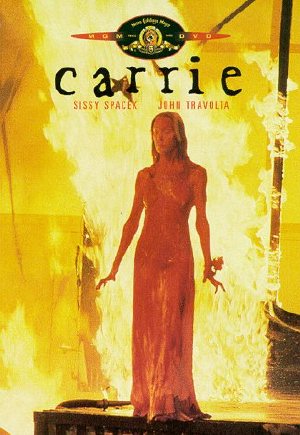
When it comes to keeping up with the classics, I have a lot of catch-up to do. This even applies to classic horror films – I’ve been a fan since college but slipped out of the groove for a decade or so and now I’m working my way back in. Recently I watched Carrie for the first time. Considering that it came out in 1976 (I still remember the original trailers), it has held up remarkably well. The story of the child struggling to become an adult against the wishes of an overweening parent never goes out of style. In keeping with a long-term theme on this blog, the religious element was fully represented as well.

The portrayal of Margaret White as a religious fanatic included incongruous elements that had clearly been selected for their ability to set a creepy mood. The statue of St. Sebastian with an abdomen full of arrows seems a strange fit for a Christianity that is apparently Protestant. Mrs. White’s veneration of the Bible settles better in a Protestant milieu than the Catholic background of director Brian De Palma. The decidedly unnerving scene where Carrie returns home from the prom to find hundreds of candles burning recalls a more Popish atmosphere, but the prayer closet resonates better with reformed traditions. This unholy mix creates a disturbing lack of specificity, as if religion itself is the danger.

Writers and movie-makers attempting to scare audiences have long drawn on the stock character of the over-zealous religious believer. One reason may be the lack of understanding such characters demonstrate towards those who do not share their views. While it would be comforting to suggest that this is a mere caricature, experience unfortunately belies this assertion. Religions around the world all have adherents who brook no rivals and claim victory only in convert manifests or body counts. Truly classic horror films draw their power from a deep honesty. And many people are honestly afraid.


Witch World

Little did I realize when I posted an entry on witches two days ago that the news this week would itself become bewitched. Tuesday’s New Jersey Star Ledger contained a piece entitled “Catholics publish guide to witches and wizards.” Then the next day a former student posted a link to CBC News article headlined “Witches to face prison for false predictions.” Last week the Jehovah’s Witnesses left an issue of Awake! at my door that reveals “The Truth About the Occult.” Coincidence or black magic? Are we really in the twenty-first century? If only employment had the same staying power as superstition there would be no jobless rate to complain about!

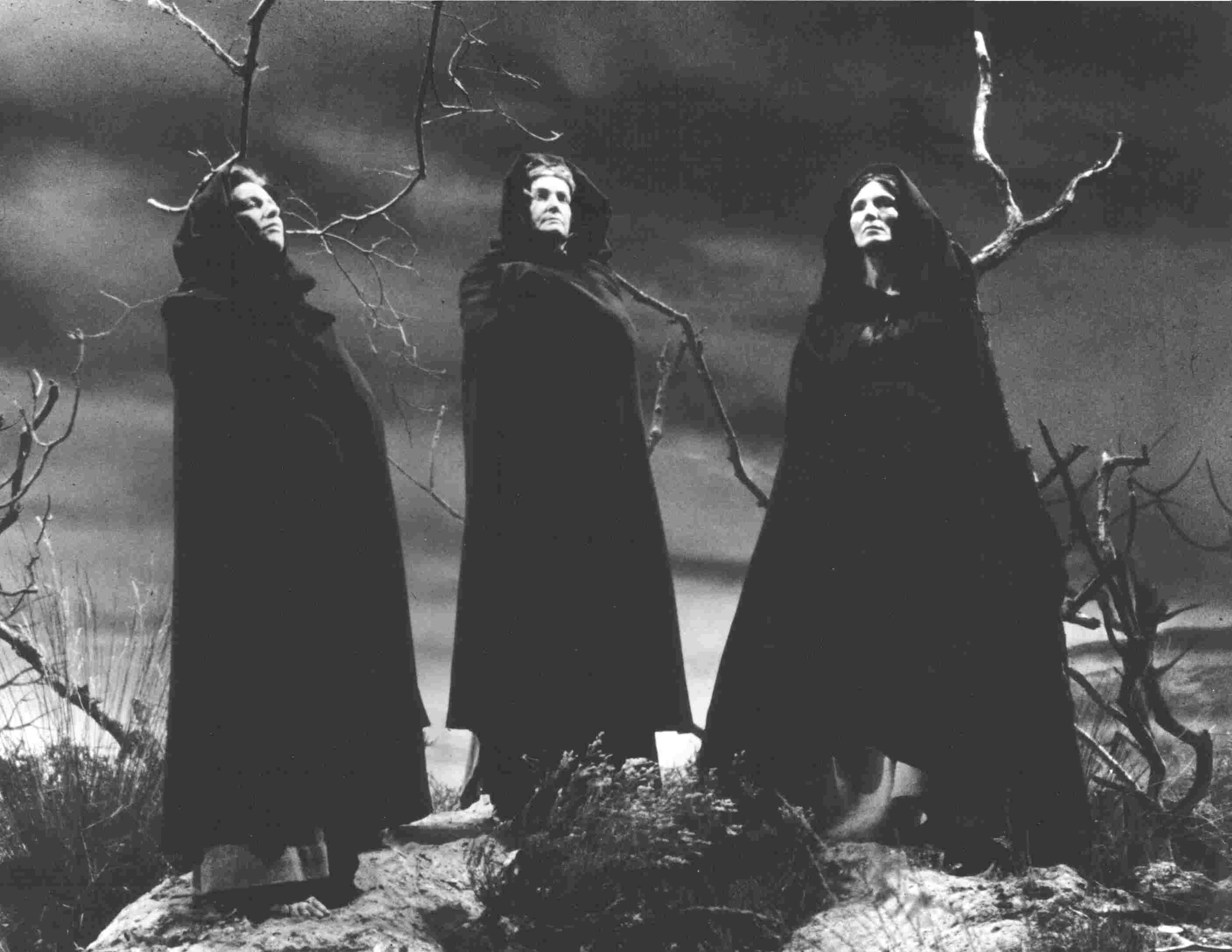
The Roman Catholic Church in England and Wales is concerned about all the interest Harry Potter is generating. Afraid that tweens and teens might tiptoe into the dark side, the Catholic Truth Society has produced a booklet called “Wicca and Witchcraft: Understanding the Dangers.” The booklet, written by a former Wiccan, is a strange answer to J. K. Rowling given that Potter and friends are not members of the Wiccan faith. They are simply fictional witches that haven’t been grounded by the constraints of the Enlightenment. Fantasy grants them their magical powers, not the Devil. In Romania, meanwhile, witches beset by income tax laws are now facing hard time if their predictions don’t pan out. New laws in the economically depressed nation would require witching permits to be obtained and receipts to be given to customers. This is not to sweep out paganism, but to gain some lucre from it. The Jehovah’s Witnesses are just concerned that occult practices, often seen as mere entertainment, might lead the younger generation down the road to sex and violence.

I was disabused of belief in witches before I failed out of kindergarten the first time. Teaching religion and mythology classes at two major universities, I see students from many different backgrounds trying to improve their minds. But once the sun goes down a backlash against the empirical method is nightly unleashed. I’m not sure whether to pick up my Kant and Descartes or my mugwort and rosemary. Religion breeds these darker manipulators of magic, a force against which many fear God has no recourse. So in our world of high tech gadgets and space stations and cyclotrons, we still have to worry about witches. Theirs is a metaphor yet to be fully appreciated.

Weird sisters or strange attractors?


iConfess; Indulge Me

I confess to being a Luddite at times. I was a late-onset cell-phone user and my last laptop (Macintosh, of course) survived ten years of hard, academic use before an accidental drop forced me into a newer model. Now I walk through student centers and see banners advertising “new apps” and wonder what an app is and whether it is something I should have already had old versions of. I’ve figured out that “app” is an apocopated form of application, and that it generally has something to do with handheld electronic devices. Now it seems that I’ve been out-teched by the Catholic Church. That great bastion of faith that agonized over Galileo for four centuries has now whizzed by guys like myself who cut our high-tech teeth on telephones that had rotary dials.

What is this new app? According to the New York Daily News, the app is called Confession. The program apparently lets you choose a commandment that you’ve violated and offers a list of sins to tick off. (I envy the priest who got that job!) A press of the button and your sins are forgiven. Sure is a lot easier than getting down on your knees and telling it all to a guy you barely know. This handy app even automatically tracks the time since your last confession, so you can give it to the holy father in nanoseconds. It only costs $1.99.

Technology has wreaked havoc on ecclesiastical tradition. Only the most severely shortsighted of churches denies the draw and retention of the electronic revolution. Problem is, the worldview that generated these religions simply doesn’t fit into a palm-sized box. The world of century one was full of demons and dragons, and all on a very flat earth. Confession, when it became a requirement, was a visceral outpouring of deep secrets and fears before a black-garbed authority figure who had the power to dole out Hail Marys like a theophanic thunderstorm. Now it can be done at the stoplight on the way to Starbucks. The last time the church had asked for payment for forgiveness Martin Luther nailed 95 Theses to the Wittenberg Door. Today, I’m sure, it would be an electronic error report posted to a Wiki-board Domain, whatever that might be.

Forgive me, Father -- oh! I've got email!


West Texas Dead

A small item from the Star-Ledger wire services proclaims, “Former priest accused of trying to hire hit man.” Since the story was bylined Texas I started to wonder if the accused was someone I knew. Nashotah House boasted more Texans than any other statehood citizenship when I was there, so it was natural enough of a gut-level reaction. Fortunately, it was wrong. A former Catholic priest named John Fiala stands accused of trying to hire a neighbor to assassinate a teenager who’d accused him of sexual abuse. In a travesty of at least three of the ten commandments, a man of the cloth allegedly attempted to bare false witness (the error is intentional).

We hold clergy to a high standard in our society. The mystique of being “called” by God, secreted away in a provocatively named “seminary,” and emerging ontologically superior to other humans has a touch of whimsy that is difficult to dismiss. Having twice been a victim of seminary, once as a student and for even longer as a faculty member, I learned some important truths about those trained for ministry. They are merely human. In fact, my best students were those who recognized and embraced this fact. When I was informed that an ultra-pious candidate was about to “shed the shackles of the laity” and would return from his weekend ordination “ontologically transformed,” I rolled my non-ordained eyes. I had seen the test scores and intense faculty evaluations. Ontological change? We should be so lucky.

So, a man barred from any sexual outlet seeks a silent victim. We should not wonder. Attempting to get a neighbor to become an assassin is a bit over the top, even for most Texans. It does, however, illustrate my point that the laying on of Episcopal hands does nothing to change the essence of a person. Clergy are just as human as anyone they serve. It is when they think otherwise that problems arise. Secular students in the halls of Montclair State University are talking about the Vatican’s changing collective mind on condoms. Discussion and exegesis of the issue cover the front page of the New Advent website. Too bad the decision hadn’t been made a few months earlier. This situation might not have emerged at all. As the paper states, “the Sacred Heart of Mary Parish in the West Texas community of Rocksprings [is] a rural enclave known for sheep and goat herding.”

Don't let it get your goat