Running on Irony

I recently remarked that my life runs on irony.  I was thinking back to when I was trying to get out of Gorgias Press (long story) and I was interviewed by Irving Louis Horowitz, founder of Transaction Press.  He listened to my account of myself and said, “What you need is a leg up.”  He didn’t offer me that leg up, but I always remembered his kindness in giving me a shot at a non-existent position.  As it turned out, I was hired a couple years later by Routledge.  Routledge is owned by Taylor & Francis, an Informa company.  Publishers grow in two main ways: by the volume of books that sell well, and by acquiring other companies.  While at Routledge we were encouraged to talk to those higher on the ladder about prospects for acquisition.  I made a small case to one executive about acquiring Transaction and was summarily dismissed.

Then I was actually dismissed.  For reasons never explained, I was handed a pink slip the day after returning from a business trip to Arizona.  So life goes.  I found another job, more stable, in the academic publishing world.  One day I was recollecting my conversation with Irving Horowitz.  I’d contacted Transaction out of the blue because it was based in Piscataway, New Jersey.  Gorgias Press was also located in Piscataway, and I’d moved my family to nearby Somerville so that the commute would be only fifteen to twenty minutes.  (I was so naive about commutes at the time.)  Besides, that semester I’d been assigned to teach on the Livingston Campus of Rutgers University as an adjunct, and Transaction operated out of a building either on or adjacent to Livingston.  It all seemed right.  Except it never happened.

After Routledge let me ago, I again contacted Transaction.  I knew that Horowitz had passed away but his widow sent me a packet of information that I never opened because a job offer had been made by my current employer by the time I received it.  After some time I’d heard that Transaction had been acquired.  The irony was that the publisher is now considered defunct because of the acquisition.  In my reverie, I decided to look up by whom.  Of course, Taylor & Francis had bought Transaction and rolled it into Routledge.  I am absolutely convinced my sophomore suggestion had nothing to do with this this.  Someone else, probably higher up, had noticed a smaller press ready for assimilation.  I’m pretty sure that I didn’t keep the somewhat hefty envelope I’d received from Transaction when I was again in need of a job.  If I had, and if it had contained an offer, I would’ve found myself again working for the company that had let me go.  My life runs on irony indeed. 

Good-Bad

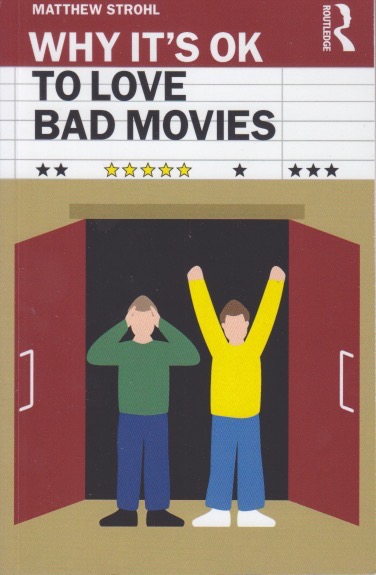
If anybody bothers to follow my movie viewing history, they’ll know that it includes a perhaps disproportionate number of “bad movies.”  In fact, I recently added that as a category for my blog posts.  In need of some reassurance, I read Matthew Strohl’s Why It’s OK To Love Bad Movies.  (As far as I can tell the Why It’s OK series was started by my old boss at Routledge—an inspired idea!)  Strohl is a philosopher, but one who admits to, and even advocates for, loving bad movies.  This book is fun but it does have a serious philosophical underpinning.  I can’t summarize it all here (you need to read the book anyway) but my main takeaways are that ridicule isn’t making the world a better place.  Movies that are so bad that they’re good are definitely a reality.  There’s a community built around it, but I haven’t had many visits from it in my lonely little corner of the internet here.

Strohl points out that not all bad movies are what he terms “good-bad.”  There are certain qualities—aesthetic qualities—that make a bad movie good.  And it doesn’t involve watching the movies to make fun of them.  One of the films that often tops the list is The Room.  When I first saw it I really couldn’t think of anything to write about it on this blog.  It was just another bad movie.  Now I want to see it again.  I do have to say that on my first viewing I didn’t feel like ridiculing.  I was more stunned than that.  And when I watched Plan 9 from Outer Space—another on the list—I felt inspired to learn more about Ed Wood, its famous director.  I’ve since watched a couple more of his movies and I appreciated them.  Now I have a better idea of why.

In addition to discussing the biggies, Strohl also takes forays into some collectives: the Twilight series, for example, and the movies of Nicholas Cage.  These are both often singled out for ridicule, but this book demonstrates that there’s an artistry to such things.  And Bad Movies underscores that not everyone likes the same bad movies.  Strohl also makes the salient point that if we only ever watch great movies we’d have no basis for comparison.  There’s a lot to like in this little book.  One thing it convinced me of (in addition to making me feel a bit better about myself) is that there’s a community out there that I’m missing out on.  Good books bring people together instead of dividing into factions.  This is a good book.


Paywall

They were my former employer, for goodness sake!  Here’s how it happened.  It begins with research.  Nobody is born knowing all they need to learn.  Research teaches you to question what you read and check sources.  That’s how bibliographies are built.  So I came across a reference to an article I needed to read.  The problem was it was behind a Taylor & Francis paywall.  (Taylor & Francis own Routledge.)  The cost to read one article in an academic journal?  $45.  That’s usually my upper limit for buying an entire book.  Working in publishing I know the reason for this.  They want you to go to your library (I don’t have one) and ask them to subscribe.  If you need access, probably somebody else will too.  This particular author isn’t on Academia.edu.  Should I risk Sci Hub? I mean the article is right there, but I’m not allowed to see it!

I did find that you can ask the author for a copy on Research Gate.  First you have to join Research Gate.  They want your institutional email.  My email doesn’t have a .edu extension.  I therefore had to go through a lengthy process of verifying that I am a researcher.  I had to claim papers I’ve authored.  I had to explain why I don’t have an affiliation.  I had to have them email me, twice.  Each time I had to provide further information.  I swear, it’s like getting a Real ID all over again.  All this so that I can ask an author for a paper that’s only available for $45 on the publisher’s website.  Every time I start a new research project I ask myself why I keep at it.  I guess I want to be part of the conversation.

The open access movement is gaining steam.  The idea is that research should be free.  Very few object to paying nominal fees for access, but often prices are extortionate.  Publishers are caught in this web because overheads are so high—they have to pay employees—and the cost of materials isn’t cheap.  Traditionally this has been overcome by passing some of the expense on to customers.  That’s why academic books are so pricy.  With journals, such as the one I need, the scenario’s a little different.  Journals are purchased by libraries via subscription.  “They wouldn’t subscribe to them,” so the argument goes, “if researchers could get the contents for free.”  Still, putting in place a free article or two before dropping the price bomb would seem to be in the best interest of actually moving knowledge forward.  Hey, T&F, don’t you remember me?


Weird Publishing

It’s a weird world.  Publishing, I mean.  In the early days of shock and angst after Nashotah House, when it had become clear that UWOsh—the University of Wisconsin, Oshkosh—wasn’t going to hire me full-time after a full-time year there, I considered that classic fall-back of the academic—publishing.  I wasn’t exactly clear on what an editor did in those days, but I was pretty sure I could learn.  Gorgias Press hired me and after just over two years, downsized.  I’d been in publishing long enough at that point to have learned about Transaction Publishers.  Housed on the Livingston campus of Rutgers University, where I’d been teaching for a few years at this point, Transaction had been founded by the sociologist Irving Horowitz.  Now that Gorgias was out of the picture, I contacted Transaction out of the blue and landed an interview with Horowitz himself.  Although he was most cordial, it didn’t lead to a job offer.

Eventually I was recruited by Routledge.  I was about to learn the nature of publishing in a whole new way.  Early in my time in the Taylor & Francis group (they had a letter signed by Walt Whitman in one of the board rooms) I learned that presses grow by acquiring other presses.  I suggested Transaction, only to be told it was too small of a “concern;” Taylor & Francis preferred larger fish.  When Routledge downsized I found myself again applying to Transaction.  Irving Horowitz had passed away by this point and before I could make an appeal, I was hired by my current employer.  There I have been ever since.

The other day I had cause to look up Transaction.  It was with some surprise that I learned they had been acquired by Taylor & Francis and merged with Routledge.  I’m sure that my suggestion of that acquisition had nothing to do with it, but I pondered what would’ve happened had I been hired by Transaction after Routledge cut me loose.  A few years later I would’ve found myself working for Routledge again.  And likely I would have found history repeating itself.  Publishing is a fairly small industry.  Books are a low-margin commodity (it pains me to type those words, but that’s the way the business world sees them).  Not too many people are interested in a company that has to sell lots of a specialty item in order to make them profitable.  Consumers tend not to buy books in bulk.  My time in publishing has been about connections.  And some of those connections are just plain weird.


A Kind of Happening

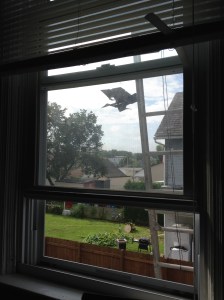
The roofers were here.  One of the things you learn only after laying down a ton of money is that those selling a house like to withhold information.  Moving during one of the rainiest summers in history, we naturally discovered leaks.  And so the roofers are here, like noisy angels banging above my head.  Given the orientation of our house, their access is outside the window of my work office.  I figured it was an opportunity to learn.  As the old shingles came raining down, however, I couldn’t help thinking of M. Night Shyamalan’s The Happening.  One of his more disappointing efforts, this horror film involved a memorable scene of mass suicide where people jumped off of a high building one after another.  Maybe other people would think of other comparisons, but the falling debris brought the film to mind in my case.

It’s a matter of framing, I suppose.  I’ve watched enough horror that it has become a framing device.  This is true although it has literally been months since I’ve seen a horror film.  (Moving proved to be its own kind of nightmare and one day I suspect we’ll be unpacked enough to watch movies again.)  Instead of losing the frame of reference, however, I find it intact.  If you spend long enough with Poe, he gets under your skin.  And changing states to M. Night Shyamalan’s eastern Pennsylvania might have something to do with it.  This is Bucks County territory, after all.  Another frame of reference, mediated by media.

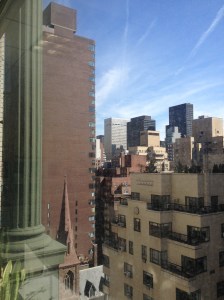
As I watch the old shingles drop, I realize the window through which I’m witnessing this is another frame.  Like a camera lens, it limits my view.  At times it can be like Hitchcock’s Rear Window, seeing neighbors at their daily business.   Indulge me. For nearly the past five years I worked in a cubicle with no view of any windows whatsoever.  I was completely cut off from the outside.  (Which, for those of you who’ll admit to having seen The Happening, might not have been an entirely bad thing.)  Now that I have a window—my own framing device—I realize some of what I’d been missing.  At Routledge I had a window, but at such a level that the Manhattan outside seemed artificial.  You couldn’t see individuals down on the street.  The entire wall was a window—too much of a frame.  Gorgias Press involved working in a windowless room as well.  I’m professional enough not to let the falling material or the pounding distract me much.  There’s work to do because there are bills to pay.  And horror films prepared me for that as well.  It’s the ultimate framing device.


Urban Evolution

They say ten city blocks are a mile. They also say the internet is fast. Putting these two theorems to the text, I’ve logged several foot-miles in Manhattan to find things that aren’t there. I don’t mind the exercise, but apparently the web can’t keep up with Midtown. I’ve been working in Manhattan for going on seven years now. I very seldom leave the office during the day, eating at my desk and trying to give the man his due. Once in a great while there’s something I’m either compelled to see, or that I must find for various reasons. Almost without fail, such lunchtime expeditions lead to frustration. I recently had to visit a business that shall remain nameless (conflict of interests, you see). According to Google Maps it was a mere ten blocks—a mile—from my office. At a brisk pace I could make it there, transact my business, and return to my cube all well within an hour. As I grew close, I got that sinking feeling I recognize now as internet ghosting. Nothing remotely like my goal was at this location.

I walked in and smiled at the man at the security desk. He was even older than me. “Ah, they used to be here,” he said, “but they left a long time ago. Long time ago.” Apologizing in advance, I asked if he had any idea where they might’ve gone. “I heard they moved across from Bryant Park, on 6th Avenue. But I heard they moved from there, too. You might try it, though.” Since this was roughly in the direction of my office from where I was, I decided to swing by. When I worked for Routledge I went by here every day, and I didn’t recall ever seeing this particular business there. Their security guard was equally as friendly. “I’m afraid there’s nothing like that here.” I had to return to work. When I got back to my office and googled their store locator, the website froze. This was truly unobtainable via the internet.

Some times you’ve just got to let your feet do the walking. Things aren’t always where the internet says they will be. I’ve come to realize that New York City is constantly changing. Buildings now stand where mere holes in the ground used to be when I began working here. Commuting in daily all these years is like time-lapse photography of a plant growing. Buildings emerge behind the green plywood walls, and next thing you know what used to be a synagogue is a new retail opportunity. It may not, however, be the business you’re looking for. Before spending your lunch hour walking a mile to get there, you might try calling first.


Admission Price

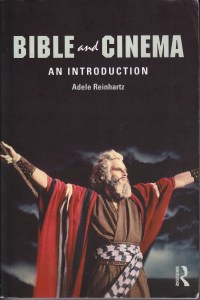
bibleandcinemaThe drama of acquiring Adele Reinhartz’s Bible and Cinema: An Introduction almost overshadows the joy of reading it at last. Back in my teaching days I realized that in very long class sessions (some went for four hours at Rutgers) students needed a break from me almost as much as I needed a break from myself. So I showed short clips of movies that had the Bible in them. The problem was, there was no easy way to find such movies. I’d seen many myself, but academics hadn’t written much on the subject and even a web search, in those days, wasn’t much help. Reinhartz is one of those scholars who understands we can learn about the Bible from movies, and her book would’ve been welcome in those days of fumbling my way through a darkened room, as it were.

Bible and Cinema is a Routledge book. In fact, it was underway during my brief tenure at the press. I very much wanted to read it but for questions best left to the empty ether, my welcome at Routledge wasn’t prolonged. The book came out before I left, yet I didn’t have a chance to get my hands on a copy. Being Routledge priced, I couldn’t afford it with my own funds. The book stayed with me, though, and last year I found a used copy, in passable shape, offered on Amazon for the price of a regular book (currently about $16). I immediately ordered it and anxiously awaited it. December came and went. The book didn’t arrive. Amazon informed me that it hadn’t been shipped and they would cancel the order unless they heard from the seller. In the new year, that’s what happened.

Once I’ve made to order a book, I have a hard time stopping. I had to cough out a bit more since reasonably priced used copies still couldn’t be found now that the one had gone AWOL. I’d been bitten, though. The new seller also delayed. The Trump administration began. I received a familiar message from Amazon. I wrote to the seller in anxious tones—if only I’d comped myself a copy before exiting Routledge! At last, late, and a bit beat up for the price, it arrived. It was worth the wait. This is a fine exploration of how the Bible has been made into movies and how movies have incorporated the Bible. Reading it was like watching movies on the bus. And for that, it’s hard to overestimate the price.


Hi Ho, Hi Ho

I’ve been writing about reading. No surprises there, I suppose. My wife recently introduced me to BookRiot, and I wish I had more time to spend there. A recent post by Aisling Twomey describes how reading on her Tube commute helps keep her sane. Here is a good case of convergent evolution—I came to the same conclusion after about a week of what turns out to be about three hours a day commuting to New York City. We didn’t move to my current location to work in Manhattan. My job was in nearby Piscataway. It was only when a headhunter found me a job at Routledge that I began the daily trip. The problem is I get terribly car sick. To this day I can’t read in a car. Some days I can’t read on the bus either. Gradually, however, I trained myself to do it, and the results have been worth it. Ms. Twomey has read over fifty books this year on her London commute. I suspect my commute is a bit longer since I’ve read a few more than that. Still, we tilt against the same windmill, so we need to appreciate the dedication it takes.

I was talking to someone the other day who was complaining about cell phones. She said, “I used to read a lot. I worked in a book store. It was great.” Her cell, she said, gave her a stiff neck from constantly looking down. And a sore thumb from swiping and texting. And yet, she lamented, she just couldn’t stop. Books may well be a vice. I’m as bad as any addict. I have no idea how many books I’ve read in my life: the number is in the thousands rather than the hundreds, I know. And even the books I regret, I don’t really regret. Reading is a coping mechanism.

img_0670

One of the things that the traditional ancient religions all have in common is books. Not all of them treat sacred texts the same way, but they all have some form of sacred writing. There was an implicit sense, I believe, from the first stylus on clay, that something truly special was going on here. Holy, even. Writing is one of the great joys of life. Reading is another. Both are sacred professions. In a way it seems a shame to have to be forced into a commute in order to find time to read books. Still, the constant flow of new material has a life-saving quality to it. I can’t imagine spending fifteen concentrated hours a week texting. I don’t know that many people to text. The ones I do know I know through their books. And they’re very good company on a long ride.


By the Time I Get to Phoenix

I remember when flying involved going to a travel agent, explaining where and when you wanted to go, and how much you could afford. The agent would contact airlines, get you your best price, and you left knowing that you’d just have to show up at the airport maybe half an hour before your flight so you got there before they closed the door. For our vacation trip, my wife used priceline.com. I’ve used it for business travel myself, but when I am going for work, certain strictures apply. For this trip, expense was a major factor. We flew, outbound, to Spokane, Washington via Seattle, on Alaska Airlines. Since our final destination was Spokane (at least for the air portion of the trip), that involved a bit of back-tracking, but, being Alaska Airlines, who could really complain?

In order to make the trip affordable, we flew back on a different airline (I’m still not sure if it was American or U. S. Air; both reference the same entity, apparently) via an alternate route. Whichever airline it was had a hub in Phoenix, so we flew from Spokane to Phoenix before heading back to Newark. I’d visited Phoenix on Routledge business, but I didn’t spend much time in the airport. It became clear from this trip, however, that the Day of the Dead is a big deal for tourists. Given the popularity of Halloween, I suppose that’s not so surprising. Nevertheless, the sheer volume of Day of the Dead merchandise was stunning, considering that these were, for the most part, impulse, carry-on items. Figurines of various sorts comprised the most popular arrays. Skeletons, fully dressed, engaged in many quotidian activities, although deceased.

IMG_2394

Amid the many daily scenes, I spied a last supper tchotchke. Skeleton Jesus and twelve skeleton disciples gathered around a table for a final meal. Maybe just a little too late. While not a theologian, I couldn’t help but wonder about the implications of this. I know little about the Day of the Dead beyond its association with All Souls Day. The last supper is set up in the Gospels as the grounding, in some way, for a divine plan or redemption. In other words, it doesn’t work if the principals are dead. Already jet-lagged and fuzzy-headed, I couldn’t think to take out my wallet. I really can’t afford baubles in any case, yet there was something profound to think about here. For some reason the market will bear much more in an airport than it will in no-fly zones. Still, as I struggled to stay awake all the long way to Newark, I couldn’t help but think that this was an appropriate image to signal the end of a much needed vacation.


Asherah’s Ashes

Academics are often poor communicators. The stunning irrelevance of most research should stand as a rather obvious clue to that. Of course, I’m old school in my approach to research. When afforded the opportunity to do so, I produced at least one scholarly article per year, and these were based on extensive research. One of the misconceptions about research is that it involves only that which supports your theory. My first article and first book, both on Asherah, demonstrated that rather clearly, I hope. A kind of scholarly orthodoxy had grown up around the goddess, originating largely in Frank Moore Cross’s work, but also in that of a few other scholars. Nobody challenged these results although they were clearly built on shaky ground. Before I finished my dissertation it had been decided that Yahweh was married to Asherah, and the two merrily danced together on a pathos graffito from Kuntillet Ajrud. After my work was published, I was surprised to see how completely it was ignored. I, like John Mellencamp, had challenged authority. And we know who always wins.

I recently read an article entitled “Iconism and Aniconism in the Period of the Monarchy: Was There an Image of the Deity in the Jerusalem Temple?” by Garth Gilmour, in a Routledge volume entitled Visualizing Jews Through the Ages. Gilmour uses a crudely incised sherd originally found in 1920 in Jerusalem, to build a turret on the house of cards of conjecture. The incised stick figures which, if you squint just right, may be a male and female, it is suggested, are none other than Yahweh and Asherah. Probably grooving together in the temple. Now don’t get me wrong—I’ve always found the idea of Yahweh having a consort conceptually satisfying. We know that other deities in the ancient world often paired off, and that Asherah was generally the main consort of the high god. The proof, however, was in the pithos. Seeing what you want to see is a constant danger to researchers. That’s why my bibliographies tended to be encyclopedic. Gilmour’s article does not mention any of my several works on Asherah, or even my articles on Baal. Apparently my work harshes the easy conclusions already drawn. Or is insignificant. Caution often is.

Consigned to while away my time in publishing, I’m aware that there’s far too much out there for anybody to be able to read it all. Indeed, when I have rare moments to engage in research during my busy, commuting lifestyle, I find myself increasing aware of obsolesce. New results are published before the proofs get to the author. Still, the number of books out there on Asherah are fairly small. Those supporting the unofficial scholarly consensus are many and top the rankings on Amazon. Nobody likes to be reminded that the dissenting view has logic firmly on its side. We see what we want to see. Research should, in the opinion of this disregarded scholar, involving searching again, even as its name implies. The foundations should be reexamined now and again to make sure the tower’s not about to topple. That’s old school. And old school is now, apparently, understood as merely old fashioned.

DSCN4422


The Art of Religion

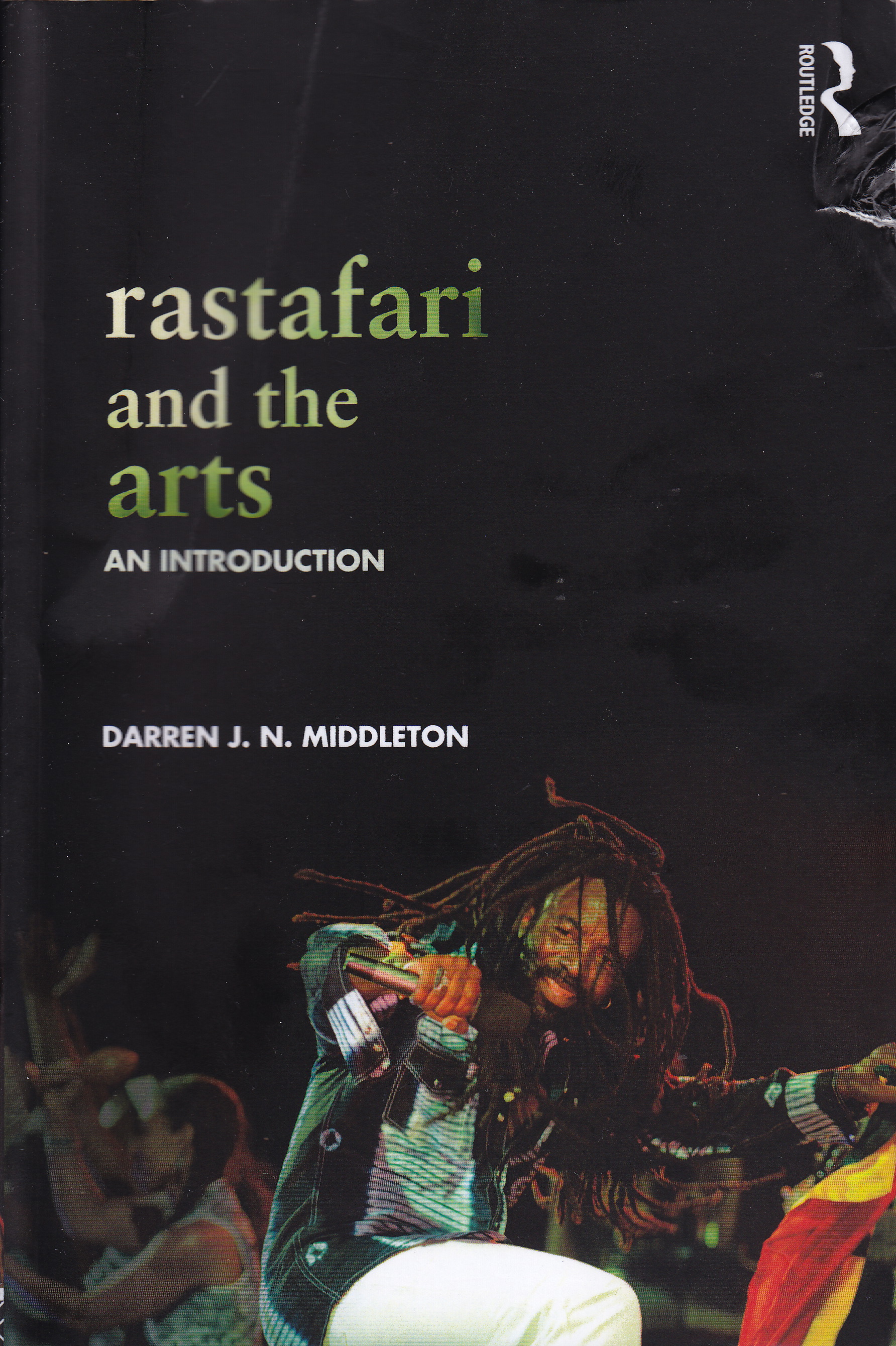
RastaIf you take a train along the Raritan Valley Line en route to New York City, you will see many of the less highly regarded sights of New Jersey. The properties along the rails are often industrial and neglected. Graffiti abounds. On one particular concrete underpass is a truly monumental graffito reading “Paint the Revolution.” Since I can’t afford to take the train on a regular basis, seeing that prophetic line is a rare occasion for me, and it always casts me in a reflective mood. No doubt injustice has become deeply entrenched in our society where politicians are synonymous with distrust and wealth is carefully corralled by a passing insignificant number of individuals. These thoughts recurred as I was reading about Rasta, the religion that developed in 1930s Jamaica, and is now found throughout the world.

Perhaps the most rewarding aspect of being an editor is exposure to new ideas. Of course, anyone can achieve this by reading, but as a person whose job is to find new books, an editor often has to go beyond passive, to active reading. So it was that, while at Routledge, I came to Darren N. J. Middleton’s Rastafari and the Arts. I immediately fell for it. I’d read about Rasta before, but Middleton’s use of art as a means of exploring the religion was captivating. Now that his book is out, I reacquainted myself with what drew me to the project in the first place. Admittedly, a large part of the draw is the fascination with Rasta itself. While some, perhaps many, would claim that it’s not a religion, Middleton demonstrates pretty clearly that it is, or that it at least has all the hallmarks of one. Moreover, it is a religion profoundly based on the concept of social justice, something that many religions possess in diminishing quantities.

The African diaspora led to the development of several new religions as African thought was forced into a mode of accepting Christianity. Among those many new religions, Rasta stands out for its association with a particular musical style, reggae. Of course reggae can be secular, but one of the many insightful observations of Rastafari and the Arts is that the global spread of Rasta often begins as music travels. While reggae is generally identified by its musical style, it is also noted for having a heavy dose of social consciousness. People who’ve been oppressed, no matter what their race, often express their victimhood in their arts. Not particularly numerous, and certainly not politically powerful, Rasta has been painting its own revolution. That revolution is associated with peace and love, and, in a way almost unique among belief systems, its music.


Duck Overboard!

Moby-DuckI remember the moment precisely.  I was in Santa Barbara, California on a campus visit for Routledge.  I stopped into the university bookstore to see which of our/their books were being used.  From the cover of one of popular books in the general reading shelf stared a friendly yellow duck.  My thoughts went, as they often do, to my daughter back home.  The cover copy explained that this was the true tale of a bunch of “rubber” ducks lost at sea and the captivating story of how they ended up in diverse places.  I bought it for my daughter since rubber duckies had been a kind of childhood theme, and when I saw it on her shelf recently I also grew curious again.  I’ve always been fascinated by the sea, even applying for jobs at the Maine Maritime Academy just to be near the water (and in Maine). 
 
Of course I’m referring to Moby-Duck by Donovan Hohn.  It wasn’t really as cute and cuddly a book as I thought it might be—that duck on the cover sure looks happy—but it was far more important.  As Hohn explains, he was a teacher captivated by the story of a cargo container holding plastic (not rubber) bath toys falling into the Pacific Ocean on a crossing from Asia.  The ducks (and frogs, turtles, and beavers) spread out as far as Alaska and points south on the west coast of the US, and some perhaps made it back east.  Some were even reported in Maine (but Hohn came to doubt they are the right ones).  So he set off on several ocean voyages to follow the trail of the toys.  He has left us a moving and thoughtful memoir of the journey, and also much more.
 
The oceans are incredibly polluted.  As Hohn points out at several points, entire cargo containers—sometimes several at a time—tumbling into the ocean and being left behind is not uncommon.  Add to that the trash, particularly the plastic, that otherwise makes its way into the ocean, in some places forming islands of garbage so large that they can be spotted by satellites, and I begin to grow truly alarmed.  Hohn learns about plastics and how toxic they might be, as well as how thoughtlessly they are hurled into the oceans.  Not written as an environmental manifesto, Moby-Duck—literate, witty, and very human—nevertheless narrates how a father came to see the world through the eyes of parenthood.  And some of what he finds is truly frightening.  My takeaway?  Little things matter.  Immensely.  That, and we need to clean up our act before it’s too late.  No bath will wash away the stains we’re still in the process of creating.


Weathering the Storm

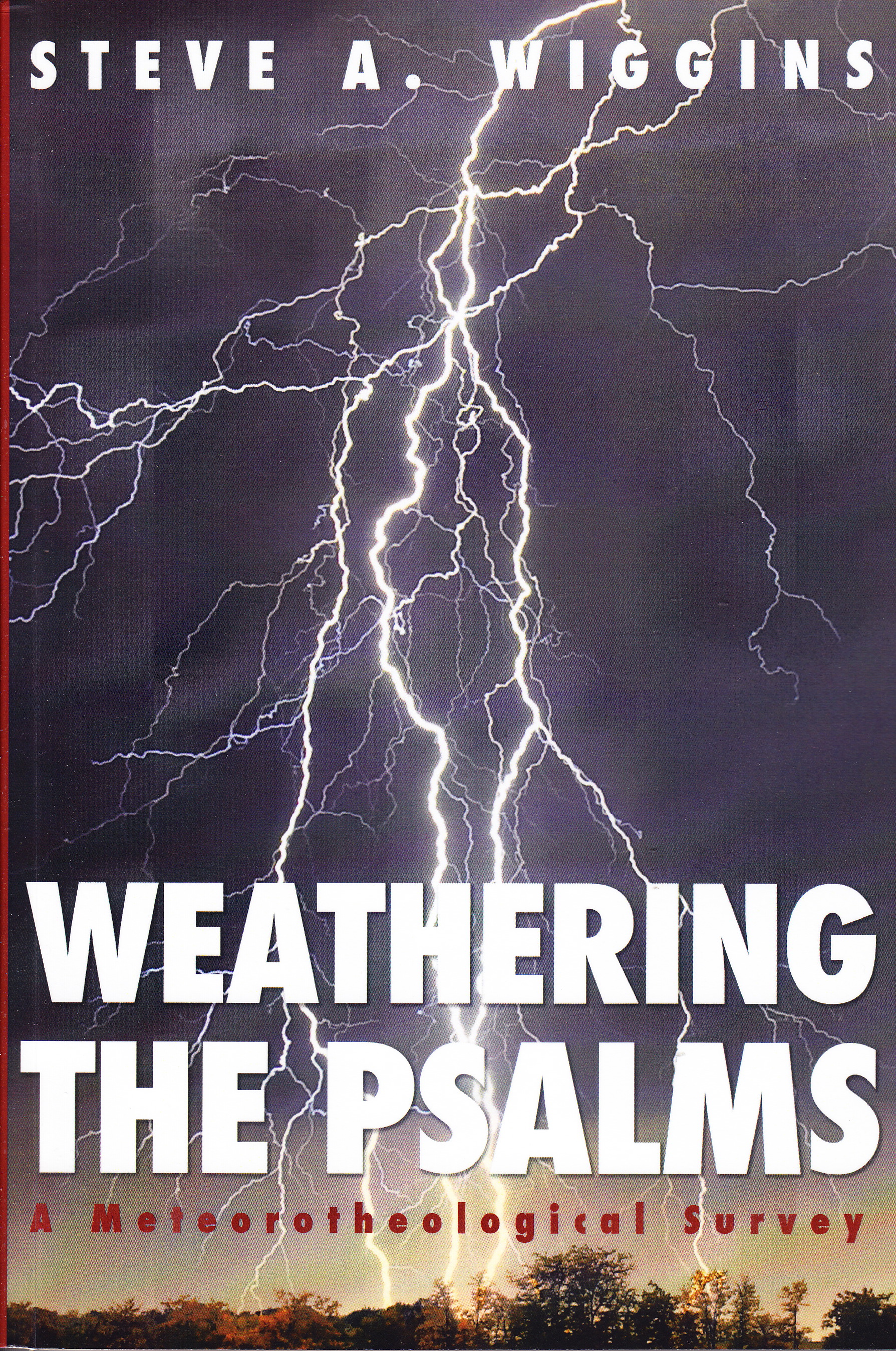
WeatheringThePsalmsI had almost forgotten the validation of being published. Colleagues sometimes ask me if I’m still working on any books without realizing that employment in publishing, with rare instances, constitutes a conflict of interest. Editors are acquirers of content, not producers thereof. As I’ve been preparing Weathering the Psalms for release on the world, I often consider how differently all this may have turned out, should I have found academic employment after Nashotah House. The day my contract was terminated, I was working on this book. It had recently been declined by Oxford University Press, and the reviewer (whom I had unwittingly met) had informed me that the book wasn’t really salvageable. It was a jumble of data with no narrative thrust. I was working on giving the data a different frame when I was called to the Dean’s office and told to read a legal memo in the presence of a lawyer. Every time I tried to turn back to my book after that, the nightmarish scene replayed in my head. Besides, I had to try to find a job.

It was only when working for what I thought was a stable Routledge that I had the chance to revisit the manuscript. Ironically, it was only after I was no longer in a position to do research that colleagues began to approach me to review submissions for journals, to invite me to write articles, and to express an interest in my research. Of course, it was too late for me to begin full-fledged research again. Despite the internet, scholars require two things I did not (do not) have: access to a university library, and time. Early on in my commuting days I discovered that the quality of the time on the bus did not allow for in-depth research. Too many other passengers have too many other agendas. I can read on the bus, and sometimes academic books, but anyone who’s tried to take notes when crammed into the space usually taken up by a backpack knows the difficulty of writing notes without the use of your arms or hands, over the constant electronic noise of your neighbor’s unsilenced electronic games.

All of which is to say that I’m very pleased to see Weathering the Psalms is out. Like a child untimely born—at the risk of sounding biblical—the book is being printed as I write. Working in publishing I know better than to expect phenomenal sales, still, many of my readers over the years have said they’d buy a copy if it was ever published. If you’re serious about that, take a look at the website of Wipf & Stock and click on the Cascade Books imprint. Finishing this book has, I must admit, awakened a hunger. I have, of course, started to write another. It may be another decade in the making, and, should it ever garner the attention of a publisher, a similar post may come along before I’m too old to think clearly. The ideas are there; the opportunity to express them is not. Still, despite the cruel vagaries of academia, I feel as though I’ve received a small validation, and I am very grateful for the honor. Wipf & Stock offers a service that other academic presses might do well to emulate. It’s not all about the earning potential of a title. Sometimes it’s just a storm.


Gothic American

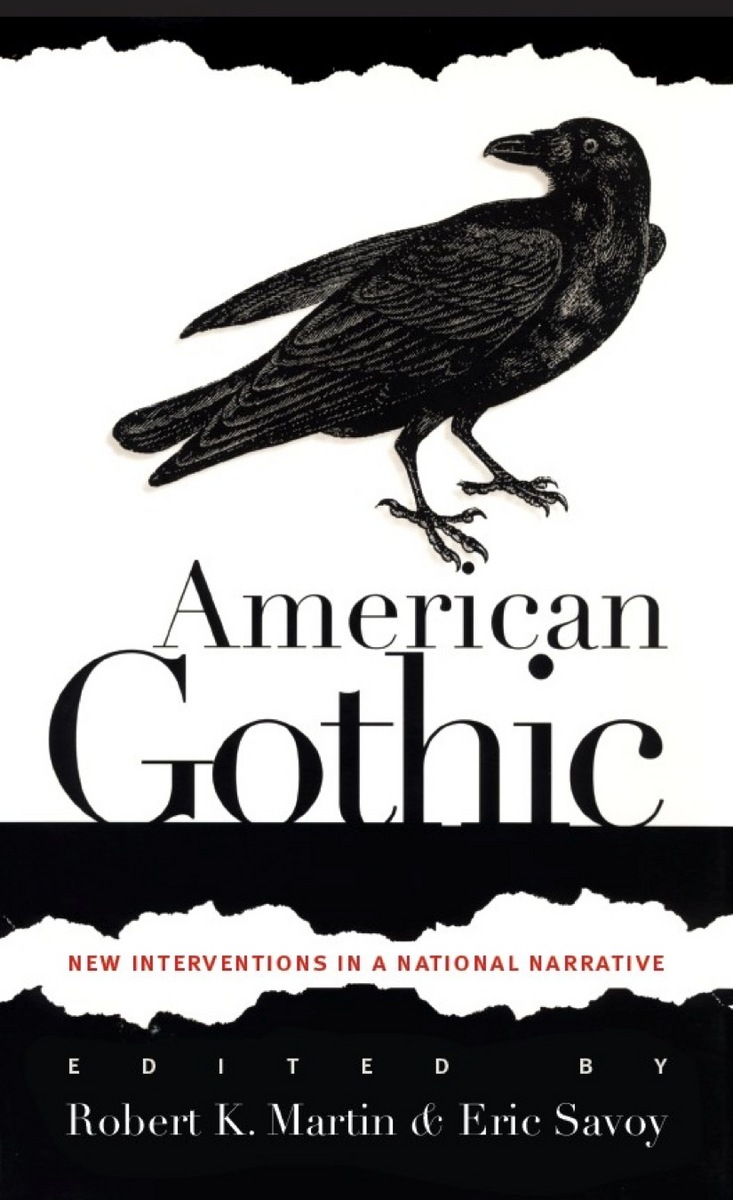
AmericanGothAmerican Gothic, the painting by Grant Wood, caused me trouble at Routledge. An author wanted to use the image on the cover of his book (we eventually managed it) but the choice was contested at every step. Along the way editors, editorial assistants, and marketers all told me what the painting represented and how it was inappropriate. I’ve learned, however, a few things from the post-modernist movement: nobody can say what an artwork means definitively. So when I read American Gothic: New Interventions in a National Narrative by Robert K. Martin and Eric Savoy, I was ready for a combination of po-mo and the macabre. Like post-modernism, Gothic is a difficult term to define. Indeed, the first set of essays in this collection struggle with definitions. Being literary criticism, the book points out that the novel and Gothic more or less developed together. When people read to be entertained, as early as the eighteenth century, they wanted to read Gothic tales.

Being a life-long fan of Poe, I was pleased to see that he made a good showing in the pieces contained in the book. What makes it appropriate to this blog—other than it being October, a comment that requires no explanation in the northern hemisphere—is a notion I found early in the book. People read horror literature for healing. Anthropologically, the wounded healer is a well-recognized figure. In a world where we expect opposites to go together health comes from disease and healing from being wounded. The gothic is a wounding of the mind to lend it healing. To be sure, many of us who read gothic literature do not relish scenes of violence or hurt. We do, however, find a kind of therapy within such darkness. In the darkness light is best appreciated. Who uses a flashlight outdoors on a sunny day?

As with most books from multiple authors, there’s some unevenness to the contributions here, yet more often than not, I found deep insight throughout its pages. Religion makes occasional appearances. Indeed, the figures of the monk and the debased church are stock images for early gothic literature. The sacred, if we’re honest, is a bit creepy. Having spent many nights in churches on retreats or for hospitality when youth groups couldn’t afford a hotel, I know that fewer places are scarier at night than an unlit, empty sanctuary. The gothic, following culture, has tended to move away from monasteries and churches into the more scientific spaces of the twenty-first century. Nevertheless, ravens and haunted houses still evoke the age-old fears of a coming period of darkness, the Halloween of the soul. And for those who want to know how a post-modern crowd scans the darkness, this book will not disappoint.


Knockin’ Where?

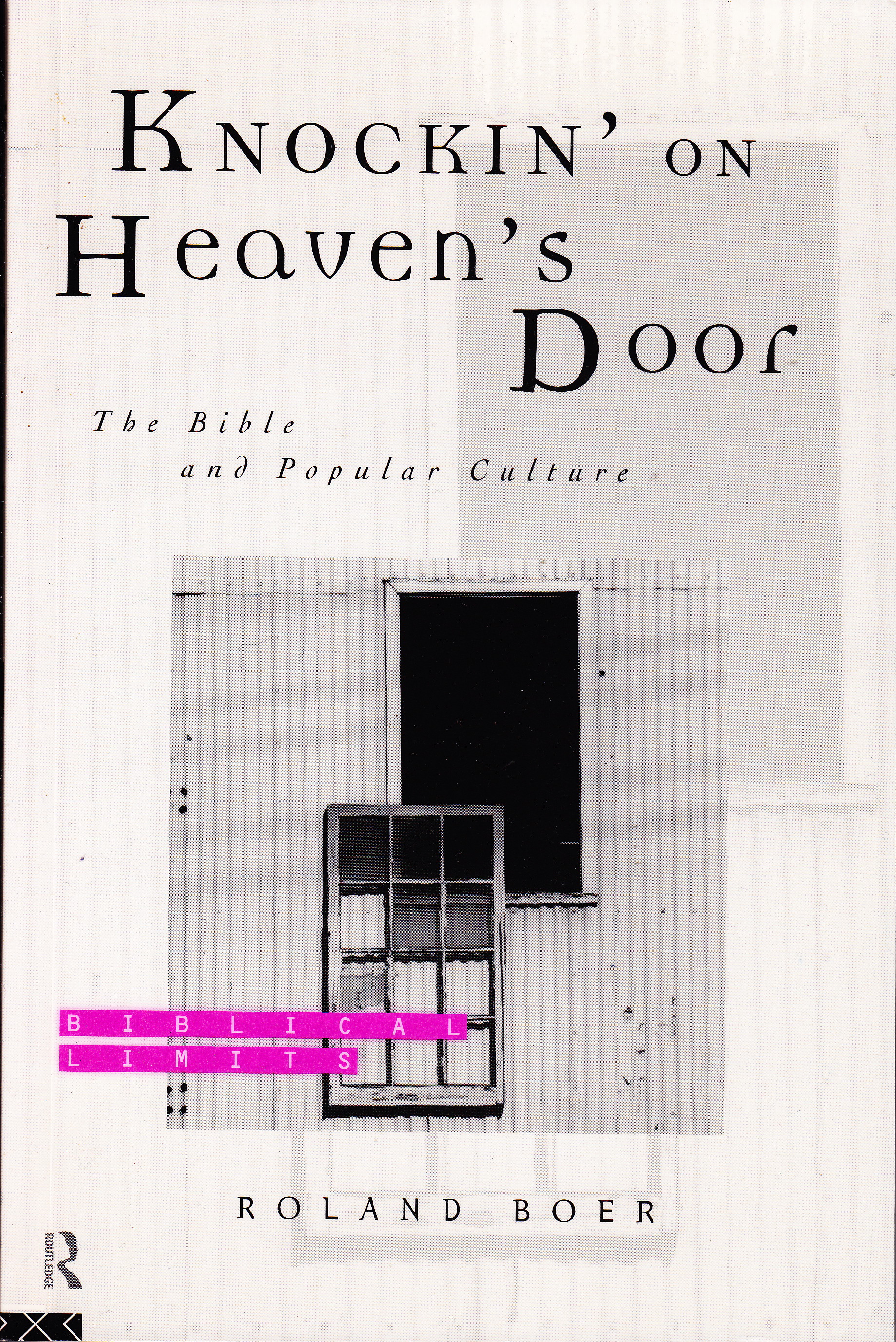
KnockinOnHeavensDoorFor a while, when I was with Routledge, I tried to kick-start the old series Biblical Limits. I didn’t initiate the series, but it had been cutting edge at the time, and one thing biblical scholars seldom get to claim is that particular adjectival phrase. Alas, my enthusiasm wasn’t contagious and the series never moved ahead. Recently I decided to read Roland Boer’s Knockin’ on Heaven’s Door: The Bible and Popular Culture. Little did I realize that it would be a book that would make such a literal fit for the symbolic nature of my blog title. This is a book that my internet savvy would declare NSFW: not safe for work. Boer explores the sex and violence that are really rather pronounced in the biblical text, but which are often sublimated into object lessons for the faithful. We hear that such books as Song of Songs are allegories since they can’t possibly be about real people really attracted to each other. Would God sanction such things, well, after Genesis 1, I mean?

Post-modern readings of the Bible like to place the obvious before the reader. There is, no doubt, some over-reading going on here, but there is plentiful insight as well. A number of places I stopped and thought, I could use that, were I still teaching. Popular culture isn’t just movies and video games. There is a very human element to culture. Indeed, culture would not exist without such a thing as human interest. Boer explores everything from David’s carnal interests to Alfred Hitchcock’s morbid ones. McDonalds to Ezekiel in Guns-n-Roses. This is not the usual finding Christology in E.T. This is more like the bad boy’s Bible.

If the Bible cannot be made applicable to a constantly changing culture, then it becomes irrelevant. Many object to Boer’s bold treatment, but I believe that unless we can move beyond our concerns with J, E, D, P, R, Q, and double, or triple-redactions, we’re going to lose readers from page one. Knockin’ on Heaven’s Door is a page-turner. You can sit on the bus and have people think you’re reading about the Bible when in reality, a chapter on pornography may have you blushing madly. It brings to mind Odysseus in Polyphemus’s cave. But then, blind giants may be the most dangerous of all.