Another Exorcist

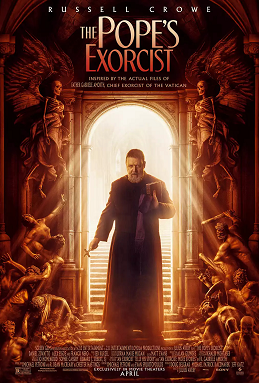
I learned from the wonderful Theofantastique that Russell Crowe’s new movie is The Pope’s Exorcist.  (I guess Crowe hadn’t read Nightmares with the Bible to think to send me a personal notice.)  I knew instantly, from the title, that it had to be about Fr. Gabriel Amorth.  Say what you will about him, he inspired William Friedkin to make a documentary titled The Devil and Father Amorth.  It’s pretty unnerving to watch, no matter what is really going on.  Catholic officials aren’t trilled about Crowe’s movie—I wasn’t impressed with his portrayal of Noah in Darren Aronofsky’s take on the flood story a few years back.  It takes a certain kind of director (like Friedkin) to be able to handle theologically dense material in a believable way.  I can’t say anything about Julius Avery’s The Pope’s Exorcist, of course, without having seen it.
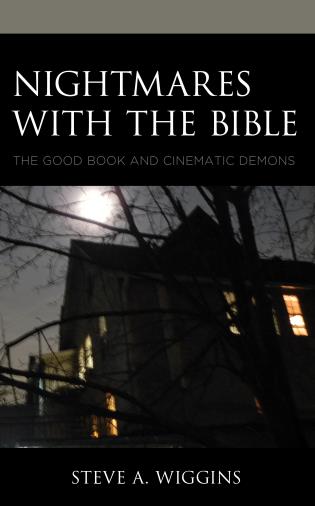
I can say, however, that those who publish books at $100 miss many opportunities.  My book is one of very few written by a credentialed religious studies scholar on demons in movies.  A quick web search will reveal that it remains basically unknown and uncited.  (The only Amazon review is a two-star job by an evangelical who didn’t like what I was doing.)  Pay $100 for a book with a two-star review?  Most people, reasonably, have better things to do.  I once got around this in the past by posting a PDF of one of my book for free on Academia.edu, where, at recent count, it has been viewed over 6,000 times.  Academic publishers don’t realize the appeal of most of the books they publish.  Even demons can’t open a wallet to a Franklin level.
So while I’m waiting for enough royalties to afford seeing The Pope’s Exorcist, I’ll focus on my current book project.  Of course it’s on something completely different.  The Wicker Man should be coming out in September, but my mind will likely be elsewhere.  Those of restless intellect are condemned to wander, it seems.  Of course, I have Theofantastique to keep me busy.  There are other kindred spirits out there.  They don’t know the way to my website, I suspect, but I’m not alone in being excited about a new exorcist movie.  I’m not expecting anything to surpass The Exorcist, however.  Like The Wicker Man, The Exorcist turns fifty this year.  One guess which was the more popular film.  Given Crowe’s profile I’m surprised there hasn’t been more buzz about his new film.  Demons can be funny that way.

Floaters and Swimmers

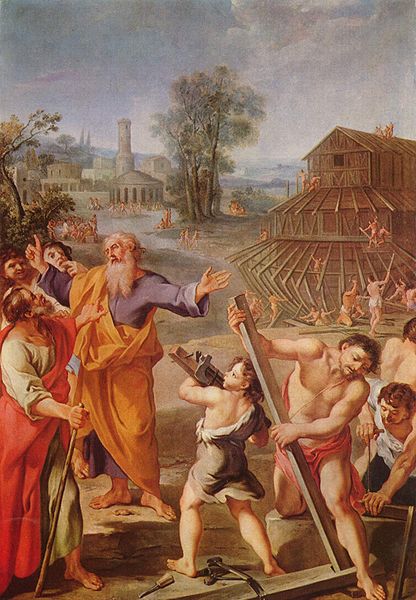
Noah seems to have found a renewed audience these days. Nothing like a major motion picture to make even one of the most famous biblical characters even more notable. And the spin-off stories are now considered news as well. One of the many impossible stories of the Bible, the ark, as scholars have long known, would not have been a physical possibility. Quite apart from the building in days before metal smelting was invented, there was the problem of volume. Since evolution is ruled out de rigueur, each separate species had to have been represented, since no changes are allowed from that time to this. The sheer number of them, especially since new ones are being discovered even now, was deemed impossible to fit on an ark of even biblical dimensions. Add in the food necessary for 150 days, especially considering the carnivores, and the human-power required to care for all those beasts (only eight are permitted by Genesis, and Noah was 600 years old at the time) and you get the picture. Then Mesopotamian flood stories even older were discovered. It was quickly recognized that this was a myth with a larger message to tell.

Now, according to geobeats, and to the relief, I’m sure, of Russell Crowe, physics students at the University of Leicester have calculated that the ark could have floated. The story, in a one-minute sound bite, is a little shy on details. The students used the biblical cubit, and figured there were 35,000 distinct species at the time. I’m not sure where that number originates, but it doesn’t take into account how Noah got the koala’s to swim from Australia. According to present evidence, the earth is home to about eight-million-seven-hundred-thousand different species. And since they can’t evolve, that’s an awful lot of swimmers.

According to the university website, this was not intended as an exercise in biblical literalism. “The aim of the module is for the students to learn about peer review and scientific publishing. The students are encouraged to be imaginative with their topics, and find ways to apply basic physics to the weird, the wonderful and the everyday,” according to Dr. Mervyn Roy, the instructor. The students, working the math angle, didn’t expect the results to work. That they did surprised everyone. Except Noah, one presumes. The story makes clear that the number of animals was used to calculate mass, not dimensions, so squeezing all the beasts in might have been quite another chore altogether. Miraculous, one might say. As for me, I am waiting to see that pair of koalas swim from Darwin to the Persian Gulf, and then back again once the waters finally recede.

Don't forget to see the movie!

Don’t forget to see the movie!


Flood of Fancy

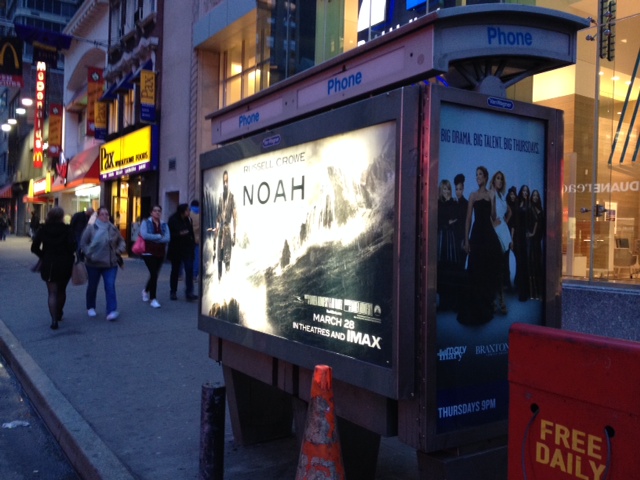
Years ago I was approached to write a book about Noah. There was still some hope at that time that I might find a university job and that my words would have more credibility than just any old internet hack. At the time I’d read just about every book about Noah that had been written—and there weren’t that many. Biblical scholars, beyond tying the story to its obvious Mesopotamian sources, have long relegated the tale to the nursery school of biblical drama. Sure, it’s a great story, but what serious scholar takes an interest in a great story? Well, I outlived my academic job and it looks like Noah is going to have the last laugh. We’re told that the Pope has been tweeted about the movie by Russell Crowe and that several Islamic nations have already banned it. According to Today Darren Aronofsky, the director, is more interested in getting non-believers into the theater than trying to please the faithful. Well, let’s face it. A movie based strictly on the Bible would have to be pretty preachy.

The bigger draw seems to be this: our society is simultaneously deemed secular and religious. Americans go to church. They also respond to surveys that they believe in God, the Devil, Heaven, and Hell. They also act as if none of this were true. Business practices tend to be anything but caring, and we show no concerted effort to make sure basic healthcare is offered to all our citizens, let alone the millions who are daily suffering and dying elsewhere in the world. We don’t want to reduce our emissions as a real flood—a literal flood—is on the rise on a global scale. Maybe we’re waiting for a biblical-scale miracle to save us. Noah’s face stares out at you all across Midtown. Judgment is upon us.

NoahMovie

Action films draw male viewers. Religious movies draw females. Aronofsky and Crowe have the winning combination. No gender-bias for a secular-religious nation that has enough loose change to spend a weekend at the movies. The biggest complaint is that it isn’t the Bible. I have to admit I’m kind of enjoying the hype, despite the fact that I never received the chance to write that Noah book that was next on my agenda. If I had, now it might have enjoyed the sales that Irving Finkel’s The Ark Before Noah—scheduled for release three days before the movie—surely will. Timing has never been my strong suit. Of course, money can be its own sort of flood, and many more drown in it than in the literal waters of a secular-religious society. According to Genesis a raven was released to fly about looking for land. The Crowe might have been a better choice since movies, as we all know, improve upon the book.