Jesus of Hollywood

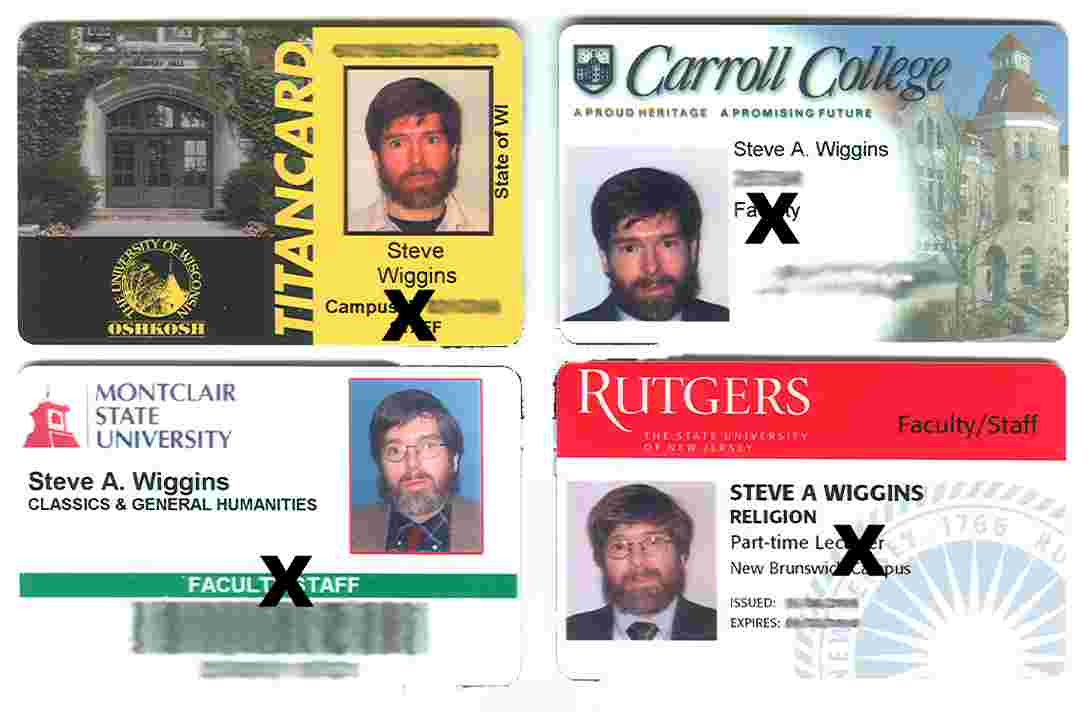
What hath Hollywood to do with Boston? Not enough, apparently. In this week’s Time magazine, an article entitled “Films Are His Flock” by Josh Sanburn revisits the ark. Actually, it throws the doors open a little wider—it looks at Hollywood’s effort to woo the religious. Ironically, although universities all across the country offer courses in religion in popular culture and the Bible in popular media, they are constantly trying to rid themselves of the detritus known as biblical scholars. High brow is in, while Hollywood makes no secret of its love to the common people. For Americans the common person is religious, or at least doesn’t block out religion like the educated crowd does. And they come with pockets lined. Religious movies, if marketed well, can be phenomenal successes. In my four years teaching at a secular state university, my Bible classes were filled to capacity each semester. Still, Rutgers coyly refused to hire me full-time. “There’s no interest,” they seemed to say. “Nobody reads the Bible.”

Meanwhile, according to the article, Jonathan Bock, founder of Grace Hill Media, a marketing firm that sells the Bible to Hollywood, knows a good thing when he sees it. Noah is about to come splashing into theaters. Son of God has already incarnated. Exodus is yet to come. And those are only the movies that are explicitly religious. I had no trouble pointing out to my long-suffering January term classes that religion plays a role in many movies, most of them explicitly secular. Those in Hollywood know that religious themes—the Bible even—resonate with the general public. Having grown up in, or maybe even below, John Q. Public, I have always known that the Bible makes good movies. Doubt it? Ask E.T. As he appeared risen, ascended, and glorified, the stranger from above wearing a white shroud and backlit with a nimbus, many of us squirmed in our seats for we had seen a clever representation of our Lord.

Perhaps it is resistance to the McCarthyism of the 1950s that so many intellectuals associate with religion, but academics just can’t seem to understand that this is important. The Bible business is a multi-million dollar industry, and yet, universities would prefer to ignore the implications. Meanwhile in Hollywood, they’re trying to make sure they get the blend just right. Theatrics and theology. You’ve got to be careful whom you choose to offend. The Last Temptation of Christ, based on a novel written by a devout Nikos Kazantzakis, just didn’t perform as a Scorsese movie. It is the job of people like Jonathan Bock to figure out why. And it isn’t hard to see that it’s a buyers market on America’s left coast. Indeed, without a hint of cynicism the Bible will bring in a flood. But that’s just academic. Or it should be.

Noah looks down over Times Square

Noah looks down over Times Square

Vampire Science

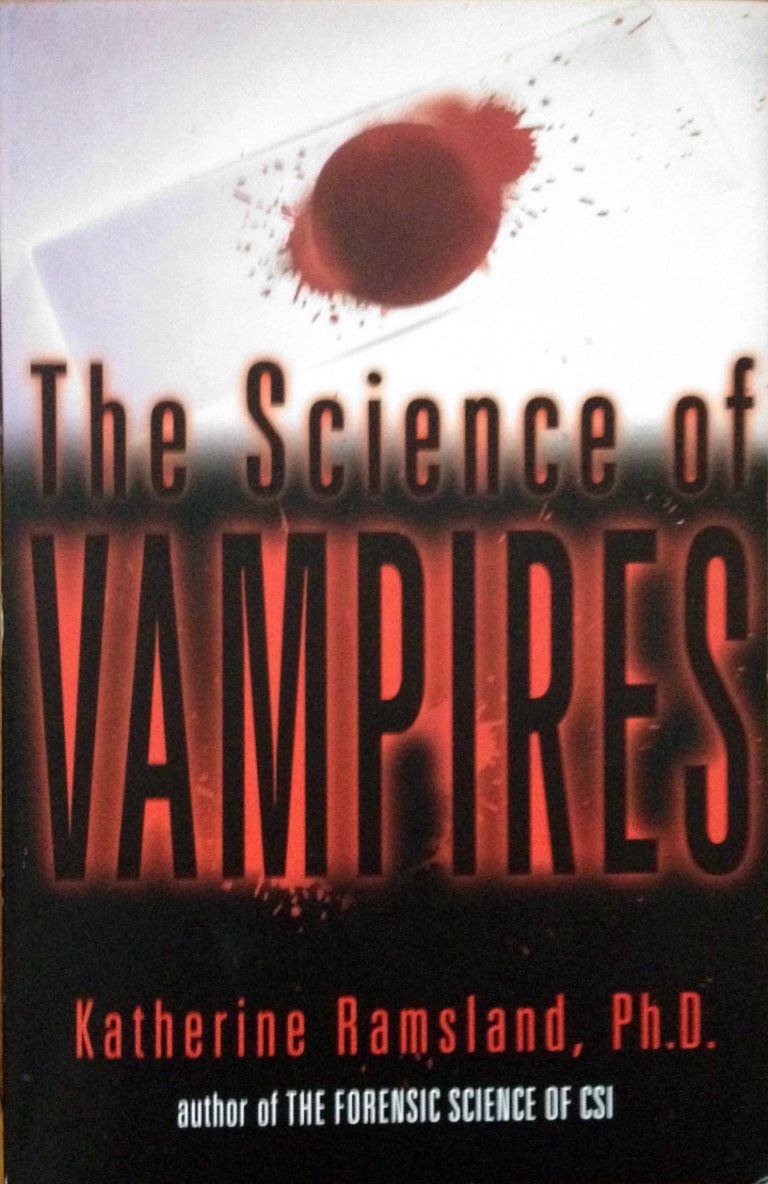
ScienceOfVampiresHow is one to take a book that combines science and vampires? That was the thought going through my head as I stood in Borders during the sad process of their going out of business sales, Katherine Ramstand’s The Science of Vampires in my hand. I knew already that I would buy the book—how could I not?—but I wasn’t sure whether it had been placed in non-fiction by accident or not. Ironically, I began reading the book on the day I was ultimately informed that my position had been made redundant. Vampires have been much on my mind since then. For several days I couldn’t concentrate enough to read, which is a kind of vampiristic encounter in its own right, in my case. Now that I’ve finished Ramstand’s study, I’m still not sure what to make of it.

Holding a Ph.D. in Philosophy from Rutgers University, Ramstand knows the fields of forensics and the supernatural surprisingly well. The Science of Vampires does indeed address the mythic creatures from a forensic perspective. The lore of the vampire is thoroughly examined and subjected to scientific scrutiny. Surprising results sometime arise. The book also contains its share of very disturbing material, more along the forensics than the fictional vampire side. I put it down woozily more than once. Yet, I found considerable insight here. Ramstand, although not focusing on the religious element, readily acknowledges the deeply religious nature of the vampire concept. She tends to focus on the scientific, rather than the spiritual, but she does have a telling interview with a professional counselor with a theological background. She quotes him as stating that he vampire is the disenfranchised among us—the pariahs of society: the homeless, people of color, those of differing sexual orientations, the working poor, the unemployed. Okay, I’ll admit that I added that last one to the list. I do, however, understand the point.

While supernatural powers may not create vampires, our society does. There are those who drain others of their resources, and there are those who are cast out. Both, in this post-modern world, might be considered vampires. At times Ramstand almost had me believing that Dracula might be more than fiction. As I read accounts of the horrors some people remorselessly perpetrate against other human beings, it seems that a vampire might be the lesser of two evils sometimes. As a symbol, both religious and secular, the vampire has proven to be irreplaceable. Hopefully some day we may outlive our use for those who prey on others.


Rorschach Test

Rutgers University, College Avenue Campus. I recall coming out on a sweltering night once in a while during a summer term, only to find a street evangelist inveighing against undergraduate evils. He, and it was invariably a he, may have delved into the darker sins of graduate students, but I didn’t stay around to find out. Colleges attempt to educate while street preachers try to halt the process. Shall we go forward or retreat? I occasionally run into off-campus preachers on my university visits. I still look like a professor, I suppose, so I am treated to their version of salvation along with the people less than half my age, facing all the temptations of adulthood. The last evangelists I saw were handing out tracts about the evils of tattoos. I know tattoos are very popular, although I’ve personally never seen the draw. With one eye cast warily ahead, I think of what happens when that firm bit of skin starts to sag and the bold decoration begins to shrivel to make us look less like rebels and more like crepe paper left too long in the rain. Besides, I could never think of a picture that I’d want attached to me for the rest of my life. Too many changes come along, best leaving tattoos for those who appreciate a strong dose of irony.

Tattoo

Our evangelist friends, of course, object because tattoos are expressly forbidden in the Hebrew Bible. “Ye shall not make any cuttings in your flesh for the dead, nor print any marks upon you. I am the Lord,” so the Lord declares in Leviticus 19. I resisted the urge to ask my ersatz savior if his clothing contained any blends of materials, forbidden earlier in the same chapter. Or if he trimmed the hair on the sides of his head. Or rotated his crops. The problem, according to the tract, is that tattooing was considered a heathen or pagan activity as Christianity spread to new lands. Presumably the very popular cross or crucifix tattoo design had not yet evolved. The tattoo is a tribal mark, indicating loyalty to a (presumably unChristian) group. My tract sets itself out on a history of tattooing, and suggests that it became popular as a form of entertainment, suggestively knocking on the door of that devil, idleness. They even cite Rick Warren as making church too entertaining. This isn’t supposed to be fun, people!

The real problem is that tattooing is getting society prepared to receive the mark of the beast. With echoes of Hal Lindsey’s Late, Great Planet Earth (now severely dated), the tract tells us that the mark is a tattoo and that among the most popular designs is the dragon. China, which venerates the dragon, is hostile to Christians—coincidence?! And, it should be noted, “Studies have shown that WOMEN who get DRAGON tattoos become more SELF CONFIDENT and ASSERTIVE” (emphasis in the original). And that, they want us to believe, is a bad thing. At least with Fundamentalists, agendas are rarely hidden. Too many assertive women and scheming foreigners are trying to lead us to the very tattoo parlor of the beast. Who knew that so much could be unpacked from half a verse in Leviticus? The name Levi, by the way, some suggest, comes from the same root as leviathan, the dragon.


Biblical New Brunswick

One of the true sadnesses of my life is that New Brunswick’s biggest institution, Rutgers University, couldn’t find a full-time place for a dreamer like me. Ever hopeful, I taught there for four years, counting on a miracle. Although I’ve got many good memories of my time at Rutgers, one of the side-benefits was getting to know New Brunswick a little bit. Probably not topping too many vacation must-see lists, New Brunswick, New Jersey nestles in the shadow of New York City and its train station is a place I’ve spent a bit of time. Last night I had occasion to stop in to get my bus pass so that I can start off the new year by going to work. As I climbed the stairs to the ticket window, I heard a street preacher holding forth. There he was, a young man, open Bible in hand, explaining to a mostly disinterested commuter crowd why they needed salvation. (If their experience on New Jersey Transit has been anything like mine, believe me, they already know.) Many of those in the waiting room are the homeless trying to get out of the cold for a while. New Brunswick has never struck me as a particularly religious town, although many of my students in my Rutgers days brought their religion to university with them. I didn’t have time for another conversion last night, however, as my family had another purpose for being in town.

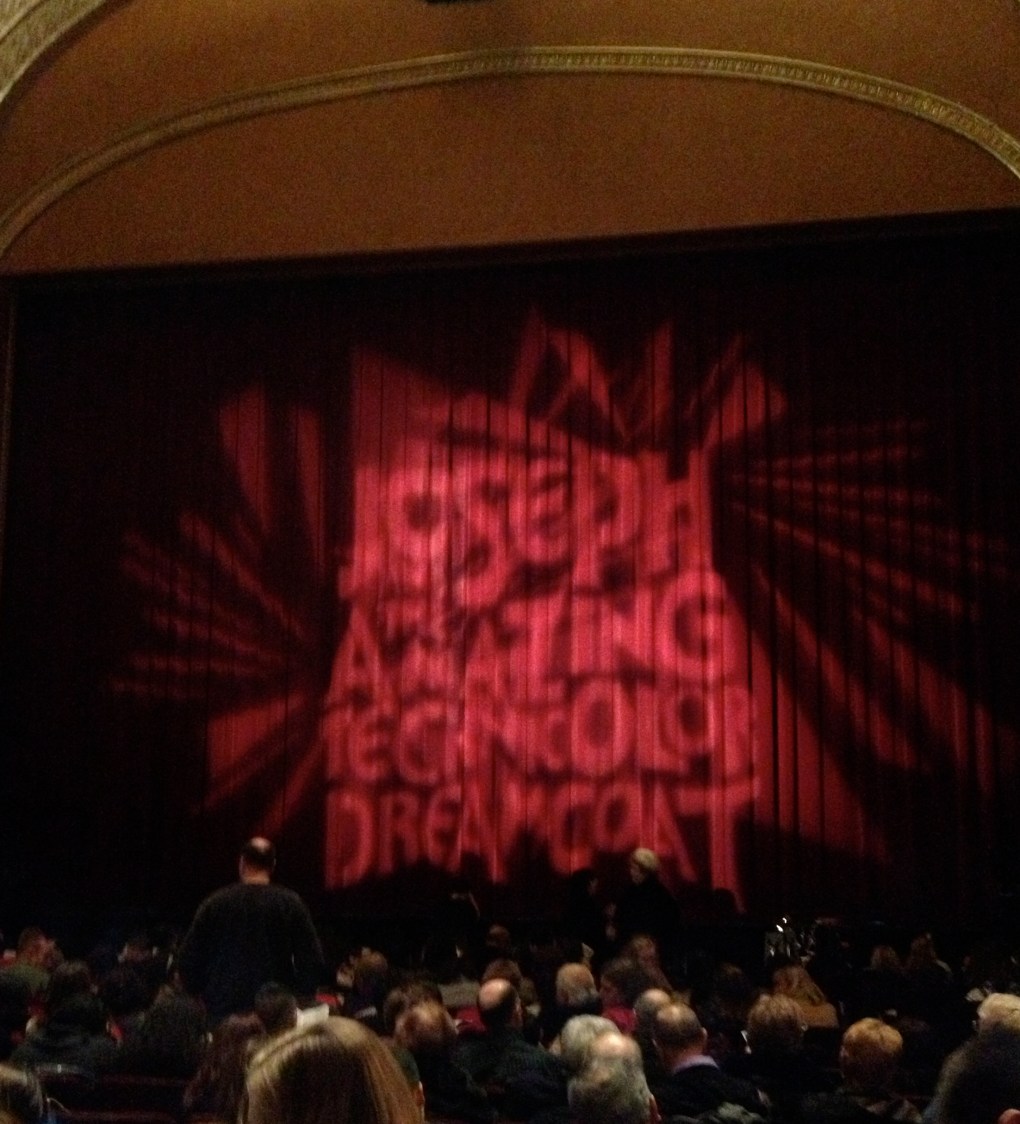
A friend had kindly given my family tickets to Joseph and the Amazing Technicolor Dreamcoat at the State Theater. Although put on by Plays-in-the-Park of Middlesex County, being in the shadow of New York City sets a very high bar for public performances. The show was excellent and energetic and I couldn’t help connecting the dots on how the Bible had played into the evening. Andrew Lloyd Webber long ago realized that even a very secular Britain had a hunger for biblical stories. Although I am biased, given my failed choice of profession, the story of Joseph is one of the great tales of all time. Although likely half the audience couldn’t say that the story occurs in Genesis, the rags-to-riches plot of betrayal and forgiveness is so deeply embedded in human dreams that even assigning it to the wrong testament would make no difference. As Lloyd Webber knows, we all want our dreams to come true. Joseph, certainly a flawed hero, does finally see himself as the second most powerful man in the fictional world of Moses’ Egypt. It’s difficult not to root for the guy.

Outside the temperature hasn’t managed to reach 40 degrees today. A few blocks away at the train station, some of those being force-fed the Gospel were almost certainly refugees from the cold. I’ve seen this every time I have to catch a train in Newark as well. The homeless know that at least they won’t freeze in the depot, even if they are chased off the seats by security. Moving from Joseph to James a moment, we hear “And one of you say unto them, Depart in peace, be ye warmed and filled; notwithstanding ye give them not those things which are needful to the body; what doth it profit?” In other words, if you are offering the homeless words only, you’re not getting the point of the gospel at all. The homeless would benefit more from having a dream come true, I’m certain, than from having a message of salvation before being turned out to the cold for the night. The real salvation in New Brunswick is being offered at the State Theater tonight, but you do need a ticket to get inside.

Any dream will do

Any dream will do


Random Science

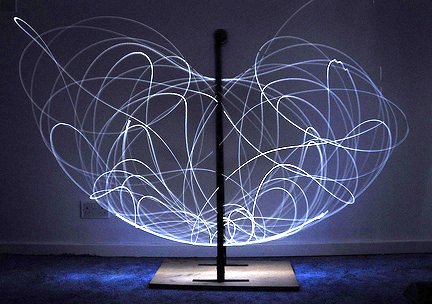
Our world is defined by science. Empirical method demonstrates again and again and again that physical properties follow the same tired pattern without any divine intervention. Saturday was Rutgers Day. Instead of our usual visit to College Avenue to sample French cheeses, we went to the Busch Campus of science and engineering. There we were treated to a 90-minute physics lesson that consisted mostly of demonstrations for the kids with things blowing up, glowing, and being broken after being dipped in liquid nitrogen. Outside the building we watched a chaos pendulum which a grad student explained never followed a predictable pattern. Back in the day when I was subjected to religious rules stricter than any laws of physics at Nashotah House, I used to read about chaos theory. It is the most biblical of scientific ideas. As anyone who’s watched Jurassic Park knows, it means that ultimate predictability is futile. Well, there’s more to it than that, but I’m merely an amateur.

Returning home, I read an interview with Matthew Hutson, about his new book The 7 Laws of Magical Thinking: How Irrational Beliefs Keep Us Happy, Healthy, and Sane. It is now on my wish-list, but I haven’t read it yet. Despite the fact that Hutson is an atheist, he recognizes that magical thinking is both healthy and unavoidable. A door creeps open for the scholar of religion here. We are able to see that non-rational thought is human, so very human. We don’t often think about how driven we are by our emotions. When we see a friend we ask, “what do you feel like doing today?”, not, “what do you think like doing?”. Visiting someone recovering from hard times we ask how s/he is feeling, not thinking. Emotion is, after all, built on the root of “motion”—it is our motivating factor. Seldom is it scientific.

Not to demean science. I have read science books and magazines on my own since I was a teenager. The truths that have been revealed through science are endlessly fascinating and pragmatic. They work in a way religions seldom do. Nevertheless, I became a scholar of ancient religions, studying them scientifically. In the Middle Ages it was said that philosophy was the handmaid to theology. Truth was revealed, not discovered. Reason, thankfully, began to show the way forward. The epithet Dark Ages gained currency for a reason. Science is our means of comprehending our universe, and yet, superstition is hardwired into our brains. I am glad for the scientific worldview even when the chaos pendulum still swings crazily, unpredictably before me. Seldom do those in my field get to consider themselves Renaissance women and men. The pendulum swings where it will.

George Ioannidis' chaos pendulum


Degradation

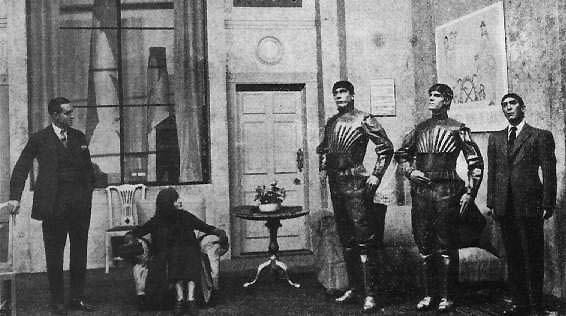
Having felt like an automaton in the realm of higher education, I was occasionally overwhelmed by the number of students and lack of resources. One of my fervent beliefs is that multiple-choice tests do not really demonstrate what a student knows, but playing the numbers, I sometimes had to resort to them. Being an adjunct, I didn’t have access to Scantron, so I devised a method of stacking the sheets precisely and grading them with a power drill. It was my one bit of notoriety at Rutgers—I was the guy who graded with a drill. All the while, however, I knew that a truer method would be to allow students to write for themselves. Even that, however, is going the way of automation. A recent story in the Chronicle of Higher Education reveals that student papers are sometimes being graded by robots. Real robots. The truly scary part of the story is that the robots provide grading almost indistinguishable from the professor, a species quickly becoming obsolete. I tell myself not to panic.

“Don’t panic,” of course, was the catch-phrase popularized by Douglas Adams in the Hitchhiker’s Guide to the Galaxy. In a world overwhelmed by forces we can’t hope to understand, panic is a natural enough reaction. Adams gave us Marvin the Paranoid Android. Higher education has given us the paranoid professor. Parents who pay extraordinary—mythologically high—tuition rates often ask me where all that money goes. It certainly doesn’t line the pockets of humanities professors; indeed, many of the classes are taught by adjuncts who are the penny dreadfuls of academia. I don’t know where the money goes. I do know that university presidents and football coaches are not wanting for material goods, but even their greed can’t account for the entire greenback drain.

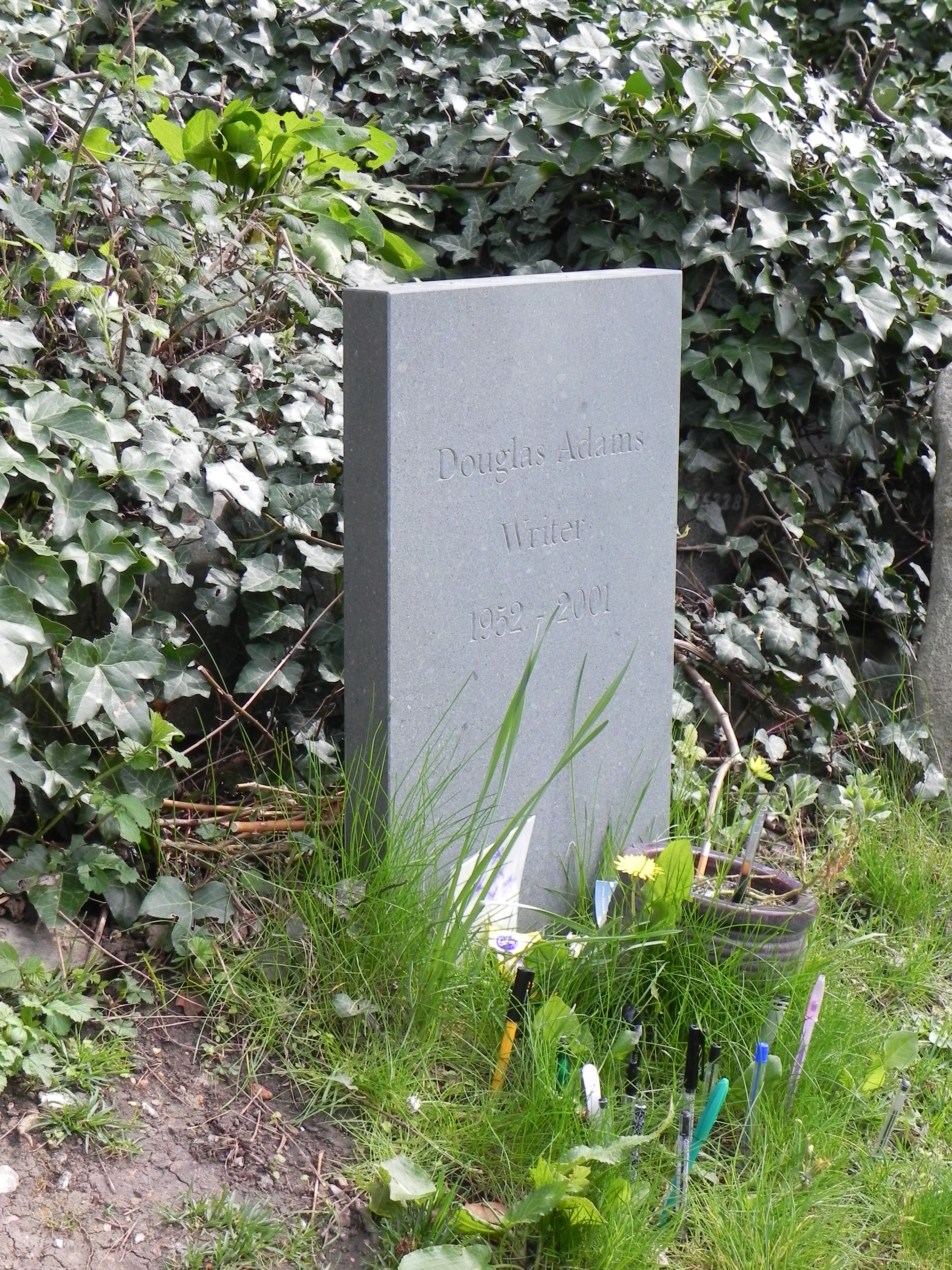
If I were still a professor I’d be tempted to ignore the sage advice of Douglas Adams about now. Courses can be covered by an overwhelming army of competent adjuncts, and grading can be contracted out to robots. Students really don’t even need to come to class any more as distance education has taught us. College becomes little more than an excuse to drink while away from home with a hefty tab being picked up by the folks back home. Higher education may have had the seeds of its own destruction always planted within itself. We’ve confused technology with the desire for increasing comfort and ease of lifestyle. It was only a matter of time before universities caught up. Standing by the grave of Douglas Adams in Highgate Cemetery I’m thinking that his bizarre vision of the future was more sensible than what has actually evolved in our culture. That, and I’m glad I learned to use a power drill.


Lower Education

Is there anything that can’t be sold? I think in the context of the free market, with its oxymoronic name, the answer must be a resounding “No!” A concept may be sold as a piece of writing or a patent or a trademark. Souls may be sold to the devil, at least according to the entrepreneurship of demons, if centuries of folklore are to be believed. A person who has betrayed his or her ideals is a sell-out. We can sell anything. Two related stories in the Chronicle of Higher Education confirm, in very different ways, this truth above all truths. The first piece, “More Notes on the Rise of Thrun Credits,” by Kevin Carey, notes how universities are in the business of selling academic credentials. Those of us who’ve gone through the educational grind-mill that leads one to poverty with the dubious benefit of a Ph.D. diploma to hang on the wall of our cardboard hovels, found this out the hard way. What matters is not what you learned or how well you learned it: where did you go to school? That is the most important commodity that a university sells—its name. It is sad that academia has gone after Wall Street, but there’s no changing the direction of this charging bull.

The second article, which I only spied because of a link on the first, was a tribute to Irving Louis Horowitz, world-renowned social scientist and founder of Transaction Press. In my days of desperation at Gorgias Press, looking for a new position that would make use of my editing and higher education (sales) background, I had contacted Transaction and ended up having three lengthy interviews with Dr. Horowitz. He was well known for his quirks, but he always had a kind word for me, and even read my book to find out more about me. Such determination and depth of investment are rare these days. In the end, I never did find a place at Transaction, although it was literally a ten-minute walk from where I taught my Rutgers classes on Livingston Campus. Publishers, it stands to reason, are also in the business of selling on the basis of reputation. Once Dr. Horowitz said as much during one of my interviews. “Without reputation, what does a publisher have to offer?” he asked.

Both of these ventures in which I have participated began as sources of disseminating knowledge. I was naïve enough to suppose that such ideals could survive the onslaught of that hissing serpent called finance, yet it is sad to be in a world where nothing falls outside its coils. Long before the birth of capitalism universities managed solvency and provided the intellectual inquiry that eventually led to its own demise. Publishers always sold their wares, but many pieces were published for the sake of their content, not their earning potential. That world no longer exists. In order to be paid you must have something to sell. All other transactions are null and void. We send our children to college to find jobs, not to learn. Maybe it’s just as well. Schools are busy with marketing and branding, so let our young ones learn the only system that works. For those interested, I have some swamp-land in Florida to sell…


Do Unto Others

Having just finished my first week as Religion Editor at Routledge, I have learned many things. The lengthy commute into New York City is filled with many lessons along the way and working for a publisher of some distinction is a privilege. My working life began with the work of a common laborer at 14. Conditions weren’t bad although the work was hard—we have laws to protect minors against exploitation. Funnily, after people reach a certain age exploitation is freely allowed, as long as someone benefits from it (not the one doing the labor). Being from a working class family, I gravitated towards dirty jobs. My college career was supported by many long hours in the dishroom, washing the cups and plates sent back by kids whose parents could foot their bill. I didn’t complain—physical work has always been relaxing to me. Mind work is much harder.

The majority of my adult life has been whiled away under the Damoclesian stare of religious institutions or individuals. Christians don’t make good bosses. My years at Nashotah House felt like some combination of Alcatraz and Bedlam. Under the authority of the religious I was taught to quake and fear. After over a dozen years of this, released into an empty academic void, I found a job with a Christian publisher who once again lived to dominate. I try hard to believe it is not inherent in religion itself, but often those who wish to bend others to their whim have some sacred sanction. For a brief respite I had a wonderful experience at the University of Wisconsin Oshkosh. My boss was secular and very caring. The same applied at Rutgers University. When Gorgias Press tired of my efforts, the secular academy came to my rescue.

Routledge once again reinforces that paradigm. For the first time in my professional life I feel that I am truly valued. As a rule, adjuncts are like Kleenex—there when you need them, but disposable after used. The university people were kind but could offer little. Now I am accepted among the secular and the little knowledge I’ve gained over the decades is appreciated. The scars, however, still show. The fear of long years of subservience are not easily dismissed. It is my hope that some day they may become effaced enough that the terrors wielded by the religious might be only nightmares recalled vaguely in the full light of day. If such deliverance comes it will have been because of my non-religious bosses. Such a parable should teach us about what religion has become in this “Christian country.”

No mean city.


Last Rites

Last night at 9:40 p.m., my last class at Rutgers University ended. I began a teaching career in higher education back in 1992 when I was still younger than most of my students (that was in a seminary). Despite the difficulties of that setting, I had lowly dreams of a reasonable teaching post in a small college where good teaching was emphasized and serious research was allowed. It was never to be. Now, facing an exciting career move, it feels like a giddy run suddenly played out. The finish line crossed halfway through the race. Higher education simply never made room for the likes of me. Students have frequently commented on how they like my courses and find me a congenial instructor and wonder why no full-time positions ever emerged. My answer has always been that Religious Studies is the one field where religious discrimination is legal and regularly practiced. Denominational schools are permitted to hire on the basis of faith—I have been declined more than one position because I was not the right brand of religion. State schools are afraid of the field.

State universities, where I ultimately ended up, are very cagey about Religious Studies. I’ve known otherwise highly educated individuals who suppose that such departments are glorified Sunday Schools or Catechisms. They always seem surprised, when a religiously motivated person decides to become a mass murderer on the basis of conviction, that universities don’t know more about religions. It is, however, a dying field. Religion in America has been hijacked by the NeoCon camp. Over the years I’ve had mainstream Christian students explain to me why they are not really “Christian” since they assume that the title goes with conservative political and social values. To my humble eyes, it appears the battle may have been already lost. State schools fear interference with the establishment clause while NeoCons plow ahead to mandate a state church. It is the religious makeover of America.

I will miss teaching, but it has been a punishing career. My years at Nashotah House were filled with abusive situations and unrealistic expectations. Since then I have never had a full-time teaching post. In some cases I have spent more time driving to campus than I spent in the classroom. It is time to launch on a new career direction—even my previous editing experience was under the shadow of a conservative religious outlook. I have told many students over the years that teaching careers are not what they used to be. I have many horror stories to back me up. That doesn’t mean that a tear or two didn’t fall as I left my last classroom after nearly twenty years in the biz. It has been an education to me, and I hope a few students among the hundreds I’ve taught out there feel that it has been the same for them.

Nevermore.


For the Love of Books

As is so often the case, publication and religion go hand-in-glove. George Routledge was a man with a vision. As a literary man of nineteenth century England, he moved from bookseller to publisher, establishing the well-known London house of Routledge (aka Warne & Routledge, George Routledge & Sons) in 1843. Although his initial successes were literary, among his first publications were the reprinted Bible commentaries of Albert Barnes. By 1854 a branch of Routledge was established in New York where it continues to operate. Acquired by Taylor & Francis in 1998, Routledge still pursues and produces notable academic books in many fields of the humanities and social sciences. The company is a testimony of the strength of vision of a man with a love of books.

I began this blog as a recently unemployed editor at Gorgias Press and part-time lecturer at Rutgers University. Both were jobs involving books and religion, but I am now moving to Routledge as a religion editor. Once again, I will be full-time in the world of books. Regular readers of this blog will know of my sense of loss at the closing of Borders this year. Although I claim no special insight into the way businesses work, the loss of comfortable space surrounded by books is something I felt very deeply. There seems to be a kind of redemption in taking on a position that will once again set me in the role of seeking to produce more books. It is as if the fabric of several loose strands of my life that had unraveled under the trials of the world of higher education have once again rejoined.

While whiling away the happy hours at the 4-H fair last week, I enjoyed strolling through the arts tent. There I noticed that someone in our county has started a creative writing club. This was a hopeful sign; the previous year I had made inquiry into starting such a club myself. When the world seems to have evolved beyond books, those of us who need them must invest the love of writing in our young. Although 4-H is not a religious organization, writing nevertheless has a sacred appeal. Those who feel drawn to the craft know the incredible grip that written expression can exert on a person—seeing your name on the cover of a book is a form of eternal life, metaphorically speaking. As editor I will not be the name on the cover, but I will be the one helping others to attain that immortality. It may not bring Borders back from the dead, but even the very idea of resurrection comes to us in the form of a book. Even so, Routledge is the agent of resurrection in my meandering career.


Natural Born Killers

Every year I spend some time at the local 4-H fair. I grew up not knowing about 4-H, and the discovery of the organization as an adult has been an education for me. The local university extension that supports 4-H is Rutgers, although on campus you never hear about this rural aspect of the sophisticated world of academia. My daughter has been a member of the cat club for years, and although not a member myself, they are cordial and always offer me a chair (something no university has ever done) to spend a few hours in the shade while the kids showcase their skills and knowledge. Young potential is one of the few sources of optimism I find in a culture obsessed with selfish gain. My daughter’s cat club shares a tent with the alpacas, the epitome of herbivorous tranquility. With wool so soft as to be unbelievable, the alpacas with their long, graceful necks and huge brown eyes, look to be the least offensive creatures at the fair (except maybe the bunnies).

People in crowds, however, often shift dynamics and stress systems that would otherwise find their own balance. While many of the thousands of visitors at the 4-H fair are respectful of the animals, many others seem unaware that loud voices and running children and constant noise can stress even docile animals kept in small enclosures. Kids will find a cat in its cage and bark at it to get a reaction, and we all know the glass-tapping behavior that drives the reptiles wild. The fair has been part of my life for three years now and I’ve never noticed a stressed alpaca. They seem above it all. Yesterday, however, one stressed animal took on a surprisingly human behavior and began to bully a smaller alpaca in its pen. Apart from the caricatured spitting, the larger animal began licking and biting the smaller one, snaking its long neck after the smaller camelid’s head, biting its ears, and generally making its life miserable. The aggression lasted only a few minutes, but it felt to me like the tension of seeing bullies rough up a kid on the playground. The fairgoers felt uncomfortable, with some even wagging their fingers at the larger, aggressive animal.

Club members eventually stepped in to separate the fighting alpacas, and the poor, smaller animal kept trembling for several minutes after the attack. No blood was let; the assault was mostly psychological. I went out to get a snack at the food tent. When I returned I was relieved to see the smaller animal had been removed from the pen, given some space. Later I learned the young animal had died from the stress of the attack. I had seen the incident, and the violence had mostly been of an unrelenting display of dominance with a minimal physical attack. The aura of threat had created the stress. Saddened, I realized that a parable had unfolded before my naïve eyes that afternoon. Like all parables, only those with perceptive eyes may be able to see through the drama and get to the heart of the matter. If only people were as perceptive as even the innocent herbivores, perhaps such parables could finally come to an end. In the meantime, maybe I’ll watch the bunnies and forget what I read in Watership Down.

Just look the other way...


Robot Ethics

One of the benefits of being affiliated with Rutgers University, if only part-time, is keeping a finger on the pulse of the future. No, I’m not on any admissions committees. Rather, this week, now available on YouTube, the university is advertising its robotics ethics program, geared mainly toward high school students. Perhaps reading Robopocalypse is not the best introduction to robot ethics, but it does raise a very serious issue—how do robots and ethics fit together? We haven’t even figured out human ethics yet! One of the principal concepts behind any ethical system is intention: did a person (or rarely, a higher animal) mean to do what it did? If an action has brought harm to a person, we need to know if it was intentional or not. In a world where artificial intelligence is just around the corner, we need to sort out how this will apply to mechanical minds.

Perhaps—if human minds are just soft computers—when robot minds are created they too will have a god concept. Neurologists and philosophers and theologians debate when the human concept of god originated and no consensus has emerged. It may be a by-product of “mind,” however we define that. If computers are eventually assigned true mind, will they also believe in God? According to Wilson’s fictional construction in Robopocalypse, Archon thinks “he” is “god.” Humans tend to project God out there somewhere. None of us has the power ascribed to God, and even if individuals claim otherwise, we don’t actually believe we are divine. Would a computer know?

Pressing just a little further on this, human ethics are always subject to corruption. It is clearly seen, almost advertised even, in politics. Not only do we find government leaders with their trousers down or with dirty money in their hands, we also find the same in ecclesiastical settings. Would robots become corrupt? Wilson calls the corrupting agent a virus, a real enough phenomenon. According to the Rutgers video, within two generations every home will have robots in it. The question is: what will their ethics be? I probably won’t be around to see it happen, but I do have a profound hope. My hope is that whoever fabricates robot ethics will be well aware of the failure our governments and religious institutions have made of the attempt.

Danger! Danger, Will Robinson!


American Haunted

Serendipity, although rare, still occurs in university life. As an adjunct instructor whose livelihood revolves around the number of courses that may be squeezed into a limited number of days, I have been considering online courses. As an avid watcher of horror movies—excellent preparation for adjunct life these days—I have attempted to sample the genre widely. It is therapeutic to see people in fictional situations worse than my own. While attending a training course on constructing online courses earlier this week I was surprised to find out my instructor was Brent Monahan, a versatile and talented individual of whose presence at Rutgers I was unaware. Most famously Dr. Monahan wrote the novel and screenplay for An American Haunting, a movie I had written a post on back in January.

Compulsive in my desire to be on time, I generally show up to all appointments early. For this particular session I was the first person present, so, not recognizing my teacher, we struck up a conversation about my field of studies. (He asked; I try not to lead with my chin.) He was nonplussed about the fact that I am affiliated with the religious studies department—in general this is a conversation stopper since, along with politics, it is a forbidden topic in polite company. Before I realized who he was he suggested that perhaps people go into this field because of their internal struggle with good and evil. It was a perceptive statement and it made sense when it came out that he was a writer of horror films and novels.

Since I’ve been exploring the nexus between religion and horror I have wondered what the deeper connection might be. Clearly fear of the unknown, the overly powerful, and the randomness of life in an uncaring universe play into it, but perhaps it is also the struggle of good and evil. Horror films often present the “what if” scenario: what if the side of evil were allowed free reign? Often the fount of that evil, in horror films, is religion gone awry. Certainly in An American Haunting a pious man is driven by inner demons to the abuse of his own child. That he is a religious man is made plain from the near-constant presence of a clergyman in his house once the haunting starts. While the exact relationship remains to be parsed, it is clear that fear and religion reside very near one another in our brains, perhaps as near as good resides to evil.


I Can Haz Edukashun?

Myths are alive and well. One of the most pervasive myths, along with the one that says clergy only work on Sundays, is the concept that educators take the summer off. Undoubtedly some do, but the summer is traditionally the time for professors to conduct research without having to break up their concentration with several classes a day. Those were the halcyon days. This morning’s newspaper slapped me like a fistful of razors as I read the story of Rutgers University’s president’s resignation. I knew about the resignation, but being fumblingly employed part-time by his mighty university, and having to take annual ethics training for the pittance I’m allowed, I blanched as I read these two sentences: “McCormick earns $550,000 a year as president and is eligible for a $100,000 yearly bonus, though he hasn’t taken the money in recent years due to the university’s budget troubles. Ralph Izzo, chairman of the board of governors, said he thought McCormick would be worth his [continued] $334,000 professor’s salary.” A few pages later the headline tells how Chris Christie, New Jersey’s cut and bleed governor, took a state helicopter ride to get to his son’s baseball game. Also, he wants to prevent state employees from making a viable living.

In this twilight zone of an educational nightmare, a guy with professional ethics training just wants to close his eyes and make it all go away. For what are we educating our young if not for greed? What professor is worth more than 100,000 dollars to any university? In the old days, back with ethics had intestinal fortitude, the term for such folks was “sell outs.” Is there really any drive for excellence at such pay scales? It is no wonder we are raising the “entitlement generation.” Actions used to speak louder than words. State-mandated ethics training has now corrected that little oversight. Higher education used to be about ideas; today it’s “show me the money.”

The truly sad part of all this is that we keep pretending. We preach the myth to a public easily pacified and crucify those who beg to differ. Back in my Nashotah House days a trustee once hushed me so that the board might listen to a student with “fire in his belly.” My belly’s a blackened cinder by now. Is anybody listening? Mythology, particularly in the Greek world, revolves around the concept of hubris. It is a concept with which modern university folk are clearly unfamiliar. It goes something like this: like most people I think I am better than others. In order to prove it, I’ll increase my blandishments until there is no longer any doubt. Is that Olympus straight ahead? I might as well take that as well!

I’d love to stay and lecture some more, but I’m apparently entitled to more state ethics training.


Triskaidekaphobia

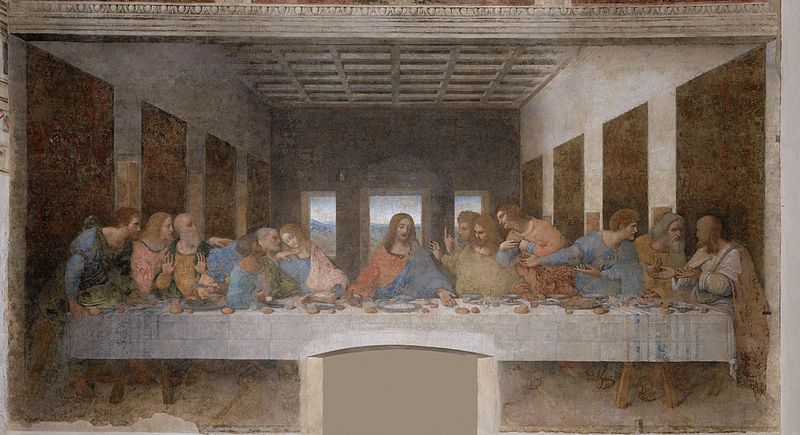
Friday the thirteenth. The very concept awakens images of horror movies and inauspicious happenings. An interview with a Psychology professor at Rutgers recently discussed this unusual phobia. Mike Petronko of the Graduate School of Applied and Professional Psychology had this to say: “Exactly how this got started is difficult to say, but the belief appears to date back to ancient times. Often, superstitions are rooted in religion. Some folklorists believe the fear may stem from the Last Supper, when, according to Christian belief, Jesus and his 12 disciples gathered for the final meal, which set the stage for his crucifixion, on Good Friday.” There is no doubt that the origin of the superstition is religious and that Fridays earned their notorious reputation because of Good Friday. Even today, as any Roman Catholic can tell you, Friday dietary requirements differ from those of other days.

But wasn't this a Thursday?

Thirteen is a little harder to pin down. It is a prime number after ten, but then, so are eleven and seventeen. It may have its unlucky associations back in the old Mesopotamian base-six numerical system. Once you reach past the first doubling of six you meet thirteen. Even today hotels are designed with no thirteenth floor, although pasting a fourteen over the actual thirteen is merely for psychological relief. Mathematics insists thirteen follows twelve. As Petronko notes, the fear is real. Airliners do not have row 13 and hundreds of millions of dollars of revenue are lost because so many people refuse to engage in regular practices (such as flying) on Friday the thirteenth.

Religion and fear are not strange bedfellows. In fact, religion, in its earliest origins, seems to have been a coping mechanism for fear. People are afraid of many things – that is the curse of consciousness. We can anticipate eventualities that will never materialize. We imagine them happening to us. Religion seeks to placate those forces that are beyond our control. We may lay claim to a highly advanced and technologically sophisticated society, but millions of people are anxiously awaiting the end of this day. Rutgers, like most universities, hardly sees the need to fund the study of religions. Nevertheless, our very culture belies that indifference. Many people are afraid today and we still don’t even know why.