Doubts Creep In

What between Snooki at Rutgers and Mel Gibson’s Passion played at Montclair, I seem surrounded by university controversy lately. A recent article in the New Jersey Jewish News addresses once more the pre-Easter screening of The Passion of the Christ on Montclair State University’s turf. Education is bound to be embroiled in controversy since learning is seldom comfortable. I suspect that is one reason bully governors and the occasional president go after higher education. Few adults like to have their assumptions challenged, their values questioned. I am reminded how blindly many educated clergy accepted the version of the faith story by a disgruntled actor rather than by scholars who actually know what they’re talking about. It is difficult to dismiss the truths of the big screen.

The fact that the wounds opened by this screening are still bleeding weeks after the event demonstrate just how vital open dialogue is. Not only open dialogue, but frank discussion of religion. Many, if not most, religious believers carry on the tradition in which they were raised. Parents begin religious instruction early, and with the threats of a fiery Hell and an enraged divine father overhead, children are shunted toward Heaven everlasting. Not all religions use the same stick and carrot, but no matter what the bludgeon or the vegetable, religions give the faithful reasons to stay in line. Best not to discuss it too much, otherwise doubts might creep in. Educating students in religion is controversial, but necessary as long as people continue in practicing it.

As the article notes, the objection to the film revolved around the fact that no educational component was included. This was one of those “think with your guts” kind of moments, as if feeling sorry for the fictional portrayal of Jesus might somehow make one a better Christian. Educational institutions are duty-bound to teach critical thought when it comes to matters of belief. Emotion is a fantastic motivator, but as history has repeatedly demonstrated, it tends to act without thought. Universities should be open to such constructive criticism, although, it is doubtful that many minds are likely to be changed when the draw at the box office is too great to ignore.
Entertainment or education?

Dukes and Serfs

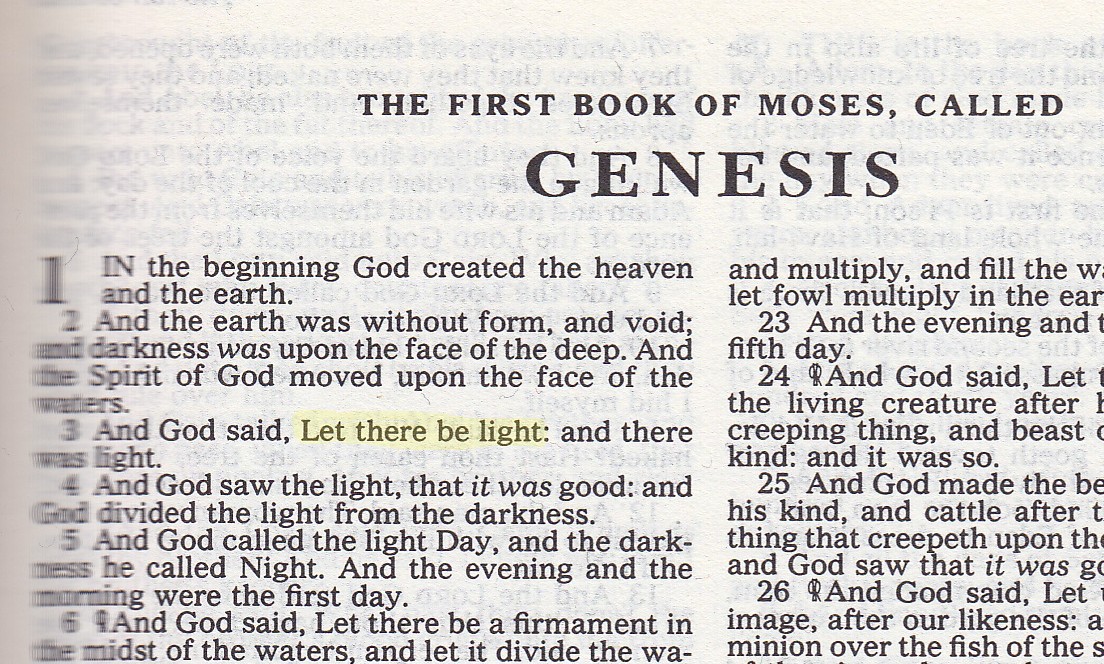
Once upon a time in a land far away, a man and woman worked a fertile garden, blessed by God. That garden was in the incredibly rich, black soil of Savoy, Illinois. The zucchinis harvested were of biblical proportions. Some of them miraculously grew to the size of my calves seemingly overnight. The broccoli and carrots my wife and I grew had so much flavor that we couldn’t believe just how much leeched out while vegetables sat in the back of a truck or on a grocery-store refrigerated shelf. Even with their periodic mistings. It was as if Bunnicula had visited them at night. So long ago, the garden. It seemed obvious in those days why the writers of Genesis compared paradise to a garden. Ours was no Eden – it was hard work – but my wife and I had a lot of fun with it.

James Buchanan Duke, namesake of Duke University, owned a considerable estate outside Hillsborough, New Jersey. Having established both a tobacco monopoly and an electric company, Duke was enormously wealthy. He left his Hillsborough farm (not the tobacco farms which were in his native North Carolina) to his daughter Doris, making her one of the wealthiest women in the world. Her estate now consists of a socially conscious Duke Farms Foundation that has offered gardening plots to the plebeians of the region. So yesterday I found myself once again back in the garden. Sharing a plot with a friend, we arrived for opening day and were greeted by one of the organizers of the garden. Her name, of course, is Eve.

New Jersey planting requires more manure than the black earth of the Midwest. Yesterday I found myself shoveling horse manure, not for the first time in my professional life, while Eve supervised the garden. It seemed strangely biblical. Dodging between my summer classes this year, I will be emulating the first profession of our mythic father Adam. In the afternoon, after cleaning up, we headed to Rutgers Day, the university public-relations festival that shows off the tremendous wealth that cannot afford to hire full-time faculty any more. As I kept a weather eye on the clouds, worried about the seeds I’d just planted, the future continued to look stormy to me, even on the campus that has at times been my only source of barely sustainable income. Perhaps I should have changed my shoes, because it seemed to me that the smell of horse manure still hung heavily in the air.

I wonder if this is how Adam got started


The Bible Tells Me So

As part of my regular Hebrew Bible class, students prepare classroom presentations for the end of the semester. This gives them a break from constant lecturing and also serves the function of initiating discussion. I assign social issues for them to discuss vis-à-vis the Bible; they can discuss these with each other in group-sessions throughout the semester. Since no one knows “the answer” when it comes to the Bible, I figure we can all learn from each other. I’ve been using this exercise for four years now, and at a school the size of Rutgers, you’d expect a wide variety of perspectives. This occurs, to be sure, as does more predictable stances. After fourteen weeks of instruction, most of them can only find the Bible a trove of prooftexts.

Learning to integrate biblical study into a rational worldview is difficult in our cultural climate. From nearly every medium from which religion wafts – Internet, television, newspaper, personal sermonizing – it comes out literal. The Bible/Quran says… (fill in the blank). What occurred to me during the student presentations is that scriptures of all descriptions become dangerous when their context is lost. Politicians, often among the arguably least educated members of society, argue about what the Bible says. Problem is, the Bible was written from a pre-Enlightenment viewpoint, a perspective that is out of reach to all but the most utterly naïve. Even to understand worldviews from the pre-Enlightenment you need to spend years of serious historical study.

So here’s our dilemma: we live in a society enamored of a book it doesn’t understand. Bible verses are used like Band-aids, pasted over every perceived rupture of continuity, but never quite reaching to the ends of the wound. Even after a semester of bald instruction – in the case of Nashotah House three semesters – students generally revert to what they know. To learn what the Bible instructs, take a pair of mental scissors, snip around the pericope, and tape the verse over the issue. There is, however, always a backside to the page. And most students never learn even to turn the page over to see if both sides agree. They could be ready for a life of politics.


Slash of the Titans

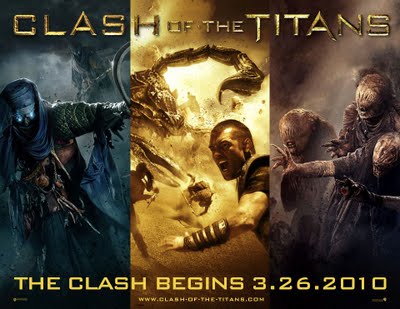
I’m suffering from mythology overload. Last night I watched the mediocre 2010 version of Clash of the Titans on DVD. Since I’ve been grading students papers on mythology non-stop for over a week now, I felt that I needed to see what all the fuss was about. Again. I saw the movie in a theater earlier this year and wrote a post on the post-modern perspective the film has on the gods. To get a better sense of a movie, however, a repeated viewing is awful helpful. The fact is that the public exposure to mythology is often limited to the movies. Students frequently ask if something they saw in the Disney version of Hercules is the way it really happened in the myths. Nothing really happened in the myths.

Meanwhile angry letters have been pouring into the New Jersey Star-Ledger. Rounding out a new losing season, Rutgers University football coach Greg Schiano remains the highest paid employee of the state of New Jersey. Academic voices are feeble, but economics makes people sit up and pay attention. Money talks. Brains are lazy when it comes to rigorous thought. As the collection of heroes gathered in the forest of Calydon to chase the great boar Artemis let loose on the city, the academic world has also chased the glory of the pig-skin. And poor Meleager paid the price of the public outcry when it was over. Even though his team won the biggest college bowl ever.

It is hard to tell the real villain in Clash of the Titans. The writers suggest it might be Zeus, or Hades, Medusa, the “Kraken,” Acrisius, Cephus, or even the “fire priest.” Everybody’s looking for someone to blame. Things aren’t right in Argos. Others blame state legislators, the president of Rutgers University, or the football coach himself. The fact is in both the movie and in the university priorities have been skewed. Nobody is driving except the money, no matter which box office it goes into.

Who's got the pig-skin?


Plumbing the Depths of the Universe

Lasting summer I helped a friend unclog his sewer line (the mark of a true friend). That episode readily released me from a lifelong fear of plumbing, and when our kitchen sink leak got to me shortly after, I took courage and fixed it. Now, a year later, it looks like a seal has gone bad. With stagnant water dripping on my face, cantilevered under a pot-bellied sink, I discovered that plumbers have their little trade secrets. Trying to loosen in intake line nut with a standard vice-grip set of pliers, removing skin from my knuckles while at an unbecoming angle for a man my age, I felt like Bill Bixby turning into the incredible Hulk. I knew I had to make the long drive to New Brunswick to get my Rutgers campus mail after this, and I was getting nowhere with the nut. Traffic in New Jersey is relentless, and it looked like my entire day was shot when I noted there was a Scarlet Knight football game today, and I have to drive right by the stadium where the millionaire football coach prevents guys like me from being hired. So there, head under the sink, fuming with rage, I had an epiphany.

Reality, as we are taught in our rational educational systems, can be explained by reason. Certainly the fact that I’m typing this post on a highly sophisticated computer to upload to a god-like Internet, demonstrates that reason works. Bit by bit, piece by piece, scientists figure out how our world works. And yet, many scientists also ascribe to religious beliefs. Explaining religion will need to await another post, but it is fair to state that religion is generally something that effects the emotions. We tend to accept religion with our feelings rather than trying to wrench it in with reason. With my face dripping with runoff, I wondered, what if there are two separate realities?

Ockham’s razor may apply here, but I don’t shave. What if reality consists of a non-rational, emotional universe as well as a simultaneous, empirically explainable one? What if we are leading dual lives straddling two different forms of reality? That doesn’t make any one religion true, but it might explain why we haven’t been able to explain emotion. Psychologists like to trace it back to “fight or flight” functions from our reptilian brains, but the emotion we experience often seems more intense than that. Emotion may drive a highly rational human being to completely nonsensical behavior. Perhaps we are participating in a universe that requires a two-pronged approach. Perhaps rationality is only half the picture. As I prepare to stick my head back under the sink again, I realize what plumbers must have long known – some things, such as under-sink arrangements, simply can’t be explained by reason alone.


The Problem with Demons

One of the perks to life among a university community is the special programs that come to campus. As an adjunct instructor with a schedule so confusing that even Escher would get lost, however, I do not often have the opportunity to take advantage of such programs. More’s the pity since next week Montclair State University is hosting an event called “The Real Exorcist.” One of the very few authorized exorcists of the Catholic Church will be speaking on campus. The event overlaps with a previously scheduled class at Rutgers.

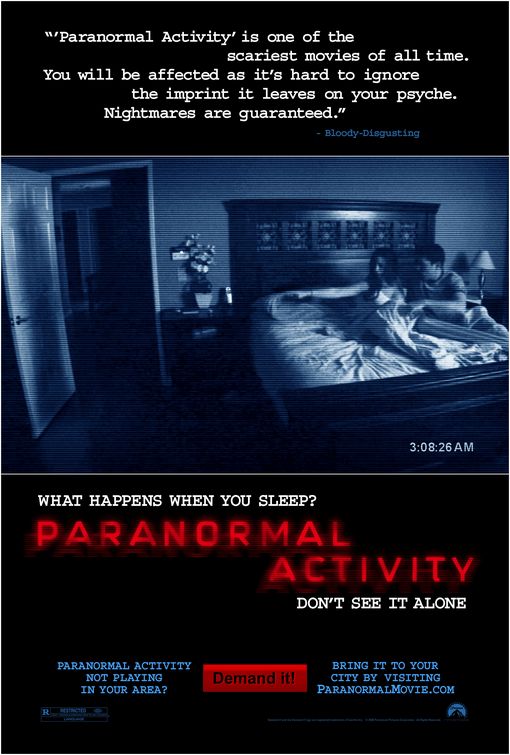
A little disappointed, last night I sat down to watch Paranormal Activity, the indie movie that made such a splash last year. Assuming it was a ghost story, I wasn’t too concerned about watching it alone on an October night. When I discovered it was a demon story, however, I wasn’t sure watching it alone was such a good idea. You see, in the hands of paranormal investigators the demon has undergone a transformation. Ancient Mesopotamians believed in a set of lesser gods who caused misfortune, although they don’t seem to have been pure evil and they didn’t call them demons. By the time we reach nascent Christianity, demons are cohorts of the Devil and are utterly malign and capable of possessing a person making them do the bidding of their dark lord. That’s where they remained on the divinity scale until modern day investigators using scientific equipment found them. I confess to having watched Ghost Hunters a time or two. Here the demon has morphed into a non-human disembodied entity – the very antagonist of Paranormal Activity.

Being aware of the origin of concepts is often a comforting place to be. When I realize that no special revelation has suddenly validated the existence of a baleful creature set to do me serious harm, a relief encompasses me. The problem with demons is that they don’t evaporate so easily. “Invented” by the Mesopotamians to explain misfortune, by the change of the era they had evolved into (largely) an explanation for epilepsy and mental illness. Now today they are back as haunting entities that have no human sympathy since they were never human. Paranormal investigators take them very seriously, despite their checkered theological pedigree. I guess I side with Shakespeare on this one: “there are more things in heaven and earth, Horatio…” After all, it is October and the nights are growing noticeably long.


Crimeless Victim?

Anyone who’s spent much time with the Dead Sea Scrolls knows the name of Norman Golb. Long-term Oriental Institute professor at the University of Chicago, Golb has been active in research on the Scrolls for decades. Tuesday the New Jersey Star-Ledger ran a confusing article about the trial of Golb’s son for identity theft. After reading the piece several times it is still not clear what Raphael Golb has done that is either newsworthy or illegal. It does involve the Dead Sea Scrolls, however, and that is always enough to draw the attention of the Associated Press.

Is the truth in there?

The Dead Sea Scrolls continue to fire the imagination of the general public in a way that is somewhat baffling. The scrolls themselves are largely obscure and fragmentary, the information they contain is often arcane, and the published pieces raise excitement mostly in scholars rather than a general readership. The fact that it is not too difficult to fill a class on Ancient Near Eastern religions at Rutgers University seems to indicate that people are still avidly interested in the past, particularly in that conflicted part of the world where civilization began. While the media report the more sensational finds, interest quickly peters out while new and more exciting stories hit the wires. It’s fun to imagine what the field of studies would be like if sustained media interest told the public what to find fascinating in the ancient world.

This article, however, represents the unfortunate reality that scandal is often the drawing point for ancient studies. People are attracted to scholars behaving badly, intellectuals receiving their timely comeuppance. It is disappointing that the subject matter itself doesn’t receive more attention. The Ancient Near East is, after all, the source of what we continue to recognize as culture. Reading the article over again, the most disturbing element is not that Raphael Gold has allegedly committed identity theft. The most disturbing element is that a professional journalist describes him, apparently without a hint of irony, as “a brainiac.”


Higher Ethics

As a part-time public servant (I teach part-time at two state schools, Rutgers and Montclair State) I am required to sit myself in front of the computer for over an hour each year to watch a slide show on the ethics expected of public servants. Probably the first time this was a good thing since I had seriously been considering taking a tip-jar to class with me to help meet the costs of living in New Jersey. You see, part-timers do not get benefits. Some, like me, teach twice as many courses as their “full-time” colleagues and get paid less than half of what their betters do. I am a bargain-basement public servant. I figured a tip-jar might just help to cover mileage (not reimbursed). As I listen to the stern-voiced lady spilling out all the unethical practices (like tip-jars) that can lead to the dismissal of bad public servants, my mind can’t help but to wander to what Bruce Springsteen famously called “the mansion on the hill.”

Froma Harrop, a journalist in Providence, wrote an op-ed piece on higher education that appeared in yesterday’s New Jersey Star-Ledger. After surveying the situation at her local Brown University, Ms. Harrop laments the seemingly endlessly escalating costs of higher education. In the past four decades tuition has increased an average of 15 percent, whereas incomes (at least some) increased at an average of 6.5 percent. She notes, however, that the money is not going to professors or academic programs. The lion’s share of university money goes to sports teams. Students who often have trouble passing my admittedly easy introductory-level courses are pampered, petted, and preened by the university. The average undergrad has plenty of stories to tell of how they have been forbidden goods and services that the university reserves for its sports stars. Ms. Harrop also cites the fact that the number of administrators has nearly doubled in the last 30 years. For all that, the schools haven’t become more efficient, just top-heavy.

So as I waste an evening looking blankly at my computer screen, I realize that I am a public servant. Strictly part-time. I also realize that many public servants – those who hold high political office come to mind – earn far more than they strictly need. In fact, the benefits package alone of some of these “servants” would easily support a family of three mere mortals. And they don’t even have to make their own car payments. As an undergrad I took enough courses in ethics to officially declare it a minor. I have studied religion, a discipline akin to ethics, all my life. As the stern-voiced lady tells me all the bad things I cannot do with state money, I wonder what the top public servants are doing tonight.


Delicate Matters of Faith

Friday’s New Jersey Star-Ledger ran an op-ed piece by Phyllis Zagano entitled “Teaching how, not what, to think.” The essay concerns a tale of two professors, one at the University of Illinois and one at Seton Hall. Both have come under fire for teaching on the issue of gay marriage, one from, one against, a Catholic viewpoint. Zagano’s point of view, evident from her title, is that professors should teach students how to think, but not what to think.

This is one of the most difficult aspects of teaching religious studies. I am in my eighteenth year of teaching in the field. In that time I have taught at both religious and secular schools and, in both settings, presented the material objectively. There are those in both settings who complain. Students at Nashotah House frequently wanted me to bend the Bible to fit conservative Anglo-Catholic teaching. Under immense logical pressure to accept what reason told them of the world, they wanted an authoritative book to back them up in a pre-decided outlook. A theological ace of spades to trump the uncomfortable conclusions of rationality. At the University of Wisconsin Oshkosh and at Rutgers University students frequently want to know my religious outlook so that they might know how to categorize what they are learning: is it sanctioned or is it anathematized? We need to know who you are so we can evaluate your authority in such delicate matters as faith.

I frequently ponder the issues raised by Zagano. I know of no other field of study where the stakes are so high, with the possible exception of political science. Religion is an all-encompassing phenomenon. All of life must conform to religious teaching, often with eternal consequences. It therefore makes an enormous difference what you are being taught. Like Zagano, I try to teach students to think for themselves. Both at the seminary and university I refused to reveal my personal outlook on the issues; I try to kick-start the thinking process. I have paid the price for this in the past, but it is a non-negotiable component of education. If the truth is uncomfortable, it is always possible to let someone else do the thinking for you.


Bible, Bible, Who’s Got the Bible?

Rutgers University boasts a truly diverse population. In my fourth year as an adjunct in the Religion Department at the New Brunswick campus, I am continually reminded of the religious and cultural mix of the human race. As I began my twelfth section of Introduction to the Hebrew Bible last night, it occurred to me just how tight a grip Christian-based publishers have on the Bible. I generally spend my first class session on defining the Bible since many students enter such a course (and it is always full) with notions of what the Bible is. In fact, “the Bible” is a difficult document to define.

Binding a book together indicates that what is between the covers belongs together. This is almost a subconscious fact that we pretty much take for granted. If a publisher put all of this in the same place, it must belong together. For the general consumer market, that translates into Bibles that contain the Hebrew Scriptures and the Christian Scriptures. This mix of 66 books satisfies most customers in the United States and Canada, but the Catholic reader expects some 13 additional or expanded books in her or his Bible. Jewish customers expect somewhat less, with 27 books normally in “the Bible” being specifically placed there by a later, revisionist sect. Orthodox Christian Bibles may add or leave out a book or two, depending on the tradition.

The irony of this situation strikes me as we have Bible-thumpers constantly appearing in the news. Their well worn, black leather King James Versions are “the Bible.” For them. Their message to the American public: we must get our lives back in line according to (my interpretation of) this book. What of those in this country who have fewer or more books in their Bibles, or, Yahweh forbid, completely different scriptures? Is there no room in a nation of religious liberty for them? I have a modest proposal. For the politicians who want their Bible to drive our society, stop by my class at Rutgers sometime. I am always glad to see the diversity. And it shouldn’t be too hard to find a section to fit in your schedule – I teach four sections of the class throughout the year, including summer and winter terms.


Trashing the Bible

For the past month any free time I’ve had apart from class preparation has gone toward helping my daughter get ready for a presentation at the 4-H County Fair. Now, the morning after the close of the fair, when prize dairy cattle and model rockets and treasured family pets have all been transported back home, I am left with that sense of purposelessness that follows a period of intense preparation. Four minutes of public exposure translated into hours, days of often emotional planning, trouble-shooting, and dreaming. Although I grew up in a small town, farm life is as foreign to me as Cambodian politics. When I’m at the fair, however, spending long hours wandering amid animals, and go-carts, and community college recruiters, somehow being outdoors feels like being truly human. Perhaps it helps that the local 4-H is part of the Rutgers Cooperative Extension. My regnant, reluctant employer channels enormous resources into helping the youth of the state transform into the future.

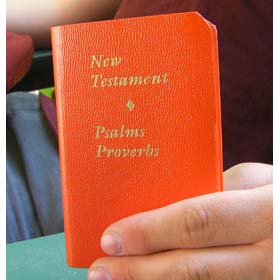
One of the vendors at the fair was the Gideons. Each year they have a table piled high with cheap New Testaments bound in flimsy plastic made to resemble jaunty orange leather, and the unwary soon find themselves with the Gospels and Paul tucked away in their bulging samples bags. It is curious that the Hebrew Bible, apart from the Psalms, is so dispensable in the cause of conversion or enlightenment. The motivation of the Gideon movement, ironically, draws on the book of Judges for its very label. An occupational hazard, I already have more Bibles than any decent human should, nevertheless, the Gideons always wish me to take on one more, if only a truncated version.

While wandering back to my daughter’s club tent after a trip to the bustling food tent, I passed one of the numerous trash receptacles mandated by any such large gathering of people in a disposable culture. Glancing in for a place to toss my greasy napkin, I spied a Gideon Bible, its optimistic orange cover partially smudged by cotton candy and other ambiguous substances. The tableau gave me a moment of reflection amid the noise, energy, and enticing aromas of church and firehouse cuisine. To someone, the Bible was that extra bit of unwanted, cheap, fair promotional junk. Although not a Bible-worshiper, the image left me just a little sad. Those weeks of intense preparation for my daughter’s presentation are brief compared to the decades I’ve spent trying unsuccessfully to cobble a teaching career out of the Bible. Sometimes symbolism can be cruel and ironic all at the same time.


Reaping the Exodus

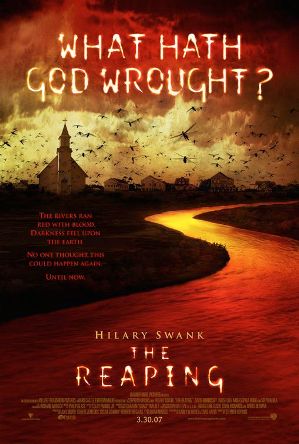
Strange coincidences transpire. In 2007, just after the professor in my discipline at Rutgers University retired, I showed up in the Religion Department seeking adjunct work. With the vicissitudes of “full-time” employment, at times my part-time stint at Rutgers is all I have. While covering the book of Exodus my first year there, students began asking me what I thought of The Reaping. I hadn’t seen the movie, which had been released on Good Friday of that year, but I promised my charges that I would. Still on my Hollyptic kick, I decided to rewatch it last night. The script was handled much better than that of Lost Souls, although the movie as a whole lacks credibility. It is, however, an example of how the Bible mystique continues to pulse through Hollywood’s veins.

The concept of bringing the plagues against Egypt into the bayou was a fresh one, but the satanic cult aspect has been overdone. A strong female lead in the role of a disenchanted former clergy-woman was a nice touch, and although the premise of her back-story was contrived, it was also decidedly eerie. The element of the movie that students wanted professional comment upon, however, was Katherine’s scientific assessment of the plagues of Egypt. This idea has a comparatively long history. Since critical biblical scholarship began, naturalistic suggestions for the non-historical plagues have been offered. Strangely, these offerings are intended to buttress an historical event that the theories themselves undermine. There is no archaeological or historical evidence for the exodus. Why then, are scientific explanations of the plagues necessary?

The story of the exodus is liberating; slaves liberated by a loving God forms a back-story that most oppressed people want to be true. The sad fact is that religion is more often used to repress than to liberate. Somewhere along the trajectory of human social evolution, religion became a key element in the control of the masses. This becomes clear from the merest glimpse at religion as it existed in ancient Egypt itself, or any of the other cultures contributing to Israel’s religious tradition. The Reaping, like so many films that springboard from the Bible, offers a conflicted worldview where nobody really knows who is in charge of the universe. In that aspect, it mirrors human religious experience.


Go Fish

You are what you eat. That trite truism has been kicking around for a few decades now, and although it has been an aphorism to encourage healthy eating it does convey a deeper truth. Scientists working in Africa have determined that the hominid diet of roughly two million years ago led to rapid brain expansion (rapid on an evolutionary scale, of course), according the New Jersey Star-Ledger. Remains found in Kenya, featuring a Rutgers University archaeologist, have indicated a widely varied diet of fish, turtles, and crocodiles among ancient hominids. Apparently these animals provide valuable nutrients for brain development, a somewhat disturbing piece of information for us vegetarians.

The more I have pondered this information, the more it has become evident that the concept of God has undergone considerable evolution. As I have noted several times in the past, religious behavior emerges at the very least in the Paleolithic Era of human development. What those non-literate ancestors thought or believed about “God” is long lost, but it seems to have persisted into modern conceptions of divinity. Belief in supernatural beings is attested world-wide, and therefore is a true human universal. (There are, of course, non-theistic religions and individuals, but all cultures show some measure of belief in the supernatural.)

In those moments when I am free to ponder what this might mean, I wonder about the earliest conceptions of the divine. It seems likely that this being was like a hominid, able to respond in kind to placating gestures on the part of early humans. An abstraction simply doesn’t fit easily into minds focused on the practical aspects of survival without the guidance of professional theologians. That early God was able to, but not obligated to assist our fearful ancestors with the struggles of daily life. That aspect of the divine being has not changed in many millennia. Even today many religious individuals still consume fish, a food approved even for meat-free days, by God himself.

Early images of God?


Everything’s Better at Harvard (Except Religion)

My wife pointed me to an important article in Newsweek on the plight of religious studies at Harvard. Now, I have to admit to a couple of bunches of sour grapes right up front. I was accepted at Harvard but elected not to go. Only after I had completed my doctorate at Edinburgh University after a lifetime of the study of religion and found that no jobs were available did I realize my mistake. I met colleagues who had jobs while attending academic conferences. All of those well settled in respectable positions had graduated from Harvard. A similar phenomenon exists in Great Britain. Those who actually find satisfactory positions hold doctorates from Oxford. Problem is, neither Harvard nor Oxford corner the market on good education (oh, the heresy!). People, however, are simplistically impressed by lineage.

In any case, this article by Lisa Miller points out the high drama of academic discord at the Shangri-La of American institutions. The famous linguist, Steven Pinker, who personally believes religion to be a severely faulty means of seeking enlightenment, has worked to prevent a required course in religion at the famed secular university on the grounds that faith and reason do not share the same status. Miller goes on to express how small colleges and state universities are picking up on the slack. My limited experience at Rutgers bears out her observations. In this large, rambling, decidedly secular school, my classes in the religion department are always full and I have to turn students away. Yet the university refuses to allow for a full-time hire. Secular America is deep in a state of denial. Because many academics reject religion personally, they simply can’t see how vital it is to understand it. I personally believe no one should be allowed to hold public office without having completed a course in Bible and its political abuse.

Meanwhile, Harvard still holds back. Its reticence will not prevent misinformed people from using their religion as a means of power and destruction. Pretending that since religion is not personally important it is not important at all has deadly consequences. To me it seems obvious that it is not the school you attend that is important, but what you learn while you are there.


Religion’s Double-Edged Sword

This podcast discusses a recent visit of Westboro Baptist Church’s “protesters” to Rutgers University. The issue is whether religious freedom includes the right to encourage hate crimes on the part of those not directly involved in the “protests.” Religious freedom is the phenomenon that allows such groups to develop in a democracy, but the end results of such groups is destructive to the democracy that engendered it. This is compared to the Scientology case that is simultaneously taking place in France and noting the differences between them.