
It’s a strangely affecting film. Among certain groups, Sasquatch Sunset was discussed long before it was released. I knew it was categorized as a comedy, and that it featured a Bigfoot family, otherwise I knew nothing about it. When it finally came to a streaming service, with commercials, I convinced my wife to watch it one weekend evening. I was surprised how deeply it invaded my dreams. It was still stuck in my head when I awoke the next morning. Now, movies will sometimes do that to you, but it’s difficult to say why this one does so. First of all, there’s no dialogue at all. No “humans” are shown in the film. The Sasquatch—parents, a child, and an another adult male—communicate by grunts and howls, but you soon begin to feel for them.
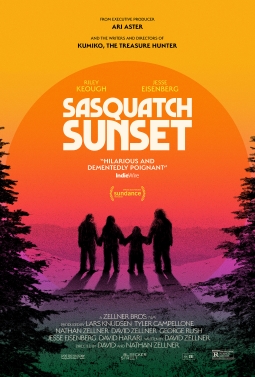
The plot, such as there is, is simple. The movie follows the group through a year, during which two of them die. The remaining Bigfoot bury them. They are perplexed by the human intervention in the wilderness. They have no permanent residence, but are nomadic. They come across as road and it frightens them. Then they find a tent. And logged areas. A leg-trap. Finally they don’t know what to make of a Sasquatch statue that they find outside the Bigfoot Museum in Willow Creek, California. The whole movie engenders a sense of loss. Loss of the wilderness, and loss of connection with the natural world. And, of course, there are many comic moments. We see ourselves in Sasquatch, and since they are played by human actors, that’s only natural. They play the parts midway between ape and human, which is oddly disturbing. All of this acted without words somehow forces concentration, and stays in your head.
Bigfoot has become less of a taboo subject in my lifetime. Sasquatch outdoor statuary has become common. The cryptid adorns whimsical tchotchkes and even Christmas tree ornaments. Although they aren’t recognized by mainstream science, some prominent scientists have cast their vote with the “may exist” camp. Reports of sightings continue to grow as the ridicule factor declines. It’s a topic, however, still best handled with some humor. The 1987 Harry and the Hendersons, which wasn’t as good as Sasquatch Sunset, was also a comedy. Stephen Spielberg was an executive producer of Harry but kept his name out of the credits, even though he directed UFO movies. Ari Aster is one of the executive producers of Sasquatch Sunset. The topic’s becoming more mainstream, and this is one of those movies, I warn you, that may get stuck in your head.

