Asteroid

So, that asteroid.  Good thing Trump won’t be in office in 2032.  Well, it’s only a three percent chance it’ll hit us, but chances are things can’t get much worse anyway.  It might be a good idea to make some plans now—but wait, we currently deny science is real and spend our time renaming bodies of water.  Hmm, quite a pickle.  If science were real it would tell us that an asteroid is not the same as a meteor, although it can become one.  Back in high school astronomy class—yes, our Sputnik-era high school had its own planetarium—I learned that the difference between a meteoroid, a meteor, and a meteorite.  Want to go to school?  Here’s the quick version: a meteor is something in Earth’s atmosphere (thus, meteorology).  A meteoroid is a space rock, or even dust, in the solar system somewhere.  Once it enters our atmosphere it becomes a meteor.

Most meteors burn up as shooting stars and never hit the ground.  Yes, that atmosphere is a pretty good idea.  If a piece does make it to the ground, that piece is a meteorite.  Although your chances of being hit by a meteorite are minuscule, they can be impish.  Not far from here, a few years back, a meteor smashed through the backseat window of a car after a couple had just put their groceries inside.  The meteorite stopped inside a carton of ice cream.  The window had to be replaced, and I can just imagine the conversation with the insurance company.  Or take that meteorite heard on a recording for the first time.  In Charlottetown, Prince Edward Island, a doorbell camera caught a meteorite strike just outside someone’s house.  Both of these were tiny critters, though.

Our 2032 friend is quite a bit bigger.  Sometimes when large meteors heat up, they’ll explode in what is called a bolide.   In western Pennsylvania back in January of 1987 (if I recall correctly) my brother and I were working on a jigsaw puzzle during the holiday break when our house shook.  A loud bang had us worried—we lived in a refinery town, and explosions weren’t a welcome report.  We ran outside to find neighbors also outside looking around.  We later learned that a flaming fireball had gone overhead before exploding, a bolide.  The actual explosion took place quite a distance from us, but sound travels in our atmosphere.  So a possible near miss is scheduled eight years from now.  Let’s hope people show some sense at the polls before that happens. Or we could just rename it MAGA and hope that it hits somewhere else.
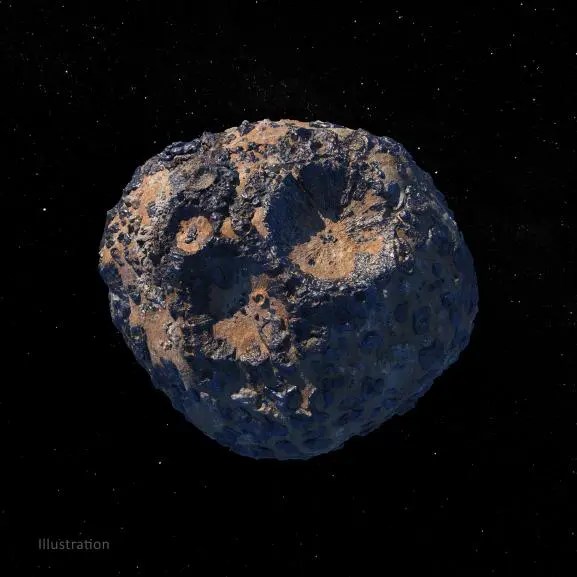

An asteroid. Image credit: NASA, public domain

Science of Convenience

One thing I’ve noticed about employers is that they’re all for science, except when science contradicts capitalism.  Then they become all mystical.  I had a situation illustrate this particularly well with one of my many employers.  Touting everything to be “evidence based,” they liked to refer to the science behind their reasoning.  Then a study came out demonstrating, scientifically, that more breaks actually increase efficiency in learning and working.  Suddenly silence from management. Crickets chirped.  This observation was just as “evidence based” as daily operations, but it was ignored because, well, it would be giving too much to employees.  You see, science that benefits the upper levels of management is one thing, but by the time it trickles down, well, you know.

American culture is based on the premise that you need to drive people to work as hard as possible.  Perhaps anecdotally, the Covid-19 pandemic showed that workers at home were just as, if not more, productive than they were after enduring an often horrendous commute to get to the office.  Once pandemic strictures began to lift, however, it was all “we want you back in the office.”  Bosses like to look out over seas of employees in their cubicles and feel the surge of the galley master with his whip.  You need to keep workers in line, you understand.  That’s the way capitalism works.

I often wonder where the world would be if superpowers didn’t have cultures based on greed.  One of the seven deadly sins, or capital (!) vices, the worship of personal gain stands behind capitalism as we know it.  And we’ve seen the results.  A shrinking middle class as those with all the wealth make plutocracy out of what was intended to be a democracy.  (Of course, the wealthy founders of the country probably didn’t have a real grasp of what life was like for the poor, even at the start of things.)  Capitalism is good at using aspects of all human endeavors in order to increase its reach.  Science is one such tool.  Religion is another.  Science says more time off is good, and can increase productivity in our current world.  Religion says greed is evil.  These are the parts we’d like to ignore.  Even the Harvard Business Review suggests a four-day work week is beneficial.  Business leaders are skeptical, of course.  Skepticism is one of the elements of science.  And science can be very profitable, if it favors those who hold the reins of power.

Photo by Alex Kondratiev on Unsplash

Powerful Belief

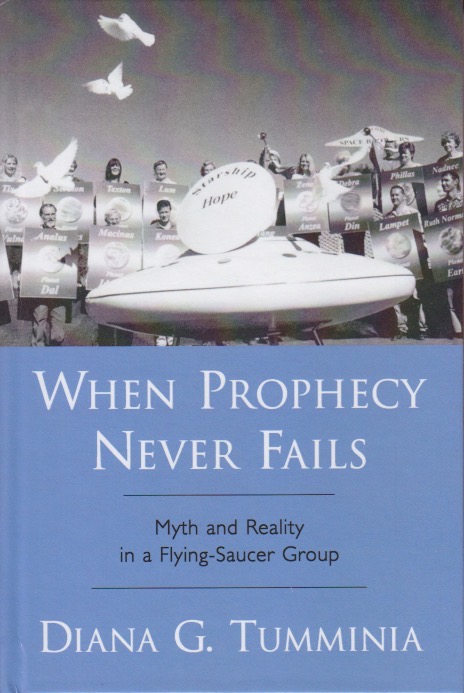
Even someone who’s spent a lifetime studying religion can’t know every single sect.  People are far too creative in that regard, and some belief groups are fairly small.  I had never heard of Unarius, for example, before reading this book.  If I had, it simply washed over me, getting lost in the noise.  Part of the trouble with defining Unarius is that it calls itself a science.  Words can be slippery, and Christian Scientists also use that designation in a similar way.  The word “science,” etymologically speaking, denotes “knowledge.”  In our materialist culture we often suppose that means the physical sciences, grudgingly allowing it to be borrowed by the “social sciences.”  There is a science of religion, but this leads to its own set of discussion points.  Let’s look at Diana Tumminia’s title: When Prophecy Never Fails: Myth and Reality in a Flying Saucer Group.  That give you an idea. 

The “prophecy” part concerns a “failed” prediction, or two, of when the spaceships would land.  Being a sociologist, Tumminia’s real interest is what happens then.  And here’s where things get interesting.  Failed predictions generally don’t lead to true believers giving up their convictions.  History has played and replayed this for us—it’s happening around us this very second—and yet “rationality” supposes that when the ships don’t land, people simply move on.  The Millerites outlived “the Great Disappointment,” after all, when the world didn’t end as predicted.  Their heirs include a sizable Christian denomination.  All this talk of AI has muddled our thinking about what it means to be human.  We are emotional.  More than that, we are believing creatures.  Our society is living proof.

Perhaps the most important, and ill-studied facet of being human, is belief.  Belief (no matter what in) is a religious phenomenon.  This study of a fairly small group shows that convinced people cannot be dissuaded, no matter how many facts are presented to them.  One need not look far to find the same phenomenon surrounding Trump.  (I do not condone violence, but history can inform us if we allow it.)  Make no mistake—he is the center of a new religion.  Unarians have absolute belief that their system is right.  Mistaken predictions—even very public ones—will not convince true believers otherwise.  It seems to me that our society, our democracy, cannot survive without intensive study of belief and how it affects the way otherwise completely rational people think.  My study is full of books exploring various aspects of belief, but we are still no closer to any kind of definitive answer.  And voters, at least a great many of them, follow their beliefs.


Unidentified

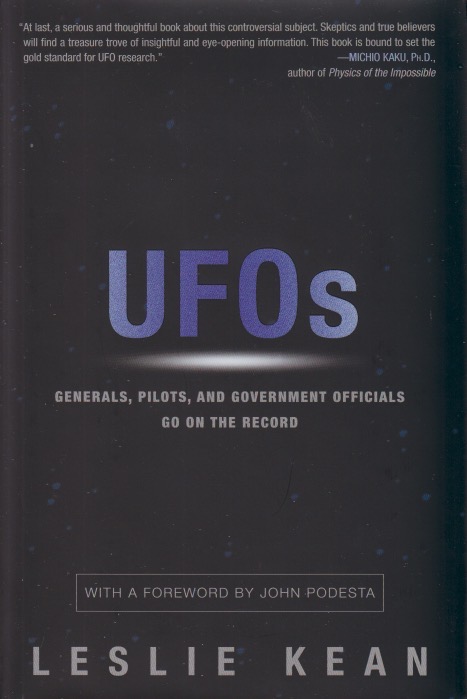
Some topics are subject to ridicule.  The poster child for this is UFOs.  What’s so remarkable about Leslie Kean’s book is that she began as a skeptic.  She points out that before a sea change takes place intense ridicule against the new idea is normal.  Then Kean did an extraordinary thing—she actually looked at the evidence.  UFOs: Generals, Pilots, and Government Officials Go on the Record is a remarkable book.  It’s filled with stories of the power of conversion.  Many UFO experts were skeptics at first, completely dismissive of the phenomenon, until they took a close look.  Official government files, even those available to the public, demonstrate the reality of UFOs.    Interestingly, as Kean highlights, the average person now no longer really requires convincing.  The elites (government officials, scientists, and mainstream media) are slow to accept the fact that UFOs/AUPs exist, even if we can’t say for sure what they are.  And they still like to poke fun.

Skepticism is necessary for science.  We can’t simply accept anyone’s word for something.  Kean’s book, which contains pieces written by an international group of high-ranking witnesses, points out that strong evidence does exist.  And it is possible that some group (not “the government”) does have more information than they’re sharing.  I also found it interesting that a number of countries—many, in fact—treat UFO reports from pilots seriously.  In the UK they are required to report them, for example.  In the United States, they are instructed to keep their mouths shut.  They doesn’t stop them from seeing what they do, however.  Still the ridicule taboo remains.

Ridicule of what we don’t understand must be a deeply ingrained defense mechanism.  As Kean notes, it took centuries before a heliocentric model was accepted.  People laughed.  And as recently as the nineteenth century it was considered impossible for rocks to fall from the sky.  Paradigms had to shift.  Meanwhile, people laughed.  We seem to have an aversion to anything in the sky other than God and angels.  Even in current models that assure us that the universe above us stretches on to infinity.  The only one “up there” is divine.  So we laugh at anyone who’s mastered the skies.  Until we catch up.  Heavier than air flight was impossible in my grandparents’ lifetimes.  People laughed at the idea.  It took me over a decade to find the courage to read this book—it made a little splash when it came out, but it didn’t change much.  Until the U.S. Navy fessed up.  Other countries had already done so.  Maybe we should see a psychologist about that laughing reflex, though.


Tech Warning

My moon roof is open.  That’s what the late-night alert says.  Thing is, I don’t have a moon roof.  Maybe I should go out to the garage and check, just to be sure.  You see, these new cars, which are as much computer as they are a means of conveyance, are subject to glitches just like the computers at work always seem to be.  And if this is true of a massive and lucrative company like Toyota, how can the rest of us really trust what our devices tell us?  After all, mainly they exist to sell us more stuff.  So whenever we take the Prius out, after it’s put away I get some kind of warning on my phone.  Nearly every single time.  If somebody’s been sitting in the back seat—or even if a bag was resting there—I’m cheerfully reminded to check the back seat once I get into the house.  I appreciate its concern and when I grow even more forgetful I may need it.  But that moon roof…

I use and appreciate technology.  I believe in the science behind it.  It makes life simpler, in some ways.  Much more complex in others.  I confess that I miss paper maps.  Do you remember the thrill of driving into an unknown city and having to figure out how to get to an address with no GPS?  Now that seems like an adventure movie.  Our cars practically—sometimes literally—drive themselves.  I’m no motor-head, not by a long shot.  I do remember my first car that didn’t have power steering or power brakes.  It had a stick-shift and you had to wrassle it at times.  Show it who was in charge.  With technology we’ve all become the serfs.  It breaks down and you have to take it to an expert.  Not quite the same as changing a tire.

I worry about the larger implications of this.  As a writer I worry that my largest output is only electronic.  Publishers don’t seem to realize that those of us who write do it as a way of surviving death.  We have something to say and we want it etched in stone.  Or at least printed on paper.  Tucked away in some Library of Congress stacks in the hopes that it will remain there for good.  I often think of dystopias.  The stories unfold and ancient documents—our documents—are found.  But unless they get the grid up and running, and have Silicon Valley to help them, our electronic words are gone.  It’s as if you left the moon roof open, even though you don’t have one.


Bigger Picture

One of the quirks of my thought process is that I tend to look for the bigger picture.  I’ve always done this and I suspect it drives some people batty when they ask me a question and I begin to answer from what seems to be a tangent.  (I also think this is why I performed well in the classroom.)  So, when I saw the article by Eric Holloway on Mind Matters, titled “Why Is Theology the Most Important Empirical Science,” I had to take a look.  Mostly a series of bullet-points that point out some of the religiously-motivated ideas that led to scientific discoveries, the article is useful.  My penchant for the big picture goes a bit broader, however.  The entire worldview in which the scientific process was born, and thus its underlying presuppositions, are religious.  Science and religion are the dogs and cats of the thought world but I’ve seen dogs and cats live happily together.

Science has always been with us.  Early peoples weren’t benighted troglodytes.  They observed, hypothesized, drew conclusions.  Science as we understand it, however, began in the Middle Ages in Europe, drawing on observations from earlier thought in the Arab world.  The context in that Arab world was solidly Muslim.  The Middle Ages in Europe were solidly Christian.  None of this discounts the contributions of Jews to the whole, it’s merely an observation regarding the larger cultural outlook.  Many of the principles of science even today (for example, that people are categorically different from other animals) are based on those religious worldviews.  We seldom go back to question whether we might’ve gotten something fundamentally wrong.  Meanwhile, the dogs began to chase the cats.

College as a religion major involved a lot of discussions about basic presuppositions.  Then questioning them.  Not much of this went on in the classroom (Grove City was, and is, a conservative Christian school).  The wonderful thing about higher education is the bringing together of people with different outlooks.  It was those after-hours conversations that helped form my questing nature.  I’d already started asking bigger questions when I was a child, annoying my parents and, I suspect, sometimes vexing clergy.  A single human mind is too limited to grasp it all, but it seems to me to deny religion a place at the table is to leave out massive amounts of human experience.  Of course, economics, the dismal science, seems well on the way to eliminating the study of religion in higher education.  And we will have lost, if this happens, a large piece of the bigger picture.

Photo credit: NASA

Using Brains

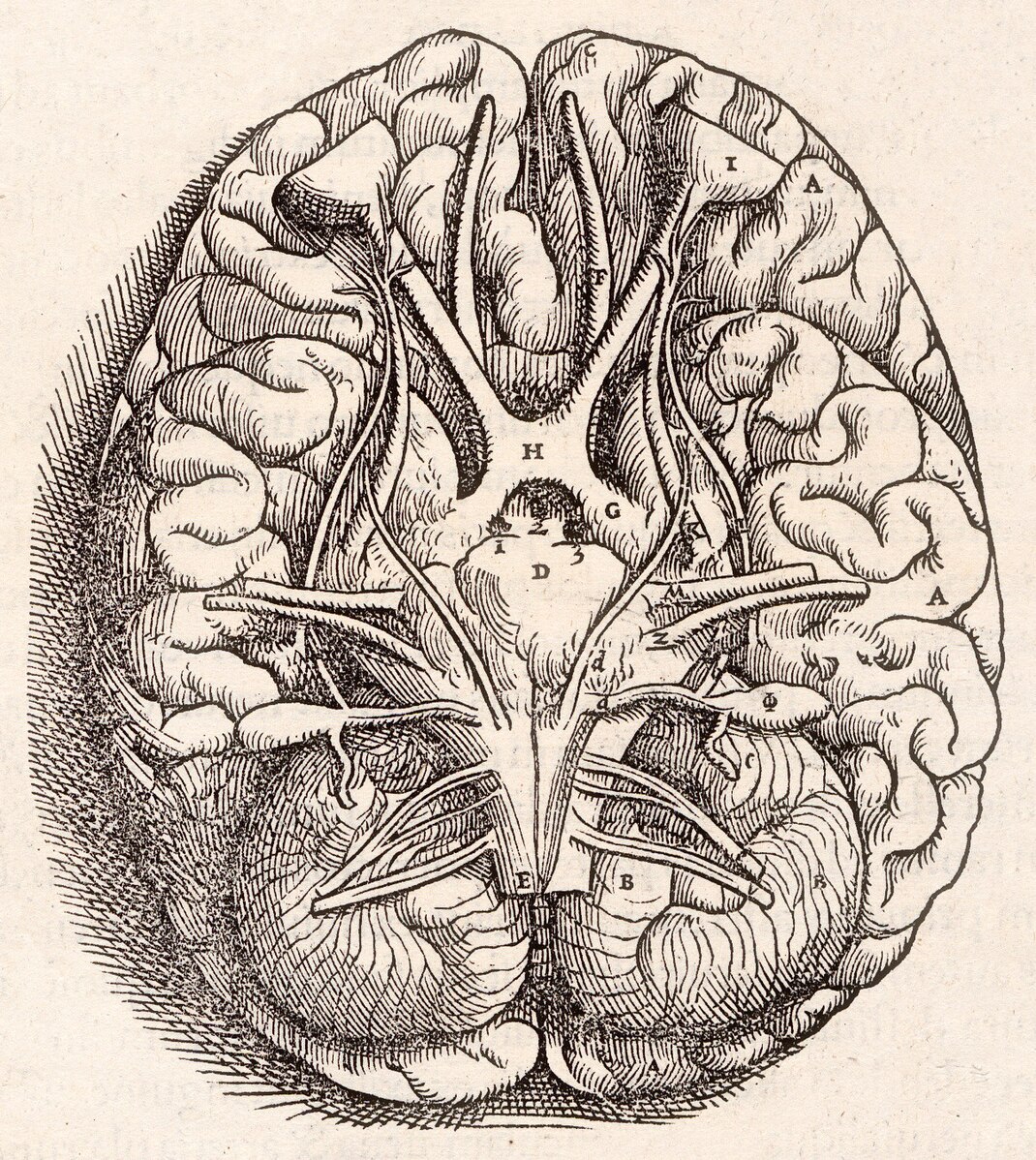
I’m old enough to know better.  Here’s a thought.  I recently saw a headline that suggested human brains filter out things like ESP because brains evolved to help us survive.  No matter what you believe about ESP, the idea got me to thinking.  We often act as if our brains are able to determine the Truth (that capital is intentional).  At the same time we don’t understand what consciousness is.  We know that other animals have brains and that the evolution of said organ is to help individuals survive to reproduce.  Some animal species end their existence at that point, but others linger on to wonder.  And I’m wondering if our brains are filters.  Stick with me here: we know that there are stimuli that we can’t perceive that other brains can.  For example, it seems that migrating birds can perceive magnetic fields.  Even if they can’t there are magnetic fields that we perceive only through their effects on objects.  Our brains have no direct access.

Image credit: Andreas Vesalius‘ Fabrica, showing the Base Of The Brain, by user Ancheta Wis

Here’s where it gets spooky.  If our brains filter out things that may hamper us in survival, what if they overzealously teach us not to perceive things that actually exist?  We’re somewhat limited by our “five” senses, no doubt.  We get along okay.  But what of those people who see things that others don’t?  We tend to medicate them or lock them away, but what if their brains have learned how to shut off part of the filter?  Having written a book about demons, naturally they come to mind as a test case.  Or, if you prefer, ghosts.  We tell our children these things aren’t real.  Trust the filter.  Get on with life in “the real world,” right, Cypher?

I didn’t have time to read the article, but I’d experienced a perspective shift.  If our brains are all about gathering information (and in part they clearly are), that’s one thing.  If they are actively filtering things out, well, that’s quite another.  We laud the imagination of children until they become “old enough to know better.”  Do we teach them to shut out what they can actually see, or sense, in order to accept the inevitable, material, adult world?  This idea has startling implications.  As we plunge ahead inventing AI to do our thinking for us, perhaps we’ve left something even more fundamental behind.  Have we lost interest in the Truth?  We may not be able to access it directly, but I wonder if we’re taught to give up without even trying.


In Praise of Lecture

As I look at our world and see divisions that certain politicians only make worse for their own gain, I wonder where we’ve jumped the rails.  I was just reading about science lectures in the early part of the last century.  This reminded me of a public lecture on dinosaurs that we attended in Edinburgh with some friends.  Yes, we were graduate students looking for stimulating, and inexpensive, entertainment.  I’ve always considered entertainment a learning opportunity.  Having grown up both poor and curious, I feel a fascination regarding most new things and I began to wonder why we don’t have more public science lectures these days.  We really enjoyed the dinosaur talk.  I think the lecturer was Jack Horner, but what really stuck with me was not his name, but the good feeling the talk left behind.

At Nashotah House, Milwaukee and Madison were both a little too far to venture for an evening lecture.  We had to be in chapel early the next morning, and besides, I had already started waking up early (around five in those days) to do my research and writing.  When we came out of Nashotah, the internet had taken over the world.  Let’s face it, when you reach, say, middle age, you don’t want to have to go out much in the evenings any more.  At least if you’re an introvert like me.  Particularly when it’s cold out.  And how do you even find public lectures these days?  We live near several colleges and universities in the Lehigh Valley, and I get occasional notices, but the lecture in Edinburgh was actually in a public venue, not a university site.  You see, I think that’s what we need to get people back on the side of science and critical thinking.

The internet favors your biases.  Algorithms send your way more of what you’ve already seen.  Each click brings someone some income.  (I hasten to add that I get no income from this blog; I pay for the privilege to post on it.)  Wouldn’t it be better if towns had lecture halls and scientists (and others) had the name draw to bring people in?  While at a small venue in the Easton Book Festival a couple years back, a university guy from New Jersey talked to me after my presentation.  “We don’t have many opportunities for smart entertainment,” he told me.  I’m no scientist and there’s a real debate about the “smart” part, but I took his point.  You used to be able to find public lectures that were cheap or free.  And everyone left feeling like they’d received a gift.


Evolving beyond Fear

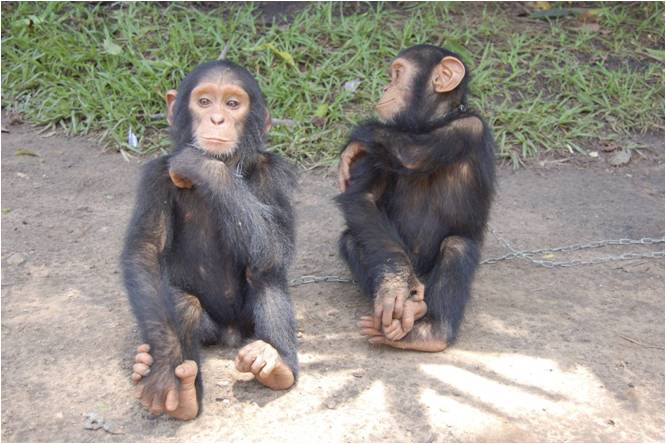
Live Science recently reported on a story that may shed light on human evolutionary behavior.  While my conclusions are speculative, they make sense, given the circumstances.  Titled “Albino chimp baby murdered by its elders days after rare sighting,” the story by Nicoletta Lanese describes how an albino chimp caused a fear reaction among its community shortly after it was born.  A few days later it was killed by the chimps.  Scientists must be careful not to attribute human motive to such attacks, and so they note that this particular community has a tendency toward infanticide, but that doesn’t explain the initial fear reaction.  An individual who was “different” appeared and the response was one of deadly violence.  We’re far from understanding human motivations, let alone those of animals, but it’s difficult not to see this as typical human behavior.

Photo credit: Afrika Expeditionary Force, via Wikimedia Commons

Just because a behavior has evolved doesn’t mean it’s inevitable.  We evolved out of our need for tree dwelling in order to open new potential habitats—an experiment that proved wildly successful.  Can we not evolve out of fear of those who are different?  That seems to be the idea behind recent diversity and inclusion initiatives.  There are those who still resist them, but examine their beliefs and you’ll soon find fear of those who differ.  This atavistic tendency is remarkably close to the chimp behavior in killing an albino.  If we are to remain civilized, we must name such fear for what it is and grow beyond it.  Conservatism is often based in fear.  Fear of change is natural enough, but had our ancestors given in to it we’d still be in the trees.

We need to admit that the lives of those different matter. How long will we allow difference be a reason to fear other human beings?  The story on Live Science is difficult to read.  The chimp behavior is so typically human that we can feel sympathy for the murdered infant and his mother.  Fear, if left unattended, can bring us to this.  The antidote is education.  The more we learn the better we can cope with fear, which is, after all, a natural and necessary response to an evolved world.  Our fear of being prey has caused us to drive extinct most of our natural predators.  The world is hardly a better place for it.  Might not weighing fears and thinking through reasonable solutions be a better coping technique?  Fear can revert a human back into an animal state.  Or it can drive us toward improvement.


Moralizing Gods

In my more radical moods I sing along with John Cougar about fighting authority.  Living in society means never being completely free.  This pandemic only amplifies that.  What I want may not be best for others.  Not to mention excessively corrupt authority *ahem* Washington DC [coughs into elbow].  Still, a friend sent me an article titled “Did judgmental gods help societies grow?  The piece by Lizzie Wade appeared in Science recently.  The article begins by noting that judgmental gods are rare.  It then suggests complex societies seem to have had judgmental gods at their beginnings.  Moralizing gods demand cooperation.  People want to do what they want.  If we’re going to reap the benefits of a highly specialized society we all need to play our part, however.  Authority always does win, I guess.

Wade’s article suggests that this kind of orthodoxy is now being called into question.  Moralizing gods, it’s suggested, appear after a complex society gets started.  Interestingly, these gods tend to be males.  (That point’s mine, not Wade’s.)  I have been wondering for quite some time just how the data from Göbekli Tepe will influence the re-construction of models concerning how civilization began.  It seems that long before settled populations emerged, back in hunter-gatherer days, people still came together to build temples.  Were they afraid of judgmental gods?  Certainly they thought it was important to gather occasionally at numinous places and ponder the larger questions.  Since they left no written records and they’ve all died out the best we can do is make educated guesses.  Who knows what might’ve been their motivation?

The one thing that seems certain to me, no matter how we nuance it, is that religion is integral to society.  Science is necessary for our survival (ancient people weren’t backward rubes, by the way—they had a kind of scientific outlook, but without all the advanced math).  Religion, however, seems originally to have brought us together.  Outside our comfort zones.  Hunter-gatherer societies limit their sizes to people you can know reasonably well.  They tend not to have private property and they share things most people in “civilized” settings wouldn’t.  To grow larger than a roving band that can sustain itself by moving from place to place once the food’s gone, agriculture was necessary.  But Göbekli Tepe suggests it only followed after religion began bringing people together in the first place.  Were their gods authoritarian?  There’s really no way of knowing that.  So when I’m feeling radical I have to remember than when it’s over I turn the volume down, comb my hair and go back into society.  Well, once the pandemic’s over.


Making Frankenstein

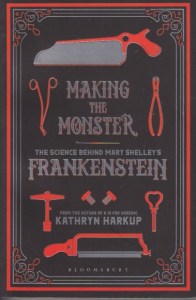
Some days ago I mentioned reading a book about Frankenstein.  This was Making the Monster: The Science behind Mary Shelley’s Frankenstein, by Kathryn Harkup.  I’ve read several books like this, many of them written about on this blog (search “Frankenstein”—there is a search box out there!), about the context of Frankenstein.  The base story is all the more compelling for having been written by a teenager who’d eloped with a married man who would eclipse her literarily.  Mary Shelley never got rich off Frankenstein, but it is one of the best known novels of the nineteenth century.  It had an impact during the author’s lifetime and has continued to have one these centuries later.  Harkup, however, is a scientist.  Her specific interest, apart from being a female writer herself, is in the science of the story.

Arranged thematically, Making the Monster covers several of the developments which would’ve been “in the air” at the time.  Mary and Percy Shelley both read science also, and knew many of these things.  There was the question of reanimating the dead that coincided with the early dissections of humans that made the modern study of anatomy possible.  There were medical breakthroughs—some of the more difficult parts of this book to read—and there were experiments with electricity.  There were cases of children raised in the wild that had been found and their subsequent stories documented.  There was evolution (in the form known to Charles Darwin’s grandfather Erasmus), there was revolution.  It was a time with so much happening that Frankenstein became a cathartic outpouring of the human soul amid the science that both Shelleys atheistically accepted.

Much of this book is fascinating, even after reading other similar accounts to the background of the novel.  What really brought it all together for me, however, was reading through the chronology at the end.  It takes me several days to read books.  What with the monster of daily work I often forget some of what I’ve read along the way from introduction to conclusion.  Having a chronology at the end reminded me of just how much information is packed in between these covers.  The narrative covers about a century (longer, if you include the alchemists), and shows how Mary was using fiction to address some very real science.  Harkup never loses track of Mary Shelley’s personal experience, however.  Estranged from her father, constantly on the move, widowed fairly young, losing several children, treated poorly by aristocratic in-laws, hers was a story of perseverance and ultimately influencing the western canon.  It shows that science and art can assist one another to make us all more human.  And the monsters left behind endure.


Plain Speaking

When the president of the United States utters words too vulgar to print here, I think of the old They Might Be Giants’ song “Your Racist Friend.” The song is all about the indefensibleness of racism. We knew that back in the 1980s. What has made it acceptable now, in the highest office in the land? The fact that Trump is a racist was known to most of us well before he was “elected.” And, of course, the Republicans stand beside him. I feel sorry for the GOP, I really do. Those who simply wanted a fiscally conservative leader (wrongheaded in my view, but understandable) decided to go with a man who would want to revisit 1776, if he knew the meaning of the date, to ensure that this would always be white-man’s land. Hear this Republicans—by standing by Trump now you’re declaring, “He’s only saying what I’m thinking.” There’s no way to defend what he’s said about Africa, along with several nations elsewhere.

As we watch this bizarre space opera of an administration do its best pratfalls we don’t even have to go back all the way to the 1770s to wonder what went wrong. Bill Clinton was impeached for having an extramarital affair in the 1990s. Less than 30 years later we have a misogynistic, racist bully who’s on his third wife running this country like a casino. And the “Party of Lincoln” laps it up. They refuse to censure anything this bumbling excuse for a leader does. They’d be embarrassed, of course, but they haven’t considered, and refuse to consider, the consequences. I’m wondering what the musical 2016 will be like, but I have a guess.

As the Russia probe gets closer, the GOP tries to shut it down. That’s how we handle facts we don’t like now. Who would’ve thought that three decades on we’d be saying “mere adultery” was grounds for impeachment? Perhaps there were good people on both sides of that affair too. Science has demonstrated that “race” is a fiction, a human construct. But science no longer matters. Anything we disagree with we call “fake news” and FOX will be there to slurp it up and spew it wide. As Friday unfolded after 45’s statement about the status of an entire continent, his verbal incontinence still dribbling, his party rushed to defend “what he really meant.” What he really meant, he said. And what he said, if you don’t denounce him, is what you’re thinking too.


Yes, Virginia, There Are Ghosts

Universities find themselves in a strange position vis-à-vis the supernatural. I suspect that many institutions of higher education are slightly embarrassed at the fact that universities began primarily as training grounds for clergy. We’ve moved away from all that superstition and now believe that only science leads to knowledge. That’s why I find the University of Virginia’s magazine article on ghosts so refreshing. We all know better than to expect a straight answer from academics faced with the awkward question of belief, but the campus magazine invited six department representatives to a discourse on ghosts. The article, which can be accessed online, asked Art History, Anthropology, Religious Studies, Literature, Neurology, and Archaeology faculty about ghosts. At least they were willing to talk about the subject.

Edgar Allan Poe's room at the University of Virginia

Edgar Allan Poe’s room at the University of Virginia

Even in this world where skeptical ridicule is an accepted part of academic practice, we can’t quite let go of the idea of ghosts. They are among the most ancient of beliefs, and even despite the proliferation of apps that let you add specters for any occasion of selfie or digital shot, people still see them often enough to make academics wonder what is going on. Since science only studies that which can be measured, we suppose ghosts lie outside that realm. Those who’ve popularized “scientific” approaches to ghost hunting on television don’t bring their scientific credentials to the discussion. Anyone can be taught to use technology. (Well, not anyone—I sometimes still find my computer at complete odds with me. Technically, however, it is just an inert piece of matter.) From time to time serious scientists have turned their attention to ghosts. Results have been inconclusive.

As the leaves are beginning to fall, and the temperature follows suit, we know that many months of long nights lie ahead. Trees without leaves and air without warmth tempt our minds to believe that perhaps the microscope can’t reveal all that exists in this world. Halloween, after all, has become a major spending holiday and that assures its veracity. Driving through town, it is clear that it is quite an investment for some. Down in Charlottesville they are hunched over their desks, writing lecture notes and grading papers. As the wind blows that empty branch against your window on a overcast evening, however, it won’t matter what department you call home. There will be ghosts about tonight.


Material to Ponder

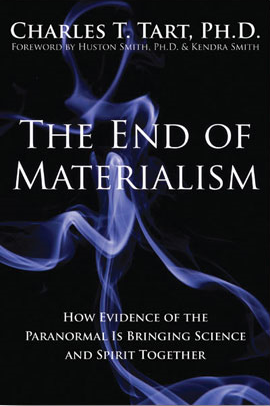
EndOfMaterialismFrom my youngest days I remember wanting to be a scientist. This desire was tempered with a real fear of Hell and wish to please. In my career, it seems, the latter won out. Well, mostly. I never planned on being an editor, but it was clear that I missed the hard-core science courses and would always lack scientific credibility. You see, I believed what scientists said, and that included science teachers in high school. To this day I still believe in the back of my mind that you can’t really see atoms with a microscope. One of my teachers had said it was impossible, and although electron microscopes were still a long way off, it was clear that atoms were just too small. The force of materialism first hit me in ninth grade physics. If what I was hearing was true, then if you had enough information, you could figure out the whole universe. But what of Hell?

I read Charles T. Tart’s The End of Materialism because of my need for reassurance. Materialism leaves me cold. To find a scientist who feels the same way is a bonus. Not all authorities agree that we’re just excited atoms that can be seen. Tart is willing to consider the spiritual as part of what the evidence reveals. He explores it in the context of psi rather than in the doomed attempt to test religions empirically, but he does make a case for more to this universe than Horatio’s philosophy ever dared dream. And some of that more is decidedly not physical. It’s what we know from our experience of the world. We don’t only reason, we also feel. I have to wonder if reason is really the friend of materialism after all.

You can’t walk across Manhattan without seeing an ambulance most days. Often they’re called out to collect some unfortunate homeless person who collapses from our collective neglect. If we are only matter, then why do we bother to assist those in distress? It’s just a little electricity and some chemicals in a biological organ, right? Consciousness is only an illusion, after all. Unless, of course, the person suffering is a prominent scientist. Then we should all make way for the ambulance lest we lose an asset of great value. Materialism is insidious in its take-no-captives mentality. Feel what you will, there’s nothing more to life than physical stuff. You can make a good living believing that. Why is it that I’m suddenly thinking of Hell again?


Are You Fey?

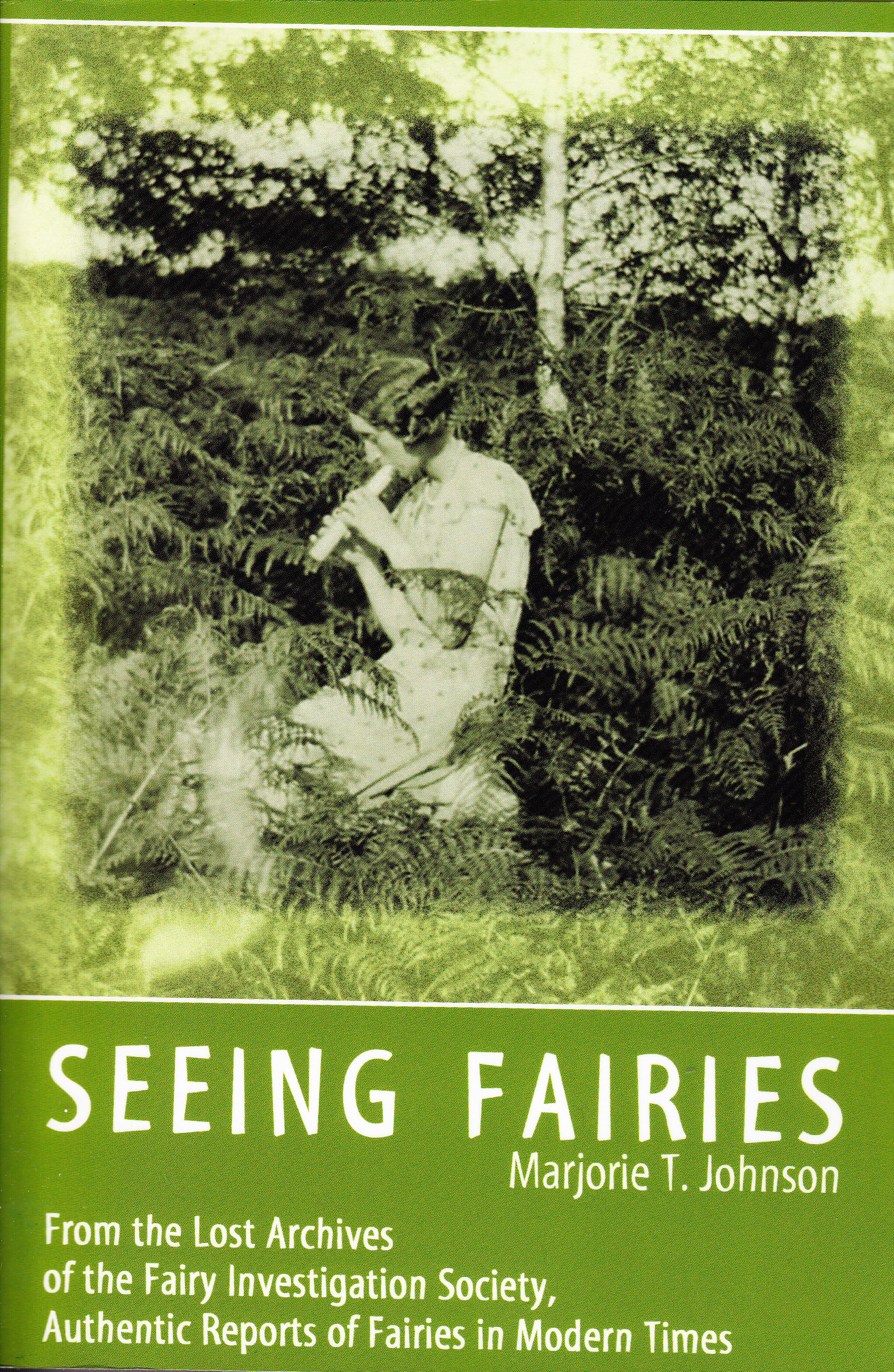
SeeingFairies‘Tis is the time of year that one might make inquiry into elves and the wee folk without being thought too strange. Santa has his cadre of mythic diminutive helpers and even the shepherds have their angels. The two, it seems, are not unrelated. Marjorie T. Johnson’s Seeing Fairies is, in many respects, a charming book. Compiled by the author during a lifetime of corresponding with people who claim to have seen fairies, elves, pixies, sprites, brownies, gnomes, and even angels, the stories—as parsimonious as any sermon—do create an aura of mystery. It is clear that Johnson believed (the book is posthumous) sincerely in the unseen world. As the preface makes clear, she was influenced by Theosophy, and the majority of the material dates from the 1950s and earlier. There is an almost childlike credulousness to the accounts, with Johnson not questioning psychic dreams or astral projection, placing them side-by-side with eyewitness accounts. This is a good example of what an editor might have done for the book.

Many people assume a doctorate in the humanities is a soft thing—pliable in a way that the hard sciences are not. The point of advanced study, however, is to ingrain habits of critical thinking. Nothing is taken at face value. For those of us who study folklore’s first cousin, religion, the task is often to set aside belief in the light of evidence. What can we know about the unknowable? Of course, psychologists and sociologists and anthropologists are now supposed to be better equipped to answer religious questions. Religion, after all, is something people think and do, and what can we really learn from studying it per se? We need an interpretative device—an hermeneutic filter (or pneumatic hammer)—to guide us toward the reality of the thing. And yet science itself is based on observation. Accounting for what our senses reveal about the world around us.

Some people, it is clear, find the world around them filled with wee people. Recently a major road construction was halted in Iceland out of fear of disturbing the elfin habitat. And Icelanders are some of the most literate people on the planet. Johnson’s accounts (some clearly hard to swallow) range across the earth, but center in the British Isles and Celtic lands. Perhaps the light is somewhat different there. Perhaps nearing the North Pole things really do change. What becomes clear from Seeing Fairies is that some highly credible and educated people see, from time to time, what they allow their eyes to see. Believing is, after all, seeing. Johnson ends her book with a chapter on angels, beings she clearly views in continuity with fairies. The difference is that the monotheistic religions allow for, and perhaps even demand, angels. When they become travel-sized, however, the only evidence is that of those with very keen eyesight.