
Podcast 20 is here! For those who are wondering, it was a long semester with daily class prep, so I did not have the opportunity to record any podcasts. The topic of this discussion is how religions naturally must change over time. Even though religions are by nature conservative, if they last long enough they will face advances in human culture and experience. This creates a dilemma that is not often addressed. It’s evolution on a religious scale.
Popes and Props
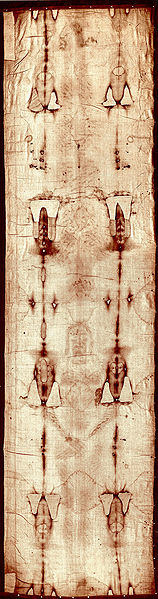
Something to believe in?
The Shroud of Turin first appears in the historical record only in the sixteenth century. Prior to that a back-story has been composed that takes it all the way to the first century in Jerusalem. Hungry for proof of the truth of their conviction, thousands of Christians fervently believe this sheet is the tangible evidence of resurrection. What seems to have been forgotten in this whole debate is the Bible itself. Not one of the four divergent Gospel accounts of the resurrection (some of the most wildly disparate material in the whole of Sacred Writ) mentions the miraculous capture of a resurrection photograph. The Gospel writers, never shy about flashing miracles across their narratives, do not tout an artifact as proving the resurrection. The force of apostolic conviction was enough for the first century crowd.
Believers in the modern world lack such conviction. Too many forces in the natural world conspire against the supernatural. A faith shaken by science and the competition of hundreds of other religions desperately needs a sky-hook on which to hang certitude. Yet the Bible itself speaks to this very issue. “Now faith is the substance of things hoped for, the evidence of things not seen,” the writer of Hebrews declares. It seems, however, that true believers throughout history feel a little more comfortable with something palpable, just in case faith is not enough.
Robo-god
Yesterday I again found myself among the robots. After an early-morning school-bus ride to the New Jersey regional competition in Trenton, a mentor to a team known as the Gearheads, I felt a little out of my league. Soon, however, I fell into the spirit of the competition and watched with increasing interest as individuals highly regarded in the world of robotics lamented the lack of science education in the United States. Having just completed the nightmare of two terms with a creationist president, is it any wonder? In any case, the competition, a modified soccer match for robots – with two teams from Brazil, no less! – soon became as emotional as any sporting event. Well, for the human participants, anyway. I’m not qualified to assess robotic emotions. As the event wound down, a respected (human) member of FIRST Robotics, during a recognition ceremony, overcome with emotion, called out “God bless you!” to the adult volunteers.
Many scientists I know are personally religious people. There is no fortified gateway between scientific reasoning and the childhood teaching of religious belief. Nevertheless, an irony became apparent that has been bothering me all night long. I joined Team 102 as a mentor because of my daughter’s interest in robotics and engineering. My role is to help with editing, since I am a “humanities” type. The irony that leaves me sleepless is that Ph.D.s in the sciences are highly coveted and have an assurance for jobs. Ph.D.s in the “humanities,” however, are a sure way to block you from career success. Since I began this blog I have been officially unemployed (I pick up a course or two here and there, but no full-time offers have been presented). The people who have been most empathetic and helpful in this time of difficulty have been the robotics team. People there have tried to hook me up with people who might be able to help, but I am like an alien on the autopsy table among scientists – where do you begin? How do you help an overly qualified “humanities” ex-professor find a job? Meanwhile my co-“humanities” colleagues helplessly wring their hands and do nothing. Worse, they interview me and decide not to make a hire, based on “religious” reasons.
The past several years, as the recipient of calculated cruelty from many religious folks, stumbling along trying to find a means of reasonable support, I have come to trust the robots. The robotics team has demonstrated the most humanitarian attitude to a fellow human who has been suffering for several months. The religious tell me that God will work it out and go their righteous way. Yesterday, being blessed by a “high priest” of the robotics world, I felt that I finally found a place I belonged. Now it might be time to go back to school and find the real pulse of humanity in the sciences.
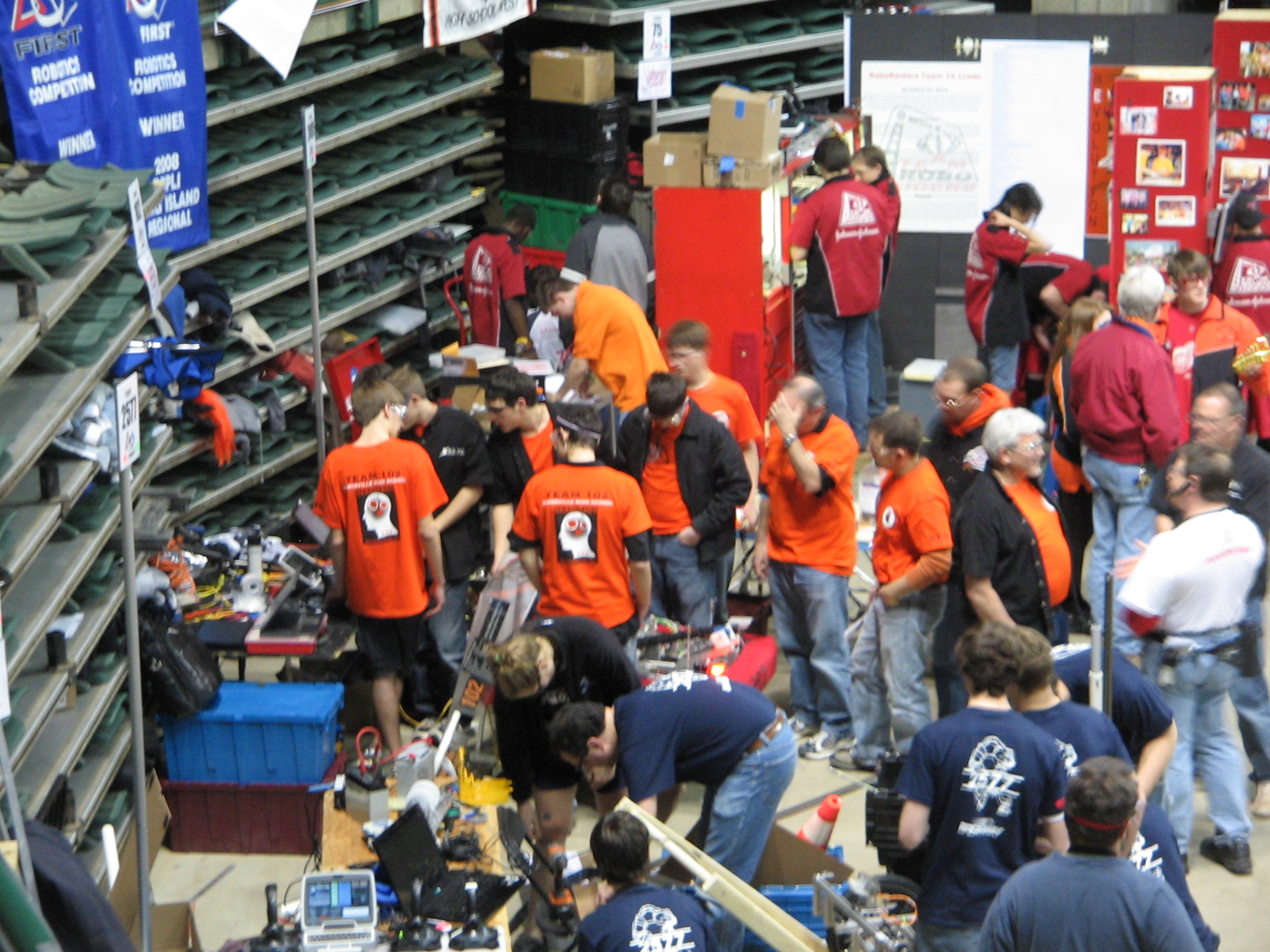
Kids building robots
 Steve A. Wiggins