Island Life

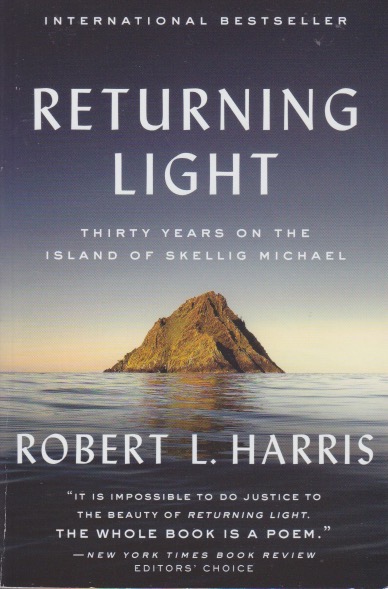
The spirituality of place.  Although it’s largely secular, Robert L. Harris’ Returning Light, his memoir of spending three decades working on Skellig Michael, is about spirituality of place.  Poetically written, his is the account of being one of the caretakers on an island about seven miles west of southern Ireland.  Some call the book nature writing, and I suppose in a sense it is.  He describes his companions—puffins, razorbills, and gannets—and life among the ruins of a monastery from the Medieval Period.  There’s no straightforward narrative arc here.  This is a set of reflections produced by a wind-swept, weather-beaten man who, when on the island, lived with very little.  His writing, as is often the case with those who isolate themselves, tends toward the reflective.  It may raise more questions than it attempts to answer.  And it fires the imagination with monks seeking such an inaccessible place to pray.

My wife and I came to read this book somewhat accidentally.  Someone we know was having a difficult time getting through it—looking for that missing narrative arc—and suggested that it might appeal to us.  In our three years and change in Scotland, we never did make it to Ireland.  From the pictures of Skellig Michael, it’s like Skye (which we did reach), only more so.  And smaller.  More intimate.  We did spend a pleasant time on Iona.  The photos didn’t turn out because, in those days you had to mail your slide canisters in the Royal Post for processing and the poor thing got crushed, exposing the film to light.  Iona is less sharp, less demanding.  More accessible.  But the idea of finding yourself an island, even if only tidal, like Lindisfarne (which we also did see), is a time-honored way of reconnecting with your soul.

Harris doesn’t write in a traditional Christian idiom, but he focuses on light.  The monks’ cells, at least some of them, share the early Celtic monument alignment with angles of the sun illuminating rooms with no artificial lights.  Illumination is, it seems, what he was seeking,  It came as no surprise that his words evoke those of Thomas Merton for some.  Harris observes, thinks, and contemplates.  Sometimes bursts into poetry.  His is a memoir of a man who spent quite a lot of time alone.  Who befriended, briefly, sea birds.  Returning Light isn’t really a book to rush through, but one to engage slowly.  In a sense, I suppose, by isolating yourself on an island where monks once hid and prayed.


Personal History

Being an historian by disposition has its own rewards.  I relate to the chronicling monks of the Middle Ages and their eagerness to record things.  On a much smaller scale, I try to keep track of what has passed in my own small life.  As we all know, most days consist of a stunning sameness, particularly if you work 9-2-5.  Although your soul is evolving, capitalism’s cookie-cutter ensures a kind of ennui that vacation time, and travel in particular, breaks.  Travel is expensive, however.  A luxury item.  It’s also an education.  My wife and I began our life together overseas, living three years in Scotland.  We traveled as much as grad students could afford.  Gainfully employed in the United States, we made regular summer trips to Idaho, and often shorter trips closer to home in Wisconsin.

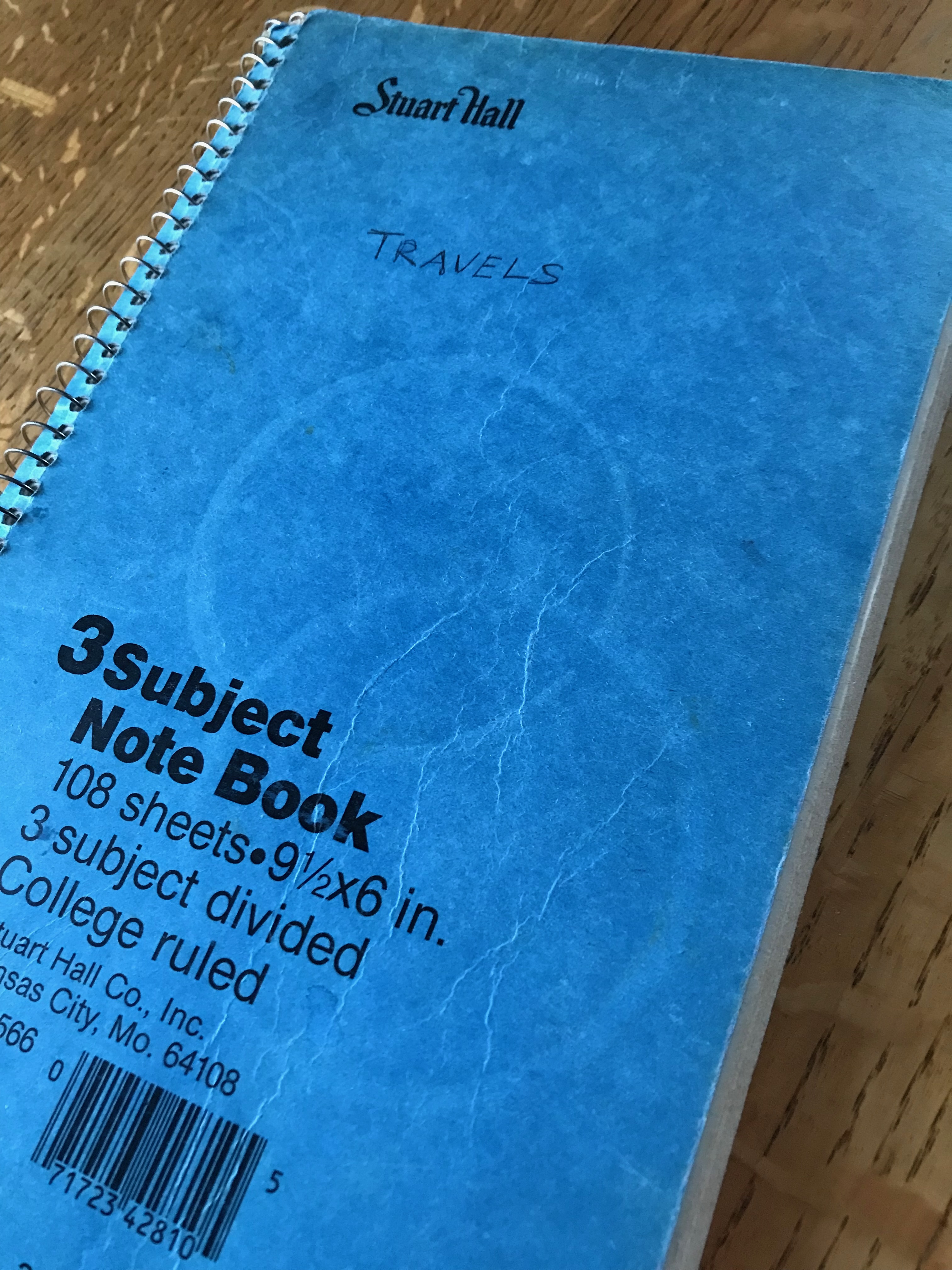
We repurposed an old, spiral bound, three-subject notebook to record our adventures.  It spanned twenty-two years.  When we moved to our house in 2018, this notebook was lost.  (A similar thing happened with an Historic Scotland booklet where we’d inscribed all the dates of properties visited.  It vanished somewhere in central Illinois in 1992.)  Recently, looking for an empty three-ring binder for my wife to use, I unexpectedly came across our old three-subject notebook.  The relief—maybe even ecstasy—it released was something only an historian could appreciate.  Here were the dates, times, and places that I thought had been lost from my life.  In that morass of years after Nashotah House my mind had gone into a kind of twilight of half-remembered forays to bring light to this harsh 9-2-5 world.  I carried the notebook around with me for days, not wanting to lose sight of it.

Those of us who write need to record things.  I’ve never been able to afford to be a world traveler.  The company’s dime sent me to the United Kingdom a few times, but overseas after Scotland has been more a reverie than a reality.  But now, at least, I could remember our domestic trips.  The notebook included ventures I’d forgotten.  You see, when you get back from a trip you have to begin the 9-2-5 the very next day, particularly if your company isn’t fond of holidays.  (This explains why I write so much about them.)  Pleasant memories get lost in the mundane cookie-cutter problems of everyday life.  And yet I could now face them with that rare joy known to historians.  I had a notebook next to me, ready for transcribing.  It was going to be a good day.


Castle Dreams

It’s a real problem.  If you’re a passionate collector you eventually run up against the space issue.  A New York Times piece tells how a couple that collects puzzles had to buy an Italian castle to house their collection.  I appreciate their passion, but I operate on a more modest budget.  We bought our house going on six years ago.  Like many people raised in poverty, I’m a bit of a packrat.  When you’ve experienced a life of not being able to afford things, you tend to keep everything.  That’s an economic reality.  You spent money on this and you don’t want to waste it.  Add to that the passion of a collector and you could have a real problem.  Castle-sized.

When we were searching for houses the market was poor.  It still is.  Although a recent trip to Somerville, where we used to live, revealed massive amounts of new apartments—we were literally stunned—buying a house remains difficult.  (But all those apartments!  When we moved to Somerville in 2006 there were only a few units available, so I guess that was before it became popular.)  And we specifically needed a house where you could keep books.  (I do periodic purges and end up feeling full of regret afterwards.)  Our house has a large garage with storage space.  Not an Italian castle, but the principle is the same.  Only our garage has been taken over by aggressive squirrels.  We can’t yet afford to have the roof rebuilt (with solar panels because we have beautifully unimpeded southern exposure); we can’t lay up books where squirrel and mildew doth corrupt, so I guess we might have to consider a castle down the road.

My escape fantasy would probably be Ireland, however.  They speak English there and they have castles.  And Scotland’s just across the way.  Although I spent my doctoral years in Edinburgh, my ancestry leans more toward Ireland.  And Germany, but although they have castles I’m not sure I can revive my German well enough to get along there.  No, Ireland might be the best choice for my castle-buying dreams.  Of course, those of us who grow up poor do dream of castles.  I read about them in books.  And books beget books—this seems to be an inescapable law of nature.  I do wonder if Irish castles have problems with squirrels, though.  If I’m going to make this work it’s going to require quite a bit more money.  And thought.  It’s a real puzzle.

Photo by Reid Naaykens on Unsplash

When Will We?

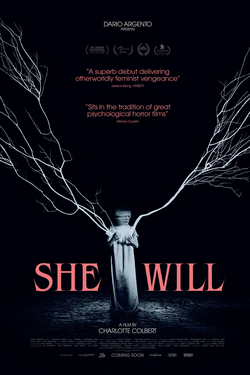
She Will is a creepy art house film from a couple years back.  Sometimes cited as a #MeToo film, it was directed and co-written by Charlotte Colbert and it follows an aging child actress recovering from traumatic surgery.  Veronica Ghent has decided to go to Scotland, to a remote retreat, to heal.  She takes her nurse with her and is chagrined to find that the retreat she booked is being shared by an art therapy retreat.  She insists on private accommodations and is put up in an even more remote cabin.  While there, it’s made abundantly clear that this was a place where witches were burnt and their ashes mingled with the soil and the very earth therefore has healing properties.  Veronica gains an ability to exact revenge from her dreams.

The target for Veronica’s revenge is a famous director who seduced her as a child while working on her first starring role.  Famous and powerful, nobody was able to touch him.  With her new-found abilities Veronica is able to exact justice through supernatural means.  Not only that, but when a local man—the retreat’s handyman—tries to rape her nurse, Veronica is able to prevent that too.  This is a moody, sad film that addresses issues that are all too real for many women in a system designed by and intended to profit men.  Either unaware of, or uncaring about women’s experiences as participants in the system, they dismiss their trauma in a way they wouldn’t for other men.  

Although the film doesn’t have tons of action and doesn’t rely on jump startles, it is an effective gothic horror movie.  The Scottish scenery is bleak and evocative and the message is important.  Horror films directed by women are starting to gain some notice.  Those familiar with Suspiria, however, will note the influence of executive producer Dario Argento.  That film also featured the difficulties women can face, and it also concerns witchcraft.  She Will is more mature in these areas, however.  Female directors—and writers—know the unique struggles women have in a society that refuses to give female leadership a chance.  It’s a simplistic world where men are in charge (because the church says so, or, more brutally, because physical strength can be used to get one’s way) and aren’t willing to consider that half the world sees things in a different way.  Movies like this force us to take the perspective of another.  And for that the world is better.


Wicker Wondering

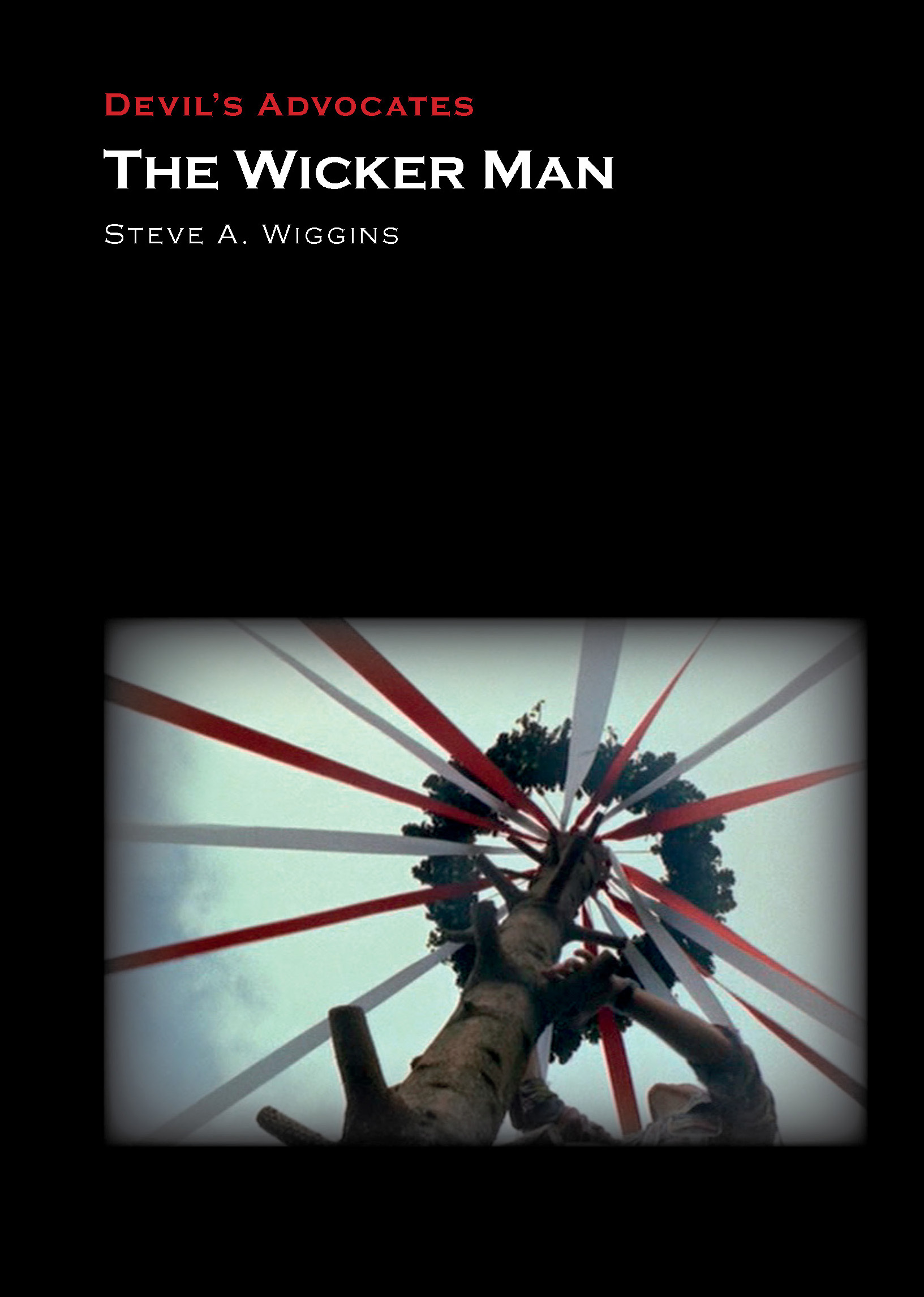
Why The Wicker Man?  It’s a fair question.  My book is now starting to appear on Amazon and other venues (it’s on Goodreads!), so it’s time to try to get the word out.  The BBC ran a recent story, “Why The Wicker Man has divided opinion for 50 years,” and that offers a springboard into the “why” question.  I’m not Scottish, but my wife and I lived in Scotland for a little over three years.  That’s one reason.  While there I did some research into Scottish folklore—historians of religion are curious people—and traveled widely, and that’s another.  As one of those writers who’s never been able to break out of the academic market, the third and most direct reason is that I’d begun a book on holiday horror.  A friend pointed the series Devil’s Advocates out to me.  Back then the series books were priced in the twenty-dollar range, but the pandemic put an end to that!

I’ve always thought The Wicker Man derived its fear from the strangeness of the holiday.  I’ve also often wondered why Anthony Shaffer and Robin Hardy didn’t make more use of “Beltane” in the dialogue.  Maybe the unfamiliar was too unfamiliar?  I suggest a different reason in my book, but I won’t reveal that here.  Writing a book on The Wicker Man would allow me the opportunity to share my thoughts about holiday horror without trying to convince an agent that people actually do like to read about horror as well as reading horror itself.  Come on, agents!  It’s called pop culture because it’s popular!

I pitched the idea and the series editor liked it.  So did the reviewers.  They were tired of hearing/reading about The Wicker Man as folk horror, as if there was nothing more to the movie.  Like most films that grow an afterlife, this one is complex and can be approached from many angles.  In fact, there’s another book, one by John Walsh, coming out on the movie just weeks after mine.  I wasn’t the only one who knew the fiftieth anniversary was on the horizon like a Beltane sunset on Summerisle.  For those who prefer a more television-like explanation, I’ve posted a video on The Wicker Man on my YouTube channel.  This blog, I realize, doesn’t get enough hits to drive traffic that way, but it’s nevertheless part of the package.  Why The Wicker Man?  The answers likely lie in several posts on this blog, a few years in Scotland, and a love of strange movies.


Skin Deep

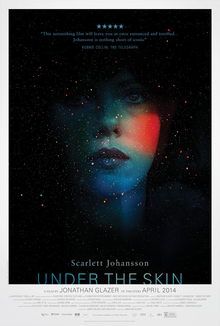
The thing about art-house movies is they’re meant to be discussed.  I spend a lot of time alone and I watch most of my movies alone.  There’s a kind of danger in that, I suppose.  Under the Skin was recommended by one of the books I read, analyzing horror.  I knew nothing about it and it became clear from the opening that director Jonathan Glazer had been heavily influenced by Stanley Kubrick.  In particular, 2001: A Space Odyssey.  There’s also the question of genre—is it science fiction or horror?  Art-house goes without saying.  The story is minimal and the movie is about images.  Even so, Glazer spent years working on the script.  The results won critical acclaim but box office failure.  We know the feeling.

So what is Under the Skin about?  Quite a bit is implied rather than stated outright.  The woman—the characters are generally unnamed—is an alien trying to learn about, while living off of, humans.  Early on she learns that sex appeal will nearly always entrap men so that they can be used for food.  Much of the film involves her driving around Scotland, seeking victims.  She has a co-conspirator who goes around making sure she leaves no traceable clues.  Conversation is minimal and shots linger to a point that viewers might feel the need for some explanation.  When she finds a victim with a deformity, the woman begins to learn empathy.  This victim is apparently set free, but is rounded up by her companion.

The woman tries to befriend a kindly man who tries to help her.  She can’t eat human food and doesn’t know to wear a coat in a Scottish winter.  The intimacy scares her and she comes across a logger in the forest with rape on his mind.  When he discovers she’s not human, he burns her to death.  Her companion, apparently seeking her, has no idea where she’s gone.  Roll credits.  As I say, the story is conveyed by the images and they stick with you.  The beautiful Scottish scenery can’t help but appeal to someone who’s lived there for a time.  The movie leaves you reflective and in the mood for conversation, the way art-house films do.  It’s also another example of Euro-horror.   This has captured my attention of late since it’s generally intelligent and light on the violence.  It makes you think.  Critics loved it, but the paying public didn’t want to hand over cash to see it.  That means, in my private calculus, that it’s well worth watching.


Ode to Auld Reekie

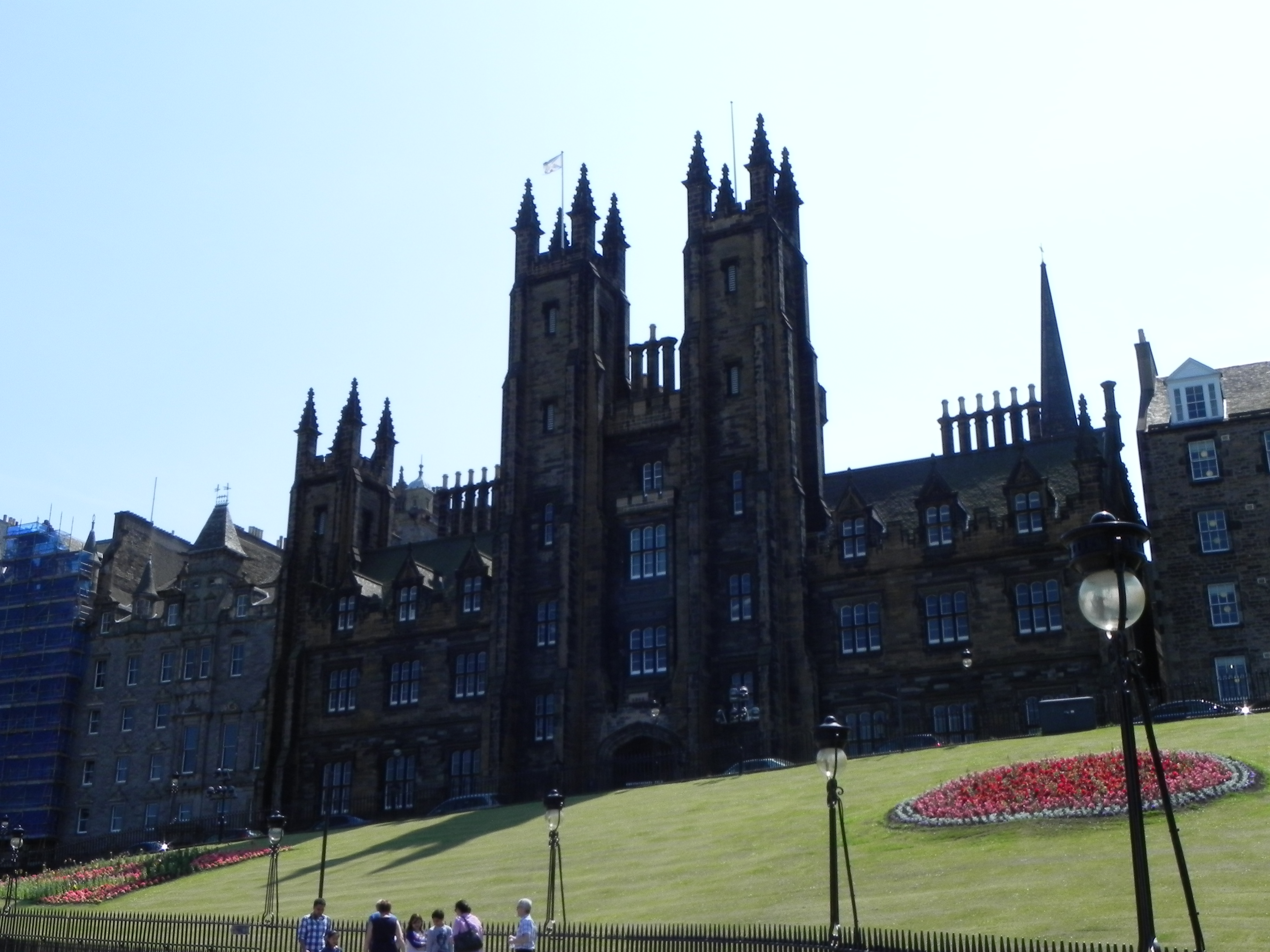
Edinburgh is a sizable city, although not large like New York, more like Boston, but smaller.  Like Boston, it has had an outsized influence globally, even apart from its world-class research university.  I think of the creatives that are from, or spent considerable time there (J. K. Rowling, take a bow) and the many great thinkers who’ve called it home.  Our three years there went by too quickly, but money being what it was (and is) and laws dictating how long we could linger, we had to leave it in 1992.  If you’d have asked us when we were there we’d have told you we’d’ve stay if we could’ve.  We had no money, no car, no television, but we had Edinburgh.  Somehow that seemed to be enough.

Places have great significance to people, but it’s not reciprocal.  I occasionally find out a famous person was from Edinburgh and say “I didn’t know that.”  Having spent three years and the cost of a doctorate there, I was a mere drop in the Firth of Forth.  I’m frequently in contact with faculty members at the Divinity School for work.  None know that I studied there—I suspect most university folk don’t sit around talking about long-ago post-grads.  Indeed, there may be no faculty left from the time I was there.  New names, new faces, new research agendas appear.  Indeed, you wouldn’t choose Edinburgh as a place to study Ugaritic now, even though there was once an “Edinburgh school” of thought in the discipline (and I can footnote that).

Still, when I hear “Edinburgh” my ears prick up like those of a dog who’s been called.  It is a part of me.  I’ve only been able to return once since our original stint there.  It was a strange sort of homecoming.  Familiar and foreign all at the same time.  Some shops were right where we’d left them, others now merely ghosts in our memories.  Fortunately Edinburgh hasn’t had the building mania that often causes old cities to try to reinvent themselves.  It was already great to begin with.  More and more I hear about the Edinburgh Festival, and the Fringe.  People are starting to notice this jewel in the crown of the United Kingdom.  On a molecular level there may still be a little bit of me there.  We’re constantly shedding, I suppose.  And someday perhaps we’ll be able to return.  It may not remember me, but I can’t forget her.


The Magic of Cairns

They’re one of those things, my daughter explained, that people do that make them so likable.  She was talking about building cairns.  Cairns are piles of stones, but not exactly the kind a farmer might make at the edge of a rocky field.  Cairns are intentionally built.  And they have been for millennia.  The thing is, while people could choose to knock them over, instead most people add to them.  When we’re out hiking we add rocks to cairns, and we’ve started our own from time to time.  I first became conscious of them in Scotland.  While out with some friends we spied a carefully stacked pile of rocks—I think it was at some remote location on the northern Scottish coast—and they told of of the tradition of adding to them.

While recounting this, I also recall seeing a pile of rocks—it wasn’t called a cairn at the time—at Walden Pond.  Some friends from seminary and I went to visit Thoreau’s famous site and although his cabin hadn’t survived, other pilgrims had started a rock pile.  It was, if I correctly recall, conical because the stones weren’t flat.  Most cairns involve the flat kinds of rocks that break off of bedding planes.  They are fairly easily stackable and they quite often tumble due to the forces of nature.  I recall building or adding to cairns in Ithaca, near Ithaca Falls.  Such cairns would be fortunate to survive the harsh winter and torrents of the spring thaw.  And yet still we build them.

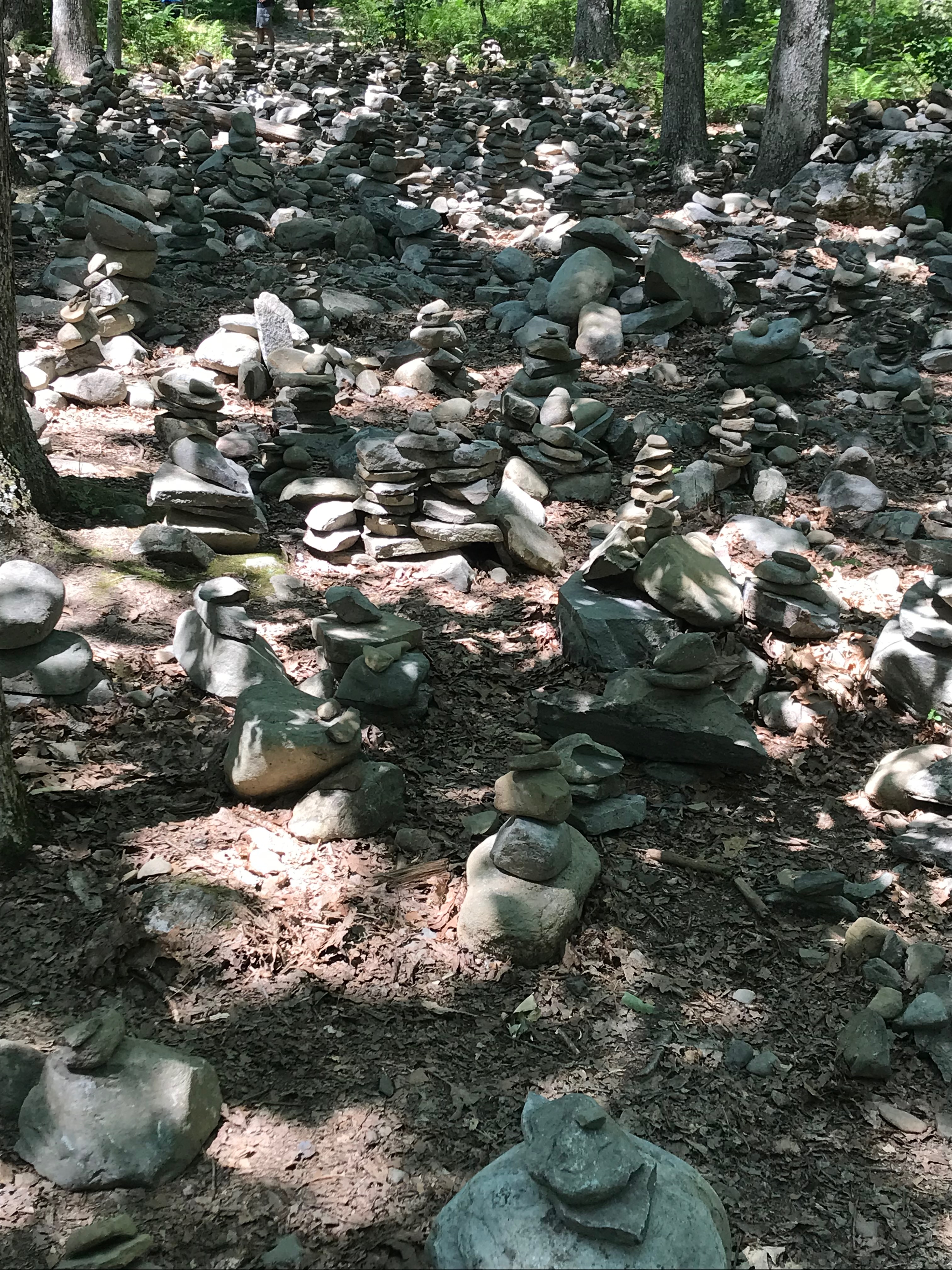
While on the red trail at Bushkill Falls, where picking and taking items is forbidden, we found cairns.  There were isolated stacks along the river, dotted here and there.  Then, at about the halfway point we came across a field of cairns.  Alongside the trail, cairn builders had obviously seen the beauty of repeated patterns.  Other hikers were snapping pictures there as well.  It was clear that this was a joint venture that had spanned years of cooperating with strangers.  Nobody asks your race or gender or orientation when you add to a cairn.  In fact, those who start them are unknown and leave them for other strangers to carry on the work.  This is frequently the case with human ventures, but when they involve money we become very specific about who might be considered a proper owner.  Stones are common, and although useful are generally not valuable.  Make them into a stack and they become a symbol.  And that symbol can be a guidepost for future travelers, left in the spirit of cooperation of those we don’t know.


Beauty of Ruins

One of the things I most miss about living in Scotland is the relative dearth of stone ruins in my home country.  In no way to diminish the culture of American Indians, there’s a particular poignancy about stone—which is supposed to be forever—falling apart.  As a homeowner I’ve discovered that you constantly have to repair to keep any kind of building up—something better suited to those with more money than we have.  In any case, my memories of Scotland quite often center on ruined castles and the gothic dreams that accompanied visiting them.  I can’r recall how many we actually had a chance to explore, but it was many.  And not only castles, but other crumbling structures, including monasteries.  Monasteries are, if possible, even more gothic in ruin.

On a rare sunny day this spring I visited the remains of Bethlehem Steel’s silent behemoth.  This industrial powerhouse took up much of the valley dividing the south side of Bethlehem from the older, more genteel colonial part of town.  While these ruins are modern—the factory shut down only in 1995—and steel, it nevertheless caters to gothic sensibilities.  There is a raised platform that allows visitors to examine the exterior from a safe distance, but still close enough to get a sense of its enormity.  The great steel furnaces and blowers and train cars are rusty after nearly three decades of sitting in the elements.  The roofs are falling in on some of the buildings.  Others have been repurposed or replaced with contemporary businesses.  Walking through, however, you can’t help but to imagine past lives.  This was hard, dangerous work.  For most it meant small rewards.  A living wage.  A modest house.

The Bethlehem Steel stacks are a landmark.  Allentown and Bethlehem merge into one another and out driving backroads it’s sometimes hard to tell which you’re in.  Once you spot the steel stacks from afar, however, you know where Bethlehem is.  Like a star guiding magi, the ruins proclaim that something significant once happened here.  Lives in Scottish castles, I expect, were often boring.  Our “something new every second” culture didn’t exist and news traveled slowly.  There was surely humdrum jobs in Bethlehem Steel as well.  Days when remembering that during World War One this factory produced a battleship per day.  Or when the realization that Manhattan’s skyscrapers couldn’t have existed without the I-beam developed in this plant.  There’s a sense of history about such places.  What makes them fascinating is that they’re falling apart.


Memories of Scotland

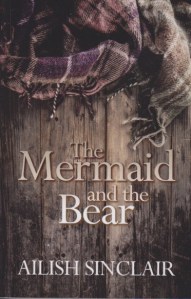
I admire those who follow their dreams.  I have been writing fiction for over forty years now, and although I’ve had some success placing short pieces my novels haven’t found much interest.  So when I see the published work of someone who obviously loves writing as much as Ailish Sinclair does, it warms my heart.  Her debut novel, The Mermaid and the Bear, is the kind of historical fiction tinged with a little fantasy, all set in Scotland.  Having spent three happy years in Scotland myself, I like to read native writers.  One of the categories in this year’s Modern Mrs. Darcy’s reading challenge is a debut novel, so all these things came together in this one little book.  There may be a little spoiler info below, so proceed with caution!

Sometimes I read a novel without knowing much about it in advance.  That was the case with this one.  I read Sinclair’s blog posts and appreciate the fact that she doesn’t compose long, rambling essays.  Her posts often make me stop and think.  Her novel follows a love story that turns into a witch-hunt.  Unlike that claimed by those who have the whole world watching them, this was a real one.  The historical notes tell a bit about the characters based on women actually tried in Scotland during those dark times.  In fact, when one of my doctoral advisors gave my wife and me a walking tour of Edinburgh early on in our time there, he pointed out where the witch trials had taken place.  Sinclair captures the rage and frustration of women who had no recourse once such accusations flew.  A religion only too ready to believe the worst about people, women in particular, showed no mercy based on what was only hearsay and jealousy.

It’s difficult to imagine what life would have been like in such times.  Castles and lairds make us think of fairy tales, but reality must’ve been somewhat harsher.  It’s fun to pretend about witches around Halloween, but there’s a sadness that’s difficult to escape as an adult.  That sadness is all the more profound for finding claims of witch-hunts on the lips of abusers and others who do their best to perpetuate inequality.  They dishonor those who actually did die so that men like them could feel smug self-satisfaction in the past.  The Mermaid and the Bear brought a number of these thoughts to mind.  Our society has made some strides towards treating all people as human beings but we’re yet a long way from where we need to be.  Books that remind us of that are always to be welcomed; dreams are worth pursuing.


Caveat Emptor

When you work in academic publishing, various higher education news sources find you.  Not able to distinguish faculty from industry professionals that rely on them for their by-products, these sites often offer friendly advice on how to succeed in academia.  Having had not a little experience in that venue (if you’ll pardon my litotes), I noted a recent headline before clicking the delete button.  I can’t reconstruct it word-for-word, but the gist of it was that if you wanted to earn more as an academic, you should study overseas.  Your salary, the article implied, would be higher if you did.  Now I recognize that things constantly change, but in my field of study if you want to get any job at all, let alone a good paying one, you study domestically.  Specifically at Harvard.  Academics, just like publishers, rest on their laurels.

The funny thing about this headline is that it contained the same advice that I received all the way back in the 1980s.  I followed up on it, choosing Edinburgh after having been accepted at Oxford, Cambridge, Aberdeen, and St. Andrews.  Only later did I learn that of those schools only Oxford opened the door to positions in my native United States, being, as it is, the Harvard of the United Kingdom.  Defying the odds, I did get a job that, when I became Academic Dean with access to industry stats, I discovered was among the lowest paying of its peers.  Studying overseas, in other words, had the exact opposite effect than the headline promises.  Perhaps things have changed in the intervening years.  Even today I have to remind people that Edinburgh is a world-class research university, one of the four ancient schools in the kingdom of the Scots.  Some of the most famous minds in human history studied there.  Ach, well, a job by any other name would smell of sweat.

Xenophobia isn’t unique to the GOP.  It exists in higher education too.  Academics are extremely tribal, and if you try to break in from the outside—no matter where you study—you’ll learn that your money might be spent more wisely learning a trade.  As a homeowner, I’ve discovered that just about any practical job that doesn’t require college pays better than what you can get with the detritus of a doctorate on your résumé.  In fact, during times when work was scarce I tried to hide it.  One of the skills I picked up in my educational journey was not to believe everything you read.  Problem is, you only pick that up after you’ve already paid that tuition bill.  The delete button is right there; don’t be afraid to use it.


Spinning Wheels

That warm, secure feeling of being home for the holidays never goes away. Admittedly Thanksgiving takes on a different cast for those of us who are vegetarians becoming vegan, but it’s not about the food, really. It’s never been only just about the food. Thankfulness as a way of life seems to hard to obtain when your own government has turned against all the principles that once made America a wonderful nation in which to have been born, but it doesn’t mean you can’t be grateful. As a commuter, I’m especially thankful for time. Each day’s normally spent riding a bus, working, and riding again. Over the past several days I took a train to Boston for the AAR/SBL annual meeting, and then a long train ride back. Followed by a single-day drive to Ithaca and back. I’m thankful for a little time not to be on the move.

Among the many memories for which I’m grateful is a mountain road that divides Glen Kinglas and Glen Croe in Scotland. Known for its splendid view, it’s one of many places that I have had the privilege of visiting. Although sitting still, here in my chair, I recall yet another busy day of driving with friends. Poor graduate students all, we nevertheless knew the value of good company and taking little for granted. As someone who grew up poor, I had managed to move to Boston, travel to Israel and work on a dig, and now I was living in Edinburgh, working toward a doctorate in one of the world’s great universities. That afternoon, however, I was out viewing what the wider world had to offer. The name of the viewpoint on the A83—from which that world all seemed visible—was “Rest and Be Thankful.”

The name speaks volumes. New Jersey certainly isn’t Scotland. My job is not that for which I trained. I continue to live as if I were a graduate student while friends have purchased houses and furnished them nicely. Today none of that matters. I’m not on a bus, train, or plane. I’m not glued to my seat in an automobile. I’m thankful to have some time to sit and reflect. Catch up, perchance, on a little bit of sleep. Unstructured time is perhaps the rarest commodity in a capitalistic society. Today I have it in relative abundance. No turkeys have lost their lives on my account and I’m able to rest and be thankful. There’s still a long way to go, but for today I’ll enjoy family and stillness. And I am thankful.


Thick Skin

Religion and folklore encapsulate what folk believe. Human beings, despite rationality, are ritualistic creatures. Psychologists have their work cut out trying to explain why we do this or that odd thing, and historians sometimes dig deep into the backstory to find some hint of a tradition’s origins. Although I lived in Edinburgh for over three years, and drove through South Queensferry in the shadow of the great Forth Bridge a number of times, I never heard of the Burryman. In case you haven’t either, here’s a link a friend sent to a brief video about him. In it Andrew Taylor explains the tradition. Each year, going back to South Queensferry’s pagan past, a citizen dresses in a suit of burrs to ensure a good harvest and bring good luck. What’s fascinating here is that burrs are something people generally avoid, although they are an ingenious method of seed dispersal. They stick to clothes, and even skin and can be annoying even singly. Why anyone would submit to an entire outfit of burrs is something only folklore can answer.

Anthropologists are in short supply. Universities don’t like to fund the study of folklore since it doesn’t lead to jobs. The end result is that what we know of many strange traditions is anecdotal. A few years back I got soundly dressed down in an academic setting for referring to a popular publication of Scottish ghost stories. You see, I was writing an article for publication in an academic journal. I wanted to document a story I’d memorized by dint of the fact that a ghost tour guide would stand beneath our window every night in Mylne’s Court and recite his tale. (I traced it back to a potential Ancient Near Eastern origin.) The problem was, no academic would deign to write about such decidedly low brow tripe. In order to find a written source, I had to cite a popular book. Academic reviewers responded with scorn that I would never pass on to an author, speaking as an editor. This was, however, in the old school days.

So, how would we find the backstory to the Burryman? Great Big Story went straight to the source. Andrew Taylor, the incumbent Burryman, tells what he knows of the tradition. You can’t even see the Burryman from high in your ivory tower where pure thought is your only companion. I’ve always been a street academic, though. Growing up blue collar, I find it much more interesting to see what people are doing out here where the professionals don’t tell them how to behave. The pagan past is still alive. We don’t need a wicker man to prove the point. All it takes is a bunch of dried burdock and some very thick skin.


Scotland the Evolved

Imports and exports are the stuff of international commerce. Nations import what they require or desire from nations that have a surplus. One surplus that the United States has is Creationism. The origins of the movement share some culture with England, but there is no doubt that the idea of Creationism is a distinctly American one. Histories of the movement have been written, and it has proven itself remarkably resilient and tenacious. The leaders of the various forms of Creationism (yes, of course there are factions) tend to be very good at fund raising and political maneuvering. Once Creationism has been safely laid to rest in one form, another arises in its place like the heads of a hydra. The United States has been exporting Creationism for years now. I recall talking with colleagues from the UK many years ago and they were asking what this thing was that was showing up in their classrooms. The Brits tend to be sensible people and they were unacquainted with this blatantly faith-based approach to “science.”

A recent piece on IFL Science! declares that Scotland, at least, has banned Creationism from science classes. As a form of religious or cultural belief, of course, it may be studied. I have a feeling that in the future our generation will be regarded with wonder as that which experienced a massive delusion that science is whatever you want it to be. Don’t get me wrong; I understand Creationist concerns. Indeed, up through my sophomore year in college I shared them and could not see how evolution would fit into a biblically informed worldview. This was not discouraged at Grove City College. The serious study of religion, however, does bring many truths to light. Religion can be studied empirically. When it is, ideas such as Creationism can be objectively assessed. When they are, mene mene tekel upharsin.

We will not see Creationism going away. With the conviction of righteousness that is fueled not only by monkey business, but also fears of social changes, it gives a verisimilitude of respectability. Science has eroded systematically such ideas as homosexuality as an aberration, gender being fixed and defined at birth, women being inferior to men, races as being different species. It used to feel like a safe world to those who felt the Bible supported their right to run the place. Creationism feels like science and tries to cast doubt on a worldview that has relegated the Bible to a quaint place on a dusty bookshelf of Weltanschauungen. It would be naive to suppose that it is about to go away just because it is banned. If we would take the time to understand it, and to try to address the insecurities it effectively assuages, we might see different results. Making fun, however, seldom leads to conversion. We’re simply too evolved for that to work.


Thank You

Comments being rare on this blog, I do read them when they come along. Recently I had a reader comment, in the form of a question (as sometimes happens): “Do Native American Indians do ‘Thanksgiving’?” Although I’m fairly certain this was intended as a rhetorical question, I was raised a literalist and couldn’t help trying to formulate an answer. Although I can make no claims to know Native American culture well (I wish I did) it led me to ponder the concept of Thanksgiving. No doubt the idea had at least informal religious beginnings. Even with the early European settlers, a religious diversity was already appearing. Still, although the Native Americans lost pretty much everything, they were still involved, at least according to the early accounts. The great spirit they thanked was not likely conceived of in the way that the god of the pilgrims was, and yet, thankfulness is a natural human response. Writers, often fully aware that their work deserves publication, frequently thank an editor for accepting it. It’s a deeply rooted biological response.

800px-The_First_Thanksgiving_cph.3g04961

For some of us, Thanksgiving is more about having time to recuperate after non-stop work for about ten months. The standard business calendar gives the occasional long weekend, but after New Year’s the only built-in four-day weekend is Thanksgiving. It is that oasis we see in the distance as we crawl through the desert sand. Time to be together with those we love rather than those we’re paid to spend time with. To rest and be thankful.

Among the highlands of Argyll, in western Scotland, is the picturesque Glen Croe. Years ago, driving with friends through the rugged scenery of boulders and heather, the little car struggled with its burden of four passengers. We stopped at a viewpoint known as “Rest and Be Thankful.” The name derives from an inscription left by soldiers building the Drover’s road in 1753, at the highest point in the climb. The Jacobite movement and the Killing Time had instilled considerable religious angst to the Scotland of the previous century and led to the calamity of Culloden less than a decade before the road was laid. These religious differences led to excessive bloodshed throughout a realm supposedly unified by the monarchy. Even though no natives protested displacement, religion led to hatred and mistrust, as it often does. Is not Rest and Be Thankful, however, for everyone, no matter their faith or ethnicity? And in case anyone is wondering, yes, this rhetorical question contains a metaphor to contemplate. Rest and be thankful.