To Obey the Scout Law

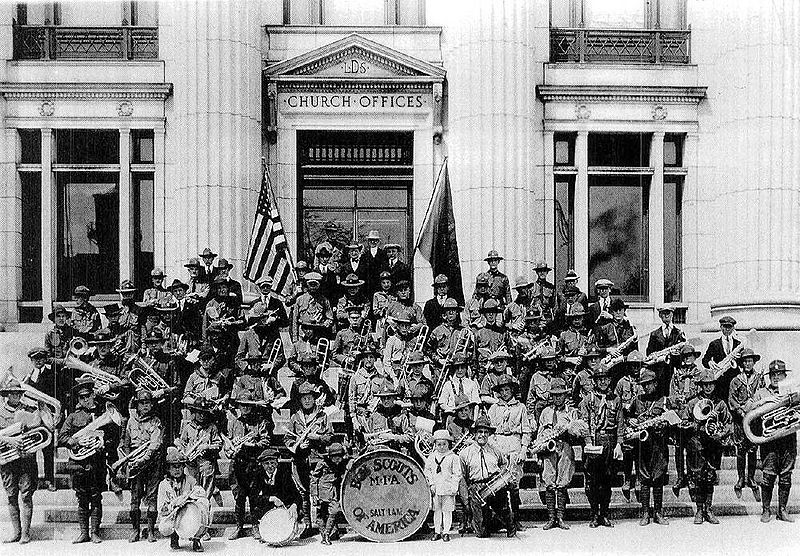
Society’s prurient interests have been on display again with the intense media blitz concerning Boy Scouts of America and the fraught issue of sexual orientation. As is to be expected, certain religious bodies have sounded the final trump once again as they frenetically posture against equality. The story is so old it is difficult to see how it counts as news. When I saw that the Church of Jesus Christ of Latter-Day Saints (the oldest sponsor of Boy Scouts and the denomination with the highest numbers) had made a statement about the issue, I almost didn’t even click on the link. We already know the official stance of such conservative groups, right? So I was genuinely surprised when I saw the note. This Mormon Church has no problem with the admission of homosexual boys since, and rightly so for a youth organization, the members are expected to behave according to the code of conduct. That code forbids sexual relationships, no matter a boy’s orientation, no matter with whom.
800px-CAB_with_Scouts

We all know that ideals are seldom observed. We should lead by example. I spent my high school years deeply involved in the feeder program for future clergy in a major Christian denomination (the one with the second highest number of Scouts). The youth programs frequently involved having hundreds of youths together for multi-day events. Chaperoned, of course. But kids with active hormones are about the most clever creatures on the planet. I frequently heard that opportunities to find some time alone with your favorite “spiritual advisor” were not difficult to arrange. And when I enrolled in a program to study for the ministry officially, I learned that the name seminary was somehow overly appropriate. Codes of conduct exist for a reason, and those who hold to them reward the trust of adults who institute them. Society can’t operate without such rules. What happens in reality, however, is a different matter. Anyone who reads the headlines can see that.

I applaud the Mormon Church’s stance on this issue. The Boy Scouts is a social organization with nary a merit badge for sexual knowledge or experience (at least not in the Handbooks I’ve seen). Those matters, as with adults, are private. Religious groups often act as if admitting admitted homosexuals somehow changes the Jamboree into a Woodstock. The problem is with the imagination of puritan adults. The solution to the anxiety is rather simple. For those concerned, volunteer to lead a troop. Attend a meeting. See what actually goes on. The fact is, kids will be kids, and making rules to satisfy uptight adults will not change that. Many groups could learn from the Mormons here: Scouting is not about sex. It takes the imagination of adults to make it so. Boys, as the saying goes, will be boys.


HRH vs C of E

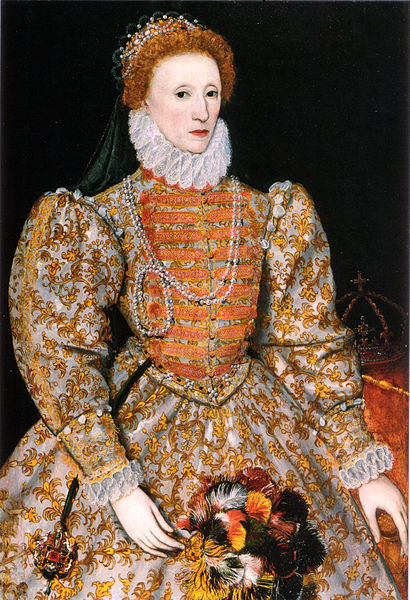
An article from the Sunday Daily Mail, the UK newspaper, opens with the headline “Queen fights for gay rights.” I was pleased, as most even-minded individuals would be, that discrimination is being addressed by Her Royal Highness. Then the implications began to kick in. Having domiciled many years among the Episcopalians, I couldn’t help but smile knowing that the monarch is the head of the Church of England. Figurehead maybe, but on the books, the buck stops in Buckingham, not Lambeth. For decades I’ve seen the Anglican communion fracturing over what is a non-starter, theologically speaking. The only reason to protest homosexuality is the loss of potential life. For anyone who believes that sex is for procreation only, I would advise trying to counsel all the spermatozoa who just didn’t make it to the egg in time. Procreation is filled with an extravagant exuberance of over-production. Walk under any oak tree or stand among the wondrous helicopters of a maple tree in early summer and ponder what’s falling at your feet.

It seems to me that what’s lacking in the religious world is love. Loving, committed couples are ostracized for being just what God made them, while self-righteous critics wag their parsimonious fingers. And this is done in the name of God. I have friends of all gender orientations, and never have they given me cause for moral concern. In fact, I have trouble categorizing them together as a group; they are individuals to me, not pigeonholes. Some churches have trouble because prejudice has become dogma. Even the Roman Catholic Church allows for sex between couples when conception is virtually impossible, as when a woman is pregnant yet doesn’t yet know it. Just try not to enjoy it too much. The life potential ends the same way. Millions must lose for every winner. Consider the ethical implications of a deity who didn’t design a one-shot, sure-fire sperm for each act. Surely it would’ve been possible to engineer for an omnipotent divinity.

Instead many mainstream churches are assiduously drawing lines in the sand, claiming that one gender, one orientation, one race, only is welcome on the side of the 144,000. The rest can, quite literally, go to Hell. Is this what religion has become? Imagine what good might be done if all that energy were poured into addressing poverty, starvation, or inadequate water supplies. Imagine those who represent the winners in the reproductive race receiving care and attention rather than those who will, by a massive margin, stand no chance of survival whatsoever. We could make this a better world instead of prolonging the suffering of those who’ve done no wrong. Those holding the balls are trying to make up the rules of the game. The Queen of the Realm seems to be saying it’s time to start playing fair. Long live the Queen!

The first queen of the Church (of England)

The first queen of the Church (of England)


On My Honor

Some old fashioned institutions fear new learning. Although I was a Boy Scout for only a couple of years, I grew up in Cub Scouts and Webelos and had a pretty good idea what boys talked about when they were together. It would’ve shocked me at the time to learn that some Scouts were gay, but then, I was young and most new things shocked me. I later came to learn that not only some Scouts, but also many of the guys I knew from conference-wide church groups were gay. It wasn’t so much that they were in the closet as the rest of the world was. Society wasn’t ready to admit anything that challenged male patriarchy (this was the 60s and that was beginning to shift), and homosexuality did challenge that hierarchy. The Bible could be used to back a husband’s superiority over his wife, but if two men formed a couple—as B-movie computers used to say—”that does not compute.” A society that declared sex had one purpose only—procreation—was already deep in denial about the symbolic power that sexual relations inherently possess, something even the ancient Greeks knew about. How could a culture that out of sync with nature come to embrace true equality?

In the socially conservative icebox of the fin de siècle nouveau (pardon my French), evangelical forces began to declare the Bible as the basis for defining marriage. The problem is that the Bible doesn’t do such a good job of it. Marriage is far from a sacrament, and its main purpose seems to have been to make sure men were kept accountable for the children they sired. After all, they could have as many wives as they could afford, eh, Solomon? The Boy Scouts, so loyal to God and country, preferred not to admit what was already part of their culture. You isolate a bunch of boys together in a cabin in the woods, and what happens? The old myth of Platonic hero-and-sidekick pairs with nary a thought of the pounding chorus of hormones surging through the atmosphere held up remarkably well, considering.

We like to think we live in a more enlightened age. Sexologists tell us that mating is hardly just for reproduction—the natural world belies that. The Bible says little about its purpose, not being of a scientific bent. And yet the Boy Scouts hold up three fingers and go beyond don’t ask, don’t tell. I’m glad to see that they are again considering a look at the obvious. In the Bible that cotton-poly blend you’re wearing is mentioned as evil just a few verses away from one of the few passages that says the same thing about homosexuality (and even that is an overstatement). The Bible was a product of its time, just as the Boy Scouts were a product of theirs. If they want to honor their pledge about keeping morally straight, the Boy Scouts need to consider morality in the light of what we know and open the closet doors to what society has been keeping hidden all along.

Read the green words.

Read the green words.


Here’s the Church, Here’s the Steeple

Americans seldom seem to fuss much about religion unless they perceive that it is under threat. We’re real believers in religious liberty that way. The threat angle is a vector worth measuring every once in a while. What gets our collective goat? A story on CNN last week about the National Cathedral caught some attention. Those who think about freedom of religion, liberty of conscience, and all that, might find the implications of a national cathedral itself a tad troubling. Of course, it really isn’t a cathedral for all of the United States, but it is used for many displays of civil religion including several presidential funerals and inaugural prayer services. The cathedral, historically and ironically, is of the Episcopalian brand. Episcopalians boast perhaps the smallest number of mainline protestants in the country, and since they are the remains of the “established church” of England in the States, it is not just a little odd that such an edifice should be associated, however informally, with government in its former colony. The reason that CNN ran the story related to a perceived threat to American religion: same-sex marriages.

Now that same-sex marriages have been approved in three states, some couples desire the symbolism of a wedding in the National Cathedral. It is a victory of social justice that highlights one of the deepest and most persistent of religious concerns—human sexuality. Although many religious denominations have made their peace with evolution by natural selection, few have really considered the implications of reproduction and its discontents. Formally ever since the Enlightenment (and certainly informally for all of human history) sexuality has been a subject of scientific scrutiny. And not just for humans either. As naturalists observe the world of our fellow creatures, we find all kinds of sexual behaviors labelled “unnatural” in humans are quite normal in nature. The reason is the religion that is invested in reproduction. People, many religions teach, are somehow different. Besides, in the days before scientific interest in animal reproduction, few bothered to consider what other animals did, far from human eyes.

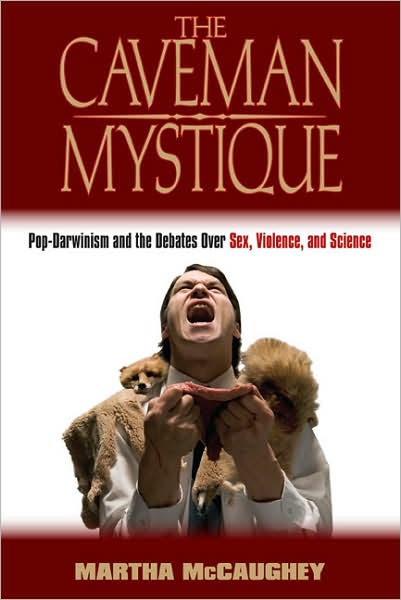
For those willing to admit that nature can teach us something about ourselves, same-sex couplings are not limited to humans. They are a part of nature. As Martha McCaughey suggested in The Caveman Mystique, reproduction is only one of a variety of reasons that humans and other animals mate. For us, however, it is a strangely sacral act. All religions have something to say about sexuality, and many express strong feelings about what marriage means. So the Cathedral Church of St. Peter and St. Paul (two men, one might note) is in the news because of what marriages symbolize for many. Marriage is about commitment, not just sex. In a nation where commitment is only fair-to-middling, shouldn’t we applaud the use of the National Cathedral to reinforce such family values? Unfortunately, for many gender differentiation trumps love in what is understood as a legitimate religious outlook.

Carol M. Highsmith's National Cathedral

Carol M. Highsmith’s National Cathedral


Out with the Old

It’s become a time-honored tradition, as an old, secular year ends and a new one, brimming with potential commences, for various pundits to sum up the past twelve months for us. And since there hasn’t been a year without religion since Adam and Eve were created, it stands to reason that the religious year in review is yet another perspective to take on this mid-winter’s day. The New Jersey Star-Ledger, my state’s answer to the New York Times, ran a 2012 top stories in religion feature on Sunday, the one day that anyone might be tempted to pay attention to things spiritual. The list reflects the view of A. James Rudin and it features several stories, most of which tend to show the embarrassing side of belief. Rudin begins his list with an amorphous Islam as reflected at unrest in the Middle East. One of the misfortunes I often deal with in my editorial role is this association of Islam with violence. There are deep roots to the trouble in the Middle East, many of them planted and watered by Christians. Religious extremists, however, are the more sexy side of the story and they always abscond with the headlines.

I should take care with my word choice, however, because yet another of the stories—dominated as they are by Christians—concerns the Catholic Church’s continuing troubles with hiding away child molesters (number five). The number two story, also about Christians, is also about sex as well. That story highlights the chagrin of the Religious Right at the recognition, long overdue, of same-sex marriages in three states. Gender plays a role in story four, the succession of Rowan Williams as Archbishop of Canterbury, but also the related story of how the Church of England still refuses to recognize women as bishops. A deity who can’t see past genitalia should be troubling to any believer. Yet a full quarter of one commentator’s top religious stories are concerned with sex. That’s how the world sees the issue.

The remaining stories Rudin points out have to do with Jewish-Christian relations, aging pontiffs, and the growth of Nones in the US religious marketplace. Anyone who spends time reading contemporary accounts of religion will be familiar with the Nones—that increasing number of people who declare no religious affiliation. Ironically, those involved in such scandals as we often see in the headlines are troubled by the number of people opting out of traditional religions. I almost wrote “opting out of faith” there, but that’s not really the issue. The Nones I know, and there are many, don’t necessarily not have faith. They have lost confidence (if they ever had it) in religious institutions. Interestingly, Rudin concludes his list with the tragedy in Newtown, Connecticut, along with the death of Sun Myung Moon and a few others. The Newtown tragedy remains the least and most religious event in the past year. And unless those of us who survive do something about it, these dead will have died in vain. Let’s hope 2013 has something better on offer.

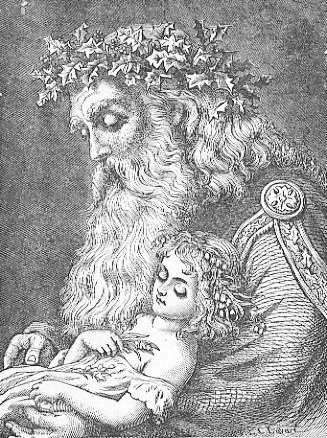
Father_time


Mystique-alism

CavemanMystiqueReading in a public place gives peer pressure an entirely new meaning. Public transit is a place where I spend at least fifteen hours a week. Not having converted to Kindle, or even Nook, I still prefer the feel of paper in my hands. With the open book, however, comes exposure. On the bus you have no control over who climbs in next to you. You’ll be spending an hour, maybe two, side-by-side, and although s/he may never see you again, it could be that tomorrow they will find themselves once more at your side. I’m very conscious of the books I choose under such circumstances. I shouldn’t care what others think, but I do. Recently my choice was Martha McCaughey’s The Caveman Mystique: Pop-Darwinism and the Debates Over Sex, Violence, and Science. The issues here were multiple. McCaughey consciously chose her riff on The Feminine Mystique as a catchy, if very appropriate title. The person plopping down next to you with a bleary eyed glance over on an early morning bus will probably catch only one or two words in the title. One of them will be the only word with an x. Still, this important little book has big implications for the “s word,” and how men are socialized to think about sex.

Darwinism, and evolution, are concepts that are keyed to religion in the United States. There is no avoiding it. McCaughey, as a sociologist studying science, shows just how many assumptions scientists make about the universal applicability of their work. She suggests something that many of us have learned over the years: absolute objectivity is not possible for any human being. We are all socialized. We all bring biases to our work. We’re all human. McCaughey doesn’t question the results of scientific investigation, however. Her concern is that in a male-dominated field the results might be, well, screwed up. In a series of delightful thought experiments, she shows how very basic sexual biases get played out into larger scenarios that tend to excuse the inexcusable: violence against women. Men have to be taught to be cavemen. Science, improperly disseminated, gives men an excuse for blaming evolution for their lack of character. It seems to this man, at least, the McCaughey is certainly on target.

In a particularly insightful paragraph, McCaughey writes, “Invoking God’s will, or nature’s [i.e., science], hides the political context in which such a will was ‘revealed’ or ‘discovered.’” How easy it is for both scientists and religious believers to conclude that the way of their belief system is the only explanation for the world. Both camps forget they are profoundly political. As humans we can’t escape it. The world defies easy explanation—there are truths that we haven’t discovered yet. The main point of The Caveman Mystique, however, is clear. Just as men have been led to believe that the caveman is inevitable, they can be also taught that such a statement is a lie. Biologically there are gender differences, but socially—and this is the ability humans boast of—we can and must insist on equality.


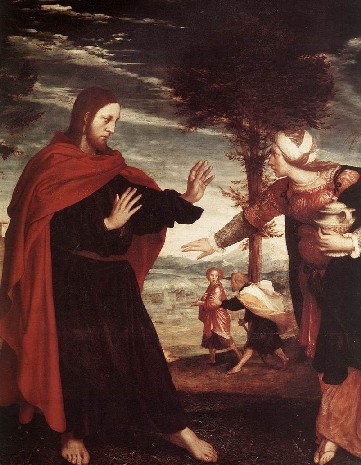
Mrs. Jesus

First we learned that Yahweh was married. Then we hear, “like father, like son.” A Galilean tempest in a Wonderland teapot. A papyrus fragment from centuries after the fact implies Jesus might have been married and the media smells blood. The scholars who translated the materials tried very hard to demonstrate that their efforts indicated nothing about the historical Jesus, but that doesn’t sell newspapers, magazines, and website hits. Jesus being married does. Spying an article about this in the Chronicle of Higher Education recently, I pondered why this might be. Why the great fuss over Jesus’ potential marriage? This is not an easy fabric to unweave. Americans have been routinely taught to idealize Jesus in order to underscore his divinity. A man without warts, no faults, perfect hygiene, completely symmetrical. His unwed nature is silent testimony to male superiority—when God chose to incarnate, he picked a masculine template. And for a man to need anything is a sign of weakness. If some Coptic Gnostic suggests that maybe Jesus had a weakness after all, well, that’s scandal enough to sell a million copies right there.

Theologians are quick to say that God is really beyond gender, but we sexual beings are so, well, focused on our biological packaging that we just can’t conceive a deity any other way. American culture thrives on the concept of a personal relationship with God. It is difficult to have a relationship without assessing the sexual roles. More than reproduction, our sexuality defines how we interact with others. By recasting Jesus as a married man, the whole dynamic is thrown off. Girls who are taught to uphold the virginal Jesus as an ideal man would now have to create room for the other woman. Boys would no longer have to consider the monastery. Overestimating the impact of marrying off Jesus in this country might well prove impossible.

The Chronicle takes a bemused look at the issue, as befits a disaffected, intellectual publication. For most Americans the relationship can never be so diffident. Scholars may find it funny, but we are vastly outnumbered. Like a divine paternity test, ink analysis of the papyrus fragment is out at the lab. If it’s just another forgery, life goes on much as before. The fact is, as has been stressed all along, all that can be potentially proven is that some people in the fourth century thought Jesus had a main squeeze. People have wondered that for centuries, with or without a papyrus to spark discussion. We are sexual beings, and like Xenophanes’s horses, our gods must look like us or become like the shadow over Innsmouth.

“And I think the couch should go over there!”


Lost Purpose

In a move that demonstrates its love of Inquisitions, the U. S. Conference of Catholic Bishops is officially investigating the Girl Scouts. Seemingly forgetful of the fact that a bunch of unmarried men with a record of protecting pedophiles is not above scrutiny itself, the Catholic Church now seems to think it has the right to police other organizations. The concern these men show for what goes on in other people’s underwear is beyond perverse—WWJD indeed? Both my daughter and my wife are Girl Scouts, and so I know it is not a perfect organization. I also know that it lives up to its goal of offering girls the chance to gain self-confidence and become empowered women. Women who are not trodden under the heavy feet of doctrine are tied to stakes and burnt, in good old-fashioned Christian charity. And why the fuss among our Roman companions? They’re afraid because of demonstrably false allegations that Girl Scouts “associates with” organizations to which the church also objects.

I was a Boy Scout for a few years. Already in those days jokes of homosexual leaders—and a few actual cases—were de rigueur. Where was the Catholic Church? Yet this year alone they have made strident moves against their own nuns and now, again, against the Girl Scouts. Where two or three women are gathered together, the Catholic bishops will begin to pick up stones. Better not read what Jesus is scribbling in the dirt. Some of my readers have problems with my biblical interpretation. I will now ask if anyone can produce a biblical prooftext for the church’s mandate to oversee the organizational structure of secular, non-profit, non-religious associations. What does the Bible say about that? Clearly what the Bible does allow sexually favors men. Where your testosterone lies, there will be your heart also.

All of this belies a lost of purpose for the church. Like the empire whose epithet it shares, the Roman Catholic Church is perceiving paranoid threats from every quarter. The purpose of Christianity, at least according to a guy called Jesus, was to help the poor and underprivileged and to love all people. Even those who crucify you. Now the message the headlines declare is that any organization offering women sexual autonomy will be investigated by the bishops. It matters not whether any allegations have a basis in fact. Christianity’s purpose? To assert male authority. To prevent any organization of women from achieving confidence or equality. To subjugate an entire half of the human race to the will of a single man. Does that sound like the true purpose of religion to you?


Same Sex Sanity

When the people speak, sometimes it’s just nonsense. So the people of North Carolina believe in the exclusive rights of dysfunctional heterosexuals over committed homosexuals. And President Obama makes a powerful statement. As Americans we are reared to respect personal freedom. And what freedom could be more personal than the open expression of love? The reasons given for exclusivity of heterosexual marriage are spurious—certainly the Bible considers marriage in purely pragmatic, not sacred, terms. As citizens of their own time they were as much programmed by their environment as are people today. Marriages were arranged and the concept of sexual orientation simply did not exist. It is not that I castigate marriage—having been married nearly a quarter of a century myself I would be a fool to do so—but I in no way feel threatened by anybody falling in love with anybody else. Nor is it the right of any loving Christian to stand in anyone else’s way.

A God who created gender-changing fish to fry in Hell (particularly on Fridays) seems unnecessarily cruel. (Yes, such fish do exist.) A God who created other animals that exhibit homosexual behavior (bonobos, penguins, elephants, lizards—at least 450 animal species have been caught in the act) and then condemns it is surely working at cross-purposes with the nature he (always he) created. It has become quite clear from nature that sexuality is far more than procreational activity. If your kit is for kid making only, why do so many good, Christian couples have trouble conceiving? And don’t say “God only knows” because Fundies have no monopoly on questions that demand a verdict. What is God playing at here?

Intelligence and sexual behavior seldom go together. Religions, however, have a hard time keeping themselves out of the bedroom. Loving, committed relationships hurt no one. For a religion claiming to be based on love, declaring various expressions of love wrong is diminishing the good in the world. The Bible has very little to say about homosexuality. Good, Bible-believing Christians often turn blind eyes to the many more stringent passages about divorce and remarriage, but single out the very few that mention specific same-sex acts. Do they not see how such cherry-picking makes a mockery of calling anything holy? With all the excised bits, it might be more appropriately called the Holey Bible. For me, it seems they might find it more instructive to observe the moray eels rather than trying to cover their wrasses.


The Price of Religion

Gender is a religious construct as much as a biological one. The study of religion has brought me face-to-face with the reality that religion appeals to many women and to those who would manipulate them. Lately I’ve taken to reading the memoirs of women who’ve discovered the abuse their faith has doled out to them and who’ve taken moves to reclaim their lives. This past week I read Deborah Feldman’s Unorthodox: The Scandalous Rejection of My Hasidic Roots. As someone who has spent much of his life reading and re-reading the Hebrew Bible that gave fuel to the Mishnah that gave fuel to the Talmud that gave fuel to the Hasidic movement, I found Feldman’s narrative gripping. Some branches of Judaism, like some branches of Christianity, try hard to separate themselves from society. Their cloistered lives become secretive, and often by the standards of secular culture, incomprehensible. While reading this wrenching account of sexual domination, I kept wondering why Feldman didn’t try to escape. At the same time I already knew the answer.

I was raised by a religious mother who found her faith both a source of rules and a source of comfort. Unaware that religion can be a trap, women are frequently its victims. In a society that still refuses to give females equal opportunity for earning a living, is it any wonder that religions offer alternative routes that equally entrap? How do you appeal to a higher power when that higher power is, by biblical definition, male? Who will help you out when the largest religious structures in the world are male constructs? Yes, lately some religions have opened themselves to female leadership, but almost always at the cost of splitting off of factions that claim seniority and sanction from the beginning, when, they claim, only men ran this show. Deborah Feldman was trapped in a religion where her life, down to her hair and clothes and reading, was programmed by male expectations. In this continuum between religions we find the same progression in a series of degrees where men make the rules.

Many who read Unorthodox, I suspect, will see it as a condemnation of Hasidic Judaism. It is not. As Feldman makes clear, she has retained her Jewish identity, but she has let it evolve into a place where she is finally free to express herself. Gazing over the religious landscape, I see this as a place that many women find themselves. The very religions that had formerly held them down, however, continue to be male preserves. Even if women may join the club of bishops, clergy, or rabbinate, they do so with the constant reminder that they are only invited guests in what was once a masculine world. The world of men never voluntarily relinquishes its grip. As long as people are considered in the image of God they will always be by default male and female only as an afterthought. To conceive it any other way would be very unorthodox indeed.


Nun Such Luck

It hardly seems to be news anymore when the headlines read “Vatican orders crackdown on US nun association.” Religions are largely characterized as men telling women (and milquetoast men) what to do. Perhaps because of our evolutionary, simian respect for the alpha male, most followers will resist pointing out inequities in the system just to have a smoother ride. The all-male Vatican is reportedly worried about how nuns of the Leadership Conference of Women Religious might be distorting the masculine teachings of holy mother church. No matter how much science the Vatican supports, it just can’t get over the idea that when God is found out there he will have not only a human face, but a human penis as well. The Associated Press article states that the Congregation for the Doctrine of the Faith—that is the organization of the Inquisition, my dear readers—found grave errors of doctrine among the ladies. Sounds like time for an auto-da-fé, n’est-ce pas?

Somewhere on its long and weary trek, the control of fellow humans for the sake of God has slipped into the rut of control of fellow humans for the rush of power. The Catholic bishops are worried about abortion (and other healthcare options for women). The Bible says nothing about abortion, considering life to coincide with the first breath. The chosen people did not have a conception of how conception worked (you can’t see the sperm or ova without a microscope, no matter how divine they may be) and so life began and ended with breath. The only reason to push the origin of life to conception is so that men may control women’s sex lives. These decisions are made by sexless men who wear dresses behind inscrutable walls of power. When nuns start seeking fair treatment for women it quickly becomes heresy.

I don’t mean to single out the Roman Catholic Church here, since many religions proclaim male superiority—loudly or softly. Back in ancient times when goddess worship was taken as seriously as the cult of male gods, a few religions did exist that gave women a position equal to, or sometimes even above, men. The priests of Cybele, for instance, had to undergo ritual emasculation. Strangely, religions with celibate priesthoods today leave their men intact, perhaps as a loophole for sin. I wonder how much more women-friendly official theologies would be if only eunuchs were allowed to serve as pastors. It is, as Genesis famously states, sin that “is crouching at the door,” and therefore it is better to remain gendered and pray not to be led into temptation. Perhaps we have something to learn from history yet.


Exposed or Expelled

I live in a relatively small town. Having grown up in communities of 10,000 or less, I am used to the ways of those who live close to their neighbors. Even in small towns people live secret lives. Returning to my small town from Iowa, the headlines for New Jersey’s largest newspaper feature a coaching assistant at Immaculata High School, the Catholic school in my town. Patrick Lott, Assistant Principal at another local school, is an assistant football coach at the aptly named Immaculata. He is accused of videotaping boys in the shower. As if not disturbing enough, this is the third Immaculata individual to be arrested for sex crimes in the last twenty years. While each individual instance is bad enough, it is the long-term pattern that is even more disturbing.

The setting of a Catholic school has long been a trope for abuse of power. In this respect it mirrors ecclesiastical history. Such is the way of human institutions. When they are placed on a pedestal and proclaimed divine, trouble starts. The problem arguably began as long ago as Augustine, and before him with Paul, the architect of Christianity. Both men spewed many negative words about sexuality, with or without abuse need not matter. Their views—which one might be tempted to call perverted were they not from religious men—perceived sex as a bizarre form of divine punishment. Funnily, neither one has much to say about why a good God designed such a sinful system for animals to propagate as well.

Sexual predators, of course, are not limited to Catholic schools and parishes. It does seem, however, that those religious institutions that most vocally castigate sexuality are the ones most often caught with their metaphorical pants down. Why such things happen is better answered by psychologists and sociologists than it is by theologians. What is always interesting is observing the response by religious leaders. The shock and distress may be real enough, even when one school claims a hat-trick of the sexual kind. I have no answers to proffer, merely some lay observations. If religions dropped their pretensions instead of their pantaloons, the world might quickly become at least a more honest place. If individuals with problems sought medical help rather than theological forgiveness, we might actually begin to make some progress.

Is this the right message?


R-e-s-p-e-c-t A-l-l

Every great once in a while a politician makes a statement consonant with the principles of the nation. Over the weekend Robert Menendez, one of New Jersey’s U.S. senators, make a public announcement of his support for the Respect for Marriage Act. Admitting that 15 years ago he voted for the Defense of Marriage Act, which would not recognize homosexual unions, Menendez has searched his conscience (a rare commodity among elected officials) and has come to realize this “Defense” Act for what it is: legislated immorality. It is immoral for a government to deny rights to committed couples based on the gender of either party. Gender is a social construct that may or may not align with sex—even the concept of two completely distinct sexes is now seriously questioned by biologists. The old measuring rod of ability to procreate together just does not match reality: infertile couples are granted the same rights as other married couples, so why not same “gender” couples? As Americans we often like to vote without thinking too deeply about the topic.

The value of procreation is obvious. Birds do it. Bees do it. Even educated fleas do it. (Cole Porter knew what he was writing about.) When did we become so fixated on this one aspect of sexuality that we let it become the sole purpose of sexual behavior? Many religions recognize sexuality for what it is, a form of human interaction. The end result may be a new child, but it is not so as the result of the vast majority of couplings. Christianity (in some quarters) early on took a dim view of sex, and soon began to relegate it to procreational necessity only. Even then you were supposed to try hard not to enjoy it. The Catholic Church even relegates the biblical siblings of Jesus to the role of step-siblings; children of Joseph from a prior marriage, despite what the Bible says. Such distortion of nature could only come at the interference of religion. And as long as we’re busy regulating sex, let’s add a few statements about the only appropriate outlets for that committed relationship. Never mind who gets hurt. It’s all gonna burn.

I, for one, salute Senator Menendez for his willingness to open his mind. Too often the “government for the people” is excised from Lincoln’s Gettysburg address. When did we the people pass to the government the right to decide whom we might love? The agenda set by the Religious Right is religious wrong, and too many tax-paying citizens are the heirs of its paranoia. It is time the government began serving the entire electorate rather than just the Southern Baptists and their friends. Nobody is attempting to regulate their sex lives, as Ted Haggard, Jimmy Swaggart, and Newt Gingrich will gladly attest. Keeping the zipper firmly up is not the strong suit of televangelists or politicians. If we’re going to have double standards here, let’s at least open the game to same-sex marriages. Those who feel threatened by the fair treatment of others need to gaze long in the mirror and ask why.


Seedless

“And Onan knew that the seed should not be his; and it came to pass, when he went in unto his brother’s wife, that he spilled it on the ground, lest that he should give seed to his brother” (Genesis 38.9). During the conference last week the Routledge booth stood across from that of an evangelical publisher. One of the realities of conference life from the point-of-view of an exhibitor is over-exposure to what is fresh, clever, or cute upon first blush. Harper One’s continuous loop video, however, demonstrated that N. T. Wright, Desmond Tutu, and Bart Ehrman can sound repetitive, and even Colbert loses his punch when you hear the jokes for the twelfth time. The evangelical publisher across the way, however, had a large cartoon drawing that mapped out the believer’s life, book-by-book through the Bible. As probably anticipated, I can’t get that silly cartoon out of my head. After four days of exposure, I finally succumbed to asking for a flier. It was the usual evangelical fare, and the warning against adultery on back used the traditional term “seed” for “semen.” I found myself pondering the implications.

Since the King James Version shares the pre-scientific worldview of the ancients, the term “seed” has been preserved in the literalist mind. Even Alice Cooper uses it in his lyrics (his father was, after all, a preacher). Well, since the Bible is Holy Writ, it seems that semen has been transubstantiated into seed. The seed, as biologists tell us, contains all the genetic material to grow a new plant. Just add water, warmth, and a little light. Presto! Life sprouts. Since evangelicals tend to be fluent in biblicalese, even today men—the default, fully equipped model of humanity—come complete with abundant seeds. Agway should be so lucky. It feels, however, as if half of the equation is missing. If the Bible-writers had raised chickens, perhaps men would be full of eggs.

Thinking life cannot exist without metaphors. Metaphors are very dangerous in the hands of religion where they get taken literally. Too easily imagery slips into facticity. The male seed demonstrates a diabolical gospel truth: men alone provide the next generation. Women, as usual, are largely superfluous. The biblical male dominates the biblical female. The man owns the wife and must be enticed to share his precious seed. If conception fails, it is inevitably her fault. The metaphor has become a thumb-sized rod. Let us speak plainly here. The Bible has betrayed womankind. Judas Immaculate. In ancient times this was accepted fact. The microscope and biology should have buried this seedy metaphor centuries ago. But once again, the unthinking promulgation of a biblical trope survives at the expense of women. I have no seeds. No man since Adam has.

An obscene photograph?


Biblical Sex

Legislation covering female reproductive health maintenance has finally passed. Even in a nation where equality is highly touted, women will have, until 2013, been treated as more expendable than men. A few years back I read Mary Roach’s Bonk: The Curious Coupling of Science and Sex. There I learned that even as of the publication date of her book, many aspects of the female reproductive system were still poorly understood. The reason: lack of interest by (mostly) male scientists. Of all the great equalizers of humanity, it might be expected that religions would step in to champion the cause of citizens routinely treated as objects and chattels. Instead, the opposite has been the case. Most religions, and even until the last century Christianity in the forefront of them, relegate women a secondary status to men. Religion is all about power. Now that legislation will allow women basic reproductive rights without extra fees, Catholic hospitals are concerned about the implications. “They defied the bishops to support President Obama’s health care overhaul. Now Catholic hospitals are dismayed the law may force them to cover birth control free of charge to their employees.” Thus begins an article in today’s paper by Ricardo Alonso-Zaldivar of the Associated Press.

Instead of cheering equality, the church is muttering about medieval conceptions of conception. The entire idea that life begins at conception was not even possible in the biblical world where sex did not involve sperm and ova—such things were unknown in those days. The Bible has a few clues to when human life begins, and generally it is thought to be at first breath. Semen should not be wasted, however, since it was thought to be the full set of ingredients to grow new people. The uterus was simply a waiting area, a comfy place to grow with regular womb service. Men were the creators, women were the deliverers. That idea of reproduction formed the basis for all biblical and other ancient legislation on the subject. Comprehending “conception” as now scientifically understood, was only possible with the invention of the microscope. In response, a sexually underdeveloped church decided that the new data strengthened the male hold on ecclesiastical authority. Once the seed is planted, there’s no uprooting allowed. What male, after all, has ever had to carry an unwanted pregnancy to term?

Female religious leadership was recognized in many early societies, and even in some branches of early Christianity. No legitimate rationale exists for saying half the human race is disqualified on the grounds of basic hardware. After all “male and female created he them.” Concerns of “purity” for an age when menstruation was not understood could be marshaled to the cause of male supremacy. That mystery was solved when conception became clear. An unequal result emerged nevertheless. Since women couldn’t be discounted on genetic grounds, they could on the basis of “impurity.” And here we are two thousand years after pre-scientific Christianity was conceived, still waiting while a coterie of all-male bishops castigates normal health care for females. Believers like to suppose that their leaders receive special word from the mouth of God. Those leaders tremble in the face of true equality for the very first word the Bible has to say on the subject is “So God created man in his own image, in the image of God created he him; male and female created he them.”

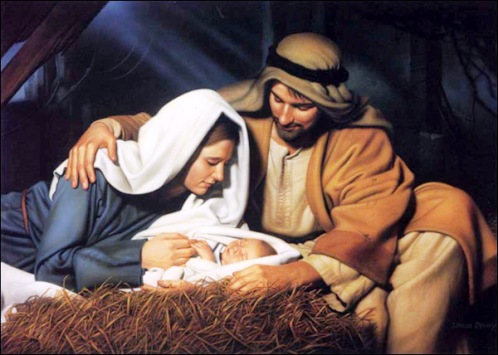
Who's superfluous here?