The Season

I learned about the Horror Writers Association years ago, shortly after I started publishing horror stories in 2009.  I couldn’t join because you had to have earned at least $30 from a publication.  I took this to mean a fictional one and I never made it beyond that benchmark until this year.  (It’s possible I misunderstood and could’ve joined for Holy Horror and beyond.  I think the point is they want to know you’re serious.)  In any case, these folks may be my tribe.  During the month of October the website has a set of free blog posts available to the public.  Mine—located here—dropped yesterday.  It deals with nonfiction, of course, since I’m still not finding much traction in getting novels published.  One of the weird things about book publishing is that you don’t know, unless you’re already successful, how well your sales are going until after about six months or so.  Sleepy Hollow as American Myth may be flopping for all I know. 
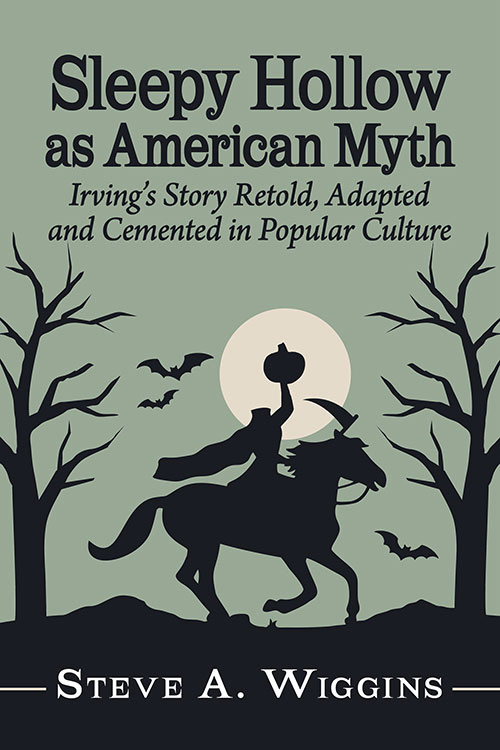
I’ve tried to promote this one as much as I can.  I contacted bookstores and libraries in Sleepy Hollow itself.  I had bookmarks printed and put them in local libraries and bookstores.  I arranged a discussion at the upcoming Easton Book Festival.  I told my local writers’ group about it.  Posted on a Halloween Facebook group.  All of this is tricky rather than treaty when a book is priced near $40.  That’s quite a trick, I know.  As Halloween approaches I keep seeing memes and posts about the Headless Horseman.  But I’m not sure if anyone’s finding my book or not.  It’s an anxious period when you write.

Working in publishing for nearly two decades now, I’m starting to realize that there are two ways to relevancy.  One is to be hired by an institution with name recognition—that automatically makes you an expert and everyone want to know what you think.  They’ll even pay you for it.  The second way is to write a book that sells well.  That one’s a bit of a catch-22, however.  To get published these days you need to already have a following.  I suppose that’s what the internet is for.  The best forums at the moment seem to be YouTube and TikTok, but there’s more much traffic there than on a Los Angeles freeway during rush hour.  I’m not sure if many people read the Horror Writers Association Halloween Haunts blog posts.  These folks, however, seem to look at this from a similar perspective.  Maybe a few of them will buy Sleepy Hollow as American Myth.  ’Tis the season.


Painting Sleepy Hollow

Not being an art critic, I’m in no place to analyze John Quidor’s The Headless Horseman Pursuing Ichabod Crane.  Having written a book about Sleepy Hollow, however, there are a few things I might point out.  I should begin by noting that this post was spurred by a jigsaw puzzle.  Normally I only work on said puzzles around Christmas time.  Several years ago friends told us about Liberty Puzzles.  They’re made of wood and are heirloom quality.  My wife took the hint and she generally orders one, on behalf of Santa Claus, each year.  We have a few now but since we only do them once a year (and usually only one of them at the time), I had forgotten that we had a Liberty Puzzle of Quidor’s painting.  The original is located in the Smithsonian and I really didn’t discuss it in my book.  The painting is dated 1858, almost forty years after the publication of Irving’s tale, but while Irving was still alive (he died the next year).

John Quidor, The Headless Horseman Pursuing Ichabod Crane, public domain via Wikimedia Commons

The painting is correct in displaying a pumpkin that isn’t a jack-o-lantern and it presents one of the obvious difficulties of painting a nighttime scene.  The painting is fairly dark.  One of the benefits of working on a puzzle like this is you look closely at the scene.  My first thought was that it seems odd that the lightest part of the painting is Gunpowder’s rump. Next is the path.  The path draws the viewer’s eye back to Gunpowder and an understated Ichabod Crane.  I realized that the lighting is meant to reflect the moon’s rays, as the orb is just peeking through the clouds at the upper left.  And, of course, Quidor was not painting from real life.  On the right lie some small buildings, including the Old Dutch Church.  The Headless Horseman blends into the dark, which is exactly how Irving describes him in the story.  There’s no bridge, however, at least not yet.  All of this matches the wording of the legend.

Quidor painted mostly scenes from Washington Irving’s works.  Having been born in Tappan, during Irving’s lifetime, that makes sense.  He was also painting before the Disney cartoon came out.  One of the cases I make in Sleepy Hollow as American Myth is that the image most Americans have of the story comes from Disney.  The painting has no sword, and indeed, neither does Irving.  The one dramatic effect Quidor allows is the raising of the pumpkin before the bridge.  That takes place later in the chase.  In a sense this painting is perhaps the most authentic visual interpretation of Irving’s story before it made the transition to celluloid.  It’s puzzling.


Naming Sleepy Hollow

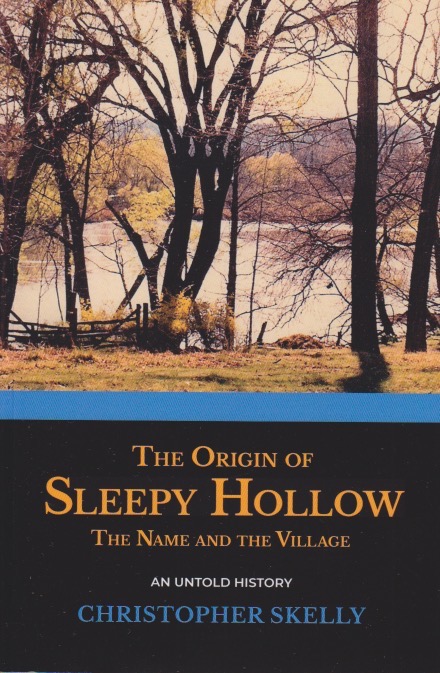
Local history has always been an interest of mine.  Although I’ve never lived in Sleepy Hollow, my book on “The Legend of Sleepy Hollow” is due out this week.  I try to keep an eye out for further information on the region.  Christopher Skelly’s The Origin of Sleepy Hollow: The Name and the Village, an Untold History appeared after I’d submitted my manuscript to McFarland, but I wanted to read it regardless.  A new father living in Wisconsin at the time, I was not aware of the name change in 1996.  I do remember looking at a map after we’d moved to New Jersey and seeing, for the first time, the name Sleepy Hollow along a route we planned to take to a point further up the Hudson.  I remember thinking, “I didn’t know there was an actual place called Sleepy Hollow.”  Well, that may have been because prior to 1996, there wasn’t.

This self-published account of how the name came about is valuable local history.  Not exactly belles-lettres, it nevertheless begins at the earliest Dutch naming of the area as the Dutch version of Sleepy Hollow.  By the time Washington Irving wrote his story around 1819, the area had already gone by several names but the village of Tarrytown was well established.  And, over time what was vaguely called Sleepy Hollow by the Dutch became North Tarrytown.  I learned here that the haven, or harbor on the Tappan Zee that was first called some version of “Sleepy” had been the victim of landfill so that a railroad could be put in.  The author is clear that the “Hollow” is still visible if you know where to stand and look.  He also explains the motivations behind changing the village name that began in 1988. 

One things I learned in my own study of ancient history is that place names tend to be remarkably resilient.  European settlers ignored much of the indigenous nomenclature, but did adapt many examples of it.  Our species needs to reference where things, or other people, are over very large distances.  We know where Edinburgh is, even if we live in Australia.  Names are important.  Personally, I’m glad that some citizens of North Tarrytown decided to change the name of their village to Sleepy Hollow.  And not just because I have a book coming out on the topic.  I’m sure the change has boosted tourism immensely, even if that wasn’t the initial motivation.  It’s nice to know that the change was actually back to the first Dutch ideas about the place.  And that a visit to Sleepy Hollow is possible because of one influential little story.


Dead, Not Sleeping

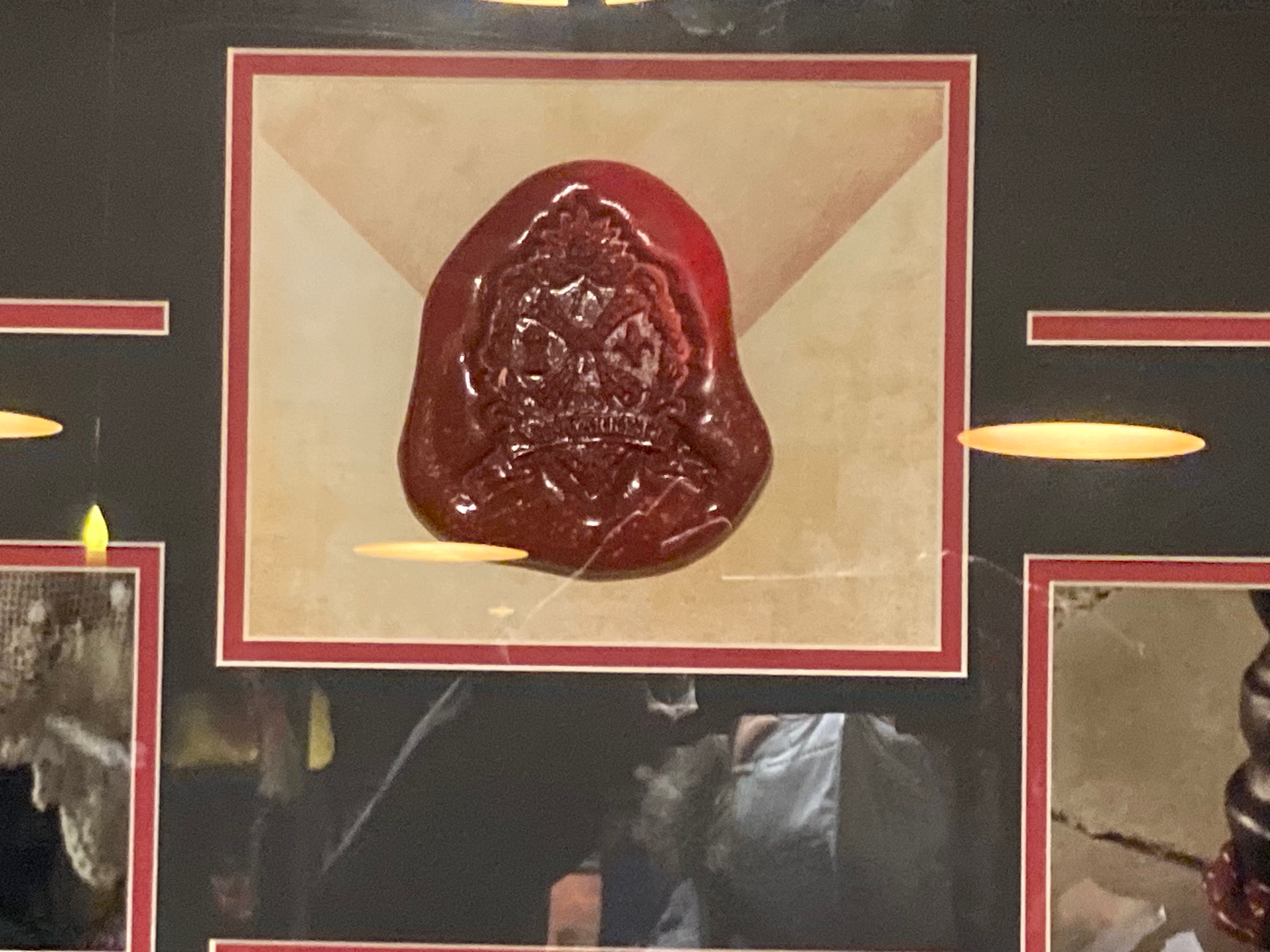
A Nightmare in New Hope is a fairly intimate space.  The owner told us that the collection will change and grow, given that he’s still collecting.  Having a particular interest in Tim Burton’s Legend of Sleepy Hollow—having a book (ahem) on the subject coming out soon (cough)—I was particularly anxious to see what props they had.  To make sense of this it helps to have seen the movie, but you’ll catch on, even if you only know the Disney version of the story.  There were three main items from the movie that they have on display.  One is the wax seal used for the Van Garrett will, used as the movie opens.  The seal is quite large.  Of course, movies substitute props from time to time, blended by celluloid magic.  CGI doesn’t leave as many tracks.

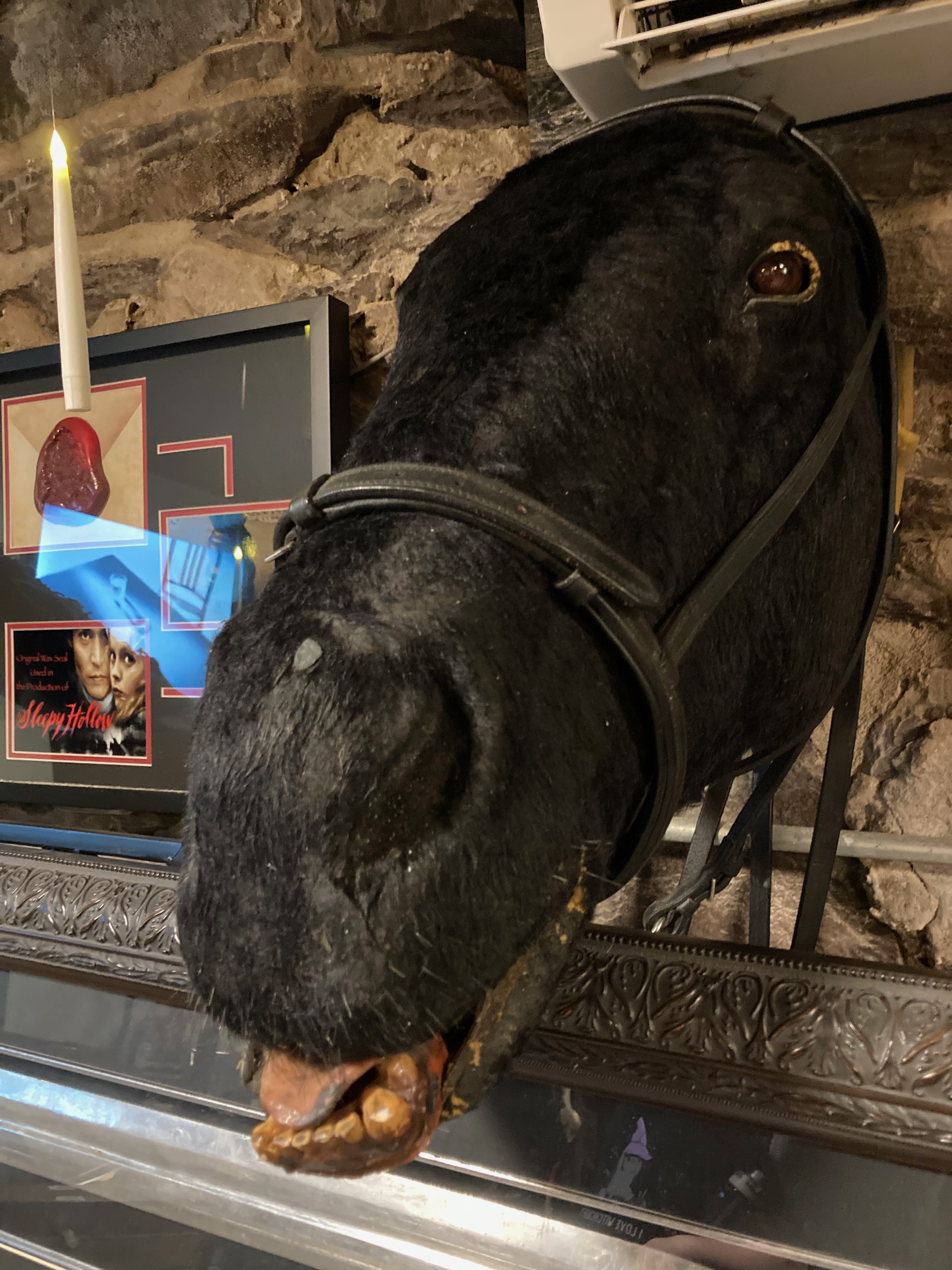
The second artifact is one that wouldn’t have occurred to me to have even existed.  This was the animatronic horse’s head for Daredevil, the Headless Horseman’s mount.  There are a couple scenes in the film involving horse acting, and I’d just assumed that trained animals were used.  Being up close and personal with this artificial head, a couple thoughts came to mind.  One is that right next to it, it’s quite obvious that it’s artificial.  The second thought was just how much thought and effort goes into a big-budget movie.  For a few seconds of a close-up horse head, this model had to be constructed and used and then set aside.  I asked the owner about how such things were acquired, and he noted that production companies don’t keep everything.  He also noted that movie artifact prices have skyrocketed.  Both because horror is now popular and because CGI, as noted, doesn’t leave tracks.

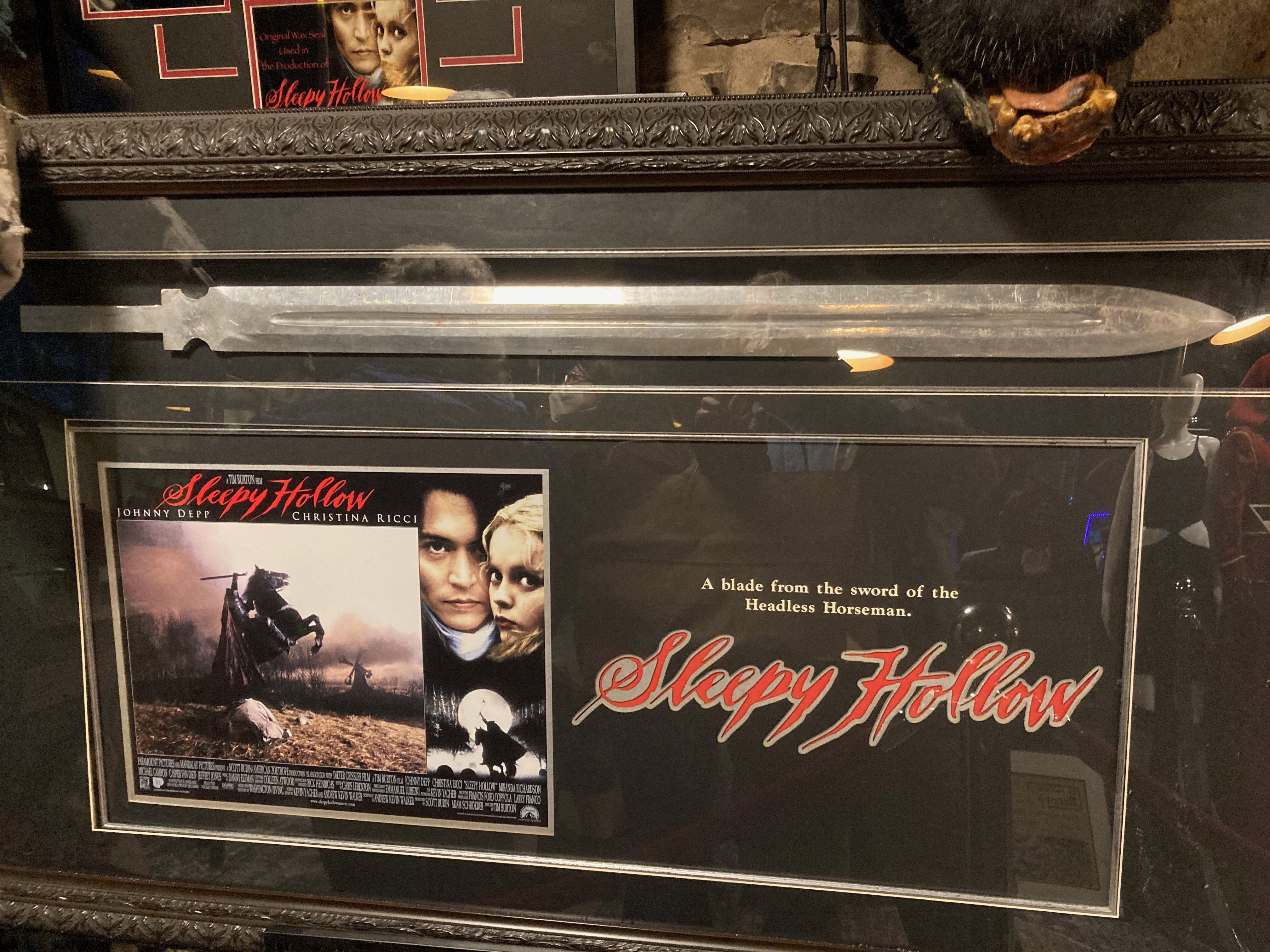
The third, and most proudly displayed Sleepy Hollow piece is the Headless Horseman’s sword.  This appears in the movie far more often than either Daredevil’s head or the wax seal.  One of the aspects of Washington Irving’s story I discuss in Sleepy Hollow as American Myth is that the Horseman’s weaponry changes over time.  I won’t say more since, like museum owners, those who write books hope that they well sell a few copies.  I’ll be revisiting A Nightmare in New Hope from time to time.  For the items on display, I’d seen probably 90 percent of the movies, and a few of them I’d discussed in some detail in either Holy Horror or Nightmares with the Bible.  Of course, the Sleepy Hollow book is forthcoming (ahem).


Playing Sleepy Hollow

In my teenage years I wrote a short play or two.  I haven’t done it since.  I’ve read plenty over the years but my fiction takes the form of short stories and novels—narrative fiction.  Playwriting, and scriptwriting, take a special talent.  One time-honored way to doing this is to utilize source material.  One of the points that I make in Sleepy Hollow as American Myth is that movies, in particular Tim Burton’s Sleepy Hollow, inspired a number of other movies and even novels, both narrative and graphic.  Others saw the potential this short story could have.  I spend some time in the book going over the various adaptations and the innovations they make.  The point is that “The Legend of Sleepy Hollow” has become an American myth.  Anyone who examines its long history can see the impact that it has had on the American imagination.  And on Halloween. 

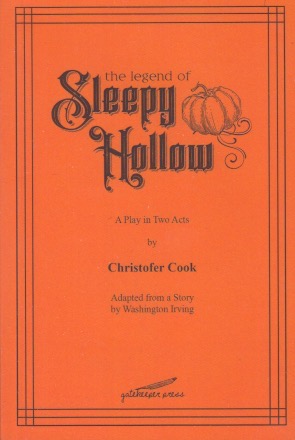
Christofer Cook’s The Legend of Sleepy Hollow is a two-act play, adapted from Washington Irving’s story.  Some of it is taken directly from the story, but as most of those who have adapted the story know, it requires some help to become a performance.  Cook’s play is an interesting take on the story.  I’m not sure what other sources Cook may have seen and/or read, but there are some elements here found elsewhere that have become part of the tale.  For example, a duel between Brom Bones and Ichabod Crane.  I’ve seen that in other treatments, and it seems logical enough, given the circumstances.  Irving, however, it is not.  Perhaps the most surprising shift Cook makes is that the famous horse chase takes place with both Ichabod and the horseman (named Hermann Von Starkenfaust) on foot.

Had I known of Cook’s adaptation before submitting my manuscript, I would’ve been glad to have included it in my book.  Many movies have their own scripts that they use to bring the tale to life on stage and screen.  This only underscores my point—myths are endlessly adaptable and capable of serious transformation.  Some elements of the story we now assume to be part of the original were added many years after the story was written and its author had died.  Yet we all tend to expect these things.  Nobody has the final word when it comes to what happens to Ichabod Crane.  Washington Irving assured that in his story.  Those who come after bend, twist, and stretch the tale in new and fascinating directions.  This little play is one such and would be, I suspect, great fun to see.


More Than Zombies

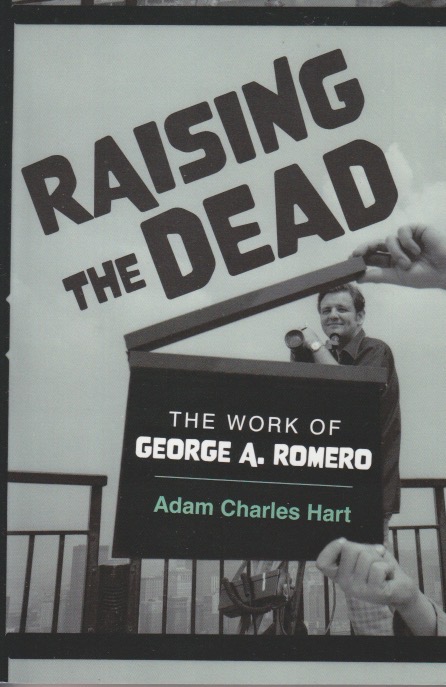
I was near fifty, if I hadn’t already passed that threshold, before I saw Night of the Living Dead.  Whispered about in my high school as one of the scariest movies ever, I had avoided it.  When I saw it, I immediately recognized its draw.  I’ve watched several George Romero movies since then, appreciating his devotion to Pittsburgh, and to monsters.  Adam Charles Hart’s Raising the Dead: The Work of George A. Romero, showed me much more than I’d ever watched.  For one thing, Hart had access to the Romero archives.  Although the book does spend time on the movies that Romero actually got made, it fleshes out the picture with those that remained unfilmed.  Or were filmed and disappeared.  And Hart also discusses the fact that Romero didn’t really think of himself as a horror auteur.  He had other ideas, other projects he wanted to shoot.  But he’s remembered for zombies.

Some of this is to be expected.  Although zombies had been around before, Night of the Living Dead made them into modern monsters.  As much as Romero hoped the cred from that film would get him noticed, as will predictably happen in capitalism, funders wanted more of the same from him when it was noticed.  Zombies went on to become a major worldwide craze.  Tons of movies, long-lasting television series, zombie walks in major cities—zombies rivaled vampires for dominance among the undead.  For those holding the purse strings, they were a sure thing.  And those wanting to gain more lucre love a sure thing.  Romero had other stories he wanted to tell, but the funders wanted more zombies.

Writers tend to have wide interests.  Stephen King doesn’t only write horror.  One of the more intriguing facts in this book is that Romero had even considered a remake of “The Legend of Sleepy Hollow.”  Given my particular interest in that tale, I wondered what that might’ve been like, had it ever been made.  Interestingly, Hart notes that it was in a folder from 1998, the year before the Burton film Sleepy Hollow was released.  (I could’ve used this information before Sleepy Hollow as American Myth went to press!)  In any case, this is a fitting tribute to a guy with principles who, although he never became a director with household name recognition, managed to help change the horror genre forever.  He avoided the big studios and paid the price for doing so.  But he left behind a legacy, and that’s about the best that can be hoped for a writer.


Release Date

July 16.  That’s the release date for Sleepy Hollow as American Myth.  If you’re so inclined, preordering helps to earn a book attention.  (I know it’s pricey, but thanks for considering it for a second.)  This book has been, like most books, a long time in the making.  As my wife will attest, reading the proofs nearly sent me into a spiral this time around.  It wasn’t because they were bad (I only found 7 mistakes) but it was because of my own doubt about how well I’d done this one.  I found myself between elation at some parts, and dread at others.  I really like this book but I spent my proofreading journey anticipating what critics would say.  I do take a few chances in this one and it has what I believe to be an important message.

Writing books is like walking into a library naked.  There may not be many people there, but those who are can see more than you want them to.  I love the Legend of Sleepy Hollow.  I learned a lot about Washington Irving doing this research.  I learned a lot about Halloween—that’s one of my favorite chapters.  I also like the conceit I applied to the book itself as a labyrinth.  And I’m already looking forward to reading more renditions of the myth once the dust settles a little.  Reading the proofs took a good portion of the weekend, as well as after-work time the previous week.  I could focus on little else.  Books, you see, are parts of their authors.  I feel a little bit crazy for even writing them in the first place.

That having been said, I’m chuffed with a July publication date.  The best time for Halloween books to be available is the summer.  My last two Halloween titles (Holy Horror and Nightmares with the Bible) both came out in November or December.  Not that there were angry mobs at Barnes & Noble demanding them at the end of October.  The other deadline I’d set myself was to have this published before Lindsey Beer’s reboot of Sleepy Hollow hit theaters.  I seem to have managed that one by quite a margin; there’s still been no release date announced.  For her, that is.  I just received mine yesterday.  I guess it’s time to start touching base with those good folks in the Hudson Valley who expressed an interest in the project when I first told them about it.  I’m anticipating Halloween already.


Proofing Yourself

Some publishers give you advance warning.  Many do not.  As a struggling writer, after I submit one manuscript I move on to the next project, knowing proofs will eventually come.  The thing is, I’m obsessive.  When I’m in the middle of a project I can think of little else, thoughts of it leaking into other activities throughout the day.  I’m in the middle of one such project, as I have been for at least three months now.  Then the proofs came.  If you write books you know that proofs always come with deadlines.  You need to drop everything and prioritize them.  I read many academic books with tons of errors, and I think I know why.  If proofs come at an inopportune time, you read them as other required activities (I’m looking at you, 9-2-5) permit.  For me, it’s difficult to let go of my present project.  My current fascination.

The proofs for Sleepy Hollow as American Myth arrived yesterday.  I’m excited for this book.  I have hopes of reaching out to local magazines and pitching stories about the Legend this autumn.  But I’m red hot into a new project.  My mind is of an age where there’s no guarantee that I’ll remember precisely what I was thinking if I lay aside my present project for a week to read the proofs.  Indeed, the last two weekends have been so busy with other things that I haven’t had time to watch any horror movies at all.  Just yesterday I awoke at 4 a.m. feeling hopelessly behind already, a feeling that lasted all day.  Then at 4 p.m. the proofs arrived. ( For context, 4 a.m. is late for me.  I’ve been waking up later due to that pointless ritual of annual time changes which, like everything else, the government can’t seem to get right.  In any case, proofs trump all.)

My time is extremely regimented.  I had to drop all committee work at our local faith community because the meetings were all in the evening, scheduled for after when I’d normally be asleep.  I wake early to write and read before the snowplow of the 9-2-5 throws me off the road for another day.  Everyone who talks to me feels that they don’t have time for what’s important any more.  The proofs are here and I’ll get them back by the deadline.  I’ve never been late once told when they have to be in.  My accountant tells me that anything that leads to royalties, no matter how small, counts as a second job.  I hope this one sells well enough to make it feel like that.  In the meantime, please don’t come knocking because I’ll pretend I’m not at home.


Deep Backlist

It’s kind of a personal archaeology.  Exploring the terrain of one’s own mind, that is.  Back in January, I mentioned my “deep backlist,” which is actually my “to read” list stored on an online book vendor site.  When it comes time to buy (or provide a gift request for) a new book, this list is my first stop.  I started the list in 2010.  Since I’m cautious about book buying (believe it or not), there are many items on that list that never got purchased.  And if I go back far enough, I have to confess to myself, there are books I really don’t want to read anymore.  At least not at this time.  That list, however, is a snapshot of my interests at the time an item was entered.  I don’t delete things from it unless I actually get them.  Life has taught me that when interests fade it’s usually not permanent.

Sometimes I think I should be more intentional about my reading.  When I was writing Sleepy Hollow as American Myth, I was adding lots of books related to the subject.  Many of them came off the list as I purchased and read them, but not all.  Although I’m currently involved in my next writing project or two, I don’t remove the remaining Sleepy Hollow-inspired books because I may well, depending on length of life, come back to them.  The same is true of all my books from Holy Horror on.  Depending on where I am on that list, I can tell what book I was working on, and not a few that never got finished.  An accountant once told me that if you are writing books to earn money (as paltry as those earnings may be), the books you buy may be tax write-offs as business expenses.  Such is the mind of capitalism.

My wishlist is a personal archaeology of some poignancy.  It took me many years after being shunted out of academia (no matter how dark) before I found employment stable enough to allow for me to start writing books again.  Weathering the Psalms was started around 1997 or 1998.  It was published in 2014.  Even after that it took a couple years to realize that I could write Holy Horror.  And there are other books that, if I’m honest with myself, I know I won’t have time to write or finish.  I find scrolling through my “deep backlist” an inspiring but melancholy exercise.  We all have layers, and strangely enough, even the books that we wanted to read, or just remember, can speak volumes about who we are.


Book Stages

Books appear in stages.  All publishers are different.  These platitudes encapsulate my experience in finding a venue for my ideas.  Sleepy Hollow as American Myth has just appeared in McFarland’s spring and summer catalogue.  I haven’t seen the proofs yet, but I suspect I will before too long now.  What’s with the spring and summer catalogue?  Well, believe it or not, books are seasonal.  Publishers go by seasons.  For many academic publishers there are two seasons: Spring/Summer and Fall/Winter.  The timing of certain books may fall in a specific place within those seasons but many academic books are aimed at classroom adoptions so early spring and early autumn are the most popular times.  It’s no coincidence that academic conferences also cluster around the semester system, the big ones being either autumn or spring.  Academics have a migratory instinct.

Personally, I’m hoping Sleepy Hollow will be out in late summer.  I don’t have any control over that, but it’s about then that normal people’s thoughts start turning toward falling leaves, long nights, and monsters.  Every year there’s a day in August when I step outside and literally smell autumn in the air.  As a kid seasons seemed like something as rigid as a biblical law: spring was March through May, summer June through August, and so forth.  The older I get, the more I realize how negotiable seasons are.  The Celts celebrated the start of spring in February.  Yes, there are lots of cold days yet to come, but the early signs of spring have begun.  For early risers, we finally start to observe earlier sunrises.  (These technically start around January 10, but they’re slow getting out of bed.)

You might think the ideal season for a book on spooky stuff, like Sleepy Hollow, would be timed for release in the fall/winter cycle.  Not necessarily.  Both Holy Horror and Nightmares with the Bible hit the market after Halloween.  Normal people’s thoughts had shifted to Thanksgiving.  I’m pleased that Sleepy Hollow will be released a bit earlier.  Summer is ideal for Halloween-themed books.  And yes, I devote a chapter to Halloween and the Headless Horseman.  They are closely related.  So I was glad to receive McFarland’s spring/summer catalogue and find my book on page two.  I don’t have a publication date yet, but I’m looking forward to being part of the discussion about one of my favorite ghost stories of all time.  Speaking of which, it’s almost time to begin gathering firewood for next winter, or at least it will be in summer.  And it’s not that far away.


Still Sleepy

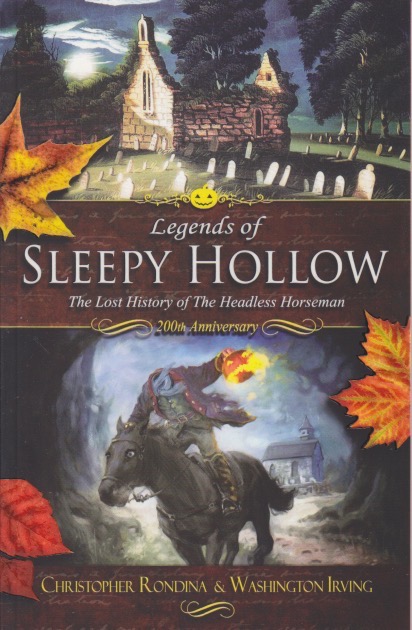
One thing I quickly learned when beginning work on Sleepy Hollow as American Myth was that the story hadn’t really been studied too much by those with academic training.  There are some exceptions, of course.  Another thing I swiftly picked up is that many people who wanted to write on the legend chose the method of publishing the public domain story with a variety of annotations, essays, and other additions, to make a salable book.  Often these are self-published and not always immediately obvious to the researcher as to whether they contain anything important or not.  I had not run across Christopher Rondina’s Legends of Sleepy Hollow: The Lost History of the Headless Horseman until well after my manuscript was submitted.  I found it in the bibliography of a ghost-hunter version of Sleepy Hollow that wasn’t even published by the time I was going into production.  (It doesn’t even have an ISBN.)

I do have to say that Rondina’s variety of this composite genre isn’t bad.  He includes Washington Irving’s story and expands it with an introduction, and brief chapters considering any historical background that there may be.  He also adds a chapter on modern media of the story that includes one television adaption that I failed to find for my book.  Interestingly, after I’d written the manuscript I discovered Joe Nazare’s similarly annotated version, also with a number of the media I’d analyzed in it.  I’d actually corresponded with Nazare earlier, having discovered his website.  Not wanting to discuss what my book was about until after I sent it in (others have more time to write, perhaps, than I do) I didn’t mention our common interest and didn’t discover his annotated version until it was too late to include as a conversation partner.

Self-publication has perhaps become inevitable since standard publishing is difficult to break into.  And the internet gives anyone the ability to self-publish without too much effort.  It does, however, make doing research a bit more difficult.  I determined early on that I could not review every annotated version of Irving’s story.  I selected a few of the most promising and moved on.  Both Rondina and Nazare had interesting things to say about the tale, and it’s a pity that they weren’t discoverable until after the fact, at least to me.  I like to give credit where credit is due, but any ideas that seem similar to these two sources in my book will have to stand as examples of convergent thinking on the part of fans of the “Legend of Sleepy Hollow.”  I know there are many other fans out there and I hope they find the resources they need to understand the story just a bit better.


This Is Halloween

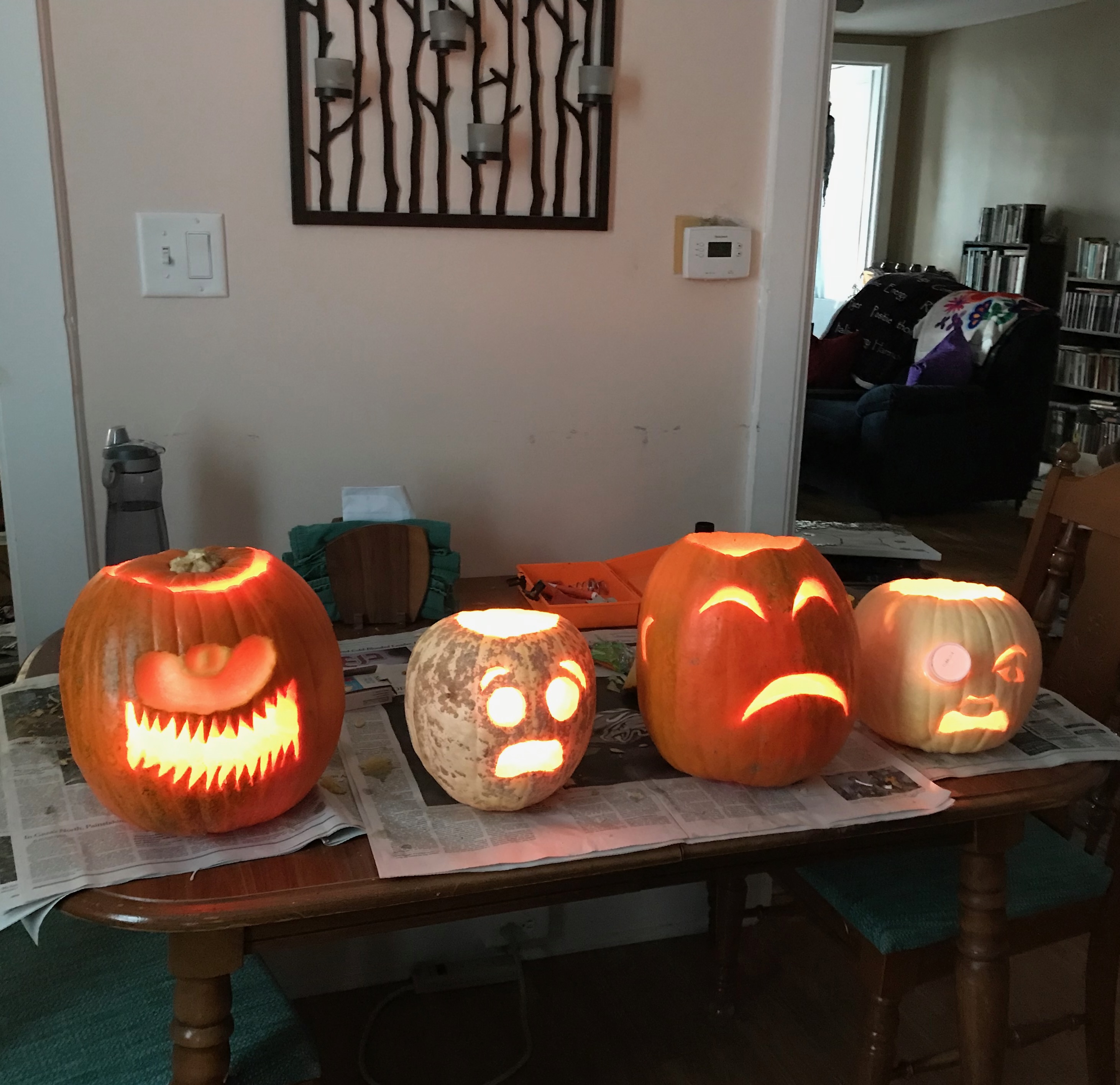
He was probably trying to impress his wife with his wit.  I was in a department store—a rarity for me.  I was wearing a mask, because, well, Covid.  As this guy, older than me, walked by he said “Halloween’s over.  Take off your mask.”  It bothers me how politicized healthcare has become, but what bothered me more was that it was only October 20.  It wouldn’t even be Halloween for another 11 days.  What had happened to make someone think Halloween was over so early?  Yes, stores had switched over to Christmas stuff by then.  In fact, I wandered into another store where Christmas carols were playing.  Capitalism seems to have wrenched the calendar out of order.  We’re tired of All Hallows Eve before it starts.  In fact, just the day before we’d gone out to a pumpkin patch to get our goods and the carved pumpkins are now showing their age.

If that little exchange in the store had been in a movie, it would’ve been a cue for me to transform into some big, scary monster.  Of course, Halloween is what it is today because of relentless marketing.  And a handful of nostalgia from people my age with fond childhood memories of the day.  For some of us, however, it is a meaningful holiday in its own right.  It makes us feel good, even after we’ve grown out of our taste for candy.  It is significant.  Christmas is a bit different, I suppose, in that there is nothing bigger following, not until next Halloween.  Besides, Christmas is supposed to go for twelve days.  The fact that Halloween is a work day makes it all the more remarkable.  We have to work all of this out while still punching the clock.

I had really hoped to be able to get to Sleepy Hollow this Halloween.  Sleepy Hollow as American Myth tries to make the case of how that story and Halloween came of age together.  It is the iconic Halloween story, what with ghosts and pumpkins and all.  And the month of October is spent with scary movies for many people.  This month I’ve posted about horror movies every other day, pretty much, trying to connect with my audience.  If that is my audience.  I tend to think of Halloween as a community.  Those of us who, for whatever reason, think of this as our favorite time of year.  A time when perhaps we don’t feel so stigmatized for liking what we do.  A time that we’re not hoping will shortly end so we can get onto the next thing.  It may have been meant as a joke, but I wasn’t laughing.  Happy Halloween!


Ichabod’s Body

Maybe you’ve noticed this.  When Halloween comes around, the Headless Horseman and the Legend of Sleepy Hollow reemerge.  There’s a reason for that, and I discuss it quite a bit in Sleepy Hollow as American Myth.  Right now there seems to be quite an interest, or maybe I’m just noticing it more.  For example, a local theater where we saw a Poe performance last year is offering a Headless Horseman show this year.  Articles have recently been appearing on Tim Burton’s Sleepy Hollow movie, given that it was released 25 years ago—online discussion, however, is often eclipsed by the Fox television show by the same name.  And before it switched over to Christmas decorations, Michaels had its share of Sleepy Hollow merchandise.  Halloween and the Headless Horseman go together.  (Read the book to find out why!)

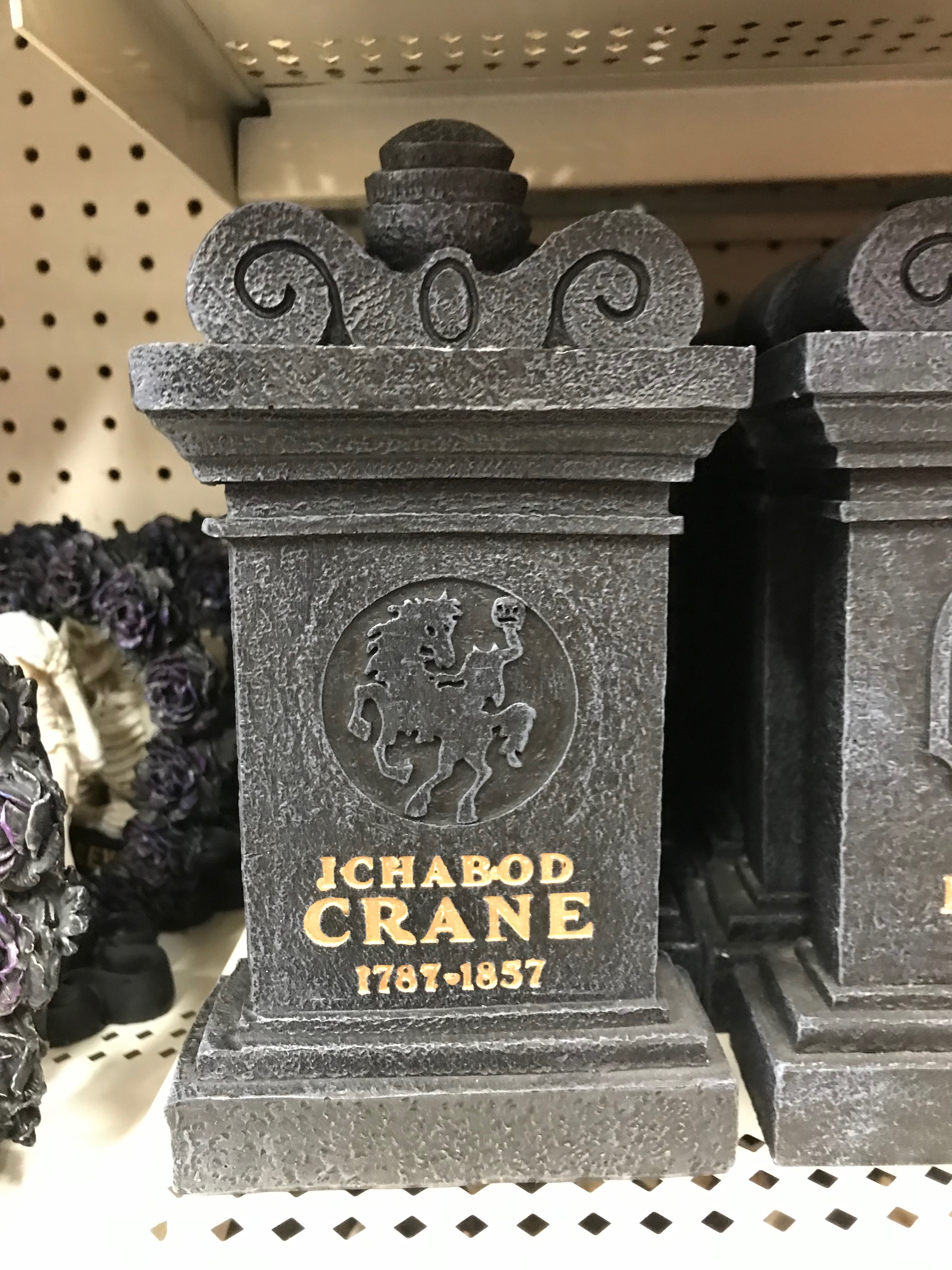
One of the tchotchkes I picked up at Michaels was Ichabod Crane’s tombstone.  In the many renditions of Washington Irving’s legend, Ichabod is treated as the protagonist of the story.  Although Tim Burton’s movie wasn’t the first to have Crane survive, besting the Horseman, the old wives’ tales, according to Irving, had him spirited away by the Horseman.  That’s why I found his gravestone so interesting.  The dates on it (1787–1857) indicate, at least according to this recension, that he died at seventy, surely not the victim of the attack that took place around the turn of the century.  If you’re not familiar with the original story, Irving set it “some thirty years since” the 1820 in which the tale was published, putting the events around 1790.  Burton shifted this to 1799, partially, I suspect, because that was two centuries before the release of his movie.

I do wonder where the maker of the Michaels tombstone got their information.  According to their reckoning, Crane would’ve been but three years old in 1790.  Of course, the story never tells us his age.  Since it is intimated that he relocated and became a judge after dabbling in politics, all of which would seem to indicate that he was a somewhat young man at the time of the tale.  To make Sleepy Hollow scary, though, having Crane cut off in his youth would seem to be more in keeping with the spirit of the season.  Of course, Sleepy Hollow is a legend that has become mythic through its many retellings.  Enough of them that someone could write a book about it all (ahem).  And this is the time of year to ponder it.  


Must Be Autumn

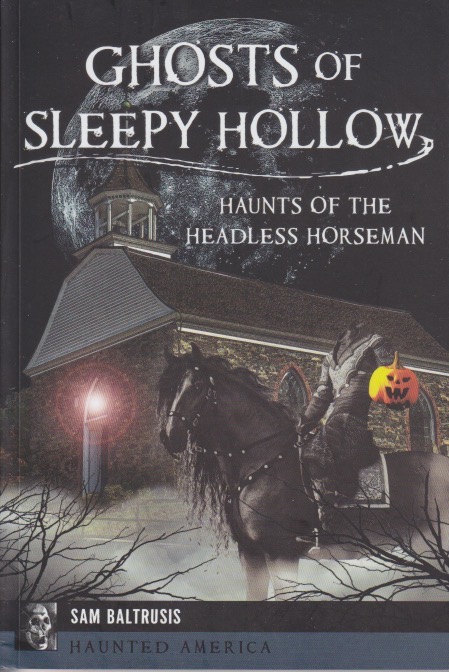
As it often goes, a friend pointed out to me a book on Sleepy Hollow that published just this week.  I preordered a copy that arrived on Tuesday and buzzed through it.  It’s what I describe to family as “one of those books”—you know, the local history, heavily illustrated quick reads from The History Press.  (I would note that I submitted what was then The Myth of Sleepy Hollow to The History Press, but they never even responded to the submission.)  In any case, Sam BaltrusisGhosts of Sleepy Hollow: Haunts of the Headless Horseman is really quite different from what I do in my forthcoming Sleepy Hollow as American Myth.  The History Press isn’t really regarded as such by historians.  I like their books nonetheless.  I was castigated by an academic journal editor early in my career for using one such book to illustrate local folklore.  (That was, by far, the snootiest rejection letter I’ve ever received.)

Aloft noses aside, there is a legitimacy in listening to what the folk say.  The tales in a book like this won’t convince skeptics, of course, but if you read them in the dark you’ll nevertheless find yourself glancing into the corner now and again, wondering if you saw something.  The book does cover the “Legend of Sleepy Hollow” and Irving’s life in a few pages—Irving was a complex man and the first truly famous American writer—before moving on to local haunts.  The thing that kept nagging at me was the easy shifting from fiction to fact.  Folklore does have a way of becoming reality (and who can definitively even say what that is?) for people.  No doubt, Sleepy Hollow has latched onto tourism in a big way.  Even more so than on my last visit there. And folklore draws on that shifting borderland between fact and fict.

One of my motivations in writing Sleepy Hollow as American Myth was that the story is largely ignored by academics and “sophisticated” readers.  It nevertheless remains important in popular culture.  Academics tend to be slow in picking up what general readers find fascinating.  I found a few academic articles on the subject, but my book was written for general readers as well.  I hesitate to say too much, otherwise, why buy it?  I have a handful of History Press (and similar) books on the region on my shelf.  I learn from them.  And I’m glad to see Sleepy Hollow getting more attention.  My only real regret about my book is that I’ll have to wait a couple of years before the price comes down.  In the meantime, those really curious about Sleepy Hollow will have this Haunted America version to read.


Under Construction

It’s fascinating, watching a book taking shape.  Just yesterday I noticed Sleepy Hollow as American Myth is now up on McFarland’s website.   And yes, it’s on Amazon too.  Go ahead and preorder!  (It hasn’t made it to Bookshop.org yet, though.)  I have to say the feed to Amazon was much quicker this time than it was with The Wicker Man.  That book took several weeks to appear, probably because it was with a UK publisher.  Yes, it does make a difference.  Now the trick is to try to get people interested in the Legend of Sleepy Hollow again.  I’m thinking I ought to join Historic Hudson Valley.  They might be interested in such a book.  It is, in a sense, right in their back yard.

The thing about writing a book is that you come to suppose other people are interested in your obsession.  I know that Sleepy Hollow is deeply embedded in American culture.  I also know that some of the fandom began to die down when Fox’s Sleepy Hollow went off the rails.  Most analysts suggest, with good reason, that the show failed when it began foregrounding white characters and writing Americans of color into the background.  A great part of the appeal was the melting-pot aspect of the cast, no doubt.  In the book, however, I suggest a somewhat different reason for the decline.  It’s one I’ve seen no one else suggest.  I’m hoping that we can both be right.  In any case, that was the fandom that got this book started.

You see, I had written my first popular culture article on the role of the Bible in Sleepy Hollow.  That article, published in the Journal of Religion and Popular Culture, led to the book Holy Horror.  I was already thinking about a project around Sleepy Hollow then, but I had a couple more books to finish first.  I’m excited about this one because it marks a move away from publishing primarily about religion to publishing primarily about a story.  There’s still religion there, of course.  We have the Old Dutch Church to pay mind to, but there’s even more about the Headless Horseman, and Ichabod Crane.  And so much more!  Sleepy Hollow as American Myth was a lot of fun to write.  I’m not sure when the book will be out, but I’m hoping next year.  Maybe if I can generate a little excitement around this Halloween—it is closely connected with the story, as I explore—there’ll be some interest next time.  Until then there are still plenty of steps to be taken.