Must Be Autumn

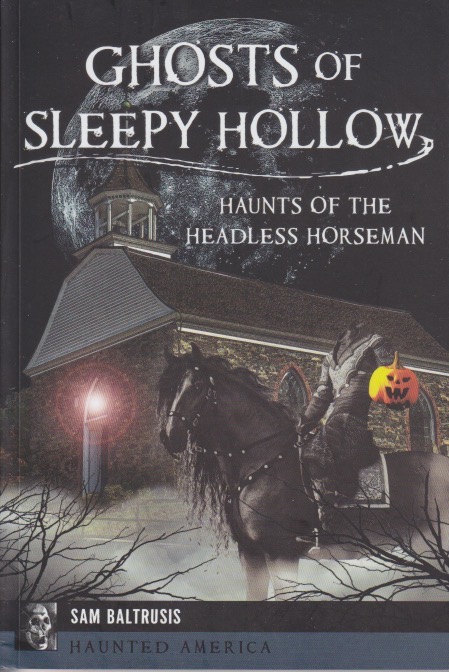
As it often goes, a friend pointed out to me a book on Sleepy Hollow that published just this week.  I preordered a copy that arrived on Tuesday and buzzed through it.  It’s what I describe to family as “one of those books”—you know, the local history, heavily illustrated quick reads from The History Press.  (I would note that I submitted what was then The Myth of Sleepy Hollow to The History Press, but they never even responded to the submission.)  In any case, Sam Baltrusis’ Ghosts of Sleepy Hollow: Haunts of the Headless Horseman is really quite different from what I do in my forthcoming Sleepy Hollow as American Myth.  The History Press isn’t really regarded as such by historians.  I like their books nonetheless.  I was castigated by an academic journal editor early in my career for using one such book to illustrate local folklore.  (That was, by far, the snootiest rejection letter I’ve ever received.)

Aloft noses aside, there is a legitimacy in listening to what the folk say.  The tales in a book like this won’t convince skeptics, of course, but if you read them in the dark you’ll nevertheless find yourself glancing into the corner now and again, wondering if you saw something.  The book does cover the “Legend of Sleepy Hollow” and Irving’s life in a few pages—Irving was a complex man and the first truly famous American writer—before moving on to local haunts.  The thing that kept nagging at me was the easy shifting from fiction to fact.  Folklore does have a way of becoming reality (and who can definitively even say what that is?) for people.  No doubt, Sleepy Hollow has latched onto tourism in a big way.  Even more so than on my last visit there. And folklore draws on that shifting borderland between fact and fict.

One of my motivations in writing Sleepy Hollow as American Myth was that the story is largely ignored by academics and “sophisticated” readers.  It nevertheless remains important in popular culture.  Academics tend to be slow in picking up what general readers find fascinating.  I found a few academic articles on the subject, but my book was written for general readers as well.  I hesitate to say too much, otherwise, why buy it?  I have a handful of History Press (and similar) books on the region on my shelf.  I learn from them.  And I’m glad to see Sleepy Hollow getting more attention.  My only real regret about my book is that I’ll have to wait a couple of years before the price comes down.  In the meantime, those really curious about Sleepy Hollow will have this Haunted America version to read.


Under Construction

It’s fascinating, watching a book taking shape.  Just yesterday I noticed Sleepy Hollow as American Myth is now up on McFarland’s website.   And yes, it’s on Amazon too.  Go ahead and preorder!  (It hasn’t made it to Bookshop.org yet, though.)  I have to say the feed to Amazon was much quicker this time than it was with The Wicker Man.  That book took several weeks to appear, probably because it was with a UK publisher.  Yes, it does make a difference.  Now the trick is to try to get people interested in the Legend of Sleepy Hollow again.  I’m thinking I ought to join Historic Hudson Valley.  They might be interested in such a book.  It is, in a sense, right in their back yard.

The thing about writing a book is that you come to suppose other people are interested in your obsession.  I know that Sleepy Hollow is deeply embedded in American culture.  I also know that some of the fandom began to die down when Fox’s Sleepy Hollow went off the rails.  Most analysts suggest, with good reason, that the show failed when it began foregrounding white characters and writing Americans of color into the background.  A great part of the appeal was the melting-pot aspect of the cast, no doubt.  In the book, however, I suggest a somewhat different reason for the decline.  It’s one I’ve seen no one else suggest.  I’m hoping that we can both be right.  In any case, that was the fandom that got this book started.

You see, I had written my first popular culture article on the role of the Bible in Sleepy Hollow.  That article, published in the Journal of Religion and Popular Culture, led to the book Holy Horror.  I was already thinking about a project around Sleepy Hollow then, but I had a couple more books to finish first.  I’m excited about this one because it marks a move away from publishing primarily about religion to publishing primarily about a story.  There’s still religion there, of course.  We have the Old Dutch Church to pay mind to, but there’s even more about the Headless Horseman, and Ichabod Crane.  And so much more!  Sleepy Hollow as American Myth was a lot of fun to write.  I’m not sure when the book will be out, but I’m hoping next year.  Maybe if I can generate a little excitement around this Halloween—it is closely connected with the story, as I explore—there’ll be some interest next time.  Until then there are still plenty of steps to be taken. 


Book Stages

There are stages to it.  Writing a book, I mean.  One stage, for me, is realizing that you’re writing one.  I started work on Sleepy Hollow as American Myth years ago, without realizing it.  That was followed by the stage of comprehending that I had a book idea and intentionally writing it.  I suspect that, in the throes of The Wicker Man, I thought “I should do a similar book on Sleepy Hollow.”  Devils Advocates, which is an excellent series, however, feeling the strain on academic presses, was moving to hardcover-first releases (the kiss of death).  I started writing the book anyway, hoping that maybe it might find trade interest.  It is still possible that an agent is out there who would’ve moved it in that direction, but I wanted the book out before Lindsey Beer’s movie gets released.  After the book is drafted, the next stage: find a publisher. (Unless you have an agent.)

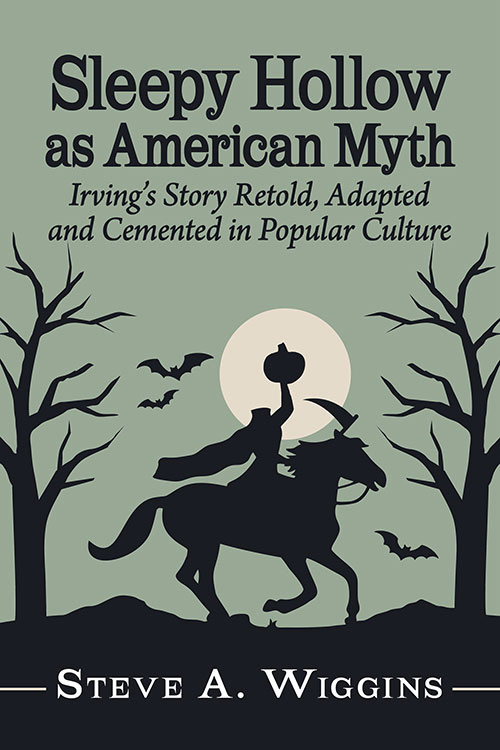
Since this is my sixth book, I felt confident (a strange, foreign feeling for me) that I could locate a publisher.  I’d done it five times before.  McFarland did a nice job with Holy Horror, but what sold me is that they dropped the price on it.  Many academic publishers continue to raise prices each year, so if you don’t buy a book right away you’ll end up paying a lot for this muffler.  The next stage is waiting to see what the cover will look like.  That wait is over.  Here it is, the cover of Sleepy Hollow as American Myth:

(Feel free to share widely, get everyone all excited!)  I’m currently in the waiting stage.  Waiting for proofs.  Of course, I’ve been working on my next couple of books as well.  You can’t just sit around, otherwise these tomes will never get written.  I haven’t decided which one will cross the finish line first.  If I had an agent they’d be able to tell me which might be more marketable, but since I work alone I’m left to my own devices.  I am bound and determined that the next book will go to a trade press.  I’m trying hard to scrub any whiff of academia from it.  In the meantime, however, I’m enjoying looking at the cover for my current book.  There aren’t a ton of nonfiction books out there on “The Legend of Sleepy Hollow.”  In fact, as nonfiction I know of only one other.  This isn’t what we in the biz call “a crowded bookshelf.”  I’m doing all the pre-publication promo that I can.  I’d be grateful for any shares or likes at this stage.


Good Timing?

Timing is important.  I hope I have a sense of it, but it doesn’t always work out the way you hope.  My last book, The Wicker Man, was released on the fiftieth anniversary of that cult film.  A bigger publisher with better reach published their own Wicker Man book that year, and mine garnered no attention.  I decided to turn to Sleepy Hollow instead.  This is a story that has been quite well known since 1820.  Although the Fox television series ran out of steam in 2017, I wrote the book when I did because Lindsey Beer has been tapped to direct a reboot of the Tim Burton film of 1999.  Looking for books on the “Legend of Sleepy Hollow” I found very little.  This is what is known of in the biz as “a gap.”  I decided to try to fill it.  Fandom helps in situations like this.

I’ve been trying to find the Sleepy Hollow fandom and engage with it before Sleepy Hollow as American Myth comes out.  I am confident that there are fans out there.  The tragic collapse of the Fox series didn’t lead to lack of love for the tale.  Indeed, further renditions have continued to appear.  Some have gained considerable attention.  The online fan base, however, seems to be, ah, sleeping.  I’m not sure when the Beer movie is slated for release.  It was announced in several media outlets but now we’ve come to the lull where updates have ceased to surface.  I’m certainly no Hollywood insider and I generally don’t even find out about movies until after they’ve left theaters (unless they’re very big).  I hope the timing is right this time.

It takes a couple years, at least, for me to write a book.  I’ve been working on this Sleepy Hollow project, in some way or other, since before Holy Horror came out in 2018.  I sure hope I got the timing right on this one.  The many trade publishers and agents I approached didn’t think so.  Maybe it’s just that people aren’t curious enough to read a book about Washington Irving’s story.  I try to make the case in my book that it has risen to the level of an American myth.  The story’s known world-wide, but its largest fan base is here in the States.  Had the Fox series been handled a bit better, keeping both people of color and the apocalypse in the foreground, it might’ve run a couple more seasons.  The underlying story’s not quite dead in the grave yet, I hope.  But then, timing hasn’t always been my strong suit.

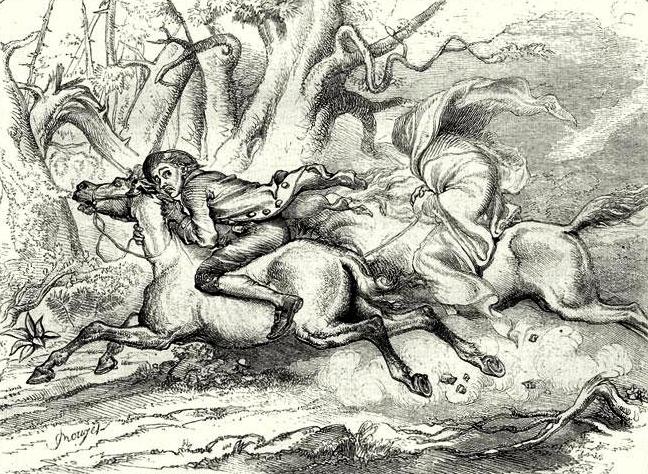
F.O.C. Darley, from Le Magasin pittoresque, public domain

Number Six

Signing a book contract always makes me happy.  There’s a validation to it.  Someone thinks my thoughts are worthwhile.  And now I can reveal what it’s about.  Regular readers likely already have some inkling, due to the number of times I referenced Sleepy Hollow over the past couple of years.  I’ll provide more details closer to the time, but it struck me back when working on Holy Horror that few resources exist for “The Legend of Sleepy Hollow,” despite its status as such a well-known story.  An agent or two agreed with me that the topic was good but they really weren’t sure it was a commercial project.  This despite the fact that Lindsey Beer is slated to write and direct a reboot of the famous 1999 movie.  It seemed that a book on the topic available at the time might sell.

John Quidor, The Headless Horseman Pursuing Ichabod Crane, public domain via Wikimedia Commons

I tried a number of independent publishers that don’t require agents.  I learned that most of them won’t even reply to your emails.  It seems that to get published by any trade publisher you have to be already famous.  Or maybe my idea’s just not good.  Weird.  Finally I found a university press that thought it might be a good fit, and it occurred to me that McFarland, who recently dropped the price on Holy Horror, would be a good press for this kind of thing.  McFarland made an offer first, and yesterday they sent a contract.  Hopefully the book will be out next year.

This is quite a personal project.  The story is one of my early memories—most likely due to the Disney version of the story, and most likely as seen on television.  My treatment is, as in all of my books, idiosyncratic.  I look at things differently than other people do.  And I’ve been looking at Sleepy Hollow for half a century or so, and I’ve read quite a lot about Washington Irving and the Hudson Valley.  I don’t want to say too much since others write more swiftly than I do and some presses speed books along.  For the time being I can enjoy that rare feeling of having a book contract and an editor who’s excited about my project.  I do hope that the next book, number seven, might find a trade publisher.  What’s it about?  Well, I’m working on two at the moment, and it depends which reaches book length first.  And I can’t say anything since someone may scoop me.  So I’ll just bask a little bit before starting another work day.


Closure of a Trilogy

So the final part of Jessica Verday’s Hollow trilogy really moves into supernatural explanations of life after death.  At least for those destined to become shades.  Since we’re at the end here, I won’t worry about spoilers.  Also, the series has been out for over a decade now, so we’re fairly safe, I think.  (Young adults aren’t my demographic, I don’t imagine.)  To recap, Abbey is in love with Caspian, who is a shade.  Caspian isn’t seen by many people, but he does appear to Abbey.  Throughout the story she mourns the death of her best friend Kristen.  As the action builds, Revenants begin to appear in Sleepy Hollow.  Revenants are beings that assist people who are to become shades as they die.  This indicates to Abbey that she won’t live to graduate from high school.  She will, however, get to be with Caspian—“complete him”—in a form of life where few will see them but they will live on in a limited sense.

The universe here isn’t particularly Christian in background.  Revenants operate in pairs, one tending toward good, the other evil.  They are sent to do a specific job and when it’s over they move on.  As in the movie Dogma, however, one Revenant doesn’t want to move on.  He figures that if he fails to do his assigned task he’ll continue on as an immortal on earth.  At the end he reveals that he killed Kristen in Abbey’s place so a difficult decision’s in order.  To straighten out the mess that’s been made on some cosmic scale, Abbey can die, history will be altered, and Kristen will be the one who survived.  This will involve self-sacrifice, which kinda does bring us back into Christian territory.

This trilogy emerged following the obvious success of Stephanie Meyer’s Twilight saga.  Teen paranormal romances were in, and publishers hearkened to the demand.  It does reflect our times that writing for young readers has taken on an impressive quality.  This trilogy is a great example of how someone who recollects well what it was like to be a teen is able to transport many of us back to that stage of life.  The awkwardness.  The constantly making wrong decisions.  The bewilderment of falling in love.  And of course, if you throw in some ghosts and some light violence, you’ve got a winning combination.  I enjoyed getting to know these characters.  I knew, once I put volume one down that I would have to see how the rest of this story unfolded.  I’m glad I did.  I have a sense of closure, for this series at least.


Good Horror

As strange as it may seem, my goal in life has always been to bring more good into the world.  As they phrase it in Nerdfighteria, helping “to decrease world suck.”  There are many ways to do this—give encouraging words to others in a cancer support community, volunteer time (structured or otherwise) to civic organizations, even trying to help make sense of it all through an obscure blog.  My motivation in entering teaching as a profession was to help make the world a better place.  (Also, I’m pretty good at it.)  When that fell through as a profession, I began yet another odd way to try to bring good into the world.  Writing books about religion and horror.  Please hear me out—this is part of a larger plan which, in the nature of plans, may or may not work out.  It involves getting people’s attention for a moment (kind of like teaching).

There are a significant number of people who enjoy horror.  The vast majority of them are not bad people.  They find something enjoyable, or cathartic, or perhaps even spiritual in consuming horror.  I’m one of them.  My piece “Exorcising The Pope’s Exorcist” appeared yesterday on Horror Homeroom.  (Hey, it’s free—check it out!)  Exorcism, as a social/religious phenomenon, owes its popularity to a horror movie.  And if the rite brings some measure of relief to someone suffering mentally, spiritually, or physically, it has decreased—you guessed it—world suck.  It makes this planet just a little bit better for a little while.  Movies that promote exorcism can, believe it or not, help people.

Some time back I was invited to offer a course at the Miskatonic Institute of Horror Studies.  I am deeply honored because if you look at the list of names of past (and present) teachers there are some superstars in there.  By the way, my course is titled “Believing in Sleepy Hollow.”  (Maybe those of you who read daily may now understand why I’ve been posting so much on Sleepy Hollow of late.)  Teaching a course that will bring enjoyment to others is a way of bringing a small measure of good into the world.  Once you leave secondary education, you’re never obligated to take a course.  It’s something we want to do. That means if someone gets something out of my course I’ve brought just a little bit of good into the world.  It counts, I hope, toward my life’s amorphous goal.


Young Fear

The amazing thing about people is that even when you’re aging you remember what it was like to be young.  I used to have to stop and consciously think of that if I wanted to realize it when talking to those older than myself.  Now that I’m no longer young I don’t need to have it explained.  I’m not afraid to read teen literature.  Those who write it well (John Green comes immediately to mind) make you feel like you did when you were a teen.  I read Jessica Verday’s The Hollow because of, well, the Hollow.  Sleepy Hollow, that is.  This is a young adult novel and even before I was half-way through I got the strong impression that to be satisfied with the story I’d need to read the entire trilogy.  This was a relief since I’ve read Sleepy Hollow novel series before where I had no real desire to press on beyond volume one.

The story isn’t a modern-day retelling of Washington Irving’s legend.  It is set pretty much in the present (although, I notice, tech changes so fast that it’s immediately clear that this was set a decade ago.  Has anyone considered how this constant change will affect literature?) where Abbey, the protagonist, is trying to come to terms with her best friend’s death.  Since her best friend was really her only friend (some of us know what that can be like), she finds solace among strangers.  Those strangers, it becomes clear late in the novel, are not what they seem to be.  Throughout the novel both quotes from and discusses Irving’s story—how could any tale set in Sleepy Hollow not do so?

In any case, this is a quick read despite its size.  Verday captures what it’s like to be a teenager.  My experience of teenage girls was always limited, but I have no reason to doubt that she represents that part accurately.  The funny thing about being an adult is that you learn that you don’t really know how to be one.  For me, dips into youth help to center me when this whole adult thing just doesn’t seem to make any sense.  I don’t want to give any spoilers for the story here, but I’ll likely move on to the second novel in the series before too long, and by the time you get to second in the series it’s okay to assume those reading about it won’t mind a bit more information.  At least that’s the way I think about it, having once been young.


Sleepy Once More

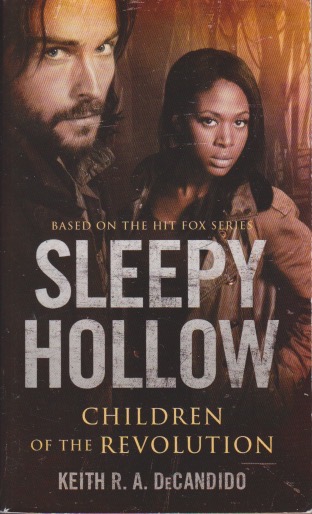
I think this is the last of my recent nostalgia reads for a while.  When trying to recapture the feeling of watching that first season of Sleepy Hollow without actually spending all the hours necessary to do so, the spin-off novels are a quick fix.  Keith R. A. DeCandido obviously has quite a bit of experience of writing novels that tie into pop culture.  Many of us were pretty enthralled and impressed in 2013 (already a decade ago!) when Sleepy Hollow first came on the air.  This literary member of what was an emerging new legend is a novelized episode that is slotted into season one, referring back to what had happened earlier in the season without betraying the cliff-hanger ending for the 2013–14 run. Sleepy Hollow: Children of the Revolution is a guilty pleasure read and a jaunt back to a decade that now seems long ago.

Here the story involves an attempt to resurrect (one of the main themes of the show) the witch Serilda of Abaddon.  Serilda had her own night in the moon earlier in the series (the episode “Blood Moon” was dedicated to her).  This novel asks, what if a coven of her followers, one of them a former policewoman, tried to bring her back?  It does so by using historical scenarios—much like the series—such as Washington’s crossing of the Delaware, and impregnating them with magical subtexts.  Here there are congressional awards that have been secretly engraved with runes.  George Washington knows about them, of course.  When brought together they can transform Serilda into a real monster.  Remember, Moloch was still an active concern in the first two seasons of the show.  In the present day, these artifacts have been regathered by the coven, and you can guess that all Hades will break loose.

I often ponder how, with the series Sleepy Hollow, the story began to fall apart when the Bible fell out of it.  It was in the process of tying together great American mythologies such as Irving, Revolutionary-Era history, and biblical self-identification.  These formed a compelling net that brought in many viewers.  Season one ended with two of the four horsemen of the Apocalypse in Sleepy Hollow, and a third had been nodded toward earlier in the series.  Instead of finishing out that line of thought, the storyline dispensed with Moloch and gave the headless horseman a head.  The plot ran out of steam.  Books like this demonstrate that there was other fertile ground to plow.  Had the original conceit kept intact, we might still be watching it.  Of course, novels like this are good for reliving those days a decade ago.


Recalling the Story

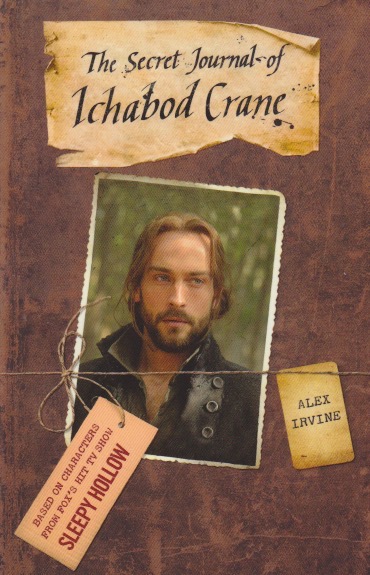
Remembering how a story goes.  That’s one of a book’s functions, particularly if a tale’s complex.  Running a season behind, I was one of those enamored of Sleepy Hollow when it first aired from 2013 through 2017.  In fact, that was the first story that I tried to explore, somewhat academically, in the horror genre.  At the time I hadn’t realized how many spin-off media had come out, based on these new characters.  I recently read The Secret Journal of Ichabod Crane in which Alex Irvine provides the service of summarizing the first season through the conceit of the main character’s secret diary.  It has to be secret because in the series he’s never shown keeping a journal, and the title explains why we’re just finding out about this now.  (Or then, since it was published while the series was still on the air.)

Reading it reminded me of just how complex the plot was.  I suspect that’s one reason so many people were taken with it.  Week-to-week you weren’t sure where it was going.  And the plot integrated religious themes from the first episode on.  That’s what first drew me to my current research trajectory.  The show wasn’t perfect, and some plot elements grew tired after a while, but overall it was compelling.  Mixed with the natural comedy of someone from centuries past trying to learn how to get along in a rapidly technologizing world provided light moments amid the death and bloodshed.  And, of course, the pairing of the patrician but progressive white man with a young black professional in the fight against evil was novel and necessary.

Irvine’s book is rather like the novelization of a movie.  In terms of hours, however, a television series outstrips the maybe two hours of a typical film.  A lot has to be left out, including scenes in which Crane wasn’t present, although he was pretty steadily in the camera’s gaze.  Initially suspected as a criminal, he had to be kept under pretty close watch, so his was a good perspective for a journal.  Its secrecy continues the trope of hidden documents that ran throughout the series.  Another aspect was that it addressed the Hamilton era when that show was becoming immensely popular.  And Sleepy Hollow was quite literary, with references to books from early writers.  There was a lot to like about the show.  It burned itself out in four seasons, though, and after season two there would seem to be little need for any further secret journals as the story grew even more complex.  This one, however, is a good reminder of how the story goes.


What People Like

It must be like showing up at a party wearing a flashy shirt that somebody else is also wearing.  Embarrassing, no?  A few years back I read Brian Jay Jones’ biography of Washington Irving.  As you may know, I recently finished Andrew Burstein’s.  The two were published within a year of each other, but both after a seven-decade gap in such biographies.  I suspect the renewed interest in Irving sprang up in the surge of public interest after Tim Burton’s Sleepy Hollow appeared.  Movies have power.  Books, especially big books, take a long time to write.  I don’t know if Jones and Burstein were aware of each other’s efforts or not.  Both are quite good, but they do stand as a testament to how fame can be fleeting.  Irving is infrequently taken as a genius writer today but he started more than one big thing.

What I’m particularly interested in is how Burton’s film seems to have kickstarted a new millennium interest in this old story.  I recently had a discussion with a couple of folks who felt that movies were too manipulative to be enjoyable.  Of course, nobody forces you to watch a movie, but I have found that they are powerful ways of influencing people.  And society.  Movies have been one of the more impactful forms of fiction media, spawning ideas that can change society.  Indeed, they may be modern mythology.  I wouldn’t yet make that exalted claim for Sleepy Hollow, but for those who follow such things, it has influenced the way we look at things.  And we can learn something from paying attention to them.

The Headless Horseman Pursuing Ichabod Crane by John Quidor

I suspect that is one of the perennial mistakes of higher education.  Assuming that something is popular means that it shouldn’t be worthy of scholarly attention.  If we want to understand what it means to be human, rather than just raping and plundering our planet until we choke it to death, we need to consider what it is that appeals to people.  What are the Classics if not the popular literature of antiquity, dating back to the time before most people could read?  What do we lose by trying to understand what motivates others?  There are those who spend their money on such things, after all.  Consider game developers.  They rake in the money because that’s what people like to do.  We don’t mind being manipulated, as long as we do so voluntarily.  We’ve wandered away from Irving at this party, but it does seem that Burton’s movie kickstarted our interest in America’s early wit again.  We ignore what interests hoi polloi at our peril.


Sleepy Unhallow

The thing about classics is they’re open to interpretation.  And expansion.  Since taking an interest in Washington Irving’s “The Legend of Sleepy Hollow,” I’ve been reading modern novels based on it.  Several of these are self-published and although they show the distinct signs of that, they are nevertheless creative.  Human beings are a creative lot.  And the basic idea of Sleepy Hollow gives us a lot of material to develop.  Well, not really, I guess.  It’s a rather simple story of a love triangle in a dreamy small town where there’s widespread belief about ghosts, particularly a headless horseman.  You can nevertheless go in a lot of different directions from there.  Especially since we have two centuries since the story was published.

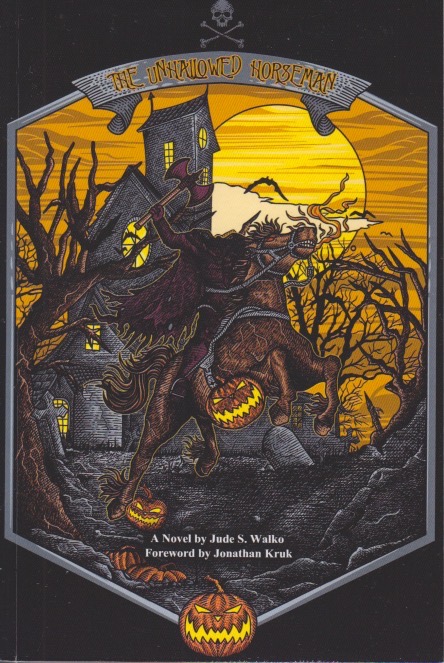
Filmmaker Jude S. Walko has written a horror treatment of the Sleepy Hollow tale in modern times.  The Unhallowed Horseman is graphic and violent and involves the gritty reality of being raised in a broken home.  This isn’t for the faint of heart.  One of the reasons, I expect, that Irving’s tale has survived is that he wrote it, according to the standards of the time, for a genteel readership.  There’s no sex and no violence.  It’s funny rather than really scary.  The characters are likable, if shallow.  There’s the frisson of a ghost but it’s never clear if he’s real or not.  In the end order is restored in the small village and the interloper is gone.  For these very reasons more recent readers are probably looking for something that fits more in our times.

Walko’s version has an emotionally scarred protagonist who is, according to modern practice, drugged into compliance.  He’s smitten by the cutest girl in the school, but the other guys try to take her at will.  The protagonist’s homelife is a shambles.  The sheriff is a descendent of Brom Bones, without any of his good qualities.  And due to a cosmic, astrological sort of event, the headless horseman rides again.  This horseman, however, is described as pure evil.  Almost in demonic terms.  On the night of the annual Halloween festivities this horseman gruesomely kills many of the characters off.  The high schoolers all drink, and the teenage boys have no morals.  At the end there’s a community left in mourning and no real future.  Nihilistic like some modern horror, this version won’t leave you smiling like Irving’s does.  Of course, if you write a classic it can be taken in new directions, and can be made to reflect the realities of new times.  Walko has his eyes open to the era in which we find ourselves.


New Horseman

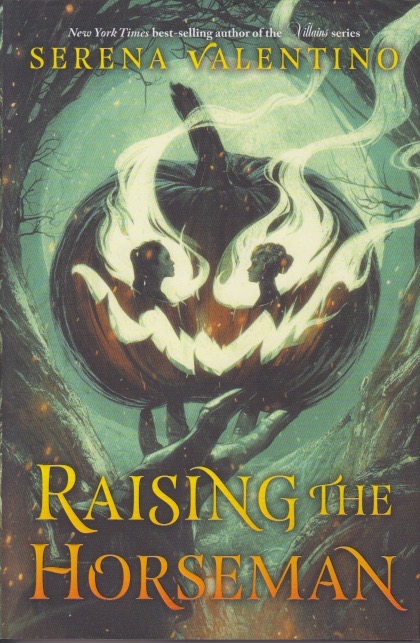
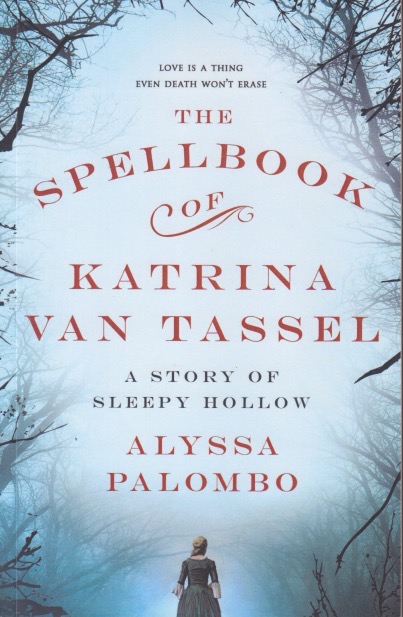
You’d think it’d be obvious, but it took me some time to realize that when a story’s being retold in a literary context, the point isn’t to restate the original in new words.  No, sometimes the vision is quite different and the result is like building a different person from the same skeleton.  I’m still on my Sleepy Hollow kick and I’m interested in what contemporary writers see in the story.  Serena Valentino’s Raising the Horseman is a feminist retelling with sensitivity to LGBTQ+ concerns.  Like some other recent Sleepy Hollow novels—Alyssa Palombo’s Spellbook of Katrina Van Tassel and Christina Henry’s Horseman—she takes the point of view of either Katrina or one of her descendants.  In this case, both, as a present-day Katrina reads the diary of the original Katrina in Sleepy Hollow.

The story is pitched at the young adult level—a literary scene that’s thriving these days—and sets up the story this way:  Katrina Van Tassel married Brom Bones and left her vast estate to her daughter and their daughters, as long as they took her name.  This creates an unbroken succession of Katrina Van Tassels.  As might be expected, the current Kat, as a teenager, wants to follow her own path rather than staying in Sleepy Hollow for the rest of her life.  She meets a new girl in town, Isadora, who encourages her to see how her boyfriend Blake has been keeping her in an abusive relationship.  “The Legend of Sleepy Hollow” is a love triangle, and that develops here as well, moving in new directions.

Valentino has been writing a series called Villains for some time.  That series takes on the viewpoint of the antagonist rather that the hero.  Such tales are quite popular these days as we reexamine dusty assumptions that have been sitting undisturbed for far too long.  Fans of Sleepy Hollow will recognize the base story in this novel, but will be taken along a different path and will be left without a simple resolution.  Younger readers adopt a more open attitude towards life, watching, as they do, the antics of many of their elders (particularly angry white men in positions of power), and they recognize bad behavior when they see it.  The novel is a plea for tolerance, a trait that’s much needed in the world.  The Headless Horseman is still there, of course, but the real villains of the story might not be who you assume they are.


Katrina’s Side

Once a story is released, and its copyright expired, it’s free to be re-interpreted.  Although there are those that deny it, any reading is a form of interpretation.  I’ve been gathering information on Washington Irving’s “Legend of Sleepy Hollow” for some time now, and I’ve just finished reading Alyssa Palumbo’s The Spellbook of Katrina Van Tassel: A Story of Sleepy Hollow.  This novel is a feminist retelling from the point of view of the titular Katrina.  In the original she’s an under-developed character.  These days we’d say that Irving didn’t write women well.  In fact, she functions largely as an object in the story, the source of tension between Brom Bones and Ichabod Crane.  Palombo spins a tale from Katrina’s perspective on all this, and thus takes the story in some new directions.

The novel itself reads like a romance, overall.  Katrina really does fall in love with Ichabod, but Brom is unable to let go, and the rivalry becomes deadly.  As the title also implies, Katrina learns witchcraft as the yarn spins out.  From a cultural point of view, this telling is clearly influenced by both the Tim Burton film Sleepy Hollow and the Fox Television series by the same name.  Both of them give us the witchery and the idea that Crane would be a romantic catch.  In Irving’s vision, it’s difficult to see Crane as any kind of love interest, but the essence of creative retelling is to make the story fit a different mold.  Katrina’s story is seconded by that of her friend Charlotte Jansen, who, like Katrina, practices white magic.  The witchcraft here isn’t malevolent.  Indeed, it is one of the few ways of expressing female power in this time frame.

A good deal of the tale revolves around solving the mystery of what happened to Ichabod on that fateful Halloween when he asked for Katrina’s hand in marriage.  Sadly, writers have, historically, tended primarily to be only male.  There have been exceptions, even from the very beginning.  The first named writer in history was a woman—Enheduanna—but the circumstances of women’s lives, particularly after the agricultural revolution, came to be relegated to roles where the leisure time for writing, and even the opportunity for education to learn it, were rare.  Early on the modern novel was dominated by female writers.  More recently re-envisioned Sleepy Hollow tales have brought women’s role to the fore, and have taken the narrative in unexpected directions.  This feminist retelling of the classic story demonstrates what could have been, had Katrina received a bit more attention, not just as an object.  This is a lesson still to be learned.


Sleepy Hollow West

You’ve got to admire those who are determined to be writers on their own terms.  As someone who’s tried and tried again to break into even indie presses, I know few established publishers will even consider fiction from someone who’s not already established.  As my regular readers know, I’ve been reading a lot about the Legend of Sleepy Hollow lately.  So I came across Austin Dragon’s Hollow Blood.  Part of a two-volume novel set, the story takes a creative approach while retaining several of the original characters, even having clever nods now and again to the wording in the original.  Although clearly self-published, Dragon is able to let his imagination go on this one.  Julian Crane, Ichabod’s nephew, is out to avenge his uncle’s death.

In Sleepy Hollow he confronts Brom Bones with the crime, but wrongly.  It turns out that the Marshal—there are elements of the old west in this too, with cowboys and showdowns—knows where Crane has settled and offers to take the nephew to him.  So unfolds a story that feels a bit more like a western than a horror story at points.  I don’t want to give away too much since Dragon, like most of those who make their living by writing, needs to move copies to stay solvent.  The thing is, Sleepy Hollow seems to be an evergreen subject.  America keeps coming back to it.  Many writers try to take it on as the basis for more modern reboots.  Of course, I have to read the second volume to find out how it really ends.

I can’t help but think that the internet has made it difficult for writers by allowing anyone to establish him or herself as one.  If you can build a fan base, you can make a living at it.  The publishing industry faces problems of its own, of course.  Paper shortages are a problem.  Not only the pandemic, but the assumption that ebooks were going to spell the death of print led paper mills to cut production.  Funny thing—print has been seeing a resurgence of interest.  Large media seems surprised, scratching its metaphoric head and saying “People like actual books—who knew?”  But I digress.  The simple tale of a love triangle in the 1790s with a ghost on the loose has spawned a great number of offspring.  Some published the traditional way, and others on a writer’s own terms.  It’s a story worth the retelling.