Birth of a Legend

I was sitting in the restaurant attached to W, a boutique hotel cum chain, with my brother-in-law Neal Stephenson. He was on a book tour and kindly treated me to breakfast. Above his head I noticed a slightly salacious painting portraying a nude lady in bed saying “Of course I think you’re adequate. I love you!” In the doorway stood a headless man in a red coat, clearly intended to be the headless horseman. I pointed it out and Neal, being an author, made some inquiries about it. Nobody in the hotel seemed to know anything about the image’s relevance, so I did some internet sleuthing. I knew Washington Irving was born in New York City. I don’t know where precisely, and I’m not really sure how to find out. New York, in those days, didn’t reach so far up Manhattan Island, and we were near downtown, at Union Square. Probably this was the outskirts back in Irving’s day. I had already started my research for my paper on Sleepy Hollow, so I was attuned to the clues. W is now a chain, but I think the first W was the very one where we met. The restaurant where we had breakfast was the Irvington. The website said nothing about the origin of the name. Had we been eating where Irving had spent his youth?

This was a slight synchronicity. I had been researching Irving and had ended up meeting someone at a hotel which, it may turn out, had been named after him. Which Washington was the Squire really named after anyway? Washington Irving had been named after George Washington, so perhaps the point was moot. Months passed, and I wrote and honed my paper for public delivery. I’d almost forgotten the existential pleasures of following a lead and drawing some conclusions, whether or not history might bear them out. My brain was fully active.
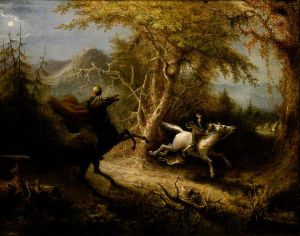
759px-John_Quidor_-_The_Headless_Horseman_Pursuing_Ichabod_Crane_-_Google_Art_Project

My flight to Atlanta yesterday for the Society of Biblical Literature annual meeting took off from Newark Airport on time. I thought I had a row to myself, but a couple of guys came in, talking, just before the cabin door was closed. They obviously knew one another, but not terribly well. One asked if the other was from Valatie, “where Ichabod Crane is buried.” These were not professorial types, which you often see at the airport this time of year. Just regular guys. “Yeah, there’s an Ichabod Crane High School,” the other replied. Their conversation moved on to other topics, but I sat there thinking about the synchronicities my paper seemed to be generating in my life. Of course, many people do watch Sleepy Hollow, not many, I suspect, are academics looking for connections to American religious thought. It seems that research never really ends.
Atlanta Bound

IMG_2600

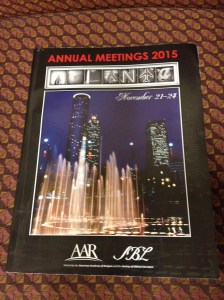
Every year as the latter half of November rolls around, the mind of religion scholars goes toward the American Academy of Religion and Society of Biblical Literature Annual Meeting. This morning I’m off to Atlanta to join a myriad of others who still think the academic study of religion is a good and noble thing. For those who read this blog regularly, it will be no surprise that I’m giving a paper this year. Honestly, I’m a little nervous. I haven’t delivered a paper in years—it is nearly impossible to do research when you are cut off from academic libraries and, more importantly, the time it takes to do the work. Having only weekends to pull ideas together is not conducive to pushing the frontiers of knowledge forward. Sleepy Hollow came to my rescue this time around. That, and reception history.

Reception history is the hermeneutic that looks at the Bible from the point of view of later interpreters. For the Hebrew Bible that reception might be that of the New Testament, or even later books within the Tanak itself. Of course, the Bible has been studied and interpreted for nearly two millennia now, and not all those reading the Good Book have official training. Increasingly, with religious extremists making headlines from decrying the color of Starbucks cups to an all-out attack on Paris, understanding the reception of religious texts is important. The Fox network hit Sleepy Hollow is an excellent example. The show begins with the Bible and although the end has yet to be determined, Scriptures have played a role throughout. And a viewership of pitiful biblical literacy drinks it all in. It is important to understand how the Bible has been, and is being, perceived.

It may be, over the next few days, that my posts will be disrupted from their usual schedule. It is always a little hard to predict how things might play out when you’re away from home. I’m not sure what wonders Atlanta might bring. My own book should be on display in the book stalls for the first, and likely only, time. I will be meeting with people from dawn to dusk, discussing their book ideas. And I will, of course, be listening. Listening for the gallop of horse hooves in the background. Yes, the meeting is always a stimulating event, and with apocalypses in the news, I think I have selected a very timely topic this year indeed. If the frogs croak my name, I will know it is only my imagination.


The Climate of Belief

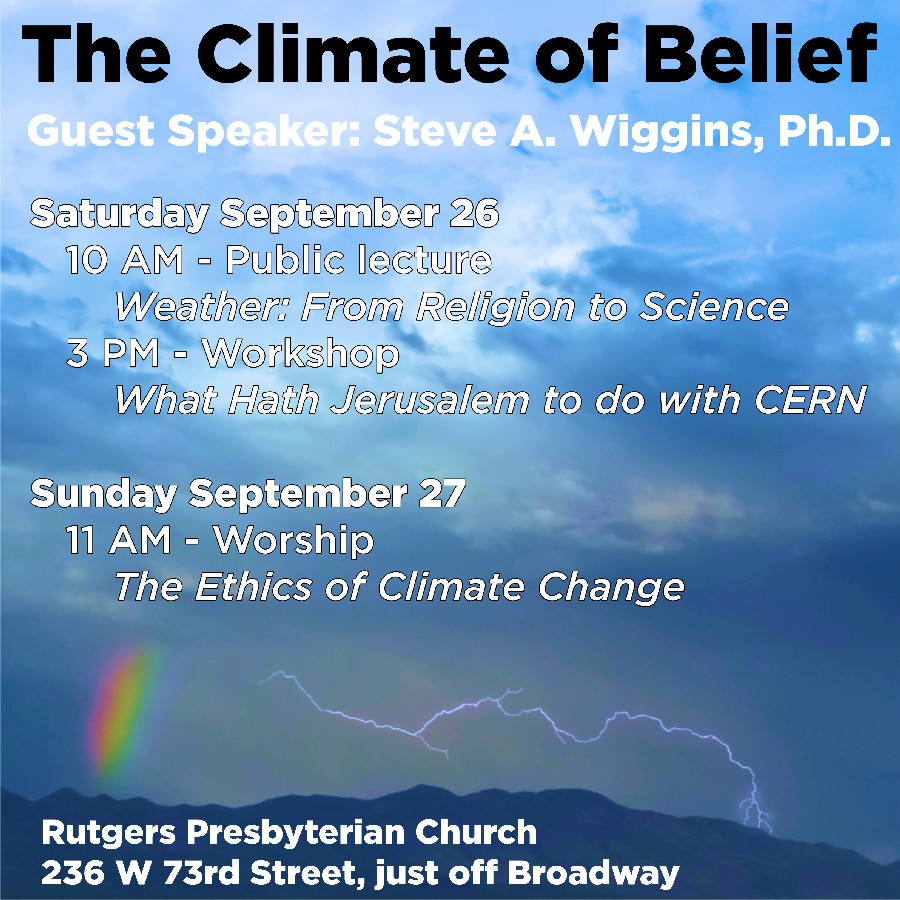
As I’ve noted before, in our culture where an individual voice is hard to hear, those without institutional affiliation are generally considered self-promoting hacks. That’s really too bad, given that so many highly educated people end up in menial positions—our society’s “greatest resources” squandered away behind a counter or sequestered in a cubicle. So it was my great honor to be asked to present Rutgers Presbyterian Church’s Autumn Guest Lecture this year in Manhattan. When I taught at Nashotah House invitations to speak came frequently, even though it was a small school. I even once received an invitation to talk when I was an adjunct at Rutgers University. Since “going corporate,” it seems, I have nothing to say. It really is wonderful to be asked to speak again. Practicing my talk brings back many fond memories. Lecturing is in my blood. The Pastor asked me to come after my book, Weathering the Psalms, was published. Never intended as a best-seller, it has quietly sat on the sidelines, like its author.

weather wiggins ii sml

I suppose a bit of shameless self-promotion might be in order, but of course, I will feel ashamed for pointing out, when it’s all over. If you happen to be in New York City this coming Saturday and Sunday, so will I. Rutgers Presbyterian is located on the upper west side, not far from Lincoln Center and the Museum of Natural History. I’m always glad for an audience. See? Now I feel bad for having said so. My theme over the weekend will be “The Climate of Belief.” In addition to the weather, we’ll be talking about religion and science. Two worldviews that seem to be in constant conflict are not really the bitter enemies they seem to be. I won’t give away any spoilers since then you’d have no reason to come to my New York debut.

Further along, I am scheduled to give a paper at the Society of Biblical Literature annual meeting in the Society for Comparative Research on Iconic and Performative Texts (SCRIPT) session on sensing scripture. My talk on that occasion will be on how the Bible is presented as an iconic book in the first season of Sleepy Hollow. Be sure to mark your November calendars now! It’s not too often that a person with no institution willing to back him gets to speak twice in a year. Someone who’s in a position to hire professors once told me that with so many candidates out there, you have to wait until you fall in love with one. Being a Don Juan, whether in amore or academia, has never been my strong suit. Still, if Elijah is to be believed, even an unamplified voice may carry. I’ll utter my “yop” for those who wish to listen.


Don’t Answer Me

Non-directed reading sometimes follows its own track and a reader might become kind of an accidental expert. I wouldn’t claim that for myself, but I have noticed that scholars, until very recently, tended to give the cold shoulder to anything with a whiff of magic about it. Ancient magic is fair game, of course, but anything like post-Enlightenment magic is anathema, a veritable shibboleth of philistine sensibilities. No scholar worth their diploma would study such a lowbrow topic, let alone give it any credence. Popular culture, and increasingly political culture, tend to ignore academics, however. I have, in my exile from academia, become interested in those who consider themselves witches. I have, I realized recently, read quite a bit about the phenomenon and have been casting about for academic treatments that might fill in some of the gaps. It is a fascinating subject.

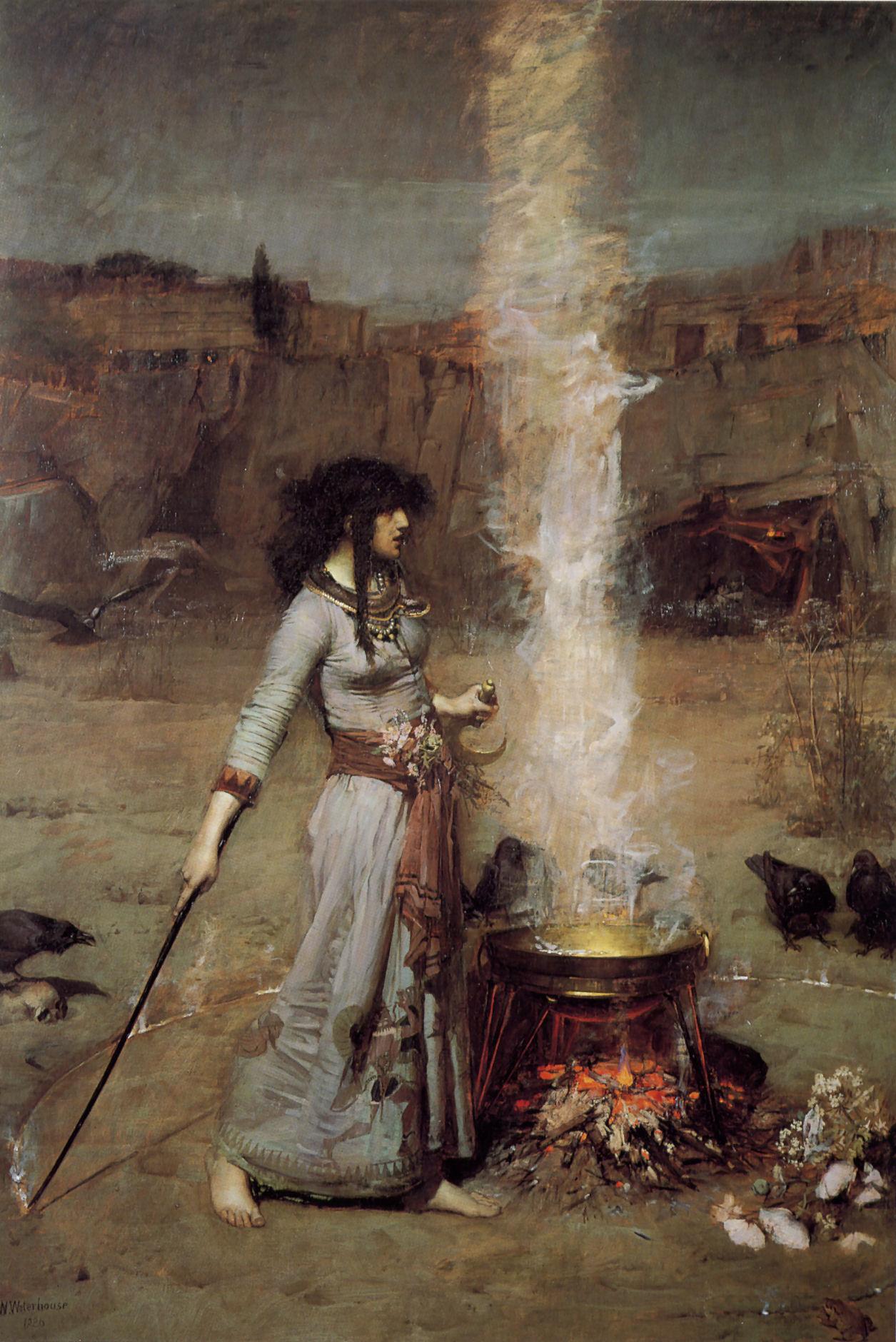
John_William_Waterhouse_-_Magic_Circle

Ironically, many religion scholars who swear by a mythological worldview of the first century, devalue magic, or Wicca. Many who study it handle it like a peculiar bug, something that might profitably be placed under the microscope as a living curiosity. The thing is, and I realize that academic institutions often shelter their inmates from the real world, many people still do believe in a kind of magic. It may not involve Harry Potter spells and wands, but everyday life outside the academy sometimes defies explanation. Scientists say it’s impossible, and scholars of religion are quick to lock step. Yet the number of those either openly or clandestinely joining occult groups appears to be increasing. Maybe they know something that the experts don’t?

While working on my academic paper for the Society of Biblical Literature annual meeting, I have run into the amazing void of interest in contemporary magic. The television series Sleepy Hollow has revived some popular fascination with the topic. The curious, however, have few scholarly resources to consult. Here is perhaps the paradigm that shows most clearly why higher education runs into trouble. Could it be that in the academy the Lowells talk only to Cabots, and the Cabots talk only to God? Have they forgotten how the common folk live? Those of us who grew up common are often not welcome in the academy. Our downmarket ways and simian brows mark us as the sort so gullible as to believe in some kind of magic. But the numbers are on our side. And the only option sometimes is to become your own expert.


Original Research

“But are you able to continue your research?” they ask. Academics can be so hopelessly naive sometimes. I recently had a notice on academia.edu that I was in the 30-day top 5 percent of page views. So I’m feeling like the Bruce Springsteen of academics for a few seconds. Meanwhile institutions who look at my record wonder why I haven’t produced anything lately. It’s really quite simple. Take a 40-hour work week (a foreign environment to most academics), add a daily commute of 3 hours, and subtract access to an academic library. As the old computers in sci-fi movies used to say, “does not compute.” My research these days is limited to material that is actually able to keep me awake on the bus (thus excluding most academic monographs) and those that I can afford to buy on an editor’s salary. My research has slowed considerably, in other words, due to circumstances beyond my control.

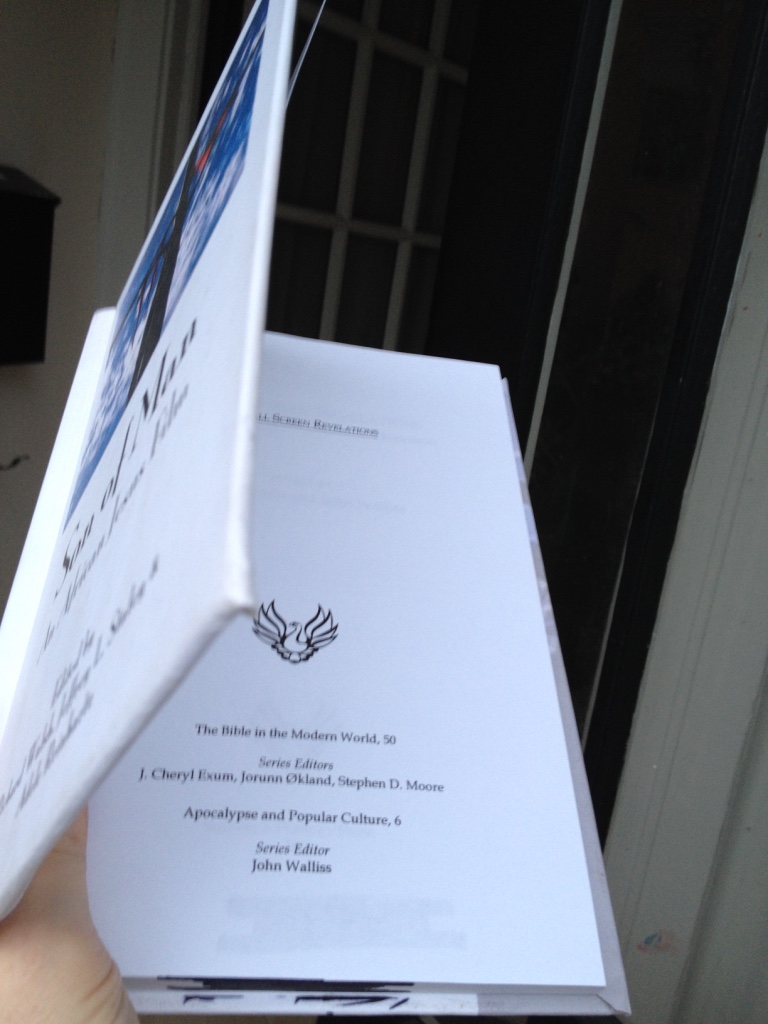
thumb_IMG_2163_1024That’s why I’m sitting here perplexed. Despite it all, I have had a paper accepted for presentation at the Society of Biblical Literature Annual Meeting this year. My project is on the Bible in Sleepy Hollow (thus the recent spate of books on Washington Irving and his hometown). Still, I had to challenge the budget and purchase a couple of things. The cover of my book has me confused. Son of Man, it says. Inside, however, is the text I need—Small Screen Revelations. (If you wonder why, watch Sleepy Hollow, or, if possible, come hear my paper.) The reason for the mismatch between the cover and content of my book is the price. A tome from the appropriately named Sheffield Phoenix Press, even used the volume costs almost $100. It’s just 200 pages. I managed to find a copy misbound for the bargain price of half that. Only an academic would pay $50 for a defective book just to get at the content. Am I able to continue my research? Reach for your wallets and see.

A large part of my job is spending time on university faculty webpages. Many of those I find haven’t published nearly as much as I have, but have comfy, tenured positions. Often it is because they’re the right brand. Catholics like Catholics, Presbyterians like Presbyterians, Baptists like Baptists. State universities hate them all. And once in a while I pull my doctoral robe out of my closet, press it to my face, and weep. I don’t know what a blue collar kid might have been thinking. Earn a challenging doctorate in an obscure field overseas and hope for a modest teaching position somewhere in the land of the most abundant colleges in the world? My race and gender should’ve come to mind long before I got that far. In some ways, I too am a misbound book. Am I able to continue my research? You be the judge.


Biblical Script

The popular perception of the Bible generally does not match the actual contents very well. Like most books, the Bible has its highlights: Creation, Flood, David and Goliath, Jonah, Daniel and the lion’s den, Jesus, the Apocalypse. Between all the fascinating narrative, however, come the instructions. More instructions, in point of fact, than most people would care for. Nevertheless, over the centuries the Bible has acquired an aura in western civilization. It has become what some colleagues call an “iconic book.” It is this aspect of the Bible that stands out most clearly in the Fox series Sleepy Hollow. I wrote a post about Sleepy Hollow as I began to watch the first season on DVD. The headless horseman is an agent of the Apocalypse, and clergy and witches play a prominent role in the story. I wondered if the role of the Bible would diminish once the audience was drawn into the conceit of the four horsemen thundering out of Revelation into Sleepy Hollow. Just the opposite, in fact, occurred.

Sleepy_Hollow_-_Title_Card

As the series unfolds, the Bible is drawn more and more into the story. Demons and detectives both want to get their hands on it. Not to read the Ten Commandments or the Sermon on the Mount, but because the Bible contains esoteric information. Those “in the know” can unlock its secrets and thereby save society. Ironically, this is a subtextual version of the biblical metanarrative. It is all about (from the Christian perspective) salvation. The means, however, are quite different. Jesus is not really part of the Sleepy Hollow story. The Bible belongs to George Washington, cryptically bringing politics into the story. The text is not secure; there are extra verses in Washington’s Bible, just as there are many excised bits in Thomas Jefferson’s. Washington leaves instructions for saving his fledgling nation from the evils that roamed its shores during the Revolution. Or is that Revelation?

Right up to the cliff-hanger ending of season one, the Bible comes back time and again, focusing the viewer on its magical qualities. It is a book of secrets and mysteries. Meanwhile in the real world, biblical studies positions are being slashed from universities as if the horseman’s axe were anything but fictional. We don’t want to know about the real Bible. Politicians, real ones, use it as their own sword to force their personal faith agendas onto the electorate, but we generally do not even understand what the Bible really is. We’ll fund economics, that dismal science, and business, and maybe even actual science. The humanities, however, the stuff that makes us human, we will gladly call luxuries and deny them fiscal security. So the Bible grows in stature even as it diminishes in stature. Those who don’t know the factual Bible can easily be swayed by the fictional one. Are those hoofbeats I hear in the distance?


Biblically Literate Ichabod Crane

I’m trying to pace my viewing of Sleepy Hollow, but autumn is never long enough for me. In many ways the FOX series exemplifies the current love-hate relationship popular culture has with the Bible. While its dictates and commandments seem tedious and petty, its prophetic view is so very full of possibilities. The millennium has passed but we’re not weary of the apocalypse yet. Even from the pilot episode with its cringing reference to “Revelations” three or four episodes into season one tidied that book title down to the proper singular and have begun to introduce other biblical characters along the way. Since the conceit of the series involves the four horsemen, the Bible is never far from view. Forensics can’t figure out what’s climbing out of the woods of the Hudson valley, but we already know that the demon is Moloch. Many fingers, I trust, have been scampering across keyboards to investigate this biblical figure.

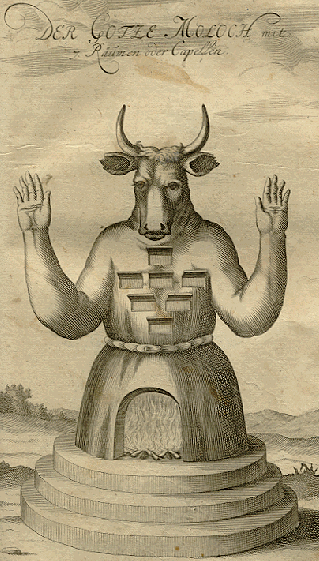
Moloch_the_godMoloch is a “Canaanite” deity. He is also one of the least understood of biblical archenemies. Scant references to making children “pass through the fire” for Moloch have led to widespread assertions of human sacrifice. Others have argued that the passing was just that—kind of like racing your finger through the flame of a candle—to appease the angry god. We don’t know that Moloch was angry. No extended myths about him have survived from antiquity. His name means “king,” an epithet fit for most gods. The vacuum left by the historical records allows imagination to fill in the gaps. Sleepy Hollow does that nicely, and although I haven’t reached the end of season one yet, I have my suspicions that he’ll be showing up for some time to come.

The Bible, viewed so disparagingly because of the ministrations of the likes of Jerry Falwell and Pat Robertson and their intolerant ilk, remains a mystery to many. Let’s face it—it’s a daunting book. Even with onionskin paper, it is a massive undertaking to read it all. Many a spiritual soldier lays slain on the beach-head of Leviticus, and that’s only three books in of the Protestant 66. What Leviticus doesn’t finish, Chronicles will polish off. And yet we have such colorful characters as Asherah, Resheph, Leviathan, and Moloch scattered throughout. Sleepy Hollow has brought back the dead. I regret that I no longer have classes of students to ask about such things, because I too, through the magic of television, am beginning to believe in resurrection again.


North Tarrytown

Ichabod Crane has undergone many incarnations since Washington Irving conjured him. Not very sympathetically described in the original “Legend of Sleepy Hollow,” he was gangly and somewhat clumsy and full of self-importance. The story of which he is forever a part, however, has become iconic of American myth-making. A deep symbolism runs through the story of the headless horseman, and for those who’ve actually been to Tarrytown, the modern incarnation of Sleepy Hollow, there may be a disconnect between the urbanity of a town so near to New York City and a rustic school teacher in a rural setting. Still, there seems to be quite a bit of buzz about the current television series “Sleepy Hollow” that I decided to see for myself what was happening. The conceit of Ichabod Crane reawakening, in a kind of Rip Van Winkle twist, in the present day is engaging. He is now a professor at Oxford University turned patriot to the American cause, which brings him to the point of actually beheading the horseman in the first place. But this literate, witty, and moody retelling involves more than Irving. The Bible is pretty much central to the series, at least as far as I’ve seen.

The headless horseman is none other than Death, the final of the four horsemen of the apocalypse, according to holy writ. Although the characters all refer to the Apocalypse as “Revelations,” something that causes premature baldness in biblical scholars, the program places the town of Sleepy Hollow at the crux of the oncoming end of the world, with the other three horsemen to be summoned along the way (Pestilence or Conquest, War, and Famine, for those who are keeping score). Also, witches, hearkening back to Salem, have a prominent place in the narrative, and the forces of rational law seem to be at their collective wits’ end to make any sense of religion breaking into a secular world. Without the Bible’s final book, Sleepy Hollow would have no legs (as well as no head).

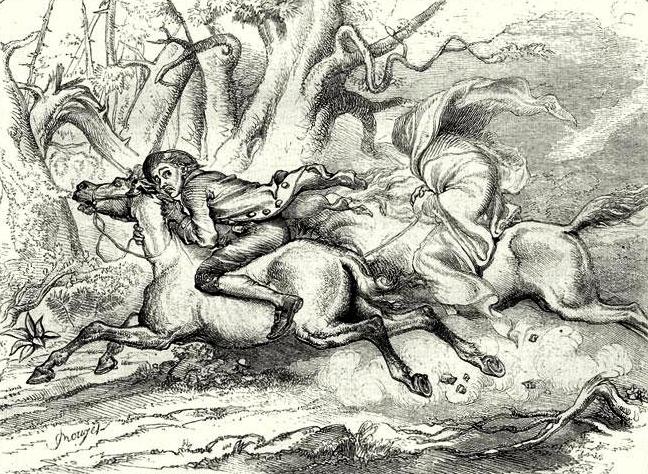
Ichabods_chase_crop

In Tim Burton’s Sleepy Hollow, Ichabod Crane came through as a detective plotting science against superstition. At the end, however, even the most rational had to admit there was more going on than the science of the day could explain. That is part of the appeal of the Sleepy Hollow legend. No matter how strong the light we shed on them may be, our psyches reach out for the immaterial, the ghostly, the supernatural. We like to believe in sacred books and spells to protect from evil. Even the Twilight Zone episode “The Jungle” plays on how in even the most advanced cultures we still build skyscrapers with no thirteenth floor, as if our towers represent an unknown hubris for which we may be held accountable. Irrational? Perhaps. But Sleepy Hollow is not so somnolent these days when the Bible once again takes center stage and hoofbeats are heard once again in the night.


Stamp Act

Reality seems more and more intangible all the time. Perhaps this is because I can remember a time, not so long ago, when sitting in front of a computer all day would have been unthinkable. Or maybe it is because when I stepped outside to go for a jog, I found a piece of yesterday’s mail lying on the front lawn. Not that it was terribly important, but it was a stamped piece of mail with my name on it. Soaked with dew. Unread. To err is human, so I wouldn’t have worried about it so much if it hadn’t have happened before. In my days of unemployment, I could hear the postal carrier come onto the stoop, talking away on a cell phone, negotiating the mailbox as if it were a nuisance. Then one day I found a bill that I had put out to be delivered on the sidewalk. The landlord once called, wondering where the rent was. We’d mailed it a week ago, but to this day, years later, it never arrived. I know I’m old fashioned, but a stamp used to mean something.

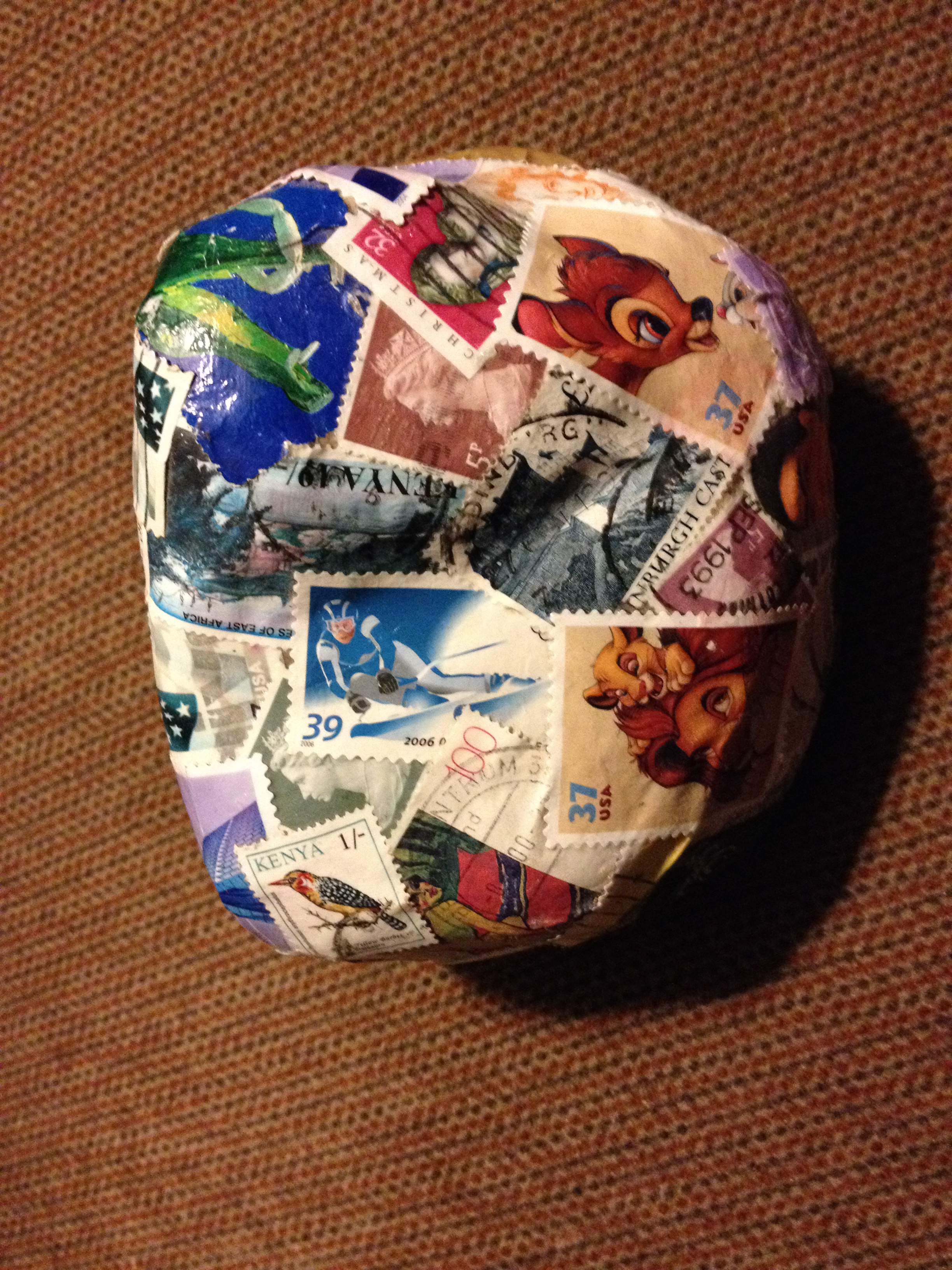
As a child I was a half-hearted philatelist. At the local hobby store you could buy photo-album knock-offs specifically for stamp collecting. Stamps were a promise from the government. I always considered the fact that they were engraved—like dollar bills and liquor bottle labels—to mean that they were serious. There was more than an implied contract here. A stamp meant delivery. Long I would linger over the empty spaces of my stamp album preprinted with the images of the missing stamps. I thrilled to find one of the Grange, although I had no idea what a Grange was. The one with the legend of Sleepy Hollow I coveted with all my youthful imagination: Ichabod Crane being forever chased by the headless horseman. Stamps from other parts of the world were virtually unknown in my small town. When they came, it was like visiting an exotic location in our own living room.

IMG_1539

A few years back I noticed that stamps were no longer engraved. Printed on a printer not so different from the one that sits on my desk, they have lost their souls. Although their costs have continued to rise, they no longer guarantee delivery like they used to. There was a covenant involved. You licked the stamp, putting it in intimate contact with your body, and the government would ensure the recipient would receive it. I’m outside holding a soggy postcard with my name on it. This one made it to within just yards of its goal before falling, unnoticed from the hand or bag of a mail carrier. We all use email anyway, don’t we? I remember a day as a college sophomore when I had never sat before a computer screen. The world was right there in front of me, inescapably real. Something has happened since then, but I have to admit that I don’t miss licking stamps. I just wonder if reality has really changed.


Sleepy Hallow

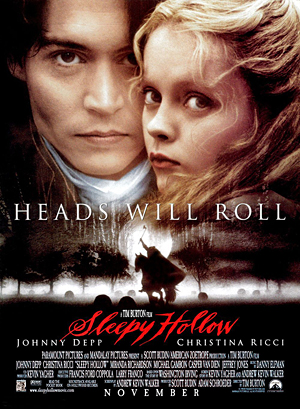
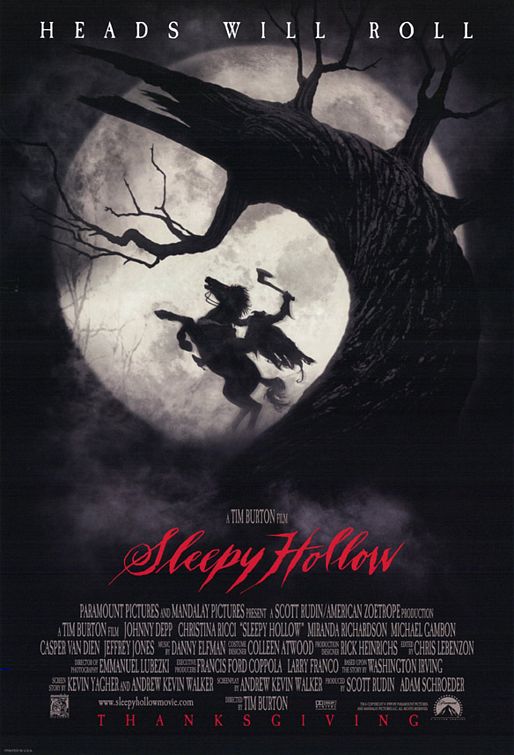
Sleepy_hollow_ver2Upon occasion I found movie clips to be of great help in explaining ideas in religion classes. A movie whose clips I used sparingly, due to concerns for squeamishness, was Sleepy Hollow (the Tim Burton movie, not the modern television series). Upon viewing it again recently, I was impressed by just how much religion is intertwined in the narrative. This is especially interesting since Washington Irving’s story does not contain much in the way of religious symbolism or motifs. From the beginning of the film, Rev. Steenwyck is one of the conspirators, making the church complicit in the attempt to subvert the van Garrett will. When Ichabod Crane arrives in Sleepy Hollow the cleric drops a Bible—a recurring motif in the movie—on the table beside him, telling Ichabod it is the only book he will need. Christianity and Paganism clash throughout the film as a number of the women are revealed to be witches, either “innocents” or practitioners of a darker kind of magic.

In flashbacks Ichabod Crane recalls his mother’s white magic that draws the ire of his ordained father. Indeed, Ichabod’s father is a stylized amalgamation of Roman Catholicism and Protestantism blended into one. His harsh white chapel houses an inquisitorial torture chamber in which he murders his wife. Seeing her pagan symbols in the fireplace ash, he too drops a heavy Bible to point out his wife’s sins. When he stalks off from his medieval chamber of horrors, the camera angle shows him to be headless—he is the true terror, rather than the Horseman who was raised by magic and appeased by the simple return of stolen property—his head. Even in the present Rev. Steenwyck is both an adulterer and a murderer. The melee in the church leaves the final three conspirators dead.

The white witches, however, are marked by their purity. Mother Crane is so light that she can float up into the air. Katrina van Tassel draws chalk icons to protect Ichabod, indeed, the whole town, from evil. While Ichabod refers to his father with the evocative phrase “Bible-black tyrant,” his mother was an innocent child of nature. In the film Ichabod moves from the rational view of life to one that allows for the supernatural, in the form of magic. True, the Horseman cannot cross onto the consecrated ground of the church (another Catholic concept mixed in with the Protestant milieu), but the faith that saves Ichabod’s life is the book of spells given to him by Katrina. Yes, the physical book stopped a material bullet, but it was faith the put the book in the pocket in the first place. All very appropriate to bring students’ minds to religion in the autumn of the year.


Before Twilight

Despite the summer with its long, languid days, The Telegraph reported on vampires last week. In an article entitled “Polish archaeologists unearth ‘vampire grave,’” Matthew Day narrates how archaeologists have uncovered skeletons buried with their heads—decapitated, obviously—on their legs. This was apparently a not uncommon medieval practice for ensuring that suspected vampires stayed safely in their graves. Interestingly enough, Day comments that the practice mainly began after the Christianization of the pagan cultures that had preceded them. Even pagans, he suggests, ran the risk of being accused of vampirism, a broadly defined threat in the Middle Ages. Of course, the Twilight series had not been written then so that the safe, Mormon cast of vampire was unknown.

Vampires represented a couple of concepts terrifying to people before the scientific revolution: they were a source of draining an individual of some life essence, and they were the problematic undead. The decapitation, in Tim Burton-Sleepy Hollow style, was intended to prevent the vampire from being able to locate its head after death. Unable to find the business end of its vampiristic corpus, the undead might remain just plain dead. Of course, staking works, if the tales of the Highgate vampire, near whose grave I recently stayed while in London, are to be believed.

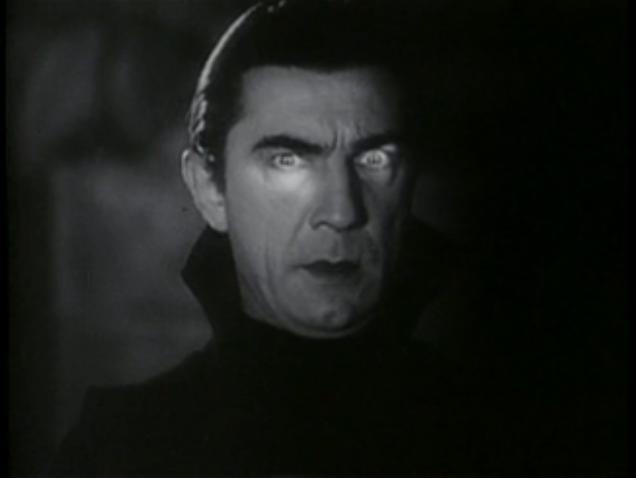
The belief in vampires, or at least fascination with them, has been very hard to shake. One of the earliest horror films made was Nosferatu, a rip-off of Bram Stoker’s Dracula that was nearly obliterated because of copyright violations. Nosferatu continues to be ranked among the scariest of horror movies, and the Werner Herzog’s 1979 remake is a classic in its own right. The Shadow of the Vampire was an even more recent movie about the filming of the F. W. Murnau original. Among the earliest of the Universal monster movies was Tod Browning’s Dracula, which forever identified the face of Bela Lugosi with the infamous Count. No matter how deeply we bury them, the vampires keep coming back to stalk our nights and nightmares. When future archaeologists uncover the detritus of our civilization, no doubt they will conclude that we too, in a secularized world, feared the undead.

Bela_lugosi_dracula


Preoccupied

I wonder if I’m the only one who feels uncomfortable with the proliferation of armed military guards in public places. I know the rhetoric that “freedom is not free” (what is it then?), but when the coffee hasn’t really kicked in yet and I walk by guys young enough to be my kids holding machine guns in the bus terminals and train stations of New York, I really don’t feel safer. Sometimes I might look like a radical. Sometimes I don’t get my hair cut as often as convention dictates I should. Sometimes I forget to trim my beard. Some days I throw on my denim jacket as I head out the door in the predawn hours. Some days no one sits next to me on the bus. Am I the enemy here? I don’t like the idea of strangers seeing me naked in airports—even if only electronically. I do like the freedom of expression, but it is no longer really free.

I suppose that’s why I’ve noticed the other peacetime occupation going on in New York: Occupy Wall Street. It is time that people say “enough!” The religious leaders with the loudest voices declare this a dangerous thing, “class warfare” they say. The wealth that lines the very upper crust, however, is simply obscene. Was a day when wealth came with a healthy dose of social responsibility. They just don’t make Andrew Carnegies any more. A few Octobers ago my family visited Sleepy Hollow, New York. The cemetery made famous by Washington Irving (who is buried there) also houses William Rockefeller and Andrew Carnegie. On the top of the most prominent hill is a classical style, opulent mausoleum for the Rockefellers, overlooking all others. Down at the base of the hill, hidden away in a humble, quiet corner is the modest tombstone of Andrew Carnegie. I am certain that Carnegie was no saint, but he did not let his wealth go without doing some good for his fellow citizens.

Freedom is not free, but excessive wealth is tax-free. And Jesus was a venture capitalist, I’m told. We are a nation occupied in peacetime. We are occupied by our own military and their commanding officers in the towers of Wall Street. The GOP can’t support Occupy Wall Street, for it will alienate the moneyed vote it so craves. Call it “class warfare” instead. Those uppity middle and lower class bums! When the select few human beings climb too high in their towers to see the suffering of those down below, images of Babel come to mind. Babel is code for Babylonia in the Bible—the wealthy, powerful oppressor of the poor and displaced. If wealth breeds superiority, we are all in very deep trouble; the battle is already lost. In the meanwhile, I suspect Jesus might secretly be on the side of those camped out in sleeping bags, waiting for the sign of Jonah. And it has nothing to do with being swallowed by a whale.

Or maybe it does.


Movie by Faith

Yesterday’s New Jersey Star-Ledger carried an article by film critic Stephen Whitty entitled, “Where script meets scripture: Recent films take a leap of faith.” The phenomenon he observes is that mainstream, big studio-backed film-makers are more and more turning to plots and scripts that emphasize faith. It is not always standard, revealed religion-type faith, but a belief that there is something else. Something beyond that with which our daily lives presents us. People are seeking, but traditional religions are having a hard time convincing them that they have the answers.

In a striking contrast, films that present a spiritual danger frequently revert to the stock image of a Catholic priest as the means of deliverance. When is the last time a Protestant exorcist took on a demon on the big screen? Torn though it is with its long and checkered history of imperialism, exploitation, and scandal, the Catholic Church with its obscure rituals is effective where the machinations of the Protestants are not. This too is a leap of faith, one that believes in the efficacy of ritual despite its origin or lack of scientific theory. Science provides a way of understanding the world that many people experience as cold and comfortless. Even many scientists choose simply to trust in what their spiritual guides teach them.

Over the weekend my wife and I watched Sleepy Hollow. It is an annual tradition; it is our October movie. In this film Tim Burton plays off the superstition of Sleepy Hollow – in fact real, in the movie – against the science of Ichabod Crane. In the end, Ichabod has to face the supernatural on its own terms in order to bring the world back to science. Having sent the headless horseman back to perdition, Crane once again returns to a New York City at the start of a new millennium, full of the optimism of science. It is the dilemma of the modern western world. People are tugged, torn even, in two diametrically opposed directions. Our experience leads us to believe in a “demon haunted world” while science placidly informs us that all can be explained. Movies do reflect the human outlook in many respects, and the end sequence has yet to be shot.