Stranger and Stranger

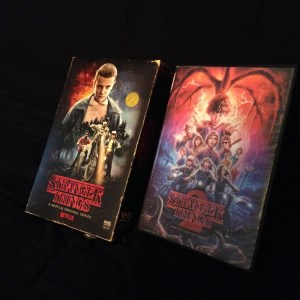
Like many fans of the X-Files and the early years of Sleepy Hollow, I’ve fallen into the Stranger Things orbit.  While I don’t have a Netflix account, I have friends who do and they got me hooked.  If you’ve watched it you’ll know why, and if you haven’t I’ll try not to give too many spoilers away.  The reason I raise it now, when we’ve gone such a long time without a new season, is that Stranger Things 2 took on shades of The Exorcist, but without any of the attendant religion.  Secular exorcists do exist, and possession is a feature of cultures with all different kinds of belief systems.  Exorcism works based on the belief system of the possessed, it seems, and if there’s no religion there’s no problem—call a secularcist!

Spoiler alert: Will is possessed by the mind flayer.  As the authorities flail around and get eaten by demidogs, his mother figures out how the exorcism has to work.  The thing about possession is that nobody really knows what demons are.  Dungeons and Dragons, which I confess I’ve never played—my life is too complicated already, thank you—gives the analogy for the possessing entity.    No matter what the demon, however, the only way to get it out is through exorcism.  Quite apart from sci-fi and fantasy, this is also the case in real life.  Part of the appeal to Stranger Things, I suspect, is that it indulges in the mysterious without the burden of religion.  While religion makes for good horror, good horror may exist without it.  Or can it?

Contrast this with Sleepy Hollow, now defunct.  Possession was a trope there as well, but the story had obvious elements of religion embedded in it.  As I point out in Holy Horror, religion often drives the fear.  That doesn’t mean it’s the only driver.  People fear being taken over by something else.  Stranger Things knows that if nobody can really figure out what that something else is, it can be scarier still.  We know it comes from the upside down.  We know it can possess people.  And we learn that it can be exorcised.  Although the setting is completely secular, there are elements of religious thinking even here.  It’s simply part of the human psyche.  We can deny it exists.  We can try to describe it only by analogy.  We can try to exorcise it.  It is there nevertheless, even as we eagerly await the advent of the third season.


Servants and Such

At Nashotah House I met my first real-life servant.  This was a student—a candidate for the priesthood—who’d formally been a “domestic.”  Now, being Episcopalian one doesn’t bat an eyelash at that sort of thing but I was secretly in shock that servants still existed.  I’m woefully uninformed about aristocracy.  Having grown up poor I resent the idea of a person being placed in the role of fulfilling the whims of someone just because they have money.  My wife has more of a fascination about this than I do, and she was recently reading a book about servants.  This post isn’t about domestics, however.  It’s about foreign gods.  In the book she was reading my wife noticed one of the servants writing that old-fashioned stoves were like Moloch.  Were it not for Sleepy Hollow, I suspect, many modern people wouldn’t know the name at all.  Who was Moloch?

Moloch, according to the Bible, was a “Canaanite” deity.  Specifically, he was a god that demanded child sacrifice.  The phrase the Good Book uses is that his worshippers made their children “pass through the fire” for Moloch.  Very little is known about this deity, and the question of human sacrifice is endlessly debated.  Theologically it makes sense, but practically it doesn’t.  Deities want servants and living bodies do that better than dead ones.  Although it’s been suggested that “passing through” could be a symbolic offering, by far the majority of scholars have taken this act as an actual sacrifice.  The ultimate servant is a dead servant.  Moloch, you see, comes from the same root as the word “king.”  And kings are fond of having many servants.

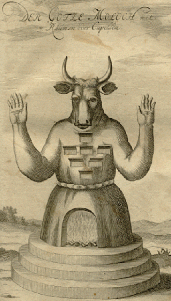
Image credit: Johann Lund, Wikimedia Commons

So how is a stove like Moloch?  The classic image of the god, which looks like a scene from The Wicker Man, holds the answer.  Well circulated since the early eighteenth century, this engraving has captured the imagination of modern people.  A massive, multi-chambered statue intended to consume by the raging fire in its belly.  This is the way in which a stove might resemble a Canaanite deity.  The servant who described cookware thus knew whereof she spoke.  Archaeological evidence for the “cult of Moloch” is slim.  It is almost certain that nothing like this fanciful image ever existed.  Moloch, in other words, lives in the imagination.  One aspect, however, rings true.  Like most tyrannical rulers the deity wants unquestioning obedience on the part of servants.  And this is a viewpoint not limited to deities.


More Conjuring

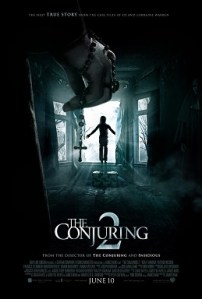
Among the most revered traditions of the horror film is the sequel. Originally a financially driven feature, sequels have now become an expectation among fans. And although in general we prefer to appeal to our higher cultural aspirations, many horror movies do remarkably well at the box office. I’m not much of a sequel-watcher, but sometimes in my effort to understand the close connection between religion and horror, I succumb. So it was I watched The Conjuring 2. As with the formula for the initial movie, cases actually investigated by Ed and Lorraine Warren are brought together with exaggerated special effects and demonic entities. Starting out in Amityville, the demon Valak is introduced. It later appears as the source of the Enfield poltergeist.

In real life controversy never strayed far from the Warrens and their investigations. Amityville and Enfield have both been implicated as hoaxes. The Hodgson girls, just like the Fox sisters in upstate New York, confessed to some faking, and, of course once that dam has been breeched, there’s no stopping the flood to follow. Nevertheless, such incidents make for good horror film fare. In the case of The Conjuring 2, bringing a named demon into the mix keeps the religious pot roiling. Ironically, the demon takes the form of a nun. This character is a complete departure from both the Amityville and Enfield of record, although demonic influences were posited for both cases. Valak appears to go back to The Lesser Key of Solomon, a grimoire familiar to watchers of the now departed Sleepy Hollow.

Even with the hoax light cast on the “based on a true story” tagline, The Conjuring is well on its way to spawning a cinematic universe. Annabelle was a spinoff, and Annabelle: Creation scored high marks this summer. The success of The Conjuring 2 has led to work on The Nun, scheduled out next year. There’s talk of a third Conjuring film as well. As religion becomes less obvious in the traditional forms of weekly worship gatherings, it crops up more in other areas of culture. Don’t get me wrong—there’s plenty of secular horror as well. What does stand out is that when religion knocks at that creaking door of horror, nobody’s especially surprised. The Conjuring 2’s climax is quickly resolved once the demon’s name is remembered. The fallen angel is banished, not so much back to Hell as to another sequel. Eternal life is, after all, a religious idea as well.


Flat Devils

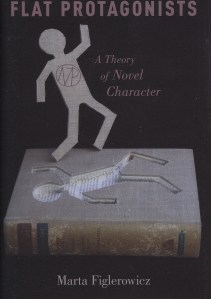
Fiction is a framework to approach reality. People are drawn to stories because they help us to make sense of a bewildering world which wasn’t, in reality, custom made for us. Marta Figlerowicz’s Flat Protagonists: A Theory of Novel Character explores the types of characters that modern novelists are taught to avoid. She points out, however, that they occur in great novels beginning from the early stages of the category up through fairly contemporary classics. The flat protagonist, in short, isn’t believable. I’m not enough of a literary critic to judge her examples, but I have been thinking of one such character that occurs in popular culture all the time—the personification of evil. In my reading on writing I’ve learned this is to be avoided. Nobody is pure evil. Popular media begs to differ.

Being of working class sensibilities I can’t separate myself from the lowbrow crowd, I’m afraid. My fascination with Sleepy Hollow is pretty obvious on this blog. One of the recurring themes in the series is the antagonist that is indeed pure evil. Whether it’s Moloch, Death, Pandora, or the Hidden One, those who are evil represent the dark side of humanity, or the universe. They glory in destruction. Of course, in late Judaism and early Christianity this was a role taken by the Devil. As a child I was taught that it was wrong to feel sorry for Satan. This clashed in my head with the idea of forgiveness and with the love of all. Could God not love his (and he was masculine) own enemy? How could we hope to do the same, then?

In the most ancient of religions, as far as we know, evil wasn’t personified. Yes, evil happened, but it was simply part of the matrix of being. Some gods tended toward good while others tended the other direction, but a being of pure evil doesn’t seem to have existed. Even Tiamat loved her children, at least until they killed her consort. The stark black-and-white world of monotheism can’t explain evil without an divine enemy. A flat protagonist, to be sure, but one you can always count on to do the wrong thing. The closest we come to that in real life is the Republican Party. Insidious, sneaky, using every possible loophole to shove their agenda through, they are the perfect flat protagonists. No, I’m not inclined to believe in the Devil. Or at least I wasn’t until November of 2016.


Sleepy Holy

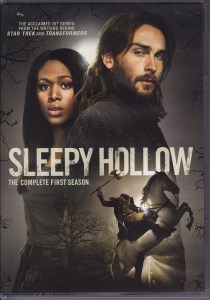
Fox recently announced that, after four seasons, Sleepy Hollow is being cancelled. The news, while not unexpected, is still disappointing. The initial success of the series caught just about everybody by surprise. Intelligent, witty, and literate, this program tapped into a number of themes dear to American sensitivities. One of those sensitivities, surprisingly, was the Bible. I sometimes wonder if the Bible might’ve been able to save Sleepy Hollow. In my limited view the first season was the best. It started out with an all-American apocalypse. To survive an apocalypse you need a Bible. George Washington’s Bible featured throughout the mythology of the first installment. Two of the four horsemen of the apocalypse had arrived in Sleepy Hollow. Then something went wrong.

In season two, Moloch—clearly a stand-in for the Devil in the series—was killed off. Apocalypse no. The end of the world, in Scofield’s canonical view, had been cancelled. Even Ichabod and Abbie began to wonder what good it is to be mentioned in Revelation if your role as world saviors has been made redundant. A new arch-villain was needed. The coven that had shielded Ichabod, headless without its horsemen, simply faded away. Ichabod learned how to drive. Where’s an enemy when you need one? Enter Pandora for season three. But wasn’t she rather a sympathetic figure? Sure, she unleashed lots of negativity but hardly with malicious intent. There’s no villain like a biblical one.

Where do you go after the apocalypse is over? What use is the Bible in such a world? Pandora has no book of Revelation behind her. No special effects budget can rival Pestilence, War, Famine, and Death. What can make you shudder like that pale horse and its skeletal rider? In a world with ebola and zika it would seem that pestilence still has a place. Famine in a world of plenty is horror defined. Two out of four isn’t bad, I suppose, but when you start off with Death you’re not leaving yourself much room for maneuver. Of course, after the horsemen there are three seals left. Perhaps if Sleepy Hollow had stayed with the script and followed through until just before the final trump, it might still be here among the land of the living. Just like creation, the “end of the world” has multiple versions in the Good Book. The Bible’s a consistent narrative only in the imagination of harmonizers eager for easy answers. The possibilities are endless. Where there is no vision, the people parish.


Terms of Interment

In an early episode of The Simpsons Marge is commissioned to paint a portrait of Montgomery Burns. Angry with him because of his constant treatment of others as beneath him and his glib superiority granted by wealth, she paints him old and feeble, naked as he climbs from the shower. The crowd present for the unveiling is appropriately shocked. Marge explains her motivations for the painting and one of the voices in the crowd affirms, “He is evil, but he will die.” That scene was brought back to mind by an article a friend sent me on Archaeodeath. As someone who’s volunteered on an archaeological dig, I understand that the past is a history of death as well as of life. We read what historians choose to preserve. And, as Professor Howard M. R. Williams points out, the tomb often tells a tale that requires some subtlety in reading.

Never a great fan of the wealthy, some years ago I visited Sleepy Hollow. It was before the television series began, back in an October when the mind begins naturally to turn to death. I’d always liked the story by Washington Irving that had made this quiet town famous and it’s really not hard to get there from New Jersey. While in town we visited the famous cemetery, in search of Irving’s grave. Others are buried there, too. High on top of a hill stands a palatial tomb to some Rockefeller. As Prof. Williams makes clear, all must die and all tombs lie. Those who insist on the most opulent tombs are those who routinely overestimate their personal importance. So it is my mind turns from Montgomery Burns to Cyrus the Great.

There was a time when world conquerors possessed a dose of humility. It may seem strange in today’s world that an Iranian (in the days before there was an Iran, designed as it was by Europeans) would be considered a benevolent dictator. Cyrus reversed the deportation rules of the Babylonians and Assyrians. Subject peoples were permitted—encouraged even—to return to their lands. He even federally funded the building of temples and, to translate, centers for the arts. Cyrus understood that grateful people make good subjects. When Cyrus died, after being king of the world, he was interred in a decidedly understated tomb outside Pasargadae where, according to one account his inscription read, “I am Cyrus, who founded the Persian Empire. Grudge me not, therefore, this little earth that covers my body.” Archaeologists uncover the dead. Those who bill themselves grandly, as the diggers understand, seldom deserve the glory bestowed by their own minds. Marge Simpson, as usual, is a voice of wisdom.

Some president’s tomb


In Poor Taste

I remember seeing a television commercial once (not during the Super Bowl) where an older guy, a lawyer, complained at the camera, “It used to be that lawyers didn’t advertise.” He went on to say that he felt uncomfortable promoting himself since it was in poor taste, but since the legal profession had swung that way he was entering the game. I know how that guy felt. I grew up with the firm notion that self-promotion was in bad taste. If my career has taught me anything, it’s that unless you’re born well connected, if you don’t promote yourself nobody else will. Still, it rankles. With that hearty introduction, I would, in poor taste, point out that my latest article has been published. Those of you who keep an eye on this blog will know that I gave a paper about the Bible in Sleepy Hollow to a learned society a couple years back. That paper is now available in the Journal of Religion and Popular Culture.

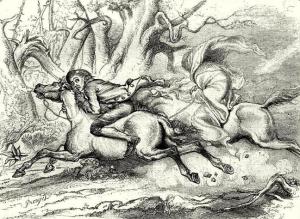
ichabods_chase_crop

Doing research is difficult when you don’t have institutional support to carry it out, but doing such things as an independent scholar can be kind of liberating. I used to research, write, and get published an article a year, back in my teaching days. Nashotah House didn’t have the greatest library, but they did have interlibrary loan and, towards the end of my time there, internet access. More than that, life wasn’t measured in increments of nine-to-five. Living on campus, commuting could be measured in seconds rather than hours. Although publication didn’t bear the weight there that often pressures academics elsewhere, like that lawyer whose name I can’t remember, I wanted to be in the game. I guess I still do.

In these days of uneducated government, if you don’t do it yourself nobody’s going to do it for you. It’s what I once called “the educational imperative.” We are duty-bound, as conscious beings, to move knowledge forward. How many apocalyptic scenarios are there where, when the powers that be devolve into inanity, the monks in their cloisters have to keep knowledge alive? (The question’s rhetorical.) I’m reminded of Station Eleven by Emily St. John Mandel since there women do a good bit of keeping the culture alive when society collapses. Or, to put it another way, like Sleepy Hollow. When the forces of evil break into the world, it’s an African American woman who saves it. If your school has access to JSTOR, you’ll be able to find out more in my paper.


What You Eat

The future of Sleepy Hollow is uncertain. The successful FOX television program has suffered the slings and arrows of outrageous scheduling over the past year and speculation abounds that the current fourth season may be its last. It has been, in my experience anyway, one of the most literate supernatural horror shows ever. Books and reading abound and an interracial team fights evil week after week. Having done some research on the first season of the program, I continue to be surprised just how detailed the homework of the writers is. My wife sent me a story from Atlas Obscura on the “sin eater.” This is a term, I readily confess, that I never heard before the introduction of Henry Parrish to Sleepy Hollow. Ichabod Crane, guilty over the death of a freed African American freedom fighter, ingests poison to kill himself and severe his connection to the Headless Horseman. Abbie Mills, believing there is another way, locates the sin eater.

The idea is fairly simple, if unorthodox. A sin eater can literally devour the sins of another. In Sleepy Hollow this comes at a considerable cost, but the article by Natalie Zarrelli demonstrates that this too reflects research on the subject. There were, it turns out, sin eaters in the early modern British Isles. Often a poor person with no other options, a sin eater would consume bread placed on the chest of the deceased, incorporating, in an almost Christ-like way, the sins of the recently passed. The dead could then be safely buried, forgiven, while for a pittance a poor soul could walk around with someone else’s sins in his or her body. Sounds like capitalism writ large, to me.

Watching Sleepy Hollow I had assumed this idea was invented for the show. Like so many details, however, it turns out that some digging had brought an obscure historical practice to the surface. Sin eating, as the article makes clear, was never sanctioned by the church. People have often worried that official religion might not deliver the salvation it so readily promised, bound up with rules and rites as it was. Here was a sacrament of the people. Bread could be visibly consumed and symbolically, or literally, sin with it. The sin eater was paid, making this a legal transaction. Although sin eating is thought to have died out, it seems that with the recent, high-level resurgence of evil-doing, perhaps it is a practice that should be recalled. In many ways Sleepy Hollow has been ahead of the times since the beginning.

IMG_1960_2


Hollow Bible

Sleepy_Hollow_-_Title_Card

The proofs for my article on the Bible in Sleepy Hollow are now here. It will be appearing shortly in the Journal of Religion and Popular Culture. For those who know my previous academic work—hi, both of you!—this represents a departure from the familiar for me. Some years back, floundering for a teaching position like a fish that’d flipped out of the acadarium, I talked to a colleague who confirmed what I’d long suspected: study of the biblical text is dying. Face it, nobody cares about J, E, D, and P, or even Q, anymore. We’ve made our point. The Bible is a composite document with many sources that people can still tuck under their arms on the way to the polls. It’s so easy to forget that this text is the basis for so many lives and eternal plans. While we scholars have been arguing with one another, culture has moved on. That’s why I looked at the Bible in “Sleepy Hollow.”

If the Bible isn’t relevant, why bother studying it? If the main character—dare we call him protagonist?—of the New Testament says to turn the other cheek and his “followers” advocate for gun ownership it’s time to ask what went wrong. Scholars know the Bible, but do we know the Bible? Long ago meaning slipped away from academics. Consider science. We can question global warming because the science has become a topic of conversation among specialists that the rest of us can’t hope to understand. Instead of trusting that they know what they’re talking about, we politicize it. Scientific research, even in major universities, is funded by interested third parties. You know, some scholars don’t think there really was even an E after all.

The Bible no longer means what the specialists say it does. I may have spent years of my life and thousands of dollars to speak as an expert, but I soon learned nobody was listening. Meanwhile, culture marches on, somehow supposing if two Corinthians walk into a bar the rich man in his tower makes the best sense, according to the Good Book. Indeed, if you want to find out what the Bible says, all you need to do is head up the Hudson Valley for a season. Or listen to those who hand out tracts and purchase firearms. What could possibly go wrong there? My article will be out in a few weeks. If you’re one of the two who read it keep in mind that there’s more to it than meets the eye.


Hollow, Sleepy Hollow

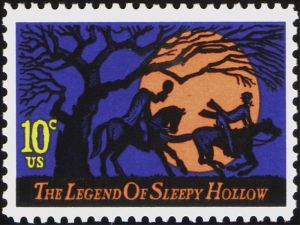
Legend_of_Sleepy_Hollow_U.S._Stamp

It was recently announced that Fox has renewed Sleepy Hollow for a fourth season. Please! No spoilers in the comments (as if)! I’m running a season behind so I want to protect my innocence. The announcement coincided with the happy news that my article on the Bible in Sleepy Hollow has been accepted for publication in the Journal of Religion and Popular Culture. I’m irrationally chuffed about this since my past publications have been primarily textual explorations of documents in languages nobody reads any more. Having something contemporary accepted for publication felt—dare I say it?—cool. As if I were part of the supernatural television crowd. It also affirmed my decision for which book to pursue next. When I say “pursue” I mean “write.”

You see, as a young scholar I struggled trying to decide what direction my research would take. After writing my book on Asherah, I was a bit sated with Ugaritic goddesses, although I started a book on Shapshu, goddess of the sun. The sun gave way to the weather and I wrote Weathering the Psalms. I lost my job in the midst of my revision of that project and it has taken a decade to find my way back to academic publishing. Research, however, takes on a vastly different form when you’re not hired to do it. Colleagues say, “I can get you access to my university library.” Such a kind thought, but my mind always says “when?” When would I have time to visit a library? I get up at 3:30 for my commute and get home in time to go to bed so that I can wake up again at 3:30 the next day. Research reading on the bus is dicey at best. Weekends are for getting the things done that are neglected all week long. Research has to be squeezed into the interstices.

That’s why I’m pleased about Sleepy Hollow. Watching television, even if on DVD, can be research. I’ve got decades of backlogged reading upon which to draw. When my tastes for light horror integrate with what I’m interested in researching it is a happy day. “The Legend of Sleepy Hollow” captured my imagination as a child. It was probably based on the Disney version, but even so, I never lost the fascination. Tim Burton’s Sleepy Hollow is still one of my favorite movies. Watching the episodes of the Fox series takes time, but now I know that time is not just simple relaxation. No, it’s research. Now to find the time to write that book that’s brewing in my head. Inspired, perhaps prophetically, by a Headless Horseman.


Golem

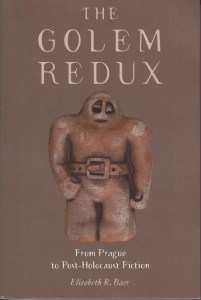
GolemReduxI read a lot of books. About a hundred a year. At the end of the year I go over them all again and many of them, I see, failed to make a deep impression. Some, I know, before I close the back cover, will stay with me. Maybe even haunt me. I count Elizabeth R. Baer’s The Golum Redux: From Prague to Post-Holocaust Fiction among those that will linger long. My regular readers will know of my predilection for monsters, so a golem book will hardly be a surprise. I realized, however, upon completing my academic paper on Sleepy Hollow, that my reading on the golem was rather slim. I’m no longer sure that it’s even a monster. As a goy who’s spent a good deal of his life among the Hebrew Scriptures, there’s a natural resonance, it seems, with those oppressed for being who they are. Golems are created in times of crisis but have unexpected, or at least unwanted, repercussions. Baer offers a thoughtful, intertextual study of the golem, largely through the lens of Jewish fiction.

Having dealt with the Bible as portrayed in Sleepy Hollow, I treated the episode where its significance truly unfolds (“The Golem”) as the entryway into the culmination of the first season. Now it appears likely that season three will be the erasure of the aleph, it seems appropriate to give golems their due. The story begins with the oppression of the Jews in early modern Prague. Rabbi Loew makes a golem from mud to protect the beleaguered community. This soulless, selfless protector becomes an archetype for various superheroes and literary characters ably summarized by Baer. The book put me in mind of my only visit to Prague, too brief and too ill-informed to truly appreciate what I was seeing. To see you have to learn to read.

While some writers have fun with the golem, others understand it in more serious tones. Those who can’t forget the Holocaust see things in a way that others cannot. Not that only Jews can summon a golem, but its origins and reuse have a special place in a community that longs for a protector. I’m reminded of the book of Job, and there’s a good reason for that. While reading The Golem Redux on my commute, I came home to find a copy of Pete Hamill’s Snow in August on my wife’s stack of books to read. As it is one of the titles studied by Baer, I felt an odd synchronicity at play. The book had been recommended by one of the booksellers at our local indie shop just a few weekends back. Tied in with all the other golem-based thoughts in my head recently, I’m inclined to think that this was no mere coincidence.


Underground Easter

SleepyHollow

Recently I had the opportunity to write a post for the OUP Blog on the topic of Sleepy Hollow. I’m not exactly obsessed with the program, but it fascinates me that a television show that is so religiously based was such a hit for a couple of seasons. Religiously based, that is, in a thoroughly secular way. That may sound like a contradiction, but that is precisely part of the charm. We are constantly being informed that religion is on its way out, but we keep coming back to it in other guises. Sometimes disguises. Since today is recognized as Easter among many western Christian groups, I thought it’d be appropriate to consider resurrection. We know that resurrection is an idea that pre-dates Christianity and that it is one of the most basic religious hopes people share, in some form or other. It is also one of the central themes of Sleepy Hollow.

The premise of the series is that Ichabod Crane has been resurrected two centuries after his death. Alive in Sleepy Hollow, he and Abbie Mills fight off a variety of weekly frightening monsters, the primary one being the Headless Horseman. But the Headless Horseman is also a resurrected character. Ironically, he is Death, and even Death comes back from beyond. As particularly the first season goes on, we find other characters dead and risen. George Washington comes back from the dead to give instructions for coming out of Purgatory. The second horseman of the apocalypse, War, is a character brought back from the dead. In the second season, Thomas Jefferson, in a kind of futuristic sense, is brought back from the dead as a kind of living hologram. Where, o Death, is thy sting?

Sleepy Hollow is a secular program. There is no overt religious message. To tell a compelling story, however, the writers keep coming back to the Bible and other sacred texts, and supernatural themes. In researching the program I learned that other networks (who has time to keep track of them all?) also have supernatural features and that competition is fierce. Meanwhile we’re being told that religion is all but stomped out under the weight of rationalism. My observation is that it may be dressed up as something different. It may even be in disguise. Religion, however, is experiencing its own resurrection in popular culture and the idea of Easter has yet to be considered obsolete.


Mere Monsters

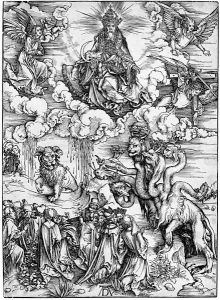
While my colleagues and I wait to hear if our monster session will be approved, my thoughts naturally turn to the taxonomy of monsters. One of the perennial problems in the study of monsters is that definitions vary widely. We might all agree that a werewolf is a monster, but what of Cthulhu? Or of a horribly deformed, but completely natural animal? What about demons? Should we all agree that we know what a monster is, how do we divide them into categories for easy study? One way of doing this might be to rely on binaries. For example: natural monsters versus unnatural monsters, living monsters versus undead monsters, monsters from earth versus monsters not from earth, monsters created by humans versus naturally occurring monsters, fictional monsters versus monsters reported in nature. It soon becomes obvious that monsters are a widely divergent group of creatures.

Monsters have won an enduring place in popular culture. I think of The X-Files. Apart from the “mythology” of the series, many episodes featured a weekly scary monster. The same is true of Sleepy Hollow, now in its third season. Monster movies, although perhaps taking a back seat to super heroes of late, are regulars on the silver screen. We just can’t seem to live without our monsters. I’ve mentioned in my many posts about monsters that the connection with religion is so obvious that it hardly requires apology. But a deeper question has occurred to me. It has to do with the nature of religion (itself not well defined).

439px-Durer,_apocalisse,_12_il_mostro_marino_e_la_bestia

Religions exist to deliver people from the trials they face. Offering Nirvana to break the endless cycles of reincarnation, or Heaven when we die after one go-round, religions claim to give us something of an assurance that things will work out. (Mostly.) In the light of this, why does religion give us monsters as well? Surely they are more than mere metaphors for the misfortunes of daily life. There has to be something more to it. What that more is, I’m not certain. I’m not even sure of how to approach the question. Monsters will, for me and many other Monster Boomers, remain a guilty pleasure that we are pleased to be able to address as adults. I am becoming more and more convinced that the more we learn about them, the more we learn about religion itself. And perhaps also about those who give shape to religious thought.


Grim Where?

An inordinate amount of my childhood time was spent on television. While the device of the day had been around for a decade already, I was among those who grew up learning that watching was easier than reading. Like most children, I took the path of least resistance. I watched. As a teen, however, I rediscovered reading and from that time television began to take a back seat to books. When the great switch-over to digital occurred we didn’t get a conversion box, and we could never really afford cable for as little TV as we watch. When a program gets commended, or if nostalgia takes too great a toll, we can always purchase programs—the price of watching television without the commercials. So it was that I began watching Sleepy Hollow. Very quickly in the first season the monster of the week trope was established as the plot grew more and more tangled. The Bible was so prominent in that season that I wrote an academic paper on it.

Sleepy_Hollow_-_Title_Card

Over the past few months my wife and I have been working through season two. The DVD version was delayed and we only watch on weekends. Recently we finished the eighteen episodes of the second installment. Clearly the budget had improved over the first season, but the Bible, it was also clear, had diminished. Throughout the first season the driving motif of the story was that biblical “prophecy” (from the book of Revelation) was unfolding in Sleepy Hollow. This is what one scholar has termed a “local apocalypse.” Throughout season two, however, the end of days is shut down. Molech, its architect, is killed. The headless horseman is less Death than a jilted lover. The second horseman, War, loses his armor and dies.

Magic, however, along with special effects, take on an increased roles. Instead of turning to the Bible to solve problems, the most helpful book to have on hand is a grimoire. Sleepy Hollow, which is anything but what its name suggests, is full of monsters. Powerful magic is required to contain them, and, it seems, the Bible is no longer needed as a tool to take down evil. Perhaps there is a parable at work here. I was drawn into the series by its biblical literacy, as well as its literacy in general. More action has been introduced, and fewer books. It’s a pattern I’ve seen before. I suspect I’ll watch season three presently. When I do I’ll be casting a wistful eye on the stack of books I have yet to read, and I’ll be wondering if reading may not have become easier than watching.


Gallows Hill

Over the past couple of weeks it has been in the news that the site of the “witch” hangings in Salem, Massachusetts has been identified. The actual site had long been suspected, and it was only recently confirmed by a group of historians using the empirical evidence available to historians. Although my interest in the Salem trials pre-dated my wife, nothing brings you so close to history as being a part of it. Descended from the brother of three of the women accused of being witches at Salem, my wife brings a sense of reality to the tragic accusations of three centuries ago. Although toyed about in the media (an episode of Sleepy Hollow, “Spellcaster,” in season two, featured an actual Salem witch) the fact is that nineteen innocent people were executed for a fanciful belief that the Devil was roaming about New England, and when you can’t catch the Devil, you have to use a scapegoat.

DSCN0518

One of those investigating the location of Gallows Hill was Benjamin Ray of the University of Virginia. I’m sure Professor Ray wouldn’t remember me, but one day as I was doing a campus visit for Routledge, I had taken AmTrak to Charlottesville to visit the religion department. Many of the faculty declined to see me, and as I sat on a bench in the hall (one of my academic dates had stood me up), Dr. Ray walked up to me and asked me if he could help. I explained who I was and he invited me to his office where we talked about Salem. I told him was wife was related to Rebecca Nurse, Mary Eastey and Sarah Cloyce, the two former, as he knew, executed for an imaginary crime, and the third accused. A strange quiet settled over the office. He told me his interest began because he too had descended from a Salem family. His ancestor, however, had been an accuser rather than a victim. It was a strange rapprochement. Opposite sides brought together in scholarship.

What truly frightens me about Salem is that we have not outgrown it. Presidential hopefuls spew the same fear and hatred toward Muslims, the hispanic immigrants who make our economy possible, and women (this should sound familiar) trying to “take the place of” men. And the crowds cheer, as crowds will do. Even though Donald Trump cussed twice in his Liberty University speech (an infraction for which a student would have to pay), President Jerry Falwell, Jr. (typing that makes me shudder) shrugged it off saying that we’re all sinners. Some sinners, however, carry a wicked, knotted rope with them while other sinners try to eke out a living in a nation where some can get rich by owning casinos while others frantically spend their inadequate cash hoping to win Powerball. We now know where innocent people accused of witchcraft died, but have we learned anything from it over these past three centuries?