Perhaps Unexpected

Of course I’d heard about it, but I hadn’t envisioned myself seeing it.  My family, however, wanted to get in on the Barbie conversation and, I justified to myself, at least we’d be in air conditioning for a couple of hours.  Besides, I now get “senior” rates at matinees!  I knew very little of what to expect, and I was pleasantly surprised by what I found.  In fact, I can’t remember the last time I saw a movie that was so full of social commentary.  And I actually learned quite a bit.  If you’re one of the maybe a dozen people who hasn’t seen it, the plot is more complex than you might think.  And the writing is smart.  And it’s funny.  I was hooked from the opening parody of 2001: A Space Odyssey.  The scene based on The Matrix made me realize that I was watching something unusual and important.
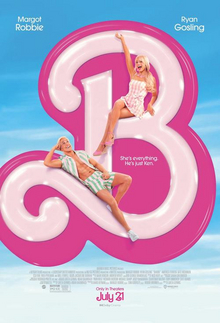
I’ll try to be careful with spoilers here, but basically, stereotypical Barbie experiences an existential crisis that leads her to the real world to find out what’s going on.  Ken tags along, uninvited, and Barbie is distressed to find that the real world hasn’t been equalized between the genders the way that she was intended to help it become.  While in the real world Ken gets a taste of patriarchy and decides to take it back to Barbie Land.  When Barbie returns she finds her once perfect world upside down.  But that’s not quite right.  She comes to realize that the world run by women wasn’t exactly perfect because men and women need to cooperate and share some responsibility.

There’s a lot more to it than that, of course.  How we’ve gone for centuries maintaining male dominance (might makes right philosophy), even while claiming to be “enlightened” is a mystery. Gender inequality is one of the biggest social concerns we experience.  Almost nowhere in the world are societies truly equal and Barbie offers a funny, yet poignant way of thinking about that.  I wouldn’t bother writing about it if the message wasn’t important.  The movie isn’t a feminist screed.  Nor is it simplistic drivel.  It’s a surprisingly sophisticated consideration of a society out of balance.  I’ve been in favor of equal treatment of women for as long as I’ve been conscious of the difference.  Raised by a capable single mother, I noticed in my formative years that she was doing what two-parent families did, with less than half the resources.  While Barbie won’t solve all our social ills, it is getting the conversation going.  From my point of view, it’s about time.

Liking Everyone

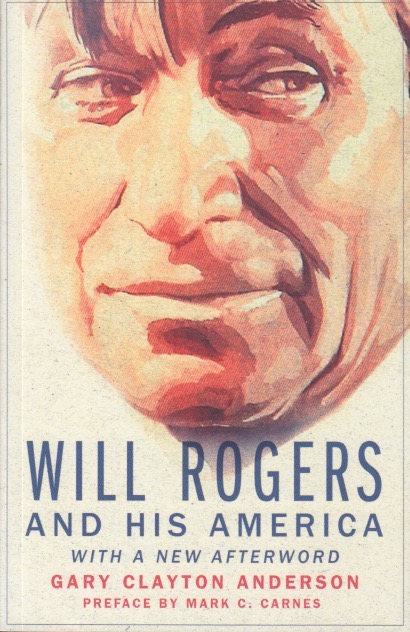
I’m not really interested in politics.  Powerful people deciding the fate of the rest of us seems inherently depressing.  We could use a good laugh.  I’ve been curious about Will Rogers for some time now.  He’s a name that everyone in my generation seems to recognize but few people know anything about him, beyond some of his famous quips.  So I read Gary Clayton Anderson’s Will Rogers and His America.  It was an eye-opening experience.  Rogers died in 1935, the year my mother was born.  What a difference less than a century can make!  At the time of his death he was one of the most famous people in the country, personal friend of U.S. Presidents, an international traveler, and widely syndicated newspaper columnist.  He was also a film actor and comedian.  When he traveled internationally world leaders gladly met him.  Not bad for a poor boy from Oklahoma.

Anderson’s book is a good introduction to who Rogers was, but it does tend to focus on the politics.  Arguably that’s where one’s greatest impact in life might reside.  Still, there’s a lot more to an individual than politics.  I’m curious about Rogers’ career as an entertainer.  He started out as a Vaudeville roper—literally, a rope act.  His noted wit, however, made him famous.  At various points he was one of the highest paid entertainers in the country.  His sympathies, like many of us born in humble circumstances, tended to be with the average person who, it seems, is always struggling against an economy that favors the wealthy.  See?  There I’ve done it myself, gone and got political.  It’s difficult to avoid.

Perhaps the most widely read columnist in the country, who influenced political opinions and could rake in the money at just about any form of comedic enterprise, Rogers nevertheless faded from view after his death in a plane crash.  He was part American Indian.  He never completed college.  He was homespun and yet influential around the world.  Fame comes with no guarantees, of course.  I guess it would be helpful to know what Roger’s motivations were.  Was he, like most people, simply trying to secure his future for himself and family?  Was he trying to change the world?  Can anyone manage to do that for very long before things come along and everything’s suddenly different?  (Think AI, for example.)  I’m glad to have met Will Rogers through Anderson’s book.  Even though I’m not really interested in politics, I learned something about them too, along the way.


Just Justice

I don’t mean to be insensitive, but there’s so many injustices to address.   We need better vocabulary for the victims of patriarchy.  And patriarchy tends to be “white” in color.  February is Black History Month and March is Women’s History Month.  These are important reminders, but I have trouble focusing on an entire month, let alone a day—particularly if it’s a work day.  That doesn’t mean I don’t support my fellow human beings.  So today’s International Women’s Day.  I frequently wonder why it’s so hard for a particular type of man to see and treat women as equals.  I’m afraid that it often comes down to might making right, which we all know is wrong.  While power may not be inherently corrupting, many people are weak and are too susceptible to its blandishments.  And power likes nothing better than similar people and sycophants.  Women remind us that we can do better.

We don’t see those women elected to high political office grasping for the power to be queen for life (except queens, but that’s a different story).  Instead we find a spirit of cooperation instead of this constant atmosphere of competition that seems so testosterone-driven that it ought to be X-rated.  I don’t stereotype women as docile, but female leaders aren’t known for starting wars.  And none of us would be here if it weren’t for women.  The spirit of the times is one of wide representation—the principle of hearing all voices instead of only those of the powerful and ultra-wealthy.  I’m not sure why men feel so threatened by women that they try to deny them a place at the table.  Or pay them less for the same work.

Perhaps we fear societal change, but change finds us no matter what.  We now know that sex, gender, and race don’t make any person inferior.  Indeed, the struggle to be dominant often creates these categories in order to assert oneself over others.  As any mother of multiple siblings knows, teaching children cooperation leads to much better results than setting kids off against each other.  It’s a lesson that politics has yet to learn.  Culturally, it seems, this is well accepted.  People deserve to be treated equally.  That concept is called “justice” and our entire legal system is based on it.  Why don’t our politics match our culture?  I don’t want to stereotype, but it seems to me that far too many men are involved.  It’s International Women’s Day.  Let’s take the opportunity to rethink how half the human race is treated.


Natural Disasters

Like many, my heart goes out to those in Turkey and Syria suffering through the destruction and aftermath of a major earthquake.  Such natural disasters often bring out the best in people—empathy, love, and offers of support.  They lead to both tragedy and human warmth.  They also give us pause to reflect, if we will, on our worst behaviors.  Rescue efforts have been hampered, in Syria especially, by a weakened infrastructure, caused, at least in part, by foreign bombing.  And yes, the United States was part of that.  People who now feel our sympathy only months before faced death from us.  What is it about our species that makes us want to destroy one another through our own technology but then turns and wants to help when a “random” act of nature occurs?  We must prefer death on our own terms.

Image credit: Luca Comerio (1878-1940), Corpses of victims of the earthquake in Messina, via Wikimedia Commons

For me, part of this is reflected in how the so-called “culture of life” treats liberal social causes as the “culture of death.”  Those groups that support “the culture of life” are against abortion but desire no controls on gun ownership.  This is the same basic principle—we want to cause death on our own terms.  We want to play God and decide who is worth saving and who should be destroyed.  I have no doubt that if, say, a tornado destroyed an entire city block outside a convention center where the NRA was meeting that those at the conference would rush out to try to help find survivors.  When they reconvened, they would try to figure out how to protect their “right” to own and collect assault rifles.  Is this “culture of life” really worth preserving?

Meanwhile the people of Syria and Turkey are suffering.  Thousands are dead, winter is setting in, and Covid is still out there.  They need our help.  The amount we spend on aid will, however, pale next to the amount we spend on bombs, drones, and missiles.  I have to wonder if we never really stop to think about what we’re doing when we engage in behaviors that destroy others.  That weeping mother outside an earthquake-collapsed building could be the same mother outside a missile-collapsed structure.  With natural disasters we know that we all stand a chance of being victims.  We feel for those caught in the way.  Once politics enters the picture, however, and we have the ability to control who lives or dies, everything changes.


Who Bites?

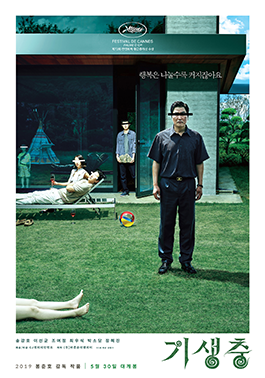
Although I use them, I find genres too constraining.  When Parasite first came out in 2019 many people said it was a horror film.  Others called it a thriller.  A comedy.  A drama.  It has elements of all these things.  As the first non-American film to win an Academy Award for best picture, it was an irresistible draw.  When it would come to a streaming service I already pay for, that is.  And having watched it, I still don’t know how I’d classify it.  And if you haven’t seen it, how would I describe it?  The word that keeps coming back to me begins with the same first couple of syllables: a parable.  In case you’re even more out of touch than I am, here’s the skinny on it.

A South Korean film, it’s the story of a poor family (Kim) that, desperate to get out of their circumstances, finds a way to infiltrate a rich family’s (Park) home.  The Kims live in a semi-basement flat prone to bugs and flooding.  The family’s son gets hired as the Park’s substitute English tutor for their daughter.  He recommends his sister (putatively as someone his cousin knows) as an art tutor for the Park’s son.  The poor siblings then arrange to have their father (presented as a stranger) hired as the chauffeur, and finally the mother as the housemaid.  They live in poverty while working for the wealthy.  Then they discover the former housekeeper kept her own family in a secret basement.  The homeowners discover none of this, then a garden party goes all wrong.

Laugh out-loud funny in parts, it’s a poignant film that, for me, explores the plight of the clever poor.  The wealthy have so much that they can easily support a second family without even noticing any financial loss.  The only reason the Parks employ all the Kims, however, is that they don’t realize the Kims are actually a family.  By pretending to be unrelated they’re able to survive.  There’s a lot to say about this movie.  I can see why some people suggest it might be horror—that’s not the usual genre assigned, though.  It has a Jordan Peelesque nature to it.  The social criticism is fairly intense throughout from trying to syphon off a neighbor’s wifi to cheap solutions to kill the bugs in the apartment.  The Parks live in a walled, gated paradise while those down lower simply have to make do.  If you haven’t seen this one, please do.  You’ll be glad you did.  And please, remember to vote.


Banning Ideas

It’s been in the news lately that some communities, in keeping with the current fascist trends, are starting to ban books.  One of the plays in the Nazi book was to burn them, followed soon after by destroying the people who read them.  Ideas are, by their very nature, dangerous things.  Trying to destroy them by banning books, however, doesn’t work.  The kinds of books being banned are predictable: those that portray races as equal, those that offer understanding and acceptance of those differently gendered or oriented, and books that show the white man caught with his pants down (metaphorically, although in actual life this happens quite often literally as well).  Books premised on lies are just fine, but as soon as we get to ideas that make us think, well, we ban and burn.

Book banning is normally presented as protecting the children.  Something any attentive parent knows is that children understand a lot more than we think they do.  I suspect they realize that books are prohibited because they contain the truth.  Nobody bans a book of “harmless” fantasy—books where white men have all the answers and solve all the problems.  And when they lose their tempers they start wars, which, of course, the white guys always win.  Such stories, based as they are on basic untruths, are fantasy indeed.  Our slow move into the new millennium from the growing awareness of the sixties, has shown us the necessity of looking deeper.  Expanding beyond the stories white men tell to comfort themselves.  Those invested in this narrative are very reluctant, of course, to let it go.

The more we move into the new millennium the more determined we seem to repeat the last one.  That one had a pandemic near the beginning and wars and white men only on the front pages.  The younger generation, thankfully, by and large doesn’t share these poison biases.  They were read to as children.  Teachers and other heroes didn’t ban books, but encouraged reading them.  Local communities are making a concerted effort to break down learning and then we wonder why the United States has the highest infection rates in the world.  If only there were some way to figure out why that might be!  Reading books with uncomfortable truths might be a good start.  Ideas that can’t stand up to logical challenges may not be the best ones for building a society.   Read a book rather than banning it, and see if we all might learn something.


Power of Parables

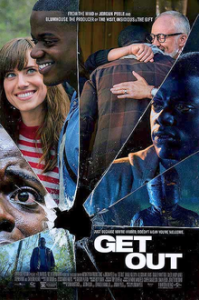
Parables come in all sizes and shapes, horror movie-shaped, some of them.  In my perpetual struggle to catch up, I finally got to see Get Out.  One of the raft of well-made, intelligent horror films that have been released recently, it’s been out long enough that I suspect my spoilers will be well known.  The Armitage family, resident in upstate New York, has been kidnapping and using African-Americans to make up for the perceived weaknesses of their family and friends.  One of their main means of obtaining victims is through their daughter Rose, who brings her boyfriends home for the weekend so they can be hypnotized by her psychiatrist mother and operated on by her neurosurgeon father.  The reveal comes slowly, but the discomfort begins early on.

Released early in the Trump White House tenure, the movie is a study in an intense xenophobia that nestles somewhere between Guess Who’s Coming to Dinner and The Stepford Wives.  It’s inherently uncomfortable watching Chris Washington, the protagonist, being treated as if his very presence requires constant comment in the world of white privilege.  He, of course, had misgivings before ever climbing into Rose’s car, but her convincing display of liberalism was enough to overcome his hesitation.  For me, watching the film made it clear that privilege is something assumed, even when it isn’t had in any explicit way.  The Armitage family and their friends are well-to-do but even if the setting were more mundane the message would still have worked—our culture imposes and reimposes its message of white superiority in subtle ways that the camera captures here.

Quite apart from its nature as a parable, Get Out is a demonstration of the social consciousness of horror.  Its reputation as a debased, low-brow appeal to all that’s unsavory to watch is misplaced at times.  While Get Out is uncomfortable it’s that way for a reason.  Were it not, it would lose its important message.  All privileged people need to be able to see through the eyes of those who are culturally disenfranchised, and although the “us versus them” mentality is problematic it has to be faced honestly and openly.  The very fact that a human construct like race could be used as the basis for a horror film in America raises questions that ought to make all of us squirm.  Setting the story in New York, where prejudice might be supposed not to remain only underscores how deeply its roots have grown.  Horror with a conscience is perhaps as much a vehicle for social change as it is a genre more honest than often supposed.  That’s how parables tend to be.


Six Impossible Things

Solipsism, as a philosophy, has its attractions.  The idea behind it is that since all we can truly know is our self, the self is the only being that really exists.  This outlook is expressed in tragicomic form in Kurt Vonnegut’s Breakfast of Champions.  Written in Vonnegut’s characteristic style, there’s confusion and continuity, and almost a mockery of the gullibility of readers.  Kilgore Trout, a penurious science fiction writer, wrote a novel where one character was human amid a planet of robots programmed to act like people.  Dwayne Hoover comes to believe this is true and acts on it, with several other characters ending up in the hospital.  The story ends with the narrator realizing, I think, that he’s the only real human being because he made up this entire novel.

As someone who generally works alone, and whose lifestyle includes early rising and early sleeping, solipsism suggests itself from time to time.  Writers tend to spend quite a bit of time in their own heads, either reading or expressing their own thoughts via their craft.  Anyone who’s been a victim of a solipsist (and we all have) knows that such a viewpoint is wrong, but it does address one of consciousness’ deepest fears—how do we know what others know or experience?  We keep secrets.  We hide our weaknesses and insecurities.  We show others, most of the time, only what we want them to see.  Addressing the individualism of the late sixties and early seventies, Vonnegut takes to task a society that still promotes prejudice and wages war.

Vonnegut experienced war and it’s clear that it haunted him for the remainder of his life.  He tried, and often succeeded, in finding some hilarity in life, but it always seems to stop short with a slap of cruelty.  I’ve been reading quite a few of Vonnegut’s novels over the past few years.  He’s a writer that mixes profundity with frivolousness in such an easy way that it’s beguiling.  Breakfast of Champions is, despite being an easy read, a difficult book.  Quickly finished with its goofy doodles and swift pace, it leaves you feeling as if you’ve been poisoned with an idea, somehow.  Or maybe it’s just me.  For this year’s reading challenge I’ve selected two more of Vonnegut’s novels, but I haven’t decided which ones yet.  I think about asking others, but then I remember that if he’s right in this one, there’s really nobody else to ask.


Ouch! Ouch!

The cold and flu season seems to have had an extended life this year, what with snow still falling in April and yet another week of cooler weather in the forecast. Although there’s no cure for the common cold, we do have the ability to prevent many maladies with a vaccine. Under eight years of Republican governance, New Jersey had become quite friendly to those who don’t want their kids vaccinated, despite being the most densely populated state in the union. The reason many objectors give? “It’s against my religion.” There was a massive outcry recently when a bill was approved that requires religious objectors to state what their religion is and what exact tenet of that religion vaccination actually violates. The statements of those opposed show that religion was largely being used as an excuse by those who didn’t want their children inoculated. Confirmation class has a purpose after all.

Social responsibility, of course, reaches beyond the home. In fact, it begins as soon as we open the door. Add to that the fact that most people can’t describe the basic beliefs of their own religion accurately and you have a real case for contagion. When you sign up to join a religion—what a capitalistic idea!—you generally go through training classes to let you know what you’re publicly proclaiming you believe. Given that religion deals with everlasting consequences, you might think most people would pay close attention, embedding the facts deeply. That, however, often isn’t the case. Beliefs are handed down like family heirlooms, or are gleaned from watching television (usually Fox). One’s religion is useful for making excuses, but people hate to be challenged on this point.

In the right’s continuing war on social responsibility, they’ve been pumping the media full of anti-vaccine fear. Vaccines, they’ll aver, use human embryos. Any other other form of conspiracy theory can be used to turn hoi polloi against them. Our society was built into what it is by as many people as possible agreeing that when it comes to the good of all, individual prejudices sometimes have to be overlooked. It’s natural enough for parents to be concerned for the wellbeing of their children. It’s sadly ironic when their “religion” tells them that the most basic protections are somehow evil. Who can help but to think of Abraham holding the knife above a bound Isaac on the altar? That is, if they happen to be of a certain religion, and if they paid attention during their version of confirmation class.


Equal Frights

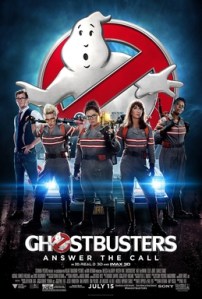
Ghostbusters_2016_film_poster

Working in Midtown Manhattan, it’s rare for a week to go by without passing through a street that’s set up for a film or television shoot. New York isn’t the largest city in the world, nor does it have the tallest buildings, but it is a city instantly recognizable at a glance. It is also a haunted city. The original Ghostbusters was a New York movie, but the reboot may be even more so (although largely shot in Boston). I’m having difficulty remembering the last time I enjoyed a movie so much. I laughed until the tears came, and the theme of spirits loose in the city appealed to that part of me that loves the strange and unusual. With several nods to the original, and cameos from the surviving cast, this is a child of love that outshines its parent. It’s almost as if it makes the original even better than it was to begin with. This is a movie with a mission.

Clearly one of the factors in making the film so good was the fact that women were the leads. They show at once the empathetic, and funny, intelligent, and challenging—roles that women routinely both possess and face. The characters have trouble being taken seriously by the males around them, yet they are fully as qualified as and indeed, know more than the establishment. Discouraged and downtrodden, they press on, saving New York City. This may be the first time women have been envisioned is such a salvific role. They are scientists, scorned for their brains and for their gender, and yet they overcome.

Sure, there’s fantasy involved here, but fantasy with a message. I applaud this movie that not only entertains, but also makes profound statements at the same time. It gives a rare glimpse of what the world would be like if men were treated with the demeaning outlooks that they already frequently give to women. It is a feminist movie, but not an angry one. I left the theater genuinely elated. Of course, I loved the first Ghostbusters, despite all the cigarettes and sausages. Still, those who made the movie had the grace to bless this new venture that takes viewers into a world where we rely on women to solve the problem. Once it’s solved, however, they are shoved into the background so that the powers that be can take the credit. It is a movie for our times. I would’ve gone to see it for the ghosts alone. I came out, however, knowing that I had seen something not only enjoyable, but which might, if taken seriously, begin to change attitudes and prejudices which haunt us to this day.


Business Beating

Politics is about power. Say what you will about the Bible, but at least they were clear about it in those days. Kings were alpha males, not public servants. In the light of Orlando we can see how little has changed. Random acts of violence grow more and more lethal and the politicians filibuster, inflating the room with hot air to avoid this issue because this is an election year. An election year where one of the candidate’s cheers can barely be distinguished from “Sieg Heil” and we have put ourselves into a place where such a tragicomedy was possible. Maybe even inevitable. Meanwhile fifty people are dead, joining the many innocents who just happened to be at the wrong place—is there any right place in a land of abundant assault weapons?—in a land of limited freedom. The press argues about exactly what type of gun was used. Maybe that model should be taken off the shelves.

Our alpha males have, at least in states like New Jersey, and increasingly on the national front, modeled bullying. Bullies are nothing without their threat of power used against you. In the same day when schools and social programs emphasize over and over that bullying is unacceptable, bellowing bulls insist on their way and the crowd goose-steps in ecstasy. Those who are different are dangerous. After all, straight white men were here first. They won this country fair and square through genocide, as any Native American can tell you. And you get your way by refusing to compromise. Refusing to reason. Give vent to testosterone and call your opponent out for being a female. Land of the aggressive, home of the grave.

Gun violence may not be preventable completely in a nation where guns are a commodity just like anything else. Religion is a commodity. The ninety-nine percent are a commodity. The spoils are there for the taking by a bully and his thugs. It used to be that organized crime was illegal. Now it’s politics. How much did you pay in taxes last year? I don’t know about you, but I didn’t know there was an exemption clause just for being rich. I grew up in a family with simple morals. Right and wrong. We learned that taking something that didn’t actually belong to you, or not contributing when everyone must, is wrong. Taking what’s not yours is stealing. And that especially includes lives. How naive we were! Politics is about getting your own way. Guns make that possible. Heil to the thief.

DSCN4678


Dairy King

In the way that only social pundits can generate stereotypes, people born between 1979 and 1994 are called “the entitlement generation.” Large scale social attitudes, it is alleged, set an almost unbreakable Zeitgeist that defines us neatly so that we can be made easier to handle. Obviously I don’t fit into that generation, but as I watch the super-rich—often old enough to know better—claiming that they shouldn’t pay taxes because they do such good for society simply by existing, I wonder if the pundits might’ve missed the boat. An antonym to entitlement, it seems to me, is social responsibility, gratitude even. That’s why I find a story in Time from back in April so encouraging. Hamdi Ulukaya, the president and CEO of a successful yogurt company (Chobani), decided to give his full-time employees, in a reverse kind of tithing, a 10 percent share of the company. After all, one can only eat so much yogurt.

IMG_2795

This generous action sets out in sharp relief some of the dangers of quotidian capitalism. Many of those who feel that unencumbered free enterprise is the only fair system don’t spend long enough looking around themselves. I’m sure studies must exist that explore what the cubicle mentality does to people. Working in a little cell, open to the view of others to ensure you aren’t slacking, knowing that someone on the floors above is getting rich from your efforts, it’s hard to believe the system’s working. Descend to street level and those who don’t even rate as drones will meet your eyes, if you keep them open. We are in the habit of discarding people as just another resource that can be remaindered and wasted. Let them eat yogurt. Social obligation? What’s that?

No, entitlement didn’t begin in 1979. Perhaps the most obvious idealist in this country the past century was Franklin D. Roosevelt. He repeatedly earned the wrath of the entitled wealthy for wanting to set up social safety nets to help the poor. When the United States entered World War Two, he realized, however, that military contracts had to allow for owners to get rich otherwise they wouldn’t contribute to the effort. If you’ve got the money to keep yourself safe, what do mere concepts as liberty and fairness mean to you? Wealth entitles personal survival, obviously. Let the others fend for themselves. There are companies with a conscience, but the fact that they stand out so clearly against the backdrop of business as usual should be telling us something. As you chew this over, you might consider having a Chobani. Go ahead, you’re entitled.


Father’s Day

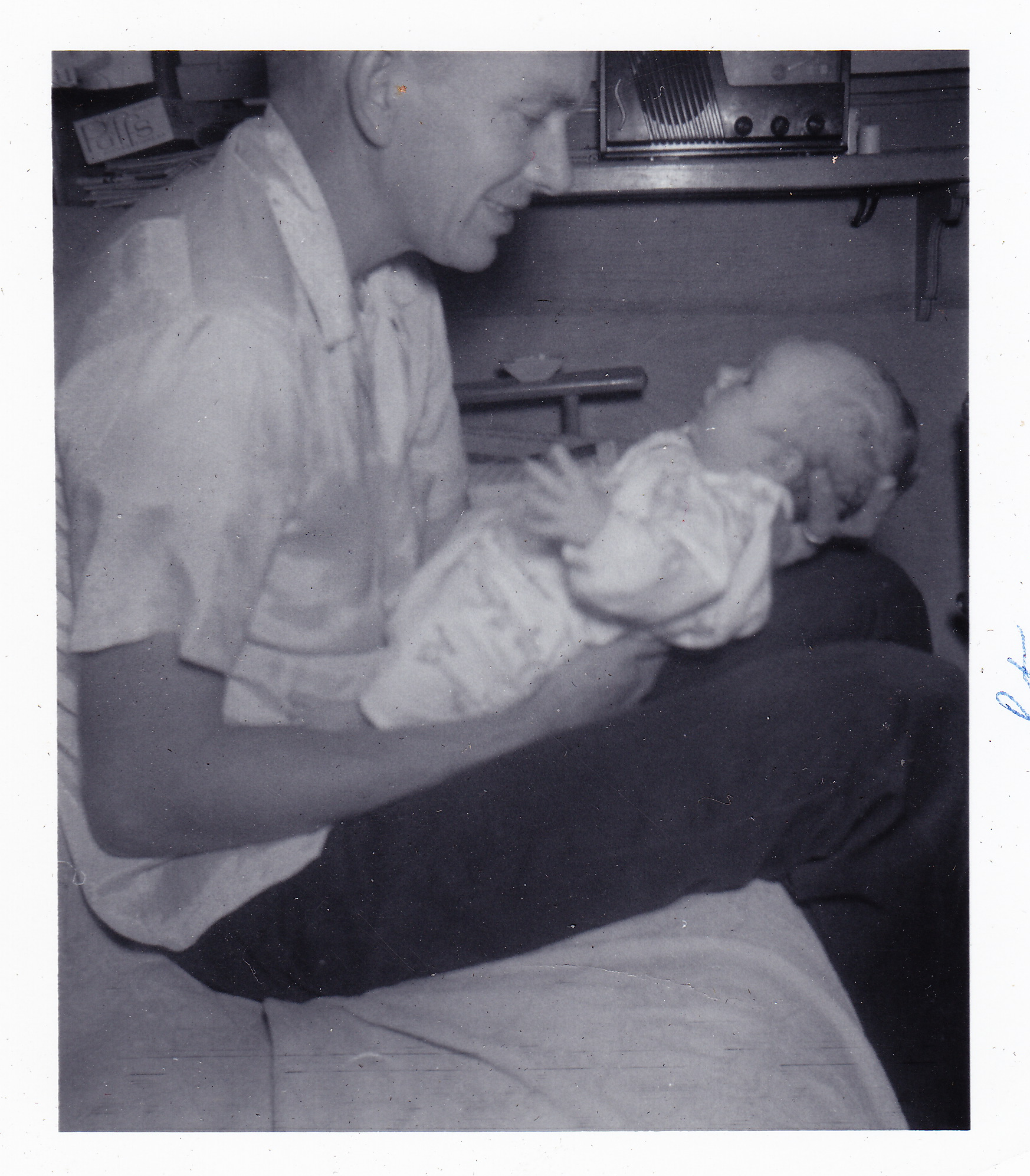
DadI’m not completely stupid.  I know that the Father’s Day ads with which I’ve been peppered all month are nothing personal.  They’re intended to tug at the sentimental heartstrings and get me to spend some money on dear old Dad.  As one of the generation for whom computers were a new household commodity well after college was over, I know that I’m part of a fairly large demographic of middle-age users.  I do wonder, when I see these ads, how many other readers ponder the fact that their fathers have died and that Father’s Day is an occasion as much of mourning as it is of celebrating.  While I know, dear reader, that you’re not my therapist, my father died many years ago after a lifetime of separation from my brothers and me.  I can’t claim to have known him, except in unguarded moments looking into the mirror at the blue eyes he contributed to my genetic code, along with other aspects I can only imagine.
 
Father’s Day can, of course, be a day to honor the memory of, as well as buy things for, dad.  Holidays, however, aren’t really holidays without the changing of hands of lucre.  Although I never tried to think much about it, I never spent a Father’s Day with my father.  I know I’m not alone in this, but many are the days when I believe I would have benefited from a bit more instruction than I received on that front.  “Majoring in religion is not the best career choice,” might have been one of those nuggets I could’ve done with hearing.  The women in my family seemed  to think it was okay.  Even one of my dad’s ancestors was a clergyman.  I like to think that fathers might be able, in some cases, to see farther than their sons.  Call it male bonding.  Call it being a man in a post-patriarchal world.  Call it confusion.
 
I’m all for honoring parents.  I also tend to think people are basically good and that by far the majority of people try to do what they think is right.  They may not have much with which to work, but they try.  I can also think of better ways of honoring them than spending money.  Maybe we could try restructuring society so that those who start out with little might have resources available to move ahead.  If some father’s child has obvious gifts, might we not offer a way for that child to use them and thrive?  As a father myself, I can think of nothing that would make me happier than to see my child have better prospects than I’ve had.  Instead I see a society of one-percenters encouraging us to spend a bit more since, after all, fathers measure their worth in stuff.  The stuff that really matters, at least for this father, include those no longer here as well as those who are yet to inherit.


Whack-A-Prof

My Ph.D. was conferred in 1992. Not by design, I’ve held several jobs since then. One thing I’ve noticed over and over is that supervisors enjoy knocking down the egghead. If you don’t know me you’ll have to take my word for the fact that I’m quiet, not self-promoting, and actually uncertain about many things most people seem to take for granted. Even in the classroom I never used my education to appear superior to students—education is about all of us learning together. At least ideally. I do know some people flaunt their doctorates. A friend told me of customers pulling into the gas station and insisting on being addressed as doctor. (It might help to know that in New Jersey you are not allowed to pump your own gas.) My friend wryly noted, then they don’t even fill the tank. I had my own similar experience working in a camera shop in a Boston suburb. A patron had “Ph.D.” printed on her checks after her name. Company policy was that the signature had to match the printed name exactly, including title. This particular customer, proud to have Ph.D. flashed before your eyes refused to sign it after her name. When the police had to be called, as per company policy, many of us stared sheepishly at our feet as she signed the cursed three initials and declared she would from then on take her custom elsewhere.

Some of us pursue advanced degrees because we have no talent for anything else. I’m a born teacher, and I have always found the classroom the most congenial environment in which to be. I have had several bosses, however, who seem to think that knocking the Ph.D. down shows just how clever they are. I don’t claim to be smart. I never have. I am a hard worker, I read a lot, and I try to make sense of what I read. Some of the smartest people I know have the least formal education. It’s rare that I don’t assume the janitor knows more than I do about any given topic. (Well, maybe Asherah is a place where I can claim some specialist knowledge.) Otherwise, I take your word for it.

Our culture, however, enjoys putting those in higher education in their place. I hear the conversations behind closed doors. While I don’t claim to know very much—in fact, the longer I’m alive the less I claim to know—I do know that America doesn’t value its educators. It’s not just the professorate. Teachers, those to whom we entrust the very future, have been perennial scapegoats for society’s ills. We don’t pay them well, and many of them have to take second jobs in the summer to make ends meet. I guess we showed them! Who’s the smart one now? I can’t claim to know much, but it seems to me that education is one of the pure goods in society. We can’t make progress without learning. Gifted teachers should be esteemed—not pampered, but appreciated. Of course, I can feel better about myself if I show that I know more than you do. The only cure for that, I suggest, is more education.

Photo credit: Anna Frodesiak

Photo credit: Anna Frodesiak


True Literalism

Biblical literalists make strong claims for selectively obeying the Bible. It isn’t so hard to do in the short term, as numerous books on people “living biblically” have shown. You can get by for a year without trimming your beard or going out on a Saturday. You can even survive without eating pigs. Still, the moral codes that political literalists cite tend to have their own empowerment in mind: prevent women, gays, or those of other races from getting ahead. Stone adulterers and sassy kids. The Bible will set us straight! The finer points of the law, however, have likely never been observed. Even biblical scholars will confess that Leviticus can be a tough go. It sometimes helps to make diagrams as you read along to try to follow the intricate rules. Still, since Leviticus is the only place to find anti-homosexual rhetoric in the Hebrew Bible, we’d better go on reading it, right? It is worth it to feel better about ourselves. Superiority rules!

I was thinking about Leviticus 25 recently, the chapter about the sabbaths of the land. The concept may have sound environmental principles encoded in it: after working the land for six years, you leave it fallow on the seventh and live off of what you’ve stored up during the presumably bumper-crop years. The same principle lies behind rotating crops—the land needs a rest. There’s no evidence, however, that this was ever really put into practice. It is notoriously difficult to feed everyone in a subsistence economy, and deliberately not growing food for a year will almost certainly lead to disaster. Read a little further though. Every fiftieth year, Leviticus 25 mandates, that which you have bought from your neighbor should be returned. “Ye shall not therefore oppress one another” is one of the more easily overlooked rules in the Good Book. Any land sold is only on loan for, at most, forty-nine years. I’m still waiting for the book entitled My Fifty Years of Living Biblically.

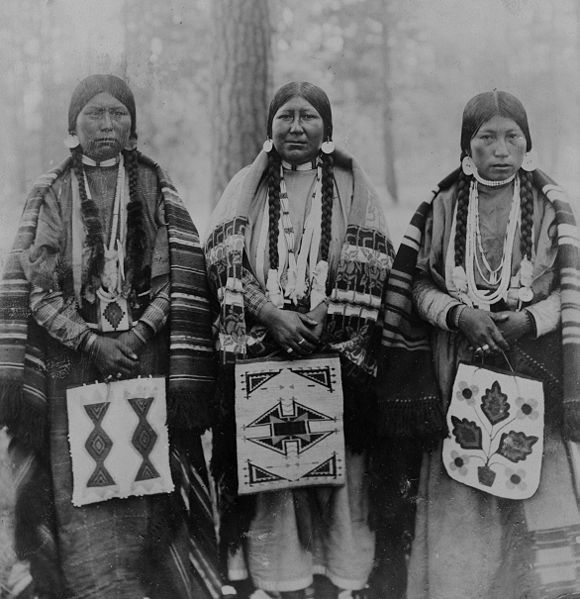
The biblical term for this collective lack of selfishness is called Jubilee Year. Ancient Israel was, at least on vellum, an egalitarian society. Each person had promised land allotted to them. Economic hardship (such as sending a child to college) might necessitate selling all you have. Fear not—hopefully before you die—what you sold will be retuned to you and the system will even itself out again. It is a profoundly beautiful idea. It has, of course, never been taken seriously. So as we see the literalists massing as candidates begin gearing up for another cycle of elections, I think it is only fair to ask to see their mortgage papers. A visit to the county records bureau might be in order. I think maybe somebody has been holding out on land I’m biblically owed in upstate New York. Just don’t tell any Native Americans about this, for it seems maybe they have the most of all to benefit from taking the Bible literally.

580px-Warm_Springs