5 Ways to Protect Women from Exploitation

Please enjoy this guest post by Daphne Holmes:

Women’s roles in society vary from region to region, with some states exhibiting greater equality than others. In the United States, for example, shifts continue to alter women’s place within social and work culture, so American society appears to be moving in a positive direction for many women. Unfortunately, women’s rights and social justice are not always promoted elsewhere, so realizing their potential is an upward struggle for most women worldwide.
Protecting women from exploitation is a moral imperative that sets progressive societies apart from others that do not share a commitment to equal treatment for all members. The following approaches help women’s causes by addressing some of the unique issues they face and supporting a fundamental guarantee of equality.

Remove Systematic Injustice

In order to protect all members of society from exploitation, social structures must be in place to accommodate each group equally, regardless of race, color, gender or creed. Government, for example, must reflect a stance that protects women equally, supporting laws that facilitate their advancement and punish those standing in their way.
A culture of respect instills and perpetuates the correct values, so adopting tolerance for diversity is an essential first-step for raising women’s profile in society. Patriarchal societies, on the other hand, leave the door open to exploitation, because women are deemed insignificant, and their right to excel is not guaranteed.

Ensure Essential Needs

Surviving as a woman in a culture that does not acknowledge equal rights can mean diminished access to basic elements of survival. To elevate women’s position in society and protect them from exploitation, fundamental needs like food, health care services, water and shelter must be available to furnish the cornerstones of personal development.

Educate and Enlighten

In many cases, ignorance and outdated thinking are behind exploitation, so education is a powerful tool for protecting victims. The benefits of education are seen in two distinct ways. General knowledge about women’s causes and education about the difficulties they face are enlightening to members of backward societies, opening their eyes to an entirely different standard of equality. And women’s education is also an important feature of equal societies, furnishing vital information that helps women rise-up from oppression. With inroads in both areas, exploitation can be seen for what it is; increasing the likelihood women will escape its ill effects.

Stop Sexualizing Women

For specific progress to occur, general changes must be made to the way women are characterized. Movies and other media, for example, sexualize women with graphic imagery and unflattering portrayals that diminish the progress women make in real life. Valuing women for reasons other than their appearance and sexuality increases their mobility within society. By recognizing their achievements and potential, women enjoy greater opportunity for advancement and suffer less at the hands of exploitation.

Increase Accountability

Women face a number of forms of exploitation worldwide, including sexual trafficking, labor mistreatment and other abuses. Unfortunately, cultural imperatives and other influences prevent most abusers from being held accountable for exploiting women. For lasting reforms to take-hold, consistent punishments must be applied to offenses against women, establishing consequences that curb abuses. And demand must also be slowed, in order to remove the incentives for trafficking and sexual exploitation. Stiff penalties for abusers and access to justice are key features of a system committed to protecting women.

Protecting women from exploitation starts within a culture of respect, acknowledging women’s valuable place in society. Through education and programs supporting women’s rights, even regions slowed by backward thinking and outdated social structure can make positive strides protecting women’s rights. And by changing views and values about women, and enforcing penalties against exploitation, society contributes to constructive outcomes, rather than turning a blind eye to harmful practices.

Author:
Daphne Holmes contributed this guest post. She is a writer from www.ArrestRecords.com and you can reach her at daphneholmes9@gmail.com.


June Bugs

On my way to work yesterday, I came upon an overturned June bug clawing at the air, trying to regain its feet.  I’m always in a hurry getting to or from work, but I decided to stop, offering the insect a leaf to grip, and turning it back over.  I knew, as I spied birds flying overhead, that its chances weren’t good.  In the course of nature, insects are radically overproduced because so many get eaten.  In my apartment they can even be a source of sudden terror when they find their way inside.  I knew the June bug was probably nearing the end of its short time on the earth, but as I held out that leaf to it, I knew that in the act of struggling we were one.  That sounds terribly Buddhist of me, I know.  Insects and humans share, on the most basic level, the desire to survive.  Who likes to feel vulnerable—soft, unprotected underbelly exposed to the air?  Defenseless and helpless?  Certainly not this poor beetle.

Photo credit: Patrick Coin, Wikimedia Commons

Photo credit: Patrick Coin, Wikimedia Commons

Stepping off the bus in New York City, I began my daily power walk to work.  The bus had arrived a few minutes late, and my anxiety level about clocking in works as if it’s on steroids.  I have to buzz past the interesting things happening in the city, the people who merit a second look, the architecture that has an unexpected amount of detail, only to be lost in the overwhelming number of buildings.  Big buildings as numerous as bugs on a summer morning.  Then I saw a box pulled up on a low sill outside some swank bank.  I often need boxes at work, and I can’t help stopping to appreciate how this unbroken expanse of paperboard would be useful.  Then I noticed the feet sticking out the end.  There was life in this box, not so different from the beetle I’d stopped to help an hour and a half ago, in its exoskeleton, grasping for some kind of salvation.

I arrived at work agitated. I had been able to help the beetle, but what could I do for the sleeping human being in his box? I had no money in my pocket, and even a twenty would stay the exposed, raw human on the city street for no more than a few hours. To care for a person takes commitment, long-term willingness to make sure that those who fall on their backs are set again on their feet, given the resources, the opportunities they need to get along in a world where those circling above are far more dangerous than the birds in my neighborhood. I looked at my calendar. June is nearly over. The June bugs will soon disappear. And yet I couldn’t erase the image from my mind. How much relief seemed to show on that inexpressive June bug face when it could finally crawl away from the center of the sidewalk. Something was terribly wrong here. And a man was sleeping in a box just two blocks away. In the act of struggling we are one.


Mores the Merrier

The Presbyterian Church (USA) and I go back a long way now. Not that I’ve ever been a member, but one of their institutions gladly accepted four years of my tuition money and tolerated my presence on campus during that same time. I arrived at college a fundamentalist, but, as a religion major who thought through what was presented in class, I soon discovered that literalism was as wrong as sin. This past week the Presbyterian Church (USA) voted to allow gay marriages. Talking to someone I still know in my native, conservative western Pennsylvania, I learned that disgruntled heterosexuals I’ve known since I was a child are now denomination shopping because of the change. Ironically, this includes divorced individuals and others who can’t seem to get the hang of this heterosexual relationship thing. Marriage may not work for straights, but we sure don’t want the gays to have a chance at it.

Gay marriage, of course, is only the tip of the iceberg upon which modern Christianity is bearing down. And not just Christianity. Any ancient religion that finds itself surviving in a world that has completely changed since its founding has trouble remaining relevant. This issues of peasants in Palestine under imperial Roman rule are very different from a high-tech, service-industry, desk-job society. One could argue that people never change, but I suspect that society gives the lie to that. Some issues are perennial—we still haven’t figured out how to make sure the poor have enough. We will walk out of church, however, when we see affluent people of the same gender walking down the aisle together. With priorities arranged this way, is it any wonder that the mainline churches have difficulties retaining members? For some, the church has become a place to feel comfortable with their prejudices rather than to try to figure out what a first-century religion means in a twenty-first-century world.

I applaud the Presbyterian Church (USA) for its decision. It will certainly cost the denomination numbers. It is, however, a move to try to introduce justice back onto the agenda. One does wonder whether it was predestined. Far be it from me to speak for a first-century carpenter, but I suspect that a church founder who stressed repeatedly that love, not judgment, was the way to become one of his followers might be a bit sad at the political turn this has all taken. We know, from all that biology tells us, that sex has far more importance to humans than reproduction. It has a pair-bonding social function without which many couples would split up. This seems true regardless of the gender combination involved. Why not acknowledge this fact as truth and get on with the important business of negotiating the twenty-first century? Of course, we will have to find some other way to justify our prejudices.

IMG_1087


Future Shock

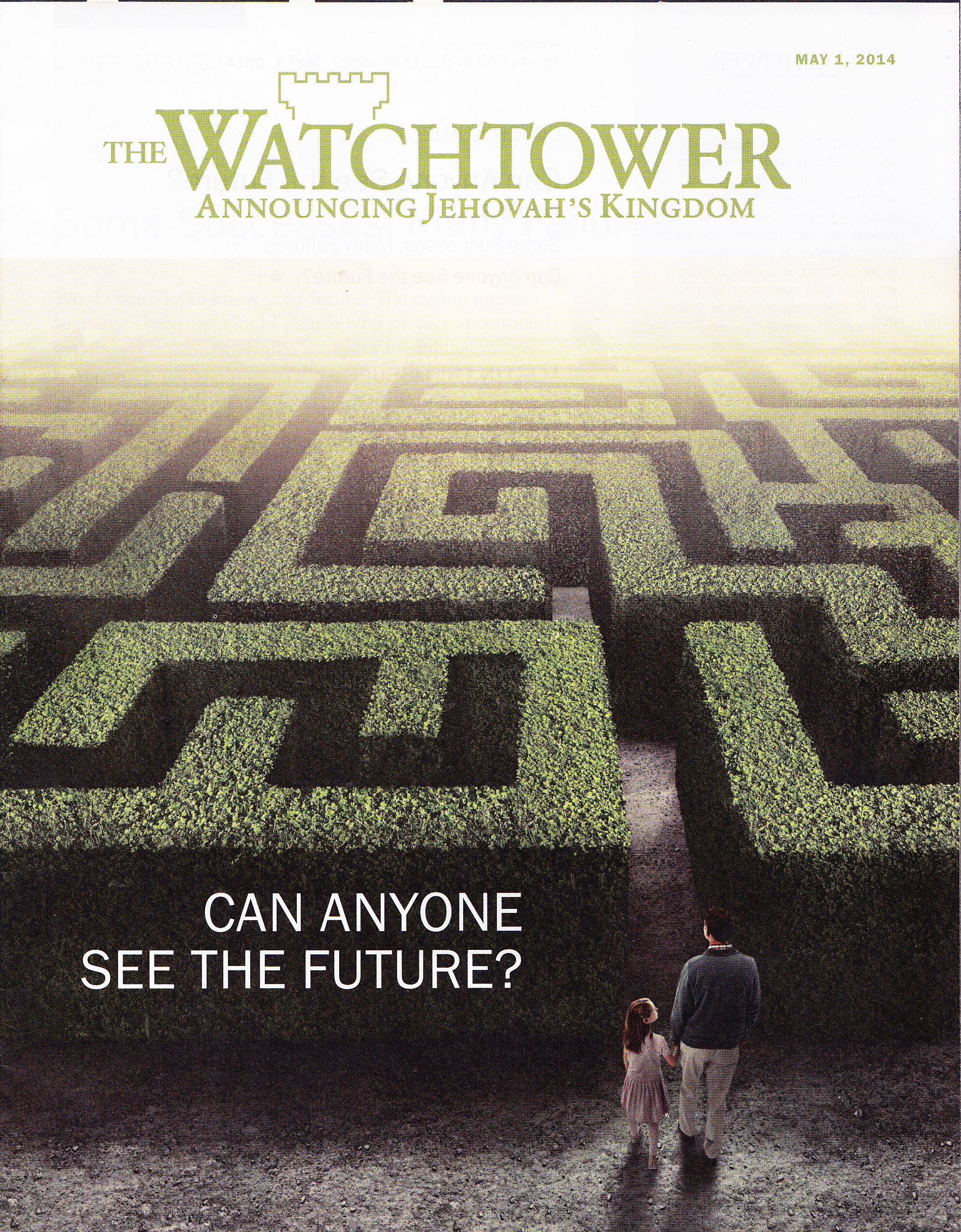
The Jehovah’s Witnesses are nothing if not persistent. Unemployed and huddling fearfully at home during the day a few years back, I answered the door and had a talk with the local missionaries. I explained that I was a biblical scholar and not open to be swayed to new religious sensibilities, but that didn’t stop them from trying to convince me otherwise. They were oh so polite, however, and sending them away seemed like the height of rudeness. The Witnesses have roots in my home territory, and I have a soft spot for religions originating in Pittsburgh. Despite the fact that I’ve had a day job now for about three years, they still routinely stop by and leave tracts behind. One of the most recent ran a headline “Can Anyone See the Future?”

JWatchtower

Of course the story inside quickly turns to prophecy and the age-old, if false, idea that biblical prophets were fortune tellers. Still, the popular conception among the public is just that: prophets see the future. In the Bible prophets are primarily social critics. They cry out against injustice, exploitation, and false religion (!). One thing they don’t do is see the future clearly. Isaiah had to be revised at least three times in the writing. Nevertheless, prophets are engaging figures. They are non-conformists who rail against a system that takes advantage of those who are helpless—not weak, but helpless. Many people are rendered helpless by society. One size can’t possibly fit all. And yet we keep the cover closed on those nattering prophets and pump our money into a capitalist engine that is fueled by human effort and spews the helpless out as exhaust. We could use a good prophet now and again.

The question about seeing the future, however, keeps coming back to me. It might have been a good talent to have some thirty years ago as I was pondering a college major and a career that would take me deep into the Bible. If I could see the future—renting an apartment for an extortionate amount of money for the privilege of living near a city where all my efforts would be poured out to help others make money off religion while asking people with the same degrees I have to write the books that I should be authoring—would I have taken this route? Or would I, as a local boy, have taken the warning of Charles Taze Russell and made my living through haberdashery. Is it any different than balderdashery? Would I have even opened the door? Only a prophet can tell.


Rosemary by Any Other Name

Rosemary

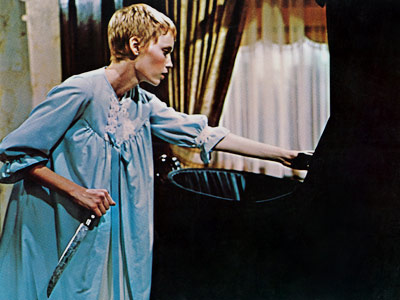
With NBC’s remake of Rosemary’s Baby into a mini-series in the news, I sat down to watch the original again. I’ve blogged about it before, but with most available funds being diverted to college, watching new movies will be a rare treat for some years to come. Besides, the original is a mishmash of religious ideas that despite their lack of coherence still leave the viewer somewhat disturbed. Since the last time I watched the movie, I’ve read several books on witches and have come to recognize the strange brew that Roman Polanski concocted for public consumption. Reaching back to the myth of diabolic witches, the original movie presents such witches initiating a new world by literally spawning Satan on a woman whose name is based on the mother of Jesus and who will ultimately care for the helpless little devil. The viewer, despite the knowledge that Rosemary is carrying evil incarnate, still sides with the vulnerable, pregnant protagonist. It’s the end of the world as we know it.

I’m not sure how you make a miniseries out of this thin plot. I suppose a nine-month pregnancy would lend itself to slow development, but haven’t we grown a little too old for witches and devils? In fact, Wicca is now a recognized religion in much of the industrial world, and the devil’s been on the run for decades. Religious movies, or at least movies based on religious themes and characters, are perennially popular, however, no matter what the secularists tell us. And why not open a series about pregnancy on the weekend of Mother’s Day? Nothing stirs the emotions like putting a young mother at risk. That’s perhaps the insidious side of the original movie—we silently side with the devil.

Rosemary is, of course, manipulated by her husband with the everyman name of Guy. This isn’t in any sense his child and, like any businessman, he stands to gain enormously from someone else’s labor. Exploitation is the cost of the continuation of the human race. It doesn’t take much to figure out that we’re watching a parable here. After all, the Time magazine cover asking if God is dead makes a cameo in Dr. Saperstein’s office. And the setting in Manhattan clues us in from the beginning that this is the place were many millions are asked to make a few very rich. There is a witchery in New York, and for those who know how to look, the devil may be found in the details.


Targeted Management of Information

Social justice has always been a concern for me. Call it my primate sensibilities. I grew up in humble circumstances, in a religion that helped to ameliorate the scathing sense that I could plainly see that other people had it much easier than I did. My faith taught me that I deserved less than I might’ve thought I did. I’ve never really felt entitled, and yet, I know the system (whatever that is) is not really fair. Fairness is a big thing with me. I suppose that ties back in to social justice. In any case, several people have contacted me to share their infographics on my blog. Almost always they are graphics about social justice issues. This past week three requests arrived in my mailbox almost simultaneously. I wonder why they pick a blog with so few hits as this one gets. Perhaps it’s an attempt at fairness? Or maybe it’s clear that I have a soft spot for helping out those in need.

It isn’t easy to get noticed on the internet. The world-wide-web is very wide indeed. It is used for crime as well as entertainment and information. Ironically, most fact-checking sites are suspect. A good deal of what you believe depends on the veracity of your source. It used to be that professors and clergy were inherently trustworthy, or so we thought. Politicians have long been out of the running. Now it is the crowdsourcing of the internet. As if our collective ignorance were wisdom. Those of us who count the number of books we’ve read to be in the thousands can be distrustful of information. Indeed, skepticism is a hallmark of education. Be careful though—it can cost you your job.

In any case, the hope of social justice compels me to share the information delivered to me. I’m just the messenger. So I’ve decided to pass the infographics along to you. All of them have to do with control. Crowd control, crime control, prison control. I’m a free spirit who lives with the mantra harm not. Some call the golden rule. Others call it naive. For me, it’s common sense. Maybe learn something below. (The final infographic seems to have some coding issues…)

Privatization of the US Prison System
The US Private Prison System
Privatization of the US Prison System. An Infographic from ArrestRecords.com

The US Private Prison System

Produced By Criminal Justice Degree Hub


42 Shots

Many of us were raised with the figure of a divine father who is ready to whip off the belt for any infraction we may make, intended or not. On a more human scale, our criminal justice system locks people in prison often on the basis of race rather than purely objective considerations. The infographic below demonstrates this clearly. African-Americans are disproportionately represented in the prison population in a society that is still reluctant to offer true justice to all citizens. When these numbers are wrenched from statistics and brought down to personal levels, the results are distressing indeed. I recently read of the case of a promising youth who was in the wrong place at the wrong time. His lawyer, a prominent African-American, pled with the judge for leniency for this young man who had great potential. Time in jail, even in one for youth, would probably scuttle this boy’s hopes for a productive future. Being an American, though, I had no hope that this might end well for the boy. Still I read on as the judge sentenced him to jail.

None of us likes to be reduced to statistics. At the same time, some social-justice disparities are easily overlooked until they are placed in such stark terms. Xenophobia is a normal human reaction. In fact, it is displayed in apes and other social animals as well as in people. Its biological function seems to be group cohesion and safety. We’ve evolved beyond that, however. The great promise of the New World was freedom. Unless you were imported as a slave. The Bible, being a document of its time, lent its voice to the approval of keeping slaves and those who wanted to justify their horrid treatment of fellow humans in the name of God relied heavily on the Good Book. We still put considerable roadblocks in the way of African-Americans and others of minority status, believing that we are somehow justified in the myth of Caucasian superiority. Humans are humans. Society benefits from the gifts that different traditions bring to the cultural table. And yet, we continue to lock up those who look different.

Justice shouldn’t be a distant dream. We know that for those who do commit crimes reformation is a possibility. Critics cite the expense, but I have to wonder whose bank account is being audited. As a society as a whole we could all benefit from some reform. The profession from which I have been repeatedly blocked is one of the few that has taken demographic configuration seriously. Some must pay the cost for others to be given an opportunity. Of course, opportunity itself is a rare commodity these days of hoarding and one-percenters. Perhaps those who build towers and remove themselves from the rest of society have put themselves in a kind of luxurious arrest. Until they are forced to share, however, those of us on the street level have to do our best to help each other out. Take a look at this infographic from arrestrecords.com and see if I’m right.


Pope of Deliverance

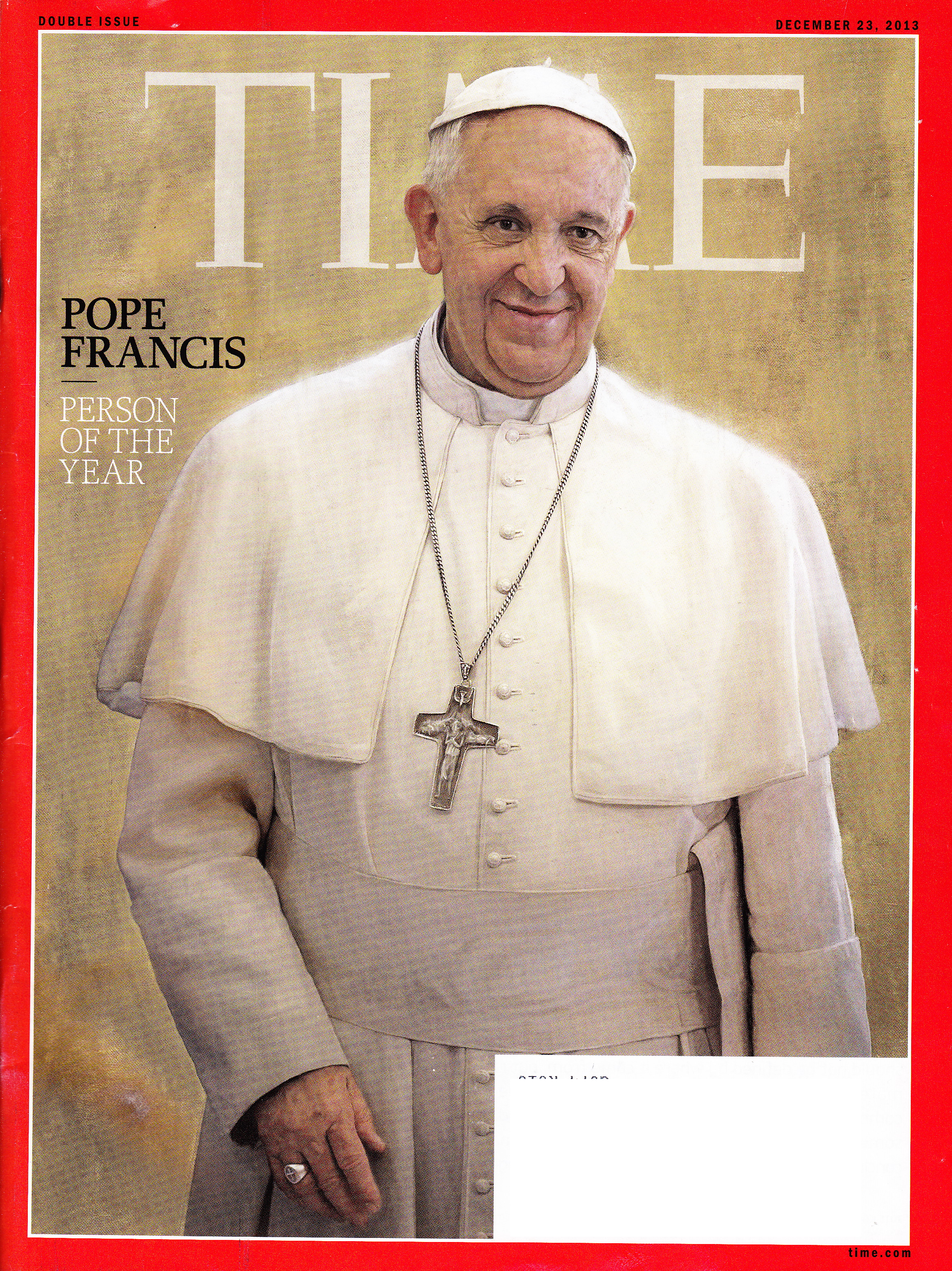
TimePopeIt’s the Time of year. The time of year Time chooses a person of the year. Not for the first time in recent memory, a religious figure has been chosen. Granted, Time declares the person of the year is the most newsworthy, not necessarily the best to emulate morally. Notorious scoundrels have made their way onto one of the nation’s top news magazine’s covers, while many more worthy will never be selected because they just don’t garner the notice. Despite this, Pope Francis is certainly the most deserving pontiff in living memory. Over this year he has demonstrated that the Catholic Church does have some historical memory of its original call and mission to the Christian faith.

Ossification is a natural tendency with institutions. We tend to think the earliest universities are still the best (in some cases that may be true), while in fact better educations are often found elsewhere. We want to believe that as it was in the beginning, is now, and do I really have to finish it? Times change, institutions evolve. Within half a millennium the Christian movement went from a bunch of persecuted, fearful peasants hiding in corners to the power brokers of a powerful empire. Problem is, once you’ve tasted empire, there’s no going back. Until now. How odd it is to see a person who could live a life of opulent self-service giving it up to be kind to his fellow humans. It is almost as if the Vicar of Christ has somehow become incarnate. A pope who is one of us. And the world stares in wonder.

I don’t mean to pick on the Catholics here. We see it in many religions. Someone humble and spiritual joins a religious movement for obvious reasons. They then grow through the ranks, acquiring a craving for power. What a temptation it must be to stand before an audience of thousands, knowing that by television hundreds of thousands more are watching you—hanging on your every word. Our underlings tell us we are great and it isn’t so hard to believe them. The man who steps down from his kingly throne to mingle with the laity, who doesn’t ride bulletproof cars to represent a man who willingly, so the story goes, gave himself up to die. What saddens me is that this is newsworthy. Not to detract from the spirit Francis has injected into a stony Vatican, but that we find it incredible is a comment on what has come to pass for religion in this time. Thanks, Time, for holding up this important mirror to our society.


The Write Place

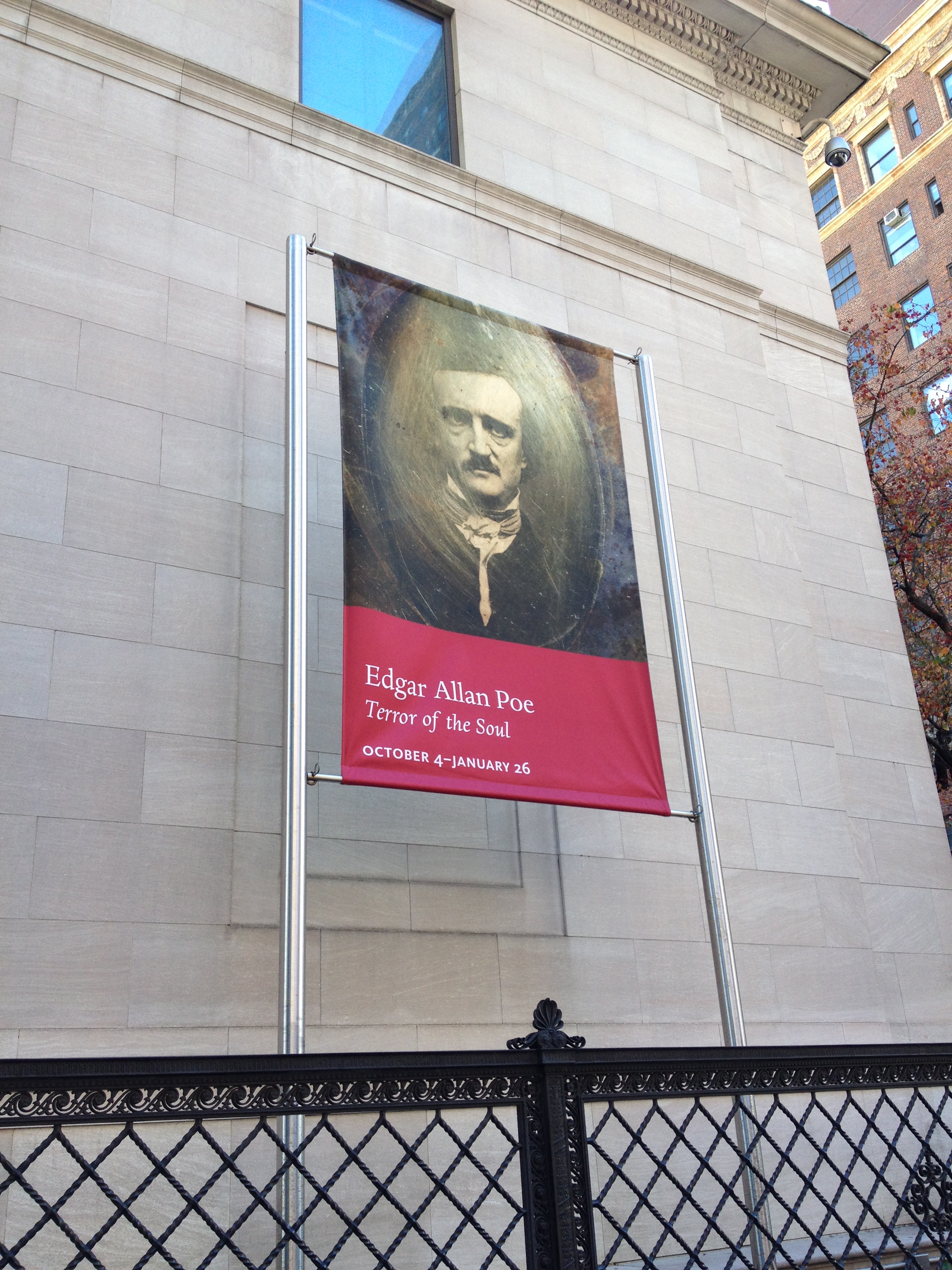
In my mind, Baltimore is inextricably bound to Edgar Allan Poe. From the accounts of Poe’s life, it is clear that he sensed nowhere as a welcoming home. Indeed, he was barely mourned at his passing and the memorial gravestone in this city was only added decades later when his works had attracted serious attention. Many of the eastern cities now like to claim him: Boston (although with Bostonian diffidence), New York, Philadelphia, Baltimore, and Richmond. All have various mementoes of his transient existence in those places, although he was not made to feel at home there when he was actually alive. The writing life is a difficult and often lonely one. Poe knew that better than many. It is so lonely that nobody is even sure why he was in Baltimore when he died, or what the cause of death was. He has become an icon to many that write.

Ironically, my career has repeatedly shoved me back to the publishing industry. That doesn’t mean that it is any easier to get published, however. The world is full of words, and those who hold the key to publishing respectability have so little time (a fact I know well, as a sometime editor). Some of us resort to blogs and pseudonyms while others die young in Baltimore. The world loves a self-promoter. Those with something intelligent to say are often discovered only in retrospect. And soon their work enters the public domain and can be claimed by all.

Other writers have called Baltimore home. Not many have football franchises named after their literary works, whether here in Maryland or elsewhere. And Baltimore, like many of the major cities of the United States, has great swaths of the neglected, the poverty-bound, and the hopeless. As I drive through the city it is clear that many have been left to face the cruelties of a self-promoters’ economy. They live with little—overlooked and forgotten. But there’s a party in town for those who can afford it. As I settle down with a cask of Amontillado and my notebook, I know that I have only just begun to get to know Baltimore. Maybe I will meet the ghost of Poe here, amid the brightest lights of scholarship and the darker shadows beneath.

Poe in New York

Poe in New York


Here’s the Church, Here’s the Steeple

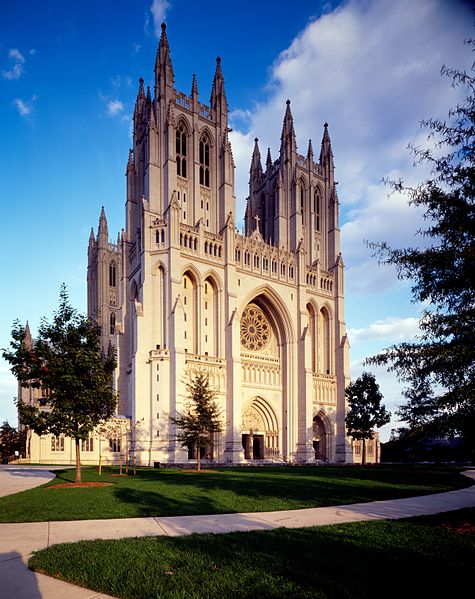
Americans seldom seem to fuss much about religion unless they perceive that it is under threat. We’re real believers in religious liberty that way. The threat angle is a vector worth measuring every once in a while. What gets our collective goat? A story on CNN last week about the National Cathedral caught some attention. Those who think about freedom of religion, liberty of conscience, and all that, might find the implications of a national cathedral itself a tad troubling. Of course, it really isn’t a cathedral for all of the United States, but it is used for many displays of civil religion including several presidential funerals and inaugural prayer services. The cathedral, historically and ironically, is of the Episcopalian brand. Episcopalians boast perhaps the smallest number of mainline protestants in the country, and since they are the remains of the “established church” of England in the States, it is not just a little odd that such an edifice should be associated, however informally, with government in its former colony. The reason that CNN ran the story related to a perceived threat to American religion: same-sex marriages.

Now that same-sex marriages have been approved in three states, some couples desire the symbolism of a wedding in the National Cathedral. It is a victory of social justice that highlights one of the deepest and most persistent of religious concerns—human sexuality. Although many religious denominations have made their peace with evolution by natural selection, few have really considered the implications of reproduction and its discontents. Formally ever since the Enlightenment (and certainly informally for all of human history) sexuality has been a subject of scientific scrutiny. And not just for humans either. As naturalists observe the world of our fellow creatures, we find all kinds of sexual behaviors labelled “unnatural” in humans are quite normal in nature. The reason is the religion that is invested in reproduction. People, many religions teach, are somehow different. Besides, in the days before scientific interest in animal reproduction, few bothered to consider what other animals did, far from human eyes.

For those willing to admit that nature can teach us something about ourselves, same-sex couplings are not limited to humans. They are a part of nature. As Martha McCaughey suggested in The Caveman Mystique, reproduction is only one of a variety of reasons that humans and other animals mate. For us, however, it is a strangely sacral act. All religions have something to say about sexuality, and many express strong feelings about what marriage means. So the Cathedral Church of St. Peter and St. Paul (two men, one might note) is in the news because of what marriages symbolize for many. Marriage is about commitment, not just sex. In a nation where commitment is only fair-to-middling, shouldn’t we applaud the use of the National Cathedral to reinforce such family values? Unfortunately, for many gender differentiation trumps love in what is understood as a legitimate religious outlook.

Carol M. Highsmith's National Cathedral

Carol M. Highsmith’s National Cathedral


Biblical New Brunswick

One of the true sadnesses of my life is that New Brunswick’s biggest institution, Rutgers University, couldn’t find a full-time place for a dreamer like me. Ever hopeful, I taught there for four years, counting on a miracle. Although I’ve got many good memories of my time at Rutgers, one of the side-benefits was getting to know New Brunswick a little bit. Probably not topping too many vacation must-see lists, New Brunswick, New Jersey nestles in the shadow of New York City and its train station is a place I’ve spent a bit of time. Last night I had occasion to stop in to get my bus pass so that I can start off the new year by going to work. As I climbed the stairs to the ticket window, I heard a street preacher holding forth. There he was, a young man, open Bible in hand, explaining to a mostly disinterested commuter crowd why they needed salvation. (If their experience on New Jersey Transit has been anything like mine, believe me, they already know.) Many of those in the waiting room are the homeless trying to get out of the cold for a while. New Brunswick has never struck me as a particularly religious town, although many of my students in my Rutgers days brought their religion to university with them. I didn’t have time for another conversion last night, however, as my family had another purpose for being in town.

A friend had kindly given my family tickets to Joseph and the Amazing Technicolor Dreamcoat at the State Theater. Although put on by Plays-in-the-Park of Middlesex County, being in the shadow of New York City sets a very high bar for public performances. The show was excellent and energetic and I couldn’t help connecting the dots on how the Bible had played into the evening. Andrew Lloyd Webber long ago realized that even a very secular Britain had a hunger for biblical stories. Although I am biased, given my failed choice of profession, the story of Joseph is one of the great tales of all time. Although likely half the audience couldn’t say that the story occurs in Genesis, the rags-to-riches plot of betrayal and forgiveness is so deeply embedded in human dreams that even assigning it to the wrong testament would make no difference. As Lloyd Webber knows, we all want our dreams to come true. Joseph, certainly a flawed hero, does finally see himself as the second most powerful man in the fictional world of Moses’ Egypt. It’s difficult not to root for the guy.

Outside the temperature hasn’t managed to reach 40 degrees today. A few blocks away at the train station, some of those being force-fed the Gospel were almost certainly refugees from the cold. I’ve seen this every time I have to catch a train in Newark as well. The homeless know that at least they won’t freeze in the depot, even if they are chased off the seats by security. Moving from Joseph to James a moment, we hear “And one of you say unto them, Depart in peace, be ye warmed and filled; notwithstanding ye give them not those things which are needful to the body; what doth it profit?” In other words, if you are offering the homeless words only, you’re not getting the point of the gospel at all. The homeless would benefit more from having a dream come true, I’m certain, than from having a message of salvation before being turned out to the cold for the night. The real salvation in New Brunswick is being offered at the State Theater tonight, but you do need a ticket to get inside.

Any dream will do

Any dream will do


Pack on the Back

One of the joys of corporate culture is receiving office memos. Of course, memos are now electronic and our environment hopefully benefits from that. A couple weeks back a memo announced Operation Backpack, a charitable cause. Fully employed for the first time in what feels like an eternity, I signed up to contribute. When I read the memo through, however, I was shocked. In New York City 11,000 children attend public schools from homeless shelters. Eleven thousand. The number is still large enough to boggle my blue-collar brain. That is over eleven times the size of the town in which I grew up. And that’s just the children. Urban culture has become the predominant paradigm of capitalism, but it comes with a considerable price tag. I see homeless people foraging through garbage for food—a more degrading example of picking berries and nuts in the woods, I suppose. What’s worse, nobody seems to think this is unusual or distressing.

A frequent visitor to university campuses, I am familiar with urban troubles. The low land values around tax-free campuses mean that many universities abut the harder neighborhoods in our cities. The city is considered the epitome of civilized living—humanity removed from the dirtiness and wildness of unpredictable nature. When did it become okay to forsake those who came to cities to make a living? How can one of the most affluent cities in the world let 11,000 children live in homeless shelters while others in the same city have far too much to satisfy any individual’s needs? We send troops to other countries to liberate them from oppressive regimes, mistaking free trade for freedom. We need to help those who cannot help themselves.

The biblical ideal of a just society is not one without wealth, but one where wealth comes only after everyone has enough. Yes, there will be some who take advantage of the system. I wonder, however, if not working is any different from taking advantage of the system on the other end—to “succeed” in a culture driven by the market, you must take advantage of the system. One kind of taking advantage means getting by with basic needs and services met, the other kind of taking advantage means living the life of royalty in a democracy. One we excoriate, the other we emulate. I don’t have the answer, but I do hope that a backpack of school supplies will make a difference in a young idealist’s life.

Still so far away…


Fighting God

Quoting Orson Scott Card, P. W. Singer notes in Wired for War that two of humanity’s “primary occupations” are war and religion. These two aspects of life are simultaneously very distant while abutting each other. While analysts cite many causes of war, there is no agreement concerning why we seem to be constantly belligerent. As a species we are keenly aware of small differences, perhaps like ants, and use those minor points to excuse the exercise of violence. Yet we are also a profoundly religious species as well, believing in supernatural powers that sometimes deliver us from, sometimes into, war. The Bible, just by way of example, contains many accounts of war. Often they are undertaken at the behest of deity. Religion and war coexist a little too comfortably.

Although Singer’s purpose in this book is to analyze the impact of robotic technology on the practice of war, he also finds indications about the origins of war itself. In today’s affluent world, dominated by technology, we should expect that armed conflict would be on the decline. Instead, it would be difficult to find any historic era when unfair distribution of basic goods has been more pronounced. As Singer notes, social disruption today tends to begin in cities, places where those in squalor daily see the opulence of their neighbors’ lifestyles. Our culture awards the aggressive—those with bigger houses, bigger cars, bigger payrolls. To these we defer. At the same time, the vast majority have difficulty finding enough to survive, let alone thrive. Still, we offer tax breaks to those who don’t need them and remind the poorest of their social obligations. This is often done in the name of religion. God is the ultimate capitalist.

The sum result, it seems, is not to lessen human hopes for religious deliverance. The belief in fairness, biologists inform us, is deeply embedded in primate evolution. We believe in fairness, and when it is elusive we thrust it toward the heavens, trusting in divine justice. Millions have died awaiting that justice that isn’t forthcoming. Again, another quote from one of Singer’s sources, “Amid galaxies of shining technologies there is a struggle to redefine human meaning… Half the world is looking for God anew, and the other half is behaving as though no god exists” in the words of Ralph Peters. Although the reference here is to technology, it could just as easily be to money or war. It appears as though we have an actual trinity of casus belli that are inseparable: technology, money, and God.

Some of our earliest technology


Preoccupied

I wonder if I’m the only one who feels uncomfortable with the proliferation of armed military guards in public places. I know the rhetoric that “freedom is not free” (what is it then?), but when the coffee hasn’t really kicked in yet and I walk by guys young enough to be my kids holding machine guns in the bus terminals and train stations of New York, I really don’t feel safer. Sometimes I might look like a radical. Sometimes I don’t get my hair cut as often as convention dictates I should. Sometimes I forget to trim my beard. Some days I throw on my denim jacket as I head out the door in the predawn hours. Some days no one sits next to me on the bus. Am I the enemy here? I don’t like the idea of strangers seeing me naked in airports—even if only electronically. I do like the freedom of expression, but it is no longer really free.

I suppose that’s why I’ve noticed the other peacetime occupation going on in New York: Occupy Wall Street. It is time that people say “enough!” The religious leaders with the loudest voices declare this a dangerous thing, “class warfare” they say. The wealth that lines the very upper crust, however, is simply obscene. Was a day when wealth came with a healthy dose of social responsibility. They just don’t make Andrew Carnegies any more. A few Octobers ago my family visited Sleepy Hollow, New York. The cemetery made famous by Washington Irving (who is buried there) also houses William Rockefeller and Andrew Carnegie. On the top of the most prominent hill is a classical style, opulent mausoleum for the Rockefellers, overlooking all others. Down at the base of the hill, hidden away in a humble, quiet corner is the modest tombstone of Andrew Carnegie. I am certain that Carnegie was no saint, but he did not let his wealth go without doing some good for his fellow citizens.

Freedom is not free, but excessive wealth is tax-free. And Jesus was a venture capitalist, I’m told. We are a nation occupied in peacetime. We are occupied by our own military and their commanding officers in the towers of Wall Street. The GOP can’t support Occupy Wall Street, for it will alienate the moneyed vote it so craves. Call it “class warfare” instead. Those uppity middle and lower class bums! When the select few human beings climb too high in their towers to see the suffering of those down below, images of Babel come to mind. Babel is code for Babylonia in the Bible—the wealthy, powerful oppressor of the poor and displaced. If wealth breeds superiority, we are all in very deep trouble; the battle is already lost. In the meanwhile, I suspect Jesus might secretly be on the side of those camped out in sleeping bags, waiting for the sign of Jonah. And it has nothing to do with being swallowed by a whale.

Or maybe it does.


Budget Bombs

Budgets are measures of what we value. For a nation that likes to tag itself repeatedly as “Christian,” our priorities belie that claim as surely as the lives of our leaders. Over the past few months, those of us involved in education have watched in horror as governor after governor has attacked education as a pork-belly society simply can’t afford. Considering the salary differences between politicians, CEOs, and teachers, there is no comparison. Many teachers I know must work second jobs to make ends meet: they too have kids to send to college. The problem, however, is not endemically a Republican one. My political leanings are well known to those who read this blog, but a colleague at Montclair State University recently sent me this quote from a 1953 address of Dwight Eisenhower that makes the point clearly:

An unlikely prophet

“Every gun that is made, every warship launched, every rocket fired signifies, in the final sense, a theft from those who hunger and are not fed, those who are cold and are not clothed. This world in arms is not spending money alone. It is spending the sweat of its laborers, the genius of its scientists, the hopes of its children. The cost of one modern heavy bomber is this: a modern brick school in more than 30 cities. It is two electric power plants, each serving a town of 60,000 population. It is two fine, fully equipped hospitals. It is some fifty miles of concrete pavement. We pay for a single fighter plane with a half million bushels of wheat. We pay for a single destroyer with new homes that could have housed more than 8,000 people. This is, I repeat, the best way of life to be found on the road the world has been taking. This is not a way of life at all, in any true sense.” (President Eisenhower’s address “The Chance for Peace,” Delivered Before the American Society of Newspaper Editors, 4/16/53)

The largest slice of our national budget goes toward military spending. Christianity teaches that we need not fear death – that’s what Easter’s all about, is it not? – and yet we pay astronomical amounts to keep ourselves safe. Do we really practice what we preach?

Since Eisenhower’s day we’ve seen an increasing inflation of self-centered motivation and self-importance taking precedence in politics. Republican politics allied itself with extreme right-wing evangelicalism and soon we were being told that Jesus was a free-market economist. The values of one sect hijacked a political party, and indeed, a nation. The force of this movement is so strong that, with some obvious differences, the policies of President Obama are not so far from those of Bush. No forward progress is to be made: backward, Christian soldiers! Our nation is in full retreat from facing square-on the very real problems of social injustice, unemployment, and lack of adequate schooling for many of our children. Those who know no better sit by and say, “well, the Christians are in charge, everything will be fine.” I don’t believe in a divine apocalypse, but then again, I don’t believe we will need one. Unless people wise up, we will be perfectly capable of creating a home-grown apocalypse all on our own.