Reflecting Spirituality

I always find undergoing anesthesia a spiritual experience.  It’s too bad the the prep for things like colonoscopies is so stressful that it’s difficult to appreciate the fasting and how it changes your perceptions.  This is followed by the delicious blackness of a complete loss of consciousness.  If death’s like this we have nothing to fear.  I’ve written about this before, but chemical sleep is not like nighttime sleep.  You hear the anesthesiologist say, “You’re going to sleep now.”  Then you wake up, disoriented because no time has passed.  I blinked a few times, saw my wife’s coat on the wall, and thought it was a nurse.  I started to say “Stop, I’m waking up!”  But then I focused on my wife and wondered why they’d let her into the procedure room.  “Are they done already?”  I asked.  Where had I been for the last hour?

Spiritual experiences are sometimes only seen in retrospect.  They jar us out of ordinary time into an alternative time.  It doesn’t make up for the nasty taste of prep medicine, or the unpleasantness associated with it, but emptying yourself is a spiritual practice.  I need to try to remember that next time around.  I know people who are afraid of anesthesia.  I’ve only had it three or four times—oral surgeries, and my first such procedure as this—but there’s something mystical about it.  I don’t use drugs (never have) so perhaps I’m a neophyte, but looking back on the experience I know that something extraordinary happened.  Coming out of it is coming into a new world that is somehow strangely the same as the one I left.

Religion has always, at least partially, been about altered states of perception.  Organized religion succeeds in making it rote, but those who experience the naked phenomenon never forget it.  Anesthesia is, I know, potentially dangerous.  It so like a light being switched off that I’m always left in awe of it.  Mystical experiences are rare, which is one of the things that makes them so valuable.  I’ve had them—widely spaced—since childhood.  Sometimes it’s evident in the moment, but often some reflection is necessary.  I suppose few people look forward to any kind of surgical procedure, but there can be benefits beyond the physical health that we hope will result.  That’s the way spiritual events often take place.  Perhaps advanced practitioners (not always clergy) can bring them about intentionally, but any of us might recognize them afterwards, upon reflection.


Hope by Butterflies

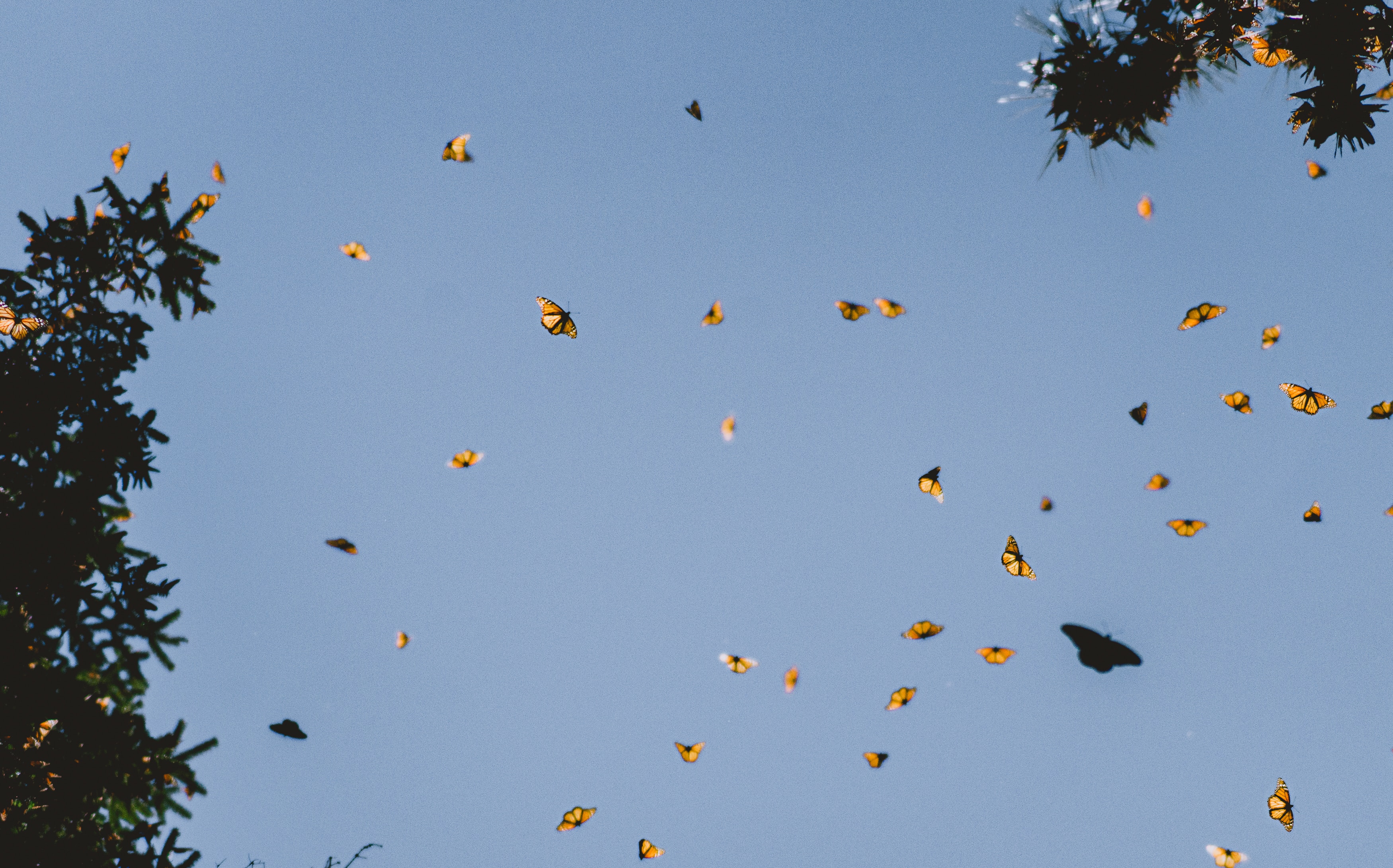
Butterflies are the most hopeful of animals.  I’m always thrilled when I see the first ones of spring and I silently cheer on those that last until autumn.  One of the three insects I didn’t fear as a child (ladybugs and fireflies were the other two), butterflies seemed like nothing so much as goodness incarnated in insect form.  While at the 4-H Fair a couple weeks back, we were fortunate enough to be there for a butterfly release.  Volunteers handed butterflies to children who were eagerly awaiting the opportunity to hold one.  It’s like touching a rainbow.  It reminded me of the butterfly rooms at various museums or zoos where even adults wear bright colors and hold still, hoping an insect will select them for a temporary perch.  We want to be kissed by butterflies.

Photo by Shiebi AL on Unsplash

Their hope goes beyond their bright colors and the cheer they spread.  To become a butterfly is to be willing to undergo transformation.  A caterpillar is an eating machine.  When its biology gives it the cue, it forms a chrysalis and inside that temporary shelter made from its own body, it literally dissolves.  Nature, knowing what to do, reconstructs that goo into the flowers of the animal world.  Could there be anything more hopeful?  More able to draw tears of joy?  Butterflies don’t bite—some don’t eat at all—they don’t dig into you with sharp chitin, they don’t fly into your eyes or ears.  Gentle and delicate, their sole purpose seems to be the bringing of happiness to other creatures.

I know I’m over-simplifying here, but I’m in a poet’s skin this morning.  Life transforms us.  We don’t know what’s ahead and some things melt us down and make us into something else.  The butterfly shows us how to do it with grace and light.  When times are difficult we realize, often only later, that we have been transformed.  We had built a cocoon around ourselves, we dissolved and became something even more beautiful than we were before.  Winter came and froze our world, but when we felt the warmth of spring, we responded, not even knowing how we did.  And looking back we can see that we bring color and light and joy into a world that had formerly been gray.  There’s a reason that butterflies are widely recognized as symbols of hope.  They’re brave without even knowing it.  And they give the world just the optimism it needs.


Phobia Therapy

I don’t like being scared.  That’s why I watch horror.  You see, many people deal with fear by running away from it.  Embracing artificial fears, however, prepares you for the horrors life will inevitably throw at you.  We humans have created an artificial environment for ourselves with many natural dangers removed.  For example (and there are always exceptions) we’ve been able to seal ourselves up in our homes and wear masks in public to avoid a killing virus.  For the most part we’ve destroyed our large predators.  As a society we tend to avoid the things that make us afraid which, in turn, makes us fragile when we have to face truly frightening situations.  I wouldn’t suggest becoming a fear junkie, but experiencing scary scenarios can diminish the overall  fear factor.

People often make assumptions about those of us who watch horror, even though it is the majority of Americans.  We’re seen as creepy people who lurk in dark places, unable to get along with our fellow human beings.  Perhaps it’s true, or perhaps it’s a reasonable coping technique.  I tend to think of it as a spiritual practice.  Spirituality is often about feeling, but it’s not completely divorced from rationality.  Often it has to do with that gut feeling that this is really real.  This is something that my years on this weary old globe have taught me is true.  Many times it’s this way in the face of evidence.  Others have trouble believing it, although some bearded guy alone on a mountain top says it’s true.  So life goes.

Spirituality is important.  I have many humanist friends and they are often uncomfortable thinking about spirituality.  It seems dangerous, a superstition that somehow survived enlightenment.  Enlightenment, however, is itself a spiritual idea.  There’s something inside of us that makes us who we are.  Whether it’s something physical or something else, it requires nourishing in order that we might thrive.  We expend a lot of energy arguing about the right (only right) way to do it.  The way to be a more spiritual person.  To me it seems that it’s about discovering what replenishes us.  What makes us into better people.  You find that and you feed it.  Spirituality comes in many forms and shapes.  Some of us have it fed by what others dismiss as mere horror.  There’s more to it than meets the eye, however.  I watch it to learn not to be afraid.


Spirit of Halloween

So it’s Halloween.  It’s also Sunday.  I’ve been thinking quite a lot about the spirituality of this particular day.  Now it’s often treated as a trick, a consumerist holiday with too much candy and befitting spooky decorations.  Like all holidays Halloween has evolved from its origins to how we celebrate it today.  Other than Wiccans and Neo-pagans, however, not too many take it seriously.  At Nashotah House, and therefore likely at some parishes scattered around the world, All Saints Day—which is tomorrow—was a day of obligation.  What we call Halloween was the day before this major festival of praising the faithful.  There is some evidence that All Saints was moved to November 1 to counter the lively celebration of Samhain, or the Celtic fire festival marking the onset of winter.

The Celts included an intellectual class known as Druids.  Druids seem to have been the “theologians” (oh, that word!) of the Celts and they mandated that their teachings not be written down.  A great deal of information was passed on by intensive memorization and only became known to us outsiders because after Christianization it began to be written down.  Their idea of the afterlife seems to have been that it was being born into the other world.  In the otherworld life was different and apparently in some respects better.  When our time there drew to a close, our death led to our birth into this world.  The cycle continued on and on.  Samhain was the time when crossing between worlds could occur.  Death wasn’t a cause for sorrow since the otherworld awaited.  Birth into this world was more problematic.

Fear of death seems natural enough to us.  Even though it’s inevitable and this world’s graveyards are full, somehow we seem to think we can avoid it ourselves.  Our evolved survival instinct runs out of control since we’ve eliminated many of the causes of death that have plagued our species (and many other species) for millennia.  Eons.  As we’ve done so we’ve distanced ourselves from death—dying in hospitals, our corpses prepared in funeral homes, buried and eventually forgotten.  To me, the Celtic idea, from a world where death was likely much more close to hand, seems a more healthy outlook.  Instead of fear, why not consider it a day of wonder and celebration?  To many, I know, that is a spooky thought indeed.  It’s more than a day of masks and candy, however.  And we might learn from it if we stop and ponder.


The Spiritual Life

Genuine spiritual experiences don’t sit well with a nine-to-five job.  When something truly profound happens to a person s/he requires time to think about it.  Ponder the experience.  If such a thing occurs on a Sunday (imagine that!), the next morning, still reeling, you need to go to work.  Perform duties that no longer seem significant.  And continue to do so for four more days, until the fire has gone out.  This paradox has plagued me for some time.  Perhaps it’s the fate die cast for an editor who can’t just read submissions for their financial payoff.  Who asks, “What if she’s right?”  Doesn’t that affect everything?  Especially in the case of a religion editor.

Blown away.

I first noticed this in college.  Even there the schedule was quite flexible, according to classes you had to take.  The professors were sincere in their presentation of ideas you should take seriously, but then in the work world your boss indicates that you’re not being paid to do that.  You’re being paid to produce.  Contribute to the machine.  Cogs and sprockets don’t think.  They do.  Then a significant weekend would come (or a holiday, say) where the message would really speak to me.  Change my outlook.  Until Monday morning.  The outlook would still be changed, of course, but the demands on routine would not also be changed.  It’s quite a dilemma.  As the great contemplatives throughout history have known, these ideas must be wrestled with.  Conversed with.  Tried on for size.  Walked with.  Such things can’t be done in the context of what you’re paid to do.  “Do it on your own time.”

What is your own time?  The weekend, essentially.  Work expands to fill the quiet times of weekdays.  Your time is owed to somebody who pays you less than the national average to do something any nonspiritual person could do.  Such is the danger of being open to new ways of looking at things.  Vacations need to be planned.  They are rejuvenating, but spiritual experiences can’t be planned.  They just happen.  HR has no algorithm for them.  Not exactly sick days or floating holidays.  And what if you need more than one day?  That meeting that was scheduled for Tuesday, what about that?  As if such things were really important.  Perhaps you too had the professor late for class because s/he was struggling with an idea, an experience that fit her or his specialization.  There were always office hours to recover.  That’s all fine and good, but it’s time for work.


Animal Spirituality

I had little scientific basis for my claims.  It wasn’t that I didn’t have evidence, but it was more one of those “if you see something say something” kinds of scenarios.  I have been claiming for many years that animals experience some kind of spirituality.  My evidence was drawn from disparate scientific materials I’d read, along with ancient religions.  Egyptians believed baboons worshiped the sun.  Chimpanzees make threatening gestures toward the sky during thunderstorms.  Penguins grieve.  Human spirituality, it seems to me, is part of our kinship with other living creatures.  Then I found an article by none other than Marc Bekoff titled “We’re Not the Only Animals Who Feel Grief and Spirituality,” in no less a prestigious place than Psychology Today.  Bekoff, some of whose books I’ve reported on here, has studied animal emotions professionally.

Our ideas of human exceptionality, it seems to me, often get us into trouble.  Arrogance is perhaps the most dangerous of psychological states.  When we see ourselves as part of a continuum, and realize that it can go on beyond us—yes, there are likely greater intelligences—humility should be an expected response.  Those who are arrogant frequently experience their comeuppance, even if they have to get elected to high office for it to happen.  We share emotions with our fellow creatures, and, now according to at least one expert, we share spirituality.  What is spirituality?  It seems to be an awareness that the body isn’t everything.  In my lexicon it’s listed there right with consciousness, mind, and soul.  We know it because we feel it.

The interconnectedness of the world, and beyond, is something many want to take exception from.  Looking around, such folks say, “Hey, we’re different than all of this.”  Yes and no.  We’re different, but that makes us no less a part of it.  Nature is our matrix.  We build fancy houses, but so do bower birds, and they do it without benefit of opposable thumbs, or even hands.  Of late we seem reluctant to admit that even human beings have spirituality.  That doesn’t stop us from feeling it, however.  I’m glad that others see it in the animal realm also.  Anyone who’s “owned” a dog knows what it’s like to receive worship.  We’ve selectively bred these wolves to adore us.  Is it so much of a stretch, then, to suppose that other animals also feel a sense of admiration for what’s beyond themselves?  Only the most arrogant wouldn’t pause to consider it.


Aching Backs

The other day someone mentioned to me (virtually, of course, since real conversation is limited to immediate family) that she was going to the chiropractor.  This simple spinal adjustment comment made me curious since my mother has used a chiropractor to manage back pain for as long as I can remember.  I also had heard many disparaging comments about chiropractors over the years and decided to look up some information.  Medical science, if we can hypostatize it that way, considers chiropractic a pseudoscience.  Part of the reason is that the medical training required to be a chiropractor doesn’t come up to the level of a MD degree.  The main reason, however, as far as I can determine, is that chiropractic was founded on the basis of receiving information from “the other world.”

Creator unknown, via Wikimedia Commons

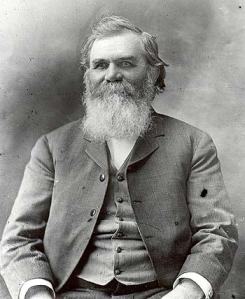
Daniel David Palmer founded chiropractic in the 1890s.  His knowledge of how to do it came from a doctor dead for half a century.  Some of the tenets of chiropractic are spiritual rather than physical.  Not being based on empirical studies going back to such traditional medical ancestors like Galen, the new way of understanding medicine was labeled as a kind of religion—an alternative medicine.  Now, I’m not a medical person.  In fact I’m rather squeamish.  I try not to look too deeply into biology, but this is fascinating.  There are more than 70,000 chiropractors in the United States alone.  If what they are doing doesn’t really help people then why do they keep going back?  Is it a matter of believing that you’ve been helped relieving pain?

Often cost effectiveness is given as the reason people use chiropractors.  In these days of Covid-19 we know that medical practitioners have been on the front lines for many months.  We also know that in the United States many people can’t afford standard medical treatment.  Our government has staunchly refused to nationalize health care, as every other government in developed nations has done, preferring to keep it a free market.  The end result is many people simply can’t afford to go to the doctor.  I don’t know if chiropractic is a pseudoscience or not, but if it provides at least short-term relief for people who can’t afford standard treatment is this a bad thing?  I don’t know much about the topic, but the whole thing seems worthy of further exploration.  Any time the mind in brought in to help heal the body, I suspect, we are knocking on the door of religious thinking.


Cave Monsters

A story in Discover back in December discusses cave drawings from Indonesia.  Dating back almost 40,000 years before the creation of the world, these cave paintings represent the oldest yet discovered.  The interesting thing about such cave art is the representation of figures—both human and animal—that are instantly recognizable.  Scientists studying the art are able to identify likely species, but, as John Morehead pointed out on his Theofantastique Facebook post, there are also fantastical beasts.  We might call them monsters.  It’s interesting to see how scientific writers shift from their awe at life-like illustration to a nearly palpable embarrassment when the creatures become mythical.  Indeed, the article itself suggests such figures point to a very early sense of either fiction or spirituality.  The monstrous and religion have long trod parallel paths and we are only now beginning to explore the implications.

Monsters are beings over which we have no control.  They don’t abide by human rules and often the only recourse against them is religious.  When monsters come knocking, it’s often wise to drop to your knees.  Or at least reach for your crucifix.  Many rationalists like to claim that human civilization developed without religion.  The discoveries at sites such as Göbekli Tepe gainsay that assessment, indicating that humans first gathered for religious reasons and agriculture and all the rest followed from that.  Perhaps they came together for fear of monsters?  That’s only a guess, but I recall the defensive tower of Jericho.  The archaeologist lecturing us as we stood by this neolithic structure asked “What were they afraid of?”  He never answered that question.

Bringing monsters into the discussion isn’t an attempt to make light of these significant discoveries.  Rather, we need to learn to appreciate the fact that monsters are serious business.  Religion, whether or not literally true, is important.  Civilization has been running the opposite direction for some time now.  When surveys emerge demonstrating that the vast majority of the world’s population is still religious, analysts frown.  It does make me wonder, however, if nature itself programs us this way.  To other sentient creatures who experience us as predators, humans must look monstrous.  We come in a variety of colors and textures (clothing), we smell of deodorant, shampoo, soap, aftershave, or none of the above.  We emit strange sounds (our music).  Are we not the monsters of the natural world?  And should animals develop religion, would we not be one of the causes?  It’s just a guess, but I need to sit in my cave and think about it for a while.


Mission Impossible

You can always tell Jehovah’s Witnesses by their tracts.  When I heard a tap, tap, tap on my front door the other day I was handed a flier and a cheery invitation to an important celebration (Easter).  The circumlocution used for the holiday made we wonder so I flipped over the tract and saw the familiar JW on the bottom.  I always treat religion at my door with respect because, well, you never know.  It’s this latter bit—the uncertainty—that has always given me pause when it comes to missionaries, domestic or imported.  Missionaries by definition believe their particular spin on religion is the only correct one, otherwise there’s no reason to convert others.  This is often the highest hurdle over which globalism must leap—the willingness to admit one might be wrong.

I could be wrong about this, but I have always considered the willingness to admit you might be incorrect as a sign of spiritual maturity.  I also know from my youth that that kind of uncertainty can drive you crazy.  We want to know we’re right!  But then, who doesn’t?  Those of us who think globalization is a good thing have failed to take into account just how difficult it is for many people to admit possible error.  For the vast, vast majority of human history we were separated from one another by natural boundaries.  Travel for leisure did not exist.  Within a local group beliefs would likely be fairly uniform.  Then you encounter others who might say, well, you’re wrong.  That’s seldom a welcome prospect.

More than air travel, the internet has shown us, as we connect, just how diverse a species we really are.  What about that missionary at my door?  For religions indoctrinated into one doctrine this can’t be easy.  I’ve had conversations with Jehovah’s Witnesses before.  There’s no convincing them they might be wrong.  Missionaries come with the assurance they’re saving you.  Rare is the proselytizer who’s there possibly to learn the truth.  As I think about it, after decades of attending church how many times has anyone wanted to have an in-depth conversation about belief?  Outside confirmation class, that is.  And even there, when most are either teenagers or older specialists in some secular business, discussing deep issues seems to make others uncomfortable.  When the missionaries come, I want the conversation to go both ways.  I’ve spent half a century thinking about these things, after all.  When there’s a tap, tap, tapping at my door, I wonder what tracks will be left behind.


Simply Beautiful

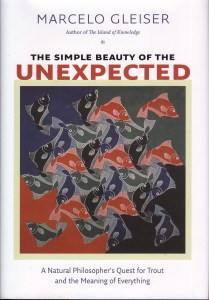
Simple BeautyThe scientific method has been a boon to humanity. Knowing how to sharpen the rational faculties has demonstrated its benefits time and time again. Sometimes, however, overemphasis on rationality contains hidden costs. Humans are not always rational, and sometimes this is a very good thing. Culturally we’re told that reason trumps emotion and that evolution has somehow led us to this. That’s only part of the story. Marcelo Gleiser’s excellent The Simple Beauty of the Unexpected serves as a wonderful corrective to this one-sided view. Although I’ve been trained in rationalistic thinking, my humanities background lacks the credibility of similar training in the sciences. Gleiser, as a physicist, demands respect. As he notes throughout this book, physics asks the hard questions. The only proper response, he rightly declares, is humility. Arrogance in any human endeavor may make for a good story, but it is bad citizenship on this planet.

I have to confess to being one of those poor souls who really doesn’t care about fishing that Gleiser mentions early on in his book. That doesn’t mean that I don’t agree with his outlook and mature thoughts on the subject. Using fly-fishing as a kind of bait, he draws the reader in to consider some deep and meaningful questions about life. Although he describes fishing literally, he clearly has a metaphorical usage in mind as well. Rare is the scientist who will admit that science can’t answer all questions, and moreover, wouldn’t want it to. Showing the limits of rational thought can feel like taking one’s clothes off in front of a crowd for those wedded to empirical evidence. Applied science clearly works very successfully. That’s not the same as having all the answers. Gleiser beautifully illustrates this, acknowledging that the spiritual has a role to play even among the rigorously trained and actually employed of the intelligentsia. This is a very important book.

Admitting that some things happen for which there is no rational explanation, Gleiser advocates for appreciating the wonder rather than trying to force science into situations where its explanatory power fails. This doesn’t happen often—indeed, rarity is what makes the unexpected so wondrous—but when it does happen we need to, like a fisher, accept it as part of the way the art unfolds. In Gleiser’s terms, not every fishing trip is successful. If you always had success, what would be the point in trying? He ventures into the murky waters of religion a time or two, but this is catch-and-release, not for the kill. The Simple Beauty of the Unexpected is an example that includes itself. Those who read it will learn what this means.


Kidnapped by Religion

The title is, unfortunately, not mine. My wife sent me a story on NPR entitled “Humility Is Embedded In Doing Science, But What About Spirituality?” by Barbara J. King. The piece is largely an interview with physicist Marcelo Gleiser about his new book, The Simple Beauty of the Unexpected. Of course, now it’s on my reading list. The interview treads the well-worn path of science versus religion. Science is presented as humble (which I don’t doubt, when in the right hands—or the right minds, rather) while religion is arrogant, claiming to know everything. Gleiser states that spirituality has been “kidnapped by religion” but still has a place in the life of a scientist. I wish there were more of them like Gleiser.

Now, I have to admit my data are limited. I read science books—I have since I was a teenager—but with a layman’s eye. My scientist dreams were dashed against the unyielding rocks of complex mathematics, something evolution cruelly withheld from my gray matter. I wouldn’t have survived high school pre-calc without my younger brother’s help. I’ve nevertheless read the pre-chewed, partly-digested science regurgitated for the formulaically challenged, and find myself, like Glieser, awed at the wonder of it all. Still, I also find many scientists—at least those with the loudest voices—claiming that what they’ve discovered is all there is. There is only matter, and we with our three-pound brains have figured it all out, by the gods, without the gods! We know all that can possibly be known will conform to the system our brains have developed, and there are no gods out there and no spirits in here and that pang you’re feeling in your gut is merely physiological, not spiritual.

I haven’t read The Simple Beauty of the Unexpected, but I have found many scientists walking the same trail I’m on. We are those who are seeking the truth, and who don’t assume the answers. Religion need not be arrogant. At its best, it’s not far from science. As a species, we have developed rationality extremely well (even if we fail to use it). Much of biological existence, however, is emotion, or feeling. That we sometimes leave behind. It participates in reality as much as rationality does. I’m reminded of this every time I hear someone in the business world refer to “soft” skills. What mere humans bring to this rationalistic business of making money. We’re just the squishy stuff that CEOs can’t live without because wealth mean nothing if you can’t compare it to someone else’s. Humility? I agree, Dr. Gleiser, we must maintain a sense of wonder. For those of you who say we’re just a number waiting to be quantified, I would humbly ask for 42, if it’s not already taken.

DSCN0633


Psychics Anonymous

New York is a city that is fascinated with itself. To me it’s kind of like rooting for a professional sports team. The members of the team come from all over the place. As Jerry Seinfeld once said, “You’re rooting for the jerseys,” or something to that effect. So it was that I found a piece in News Watch so interesting. “New York City: Psychic Capital of the World?” the headline ran. New York has to be first in this too? I’ve noticed on my daily walks through Midtown Manhattan that many psychics hang out the shingle proffering their wares. In my half decade of commuting into the city, I’ve only ever seen one person take up such an offer by pushing through the door. Nevertheless, I have been impressed by the sheer number of psychics that advertise in New York.

IMG_1178

I’m not one to rule out psi without giving it a fair hearing. Much knowledge is lost, I fear, by the ridicule factor. How many times have you thought about someone for the first time in years and then they called you? We all experience significant coincidences from time to time. Princeton and Duke Universities even set up, once upon a time, laboratories to test such things. What really interests me here, though, is that those who advertise are doing it as a business venture. Something of value changes hands for a chance at some insider knowledge. For legal purposes the psychics have to declare their wares for entertainment only—they go where no empirical evidence dares follow. Lawyers live for such ambiguity. Even so, some of the most influential people in the world of politics have relied on psychics. Some police departments do as well, very quietly.

News Watch says that psychic consultation is the closest some New Yorkers get to spiritual. If so, I’m glad they exist in such profusion. Our world has many shortages: fresh water, adequate food, and, for the tastes of some, fossil fuels. Perhaps the most dangerous shortage of all is the recognition that we are spiritual beings. Call it emotion, call it irrationality, call it feeling—our non-physical selves are what we care most deeply about. When we greet someone after an illness or surgery, we don’t ask “How do you think,” but rather “How do you feel?” We can give it many names, but the existence of our psyches is what keeps us sane and healthy. New York City is just like anywhere else, in that regard. It is a very human city.


Seekers

We live not far from an upscale mall. This mall, although over 30 miles from Manhattan, has its own bus line dedicated to it by New Jersey Transit. There is a route that runs throughout the day from the City to this mall and back. My readers know I’m hardly an uptown type. Nevertheless, an occasional trip to the mall can be a learning experience. On a cold weekend where outdoor activities felt unnecessarily ascetic we went to stroll around to see what was new. In the midst of the usual stores I never visit, there was one that had the temporary feel of an exploratory venture in high rent retail. It was, for lack of an appropriate adjective, a “New Age” store, featuring figurines from eastern religions, incense, dragons, and the aesthetic of the hippie mystique. Wandering about, I couldn’t help but notice how much of the merchandise, in one way or another, was religious in orientation.

Those of us from the western hemisphere find the quotidian aspects of Hinduism and Buddhism exotic. Otherworldly, even. In our sterile offices, we dare not burn incense. Fabrics this colorful are not worn to work. It was as if the only place true color exists is in that mystical world that religions acknowledge, but businesses deny. Yes, it was a Saturday, but nevertheless the number of patrons surprised me. The town in which the mall sits is quite affluent. We live far enough from the City that some very serious money resides at no great distance. Patrons tend to have enough, and considerable surplus. And here they are, in a store selling that is undifferentiated spirituality. A stand of silver jewelry was explicitly marked Wicca. There were even Christian figurines among the crystals.

IMG_2672

People, even (or perhaps especially) the wealthy, desire more than the dollar can bring. We’re authoritatively told that we are meat computers. Mere automatons to the forces of physics. Our human experience tells us otherwise. We are meaning-seeking creatures. There are people who will willingly sit for three hours on a bus just to reach this mall. Whether it is a hippie-friendly shop, or the latest fashion trends that draw them here, they have this in common: they’re seeking something. I glance around and spy a mirror. I came here looking for a place out of the cold, but I have discovered an unexpected insight. If we make our own, or purchase it prefabricated, we venture to our secular cathedrals to find a kind of salvation.


Growing Up

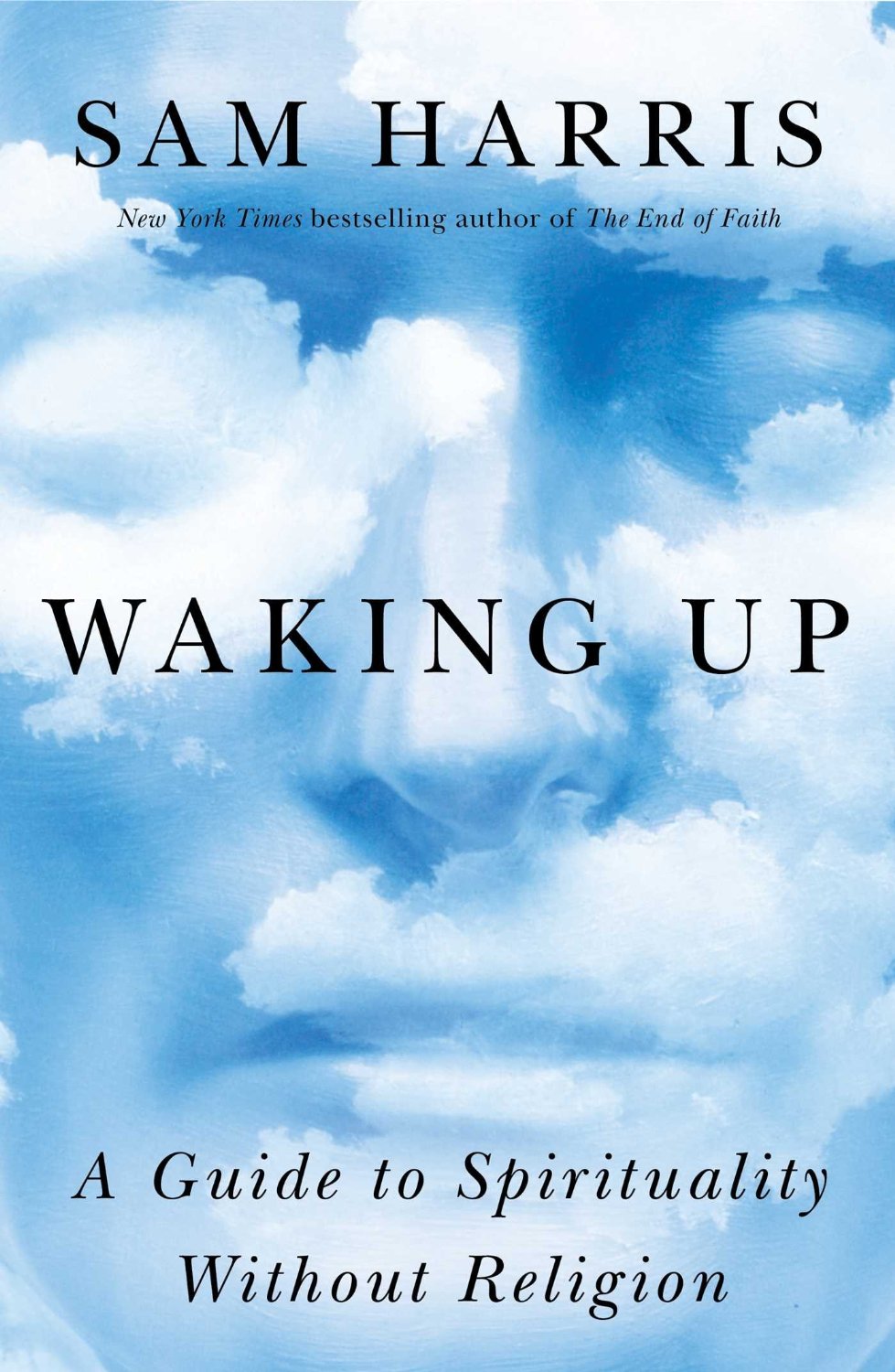
WakingUpI am in two minds about Sam Harris’s Waking Up. Literally. I haven’t read Harris since The End of Faith, and I have to admit that I found Waking Up to be a very engaging book. I can’t agree with everything Harris writes—that’s an occupational hazard of acquiring advanced degrees—but to have a scientist, an atheist no less, praise spirituality felt incredibly genuine. Spiritual experiences happen. I’ve had a few doozies over the years. I’ve also read a number of scientists who tell me they’re all an illusion. Harris admits that consciousness is a mystery. His use of “mind” instead of “brain” won me over from the beginning. I discovered that the atheist can also be a seeker. Dogmatism, of whatever stripe, is the enemy.

Harris has considerable experience meditating. This is no activity for posers or wimps. It is, despite minimal physical demands, hard work. Throughout the book we get the sense that Buddhism is among the least objectionable religions, when divested of its myths. I do wonder, however, if demythologized Christianity was ever given a fair chance. From my own experience, some of the selflessness advocated by Harris can be found in taking aspects of Christianity seriously. I understand, I think, Harris’s objections to religion. It can, and does, lead to horrors both obvious and subtle. Yet, every once in a perhaps great while, it does offer redemption. Meditation, for example, has its roots in religious practice. It is this that Harris calls spirituality. And it is good.

A Guide to Spirituality without Religion is an apt subtitle for this brutally honest and open book. Harris’s knowledge as a neuroscientist endows his ideas with great authority. He opines, and he is not alone, that meditation demonstrates that “I” is only an illusion. This loss of self will haunt me for some time. For decades I is all I seem to have. Still, I am pleased to find an open-minded scientist on this same path I tread. Raised to be both spiritual and religious set the trajectory of my otherwise logic-driven life. You can’t go back and change all that, but you can grow up. To read of Harris’s spiritual experiences in the geography of great spiritual masters as well as in the laboratory instill in this reader a profound hope. Whether or not this reader is merely an illusion. There may be morning after this long night, after all.


Bargain Basement

Signs, in my experience at least, lend themselves to being over-read. How often a heedless moment suggests something more than was intended—signs try to say too much in too few words. Indeed, poets rather than marketers ought to be sought. I found myself in Barnes and Noble recently, since Borders is gone. In all fairness, I attended two independent bookstores as penance afterward. Nevertheless, in the corporate atmosphere of the last major brick-and-mortar chain, I saw a sign. Several, actually. One of the most obvious is how many tchotchkes the store had, as opposed to wall-to-wall books. Barnes and Nobel has never been particularly imaginative in its selection of floor stock, but now it is a great place to buy toys, electronics, and coffee. Maybe pick up a book as an afterthought on your way out.

IMG_1550

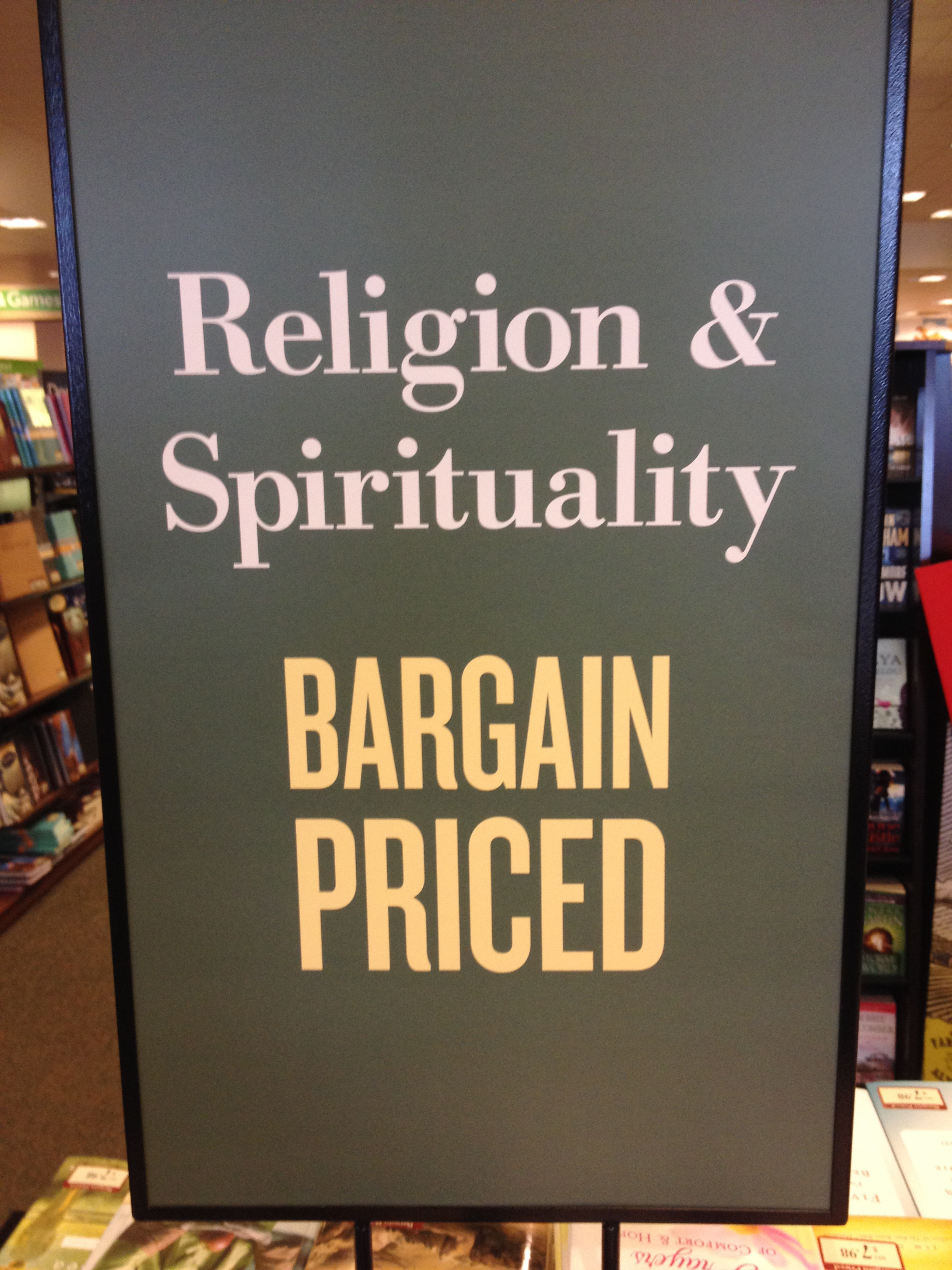
The front space just inside the door of a bookstore is prime real estate. Publishers have to pay extra to have their books displayed immediately inside the doors—something they reserve for sure-fire rapid sellers. The average customer will walk in, down the center aisle and there they will find promoted (and demoted) items, laid out on their own tables. So it was that I saw a sign reading “Religion & Spirituality Bargain Priced.” In fact, they’re free. Not the books, but religion and spirituality. Even in this secular world, people are not shy about buying books in these categories. Step into the religion aisle sometime. You may be surprised how much you find there. In fact, those who track the industry often include Christian books as a third major category besides fiction and non. We trust those who know enough to write books about such matters. The Bible, despite its detractors, is a bestseller by any measure.

Do we, however, value religion and spirituality? So often religion is portrayed as the root of all extremism while spirituality is relegated to the weak-minded. The science section generally takes up only half the shelf space of religion. People want to know what it’s all about. The rates are anything but bargain priced. Some religion may indeed be simple, but most religions are unexpectedly complex. Those who engage them seriously know there is more to life than just fact and fiction. There are middle grounds and outer limits. There are places that have yet to be discovered, let alone explored. We are in the infancy of intellectual awakening. Of course that shows in how quickly we’ve abandoned our bookstores and gone off after less weighty things. If you have a moment, though, on your way to the coffee bar, you might pick up some religion cheap, and who knows where it might lead?