Springing

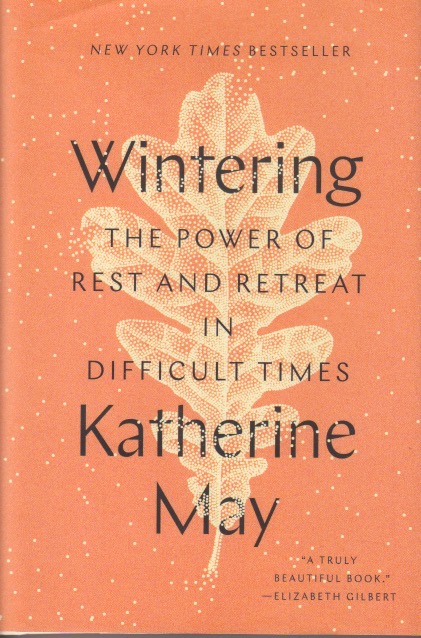
Life, for everyone, has difficult times.  Katherine May has a reassuring, but not always cheerful way about her.  She calls troubled times Wintering.  The subtitle of her book explains that it’s about The Power of Rest and Retreat in Difficult Times.  My wife and I read this one together.  It reminded me, in some ways, of Barbara Brown Taylor’s Learning to Walk in the Dark.  In a society vapidly preoccupied with an often shallow happiness, admitting, even pondering the things that are difficult is an act of courage.  May has a disarming way of writing, a humility and self-deprecation that are an antidote to the brazen self-assurance we too often see in the media.  She looks for lessons in her own experiences of pain and loss, and yes, surviving through winter. 

Winter is often a quiet time of reflection.  In our bright, loud, beeping, buzzing world we don’t take much time for such things.  Indeed, capitalism (which is generally not deep, although deeply engrained) doesn’t encourage it.  “The more you can work,” it whispers in your ear, even while sleeping, “the better you’ll feel.”  Winter slows things down.  Makes life a bit harder.  Think of all those days when you just don’t feel like going outside in the cold, snow, and sleet.  When the chill drives you next to the radiator, covered in lap blankets.  When it’s dark most of the time.  Such are good times to think.  As May shows, when you turn a difficult situation around and look at it from different angles, truths about yourself, about life, begin to emerge.  What is it we’re after that keeps us running all the time, dangerously overheating?  We need winter.

The anecdotes here are deeply personal.  This is particularly difficult for a writer because many of us face rejection frequently.  When you’ve poured yourself into a book, blithe casting aside by agents and publishers hurts.  I admire the bravery and the wisdom of writers like May.  She shows that wintering is possible, and that it is followed by spring.  Lives, she notes, are cyclical.  We can find quite a lot of meaning in that.  I often find myself fearing winter.  The heating bills.  The wearing of many layers of clothes for months at a time.  The dark and cloudy days.  Yet a good part of me welcomes the retreat.  I know that, in the cycle of the year with few days off from work, that if I can make it to Halloween, some rest—some wintering—awaits.  And that is a hopeful thought indeed.


Easter Fools

One of the most interesting aspects of Easter is its peripatetic nature.  It wanders around the calendar awaiting the first Sunday after the first full moon after the vernal equinox.  By definition it’s always in spring, but it can range widely as to when it actually falls.  This year it meets up with another unusual holiday—one with very uncertain origins.  April Fools’ Day is poorly documented and understudied.  This is one of the reasons I find holidays so fascinating.  Scholars seldom take them seriously and, well, April fools.  Who’s going to look into that?  When working on The Wicker Man (which is about holiday horror), I found there was little to find about April Fools’ Day.  There’s no agreement as to why it’s called that or how it started.  I have a pet theory, but no evidence to back it up.

Image credit: Heinrich Vogtherr the Younger, public domain via Wikimedia Commons

We tend to think of April Fools’ as a day for practical jokes.  Indeed, the horror movie based on it is a big, long practical joke.  I wonder, however, if it goes back to my other old avocation, the weather.  The weather led me to write a book as well, of course.  For those in the northern hemisphere—particularly up in the more temperate parts of that hemisphere—April can indeed fool.  Around here it’s been decidedly cool for spring after a real warm spell a couple weeks back.  One year while living in Wisconsin we took a family trip for my wife’s mid-April birthday only to end up playing mini-golf in the snow.  April fools, you see.  We’re not out of the woods yet, regarding winter.  This understanding of seasons makes me think April Fools’ Day evolved from a statement about the weather.

Irish Celts believed spring began at Imbolc, at the start of February.  In that viewpoint, summer begins on May Day (Beltane), just a month away.  Now that Easter has fallen on the last day of March we’re left with an April bereft of official holidays, other than April Fools’ Day.  In fact, work-wise it’s a barren period from Presidents Day, in mid February, through Memorial Day at the end of May.  Just as the weather’s warming up to make the occasional long walk through the woods a magical journey of discovery, we’re confined to our offices—virtual or physical—gazing longingly out the window as nature invites us out to play.  Well, April fools, does it not?


What Would Ostara Say?

Easter is an uneven holiday.  In Britain it leads to days off work.  In the US, which prides itself on being religious, it’s business as usual.  Nobody closes for any days surrounding the holiest day of the Christian year.  That irony has always struck me about this season.  Of course, going to college there were breaks in the spring, and at a Christian school, special observances for sacred times.  In seminary it goes without saying.  In my case, working on a doctorate in the UK (an activity with few true breaks), we experienced the British sense of holidays surrounding Easter.  At Nashotah House you simply couldn’t miss it.  In fact, the Triduum was a contest of endurance with late night services and hours and hours in chapel.  Once I was forced into secular life, the shift was blinding.

Capitalism rolls right over Easter without even slowing down.  Who brakes for a Sunday holiday?  I am a believer in significant days.  I write about holiday horror, and holidays in general, because I’m certain of their importance.  The relentless pursuit of gain that is the American way is wearying.  Most everyone I know who isn’t retired is just plain tired.  Tired all the time.  We’re given few pauses and fed many worries.  So much so that resurrection from the dead can feel like something scary indeed.  Will work in the afterlife be as unrelenting as it is in this one?  All of this becomes especially evident to me on years like this one where Easter creeps up on me.  Not a fixed day in the calendar, sometimes you don’t even look up until you’re practically on top of it.

I remember in high school spending practically all day on Good Friday in church.  When working at Ritz Camera (after seminary, trying to stay ahead of student loan payments), managers looked at you funny if you asked for it off.  You see, I need spiritual time to recover from the onslaught of work.  Easter, however, is just another Sunday.  Watched on Zoom, with maybe special music.  If you’re able to be there in person there may be lilies with their distinctive Pascal scent.  Then the next day it’s back to work as usual.  Thinking about Easter always make me think about hearts being where the treasure is located.  When we take treasure too literally, it leads to too much work.  My mind, I fear, is that of a professor, with built in spring break.  And semester breaks.  Not exactly holidays, but unstructured time to catch up on work.  Holy days.


Balance

Spring came early this year.  I’m not talking about Punxsutawney Phil, but rather the fact that a leap year shifts the vernal equinox a day forward.  According to experts, spring begins today.  In The Wicker Man (it’s about oh so much more than the movie!) I discuss the seasonal holidays of the Celts.  The vernal equinox was surely known, but the beginning of spring was understood to be Imbolc, around February 2.  Since their summer began on May Day (thus the eponymous Wicker Man), the equinox was halfway through spring.  Modern paganism traces the equinox celebrations back to Ostara.  The day takes its name from the germanic goddess Ēostre, who also gave her name to Easter.  The holidays were intertwined, just as Christmas was entangled with Yule.

I find the equinoxes and solstices times for a spiritual pause.  Sure, there’s the simple astronomical fact of equality of light and dark, but there’s also something more.  Something that feels cosmic and that helps direct our destiny.  From now on there will be more light than dark.  But only for six months.  Even with Daylight Saving Time, our capture of light is of limited duration.  It makes sense to make use of the light while we have it.  Of course, those of us who rise early end up falling asleep before dark, but even so it’s starting to get lighter in the mornings again.  The equinox is a time for reflection.  And like most times for reflection, business doesn’t recognize it as a holiday.  Who ever heard of a holiday on a Tuesday?

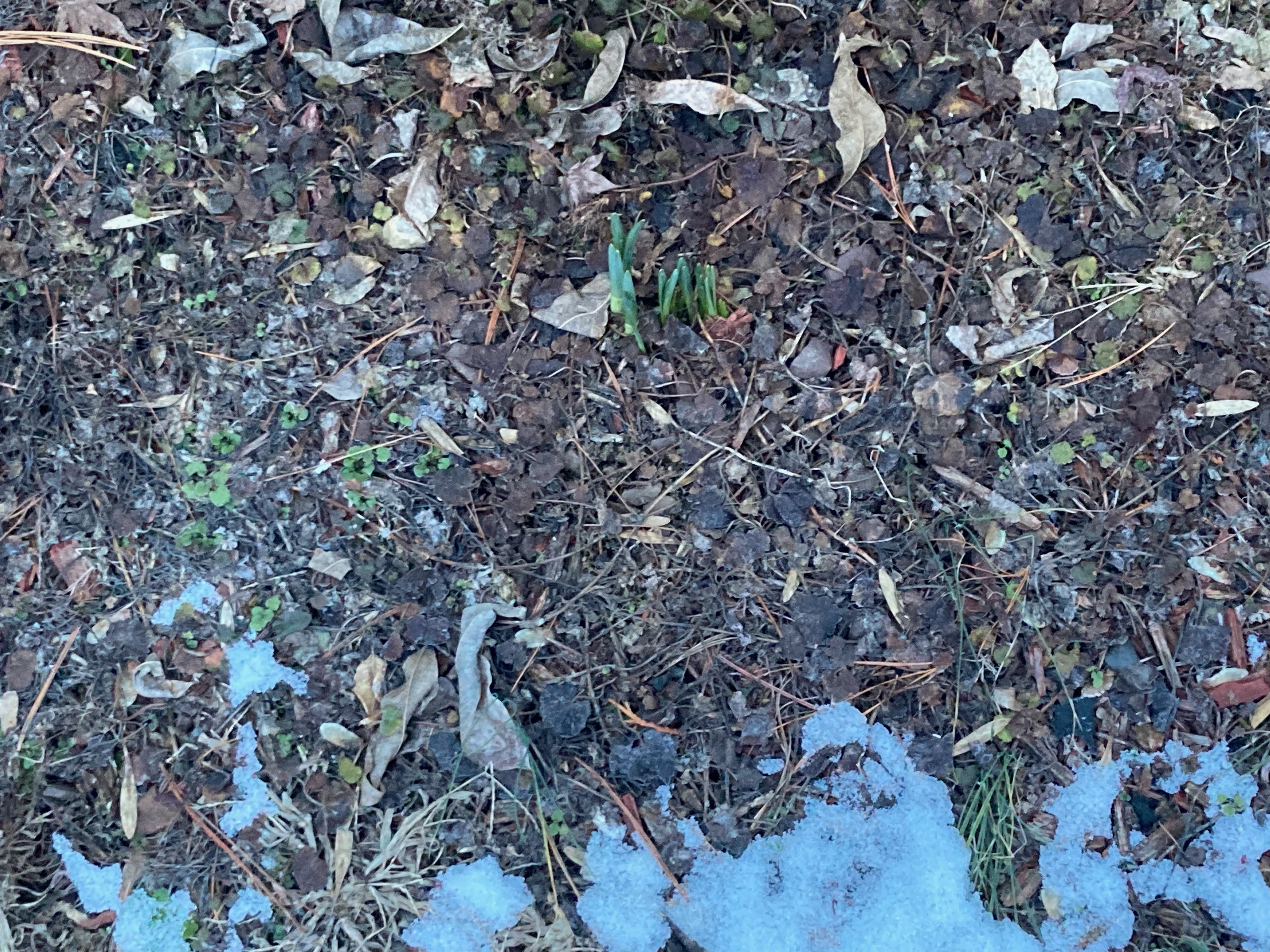
The thing about spiritual messages is that they often come to you rather than the other way around.  At certain times, however, conditions are just right for something to break through.  It does require some listening, however.  So today, as nature holds everything in balance, try to take an unrushed moment to ponder.  For some of us it may come before the fury of work tears through our peaceful meditations, while for others it may come with the calm that five o’clock brings.  However we find it, this is a special time because this day is unusual.  It is a time of balance.  We all know how rare such things are in life in a topsy-turvy world.  The earliest flowers are already blooming around here, suggesting that as light increases so will hope greet us, if we watch for it.  The world is full of wonder, and an equinox is a time to look for it.


Thoughtful Transformation

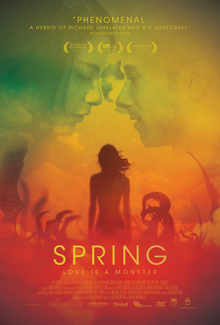
Philosophical horror’s a thing.  A friend introduced me to Moorhead and Benson films—these aren’t major studio productions—and I’ve been watching them as I can find time.  They’re intelligent and tend away from heavy gore, which is fine by me.  And they leave you with plenty to ponder.  I recently sat down with Spring, an unusual movie that sometimes gets classified as science fiction, probably because the lead actress plays a science student.  There will be spoilers here, so if you have plans to watch, please stop and do so now.  Here goes:  The story follows an aimless young man who’d given up college to take care of his dying mother.  To get away, he heads to Italy with no particular destination in mind.  He ends up in Polignano where he meets and is smitten with a young woman.  At least he thinks she’s young.

From the privileged point of view of watchers, voyeurs perhaps, we come to see that Louise isn’t who Evan thinks she is.  She’s a two-millennia-old woman who has to regenerate herself every twenty years to maintain her immortality.  When the twenty years wind down, she transforms into other creatures on the evolutionary scale on the way to humans.  Since she lives on she’s not really seeking a long-term relationship.  This leads to some discussions of religion, which I find intriguing.  Louise is a scientist, however, and even when she transforms into a monster, she refuses to call it supernatural.  Rather, she claims it’s just something that science can’t yet explain.

This perspective really does get at the heart of the debates between science and religion.  Are there things science simply can’t explain?  I.e., are there things beyond science?  Or is science really the panacea for all things?  The problem is that the human mind cannot sense or detect all things.  We don’t even have a clue as to how many things there actually are to detect.  How can one method be used to encompass everything?  Not a bad set of questions to be raised by a somewhat Lovecraftian movie.  Lovecraftian, by the way, due to its focus on the sea and some of Louise’s atavistic transformations.  Spring is an unusual and thoughtful movie.  It’s a love story as well, about willingness to face the unknown for love, and trusting evolution.  The characters are likable and you want them to thrive, which you don’t always get in this genre.  It’s one of the reasons I keep coming back to Moorhead and Benson, and always being glad I came.


Going Green

It’s easy to get eager at this point in the year.  A month and a half after Groundhog Day, we’re at St. Patrick’s, and just a few days from the equinox itself.  Around these parts we’ve had some warm weather after last weekend’s bomb cyclone and most of the snow is now gone.  We’re ready for progress.  We’re tired of winter and huddling indoors.  The crocuses are defiantly open although the warning saying in Wisconsin went “three snows on the crocuses.”  St. Patrick’s green is the fecund green of spring.  Although nobody gets them off from work, the seasonal holidays are signs of hope.  It doesn’t matter which season into which we’re transitioning, there’s beauty ahead.  It’s the kind of change many people enjoy.

Look closely at a flower.  (If the crocuses aren’t up yet in your area they will be soon.)  Open and inviting, it offers insects what they need in return for a bit of cross-pollination.  Yesterday I saw my first wasp looking for a place to build a nest on our house, reminding me to be careful opening doors now because no transition is completely smooth.  Spring is hope in season form.  As much as we may appreciate winter with its pristine chill, spring reminds us that food is soon to be available from the bosom of the earth itself.  The songbirds, now back in force, have been eagerly anticipating it.  They are the heralds of transition, the little winged messengers of assurance.

Photo credit: Andreas F. Borchert, Wikicommons

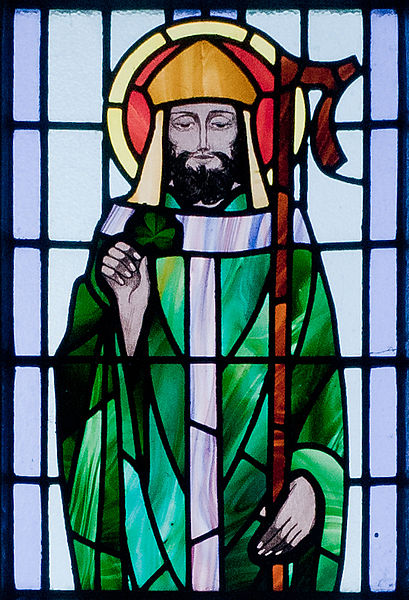
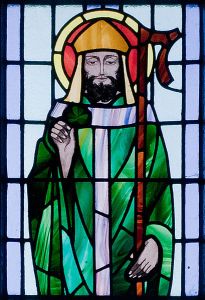
It’s time to step outside and breathe deeply.  The muddy smells of a thawing earth blend with the first fruity hints of buds beginning cautiously to open.  The transition’s not straightforward.  There will be setbacks and chills yet to come.  Nevertheless, the die is cast—St. Pat waves his clover as if to say “This is what lies ahead, as brown becomes green.” Our world tilts as it spins and brings us the delight of seasonal changes.  Saints and birds and flowers must agree on this, even should they differ on the details of what is needful.  It’s a day for celebration, even though it’s a Thursday, a work day with perhaps a respite—after hours of course—to have some fun.  Green is about to reappear.  We wear it today to encourage the timid plants, yes, we need hope.  We look around the world and know that hope is what we really all crave.  


Peaceful Lessons

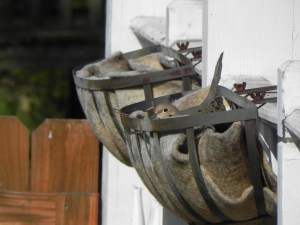
We are all, I think, looking for hope.  Probably due to the way I was raised, I often seek signs.  There’s no way to know if said signs are mere coincidences or the more intense variety known as synchronicities, yet we have a hopeful sign here at home.  On our front porch we have some plant hangers.  Spring crept up on us this year and we haven’t got around to putting any pansies in them yet.  The other day when I was stepping out to get the mail, I noticed feathers in one of them and feared there’d been a bird-related accident there.  As I took a step toward the planter, the head of a mourning dove popped up.  She blinked at me curiously, but didn’t fly away.  I knew then that she had built a nest in the as-yet unused planter and she was sitting on her eggs.

Monday was fiercely windy around here.  And rainy.  I wondered how any birds could fly in such weather.  A mourning dove flew up—perhaps one of the pair on our porch—and landed on the electric wire leading to our house.  The wire was swaying and bucking so furiously that the dove constantly had to shift and fluff and flutter just to stay in place.  The poor bird was in constant motion.  Then it showed a sign of animal intelligence.  There’s a much larger wire that runs down our street, from which other houses are supplied.  It’s more stable in the wind due to its girth.  The dove flew up to that wire instead.  There it was able to perch without having to constantly adjust itself to the gusts.  Peaceful and intelligent.  That’s what the world needs.  I have hope.

The dove has long been a sign of peace.  It’s understood that way in the Bible.  It was the dove that brought an olive twig to Noah, indicating that although all he could see was water there was, somewhere, dry land.  These days we need to be reminded that although it seems that the storm will last forever, even hurricanes eventually exhaust themselves.  The dove, clearly not happy about the horrendous wind buffeting it on that wire, nevertheless persisted in a kind of stoic optimism that things are as they should be.  There is great wisdom in the natural world.  If we can get to a window we can see it playing out before our very eyes.  Now when I step out the door, I glance at the dove, and she looks back at me.  We wink at each other.  She doesn’t fly away, for she understands.  She has a wisdom to which we all should aspire.


Suddenly Spring

Maybe it’s just a sign of passing years, but spring seems much more sudden to me now.  One day I’m wearing multiple layers and shivering in the mornings and the next day I need to take a machete to the lawn for its first mowing.  Those weeds along the fence, which weren’t there a day ago—I swear!—are now two feet tall and aching for an appointment with the weed whacker.  I mean, the snow shovel’s still on the porch.  When did this happen?  How did we go from brown grass to sprouting trees of heaven just overnight?  I haven’t had time to build up my calluses yet for pushing the lawn mower (we have the environmentally friendly kind, powered by naught but human effort).  Morpheus was right, I guess.

This past week was so unexpectedly busy that I haven’t had time to stop and muse over some important happenings.  My current project, Nightmares with the Bible, involves trying to sort out The Conjuring universe, and I wanted to reflect on the passing of Lorraine Warren.  Her obituary in the New York Times  by Neil Genzlinger was surprisingly respectful.  Whether or not she was really onto something, people in general seem to believe she and Ed were sincere in their convictions.  There are those who claim they were charlatans, but those who perpetrate hoaxes tend to leave telltale signs.  Those who claim they couldn’t have experienced the paranormal because there’s no supernatural to experience are entitled to their opinions, of course.  Being tolerant of those who see differently, however, has never been more important.

The natural cycles of the earth never fail to surprise me.  Supernatural or not, the explosion of life following one warm, wet week is nothing shy of astounding.  I walked around to the seldom visited north side of the house to find a veritable jungle that wasn’t there just the week before.  Staring at the flowers and weeds, I can’t help but think of the hackneyed phrase “pushing up daisies.”  Much happened this past week.  The mower was oiled up and played the grim reaper to the grasses and other plants of my neglected yard.  Life, as Jurassic Park (which my lawn resembles) teaches, is persistent.  I never met or in any way corresponded with the Warrens, but I feel that in some sense I have gotten to know them.  And just yesterday it still felt like winter.


A Saint Lent

Photo credit: Andreas F. Borchert, Wikicommons

Lent, among the denominations that observe it, is intended as a time of intense reflection.  Beginning on Ash Wednesday the fact of one’s own mortality becomes a foremost consideration as the faithful are reminded that they will die.  It has always struck me as paradoxical that St. Patrick’s Day always falls in Lent.  Those who abide by the liturgical calendar readily acknowledge that Lent is a punctuated season; saints’ days and feasts can still occur, temporarily disrupting the heavy contemplation.  While at Nashotah House we never celebrated St. Patrick beyond a brief mention during a collect of the seventeenth.  His day, rich in Celtic mythology, it seems, was inappropriate to the mandated gloom so highly valued by the soul-sick.  Having some Irish ancestry, I always felt a little slighted by this aloofness regarding a saint most people can actually name.

College campuses, I later learned, tend to schedule their spring breaks to include Saint Patty’s Day because of the damage drunken students may exact.  The stereotypical besotted Irish have become an excuse for excess during Lent, although, I suspect the forty days have little to do with it.  A saint becomes a justification for sin, it seems.  And Lent continues the morning after.  There’ll always be Lent.  The tray holding the ashes of last year’s palm branches is never empty.  Two once religious observations clash in mid-March of each year.  During a brief spell the historically oppressed Irish are celebrities for a day.  Such are the vicissitudes of liturgical calendar clearing.

Today many people celebrate a saint they wouldn’t otherwise recognize.  One that mythically drove the snakes from the Emerald Isle, and who perhaps hid a pot of gold at the end of the rainbow.  A holy man who has made it possible for anyone to be Irish for a day.  Leprechauns and clovers are in fashion as the ironic luck of the Irish closes down major thoroughfares for parades in the midst of ashes and dust.  Outside there may be snow or budding trees.  Perhaps both at once.  There’s a richness to these conflicting symbols that belies the commemoration of a missionary with alcohol.  The day is part of the complex of equinox holidays, whether intentional or not.  The green man of yore begins to awaken as light starts to outstrip darkness for half a year.  We’ve had enough of dusk.  Anticipate the light.  The rules state that Lent will still be here tomorrow.  But the light is beginning to grow. 


Palms and Psalms

At Nashotah House, where I spent many years of my career, it was often felt that the weather during Holy Week was, in the best of circumstances, appropriate. With spring just around the corner, however—the date of Easter is based on the Vernal Equinox, after all—a number of surprises came. Particularly in Wisconsin. The ideal scenario would look something like this: sunny then partly cloudy on Palm Sunday; it was a a joyful day for a parade, but clouds make for nice foreshadowing. Nobody really commented on the weather for Monday through Wednesday, and Thursday—Maundy Thursday—was largely spent inside the chapel. Good Friday, however, should be rainy. Saturday gloomy. And, of course, Easter Sunday should be a perfect, sunny spring day. It seldom, if ever, worked out that way. The weather is not beholden to liturgical celebrations. The same holds true for New Jersey. At least the snow has been removed from the forecast today, only to come in the night.

It was at Nashotah House that I wrote Weathering the Psalms. Being a lexically driven book, it was never intended to be a commentary on global warming. It should have been, in retrospect. Already by then we were nearing the point at which, even if greenhouse gas emissions were stopped, runaway melting of the polar ice would continue apace and the weather would grow more and more unpredictable because of human action. Human action of everyone except the industrialists, of course, since they don’t believe in global warming. We cling to our palms and shout “Hallelujah” while the sea level’s rising and our weather grows increasingly erratic. We have a theology with which the weather disagrees.

IMG_2721

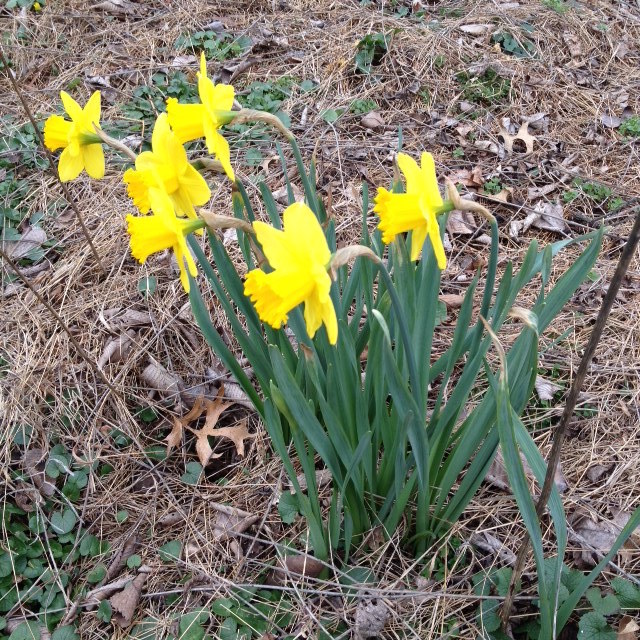
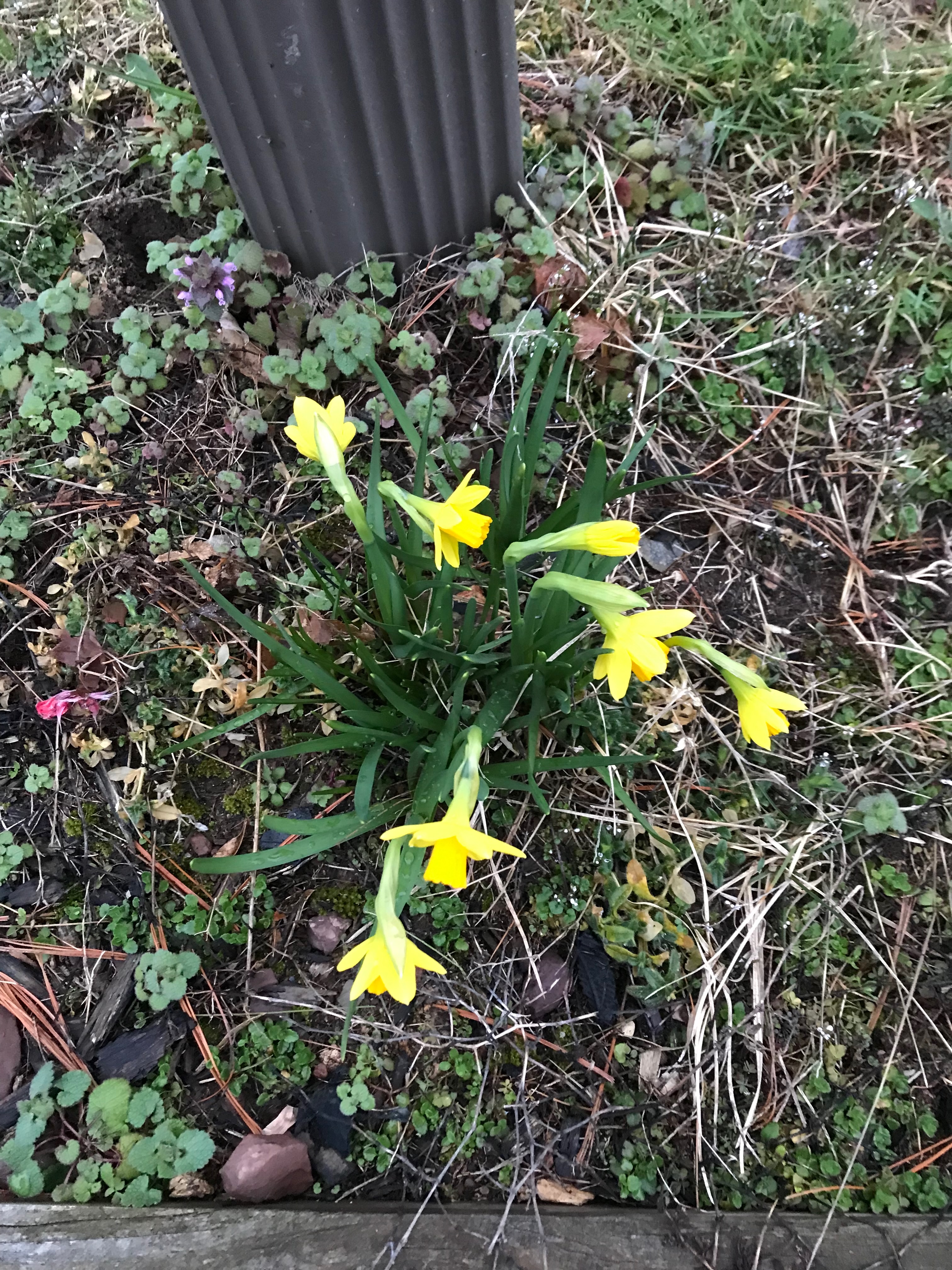
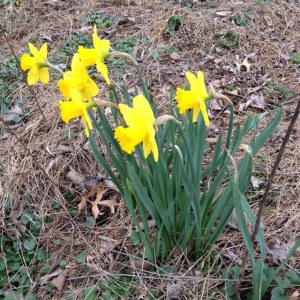
The liturgical year is, like its Jewish predecessor, cyclical. Some have suggested that holidays were invented to remind the laity of when it was safe to plant again. Of course, the climate in the “Middle East” is quite different than that of northern Europe and the United States where the Bible seems to have its proper setting. As I was walking yesterday, I enjoyed the daffodils that I always associate with Easter. When I returned home I saw snow in the forecast. Leap year, Daylight Saving Time, and my general level of sleepiness conspired to cause me to overlook that today is the Vernal Equinox. I look for the snow, grasp my palm, and think of spring.


St. Pat Tricks

What does it say about a saint when the celebration of his day is excessive drinking? Virtue and vice, while not nearly as Manichean as sometimes made out to be, nevertheless conflict in such a setting. Like many American mutts, I have some Irish heritage. I wear green on St. Patrick’s Day, as it’s the done thing. I avoid any celebrations, however. When my job calls for travel to college campuses, I know to avoid the time around St. Patrick’s. Indeed, I’ve taught on campuses where Spring Break was always scheduled around St. Pat’s so as to minimize property damage on campus. Send them off to Florida, where they can be some other electorate’s problem.

IMG_2681

This is an interesting dichotomy. We live in a fairly permissive culture, at least when it comes to things like sex and violence. We nevertheless have built a Prohibition-Era-like mystique around alcohol consumption that makes our college-aged kids a little too curious. Binge drinking and its predictable aftermath have become far too common. Put them together with an Irish saint and all bets are off.

Historically, the Irish have been maligned in what is an acceptable way. Few complain when a nationality is non-ethnic on the surface but non-welcome nevertheless. The Irish have been historically oppressed, but today we forget all that. We hold parades with bagpipes to bolster solidarity, but only if the taps are freely flowing. Drinking with holidays is nothing new. Even Judaism has its Purim and other religions may, from time to time, relax strict rules on the evils of alcohol. But what does it say about a saint that there is apparently no other way to celebrate his day? Wearing green, yes, but that may be entirely accidental. It is, after all, a Dionysian rite of spring, our apparel matching the verdure we soon anticipate as winter wends its weary way out. Even so, I’m glad not to have to be on the streets of a major city when the parade marches by. Even with my Irish ancestry, I prefer to celebrate in my own quiet way, just by wearing green.


Out There…

Spring is a time of hope. As crocuses poke their heads through the slowly yielding soil, we’re reminded that the long months of darkness are only temporary after all. It was only appropriate, then, that my wife should point out to me the returning of the X-Files. Only a limited season of six episodes, but after hearing rumors for years that the third movie was in the works, we’ll gladly take six episodes to remind us that the truth is out there. I’ve not always been a fan or the X-Files, but there are reasons for that which have to do with living in the middle of the woods in Wisconsin in a seminary where the paranormal was, at times, just a little bit too readily at hand. And also because the very topics addressed are those of taboo. The anomalous is fodder for ridicule. Nobody could be so naive. Meanwhile the show was winning awards and creating enduring cultural memes.

Thexfiles

As I’ve suggested many times on this blog, the paranormal and religion are closely related categories. While not many X-Files episodes directly dealt with religion, the second movie made the connections explicit, blending Bible and spooky effects at a distance with abandon. The X-Files and religion share a fascination with wonder. It is all right not to know. Sometimes wanting to believe is enough. We can find information on nearly any topic instantaneously by pulling out our phones and tapping into the local wifi network. We access any bit of random information with ease. And we wonder at our lack of wonder. Where has it gone?

Thirteen years ago the haunting music died. We’ve been left with a reality that feels dull and devoid of possibility. We need some sign of hope. Ironically, it is Fox that offered a world of possibilities far beyond a Republican purview. This was a realm where humanity was no longer in control. Forces outside of and more powerful than us swept into our mundane setting to remind us that even government control is only an illusion. Human pride requires timely mementos that we are simply the dinosaurs of our age. The incomprehensible overshadows us as we spin away our time on a planet nowhere near the center of our galaxy, let alone our universe. And yet we tell ourselves we are capable of discovering the laws that lie behind it all without stepping foot on even the nearest of other planets. Welcome back, X-Files. Remind us where the truth may be found.


Flood Warning

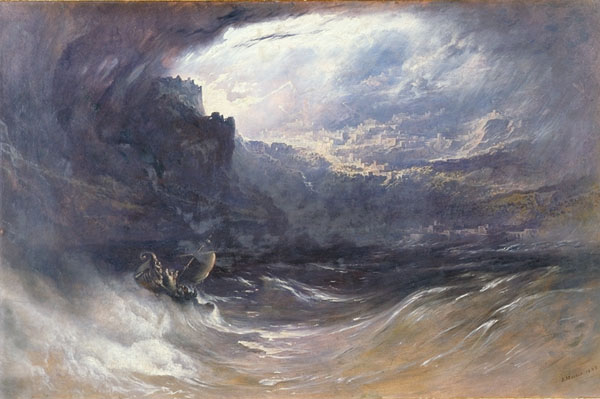
If you’re like any number of others in North America, you may be wondering when spring will arrive. Not meteorological spring—that has flown past already—but the warm, salubrious air that bears no wind chill factor. You might, like many, turn to the Weather Channel website. While you’re there you might see a story about extreme weather and Noah’s Flood. (You might need to scroll down the page to find it; the link seems to have been cursed.) The flood myth is a pervasive story. It appears in countless novels, movies (even Titanic and The Poseidon Adventure, for those who are willing to believe), and many baby’s nurseries. The weather this year has many wondering about global warming, although, honestly, we’ve known about it for years. Some are speculating that floods will become more common, and that’s almost certain. The Weather Channel, however, uses the myth to point out that people have experienced extreme weather from “the beginning.”

The trouble with this reasoning is that the story of Noah’s flood is not original to the Bible. It seems virtually certain that the writers of the biblical stories (there are two) knew the Babylonian version embedded in the tale of Gilgamesh. The writer of the Gilgamesh Epic knew the Sumerian version of the story, already centuries old by that point. And the story never really happened. At least not in historical time. Floods, yes. World-wide flood, no. The stories were told to make points, as most stories are. The point here seems to be that gods can be pretty petty if you neglect to offer them their due. Even minor sins can set you treading water for weeks at a time. Still, the Weather Channel considers the possibility that this could reveal ancient meteorology. Ancient morality is closer to the truth.

Every year around Easter the media peppers its workaday headlines with biblical tropes. It is the time to catch the quasi-religious thinking pious thoughts and click-throughs are more likely. Never mind that biblical scholars have known for many decades that this fetching tale is based more on a primitive Schadenfreude than modern science. Not that the Bible is devoid of ancient weather. I once wrote an ill-fated book about the topic. The people of ancient times knew that God has a special place in his sacred heart for the weather. It is one of the most awesome demonstrations of divine power. So it is in the story of Noah. For those of us in the twenty-first century it may still be a morality tale. This time, however, the flood is caused by human greed and lack of control. And this, when all is measured in the scales, may be among the worst sins humanity has ever committed.

Martin,_John_-_The_Deluge_-_1834