Missing the Rose

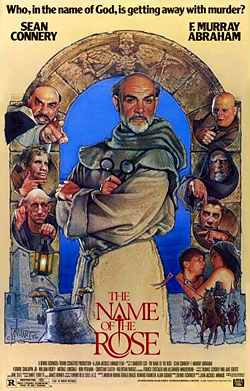
It was Edinburgh, my wife and I concluded.  That’s where we’d seen The Name of the Rose.  Edinburgh was over three decades ago now, and since the movie is sometimes called dark academia we decided to give it another go.  A rather prominent scene that we both remembered, however, had been cut.  If you read the novel (I had for Medieval Church History in seminary), you knew that scene was not only crucial to the plot, but the very reason for the title.  In case you’re unfamiliar, the story is of a detective-like monk, William of Baskerville, solving a suicide and murders at an abbey even as the inquisition arrives and takes over.  It isn’t the greatest movie, but it does have a kind of dark academic feel to it.  But that missing scene.

Of course, it’s the sex scene between Adso, the novice, and the unnamed “rose.”  Sex scenes are fairly common in R-rated films, often gratuitous.  But since this one is what makes sense of the plot, why was it cut in its entirety?  Now the internet only gives half truths, so any research is only ever partial.  According to IMDb (owned by Amazon; and we’d watched it on Amazon Prime) the scene was cut to comply with local laws.  More to the point, can we trust movies that we stream haven’t been altered?  I watch quite a few on Tubi or Pluto and I sometimes have the sneaking suspicion that I’m missing something.  How would I know, unless I’d seen it before, or if I had a disc against which to compare it?  There was no indication on Amazon that the movie wasn’t the full version before we rented it.

The movie business is complex.  Digital formats, with their rights management, mean it’s quite simple to change the version of record.  Presumably, those who’ve pointed out the editing (quite clumsy, I’d say) in reviews had likely seen the movie before.  Curious, I glanced at the DVDs and Blu-ray discs on offer.  The playing time indicated they were the edited version.  Still, none of the advertising copy on the “hard copy” discs indicates that it is not the original.  Perhaps I’m paranoid, but Amazon does run IMDb, and the original version is now listed as “alternate.”  Now that I’ve refreshed my memory from over three decades ago, it’s unlikely that I’ll be watching the film again.  I’ll leave it to William of Baskerville to figure out why a crucial scene was silently cut and is now being touted as the way the story was originally released.


Movies, Paused

Technology breaks the world into bits.  It’s not just pixels, or 1s and 0s, it’s culture.  And we let it happen.  I was thinking this when I should’ve been watching a movie.  I don’t have much time for films, nor do I have money to see everything in a theater.  Or even to pay on a streaming service so that I can watch without commercials.  So like any zombie, I just let it happen.  Recently I was watching a movie—it’s here on this blog someplace—that was uncommonly unified by mood.  Edgar Allan Poe was of the opinion, and I think he was right, that short stories should be brief enough to finish in a single sitting.  Poe opined that such a reading allowed for the continuation of a mood set by the writer.  He was a master at doing this himself.  Breaking up movies with commercials reminds us of his wisdom.

Photo by Ramon Kagie on Unsplash

So I was watching a film where the dread builds up slowly.  The shadows, the music, the unspooling plot—try this new toothpaste!  Here’s a silly television show that you can watch on our network!  What was the mood I was in?  It was shattered by people pushing stuff I’ll never buy.  (I’ve got sensitive teeth, Mr. Commercial, and my dentist has recommended a brand that keeps me from gnawing my tongue off.  And that television show, Ms. Commercial, has no appeal to me.  I won’t watch it.)  Back to the mood you were trying to enjoy.  This isn’t anything new, of course.  I grew up watching Saturday afternoon monster movies and they were constantly interrupted by commercials.  You have to endure the sermon if you want the fun of coffee hour.  But still, but still…

Yes, I know the rules.  Subscribe to a service (I use two) and you can watch what we’ve got.  Only some of it will be interrupted by commercials.  Companies as large as ours didn’t get this way by accident, you know.  We had to show the average person what market research indicates they want—whiter teeth, more entertainment.  Forget what you’re watching at the moment.  Isn’t that mood just a little intense?  Don’t you need a little break just about now?  I don’t know how you see these posts, but I pay extra not to have advertising on my website.  I do hope that’s the case, if you see it from a device other than mine.  Besides


Virtually Taxed

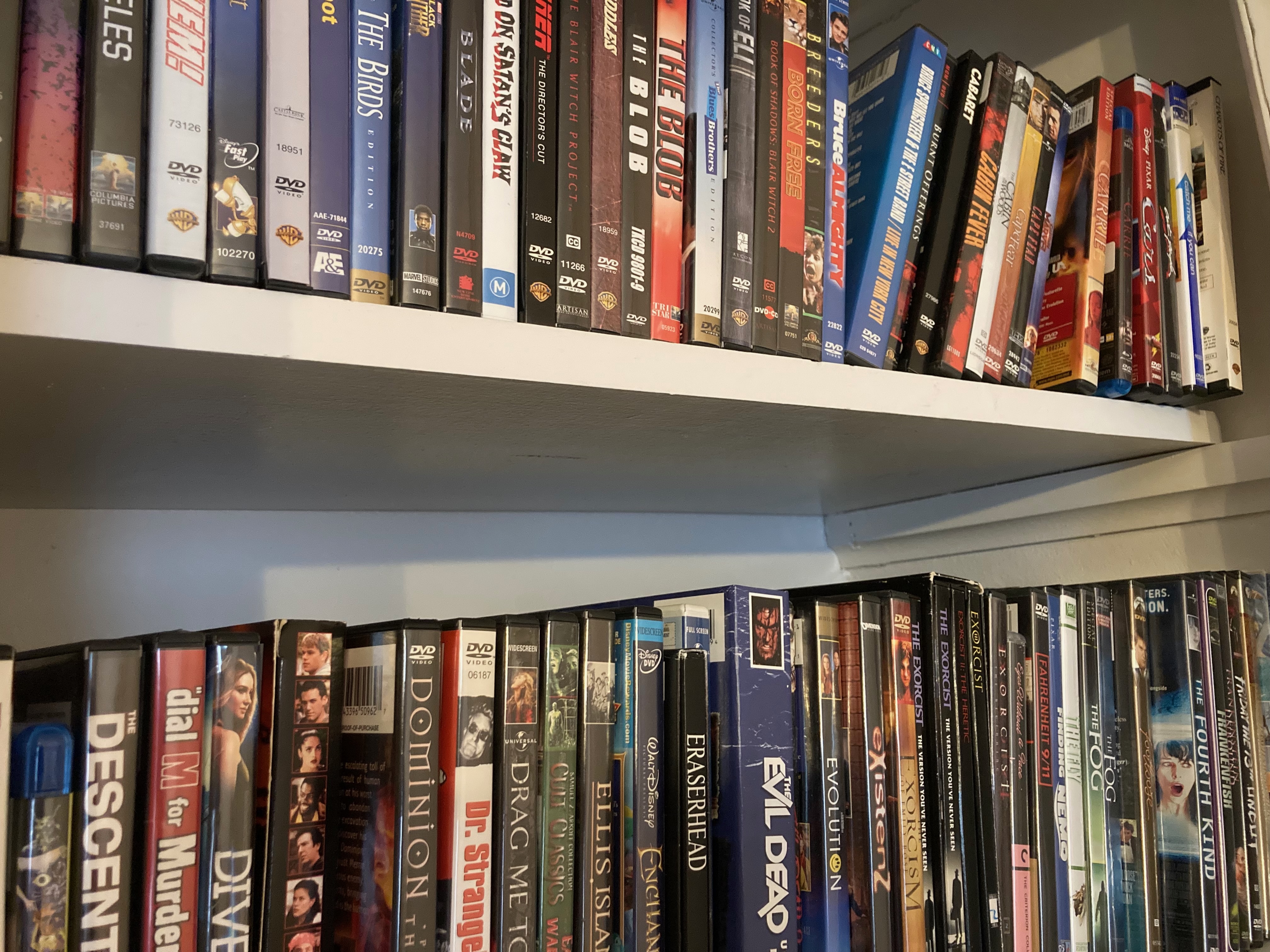
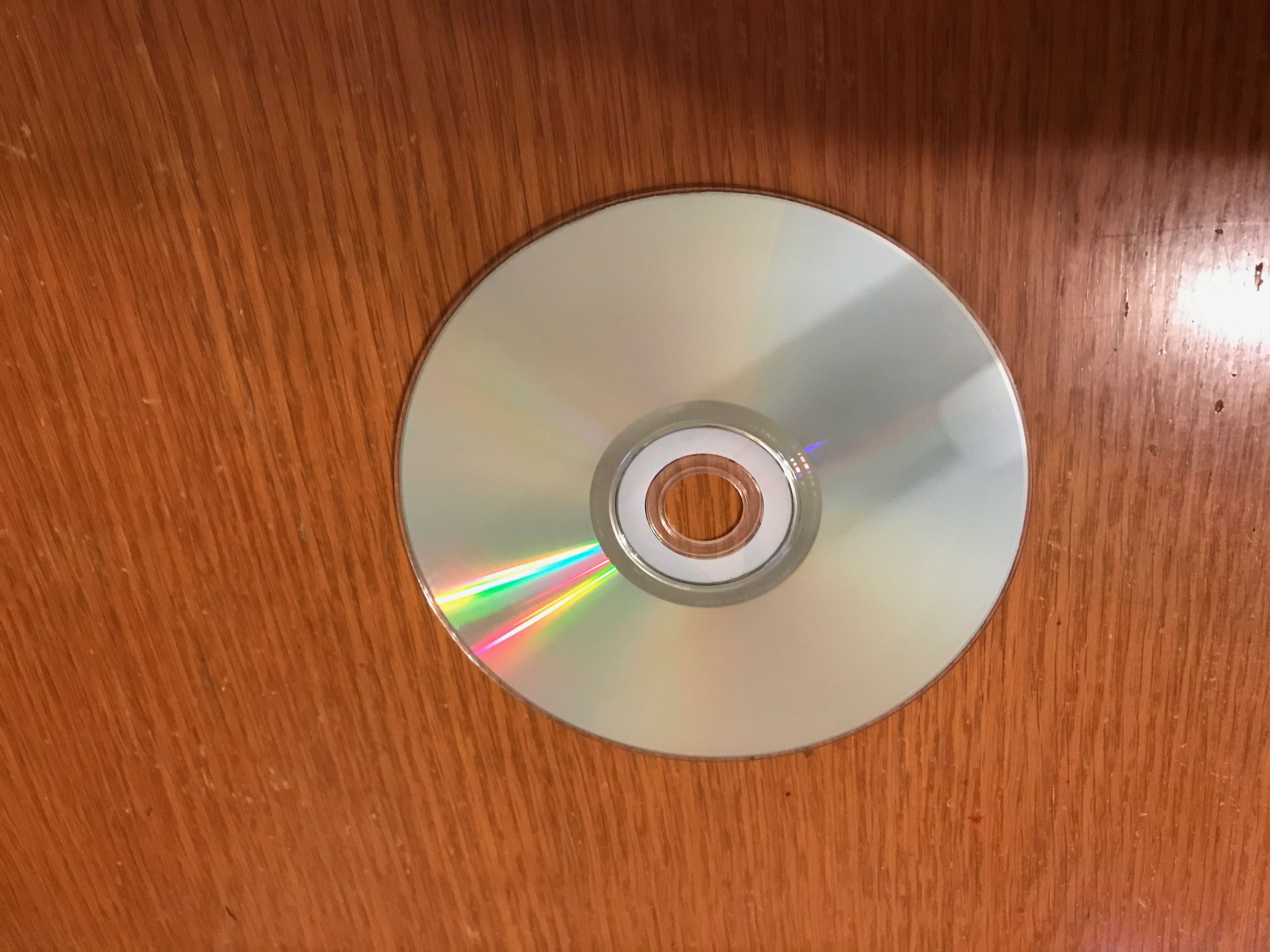
Nobody ever explained it to me.  DVDs, with no moving parts, can still go bad.  Having amassed a library of them over the years, and storing them the recommended way, I nevertheless come across several that have “damaged” areas—like a skip in a record—that confuses readers to the point that the movie simply isn’t enjoyable to watch.  The other day my wife had a hankering to watch one of those movies.  I checked our two streaming services and it was only available for rent, or “purchase.”  I still can’t wrap my head around buying something that doesn’t exist with money that’s purely electronic.  And people don’t believe in the spiritual world!  Well, I bit the bullet and clicked to “buy” the movie—perpetual access is what we call it in the biz.  We watched and all was well with the world.

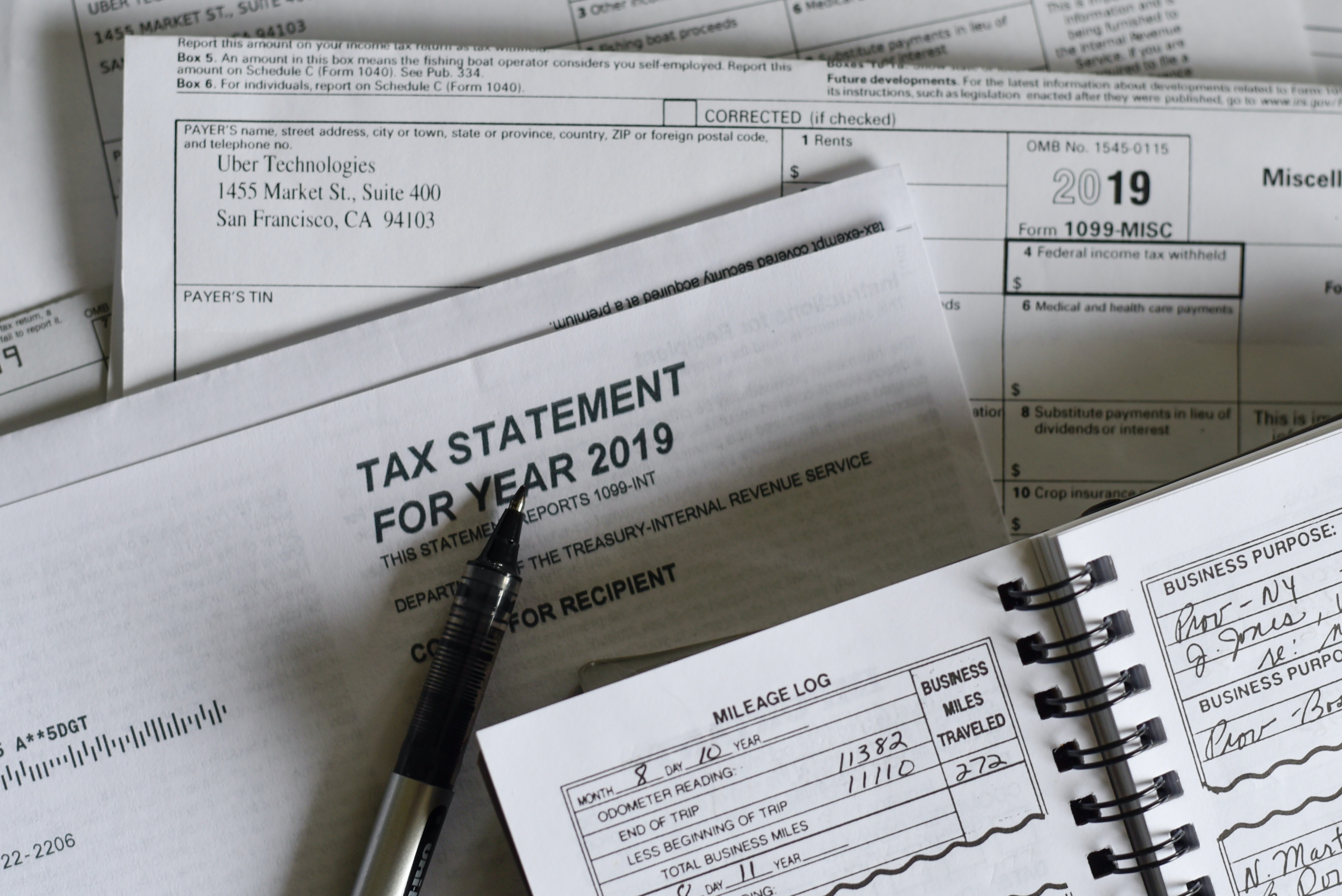
The next day when I went to file away the receipt, which came in the form of an email, I noticed that we’d been virtually taxed for this virtual purchase.  It never occurred to me before that when you’re buying electrons configured in a certain way, that this is a taxable event.  And your tax is based on the state in which you live.  If you’re in a place with no state tax—New Hampshire, I’m looking at you—these electronic purchases will save you some money.  The funny thing about this is the system works only because we believe in it.  The skeptic who says “What, exactly, did I just purchase?” raises a valid question.  Despite current trends, I don’t mind a bit of clutter.  I can always find the physical object I’m looking for.  It’s the electronic ones that give me trouble.

Our world is becoming less and less substantial.  More and more virtual.  Some of us prefer the corporeal sensations of the hunter-gatherer world.  Feet on actual ground, hands on actual book.  Or DVD.  Whatever.  The cloud, with its taxes, strikes me as distinctly odd.  Politicians can virtually live in a state—Dr. Oz wasn’t, and isn’t, a resident of Pennsylvania—so can I virtually move to New Hampshire and not pay taxes on my electronic purchases?  I’ve always wanted to live in New England, but my jobs have never allowed it.  There’s something about this physical universe, and house prices being what they are I can’t see a move anytime soon.  To deal with this reality I guess I’ll stay where I’m physically located and just watch a movie.

Photo by Olga DeLawrence on Unsplash

The Persistence of Streaming

I’ve had to start keeping a list.  If I don’t I’ll forget which movies I’ve streamed.  I suspect I’m not alone in this.  Electronic information is vapid and eminently forgettable.  If you go see a movie in a theater, you’re likely to remember it.  Memory of place and occasion aid the memory of plot and effects, I suspect.  To my knowledge I’ve never had anyone ask if I’ve seen a movie that I didn’t remember, if I saw it in a theater.  Streaming—maybe yes, maybe no.  A few weeks back I found myself streaming a film and thinking “this looks awfully familiar.”  The longer I watched the more convinced I was that I’d seen it before.  When it was over I checked.  I had watched it only a few months earlier.

When you buy a DVD or Blu-ray (or even a VHS tape), the physicality of it serves as a reminder.  Unwrapping the package, handling the case, loading it into your player—these are all keys, hooks upon which memories hang.  As I’ve intimated before, movies are, I believe, our modern mythology.  The idea’s not original with me, but think about how movies are often our frame of reference around the water cooler or with friends.  What did you think of Nope?  It’s a safe way to express our beliefs and aspirations.  Even if it’s not great, it’s helpful to be able to remember it when you want to.  Streaming, it seems, often lacks commitment.  Particularly if it’s from a free site.  (I use such only when the media are otherwise unavailable.)  Maybe there’s a reason it’s free.

Streaming asks little by way of investment, financially or psychologically.  It costs time, of course, and perhaps that’s the greatest siphon of all.  If you’re a busy person time is a commodity.  Spending some of it watching a movie—depending on who you are—isn’t simply entertainment.  Mythology gives us meaning.  I suspect that’s why we value those auteurs who break through the noise and manage to stand out in our minds.  Those who know what it is to captivate an audience.  Those who are really invested in their projects.  Like most books I read, the movies I watch come from a list.  I have a reason for watching them, often related to research.  And if you put the time into it, you want to remember it.  For that, I recommend keeping a list. (Have a written a post like this before?)


Your Viewing Pleasure

I watch a lot of movies.  Well, I used to before the pandemic stole much of my free time.  We have a closet full of DVDs.  At least they’re not VHS tapes.  The problem with VHS tapes was that they wore out with continued playing.  I’ve read that magnetic tape is still the most stable storage medium, but the DVD, with no moving parts, seemed like an improvement.  Lately we’ve had several DVDs go bad.  I’m not sure that I wanted to know there were such things as disc rot and laser rot, but there are.  And some of these were discs that weren’t cheap.  The alternative these days is streaming.  The problem is streaming services go out of business and you’re left without money and without the movie.  There’s a reason vinyl’s coming back, I guess.

Remember when you had to wait to see a movie?  When you had to either see it in a theater or wait years until it was broadcast on television on a certain channel at a specific time?  You lived your life normally, and the movie was a rare treat for those who had specific fare in mind.  Now we get movies “on demand.”  It’s death by a thousand cuts, though, since if you’re really in the mood for a film that’s not on Netflix you’ll pay to see it on Amazon Prime.  Used to be you can buy a disc—a one time expense—or was it?  Chances are in the early days you were replacing a VHS tape you’d already bought.  You may’ve sighed in relief when UltraViolet came along.  But you’d have sighed too soon.

These things bring eastern and southern Asian religions to mind.  (Consider the source.)  While I’m not an expert on the religions of east and south Asia, I’m familiar enough to know that their basic concept is that the only thing permanent is change.  Western societies are built on the demonstrably false concept that a steady state is permanent and that change comes once in a while.  In fact, our entire worldview is based on things remaining the same.  Perhaps that’s why conservatism is such a strong force in western thinking.  It is, however, an illusion.  The pandemic has given the lie to our steady-state thinking.  And if you cope, as many do, by watching movies you’ve probably signed up for a subscription service or two.  It will serve you well, for the moment.  You certainly can’t run to Blockbuster to pick up your favorite flick any more.  If only I had more time, a movie might have the answer.


Digital First

Publishers these days are all yammering about being “digital first.”  Now, I use technology when I write these days, despite the fact that I am coerced to shut down programs at 3:30 a.m., my writing time, because tech companies assume people are asleep then and that’s when upgrades happen.  Still, even as an author of the modest academic sort I know the unequalled thrill of seeing that first printed copy of my book.  Authors live for that moment.  It’s our opiate.  Publishers don’t understand that.  Five years back or so I had a novel accepted for publication.  (It never happened, but that’s a long story.)  At one point the publisher changed its mind—post-contract!—and decided that my story would be only an ebook.  They tried to make me feel better by saying they thought it would do well in that format.

Who wants to hold up a plastic device and say “Look what I wrote!”?  It makes about as much sense as smoking a plastic device.  No, writing is intended to lead to physical results.  Even those of us who blog secretly hope that someday someone will say, “Hey, I want to publish your random thoughts as a book.”  As long as it’ll be print, where do I sign?  In some fields of human endeavor there are no physical signs that a difference has been made.  Is it mere coincidence that those who work in such fields also often write books?  I suspect not.  Writing is a form of self-expression and when it’s done you want to have something to show for it.  All of that work actually led to something!

Since I work in publishing I realize that it’s a business.  And I understand that businesses exist to be profitable.  I also know that technology sits in the driver’s seat.  Decisions about the shape of the future are made by those who hold devices in higher regard than many of us do.  I’m just as glad as most for the convenience of getting necessary stuff done online.  What I wonder is why it has to be only online.  The other day I went looking for a CD—it’s been years since I bought one.  At Barnes and Noble about all they had was vinyl.  I’m cool with records, but my player died eons ago.  I had to locate a store still dedicated to selling music that wasn’t just streamed or LP.  That gooey soft spot in the middle between precomputer and 0s and 1s raining from the invisible cloud.  I went home and picked up a book.  Life, for a moment, felt more real.