The Teenth of June

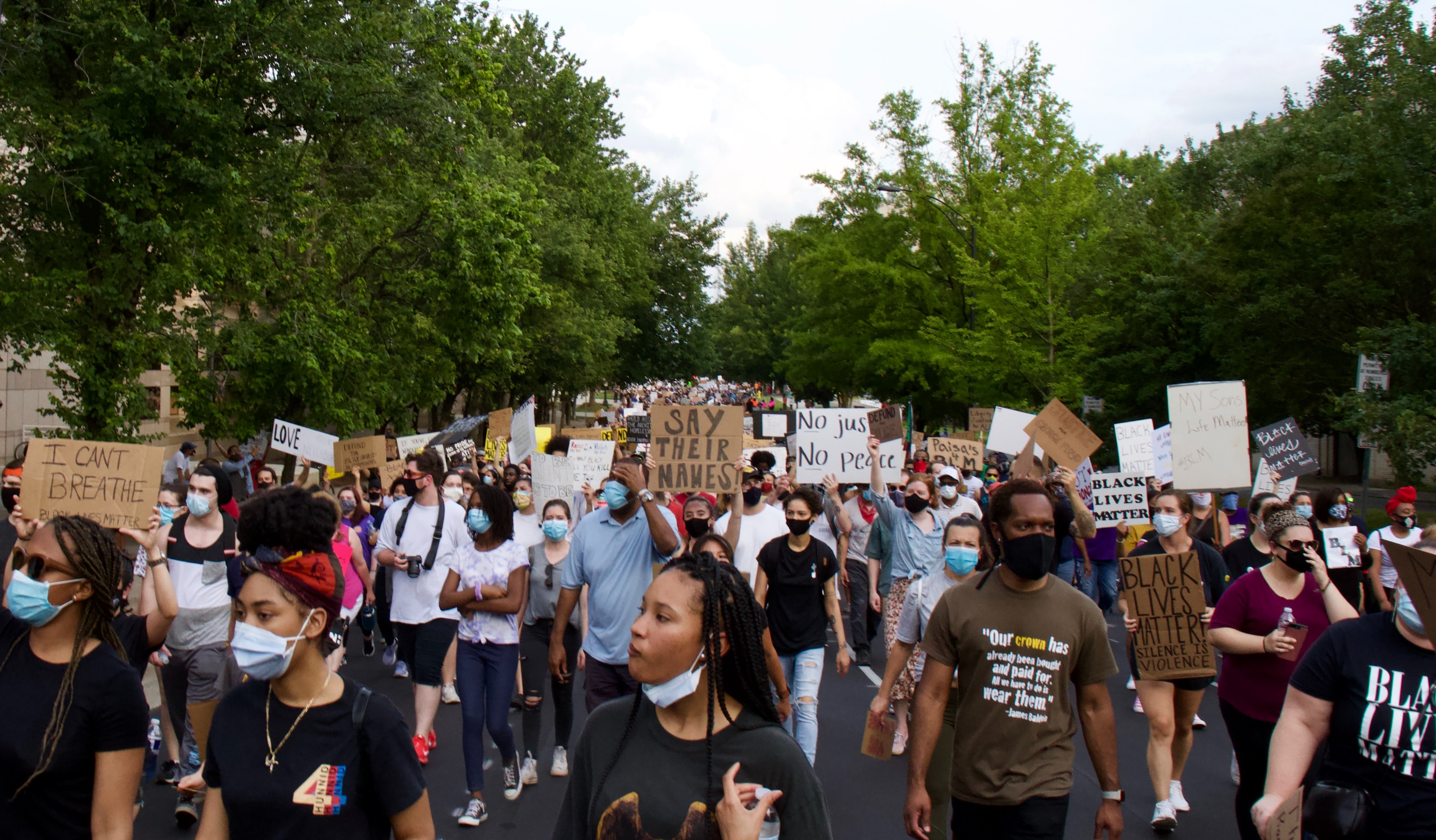
It’s only really when they have no choice.  The Wednesday holiday, that is.  No convenient weekend a day away.  So Juneteenth is actually celebrated on Juneteenth.  I believe in holidays.  I think they’re more than just time off work, and Juneteenth celebrates freedom.  And it reminds us that our African-American siblings aren’t yet truly free.  We still have much to learn and having a holiday to underscore that is important.  Capitalism does a good job of disguising freedom, of course.  Your worth is weighed by how much value you add to the company.  Taking a day off from that is an opportunity to reflect on how daily living could be improved for all.  Juneteenth is a necessary holiday.  We need constant reminding.

I don’t see many African-Americans flying flags on their houses declaring themselves “not woke.”  We prefer to believe we’ve reached perfection already.  Capitalism is great at spreading myths like that.  The basic premise behind it is greed, and people are easily divided into groups because of skin tone.  It’s a dangerous combination.  Somewhere along the way, “justice” came to be a swear word.  Particularly among one political party that has decided power, at any cost, is the sine qua non of human existence.  If that means oppressing others systemically, or if it means invading a neighboring sovereign state because you have nukes with which to threaten the rest of the world, it’s all the same.  Power is far more addictive than any opiate, but we  don’t have any laws preventing those unsuited to holding it from doing so.  Juneteenth uncovers a host of problems still to address. 

Slavery was hard to let go because it cut into profits.  Human beings love wealth more than each other.  Ironically, without others to compare with, wealth means nothing.  If money makes someone happy I have no problem with that, but it has to come with responsibility.  One way to handle it responsibly is to insist that only so much can be had before the surplus goes to insure that all people have enough.  Of course, where Supreme Court justices openly accept bribes we can’t wonder that there are legal loopholes to help the wealthy circumvent their civic duty.  We need constant reminders.  We need holidays like Juneteenth.  We need to give our African-American siblings the same rights and privileges all people should have.  It’s appropriate to celebrate small steps in that direction.  Even if it means giving a Wednesday off of work.


Celebrate Freedom

Perspective.  The most valuable thing I learned growing up was to try to see things from the perspective of others.  It’s the basis of sharing and empathy and kindness.  It’s what makes us human.  Juneteenth celebrates a Black holiday, but it applies to us all.  Today (actually tomorrow) commemorates the day when slavery was ended in Texas.  As much as southern states sometimes like to posture, all but the most frightfully unenlightened know that slavery is wrong.  The exploitation of others because we have the power to do so is the very embodiment of evil.  There’s no need for a devil if human beings can do this all by themselves.  Black lives do matter.  We need to stop countering this with “all lives matter” because until we acknowledge systemic racism such responses only serve to perpetuate the problem.

The history of the Christian (and yes, religion fueled and still fuels it) European domination of the world is a long, sad, and unethical one.  Blacks, because they’re often so easily visually identified, have borne the brunt of this domination.  In many ways this continues to be the case even today.  Red lining still exists.  Discrimination still exists.  Blacks are more likely to be imprisoned than others.  Poorly trained police are more likely to shoot and kill them.  This must change if society is to improve at all.  Congress has just passed a bill making Juneteenth a national holiday.  This gives the lie to the posturing of many of our elected officials.  This shows how deep Trump’s lies went.

More socially conscious employers made today a paid holiday in support of Juneteenth, even before the senate passed the bill.  We need to admit that we’ve been wrong.  We need to admit that special interests have kept us from seeing what should’ve been as obvious as the color of our own skin.  We’ve tried to keep slavery going.  We’ve made life hard for those easily identified as not “white.”  I have to wonder if this situation would’ve ever developed had we grown the more accurate habit of calling some people pink and others brown.  “White” was chosen for its theological implications.  Make no mistake, this was a carefully constructed divide.  Those who initiated the terminology—pink men, all of them—used their Christianity to demean, debase, and degrade other human beings.  Juneteenth celebrates one small step in what is necessarily a long journey.  We need to undo systemic racism.  We need to learn to say Black Lives Matter and we need to live it.

Photo by Leslie Cross on Unsplash

Seussical Thoughts

It seems that Dr. Seuss has fallen on hard times.  His estate is pulling six of his books from production because of hurtful race representations.  This has, of course, sparked the debate between period pieces and the clearly necessary reeducation that has to take place regarding race itself.  I don’t have a solution here, but children raised on these books are among those who realize the dangers of racial stereotypes.  In fact, even those of us who try to keep a weather eye on our own thinking process can at times get caught in the trap of thinking that “white” is “normal” and everyone else is a “variation.”  The truth is we are all variants and political power, with its not-so-subtle adjunct money, have embedded racist thinking throughout our society.

Photo credit:
Photo credit: Al Ravenna, via Wikimedia Commons

Theodore Geisel was a broad-minded individual.  His works often advocate for inclusion.  He was also a product of his time, even as we are.  The struggle to do right in the midst of a corrupt world is constant.  None of us, I fear, have risen to perfection.  The roots of racist thinking run deep and they re-sprout if just a fragment of a rhizome left behind.  We should all know by now that slavery was evil and that a system that devalued other humans for money was clearly wrong.  We should know that government policies that keep American Indians repressed and do so secretly are unethical.  We should know that people from Asia have as much right to opportunity as those whose ancestry lies in Europe.  Why is this so hard to learn?  Why do we still have to fight to dismantle systemic racism in this “land of the free”?

Dr. Seuss has taught generations of kids that “a person’s a person” and that persons deserve fair treatment.  He did it in the language and idiom of his own era.  Those making the decisions for his estate are not trying to destroy his legacy.  They are, however, asking us to look forward and to try to figure out where we go from here.  Half a century ago we knew that civil rights were the only fair way to live.  We’ve experienced globalization since then and we’ve been made better for having done so.  Yet we are mired in preconceptions that can only damage our collective sense of justice, often falling along party lines.  Dr. Seuss taught us well—shouldn’t we implement what we’ve learned?


Savage Doc

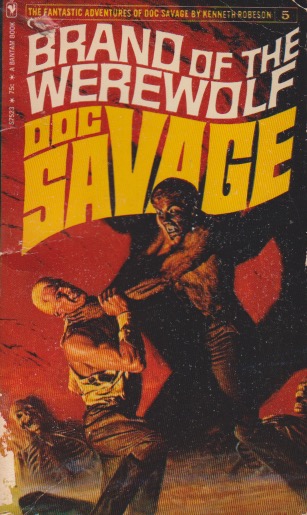
Over the past several years I’ve written quite a lot about childhood books.  Despite my ambivalence toward the internet, it has made it easier to find books from years ago.  Since one of my Modern Mrs. Darcy reading challenge categories was a book from my childhood, my thoughts went to Doc Savage.  I haven’t written much about the Doc on this blog.  I think I can understand why now.  Doc Savage, I suspect, was one line of inspiration for Indiana Jones, although the latter was much more of a hapless sort of adventurer.  Kenneth Robeson was a pseudonym mostly for Lester Dent, the author of many of the pulp fiction stories about Doc.  As a forerunner of the superheroes that were shortly to appear, Savage was a “Mary Sue”—a literary character with no faults.  The stories were originally written in the 1930s and ‘40s.

As a child I read many of these novels, beginning in sixth or seventh grade.  I recently found a used copy of Brand of the Werewolf, which I read as part of my challenge this year and I was embarrassed by what I found.  Not that Doc’s perfection came as a surprise.  No, my embarrassment was at the racial stereotypes that were so blatantly on display.  This particular story caricatures African-Americans, American Indians, and Spaniards.  It does so unselfconsciously with an air of entitlement that made me ill.  Sure, all characters suffer by comparison to Doc Savage, but those who aren’t “white” (or bronze, in context), are throw-away characters.  Unless, of course, they are pretty girls.  If so we’re reminded every time that they are pretty.

No wonder our culture remains so intolerant of difference!  Here the default human being is the white male.  Even Doc’s female cousin (pretty, of course) doesn’t really help at all.  The entire scandal is uncovered and resolved by the white man.  I realize that I might be putting too much stress on a pulp that just can bear much weight, but I do wonder about how such stereotypical messages, repeated decade after decade, blend into the cultural stew in which we all soak.  I was by no means the only tween reading these books in the 1970s, some three or four decades after they’d been published.  A friend of mine got me started on reading them, and they were still popular books at the time.  We need, it seems, to be aware that our prejudices will live on in our words after we’re gone.  And after all that there wasn’t even a werewolf in the book.  Childhood memories are sometimes unclear.