Passing Words

I’ve never counted, but it must be dozens.  Maybe a hundred.  And they have very high memory requirements.  Especially for a guy who can’t recall why he walked into a room half the time.  I’m talking passwords.  The commandments go like this:

You can’t use the same password for more than one system/platform/device/account

You can’t tell anyone your password (duh!)

You can’t write it down

You can’t send your password to someone electronically (duh!)

You must logoff your device when it’s unattended

You will be held responsible for anything done under your login

The word of the Lord.

Now, how much more ageist can you get?  I’ve never counted the number of passwords I’ve had to generate for work alone but I can’t remember much without writing things down.  Even the chores after work.  I hear that there are “keychains” you can get that remember your passwords for you.  I suspect you need a password to access your passwords.  Replicate the commandments above.

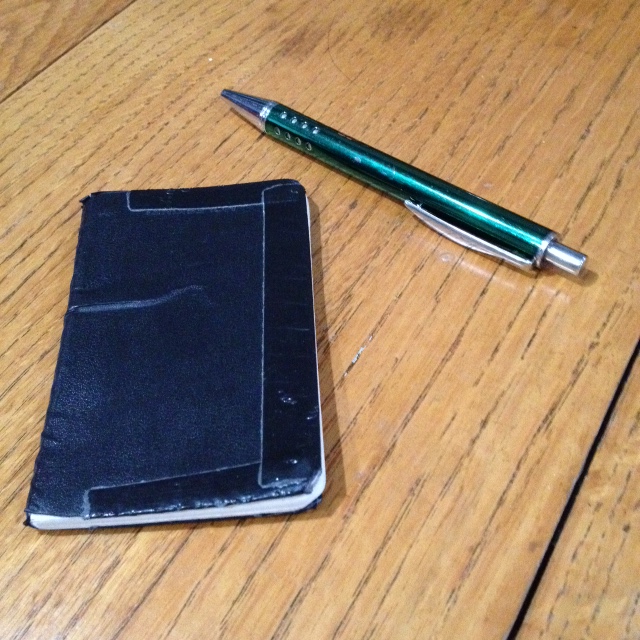
I know internet security is serious business.  My objection is that you’re not supposed to write any of this down.  I carry a notebook around with me (it has no passwords, so please don’t try to steal it) to keep track of everything from doctors’ orders to how to call the plumber if there’s a leak.  I can’t remember all that stuff.  Some of it is personal information, but with everything you’re expected to keep in memory these days—at the same time we’re unleashing AI on the world—is madness.

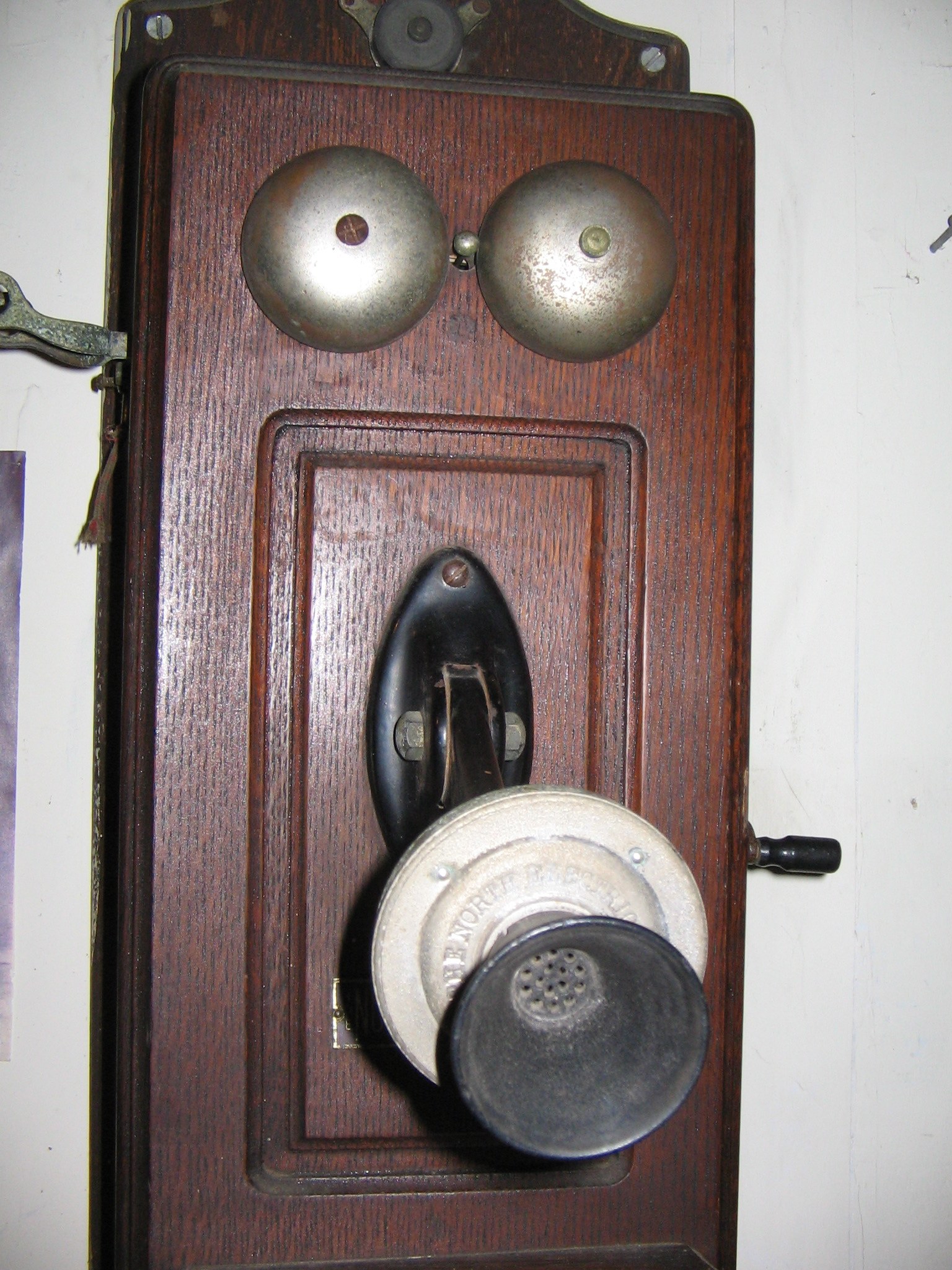
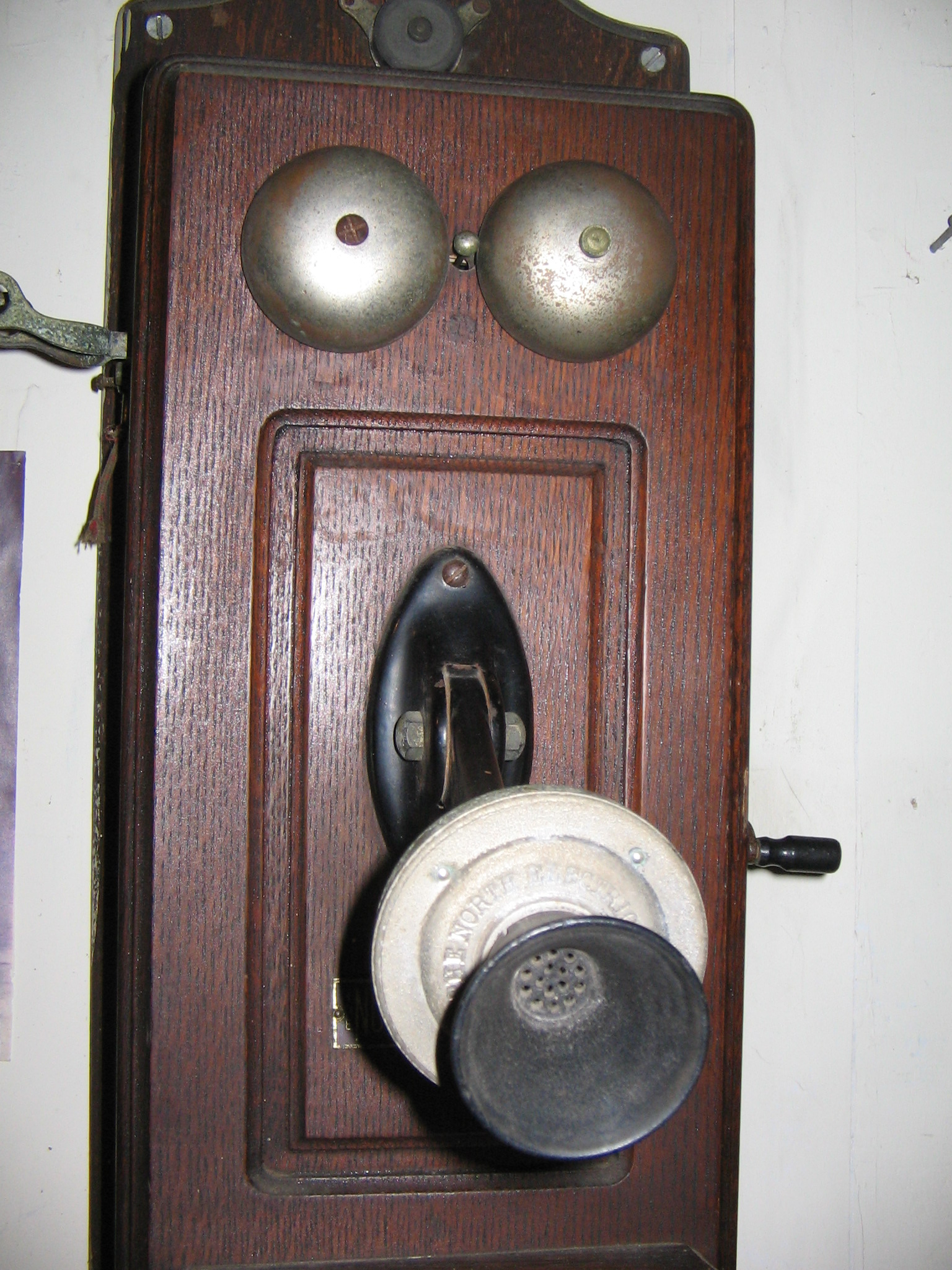
A friend pointed out that AI books are written without authors.  If I remember correctly, my response was “AI has great potential, but let’s leave the humanities to humans.”  I hope I’m remembering that correctly, because I thought it clever at the time. I wish I’d written it down.  Those who make the rules about passwords aren’t as close to their expiration date as I am.  My grandmother was born before heavier-than-air flight took place and died after we’d landed on the moon.  Guys my age regale their kids (and some, their grandkids) by telling them telephones used to be attached to walls and you could walk away from technology at will.  Now it follows you.  Listens to you even when you’re not talking to it—our car frequently interjects itself into our conversations.  At least she isn’t asking for a password while I’m driving.  I couldn’t write it down.  Our love affair with technology is also driving.  More often than we suppose.  It’s driving me too… driving me crazy.


Tech Warning

My moon roof is open.  That’s what the late-night alert says.  Thing is, I don’t have a moon roof.  Maybe I should go out to the garage and check, just to be sure.  You see, these new cars, which are as much computer as they are a means of conveyance, are subject to glitches just like the computers at work always seem to be.  And if this is true of a massive and lucrative company like Toyota, how can the rest of us really trust what our devices tell us?  After all, mainly they exist to sell us more stuff.  So whenever we take the Prius out, after it’s put away I get some kind of warning on my phone.  Nearly every single time.  If somebody’s been sitting in the back seat—or even if a bag was resting there—I’m cheerfully reminded to check the back seat once I get into the house.  I appreciate its concern and when I grow even more forgetful I may need it.  But that moon roof…

I use and appreciate technology.  I believe in the science behind it.  It makes life simpler, in some ways.  Much more complex in others.  I confess that I miss paper maps.  Do you remember the thrill of driving into an unknown city and having to figure out how to get to an address with no GPS?  Now that seems like an adventure movie.  Our cars practically—sometimes literally—drive themselves.  I’m no motor-head, not by a long shot.  I do remember my first car that didn’t have power steering or power brakes.  It had a stick-shift and you had to wrassle it at times.  Show it who was in charge.  With technology we’ve all become the serfs.  It breaks down and you have to take it to an expert.  Not quite the same as changing a tire.

I worry about the larger implications of this.  As a writer I worry that my largest output is only electronic.  Publishers don’t seem to realize that those of us who write do it as a way of surviving death.  We have something to say and we want it etched in stone.  Or at least printed on paper.  Tucked away in some Library of Congress stacks in the hopes that it will remain there for good.  I often think of dystopias.  The stories unfold and ancient documents—our documents—are found.  But unless they get the grid up and running, and have Silicon Valley to help them, our electronic words are gone.  It’s as if you left the moon roof open, even though you don’t have one.


Strangers

Okay, so I like to think that I’m a reasonably intelligent person.  I can drive a car.  I’ve read over two thousand books.  I have been blogging for nearly a decade and a half.  Why can’t I figure out this password thing?  My brother has a blog on WordPress too.  His posts are quite different than mine, but I always like to read them since we think a lot alike.  Anyway, I wanted to leave a comment on a recent post he wrote.  You’d think that’d be easy since this blog is also hosted on WordPress.  (I’m the one who suggested WordPress to him.)  When I went to post the comment I received a dialogue box basically asking “and who might you be?”  When I gave my web credentials it wanted a password, but it wasn’t clear which password it wanted.

An actual word press; image credit: DANIEL CHODOWIECKI 62 bisher unveröffentlichte Handzeichnungen zu dem Elementarwerk von Johann Bernhard Basedow. Mit einem Vorworte von Max von Boehn. Voigtländer-Tetzner, Frankfurt am Main 1922, public domain via Wikimedia Commons

Like most human beings alive today I have more passwords than atoms in a typical tardigrade.  With a brain over sixty, trying to recollect them all in an instant, well, let’s just say that ain’t happenin’.  As I laboriously lumber through all relevant passwords (I’m pretty sure they don’t want all the unique ones I use at work, in addition to my private accounts), it rejects each and every one.  You see, WordPress is funny.  My own account, now 14 years old—maybe that’s the problem—those teenage years!—doesn’t recognize me at times.  Indeed, on my own blog (and I have a paying account) it sometimes blinks its virtual eyes and says, “and who might you be?”  I try not to take this personally.  I mean, we’ve only known each other for years.  And all I want to do is put a supportive comment on my brother’s blog—we share the same surname, and even the same web host.  What could be so difficult about that?

I’m pretty much logged into my WordPress account constantly.  I post every day.  There’s over 5,300 mini-essays of about 400 words.  That’s over 2 million words.  Is this relationship really so one-sided?  I’m trying hard not to let my aporripsophobia get the best of me here.  Just tell me which password you want!  And, if I can use it to log into my own WordPress account, why won’t it work for the WordPress accounts of family and friends when I want to make a comment?  We’ve been together for so long, do you really not know me any better than this?  Hey, I think I need a private moment with WordPress—you can check out my brother’s blog while you wait…


Phony

It happened right in the middle of a phone call.  The phone just died.  Well, honesty it had been sick for some time, but its departure was somewhat unexpected.  This is a landline we’re talking about.  Yes, I have an iPhone but I seldom use it.  Especially for phone calls outside the family.  I don’t want people calling me on what I consider a private number.  That’s what the landline is for.  Now, I had a call scheduled for later in the afternoon and I had to postpone it (via email—does anyone else see how strange all of this is?) until I could get a phone.  Since it was the work week the soonest I could get out was Saturday—I often have evening obligations after work.  So I ordered one online instead.

I was in a bit of a hurry, I’ll confess.  I don’t need a lot of features.  As long as it works for talking to others across a distance, I’m happy.  When it arrived I realized it didn’t have an answering machine.  Hadn’t thought of that.  The number of people who actually call me is quite small.  But if they are actual people I do like them to leave a message if I can’t get to the phone.  Then I remembered that answering machines used to be sold separately.  You didn’t need to have everything in one device.  Our modern way of living encourages that—keep everything together.  The phone in your pocket is a camera and computer and GPS all in one.  And more.  I’m more of a component guy.

Back when records were still a thing, my stereo was a component system.  Ostensibly because some components performed better for certain functions than others did, but really because some were on sale at Lechmere’s.  Nevertheless, the concept stuck.  I’ll admit that the all-in-one functionality is convenient, but I also think it becomes problematic when we have to buy more than we need just to keep up with the Joneses.  People are so reachable (with the exception, it seems, of many academics and contractors)—that we’re spoiled for choice.  In fact, it seems that the only polite thing to do is ask others how they’d prefer to be reached.  The telephone, of course, reaches into one’s private world in a way that email doesn’t.  I suppose that’s why many people are careful not to give out their numbers.  And if they do, we expect to be able to leave a message if they’re not home.


Around the Bible

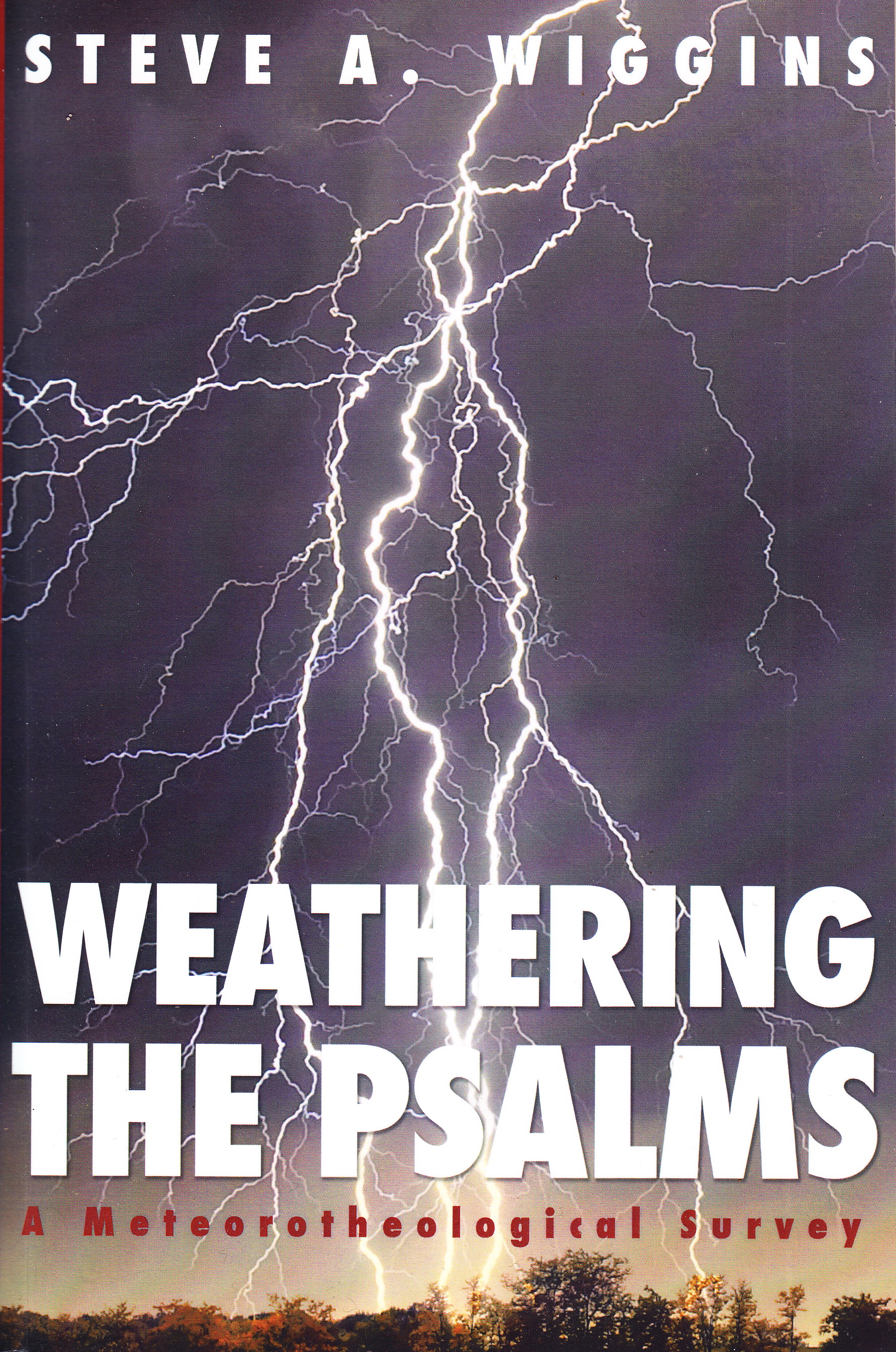
Perhaps it’s happened to you.  You grow curious about something adjacent to the action in the Bible and you go online to find information.  Instead you discover that Google (or Ecosia—plant trees!) searches round you up time and again into the biblical realm.  It seems as if nobody is interested in exploring the world of the Bible not mentioned in the Bible itself.  This has been an avocation of mine all along.  After a while you get tired of hearing what yet another commentator has to say about the Bible itself and you start to want information on, say, places Jesus didn’t go.  A startling apathy meets you online. If it’s not mentioned in the Good Book it’s not worth knowing.  Now quite apart from sending me to the pre-biblical world for my doctoral work, this was also the impetus for Weathering the Psalms.  Nobody seemed particularly interested in the larger picture.

I’m guessing this has improved somewhat in the academy, but it doesn’t translate well to the web, at least not the versions available in America.  Searches for topics around the Bible always herd you back to the Bible itself, as if it is the only reason one might be asking about the weather, geography, or natural flora and fauna of Palestine, Israel, Jordan, Lebanon, or Syria.  Who’d possibly have such an interest for its own sake?  Our bibliocentric culture seems to feed into search-engine algorithms and brings up Scripture time and again.  Try this for maps, for example.  You’ll come up with plenty showing places the Bible names.  If it’s not named there, you won’t find much.  Curiosity for its own sake isn’t encouraged.

This is related to the phenomenon of trying to search for something you don’t know the name of, I suppose.  Those who post content on the web, if they want to be successful, anticipate what others are interested in.  What of those of us who think differently?  Some of us put unusual stuff on the web, but how do you find it if you can’t put it into words?  Secular society doesn’t have much interest in the Good Book.  I’ve suggested many times why I think this is misguided—the Bible is foundational for the American way of life, whether you’re religious or not.  You might think curiosity would abound on related topics.  The thing is you have to get through all the clutter to get there.  I guess we need to be archaeologists of the web.


Slacking Off

The other day someone on a committee on which I serve suggested we might eliminate the problem of buried emails by using Slack to communicate.  The problem, it seems to me, is that we have too many ways to communicate and yet lack the means to do so well.  For me email is indicative of the problem.  Email was devised—and I remember its beginnings well—as a means of swift communication.  The only real options before that were writing an actual letter (which I miss) or telephoning.  At that time you might have a cordless phone that you could carry from one room to another but you probably did not.  The phone was relegated to a place on a wall or table and, although I appreciate knowing things quickly, the fact is we got along in those days.  Junk mail was evident at a glance.  You sorted it and life went on.

Now email has taken over life.  I simply can’t keep up with it.  Some time ago Google offered a trifurcated email experience: primary, social, and promotional.  Their algorithms aren’t perfect (numbers seldom are) but I can often ignore large swaths of the promotional page.  That saves time.  Most of the social is dominated by people I don’t know wanting to connect on LinkedIn, or someone mentioning something I should pay attention to on Facebook.  Or perhaps something going on in the neighborhood on Nextdoor.  Primary deserves its name, but I can’t keep up with even that.  You see, I have a full-time job.  It largely consists of reading emails.  If I get a personal email in the morning, chances are it will be buried on the second page by the time the day’s out.  It may never been seen again.  I don’t need another new way to communicate.

The pandemic has introduced the new malady of Zoom exhaustion.  It isn’t unusual for my entire weekend to be taken up with Zoom.  If I don’t have a good part of a Saturday to sort my emails into files things I promised I’d do begin to slip.  I don’t see that email—the one that serves as a reminder to this addled brain of mine.  If I order something on Amazon I have to follow up on an email asking me to rate the service.  And then, if it’s not sold directly by Amazon, a vendor fishing for a compliment.  That after getting an email to confirm my order and another to tell me it’s been shipped.  No, please don’t subject me to Slack.  Or better yet, send me an email about it.  I’ll get to it eventually, as long as it stays on the first page.


Plants Will Lead

The world just keeps getting weirder.  Although I very much appreciate—“believe in,” if you will—science, sometimes the technology aspect of STEM leaves me scratching my primate cranium.  What’s got the fingers going this morning is spinach.  Not just any spinach.  According to a story on Euronews, “Scientists Have Taught Spinach to Send Emails.”  There are not a few Homo sapiens, it seems, who might learn something from our leafy greens.  The tech comes, not surprisingly, from MIT.   When spinach roots detect certain compounds left by landmines in the soil, it triggers sensors that send an email alert to a human being who’s probably eaten some of their (the spinach’s) very family members.  I’m not denying that this is very impressive, but it raises once again that troubling question of consciousness and our botanical cousins.

Some people live to eat.  I’m one of those who falls into the other category—those who eat to live.  In my life I’ve gone from being a picky omnivore to being a somewhat adventurous omnivore to vegetarian to vegan.  I’m not sure how much more restricted I can make my diet if I leave out plants.  I’ve watched those time-lapse videos of trees moving.  They move even more slowly than I do when my back’s acting up, but they really do move.  If they had legs and speeded up a bit we’d call it walking.  Studies into plant consciousness are finding new evidence that our brainless greens are remarkably intelligent.  Perhaps some could have made a better president than 45.  I wonder if spinach can tweet?

People can be endlessly inventive.  Our thirst for information is never quenched.  Universities are among those rare places where ideas can be pursued and it can be considered work.  While I don’t think everyone necessarily needs to go on to higher education, I can see the benefits it would have for a culture.  Indeed, would we have armed mobs trying to take over because of a fact-based election loss?  I wonder if the spinach would take place in “stopping the steal.”  Hopefully it would fact-check more than those who simply follow the leader.  Consciousness and education can work together for a powerful good.  I’m not sure why Popeye’s favorite was chosen for this experiment, but it does seem to show that we can all get along if we really want to.  Maybe then we could meet in the salad aisle rather than out in the field looking for explosives.


Too Fast

In the Easy Reader book Hooray for Henry (available on Amazon for $768.57; that’s $12.60 per page), our eponymous protagonist Henry can’t win any of the events at the picnic games.  One of the refrains as he participates in the races is “faster, faster—too fast” (I may have got the punctuation wrong, but then I haven’t read the book for at least a couple of decades and I can’t afford a new one).  That story seems to have become a symbol for those of us mired in technology.  The rate of change is, as in Henry’s experience, too fast.  The other day I noticed an annoying warning on my laptop that claims I’m low on memory and that I have to close some applications.  What with all that tech requires of us these days I probably do have too many things open at once.  It pops up, however, when I have even just one application open.

A web search revealed this is probably a virus (something that used to be rare on Macs, but that was back in the day when things moved a little slower).  The steps for removing it were technical and appeared to be extremely time-consuming.  What I don’t have is time.  And it’s not just my rare time off work that’s too full.  On the job we’re constantly having to learn new software.  It doesn’t really matter what your line of work is, if it involves sitting behind a computer we’re constantly being told to learn new applications while trying to find time to do the jobs we’re paid to do.  There’s no question of which is the tail and which is the dog here.  With an economy driven largely by tech, because that’s where all the jobs are, you risk everything if you don’t upgrade (about every two weeks at present).

I’ve been writing a long time.  Decades.  Some of my earlier pieces are no longer openable because the software with which I wrote them has been upgraded to the point that it can’t read its own earlier writing.  To the prolific this presents a real problem.  I have, literally, thousands of pieces of writing.  I can’t upgrade every single one each time a new release comes out.  The older ones, it seems, are lost forever.  I used to print out every post on this blog.  Given that there are now even thousands of them, I eventually gave up.  I know that they will inevitably disappear into the fog some day.  For writers who’ve been discovered after their deaths this would be a Bradburian fate.  Or perhaps a Serlingesque twist.  The world realizes a writer had something important to say, but her or his writing can no longer be read because the tech is outdated.  Faster, faster—too fast.


Anticipation

My work computer was recently upgraded.  I, for one, am quickly tiring of uppity software assuming it knows what I need it to do.  This is most evident in Microsoft products, such as Excel, which no longer shows the toolbar unless you click it every single time you want to use it (which is constantly), and Word, which hides tracked changes unless you tell it not to.  Hello?  Why do you track changes if you don’t want to see what’s been changed when you finish?  The one positive thing I’ve noticed is now that when you highlight a fine name in “File Explorer” and press the forward arrow key it actually goes the the end of the title rather than just one letter back from the start.  Another goodie is when you go to select an attachment and Outlook assumes you want to send a file you’ve just been working on—good for you!

The main concern I have, however, is that algorithms are now trying to anticipate what we want.  They already track our browsing interests (I once accidentally clicked on a well-timed pop-up ad for a device for artfully trimming certain private hairs—my aim isn’t so good any more and that would belie the usefulness of said instrument—only to find the internet supposing I preferred the shaved look.  I have an old-growth beard on my face and haven’t shaved in over three decades, and that’s not likely to change, no matter how many ads I get).  Now they’re trying to assume they know what we want.  Granted, “editor” is seldom a job listed on drop-down menus when you have to pick a title for some faceless source of money or services, but it is a job.  And lots of us do it.  Our software, however, is unaware of what editors need.  It’s not shaving.

In the grip of the pandemic, we’re relying on technology by orders of magnitude.  Even before that my current job, which used to be done with pen and paper and typewriter, was fully electronic.  One of the reasons that remote working made sense to me was that I didn’t need to go into the office to do what I do.  Other than looking up the odd physical contract I had no reason to spend three hours a day getting to and from New York.  I think of impatient authors and want to remind them that during my lifetime book publishing used to require physical manuscripts sent through civilian mail systems (as did my first book).  My first book also included some hand-drawn cuneiform because type didn’t exist for the letters at that particular publisher.  They had no way, it turns out, to anticipate what I wanted it to look like.  That, it seems, is a more honest way for work to be done.


Upgraded at Last

Those who pay close attention to labels may have noticed the tag “Neo-Luddism” appended to some of my blog posts.  Luddites were nineteenth-century protestors against machines because, their thinking went, machines denied people jobs.  I’m not fully in line with this way of thinking, of course, but I do occasionally point out the ironies of how our technological life has become, well, life.  Tech seems to have taken over life itself and some people really like that.  Others of us miss the outdoors and even the “free time” we used to have indoors.  Our computers, phones, iPads, left behind and maybe a physical book cracked open—this seems a dream at times.  I really do enjoy our connected life, for the most part.  It makes this blog possible, for instance.  What I object to is being forced to upgrade.  That should be a decision I make, not one thrust upon me.

Which cloud is it?

This is just one small instance of what I’m talking about: my laptop wants an update.  It has for a couple of months now.  Since it’s in rather constant use I can only devote the time to it on the weekends and the past four weekends have all been used up with other things, including two that had over eight hours of Zoom meetings scheduled.  Now, you see, the update isn’t just a matter of simply updating.  You need to clear space off your computer first.  I like to keep my files and the tech companies want to pressure me into keeping them on “the cloud” so they can charge me for the privilege of accessing the things I created.  Instead I back them up on terabyte drives, sorting as I go.  Photos, formerly iPhotos, take seven or eight clicks to upload and delete for each and every set.  If you snap a lot of pix that translates to hours of time.  It also means when I want to access my files I have to remember where I put the terabyte drive, and then connect it to the computer.  At least I know where my files are.

But do I?  If I were to crack open the drive would I have any means of locating what, on my laptop, looks like memories of family, friends, and places I’ve been?  Are they real at all?  If you’re sympathetic to this existential crisis created by the tech world in which we live, you might understand, in some measure Neo-Luddism.  Of course memory is available for purchase and it will surely last you at least until the next upgrade.


Zoom Game

Perhaps you’ve notice it too.  The technology blame-game, I mean.  Although it’s grown more acute since the pandemic, it has been around for as long as the tech disparity has existed.  A typical scenario goes like this: someone (often of a more senior generation) encounters a techical problem communicating with someone else (often of a more recent generation) and asks them what the problem is with their (the younger person’s technology).  I sent you the message, the narrative goes, there must be something wrong with your tech if you didn’t receive it.  Believe me, I understand how bewildering this can be.  We’ve sold seniors (one of which I am rapidly becoming) on the idea that this little device in your hand can do anything.  When it doesn’t work, it must be somebody else’s fault.  The young, however, often have the latest tech and fastest speeds and broadest bandwidth, so the problem is probably on the sending end.

I run into this quite a bit since I run a small program for some local folks that involves weekly Zoom meetings.  I’m no Zoom maven.  My wife trained me in it and I can do passably well at running a meeting.  Many of those older than me, however, often have problems.  They wonder what is wrong with my broadcasting rather than their receiving.  I’m not sure how to say ever so gently that we pay (through the nose) for high-speed connectivity.  We have to since I work from home as a matter of course.  Now my wife also works from home and the two of us use our bandwidth all day long with multiple simultaneous meetings without any issues.  The tech here seems good.  We have no way of checking the tech on the end of those who are having connectivity issues.

I’m not setting myself up as any kind of tech prophet.  If you read my blog you know that I am deeply ambivalent about this whole thing.  I’ve been thinking a lot about overpromising recently and I wonder if that’s not a major part of the problem.  Technology will not solve all of our problems.  The fact that you need a regular source of electricity for it to run shows its inherent weakness.  It is a tool like any other, and if the tool is bladed to be useful it must have a dull part onto which one might hold.  Our Zoom society is bound to have issues.  Once we can see each other face-to-face again, all we’ll have to worry about is whether the laptop will communicate with the projector, or if the microphone is on the fritz this morning.  So it always has been.


White Rabbit

There are books that make you feel as if everything you know is uncertain.  D. W. Pasulka’s American Cosmic is such a book.  Its subtitle, UFOs, Religion, Technology, only pauses at the brink of the rabbit hole down which this study will take you.  Over the years I admit to having been jealous of colleagues who’ve been able to make an academic career stick.  The credentials of a university post open doors for you, even if you’re a professor of religion.  Pasulka has opened some doors here that I suspect many would prefer to have kept closed.  This is a compelling book, threading together many themes tied to religious studies.  There are things we might see, if only we’ll open our eyes.

Although immediately and automatically subjected to the ridicule response, UFOs are a fascinating subject.  This book isn’t about UFO religions—of which there are many—but rather it connects this phenomenon to the study of religion itself.  In Pasulka’s related field of Catholic studies, there are those anomalous accounts of saints who did the impossible.  Like UFOs, they are subjected to the ridicule response, making serious discussion of them difficult.  Might the two be related?  As you feel yourself spinning deeper and deeper down that hole, technology comes into the picture and complicates it even further.  Pasulka was a consultant on The Conjuring.  I’ve written about the movie myself, but what I hadn’t realized is how media connects with perceptions of reality.  Yes, it has a religious freight too.

Every once in a while I reflect that my decision—if it was a decision; sometimes I feel certain my field chose me—to study religion might not have been misplaced.  Perhaps all of this does tie together in some way.  American Cosmic is a mind-expanding book that assures me all those years and dollars learning about religion weren’t wasted after all.  I had a discussion recently with another doctoral holder who’s been relegated to the role of editor.  We both lamented that our training was in some sense being wasted on a job that hardly requires this level of training.  Still, if it weren’t for my day job I probably wouldn’t have known about this book, and that is perhaps a synchronicity as well.  Life is a puzzle with many thousands—millions—of pieces.  Some books are like finding a match, but others are like informing you that you’ve got the wrong box top in hand as you try to construct the puzzle with the pieces you have.  If you read this book be prepared to come close to finding the white rabbit.


Rescued, Technically

One of the scariest tropes in horror (or other) movies is where the protagonist has to rely on the monster (or antagonist) to be rescued.  All the time the viewer is wondering if the monster is going to turn on the hero since, well, it’s a monster.  The tension builds because the situation is untenable to begin with, but there is no other way out.  So lately that’s the way I’ve been feeling about technology.  The first and only time I drove to Atlantic City (it was for a concert some years back), navigating by GPS was still new.  In fact, I didn’t have a device but my brother did so he brought it along.  I remember not trusting it to know the local traffic rules, but once we got into an unfamiliar city I had to rely on it to get us to the venue.  The fact that I lived to be writing this account suggests that it worked.

I no longer commute much.  Still, I’m occasionally required to go into the New York office for a day.  It’s a long trip from here, and to handle the true monster of New York City traffic, I have to leave the house before 4 a.m. to get a spot on the earliest possible bus.  If I do that I can justify catching the bus that leaves the Port Authority before 5 p.m., the daily urban traffic apocalypse.  The last time I did this, just this week, it was raining.  Rain almost always leads to accidents in New Jersey, where the concept of safe following distance has never evolved.  And so I found myself on a bus off route because the major interstate leading into Pennsylvania was completely closed.  The driver announced he wasn’t lost, just trying to find the back way home.  When the streets turned curvy and suburban he asked if anyone had a maps app on their phone.

Lately I’ve been complaining about smartphones.  Truth be told, I do use mine as a GPS when I get lost.  It’s at that stage in an iPhone’s life when it shows you a full battery one second and the next second it’s completely dead, so I let my fellow passengers—every single one of whom has a smartphone—do the navigating.  People on the narrow, off-route roads might’ve wondered what a bus was doing way out here, but we finally did get to the park-n-ride.  The monster had helped us to escape.  And people wonder why I like horror movies…


Home Phone?

I wonder if anyone’s done a study on how cell phones affect our psyches.  The other day my wife upgraded her phone.  What with this being technology and all, the setting up rendered both her old and new phones useless so we would have to go back to our dealer.  Since she has to drive to work and I don’t, I gave her my phone for the day.  I use my phone little on most days.  Soon, however, I began to feel very isolated.  Anyone could reach me by email or landline, but I was without my cell phone for about 10 hours and I grew edgy.  What had happened to me?  Was I experiencing withdrawal from tech?  My smartphone is with me all the time and I’ve come to depend on it being there, even if I don’t use it.  Is this healthy?

That night we were back at the dealer’s shop.  One of the techies was trying to help us and because of the uber-security state in which we live, he had to text me a passcode to get into my wife’s phone (it’s my name on the joint account).  When his text didn’t come through he asked if he could see my device.  I handed him my iPhone 4S and he acted as if I’d just passed him a human-alien hybrid baby.  As if he’d never seen anything so antiquated.  In all seriousness he said, “You have to upgrade.  Soon this phone will no longer work.”  I have to wonder about the extortion of companies that sell you expensive devices then force you to upgrade when your salary doesn’t keep up with inflation.  My old phone does what I need it to do.  A new one will be capable of much more for which I won’t use it.  I work at home and I don’t give my cell number out to work colleagues.

There’s a psychological study in here.  I don’t want people who don’t know me personally calling my cell.  That’s what a landline is for.  Not only that, but my hours are unconventional.  Even people I know forget and send me texts after 8 p.m., waking me from a night’s sleep.  You see, the phone is always present, and those of us who don’t conform must pay the price.  The thought of being out of contact with others feels like solitary confinement.  Tech companies have given us tweeting presidents and bosses that can reach us at any hour.  And we happily comply.  I appreciate the welcome text or call from family or friend, but when it comes to work and other necessities, I still prefer to receive a letter.  Maybe I need to see a shrink.


Early Light

There are times when the Internet’s asleep.  Okay, well, so maybe that’s overstated, but if you have my hours you’ll quickly find the things you can’t do online well before 9 a.m.  For example, just the other day I wanted to check out one of my accounts that I only vaguely understand.  It’s with a company my employer contracts with, and it has an innocuous name that tells you nothing about what it really does.  Still, I had to check in.  After looking up the password, and going through the usual 18-step confirmation of my identity (it didn’t recognize my laptop), I landed on a page stating that it was the routine maintenance period for the website, and would I be so kind as to check back in later.  This is not an isolated incident.  In fact, I often awake around 3 a.m. to find that my laptop’s also doing routine maintenance, although I’m using it nearly every day at that time.  Smart tech, indeed.

You see, the ultra-early riser has a different view of time than the rest of the world.  After about 4 p.m. I don’t have the sharpness that was evident twelve hours before.  Oh, I can still function, but it’s on auxiliary power.  No warp drive that late in the day.  I realize I’m the weird one here.  After visiting friends and family and staying up to the obscenely late hour of 10 p.m., I’ll take an entire week to get back on track with days passing in a fuzzy haze of timely confusion.  I’ve been trying to break the habit for over a year now, but I still occasionally have to go into New York City, and those days require ultra-early awakening.  Knowing such a day is coming up, my body doesn’t want to be vulnerable to that shift.  So I wake up naturally when many others are just getting to bed.

This is mid-day for some of us.

The problem with this is that if you have to get some business done before work hours, many websites are undergoing their maintenance.  They don’t want to be interrupted when I’m actually alert.  There’s a lot of talk about diversity these days, but the person trapped in the early rising net is not a protected category.  It is frustrating to have people say “why don’t you just go back to sleep?” when you can’t.  I’ve gotten used to all that.  The early bird, they say, gets the worm.  That depends, however, whether the worm is on the Internet or not because, believe it or not, the Internet slumbers in the middle of the night.