Waking Up

Moody, gothic, and intriguing.  These are words that might describe The Awakening.  It’s also an ambiguous, somewhat confusing ghost story.  To discuss this some spoilers will be necessary, so please be advised.  When you’re on the lookout for a movie to watch on an afternoon when staying awake is a struggle (which, in all honesty, is just about every afternoon), on a weekend I’ll open my long list of movies to see and compare it against what’s streaming for free on the couple of services I pay for.  Seldom do the list and offerings coincide at all.  In any case, when I find something off-list that looks intriguing I usually check IMDb to see how many stars it’s earned.  On some streaming services four out of five stars will translate to three out of ten on IMDb.  The Awakening had 6.5, which is pretty good.
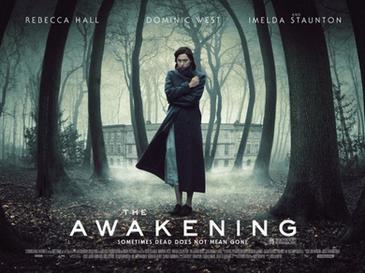
So, set just after the First World War, Florence Cathcart is a seance buster who doesn’t believe in ghosts and who’s written a book debunking the whole thing.  She’s then invited to a boarding school where a ghost has been frightening the boys, one of them to death.  Her own past is deeply repressed, however.  So deeply that she has a screen memory of an event that never happened to mask it.  After setting up all her equipment she does find evidence of the inexplicable.  Robert Mallory, a teacher and wounded veteran, believes in ghosts.  He says that those who went through the war see them.  He and Florence fall in love—her fiancé was killed in the war—and during the school holiday, she’s left alone with him, Maud the housekeeper, and one student.  Here come the spoilers…

The one boy left behind is the ghost of her step-brother.  Florence grew up in that house and Maud was the housekeeper, and mother of the boy.  Her unhinged father killed Florence’s mother and was trying to shoot her as well but accidentally shot his son by the housemaid.  He then killed himself.  Florence has to remember her past to realize she’s been seeing ghosts she doesn’t believe in.  It’s an eerie film but the plot is bit confusing.  It brings religion into the story, and even the Bible.  The tale of Holofernes’ beheading from Judith is represented in a painting.  Her debunking book is kept next to the Bible.  By the end we’re asking ourselves if Florence is a ghost.  This is a good, spooky film.  A bit ambitious, but it gets more stars than the usual freebie on a sleepy afternoon.

Ban Ban Go Away

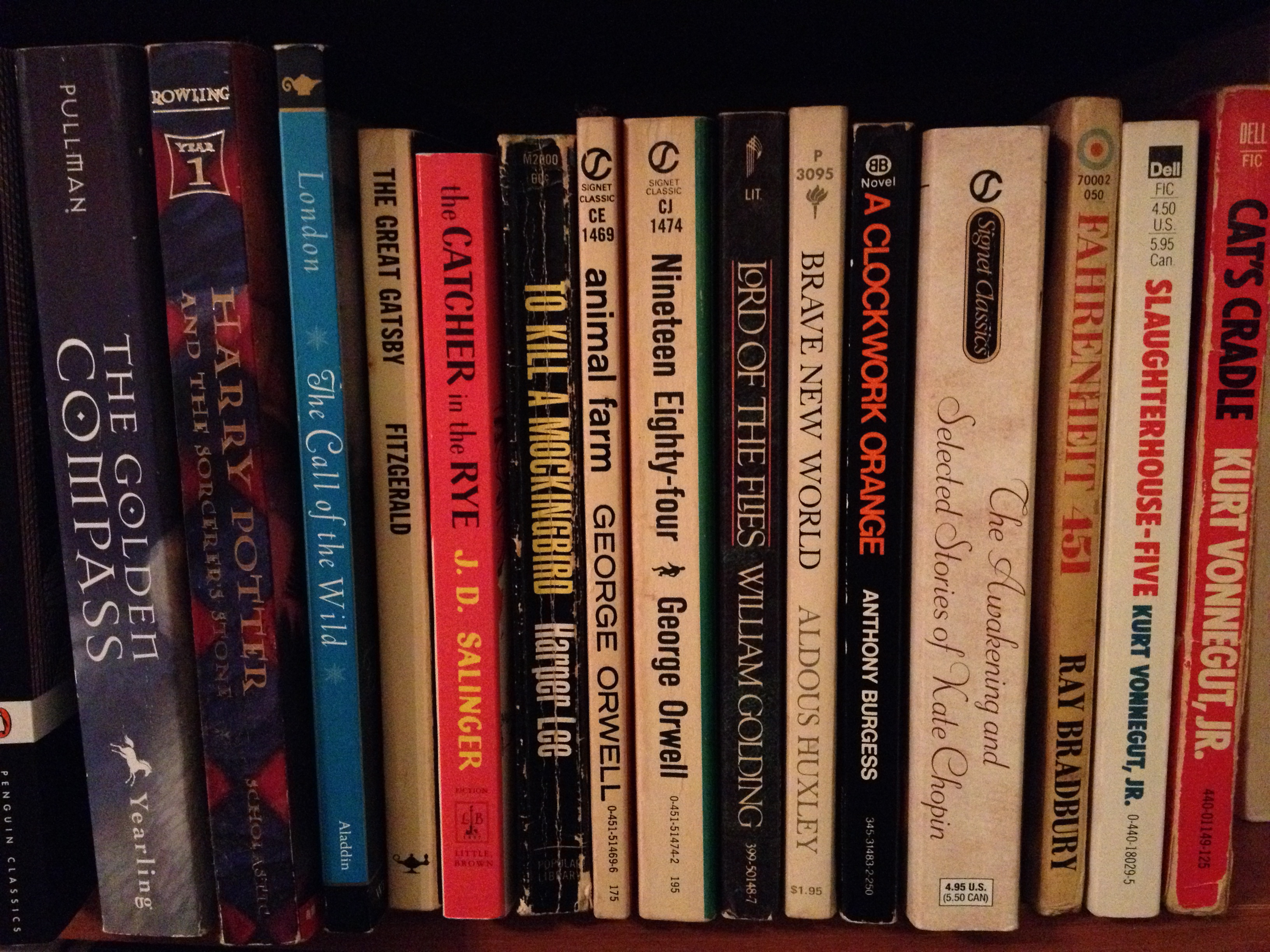
I always seem to discover banned book week in retrospect. With the insane amount of time put into getting to and from work, and actually working, my daily bus ride is my main vehicle (literally) for reading. For eating forbidden fruit. Historically speaking, the first literature was religious literature. Much of it, if anybody bothered to read it, would end up on banned book lists, I’m sure. The Bible is granted a special amnesty, given its reputation as a divinely penned parchment, but it too has its share of unseemly topics. Sex is there almost from the beginning. Violence too. We could go further, but sex and violence are usually sufficient to land a book on the list. And the choices are always so period specific. Catcher in the Rye seems downright tame in the new millennium (or, indeed, Kate Chopin’s The Awakening), and yet we still find new books to condemn. I wonder if such books aren’t forming a new kind of scripture.

There was a time when religion challenged social convention rather than championed it. Religions have been co-opted and domesticated by political interests. Can you imagine the man who overturned money-changers’ tables in the temple on the floor of the stock exchange? We have quantified everything, even—especially—human beings. That which can be quantified can be measured and that which can be measured can be sold. Religions, but only those upholding the status quo, grease those wheels nicely. If we had a chance to know religious founders personally, I suspect we would have found banned books in their libraries. Ideas can be dangerous things.

Despite my generally kind words on this blog, I do read books that I don’t like from time to time. I would never challenge the right of the author to express his or her ideas, nor the publishers (no matter how misguided I think them) for promoting them. I am not the one to quantify. Looking over the American Library Association’s list of banned and frequently challenged books, however, I realize that my fiction-reading hours would be slim indeed. We tend not to ban non-fiction, challenging though it may be. It is the imagination that offends. Such is the power of fiction. Last week was banned book week. Time to look over the list of latest condemned editions to find what to read this week. I am always looking for future scriptures.

The usual suspects...

The usual suspects…