Connecting Connecticut

One of the many lessons of the current pandemic has been that my appreciation of horror is not misplaced.  Horror Homeroom has just published my piece “Demons or Ghosts?  Hauntings in Connecticut,” available here.  I’ve noticed that Horror Homeroom has had a surge of pieces since all of this began, which seems tacit evidence that horror is a coping mechanism.  It’s no wonder, really.  Horror often deals with “worst case scenarios” and specializes in isolating victims.  Now that we’re all practicing social distancing we’ve entered into one of the main framing plots of the horror movie.  Contagion isn’t an unusual trope either.  My article is about neither of these, but I still maintain that watching horror is therapeutic.  As with most therapy there’s good and bad varieties.
The films I write about in this instance aren’t good movies.  The Haunting in Connecticut franchise misses on so many levels that it doesn’t seem bound for classic status.  Yes, there are classics in the genre.  When the outbreak started many people referred to The Shining as how they felt being cooped up all the time.  There are those who vehemently deny that The Shining is horror, but given the association with Stephen King it seems difficult to deny.  Horror doesn’t have to involve slashers or bug-eyed monsters.  It isolates.  It imagines worst case scenarios.  All Jack Torrence needed was an inept national administration to put us all in the Overlook, one at a time.  

The pandemic has slowed down the release of new movies, of course.  The much anticipated A Quiet Place Part II has been pushed out to September.   Sitting here in isolation I wonder if that’s long enough.  Politicians with money in mind over their human constituents are chomping at the bit to get us mingling again.  Exposing one another.  Horror, however, knows all about aftershocks.  I don’t like jump startles.  I prefer my movies to built thoughtful, moody situations.  Despite their many sins, the Connecticut haunting movies do that correctly.  While they have other problems, they do throw us into a world where things aren’t quite right and we know it.  Elaborate plots really aren’t necessary, though.  The mind is pretty adept at filling in the story.  Like children asking to have the same book read over and over, we know how it goes.  We just like someone else to show us exactly how.  Isolation should continue for some time.  And horror provides a reasonable narrative to help.

Haunted States

I’ve been going through a spate of watching “The Haunting” movies.  Just to be clear, I don’t mean The Haunting, by Robert Wise (1963), which is excellent.  Instead I mean movies spun off of the Discovery Channel’s series A Haunting.  Several years ago, between jobs and too near an FYE store, I picked up a cheap two-fer.  This set contained the television movies A Haunting in Connecticut and A Haunting in Georgia.  I watched them once and then traded them in to get something else.  The first one really bothered me.  The Connecticut story deals with a childhood cancer victim, and that alone is scary enough.  It had the limitations of a television movie and left me thinking it wasn’t too satisfying.  The Georgia haunting was more of a documentary, but it was also open-ended.

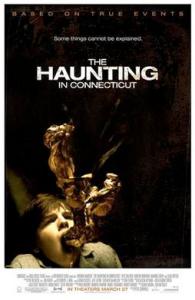
Then someone got the idea to make a movie out of the two.  The Haunting in Connecticut blows the plot over the top.  I kept thinking as I watched it, isn’t it in bad taste to make a horror movie based on the true life horror of tragic disease?  The protagonist of the story, Philip Snedecker, died about three years after the movie came out.  Although the plot generally followed the first movie an entire subplot was added to pad it out.  A nineteenth-century funeral director has enslaved a young man to be his medium.  The undertaker steals and marks dead bodies to enhance the boy’s powers.  These completely fictional characters intermingle with the real life tragic Snedeckers.  As you might expect, chaos ensues.

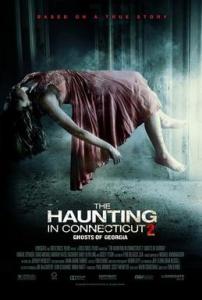
The oddly named The Haunting in Connecticut 2: Ghosts of Georgia also had to add an entire fabricated story to the troubles of the Wyrick family.  In real life the Wyricks moved into a house where their daughter started seeing things, including a kindly ghost named Mr. Gordy.  She also saw some sinister spirits.  So much so that her family invited a parapsychologist to investigate.  The theatrical version adds in a stationmaster on the underground railroad who was also a taxidermist.  Instead of helping all the slaves to freedom, he saved some for stuffing later.  No real motivation is given, beyond his enjoyment of sawdust and thread and death.  

While these two movies really didn’t help much, I generally find watching horror during a pandemic therapeutic.  Horror films sometimes help viewers envision worst-case scenarios and figure out how they might deal with them, learning from the victims’ mistakes.  I suspect that’s why, a few years back, the CDC posted instructions on what to do in case of a zombie apocalypse.  It was all about disaster preparedness.  Of course, in those days we had no idea what was really coming to Connecticut, and Georgia, and to every state of the union.


Local Hauntings

In my on-going research (as I think of it), I watched The Haunting in Connecticut.  I recently wrote about A Haunting in Connecticut, distinguished from the theatrical version by an indefinite article.  Both claim to be based on a true story and the story itself is disputed because it doesn’t fit into a materialist paradigm.  Ah, but that’s another can of worms.  Regarding the movie, it abandons the base story to add an entirely fictional subplot that drives the horror.  Or so the writers and director think.  The tale ends up jumbled and the confusion it generates is not the kind borne of intelligent planning.  The Campbell family, struggling to pay the bills against a case of childhood cancer is real horror.  In our healthcare system that is a true story.

According to the diegesis of the movie, Matt Campbell can see the dead because he’s close to death.  In case you don’t know the story—the family has to move to be closer to the hospital where Matt is receiving his treatment.  Once ensconced in their new house they learn it used to be a funeral home and hauntings ensue.  The writer of the original book claims to have made much of it up, while interviews with witnesses make the claim that much of it actually happened.  Matt ends up in a mental hospital.  In the movie a subplot of necromancy and a young boy medium are added.  Souls whose bodies have been bound are trapped in the house until Matt figures out how to break the spell with the help of the medium’s ghost.  Instead of Ed and Lorraine Warren investigating, a local minister is added.  Also suffering from cancer, he figures it out too, but too late to help the Campbell family.

In Holy Horror and Nightmares with the Bible I do not treat made-for-television movies.  A large part of the reason is that they often lack the cultural impact of a theatrical release.  (Although Game of Thrones and The Walking Dead may have reached a point of familiarity with numbers to rival big screen efforts.)  In the case of the cinematic treatment of the Snedeker (“Campbell”) family, however, the television treatment might well have been scarier than the big-budget studio effort.  Whether fictionalized or not, the Discovery Channel show stays closer to the book (In a Dark Place, by Ray Garton).  Using the Usher-like ending of destroying the house doesn’t seem to offer any release in the big-screen version.  Sometimes reality is scarier than the tales we tell after dark.