Cat Curse

In researching Sleepy Hollow as American Myth, I watched every feature-length movie of “The Legend of Sleepy Hollow” that still exists.  I also watched many other productions, based, however loosely, on the Legend.  I was unaware that The Curse of the Cat People should’ve been included.  There is no database of all cultural references to Sleepy Hollow, and although Curse of the Cat People has many fans, nobody advertises it as related to the Legend.  But it is.  I happened to watch this 1944 film because I’d been thinking about Cat People.  My jaw dropped when the film opened with a teacher taking her children on a walk and explaining that this was Sleepy Hollow.  My book had been published just last month and I was discovering new material!  The movie is a bit disjointed, apparently because studio executives wanted new material added and some of the edited pieces explaining the story were lost.  Still, it is well worth seeing.
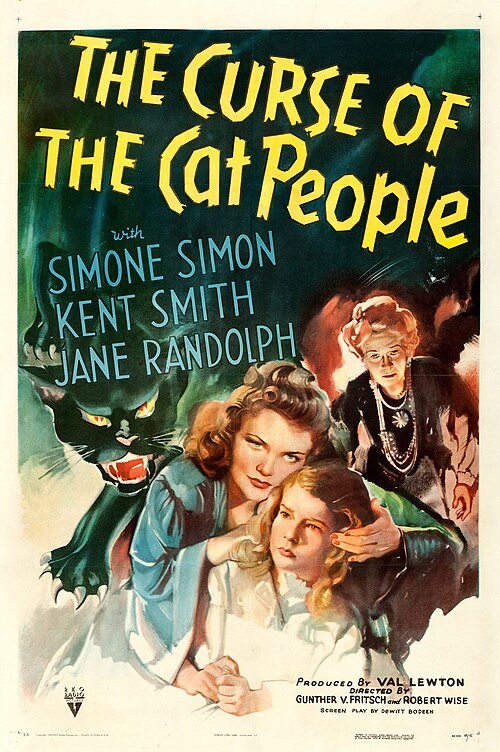
Six-year-old Amy Reed has no friends.  A daydreamer who has a rich fantasy life, she frightens her father, Oliver, who had been married to Irena—one of the cat people.  Oliver never believed Irena was really a cat person and is afraid his daughter is suffering under similar delusions.  This is because Amy is given a ring that grants wishes by an old widow who tells her a version of the Legend of Sleepy Hollow.  The wish Amy makes is for a friend and Irena, the ghost of her father’s first wife, shows up.  There are no cat transformations here, but there is a great deal of psychological subtlety.  Is Amy really seeing Irena or is her loneliness filling in the voids in her life—her father is distant and refuses to accept what his daughter tells him. Instead he punishes her for it.

When Amy gets lost on Christmas Eve, Irena saves her from the murderous daughter of the widow who gave her the ring.  It’s clear that some of the connective tissue is missing, but the story is sincere and smart, even if only very loosely a sequel.  The story of the headless horseman, pre-Disney for those of you who’ve read my book, presents the horseman as collecting unwary wanders on the bridge and compelling them to ride with him.  He’s not after anybody’s head.  Indeed, this is the way he’s described in Irving’s story.  Just as I’ve begun collecting films for Holy Sequel, it looks like I should begin keeping a list for Sleepy Hollow as American SequelCurse of the Cat People will be first on the list.


Painting Sleepy Hollow

Not being an art critic, I’m in no place to analyze John Quidor’s The Headless Horseman Pursuing Ichabod Crane.  Having written a book about Sleepy Hollow, however, there are a few things I might point out.  I should begin by noting that this post was spurred by a jigsaw puzzle.  Normally I only work on said puzzles around Christmas time.  Several years ago friends told us about Liberty Puzzles.  They’re made of wood and are heirloom quality.  My wife took the hint and she generally orders one, on behalf of Santa Claus, each year.  We have a few now but since we only do them once a year (and usually only one of them at the time), I had forgotten that we had a Liberty Puzzle of Quidor’s painting.  The original is located in the Smithsonian and I really didn’t discuss it in my book.  The painting is dated 1858, almost forty years after the publication of Irving’s tale, but while Irving was still alive (he died the next year).

John Quidor, The Headless Horseman Pursuing Ichabod Crane, public domain via Wikimedia Commons

The painting is correct in displaying a pumpkin that isn’t a jack-o-lantern and it presents one of the obvious difficulties of painting a nighttime scene.  The painting is fairly dark.  One of the benefits of working on a puzzle like this is you look closely at the scene.  My first thought was that it seems odd that the lightest part of the painting is Gunpowder’s rump. Next is the path.  The path draws the viewer’s eye back to Gunpowder and an understated Ichabod Crane.  I realized that the lighting is meant to reflect the moon’s rays, as the orb is just peeking through the clouds at the upper left.  And, of course, Quidor was not painting from real life.  On the right lie some small buildings, including the Old Dutch Church.  The Headless Horseman blends into the dark, which is exactly how Irving describes him in the story.  There’s no bridge, however, at least not yet.  All of this matches the wording of the legend.

Quidor painted mostly scenes from Washington Irving’s works.  Having been born in Tappan, during Irving’s lifetime, that makes sense.  He was also painting before the Disney cartoon came out.  One of the cases I make in Sleepy Hollow as American Myth is that the image most Americans have of the story comes from Disney.  The painting has no sword, and indeed, neither does Irving.  The one dramatic effect Quidor allows is the raising of the pumpkin before the bridge.  That takes place later in the chase.  In a sense this painting is perhaps the most authentic visual interpretation of Irving’s story before it made the transition to celluloid.  It’s puzzling.


Naming Sleepy Hollow

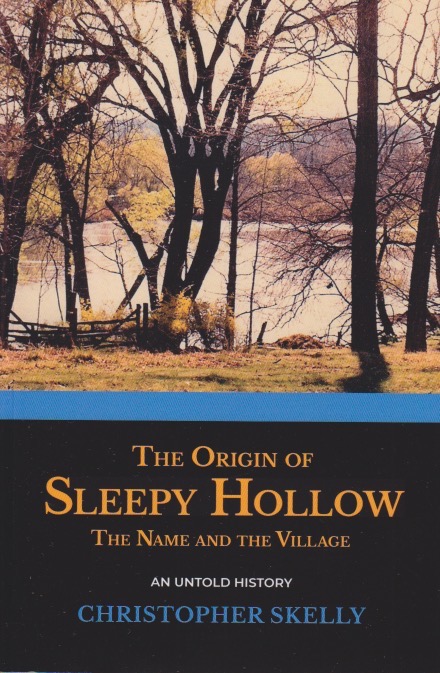
Local history has always been an interest of mine.  Although I’ve never lived in Sleepy Hollow, my book on “The Legend of Sleepy Hollow” is due out this week.  I try to keep an eye out for further information on the region.  Christopher Skelly’s The Origin of Sleepy Hollow: The Name and the Village, an Untold History appeared after I’d submitted my manuscript to McFarland, but I wanted to read it regardless.  A new father living in Wisconsin at the time, I was not aware of the name change in 1996.  I do remember looking at a map after we’d moved to New Jersey and seeing, for the first time, the name Sleepy Hollow along a route we planned to take to a point further up the Hudson.  I remember thinking, “I didn’t know there was an actual place called Sleepy Hollow.”  Well, that may have been because prior to 1996, there wasn’t.

This self-published account of how the name came about is valuable local history.  Not exactly belles-lettres, it nevertheless begins at the earliest Dutch naming of the area as the Dutch version of Sleepy Hollow.  By the time Washington Irving wrote his story around 1819, the area had already gone by several names but the village of Tarrytown was well established.  And, over time what was vaguely called Sleepy Hollow by the Dutch became North Tarrytown.  I learned here that the haven, or harbor on the Tappan Zee that was first called some version of “Sleepy” had been the victim of landfill so that a railroad could be put in.  The author is clear that the “Hollow” is still visible if you know where to stand and look.  He also explains the motivations behind changing the village name that began in 1988. 

One things I learned in my own study of ancient history is that place names tend to be remarkably resilient.  European settlers ignored much of the indigenous nomenclature, but did adapt many examples of it.  Our species needs to reference where things, or other people, are over very large distances.  We know where Edinburgh is, even if we live in Australia.  Names are important.  Personally, I’m glad that some citizens of North Tarrytown decided to change the name of their village to Sleepy Hollow.  And not just because I have a book coming out on the topic.  I’m sure the change has boosted tourism immensely, even if that wasn’t the initial motivation.  It’s nice to know that the change was actually back to the first Dutch ideas about the place.  And that a visit to Sleepy Hollow is possible because of one influential little story.


Playing Sleepy Hollow

In my teenage years I wrote a short play or two.  I haven’t done it since.  I’ve read plenty over the years but my fiction takes the form of short stories and novels—narrative fiction.  Playwriting, and scriptwriting, take a special talent.  One time-honored way to doing this is to utilize source material.  One of the points that I make in Sleepy Hollow as American Myth is that movies, in particular Tim Burton’s Sleepy Hollow, inspired a number of other movies and even novels, both narrative and graphic.  Others saw the potential this short story could have.  I spend some time in the book going over the various adaptations and the innovations they make.  The point is that “The Legend of Sleepy Hollow” has become an American myth.  Anyone who examines its long history can see the impact that it has had on the American imagination.  And on Halloween. 

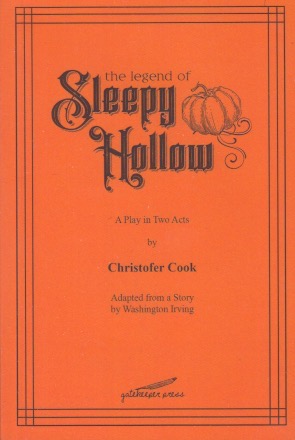
Christofer Cook’s The Legend of Sleepy Hollow is a two-act play, adapted from Washington Irving’s story.  Some of it is taken directly from the story, but as most of those who have adapted the story know, it requires some help to become a performance.  Cook’s play is an interesting take on the story.  I’m not sure what other sources Cook may have seen and/or read, but there are some elements here found elsewhere that have become part of the tale.  For example, a duel between Brom Bones and Ichabod Crane.  I’ve seen that in other treatments, and it seems logical enough, given the circumstances.  Irving, however, it is not.  Perhaps the most surprising shift Cook makes is that the famous horse chase takes place with both Ichabod and the horseman (named Hermann Von Starkenfaust) on foot.

Had I known of Cook’s adaptation before submitting my manuscript, I would’ve been glad to have included it in my book.  Many movies have their own scripts that they use to bring the tale to life on stage and screen.  This only underscores my point—myths are endlessly adaptable and capable of serious transformation.  Some elements of the story we now assume to be part of the original were added many years after the story was written and its author had died.  Yet we all tend to expect these things.  Nobody has the final word when it comes to what happens to Ichabod Crane.  Washington Irving assured that in his story.  Those who come after bend, twist, and stretch the tale in new and fascinating directions.  This little play is one such and would be, I suspect, great fun to see.


Ichabod’s Body

Maybe you’ve noticed this.  When Halloween comes around, the Headless Horseman and the Legend of Sleepy Hollow reemerge.  There’s a reason for that, and I discuss it quite a bit in Sleepy Hollow as American Myth.  Right now there seems to be quite an interest, or maybe I’m just noticing it more.  For example, a local theater where we saw a Poe performance last year is offering a Headless Horseman show this year.  Articles have recently been appearing on Tim Burton’s Sleepy Hollow movie, given that it was released 25 years ago—online discussion, however, is often eclipsed by the Fox television show by the same name.  And before it switched over to Christmas decorations, Michaels had its share of Sleepy Hollow merchandise.  Halloween and the Headless Horseman go together.  (Read the book to find out why!)

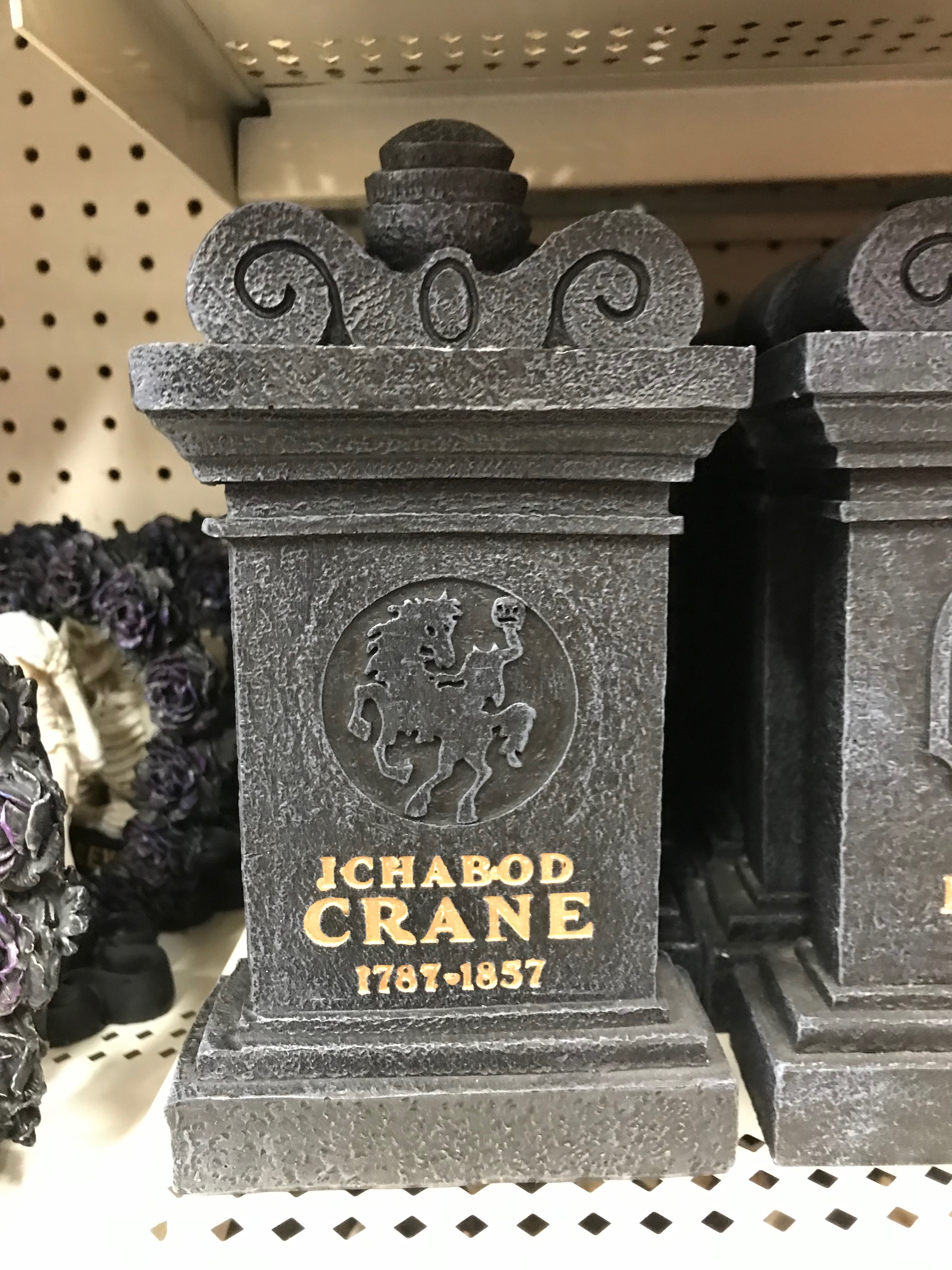
One of the tchotchkes I picked up at Michaels was Ichabod Crane’s tombstone.  In the many renditions of Washington Irving’s legend, Ichabod is treated as the protagonist of the story.  Although Tim Burton’s movie wasn’t the first to have Crane survive, besting the Horseman, the old wives’ tales, according to Irving, had him spirited away by the Horseman.  That’s why I found his gravestone so interesting.  The dates on it (1787–1857) indicate, at least according to this recension, that he died at seventy, surely not the victim of the attack that took place around the turn of the century.  If you’re not familiar with the original story, Irving set it “some thirty years since” the 1820 in which the tale was published, putting the events around 1790.  Burton shifted this to 1799, partially, I suspect, because that was two centuries before the release of his movie.

I do wonder where the maker of the Michaels tombstone got their information.  According to their reckoning, Crane would’ve been but three years old in 1790.  Of course, the story never tells us his age.  Since it is intimated that he relocated and became a judge after dabbling in politics, all of which would seem to indicate that he was a somewhat young man at the time of the tale.  To make Sleepy Hollow scary, though, having Crane cut off in his youth would seem to be more in keeping with the spirit of the season.  Of course, Sleepy Hollow is a legend that has become mythic through its many retellings.  Enough of them that someone could write a book about it all (ahem).  And this is the time of year to ponder it.  


Love’s Life

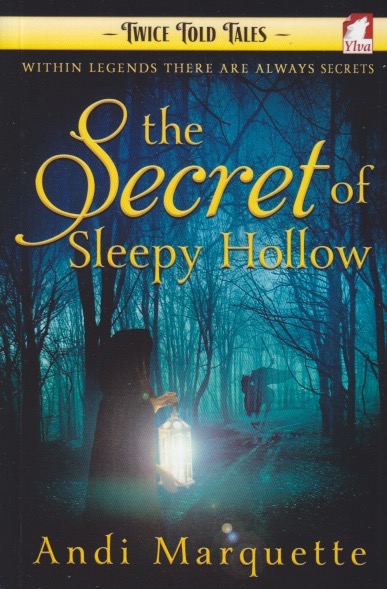
One of the things about literary classics is they open themselves to reinterpretation.  It’s often a lot of fun to trace these.  Andi Marquette is obviously an educated writer.  Her The Secret of Sleepy Hollow is one of those reinterpretations that has a unique take on the tale.  Set in modern times and featuring a member of the Crane family—Abby—as a graduate student, this story brings the tale into a contemporary context.  Abby meets another graduate student—Katie—in Sleepy Hollow and the two fall in love.  It turns out that Katie is a member of the Van Tassel family, thus bringing the two main families of Washington Irving’s “Legend of Sleepy Hollow” together again.  There’s even a headless horseman.

Like the biblical book of Ruth, this is a gentle tale of women’s love.  There’s no overt violence, no heads get chopped, but two women love and care for one another.  Many of the more modern repackaged versions of Sleepy Hollow tend to go for the violent, sometimes drug-fueled tales of bored youth in a small town facing an angry ghost.  Here the interest is more literary, a gothic romance.  The fact that it’s a lesbian love story makes me wonder why so many people have trouble with others’ love lives.  People are prone to curiosity about sex—that’s a simple fact.  What isn’t so simple is that mores based on culturally specific ideas from millennia ago don’t stand the test of time and yet cause misery in modern lives because they can’t accept what we now know—sex and love are anything but simple.

Marquette’s book is marked by that anxiety.  When people discover a love that’s often misunderstood, they face ridicule or worse.  The book of Ruth provides a good guide here—the acceptance of a normally forbidden love can bring good and happiness to people in what is often a difficult world.  There’s trouble enough—there are headless horsemen out there—that we don’t need to be causing more by judging the loves of others.  Even a cisgender heterosexual can understand that.  Life is complicated and we all try to find our way through.  Love is one of those things that can help to make it more bearable.  I found The Secret of Sleepy Hollow compelling in that way.  It may not be a literary classic—few books are—but it takes on a complex topic intelligently and with heart.  It’s a new take on an old story that still fits the modern world.


Sleepy Unhallow

The thing about classics is they’re open to interpretation.  And expansion.  Since taking an interest in Washington Irving’s “The Legend of Sleepy Hollow,” I’ve been reading modern novels based on it.  Several of these are self-published and although they show the distinct signs of that, they are nevertheless creative.  Human beings are a creative lot.  And the basic idea of Sleepy Hollow gives us a lot of material to develop.  Well, not really, I guess.  It’s a rather simple story of a love triangle in a dreamy small town where there’s widespread belief about ghosts, particularly a headless horseman.  You can nevertheless go in a lot of different directions from there.  Especially since we have two centuries since the story was published.

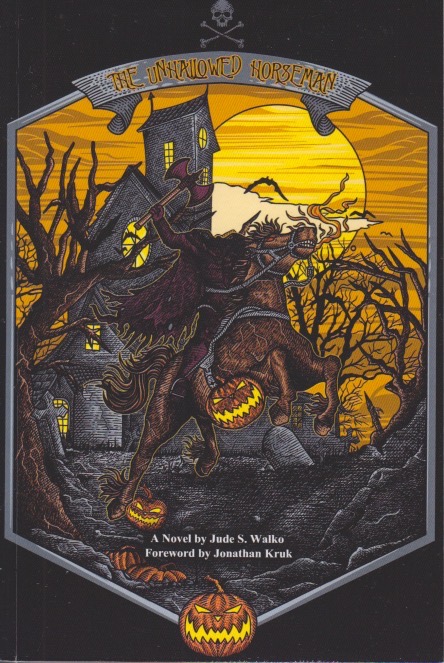
Filmmaker Jude S. Walko has written a horror treatment of the Sleepy Hollow tale in modern times.  The Unhallowed Horseman is graphic and violent and involves the gritty reality of being raised in a broken home.  This isn’t for the faint of heart.  One of the reasons, I expect, that Irving’s tale has survived is that he wrote it, according to the standards of the time, for a genteel readership.  There’s no sex and no violence.  It’s funny rather than really scary.  The characters are likable, if shallow.  There’s the frisson of a ghost but it’s never clear if he’s real or not.  In the end order is restored in the small village and the interloper is gone.  For these very reasons more recent readers are probably looking for something that fits more in our times.

Walko’s version has an emotionally scarred protagonist who is, according to modern practice, drugged into compliance.  He’s smitten by the cutest girl in the school, but the other guys try to take her at will.  The protagonist’s homelife is a shambles.  The sheriff is a descendent of Brom Bones, without any of his good qualities.  And due to a cosmic, astrological sort of event, the headless horseman rides again.  This horseman, however, is described as pure evil.  Almost in demonic terms.  On the night of the annual Halloween festivities this horseman gruesomely kills many of the characters off.  The high schoolers all drink, and the teenage boys have no morals.  At the end there’s a community left in mourning and no real future.  Nihilistic like some modern horror, this version won’t leave you smiling like Irving’s does.  Of course, if you write a classic it can be taken in new directions, and can be made to reflect the realities of new times.  Walko has his eyes open to the era in which we find ourselves.


New Horseman

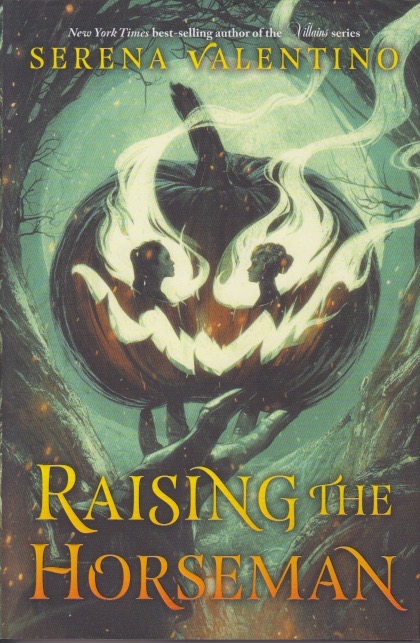
You’d think it’d be obvious, but it took me some time to realize that when a story’s being retold in a literary context, the point isn’t to restate the original in new words.  No, sometimes the vision is quite different and the result is like building a different person from the same skeleton.  I’m still on my Sleepy Hollow kick and I’m interested in what contemporary writers see in the story.  Serena Valentino’s Raising the Horseman is a feminist retelling with sensitivity to LGBTQ+ concerns.  Like some other recent Sleepy Hollow novels—Alyssa Palombo’s Spellbook of Katrina Van Tassel and Christina Henry’s Horseman—she takes the point of view of either Katrina or one of her descendants.  In this case, both, as a present-day Katrina reads the diary of the original Katrina in Sleepy Hollow.

The story is pitched at the young adult level—a literary scene that’s thriving these days—and sets up the story this way:  Katrina Van Tassel married Brom Bones and left her vast estate to her daughter and their daughters, as long as they took her name.  This creates an unbroken succession of Katrina Van Tassels.  As might be expected, the current Kat, as a teenager, wants to follow her own path rather than staying in Sleepy Hollow for the rest of her life.  She meets a new girl in town, Isadora, who encourages her to see how her boyfriend Blake has been keeping her in an abusive relationship.  “The Legend of Sleepy Hollow” is a love triangle, and that develops here as well, moving in new directions.

Valentino has been writing a series called Villains for some time.  That series takes on the viewpoint of the antagonist rather that the hero.  Such tales are quite popular these days as we reexamine dusty assumptions that have been sitting undisturbed for far too long.  Fans of Sleepy Hollow will recognize the base story in this novel, but will be taken along a different path and will be left without a simple resolution.  Younger readers adopt a more open attitude towards life, watching, as they do, the antics of many of their elders (particularly angry white men in positions of power), and they recognize bad behavior when they see it.  The novel is a plea for tolerance, a trait that’s much needed in the world.  The Headless Horseman is still there, of course, but the real villains of the story might not be who you assume they are.


Not Sleepy Yet

Working on a doctorate changes the way you think.  Or at least it’s supposed to.  Easy answers have to be examined closely, and sources critically scrutinized.  One of the side-effects of this is that many Ph.D.s tend to think that only others of that status are able to do good research.  An essential piece of research, however, is passion.  This part isn’t always logical and can’t always be explained.  A recovering academic, I first resisted Gary DenisSleepy Hollow: Birth of the Legend because it was self-published.  I’ve had bad experiences with self-published books before but what I discovered here is that Denis is quite a capable researcher, driven with a passion for Washington Irving’s tale.  The execution may be a little rough, but the data-gathering is very good.  He tries to point out where accounts have problems and attempts, where possible, to resolve them.

Denis is driven by the question of what in Irving’s story is factual, if anything?  This is probably not a question an academic would ask, presuming that fiction is fiction.  Still, there is data.  The first four chapters are very good.  Here he lays out the background to the region, Irving, and stories of headless horsemen.  I learned quite a lot from it.  The final three chapters turn to the main characters of the story—Ichabod Crane, Katrina Van Tassel, and Brom Bones—asking who they might’ve been based on.  The best drawn of these is the first and there’s good reason to suppose Irving based Crane’s situation on that of his friend, Jesse Merwin.  The other two, however, are sketched rather hastily and lots of people have suggestions for who might’ve been behind them.

Clearly aware that authors borrow and make things up, Denis knows that Katrina and Brom may well be pretty much imaginary.  He also knows that Irving did indeed borrow much from previously known stories and legends.  Irving’s real genius was in the way he expressed these stories in colloquial English, making American literature a blend.  Although Irving wrote many books, his fame was largely due to two of his stories published early in his career.  One of those stories, “The Legend of Sleepy Hollow,” has left quite a paper trail and Denis leaves no rock unturned in his efforts to collect data on it.  I’ve read a fair number of self-published books over the years—they’ve been easy to produce since the internet began—and I’m wary of them.  This book, however, is one that I’m glad I found and it serves as a useful reminder that good research isn’t limited to the privileged few in the academy.


Katrina’s Side

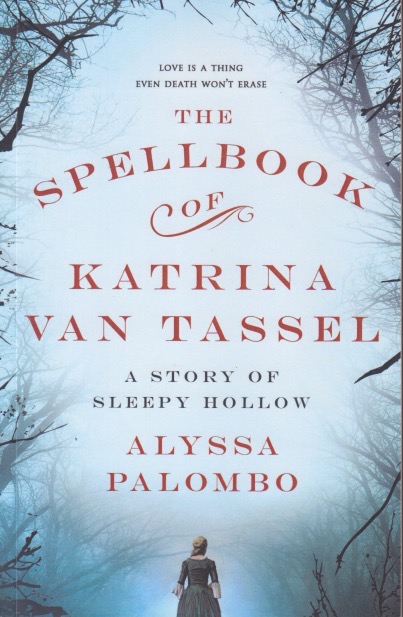
Once a story is released, and its copyright expired, it’s free to be re-interpreted.  Although there are those that deny it, any reading is a form of interpretation.  I’ve been gathering information on Washington Irving’s “Legend of Sleepy Hollow” for some time now, and I’ve just finished reading Alyssa Palumbo’s The Spellbook of Katrina Van Tassel: A Story of Sleepy Hollow.  This novel is a feminist retelling from the point of view of the titular Katrina.  In the original she’s an under-developed character.  These days we’d say that Irving didn’t write women well.  In fact, she functions largely as an object in the story, the source of tension between Brom Bones and Ichabod Crane.  Palombo spins a tale from Katrina’s perspective on all this, and thus takes the story in some new directions.

The novel itself reads like a romance, overall.  Katrina really does fall in love with Ichabod, but Brom is unable to let go, and the rivalry becomes deadly.  As the title also implies, Katrina learns witchcraft as the yarn spins out.  From a cultural point of view, this telling is clearly influenced by both the Tim Burton film Sleepy Hollow and the Fox Television series by the same name.  Both of them give us the witchery and the idea that Crane would be a romantic catch.  In Irving’s vision, it’s difficult to see Crane as any kind of love interest, but the essence of creative retelling is to make the story fit a different mold.  Katrina’s story is seconded by that of her friend Charlotte Jansen, who, like Katrina, practices white magic.  The witchcraft here isn’t malevolent.  Indeed, it is one of the few ways of expressing female power in this time frame.

A good deal of the tale revolves around solving the mystery of what happened to Ichabod on that fateful Halloween when he asked for Katrina’s hand in marriage.  Sadly, writers have, historically, tended primarily to be only male.  There have been exceptions, even from the very beginning.  The first named writer in history was a woman—Enheduanna—but the circumstances of women’s lives, particularly after the agricultural revolution, came to be relegated to roles where the leisure time for writing, and even the opportunity for education to learn it, were rare.  Early on the modern novel was dominated by female writers.  More recently re-envisioned Sleepy Hollow tales have brought women’s role to the fore, and have taken the narrative in unexpected directions.  This feminist retelling of the classic story demonstrates what could have been, had Katrina received a bit more attention, not just as an object.  This is a lesson still to be learned.


Hollow

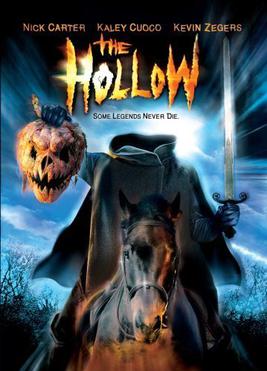
Now that we’re officially in September, it’s kosher to talk of Halloween horror (I’ve seen Christmas decorations in the stores already).  Well, around here we don’t really need an excuse, but since it’s handy I’ll use it.  Regular readers know I’ve been on a Sleepy Hollow kick lately, and I’d been wanting to see The Hollow.  Released as an ABC television movie, it had a fairly modest budget of only about $900,000 but managed to pull in stars with name recognition.  A pre-Penny Kaley Couco also appears as the new version of Katrina Van Tassel.  Let me back up a bit.  This is set in the present day.  Halloween eve.  Karen (not Katrina) is watching a Sleepy Hollow retelling being done by Ian Cranston, but her bored escort, Brody (Brom, anyone?), goes to the graveyard instead with some of his friends.  Two of them are killed.  Oh yes, there will be spoilers.

It turns out that Ian, who’s just moved to the area, is the last remaining descendant of Ichabod Crane.  You see, after Ichabod fled, and settled in New York City, he changed his name for fear that the Horseman would find him.  Now that a Crane is back in town, the Horseman rides again.  The teen-rivalry between Ian and Brody plays out at Karen takes a shine to the newcomer.  A descendant of Hans Van Ripper, who unaccountably talks like a pirate—lots of “ye”s thrown in—realizes that the Horseman’s after the young Cranston.  Since he’s the town drunk, though, nobody really believes anything he says.  On Halloween the town has a haunted hay ride in which each side of the love triangle is involved.  Brody plays the Horseman, but suddenly there are two of them—uh oh!

Cranston, who’s on the fencing team (to the everlasting shame of his football-coach father), is able to engage the fiend in swordplay and eventually destroys him.  He gets the girl and impresses his father all in one predictable way.  There are some laughs along the way, but for the most part this is played as teen drama.  Some racy scenes (and head-chopping) led to an R rating, but there’s little that’s surprising here.  For anyone who’s interested in the various ways Washington Irving’s “Legend of Sleepy Hollow” has been repackaged over the years, it’s a reasonable enough diversion.  When Halloween draws closer, however, it may well be time to try something a bit more appropriate for the harvest season.


Updating Irving

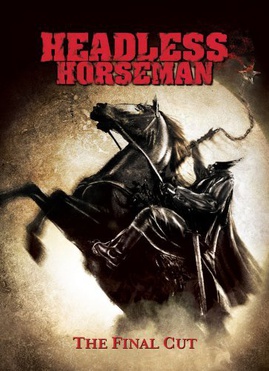
Movie quality is measured by many standards.  It’s pretty clear that budgets can make a difference—Hollywood movies generally outshine television movies.  Streaming services, like Netflix and Hulu, have been gaining ground here, but they still lack some of the qualia that come from long-term players in the industry.  Often this was measured, pre-pandemic, by box office success.  I’m not sure how it’s all quantified now, but I’m sure it still comes down to money.  To me, the deciding factor about the quality of a movie is often the writing.  Even with a modest budget excellent writing can make up a lot of ground.  Headless Horseman originally aired on the SciFi channel (now Syfy) in 2007, and I wrote a tiny bit about it in a former post.  I recently rewatched it with an eye toward how religion is integrated in it.

Headless Horseman is not a great movie.  Its writing doesn’t inspire and it leaves too many gaps in the narrative to carry the viewer along easily.  Still, religion plays an important role in the story.  This one resets Washington Irving’s tale in the south—from the license plates, Missouri.  The horseman is a serial killer who offered his victim’s heads to the hydra, the serpent that guards the entrance to Hell.  When the killer is stopped and his body sent through the gateway, he comes back every seven years to chop heads.  The town where all this takes place has the biblical name of Wormwood, and everyone in it is literally family.  So every seven years they have to trap seven outsiders to make their offering.  The person who originally stopped the killer was the local priest.

Even this brief synopsis reveals how deeply religion is engrained in this retelling.  Irving’s classic story is set in an overtly religious period (particularly Protestant, of the Reformed variety), and wears this lightly.  Everyone can be assumed to go to church and the Headless Horseman is a Hessian mercenary decapitated by a cannonball during the Revolutionary War.  Over time, with many retellings, the horror becomes more and more involved with religion.  To the point that the religion itself is the real engine of fear.  A town protecting a Hell-guarding hellion doesn’t exactly make them Satanists, but it does mean they’re not far from it.  The in-breeding is, however, a bit insensitive.  My recent rewatching wasn’t with an eye toward the Bible, as my last viewing was.  When retelling the story, however, it seems religion will surface where once it was only in the background.


Annotating Irving

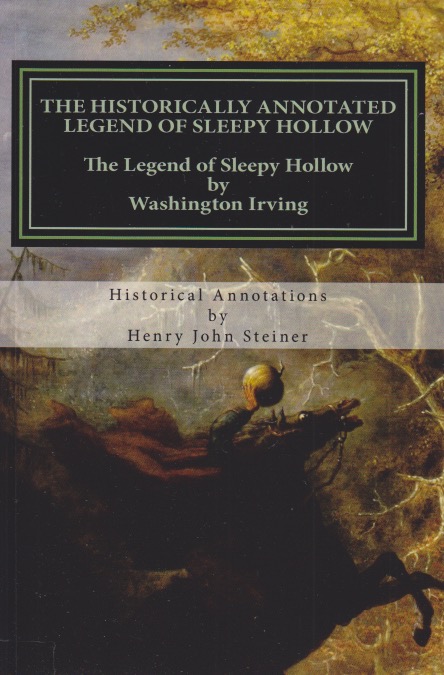
Really concentrating on a short story is sometimes difficult to do.  I don’t have a degree in literature (I took a few courses, but my specialization was religion).  I’ve been on a bit of a Sleepy Hollow kick lately and I wanted to move beyond just the short story by Washington Irving.  Although I’m sure working through the entire Sketch Book of Geoffrey Crayon, Gent., the book in which “The Legend of Sleepy Hollow” was published, would probably be rewarding, it would also be time consuming.  Irving was trying to find his way as a writer and this particular story has been his lasting contribution.  So I turned to local historian Henry John Steiner’s annotated edition.  It has a useful introduction, but still wouldn’t be “book length” without several pages of photos and a large font size.

Sleepy Hollow may lay claim to several signs of historical importance.  It featured in the Revolutionary War.  Washington Irving did eventually settle there.  As a getaway it attracted the wealthy and powerful from New York City because it’s not that far from Manhattan.  Several movie and television renditions have been made of Irving’s story.  This book generally provides local place connections in the annotations.  A visitor to Sleepy Hollow might wonder where this or that event in the story was set.  This book will help with that.  Still, it left me looking for a bit more substantial treatment.  Not necessarily a literary-theory kind.  Let’s face it, academic writers tend to write for other academics. No, a bit more of the folklore, I suppose.

It did allow me to slow down and really concentrate on the story.  Books have an endpoint that really helps in that regard.  This little book (as was the one I recently read on the Old Dutch Church) was published when the Fox series Sleepy Hollow was taking off.  That all-important media tie-in helps to sell books.  Interestingly, the details of a closer reading are revealing.  This isn’t, in origin, a Halloween story.  It’s a tall tale told American style.  Steiner indicates it was based on an older legend—this is something I’d be interested in hearing more about.  Writers are great recyclers.  I suppose a book on the folklore of the lower Hudson Valley might have more of what I’m seeking.  Nevertheless I came away from this edition feeling as if I’d gotten to know the story better.  Irving’s “Rip Van Winkle” also appears in his Sketch Book, but perhaps it’s asking too much to have both analyzed together.


Back to Tarrytown

The very name “Hollow” takes me there.  It’s a resonant geonym.  Near Franklin, Pennsylvania, my early hometown, runs a route called Deep Hollow Road.  For me, with its lush, thick trees and shadowed valley, it always exemplified what the term “Hollow” intended.  And of course, there was Sleepy Hollow.  Now that my article on various movies based on the Irving story has appeared in Horror Homeroom (it’s free), I’m again thinking about my dance with that particular story.  In fact, after I submitted the article I watched yet another version of the tale, Pierre Gang’s 1999 The Legend of Sleepy Hollow.  This film on Sci Fi (before it became SyFy) purports to follow the original closely.  It nevertheless has to pad out the story and does so with religion.

Religion—specifically the Bible—and the tale as represented in Fox’s four-season series Sleepy Hollow is what started me on the current leg of my journey.  I sent an article to the Journal of Religion and Popular Culture on the topic and when it was accepted I expanded the idea into the book Holy Horror.  So it is that I’ve tried to watch as many versions of the story as I can.  There have been many made-for-television renditions.  Some are available for free on the various services that draw from my pocket monthly.  Others cause me to debate whether I want to pay for seeing a sub-par effort for the sake of completeness.  The scholar’s heart still beats within me, I guess.  The Gang version expands the story with a church scene, not in the original tale.  To inculcate the Bible, however, Tim Burton’s film of the same year was necessary.

For me no story better encapsulates October.  Perhaps it’s the crucial role of the pumpkin.  Perhaps it’s the ambiguity of the headless horseman himself—is he a hoax or something more?  These kinds of questions are answered by various filmmakers but since the viewer ultimately decides the question is left up to us.  If I were still an academic my next book project would be clear.  Instead I’m trying to bask in the wonder that is October—the season of transition from bright blue skies and colorful leaves to long, chill nights and bare trees.  Our time outdoors becomes more focused so that we might get back to the warmth inside.  And if we’re looking for a tale to read that’s not really that scary, but which captures the ghosts of the American imagination, “The Legend of Sleepy Hollow” beckons.


Not Sleepy Yet

Over a recent weekend I watched four versions of “The Legend of Sleepy Hollow.”  (I have two excuses.  One is that it’s October, and the second is that I have an article on Sleepy Hollow coming out on Horror Homeroom.  For the second, read on.)  The story is one that made an impact on me as a child, probably because of Disney’s Adventures of Ichabod and Mr. Toad.  The cartoon version, which was one of the four I watched, is silly and scary both.  It leaves it to the imagination whether the headless horseman is real or not.  Before that I watched the silent 1922 Headless Horseman staring Will Rogers.  Clearly in that film the headless horseman is what we’d now call a liberal hoax.  It was Brom Bones scaring Ichabod Crane away from Katrina Van Tassel.

The canon of characters grows with Tim Burton’s 1999 film Sleepy Hollow.  Although Burton is hit or miss for me, this strikes me as one of the best October movies I’ve seen.  The headless horseman is quite real and the spiritual world intersects with the rational, crime and punishment world in the haunted western wood.  I didn’t have time for the 1980 television movie this time around, but I decided to watch the 2007 television movie Headless Horseman.  A rather puerile splatter film set in Missouri, it posits that this is the real headless horseman behind Washington Irving’s story.  It has a lot of religious imagery, which is often what I’m looking for in horror.  The writing is poor and the characters shallow, but it isn’t a total waste of time.

What all of these films demonstrate is that Washington Irving’s story, as simple as it is, really resonated with Americans.  How can you reason or plead mercy from a headless man?  Look closely, for there is a parable here.  The headless are merciless and they have the ability to frighten.  The story is generally set in the harvest season.  The 2007 movie makes the horseman’s appearance as a crucified scarecrow.  Although the original story had no such religious elements, they’ve become a standard part of its accrued cultural heritage.  The headless horseman has gone from secular to religious, for it is an American story.  Originally set in the period after the Revolutionary War, it was part of an unsettled nation’s frustrated attempt at normalcy.  This, I believe, remains.  When we can’t make sense of our surroundings, we look back to those stories that seem to have some insight into who we are.  Headless horsemen are quite useful in that regard.