Existing Stance

You know, I’ve referenced eXistenZ several times on this blog without really writing about it.  How rude of me!  Well, the fact is eXistenZ is one of my “old movies”—those that I knew from the days before I started this blog.  I have watched it since 2009, but early on I didn’t review movies unless they had religious elements.  Having recently referenced eXistenZ yet again, I figured it was time to look directly at it.  When I first watched this movie I had no idea who David Cronenberg was.  The film was recommended to me by one of my students at Nashotah House.  In those days there was no streaming so I had to purchase the DVD.  The movie is a science fiction horror film, primarily body horror, which is kind of Cronenberg’s shtick.  It’s also about gaming and I’m not a video gamer at all.  Still, I really like this film.
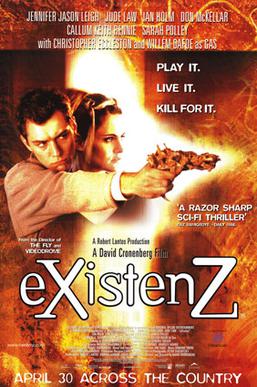
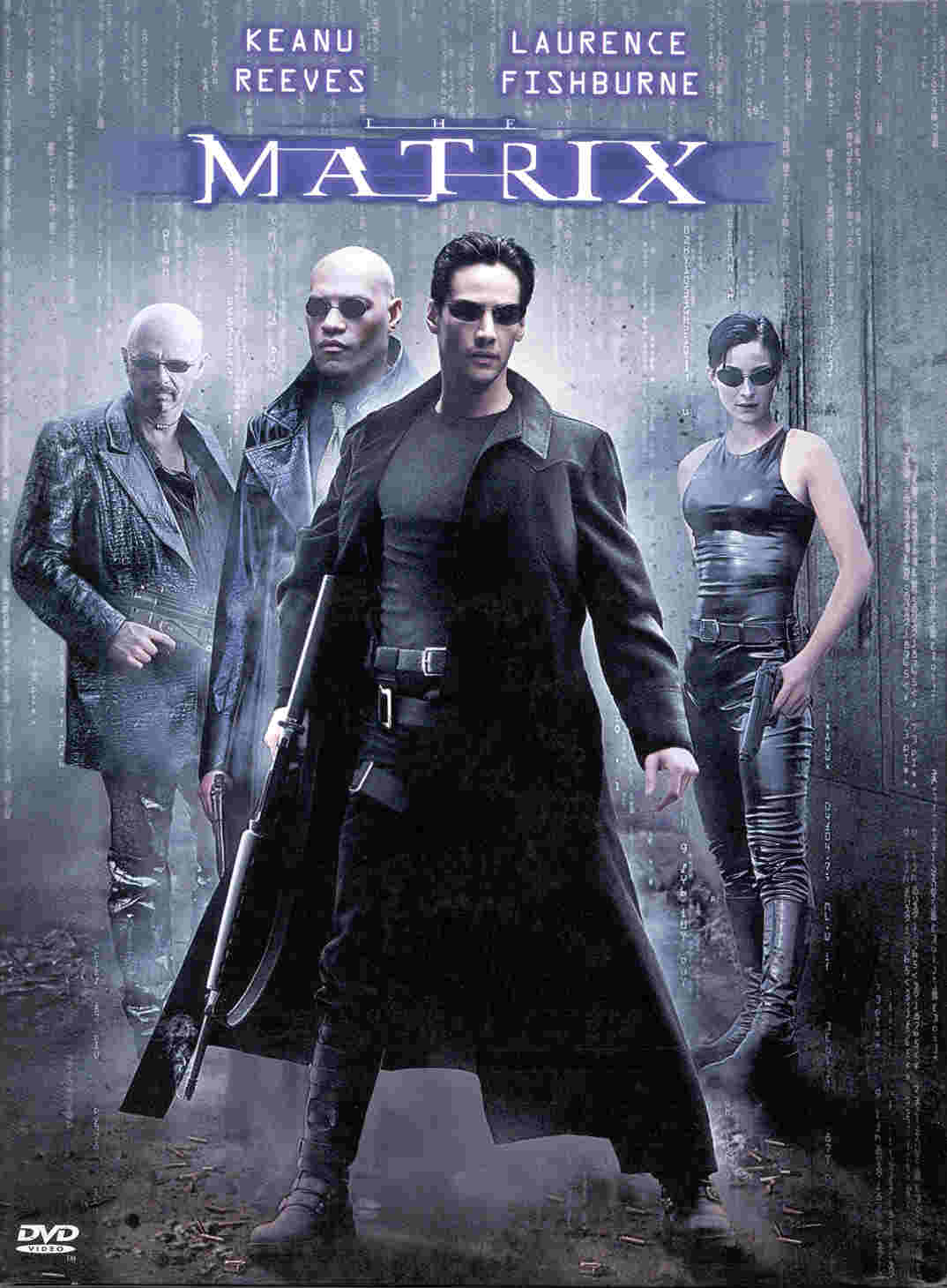
Perhaps presciently, Cronenberg set the movie in 2030.  Computer gaming has become biological with organic ports that have to be punctured into players’ spines so they can use an “UmbiCord” to connect to the pod.  Rewatching it, this seems almost too plausible.  In any case, as the movie goes on it becomes less and less clear what is real and what is part of the game.  Reality becomes distorted.  eXistenZ came out about the same time as The Matrix (probably why my student suggested it to me).  Given the very high profile of the latter film, eXistenZ never really broke out.  Cronenberg seldom breaks through to the mainstream, but I know a lot of people were talking about his remake of The Fly in 1986.  I even saw that one in the theater with some seminary friends.  In those days I didn’t know enough about horror to know what to expect from a Cronenberg film, which may be why it had such an impact on me.

In any case, eXistenZ remains underrated.  I see more recent films that appear to nod to it.  The horror aspects tend to be the slimy, gooey aspects of the game world which—spoiler alert—is, diegetically, the one in which the viewer resides.  There are indeed a few parallels to The Matrix, but eXistenZ has creatures and horror themes.  Sci-fi horror is a sub-genre that often works.  Critics tend to refer to such things by the older category of “science fiction,” but it is close kin to horror, a genre only separated out in the early 1930s.  Now as AI takes over the world, it might be a good opportunity to watch eXistenZ and ponder just how far you want to let it go.
Free Reality

One thing movies can do especially well is to make you question reality.  Early on this was more or less literally true as people couldn’t believe what they were seeing on the screen.  Photography had perhaps captured souls, after all.  A series of movies in more modern days began to ask us to reconsider what we know, with profound results.  In 1998 The Truman Show suggested that we might be living on a stage and God is really a misguided director. The next year The Matrix went further to float the idea we might be living in a simulation—an idea that some highly educated people have taken seriously since then.  They asked us to consider what we meant by reality.  Those questions have haunted us as the cybersphere grew.

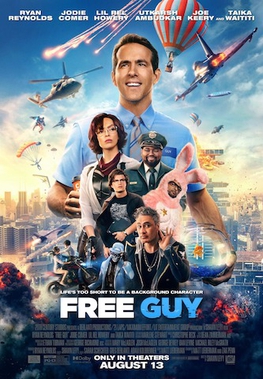
I recently saw Free Guy, a movie that slipped me back into that uncomfortable space.  I’m no gamer, so I’m sure I missed many of the references to memes and characters that are familiar to many.  Still, it was fun and profound at the same time.  It’s not giving too much away to say that Guy is a non-playing character in a shared game.  In other words, he’s just code.  Not conscious, not making any decisions.  Until he starts to.  He turns out to be a form of artificial intelligence.  Teaming up with a human player, he learns to appreciate virtual life and works to make Free City a better place to live.  When the credits rolled I found myself asking what I knew about reality.

Not a gamer, I’m pretty sure we’re not caught in that particular matrix.  I’m pretty sure my wife wouldn’t’ve put up with over thirty years of pretending to be married to me just for ratings.  Still, many times riding that bus into Manhattan I had the distinct feeling that none of it was really real.  I would tell myself that on the way to the office.  Not that I think movies are the whole truth, but they definitely seem to be part of it.  Guy learns to rack up points to level up.  He becomes a hero.  In this reality we can look but not see.  Becoming a hero is unlikely unless someone is actively watching you.  Many heroes on a small, human-sized scale exist.  They don’t get to wear sunglasses, but they can watch movies about those that do.  And if they’re not careful, they might find themselves getting in a philosophical quandary by doing so.


Virtually Religious

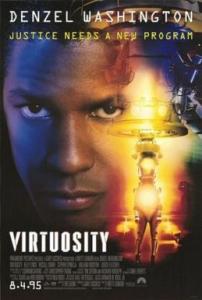
“Which god would that be? The one who created you? Or the one who created me?” So asks SID 6.7, the virtual villain of Virtuosity.  I missed this movie when it came out 24 years ago (as did many others, at least to judge by its online scores).  Although prescient for its time it was eclipsed four years later by The Matrix, still one of my favs after all these years.  I finally got around to seeing Virtuosity over the holidays—I tend to allow myself to stay up a little later (although I don’t sleep in any later) to watch some movies.  I found SID’s question intriguing.  In case you’re one of those who hasn’t seen the film, briefly it goes like this: in the future (where they still drive 1990’s model cars) virtual reality is advanced to the point of giving computer-generated avatars sentience.  A rogue hacker has figured out how to make virtual creatures physical and SID gets himself “outside the box.”  He’s a combination of serial killers programmed to train police in the virtual world.  Parker Barnes, one of said police, has to track him down.

The reason the opening quote is so interesting is that it’s an issue we wouldn’t expect a programmer to, well, program.  Computer-generated characters are aware that they’ve been created.  The one who creates is God.  Ancient peoples allowed for non-creator deities as well, but monotheism hangs considerable weight on that hook.  When evolution first came to be known, the threat religion felt was to God the creator.  Specifically to the recipe book called Genesis.  Theistic evolutionists allowed for divinely-driven evolution, but the creator still had to be behind it.  Can any conscious being avoid the question of its origins?  When we’re children we begin to ask our parents that awkward question of where we came from.  Who doesn’t want to know?

Virtuosity plays on a number of themes, including white supremacy and the dangers of AI.  We still have no clear idea of what consciousness is, but it’s pretty obvious that it doesn’t fit easily with a materialistic paradigm.  SID is aware that he’s been simulated.  Would AI therefore have to comprehend that it had been created?  Wouldn’t it wonder about its own origins?  If it’s anything like human intelligence it would soon design myths to explain its own evolution.  It would, if it’s anything like us, invent its own religions.  And that, no matter what programmers might intend, would be both somewhat embarrassing and utterly fascinating.


Keypad of Heaven

There are those who celebrate technology, and those who mourn it.  I fall somewhere in the middle.  One of the selling points for our house was keyless entry.  The great thing about it is you never have to worry about forgetting your keys.  The bad thing is that batteries don’t like cold weather.  The former owners of our house seem to have had it even less together than we do,  They had no instructions or emergency keys for these electronic locks.  So it would happen on a cold, blustery weekend morning we would find ourselves locked out of our most expensive possession.  Now, you have to understand that this “well-maintained” house—so claimed by the not-inexpensive inspector—has turned into a money pit.  The list of derelict pieces and appliances grows weekly and we haven’t even paid off the roof yet.  Emergency locksmiths, I now know, earn their keep.

As I stood on the porch in the gusting wind, waiting in a thin jacket (we were not out for a long trip) for someone I would pay handsomely to break into my house, I considered technology.  If you can afford to keep up with it, it must be great.  If, say, electronic keypads were solar, wired to panels on the roof so that the batteries never died, that would be fantastic.  Even a key would be an advance on a day like this.  So once our teeth stopped chattering and we added yet another creditor to our growing list, I thought how that very morning my computer told me it needed a systems upgrade.  “Didn’t you just have one?” I asked, almost out loud.  I know what it is to be a servant.  My thoughts wandered, as they frequently do, to The Matrix.  When the machines take over, their problem is battery power.  Since we scorched the sky, they began using us as wet cells.  

Later in the day, for cheap entertainment, we went to a local parade.  Among the many vehicles on display were old cars and tractors.  Tractors that even I might have a chance of understanding because they were merely open engines on a frame with seats and large wheels.  This was technology that fed people rather than preventing them from entering their houses.  I couldn’t help but notice that they started with keys.  There’s a reason that the key has always been a potent symbol.  Its simple technology leads to hidden wonders.  And on a cold morning those hidden wonders might well include your own house.

“Now, put these where you won’t lose them!”


Traveling Unplugged

Those who pay close attention, or who have nothing better to do in July, may have noticed that I missed a day posting on this blog on Saturday.  That hasn’t happened for a few years now.  I think maybe I ‘m growing up.  Or learning to resist.  Saturday was a travel day—the first I had to make from Pennsylvania, back to Newark in order to fly to Washington state and drive a few hours to the lake.  All in all, it turned out to be a long day in which I didn’t even notice that I was unplugged.  I had a book that I read along the way.  Although it’s against my religion—(call it Moby)—(but I jest)—I even fell into a cat nap or two on the plane.  I didn’t have a window seat and strangers don’t like you staring in their direction for five hours at a time.

Upon awaking, eyes refusing at first to work in tandem, in the chill mountain air, I realized I’d spent the entire day off the internet.  We had to pull out at 2:30 a.m. to meet TSA requirements, and you have to pay for the privilege of connecting to the web in airports and on board jets.  I’ve become so accustomed to being wired that I feel I have to explain why I wasn’t able to post a few thoughts when circumstances were so adverse to getting tangled in the world-wide web.  Yes, it still has a few gaps where one might buzz through without being caught.

It was remarkably freeing to be unplugged.  I believe Morpheus may be correct that they want us to believe reality is otherwise.  I feel guilty for not checking email manically.  What if someone requires something right away?  Some sage response to a communique that just can’t wait until I’m back from vacation?  Some reason that I must ask to be inserted back into the matrix if just for a few moments, to hit the reply button?  We’ve perhaps been exposed to what The Incredibles 2 calls the Screenslaver, the force that draws our gaze from even the beauty of a mountain lake to the device in our hand, whining for attention.  We have wifi here, of course, for the fantasy of living raw is sustainable for only a few hours at a time.  Reality, as you know if you’re reading this, is electronic.  But until I have to reinsert myself at the cost of my soul, I think I’m going to take a dip in the lake.


Illusions Incorporated

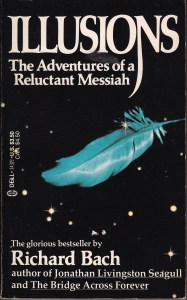
illusionsFiction and fact aren’t so different. Long before the Wachowski Brothers came up with The Matrix, Richard Bach wrote Illusions: The Adventures of a Reluctant Messiah. I was in seminary when I read it and it seemed, at that time, to change my life. Fiction, or fact, has a nasty habit of getting into the way of things and over the course of decades I forgot. The Matrix reminded me—reminded me multiple times—but Illusions sat on the shelf, gathering dust. I was reminded of this book that refuses to be categorized when playing a family game. Like many games these days it’s a set of pre-printed cards and what makes the fun is the context in which you put the words. In this particular game you have to find the suggested idea in the book you have at hand.

I have to confess that this is just a touch artificial at our house. We don’t have much in the way of things, but we have books. Lots and lots of books. When we play this game, we think ahead of time what books we might bring to the table. You never know what the cards will ask, so books with diverse ideas are a good choice. I saw Illusions on the shelf. As I thumbed through, it was as if the decades were wearing thin. I knew I had to read it again.

Stubbornly refusing to classify itself as fact or fiction, the narrative of what it’s like to meet a messiah is inspirational. I can’t claim to have come to the conclusion on my own—I’ve read Illusions before, and I have seen The Matrix many times—but I recollect the realization coming to me on the streets of Manhattan. This is not real. Standing in the shadow of the tallest buildings in this country, that’s not a comfortable realization. Nobody said reality was comfortable. We easily let ourselves accept what we can’t do and what’s impossible. It’s far more rare to consider what is truly possible. What we can do. These ideas will be a hopeful ebenezer over the coming months. We choose to elect reality. Despite what the loud and angry say, the mind is the arbiter of truth. I read the book before I knew much about the world. If I’d had the good sense to believe it, it might not have taken me decades before pulling it off the shelf to remind myself of what I already knew.


Busyness as Usual

“Time,” Morpheus said, “is always against us.” Such is life in the Matrix. Wake before daylight. Climb on a bus. Stare at a screen for a solid eight hours. Climb on a bus. Sleep before dark. Repeat. It’s a schedule only a machine could appreciate. Since I was a seminary student, I’ve considered time an ethical issue. Take waiting in line, for example. This is difficult to convert to a good use of resources. In circumstances where the queue is anticipated, such as waiting for a bus, one might bring along a book. The unexpected line, however, is wasted time. Paying Agent Smith his due. This all comes to mind because of a recent news blurb about Søren Kierkegaard. The story in Quartz, cites the Kierkegaard quote: “Of all ridiculous things the most ridiculous seems to me to be busy—to be a man who is brisk about his food and his work… What, I wonder, do these busy folks get done?”

Kierkegaard

I’m a lapsed Kierkegaard reader. The sad fact is that philosophy takes time. You can’t sit down and whiz through it. You need to stop frequently and ponder. This was the life of the academic that I once knew. Before the Hindenburg. Before capitalism became my raison d’être. You see, you can never give too much time to work. There’s always email. The internet has wired us to that which once wired money. “We are the Borg.” There’s no time for a Danish and a concluding unscientific postscript any more. We willingly comply because the rent is due. What, o Søren am I getting done?

We rush around, it seems to me, because when labor-saving devices were invented they only led to more labor. Our European colleagues look with wonder at our febrile, frenetic pace. They wonder where it has gotten us. Has the final trump indeed sounded? Has the stock market become divine? Has money become the only Ding an sich? Kierkegaard wears a thick layer of dust on my shelf. Once I spent an entire day trying to digest a single paragraph of his writing. Now I brush him off like crumbs from my danish and I don’t have time to finish my coffee since the till is calling. I will get back to you, Søren, truly I will. It’s just that I have this never-ending task to accomplish first. After that we’ll sit down and have a leisurely talk.


Hello, I’m Not In

I recently received two “out of office” replies to my own “out of office” message. Being a fan of futility in all forms, this struck me as a great paradigm for the modern age. Email has made vacation superfluous, of course. I was actually out of town moving my daughter back to college, so email was not high on my list of priorities. When I’ve tried to leave work without putting on a message explaining that I’m not there (I tend to respond to emails quickly for an editor, so I’m told) I’ve been politely informed that it is rude not to let people know you’re away. Or computers. My non-message prompted a non-messages from other vacationers’ email accounts, and when I returned, I had to read them as well as the original email that had received my impersonal reply. Both had sent their replies, despite their out of office messages. This is indeed a brave new world.

It is a world where human interaction is optional, at best. Our industry grinds away making devices and services that people will buy with electronic money sent over a network that no one really controls. And we think nothing of it. Business has blinded us to how meaningless humanity has become. Business runs for business’s sake. Even so, we’re asked to check our email when we’re on vacation, in case something important comes up. I used to think vacation was important. It is the sop we’re thrown for working jobs that lack the visceral appeal of growing our own food and relying upon ourselves. Thoreau on the web.

Benjamin_D._Maxham_-_Henry_David_Thoreau_-_Restored

Science fiction is the great predictor of where we might go. Most of it is completely fiction, or course, but some manages to catch glimpses of the truth. Skynet, or even the Matrix or Hal, have sent messages to us. Machines that think are devices we don’t understand. We haven’t even defined consciousness to a level that satisfies anyone. We know it because we feel it. Oh, I’m not really an alarmist about all that. I do wonder, however, where we are headed when technology races ahead while the humanities are disparaged. All those who emulate Spock seem to have forgotten that his appeal is that he’s half human. We build our aliens to specification. And they now pass polite greetings when they speed past each other on the cyber-highway with no laws.


Night Terrors

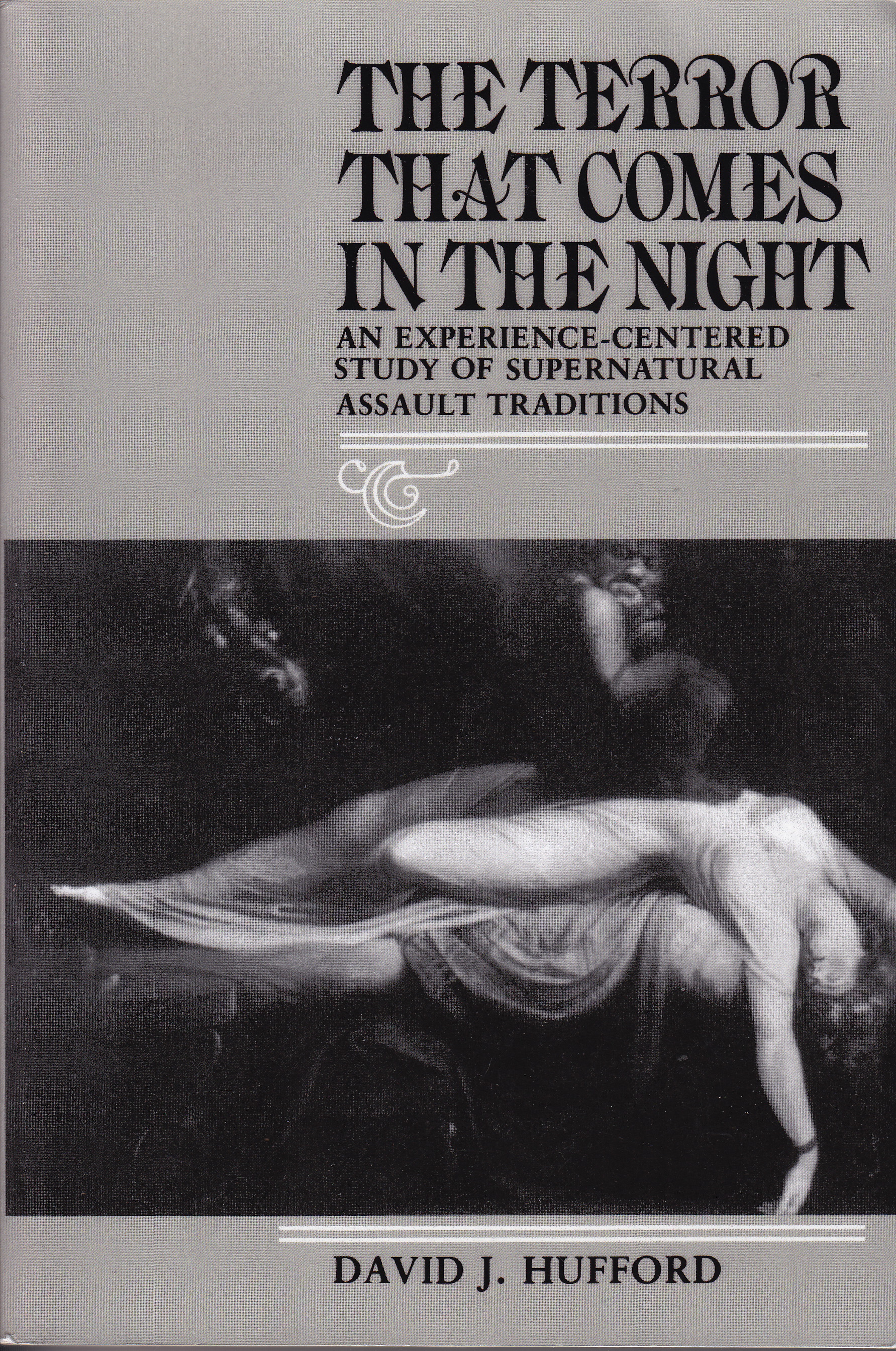
TerrorInTheNightNightmares are the stuff dreams are made of. Or maybe I’ve got that the wrong way around. Having grown up subject to frequent nightmares, I still occasionally have them. I suppose it is easy enough to assume someone who reads about monsters and watches horror films should not find this unexpected, however, I’m not sure they’re related. My nightmares visit issues that horror films avoid, and most of my monster reading is, well, academic. Surely the scientific study of nightmares has advanced since David J. Hufford’s The Terror That Comes in the Night: An Experience-Centered Study of Supernatural Assault Traditions, but it remains a very important book. As someone familiar with the phenomenon, I found Hufford’s study somewhat therapeutic, and it certainly does raise some interesting questions.

Apart from the unfortunately, inherently sexist, folk-title “the old hag,” Hufford is addressing a universal experience of people of all ages. Using his original setting in remote Newfoundland where his work began, Hufford collected tales of what might technically be called sleep paralysis with a specific hypnogogic hallucination of being attacked. A designation, he acknowledges, that is quite awkward for repeated use. Back in the early 1980’s, when the book was published, these accounts of nighttime attacks—a person waking up, or not having yet fallen asleep, sensing a presence in the room, finding her- or himself unable to move, and sometimes seeing or hearing an entity and feeling it on his or her chest—were rarely discussed. Especially in scientific literature. They seem a kind of embarrassing medievalism related to the ancient concepts of incubi and succubi, and even vampires. Having “the old hag” (a moniker relating to witches) is what the experience is known as in Newfoundland. Hufford, taking these accounts seriously, investigated what the sufferers had experienced. Unwilling to judge whether the event “actually happened,” Hufford’s scientific objectivity is truly admirable. Since the time of his book, the concept has become widely known and the argument is often made that having heard of sleep paralysis episodes feeds those with hypnogogic hallucinations the idea of a supernatural oppressor. In other words, now that we know about it, we don’t have to take it seriously.

Hufford is one of a small number of academics that is willing to engage with the supernatural on its own terms. Religion scholars do, of course, but we are generally dismissed from the starting block anyway. Most scientists disregard the possibility of anything beyond deluded brains and say nightmares are normal. Just deal with it. Those who’ve experienced the nighttime attack know that it feels very different than a garden variety nightmare. You can tell when you’re awake. Of course, we’re of the generation who’ve seen The Matrix and Inception, and we know that, at least in popular thought, reality has become negotiable. Nobody is much surprised any more by the idea of such an attack in the night. Waking nightmares have become as common as the headlines. If only more scholars would take human experience as more than just “old wives tales” we might all be surprised at how just rolling over can change everything for the better.


Quantum Uncertainty

Physics has moved beyond the point of comprehension for the average citizen, if I might be permitted to class myself as that. I got the concept of the atom, although I always wondered about the spaces in-between. No god-of-the-gaps there, but it didn’t fit with experience that everything was full of holes. An article my wife sent me now has me wondering if I’m a hologram. Physicists began to lose me with quarks—I can understand atoms being made of something, but what of ups and downs and leptons every way to Sunday? Then string theory. Then those particles that can be two places at once, until you look. And now I’m being told that The Matrix may be more fact than fiction and quantum uncertainty rules the day. Indeed. Physics tells us what we’re really made of. Religion used to tell us what it all means. That precarious balance seems to have tipped and religion has no other role than to motivate violence and science will save us. Help me, Neo!

I can’t even figure out my taxes any more, let alone what the universe is made of. How we could all be jittery two-dimensional particles is unclear to me. Well, the jittery part I get. I was never really satisfied being limited to three dimensions of motion. Is it ever clear which way is really forward? Height and depth seem terribly geocentric, and even a circle could be divided into more than 360 degrees, a legacy of our Mesopotamian forebears. Spheres—my primitive view of atoms—only touch at the edges. I think there must be something more. Then comes the math. The truth is in the numbers, it seems. Glad I have a calculator.

Although I don’t have the weak nuclear force at my disposal, I have tried to build with marbles many times. You can’t build upward without the bottom row rolling away. Perhaps in our world spheres just don’t balance that way. They don’t hold together. Pixels, however, have edges. They seem to fit together more fully, but leave the universe full of jagged edges. That fits much better with my experience, I guess. Shards of reality lie all around me. Religion used to be the way of putting the pieces together, but, I’m told, that’s all a myth. Instead we have a universe that the average person is incapable of understanding, and that seems to be held together by forces that are fully explainable only by math. Once upon a time, Hell was a mythical, fiery place underfoot. Now it is a universe of formulas and equations that are held together only by quantum uncertainty.

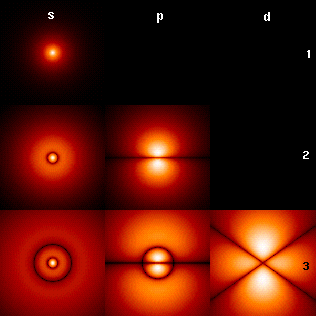
"HAtomOrbitals". Licensed under Creative Commons Attribution-Share Alike 3.0 via Wikimedia Commons - http://commons.wikimedia.org/wiki/File:HAtomOrbitals.png#mediaviewer/File:HAtomOrbitals.png

“HAtomOrbitals”. Licensed under Creative Commons Attribution-Share Alike 3.0 via Wikimedia Commons – http://commons.wikimedia.org/wiki/File:HAtomOrbitals.png#mediaviewer/File:HAtomOrbitals.png


Jonahado

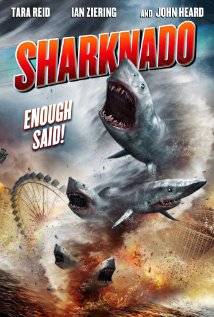
SharknadoSome movies are so bad that they become classics. Some are just plain bad. The jury in my head is still out on Sharknado. The story, obviously tongue-in-cheek, is so far-fetched as to be pretentious, and anyone who knows something about either sharks or tornadoes, or both, will likely find credibility waning from the first scene. For those sensible among my readers, who’ve not seen the movie, the title gives it all away. A global-warming-induced hurricane hurries toward Santa Monica with its forever young sun-worshippers. The hurricane floods the California coast, bringing sharks to the city streets. As our protagonists drive around somewhat pointlessly, the sharks attack their car, eventually eating everyone who’s not family. At one point the family tries to buy rations at a liquor store, only to have the news announce that this is the apocalypse. The store owner scowls that it’s the government, not God, that’s bringing this upon them. Then the waterspouts appear, morphing into tornadoes carrying sharks, still hungrily chomping at everything as they fly through the air.

Ironically a biblical theme comes about with the swallowing of Nova. As she falls from a helicopter (don’t ask), a great white shark snaps her up in mid-air, and since she’s about the only character you can care about, the movie seems to have reached its nadir. As the tornadoes dissipate and the sharks coming raining down, the eponymously named Fin is swallowed whole by a huge great white, while still holding his chainsaw. We already know that this latter-day Jonah will make his way back out, and we are supposed to be surprised that this is the very same shark that holds the reborn Nova, who admits her real name is Jenny Lynn. Like Neo in The Matrix, she is the convert to a new faith, this time in the family of Fin, whose only fault, it seems, is that he cares too much for others.

While a made-for-television B movie (although C or D might be more appropriate), Sharknado demonstrates the popular conception of the apocalypse. Not that it will involve flying sharks and destructive wind-storms, but that the end of the world is somehow inevitable. We have convinced ourselves that its a matter of when, not if, the world will meet its demise. Global warming, clearly our fault, is blamed by the movie (as is the government), but the story is that the flimsy culture we’ve constructed is subject to utter ruin by a hurricane and maritime predators. Or I could be reading far too much into this. Religious tropes may be picked and chosen at will. And when things really go wrong, like accidentally switching on Sharknado, we have a ready arsenal of religious ideas at hand to blame. And the apocalypse may be the least of our worries.


Job Well Done

By now the world is well aware that Steve Jobs has died. As an avowed Mac user, an encomium for a man I never knew seems somehow appropriate. In a world where most religious leaders are known for their lack of vision and staunch conservatism (“Where there is no vision, the people parish,” to paraphrase Proverbs 29), Steve Jobs gained high priest status among technocrats for making the computer accessible. Even if you are reading this with a PC—thank your lucky Mac-OS-emulating Windows that you didn’t have to begin with a god-forsaken C-prompt—Jobs’ impact is part of your daily life. Although Mac has always been second fiddle in the computer market, Apple has always taken the lead in the gear: your iPods, iPhones, iPads, perhaps even the letter ”i” itself. We have entered the world of the Matrix, so much so that earlier this year it was reported that Apple fans experience a high like a religious encounter when they behold Apple’s mighty hand.

Nevertheless, a deep uneasiness overtakes me when I consider how helpless I am without my electronic accoutrements. When my laptop crashed last month, I was completely disoriented for about a week. I didn’t know what the weather was supposed to be like, who had tried to email me, and just how few people had decided to read this blog. I had become immaculated, and I was embarrassed. I miss the days of wandering carefree through the forest, concerned only about bears, cougars, and getting lost. Not having to wonder if there is an email I had left unanswered or if some new gadget had been invented, or if I had forgotten the birthday of someone I barely know on Facebook. No, electronic reality has supplanted actual reality. On the bus I’m nearly the only one who passes 90 minutes with a book. The glow of LCD screens peer like huge eyes in the pre-dawn of a New Jersey highway.

If it hadn’t been for Apple, I would not have joined the computer race at all. Back in college, several of my friends and I vowed we would not give in to the computer craze. I made it through my Master’s degree using an honest-to-God typewriter with ribbons, white-out and retypes. Today I can’t image how I ever survived all that. My wife first encouraged me to use a computer. She took me to the computer lab at the University of Michigan one Saturday and sat me in front of an Apple. “See, it’s easy,” she said. She was my Eve, offering me the bite of an Apple I’d never be able to put down.

We dream of building legacies, something to show that we’ve passed through this weary wilderness. Steve Jobs did not live to be an old man, but he has left a legacy. This blog, and countless others like it, would be inconceivable, were it not for his genius.

The apple tree keeps giving.


Always Against Us

In one of the coolest homework assignments ever, my daughter was supposed to watch The Matrix. Her digital electronics class makes constant reference to the movie, so her teacher decided that in order to “get it,” those who hadn’t seen the movie should watch it. I know the film has many nay-sayers and some of the acting may not attain the highest standards, but it remains among my favorite movies. At Nashotah House, early in the dawning millennium, many students watched the film religiously. One student had it on his laptop and a small knot of his classmates would gather around just about every morning to watch before my class began. I was a bit put off by the claims that it was a “New Testament allegory,” but I have come to realize that without resurrection, the film industry in this country would be dead. American audiences (especially) crave the possibility of coming back. And even though I’m as much a sucker for a good love story as the next guy, that resurrection scene isn’t the highlight of the movie. Not by a long shot.

The Matrix has always been one of my favorites because of the basic premise: what if the world is not real? I’ve been plagued by that question for about as long as I can remember. When, in my first philosophy class, I learned about naïve realism, my worldview shifted. Who’s to say what’s real? And if someone decides to shoot me to shut me up, the lights might go out, but will there be anything left behind? Not that I believe I’m a source of energy for evil robot overlords (I get too easily chilled to believe that), but I often think about the tenuousness of it all. Our reality changes when we fall asleep, and each day we assume that a continuity is the same as the essence of our existence. There’s no way to check it, however, and I’m not entirely convinced. That’s why I like The Matrix so much. Someone else understands my deep fear that none of this is real.

The moment when Neo refuses to leave, but turns to fight Agent Smith, Trinity asks Morpheus what is happening. Morpheus responds, “He’s beginning to believe!” That line always gets me. The idea that something out there actually tips the balance on the side of good creates a longing so deep that it hurts. When I wake up the next morning, however, I see the headlines bring more suffering, more status quo ante-Christ. The last thing I want to see on the front page is Chris Christie’s face first thing in the morning. It can be a very cruel world. In one of Morgan Freeman’s Through the Wormhole episodes, a scientist suggests that a Matrix-like world may match our reality. God, the scientist suggests, may be a programmer and has coded us to live in a virtual world. The tapping of my fingers is just an algorithm. I’m not yet beginning to believe that. But if I ever do I’ll be forced to conclude that our programming deity has either a wicked sense of humor, or is just plain wicked.


Who Made Whom, Now?

John Lennon has great currency, in part, because he is a martyr. Music has moved on since the ‘60s and ‘70s, but aging Boomers still like to quote him, especially his song “Imagine.” In an article written for the Los Angeles Times, reprinted in the local Sunday newspaper, J. Anderson Thomson and Clare Aukofer cite “Imagine” as the statement of what a world “that makes sense” looks like. I applaud their idealism. Citing psychological and sociological work that has been done over the past decade in the attempt to unravel “homo religiosus” they entitle their article “God didn’t make man: man made gods.” Much of the evidence they cite has been discussed elsewhere on this blog, but the overarching issue—whether this explains human religious behavior or not—remains open. In other words, if evolution provided us with religion, it must have some survival benefit and humans are not easily going to dismiss it.

Admittedly, the evidence for human conceptions of God arising from the need for close connections in community is pretty convincing. Nevertheless, the issue of whether there is a God or not will never be answered by empirical observation. As I tell my students, belief is not based on empirical observation. We do not yet know why people believe, and even if we find the right node, neuron cluster, or sensory stimuli, there will always be those who insist that the hardware is sparked into action by the unseen Other outside the system. It is the classic chicken or egg debate, taking place in that henhouse in the sky. The problem is that God is more like the rooster in that scenario.

The human brain is an endless source of fascination. Science has given us a sense of wonder about our own on-board computer, but it has not managed to capture the sine qua non of the totality of the experience of owning one. Scientists also read, go to shows, make love and eat fine meals for the enjoyment of it all. But as Cipher says in The Matrix, “I know this steak doesn’t exist. I know that when I put it in my mouth, the matrix is telling my brain that it is juicy and delicious. After nine years, you know what I realize? Ignorance is bliss.” Our perception of the world as a stable, unmoving center of existence is an illusion. Science has revealed an even stranger reality involving equations that used to haunt my nightmares. Should God ultimately be reduced to formulae, true believers will find another entity to name as the divine. “Imagine… no religion too”? As long as humans are humans such a world remains pure imagination.

Imagine


The Reality of Movies

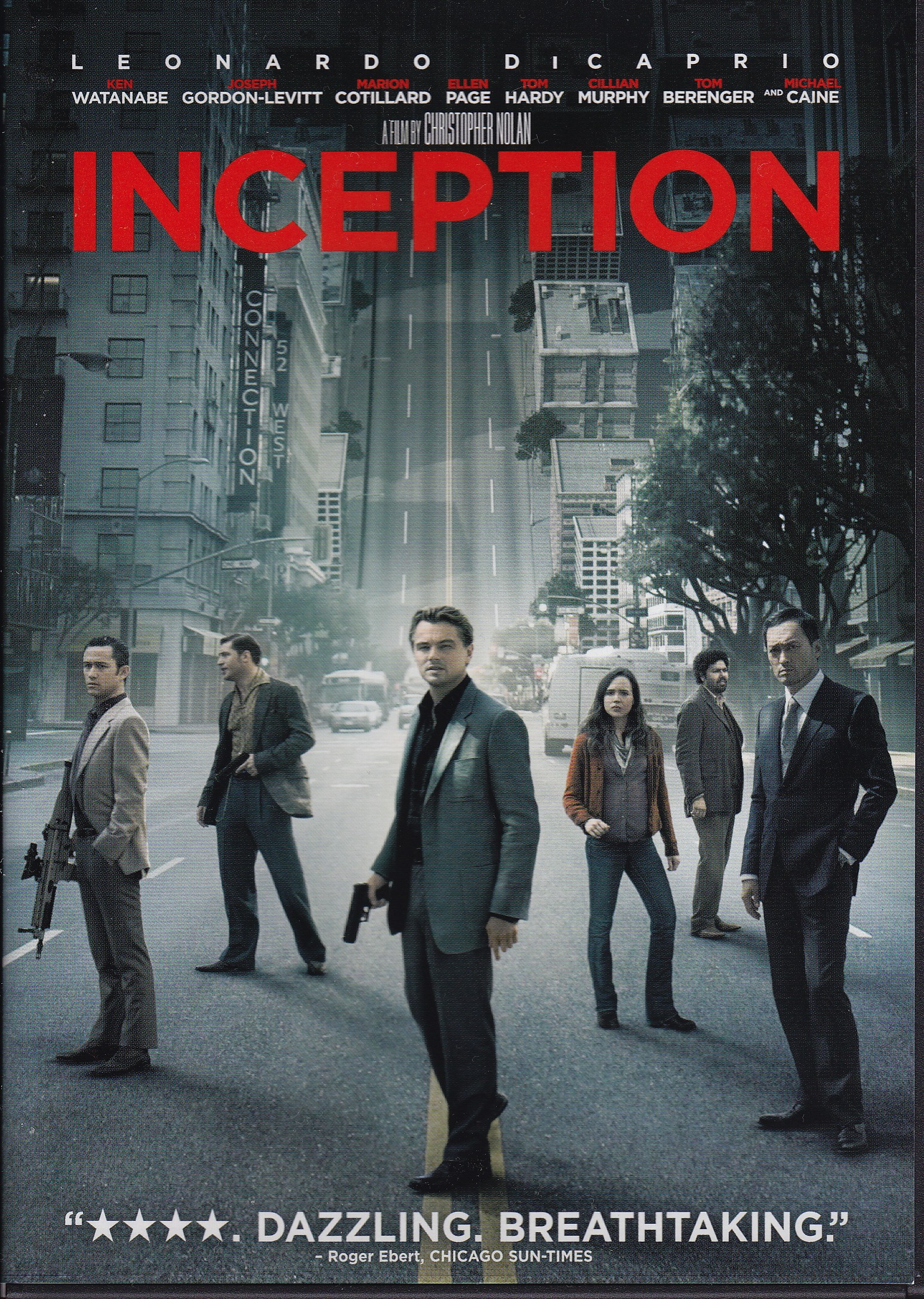
Inception was released on DVD this week, and having a weakness for struggling with reality, I knew I had to see it again. Now, people with a far sturdier grip on life than myself have been blogging about the movie since the summer, writing posts both profound and critical. I wrote an earlier post on the movie, toying with its retelling of the Theseus myth. This time, I am wrestling with the wonderful burden of having a subconscious mind. The crux of the movie is when Cobb has to decide which world is real: Mal’s or his own. The movie, of course, refuses to divulge the answer.

With a finesse that I had previously experienced with the original Matrix movie, Inception ups the ante on what we consider reality. “Reality” is a problematic concept, a bi-product, we are told, of consciousness itself. Reality is generally viewed in exclusive terms, and most of us spend our days in what I learned to denominate “naïve realism,” the concept that what we perceive is pure, unadulterated reality. Perhaps not as Inception or The Matrix, or even eXistenZ would have us believe, scientists today tend to agree that the world is not as it seems. The quantum world has opened up levels of reality undreamt of even by Einstein whose God did not play dice. This is perhaps one of the greatest challenges to traditional religions.

Although many religions gladly point out that there is a mythical reality behind what we experience every day, there is no hard evidence to back up these assertions. This is not the same as declaring they don’t tap into that reality, it is just that we have no final arbiter as to what that reality is. Having been in the business of religion all my life, I am absolutely certain that it isn’t what any fundamentalist group declares it is. They make claims about reality that would leave Jesus scratching his halo-encircled head. Is it Cobb’s, Neo’s, or Allegra’s reality or is it Hawking’s, Witten’s, or Greene’s? I simply don’t know. I just put the disc in an press the play button.