Body Count

While I’m privileged and proud to have been part of one of millions protesting over the weekend with our nation’s youth, I can’t help but be a little reflective. Why does our world continue to shortchange women? You see, I had the honor to be a man invited to march in Washington, DC on January 21, 2017. I was there the day before, when the devil in the red hat assumed control. Helicopters were buzzing all over the place, flying low and dramatically over the scene. There were some small riots, to be sure, and I saw police action up close. The day of the march itself, however, all was peaceful. Including the skies. The helicopters were home, their blades drooping listlessly. The women marched. Few paid attention.

It’s hard to tell how many people there are when you’re in a crowd on the streets. There’s no stadium seat numbers to guide you. The National Park Service, which has metrics for counting visitors, probably knows best. As we thronged toward the capitol building we asked an NPS officer if they had any estimates. She nodded. “We’re estimating it’s 1.3 million.” When the headlines squeaked the next day all they said was “hundreds of thousands.” The White House was saying maybe 500,000. Of course, this was now the era of fake news. Nobody worth their testicles could say that the Women’s March drew more than a million to the capital, but it did. Because it was led by women, we have to scale the numbers down. It’s a trick employers use all the time.

This past weekend’s rallies and marches are being noticed by a reluctant press. Official estimates in DC are at a million. The Washington Post noticed that Metro ridership was “far behind” the Women’s March. Women are finding their voices. They were cheated out of the first female presidency by an electoral college that forever will bear the badge of shame for electing a candidate who lost by three million popular votes. People don’t like to be cheated. Women, who throughout history have been the victims of unfair policies upholding male privilege, are half of the human race. They number in the billions. Those who steadfastly hold to Trump—who’ve abandoned their tribe—have the right to be heard as well. They, however, must listen to their sisters. This is not about fiscal conservancy. This is not about unborn babies. This is about the most basic human right of all. We march because this is about the numbers. Women are equal to men. And we will march until the numbers are counted as they actually stand.



Hypocrisy, Defined

Things look pretty Stormy in DC. I suspect my Republican background is showing when I say I don’t condemn sex workers. If they’re not exploited and they like what they do, hey, a job’s a job. The evidence, of course is that Trump had an affair with Stormy Daniels when his wife was recovering from the birth of their son. And hush money was paid right before the election. This is public knowledge. What I find interesting are the responses that Republic congressmen have been giving journalists. In a recent story in the Washington Post, various congressional leaders of the GOP were asked if Obama had been caught in such a situation would they have pursued impeachment. “Of course,” they answered. When asked why this didn’t apply to Trump, they simply shrugged. There’s a word for that.

Hypocrisy may seem like an old-fashioned notion these days. Indeed, when I was growing up I frequently heard it from Fundamentalist pulpits. It was considered, along with lying, to be about one of the worst sins possible. Now Fundamentalists are lined up behind Trump (who’s lined up behind Stormy apparently) and saying all of this is just fine. The Lord’s will is being done. Moderate Evangelicals are scrambling to find a new label for themselves, for their vaunted title has been taken by a party that will condone anything as long as rich white men benefit. Cheat on your wife while she recovering from giving birth? That’s the new Fundamentalist way! Congressmen, it seems, don’t want people to look too closely into such things. My, there’ve been a spate of recent retirements lately, haven’t there?

I grew up and grew away from Fundamentalism. Although it seems counterintuitive, this sharped my moral sense considerably. Poll after poll shows that actual morality, according to Fundie standards, is more often lived by liberals than conservatives. Divorce rates are lower, for example, and we tend not to own guns. So, even when the skies over the Potomac are growing stormy, the elected officials of God’s Own Party smirk and say, “Doesn’t the Bible command you ‘Love thy neighbor’?” They take it literally, of course. And it’s just fine that the leader of the free world exploits women. Many of these same people gathered to condemn Bill Clinton for loving his neighbor in the blue dress. Hypocrisy was a bad thing back then. “I did not have sex with that woman,” became a mark of national shame. Now presidents brag of grabbing women by their private parts and the Republican Party claps its hands and says, “Hypocrisy? Never heard of it.” Does it look like another storm to you?


Emulating Icarus

According to a story by Sarah Kaplan in the Washington Post, NASA is preparing to send a probe closer to the sun than any human-made object has been before. If you’re like me, this might conjure those childhood fascinations of being blasted by impossible heat—maybe in a science fiction story of a colony on Venus, or a crew hurtling out of control in a capsule being pulled inexorably toward the inferno of the heavens—on a hot summer’s day. The Post story makes an inevitable reference to Icarus, the character from Greek mythology who flew too close to the sun. The tale has long been a parable for human overreach, but this time it seems that scientists are taking it literally. The technology used to shield the craft from Old Sol is incredibly impenetrable, and it may have applications as we try to figure out how to escape this planet we seem bent on ruining completely.

Earth flies around its personal star in what’s become known as the Goldilocks Zone—that place where it’s neither too hot nor too cold for life. But don’t wander outside in the northern hemisphere in February without a coat. The weather down here can be fatal. We live on that teeter-totter of the extremes in which our frail bodies can survive. Temperatures range from -88 degrees at Oymyakon, Siberia (at this point whether Celsius or Fahrenheit hardly matters, but for the record, it’s -126 F) to 136 in the Libyan Desert. In this incredible range of 262 degrees people can be found at all shades between. Stepping out my front door one January in Nashotah, Wisconsin the thermometer read -42. That was without wind chill. It was the kind of cold you could feel immediately through all the layers. Humans can’t survive it without artificial means of heat. And yet we have a star overhead where temperatures reach 27 million degrees in its core. Out beyond Pluto our universe reaches near absolute zero, at -459 and change, on the Fahrenheit scale.

It’s a universe of extremes. That friendly sun in the sky was recognized as a deity from earliest times. Even the Bible retains hints of clandestine solar worship. Icarus, however, lost his fear of extremism. There was nothing too outrageous to try. As long as wings of wax can hold you aloft, why not attempt to reach all those zeroes? Millions sound great until they’re exceeded by billions. At that point even the sun isn’t hot enough for some.


Milkweed and Honey

I’ve never thought of bugs as an ethical concern. Well, not directly anyway. I had some truly frightening encounters with insects and arachnids as a child, so I tended to avoid bugs when I could. At times, I hesitate to admit, I took advantage of my size and smooched them. I did, however, mature out of that. Many years ago I stopped killing bugs that got inside, choosing instead to favor capture and release. I’d trap them in one of a variety of empty peanut-butter jars we kept around the house expressly for that purpose. The imprisoned intruder is then escorted outside and released. It seemed the only fair way to handle the situation—I don’t believe in exploiting size, and hating things with too many legs is prejudicial. Then I heard that insects are dying out.

Public domain, from Wikimedia Commons

Instead of bringing glee, this instilled a kind of panic. According to a story in the Washington Post, scientists have noted a 75% drop in bug biomass over the past several years. Stop and think about that. Insects contribute so much to our lives that we barely pay them any mind. Everything from pollination to breaking down decomposing organic matter, bugs do it. We need our insects. As with most things these days, it seems that we humans are the likely culprits. We destroy habitat, we spread pesticides everywhere, we try to take all kinds of land and make it in our own image. And we’ve sacrificed our insects along the way. As the article states—driving around country lanes on a summer night doesn’t bring up the windshield splatter that it used to. I stopped to think about that. It seems to be true.

The tiny members of the animal kingdom do a tremendous amount of work. I know they’re not doing it for us, but the things they do we don’t have to—and oftentimes can’t—do. All fruits and vegetables are pollinated by insects. Honey has been the main place where some of this shortage has been felt most directly. Bees have been disappearing. So have monarch butterflies. The fact is, we can’t live in a world without bugs. This does make it an ethical issue. If we’re going to claim dominion over all things we have no right to overlook the smallest creatures. Sure, they can, well, bug you. They fly in your face or bite you while you’re sleeping. They’re only doing what they evolved to do. I don’t mean to bug you about it, but we need to look after the minuscule and vulnerable among us.


Voting Belief

No one knows the origins of religion. Before the advent of writing we can only guess, based on artifacts. Even in the era of scriveners, nobody jotted down the origin of belief until modern times, long, long after it began. Once writings about religious practice become reasonably clear, we find temples in the service of palaces, and vice-versa. Monarchs needed the validation of deities and priests required the support of the crown. Together they brought the two swords together and managed to keep the unruly masses in check. This isn’t cynical, not necessarily, since it reflects, the best we can reconstruct, how western organized religions began. Power was always part of the picture.

A recent Washington Post story, “The stark racial and religious divide between Democrats and Republicans, in one chart,” by Christopher Ingraham, shows the diametrically opposed pie-charts of self-identified white Christians (Republicans) versus non-white or non-Christian (Democrats) Americans. Such survey results tell us much about ourselves. We vote with our faith (or lack thereof) and not with our rationality. This has long been the piece of the political puzzle that Democrats have failed to comprehend. Not to take away from Barack Obama’s charisma, but people were afraid of Mormon Mitt Romney in 2012. Although conservative, white, and evangelical, Mormons have long been questioned as to their Christian identity by other evangelicals. It would seem, in the light of present circumstances, that understanding the “white Christian” mindset might be the only way out of the morass.

Typically self-defeating, academic institutions have shown little interest in understanding religion among hoi polloi. Long ago they bought into what Peter Berger admitted was his biggest blunder, the idea that religion was dying out. By the time he made that admission, academics had ceased to pay much attention to religion. It has, of course, come back as the ghost that haunts us. Or is it a zombie, once dead and now back to life? The fact is religion was never dying. It is as much of being a human as is driving a car or owning a cell phone. When times are uncertain, we turn to what is perceived as unchanging—religion. In truth, religion is constantly evolving to fit outlooks influenced by science, technology, and social progress. Worldviews change. Our culture is becoming more diverse. Republicans have a natural voting bloc that identifies itself by race and religion. Information about the former is readily available. You’ll need to look a bit harder to find quality information about the latter, no matter how important it may be.


Implied of Course

The American terrorist attack in Charlottesville over the weekend should have us all frightened. Despite declarations of “it couldn’t happen here,” fascism is an adaptive disease that finds its way to new hosts quite readily. The atmosphere coming out of Washington only promotes contagion. Trump’s response—bad behavior all around, no one party to blame—left the supreme white commander open to criticism. The appropriately named “White” House spokespersons responded with an implied “Of course that includes white supremacists,” according to the Washington Post report. That’s an awful lot of weight for an adverb to bear. The past six months have given many of us reason to doubt it’s true at all. “Of course” 45 loves all Americans. Or at least their cash.

Of course, I could be making a lot out of an implied deflection. A national leader should not hesitate to point the blame squarely at any supremacist group. Listen closely: no group is superior to another. Anyone’s background, examined closely enough, is likely to turn up a character or two who would be suspect. Trump’s election gave a new boldness to fascist groups—this is the way America’s going, isn’t it? Republican leaders, full of squees and shivers, refuse to say anything negative about a man whose thumbs can’t even reach the humility emoji. Hate crimes are wrong. They used to be illegal. What has happened to leadership? It’s more than just the CFO, wait, I mean Commander in Chief, who’s implicated here. It’s an entire political party that won’t stand up against injustice. What ever happened to “truth, justice, and the American way,” Clark? There’s never a phone booth nearby when you need one.

Back when I worked at Nashotah House, we had a conflicted environment. One of my colleagues told me something that has stayed with me ever since: “silence implies consent.” If you don’t condemn evil, you are complicit with it. We all need to stand up and say racism isn’t just an opinion—it is evil. Human rights are more than just civil rights. All people have the right to be treated fairly. Someone who hates others enough to climb into a car, start the ignition, and accelerate toward a group of pedestrians is guilty of premeditation. A president who won’t say as much is tacitly saying it might just be okay. Of course, it might just be that he’s too self-absorbed to get the thumbs going on the words we’ll never read: “I’m sorry.” Of course I’d be glad to be proven wrong.


Water Bears

Since we should all be busy planning on alternatives to planet earth, my mind has turned to tardigrades. Known as “water bears” these very simple animals are amazingly complex. Don’t go looking for them in your drinking water, however. They’re microscopic. So why am I thinking about tardigrades at a time like this? Because they’re one of the few organisms that scientists believe could actually survive the destruction of the planet. Who knows? They might even be able to survive in Washington, DC. Maybe that’s why they’re in The Washington Post.

You have to look closely to see one.

Able to cling to life at the cusp of absolute zero, in conditions with no oxygen, and at doses of radiation that would leave the human race—among most other species—fried, these micro-organisms are truly remarkable. No wonder scientists are playing with thought-experiments as to how to wipe them out. Hey, scientists are only human after all. Don’t worry—nobody’s really trying to kill these little guys off. The question behind Ben Guarino’s story seems to be what makes these tiny creatures so amazingly resilient. It raises an issue that I often ponder. The will to survive. Evolution is, according to standard theory, without purpose. Natural selection works in a “logical” way: the most successful organism survives long enough to breed and its traits become standard options in the next generation. Nobody needs to want anything (except to mate) and chance takes care of the rest. But that doesn’t explain the will to survive. The “eye of the tiger,” if you will. I’m sure this wasn’t what the Washington Post was intending to trigger, but doesn’t it seem strange that even “non-conscious” micro-organisms “want” to survive?

The desire to exist is dangerous territory. It has a whiff of the divine about it. One of the characteristics of life, if my high school biology isn’t completely outdated, is the ability to reproduce. What it didn’t address, for fear of teenage snickers, I’m sure, is the desire to reproduce. Why does life insist on its own continuation? Is it truly just an eons’ long succession of one-night stands that results in creatures capable of even asking that question? Or is there something more to it? Tardigrades have segmented bodies, legs, and claws. All at less than 40,000 cells per individual. They lack a neocortex (which doesn’t necessarily disqualify an individual from being president). They can’t answer the questions we put to them. As individuals they are remarkably easy to kill. As a species, however, their resilience carries the answers to some very deep questions. If only we had the will to ask them.


Brick in the Wall

Kids. You never know what’ll come out of their mouths. Not bounded by logic or the rules of physics, they come up with some of the most truly creative ideas that grace our species. The growing up process usually includes filters that separate the real from the imaginary. But not always. In a recent statement, Donald Trump said that his proposed wall between Mexico and the United States should be invisible. His concern, according to a Washington Post story by Christopher Ingraham, is that catapults could be used to launch drugs over the wall. Somebody could get hit in the head. (It sounds like somebody has been already.) So the wall should be see-through. This wall, which the majority of Americans don’t want, and which will have to be deconstructed at great expense after his presidency (such as it is), will be a technological marvel. It’ll even have solar panels, added by old king coal himself.

I can’t help but think of Star Trek IV: The Voyage Home. Earth is being destroyed—not by Trump in this scenario, but by aliens looking for whales that we’ve driven extinct (there’s the Trump part). The crew of the Enterprise, in a Klingon warship, have to transport humpback whales from the 1980s into the future. The problem is see-through aluminum does not yet exist. Scottie, posing as a professor from Edinburgh—back in the days when my alma mater bore some cachet—gives the formula to a San Francisco manufacturing firm in return for enough of the metal to make a holding tank for the aquatic mammals. They slingshot around the sun back to the future just in time to save earth from a catastrophe worthy of Trump Enterprises. Problem is, see through aluminum is fiction.

Photo credit: George Louis, Wikimedia Commons

In my daydreams I often picture this wall. My thoughts inevitably go to Berlin and shortsighted solutions. History (which most American presidents have made a point of studying) teaches that walls don’t work. The technology is ancient. As is the technology of how to get around, under, and over walls. In fact, basic career counseling will often use the wall as an exercise to get you thinking of ways to overcome obstacles in your path. Dealing with walls is one of the most time-honored of human pastimes. You see, walls were originally built to keep us safe especially from non-human threats. We didn’t want toothy big cats or cave bears wandering in during the night and making snacks of us. We built walls. Then we wondered what was going on over on the other side. Just now, it seems, that idea has begun to dawn on a man who might benefit from trying to understand The Voyage Home.


On Jordan’s Stormy Bank

All you have to do is spit in the cup. Well, you have to do it quite a few times, but that’s the basic idea. Then you send the contents to a religiously motivated lab and your genetic ancestry will be emailed back to you. (There will be a fee involved, of course.) Genetics, a science of which Darwin didn’t have the benefit, is capable of mapping out where various “races” originated and ended up. Enter the Bible. One of the most disputed groups among scholars of the ancient Near East is the Canaanites. There was, as far as we can tell, no “nation” called “Canaan.” No people called themselves “Canaanites” but the term was used by others to designate them. Yahweh had a vendetta against them and ordered them wiped out. And, according to parts of the Bible, the Israelites acquiesced. So where are the Canaanites?

Image credit: http://maps.bpl.org, via Wikipedia Commons

According to a Washington Post article by Ben Guarino, DNA sequencing has revealed that they’re still there. This should come as no surprise to most anthropologists. Racial purity is always partially a myth, since “race” is no barrier to love. Or at least lust. And genetic traits don’t lie. Tracing ancient DNA from “Canaanite” (I’m getting myself scared using all these scare quotes) burials, scientists have discovered the biblical nemesis still survives in abundance, especially in Lebanon. Interestingly, on a cultural level, there is no distinction between Israelite and Canaanite. They are virtually identical. This creates one of the many embarrassments for biblical scholars, since the differences should be more than just skin deep. As with so many cases of racial distinction, the reality is mostly imagination.

Literalists, of course, have been in a rear-guard position for well over a century now, so the news should cause minimal shock. The problem will be keeping them from finding new excuses to carry out an extinct mandate. Biblical scholars, that heathenish race, long ago capitulated with the enemy. You’d expect no less from those who would dare use reason when approaching Holy Writ. It’s the real-world application that’s a problem. What do you do when the biblical enemy is found, hiding in plain sight like a purloined Lebanon? The solution might be as old as the story itself. Darwin didn’t have genetics, but he did have the Bible. The issue in the nineteenth century was what to reject when worldviews clashed. The answer was to jettison the godless science. We can only hope that this time-honored technique will prevent future crusades fomented by scientific discovery.


Russian Watchtower

From time to time I’ve good-naturedly poked fun at the Watch Tower Society members who used to visit with some frequency. I don’t belittle anyone’s belief system, however. Believers of any faith are generally sincere and certainly entitled to follow the dictates of their own consciences and reasoning. Still, as John Cale sings, “nothing frightens me more, than religion at my door.” Some of us prefer to keep our religious preferences private, while musing publicly about the wider world of religious diversity. The Jehovah’s Witnesses have come to mind again because of an article in the New Jersey Star-Ledger my wife clipped out for me. According to Amanda Erickson, writing for the Washington Post, Russia has now classified the Witnesses as religious extremists. She points out the irony since the Watch Tower Society is officially a pacifist group, opposed to any violence. It’s difficult to radicalize a pacifist.

I’m not at home enough any more to be here when the Jehovah’s Witnesses stop by. I know they still come because I can see their tracts. There is a Witness who occasionally stands outside my gate at the Port Authority Bus Terminal in New York. He stands, patiently smiling, next to the entrance holding up the Watchtower while anxious commuters and day trippers give him nary a glance. He seems like a nice guy to me. Always neatly dressed. One day I noticed him commenting to a New Jersey Transit employee that a particular denizen of the Post Authority was acting oddly. He was right, and, as a daily user of that facility, I know it takes quite a lot to earn that kind of notice. Ports, after all, bring in many with diverse outlooks on life.

What’s behind the Russian rage against the “extremist activities” of a peace-loving sect? I suspect the real problem has to do with the fact that Jehovah’s Witnesses are so typically American. And, like the Mormons, a fairly successful New Religious Movement. Religions, it seems, do grow a bit stale with age. Once in a while, something new comes along and revitalizes old systems of belief. Russia, however, is not the Port Authority. There is a repression there that is the envy of New Jersey Transit and every other carrier, I’m sure. Right, United? If only people would conform. Wouldn’t we all be happier if everyone else just believed like us? I’m not sure that history concurs on that point. Perhaps the safest alternative is to remain private. You don’t, however, grow a religion that way. If Russia wishes to inherit these States, they’ll need to learn a bit about the joys of religious diversity. Pacifism is a risk you have to take.


Do unto Yourself

Selfishness goes by many names. One of the strangest is “Christianity.” I wouldn’t presume to define a religion, but some time back my wife sent me a story about the prosperity gospel. Written by Michael Horton, himself an evangelical, the pre-greatest inauguration of all time piece is called “Evangelicals should be deeply troubled by Donald Trump’s attempt to mainstream heresy.” Horton goes on to describe the belief system of the prosperity gospel that includes people becoming gods and the idea of positive thoughts drawing good things to you. Quite apart from completely ignoring most of what Jesus is recorded to have taught, the prosperity folk tend to think the Almighty wants them to be, of all things that most shallow, wealthy. “More for me” also goes by many names. The most common is “selfish.”

I grew up evangelical as well. One of the messages drilled into my malleable head was that Jesus taught putting other people before yourself. “Do unto others” was the least you could get away with and still call yourself “Christian.” Part of the disconnect here is that nobody has the authority to define a religion. Not even the Pope can say unilaterally what Christianity is. Protestants aren’t obligated to agree. And with prosperity gospelers with their enormous cash flow telling us that it’s God’s will, well, heresy looks mighty attractive. We’ve come to see the error of heresy, however. Nobody can claim their brand alone has the answer. It’s a theological anything goes. I suggest we go old school and call a cad a cad. Selfishness by any other name would smell as bad.

It’s poor taste to claim your own self-gain as a benefit to society. I, of all people, would handle my wealth properly so that nobody suffers. Except those I don’t like. Doth not Scripture saith, “ I have said, Ye are gods”? Yet earlier in the same Psalm come those easily ignored words, “Defend the poor and fatherless: do justice to the afflicted and needy.” Missing are “build a wall across your southern border,” and “speak untruths when it is convenient to do so,” and “distrust those who speak a language not your own.” Oh what the Bible would say if only we could write it ourselves! But fear not, for we have many who believe the prosperity gospel. And they’ve already got the task well in hand. And their lexicon doesn’t even include the word “selfish,” so you need not worry about such uncomfortable thoughts. Get rich and all will be well.

Photo credit: Kriplozoik, Wikimedia Commons


Somewhere out There

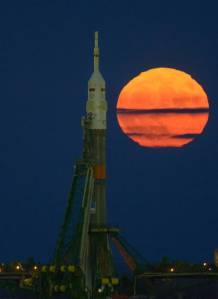
If last month’s election taught us anything it’s that nobody really knows anything. For many years now I’ve been saying that the sign of an educated person is s/he admits how little s/he knows. Socrates may have beat me to that idea, but there are still people whose intellect appears so great that we should pay attention. To my mind, such as it is, Stephen Hawking is one of those people. I don’t understand his formulas, but some of the concepts I can grasp. So when Prof. Hawking says we have approximately 1000 years before we make our planet unfit for human life, I think we should take notice. In just a decade we’ve gone from a Wall-e White House to a Dumb and Dumber one, and old mother earth is due to take a beating. Hawking, according to a story in The Washington Post, advises us to look for another planet to colonize.

 Photo Credit: (NASA/Bill Ingalls)

Photo Credit: (NASA/Bill Ingalls)

Colonization seldom ends well. I wonder how the rest of the universe feels about us moving into the neighborhood. We dump our waste into anything pristine enough to carry it away so that people can make some of their number wealthy so that they can feel better about themselves. We can’t go one year without a war somewhere in our world and we kill one another just because we look different. We can’t even elect a president who’s smarter than any random undergraduate. Not exactly the kind of invasive species you want living next door. Any system can be gamed—capitalism most of all—and if it were up to me I’d prefer to have thoughtful neighbors. Perhaps the universe is politely saying to Dr. Hawking, “not in my backyard.”

What I find truly amazing here is that religion gave us the entitlement. Believing that the gods are like us, or that one deity made us in his white, male image, we’ve figured out this world’s ours to destroy. Just like entitled kids with too many toys. Daddy can always buy you another. So now we’re in the market for a new planet. One that’s not too hostile, but easily exploitable. A capitalist planet, but one that doesn’t mind a bit of help from former communists. You see, once we’ve figured out how to exploit another planet, there’ll be no stopping us. I have great admiration for Stephen Hawking. It’s just this time I think that we need to set our own house in order before we start inviting ourselves to somebody else’s home.


The Least of These

Despite criticisms to the contrary, the pre-Reformation church did have concerns about the average person. About the poor. In those days church offices commanded a good deal more esteem than they currently do among the populace, and being a priest was a position of power. The concern for the quotidian human—at least of the Christian variety—was demonstrated in All Souls’ Day. Although the date migrated around the calendar before settling on November 2, it came part of one of the very serious (days of obligation) annual celebrations along with All Saints’ Day, November 1. It was recognized that not everybody could be a saint, and all the faithful departed deserved a special day of commemoration. Through a complicated history this two-day celebration came to be associated with Celtic beliefs about the crossover day between worlds, samhain, giving birth to Halloween. It seems appropriate on All Souls’ Day to think about the poor.

An article in the Washington Post reports on findings that poor children, in their words, “that do everything right don’t do as well as rich kids who do everything wrong.” There are indeed deficits that attend the poor all their lives. Those of us who began in such circumstances can sometimes break through in a system that favors the upper classes, but it is rare. Good paying jobs are reserved for friends of the wealthy or to those who might pay them back in some way. The poor have little to offer beyond their souls. Our system, the so-called “free market” deals in souls. The poor are, make no mistake, chattels. Even in higher education, where we’d like to think thinkers think, positions are granted based on privilege. The loftier music and liturgy is, after all, reserved for All Saints’ Day.

dorothealangemigrantworkerschildren

Like many raised in humble circumstances, I grew up hearing about the American dream. If you work hard you can succeed. But that really depends on who you know and how much they’re willing to help out. Stats are now beginning to back up what those of us who have lived experience in the lower register already knew. Having faced it throughout my career, I know I’m not alone. Just the other day I met someone else who grew up poor who’d hit the bullet-proof ceiling carefully installed by children of privilege. Not ambitious beyond desiring the basic comforts of a job that covers the bills and allows for some reasonable amount of surplus against lean times is, it seems, more than the wealthy are willing to grant. After all, All Saints’ must come before All Souls’, for even Heaven has its hierarchies.


Not Quite Dead

Duria_Antiquior

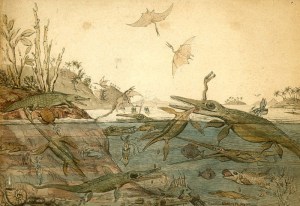
Extinction is a cause of fear. Having evolved a certain level of self-aware consciousness, we fear becoming the next tyrannosaurus-rex or spinosaurus, or whatever the next top predator turns out to have been. We’re here to stay. So we like to think. Data have been known to interfere with comfort zones, however. Take religion, for example. America has always been a religiously diverse “country,” but many people suppose it has a Christian beginning. Moreover, the historically uninformed suppose that generic Christianity to have been Protestantism (which is not really a single religion) and white (which isn’t really a race). Now, it seems, that white Protestantism is slowly going extinct. An article in the Washington Post by John Sides contains an interview with Robert P. Jones of the Public Religion Research Institute. Jones has written a book about the end of this particular hegemony.

Demographics tell the story. The powerful cultural force of the mainstream Protestant churches hasn’t disappeared, and really isn’t likely to become extinct. It has, however, diminished. As soon as we began to embrace technology this was a more or less inevitable trajectory for the human race. We made oceans smaller and came to see that we’d evolved different religions in different regions. And that Christianity wasn’t quite unique as we’d thought. “Orthodoxy” was actually a form of prejudice for a past that may never have been. We saw the writing on the wall and went on scribbling. Making claims the data don’t support.

One of the drivers—and this is a complex phenomenon—behind this shift has been the ossified positions of religions in the light of increased understanding. For example, most people see no problem with homosexuality. They believe shooting someone because of their race is wrong. Women, they radically suggest, should have the same rights as men. The hold-out positions on these issues have historically been religiously based. Just listen to the rhetoric of televangelists and see if it has changed. Meanwhile, the world moves on. Many religions are holding still. Or racing to see if their diminishing number of feet might make the world spin backwards after all.

Religion is a human invention. Many protect themselves by claiming direct revelation by a God who used to live in a glass ceiling above our heads. Trips to the moon, probes to Mars, and out of our solar system have proven that view false. If the view of something as basic as the universe was wrong, what else might’ve been a mistake? Jones’ new book will no doubt cause some panic. Extinction, at least not imminently, doesn’t seem to be in the cards. Protestantism seems to have reached a stasis. Religion still has an important function in society. When it takes the lead on issues of equality, we may begin to see a miracle.


World of Color

DSCN3311

Albinism occurs across species. In human beings, suspicious and superstitious lot that we are, it’s sometimes an excuse for prejudice. I’ve confessed in the past to reading Weird N.J. (Long story.) When we first moved to the Garden State a series of stories ran about rumors of albinos in a secret town, probably deep in the woods. Don’t scoff—there are deep woods in Jersey! Typical of stories in the zine, people—mostly of the teen variety, I suspect—would write of driving around late at night, discovering these albino enclaves, and being chased out by people lacking pigment and tolerance for strangers. Average juvenile behavior. I had no idea at the time that people with albinism are actually seriously mistreated. This is particularly a concern in Malawi. A story in the Washington Post by Max Bearak describes how albinos are murdered for body parts because of a rumor that, among other fabrications, they have gold in their bones.

As someone who has a love of folklore (and it’s more puerile kin—thus Weird N.J.) this is deeply disturbing. Folklore often focuses on the strange, unusual, or uncanny. Let’s face it, there’s not much of a story to tell when everything’s normal. Humans have the natural predisposition to tell tales when something is out of the ordinary. Our saving grace is that we recognize stories are just stories. When we start taking fiction for fact, we’re all in trouble. Many the night before Snopes I cowered under the covers because of some urban legend spreading by however ideas spread before the internet. There were killers on the road at night, and hiding under your car in the parking lot. At the same time, I could separate truth from the stories my step-dad told of jars of buffalo nickels buried in the woods behind our house. Nobody wants to be thought gullible.

In the sad case of those who are killed for being different, the Post article cites a United Nations specialist stating, “The situation is a potent mix of poverty, witchcraft beliefs and market forces which push people to do things for profit.” Poverty. Market forces. Profit. A new kind of clarity. Violence comes in many guises. One of the most insidious is that which some specialists call “slow violence.” Systems set up to exploit, drain, and yes, enslave others to one’s own benefit. And it’s perfectly legal. The plight of those born with albinism in a nation where their differences plainly show dolefully demonstrates a side of human nature that we would rather hide. Those who have control of resources place others in situations where they contribute to their personal bottom line. We call it business as usual while those who observe closely call it by another name. Witchcraft.