Thorough

It was a warm summer’s day, sometime in the mid-eighties.  I was living in Boston and some friends asked if I’d like to go to Walden Pond, outside Concord.  I’d read Henry David Thoreau’s Walden, so yes, please.  I knew Thoreau was an early Massachusetts Transcendentalist, mystic, and nature lover.  That particular day we were the only ones at the site where his cabin in the woods once stood.  I suspect that, being there with friends, it wasn’t as contemplative a trip as it would’ve been had I made it alone.  Still, here we were, nearing a century-and-a-half after his death, remembering him.  My wife and I recently watched the PBS three-part documentary on Thoreau, and I learned a lot about him.  He was admirable in a way that few public figures are today.  What’s more, it’s clear that he’s widely appreciated as a visionary and believer in freedom.

Image credit: Benjamin D. Maxham, public domain (via Wikimedia Commons)

Writing in the nineteenth century, it seems, got you noticed much more than it does now.  Thoreau had profound things to say.  He had strong convictions about abolition and being shuffled into an existence of work, forced from being free.  He was able to live the way he did largely because he didn’t need many things.  He also had famous friends, Ralph Waldo Emerson, for one, who gave him a place to stay when he had none of his own.  The documentary makes the point that, despite being a hero to many, we’ve gone ahead and built the world Thoreau most feared.  Few, or at least a few of us, find that work doesn’t define us.  Writing, it seems, still helps with that.  Those of us born to write do so, and long days “in the office” must be endured to come to life when writing is again possible.

If you think deeply about it you start to realize that we’ve allowed ourselves to be hoodwinked by economics.  If you have a mortgage you know this to be true.  Or if you have a medical condition—you can’t afford not to have a job without insurance.  Thoreau, it seems, lived with the tuberculosis that ultimately killed him pretty much all of his life.  And he died too young, we feel, because he had so much to say.  So much to say that was worth listening to.  Such writers are rare today because, like everything else, writing has become a business and some readers even prefer things “written” by AI.  And yet I remember that warm summer’s day and think of a placid time still earlier when one might’ve met Henry David Thoreau in the woods.

On Vocation

“There ain’t no use in complaining,” Bryan Adams once wrote, “when you got a job to do.” If I may be pardoned from removing rock and roll from its love song context. As a guy who’s suffered unemployment several times, I have to agree that having a job is good. Of course, such goodness has its natural limitations. Switching jobs too often means starting out over and over again. In today’s world, that means that at half-a-century-old you might well find yourself having to earn vacation days from nothing all over again. So when family vacation plans were made this year, one of us—the one with a new job—could not be included. My family is out near the west coast while I remain here on the east. Once upon a time we were somewhere in the middle. I’m glad they have the opportunity. This post isn’t about sour grapes, or vacation; rather, it’s about vocation.

I often think about how life has become only earning for the sake of earning. People say you should get a job you like, which is fine if such jobs exist. The jobs I like are now considered beneath me. Not by me, but by those doing the hiring. Where has the sense of vocation gone? Back in the Middle Ages (and I’m not one to suggest that things were necessarily better then) the learned had opportunities. Those who had a skill could be inducted into a guild that would help to ensure job security. We’ve moved to a free agent model where someone can be removed from their natural vocation with nary a thought what they might do next. Detritus of a throw-away culture. For those with highly specialized skills—Ugaritic, anyone?—such severance is like setting one on an ice floe, only crueler. Ironically, the guild offers no help.

Reading about the Transcendentalists reminds me of how restorative the woods are. Emerson and Thoreau, heading off to the forest to commune with the divine. Since this road is blocked for me, I take the one better traveled, into Manhattan where, I’m sure, there is life. Elevators, ubiquitous pavement, quotas and tallies. Prove your worth. Among the students I knew I was accomplishing something. Since then it’s all just numbers. In the woods I don’t count the trees. I don’t demand to know what they’re producing for the good of the company. I don’t question their motives. Outside my window, if I had a window, I would see only stone, concrete, and steel. And inside all I feel are numbers. Can a soul be quantified? I think I would have to side with the Transcendentalists on this one. But that’s not what I’m paid to do.


Unity in Diversity

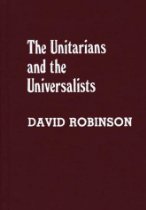
UnitariansUniversalistsIn the Simpsons episode “Bart’s Girlfriend,” Jessica Lovejoy steals all the church’s money from the collection plate, leading Mrs. Lovejoy to call out, “Everyone turn around and look at this!” Grampa Simpson whips around saying, “What is it? A Unitarian?” And so the jokes go, back even to my seminary years. The Unitarians, however, are among the most intellectually honest of religions. I recently read David Robinson’s The Unitarians and the Universalists. Although the traditions approached their 1961 union from different angles, they had a common origin: concern over the Calvinism of colonial and early post-colonial New England. The majority religion of the northeast, various forms of Calvinism taught of utter depravity, human helplessness, and, that absolute affront to human intellect now being posited by some materialists: predestination (determinism, in secular terms). The Universalists couldn’t accept that a loving God would make anyone suffer forever. The Unitarians had trouble with several aspects of the theology, not the least of which was the Trinity (as a non-biblical concept). Early Unitarians based their beliefs on the Bible, which, as it turns out, does not support several Calvinistic concepts.

Like all religions, Unitarianism evolved over time. Eventually the unity of God became only one among many possibilities of what one might believe. In fact, doctrine was less important than ethics. It was a true Enlightenment religion. It allowed for the Transcendentalist movement that we all learned about in school, with Emerson wandering in the woods, and Thoreau never wanting to move out of them. They also had room for those who studied the Bible but expressed concerned that Jesus doesn’t really say that he’s God, although obviously some people interpreted it as if he had. Regardless of belief, meeting together was necessary, and eventually the Unitarian Universalist Association came to represent a widely liberal form of religion with Christian roots but rational sensibilities.

Among the marks of distinction of these groups is that, among Protestant denominations, they were among the first, if not the first, to ordain women. When you are less beholden to wooden tradition, all kinds of possibilities emerge. This book was kind of an epiphany for me. I’d been channeled into thinking that “orthodox” necessarily equalled “the good guys,” despite the treatment that I’ve repeatedly received at their hands. It sometimes takes a Gestalt phenomenon to see orthodoxy as not necessarily good. Perhaps the effort to preserve a tradition outdated by a couple of millennia costs far more than it saves. Perhaps we need to become more human, not less. I may not walk the forest with Emerson—he preferred to be alone anyway, from what I understand—but I’ll not be so quick to assume that tunnel vision is true vision either. Not in a world where the Simpsons can teach us as much as The Institutes.