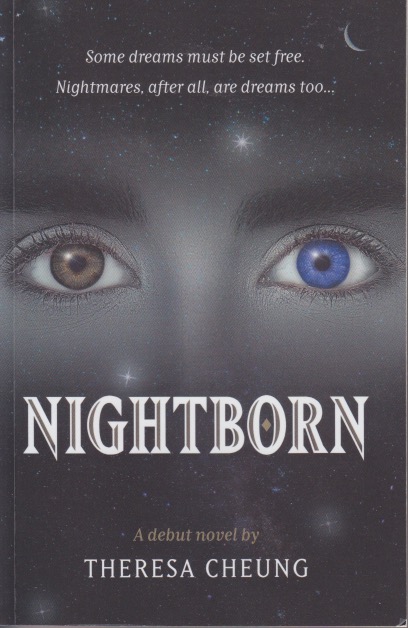
Dreaming

To be honest, I’m not quite sure what to make of NightBorn.  It’s not a bad novel but some of the action isn’t explained enough, leading to a little confusion as to what’s going on.  This is pretty minor, however.  I was enjoying Theresa Cheung’s debut novel but I kept thinking of Dream Scenario and how the premise, at least at first, is so similar.  I was very impressed by the movie Dream Scenario, and wondered if this was going to play out in the same way.  The basic idea is that Alice Sinclair, a professor of psychology, begins appearing in people’s dreams.  The dreams of people who don’t know her.  Then the dreams start to become scary.  If you’ve seen Dream Scenario you’ll recognize the many touchpoints: professor, appearing in strangers’ dreams, dreams becoming nightmares.  Back in the novel, Alice joins forces with her psychic boyfriend, two psychic friends of his, and her dog, to explore why this is happening.

Alice discovers that her absentee father, whom she’s never met, is also a psychology professor and he’s been experimenting with a technology that makes a person go viral in other people’s dreams.  He randomly chose her, not ever knowing Alice as his daughter, or knowing her at all.  The novel deals with synchronicities, and this is one of them.  Her father, who is rather a slime-bag, is working for the government where an unpopular president (this is a novel of its time) is paying to have himself interjected into people’s dreams to get reelected.  Alice was simply a test case to see if it was possible to, well, do a Dream Scenario.  In the movie, of course, a company has been developing the technology for profit, so that advertising can be interjected into dreams.  Another synchronicity.

I won’t spoil the ending of the story.  The ethical concerns of the author come through clearly.  In many ways this is a Trump book—that category of books that, had this particular individual not been elected (or reelected) would likely never have been written.  It’s more, however, about the power of dreams than it is about the power of potentates.  The publisher, 6th Books, prefers paranormal plots, so expect a bit of that when you pick this one up.  Dreams not only feature Alice, they also guide the plot.  In the end, the scenario isn’t the same as that in Dream Scenario, but the vehicle is quite similar.  It may, if viewed from a certain angle, be considered dark academia.

Zoning In

Born Jewish, and Unitarian by choice, Rod Serling believed in the inherent worth and dignity of all human beings.  Like many people, even Serling believed that season four of The Twilight Zone, which went to an hour format from the usual half, didn’t really work.  Nevertheless, the fourth episode of that season,“He’s Alive,” really should be required watching of every person in the United States.  This episode was written by Serling and it focuses on a young American fascist who’s having trouble gaining a following.  A shadowy figure then reads to him from what sounds exactly like Trump’s playbook, and soon decent people are raging along with him about foreigners and those who are different.  When the shadowy figure is finally revealed, we’re not surprised to learn it is Hitler.

The young man obeys without question, and soon it looks like he could be elected.  He has one of his best friends killed as a martyr to the cause.  He murders an old Jewish man who has cared for him since his youth.  He declares himself made of steel, with no feelings.  And when he ends up dead (everyone knows how Hitler’s career culminated), the spirit of Hitler rises from his body as Serling warns that wherever hatred exists, Hitler still lives.  Now this episode aired in 1963 but it could’ve been 2016, or 2024.  Prescient people, like Rod Serling, knew that mob thinking could be easily exploited.  Even in the first segment after the introduction the instructions are laid out.  Play on people’s fear of those who are different.  No matter how good things may be, people will be unsatisfied.  Add any power-hungry individual and you’ve got the recipe for a fascist overtaking.

The episode made me wonder if we could ever become a just society.  Ironically, that which calls itself “Christianity” these days stands in the way.  In its day, The Twilight Zone was amazingly influential.  It had a great impact on what was to follow and it’s still regularly referred to, even by those who’ve never seen an episode.  If only we’d pay attention to its message.  I’ve been making my way through the entire series, slowly, over the years.  Now and again an episode will really hit home.  I have to admit that I was physically squirming during “He’s Alive.”  It’s not that it is the greatest episode of the series, but its message is extremely timely.  The requirement for a better world is simple, but seemingly impossible to reach.  Treat others as you wish to be treated.


A Christmas Parable

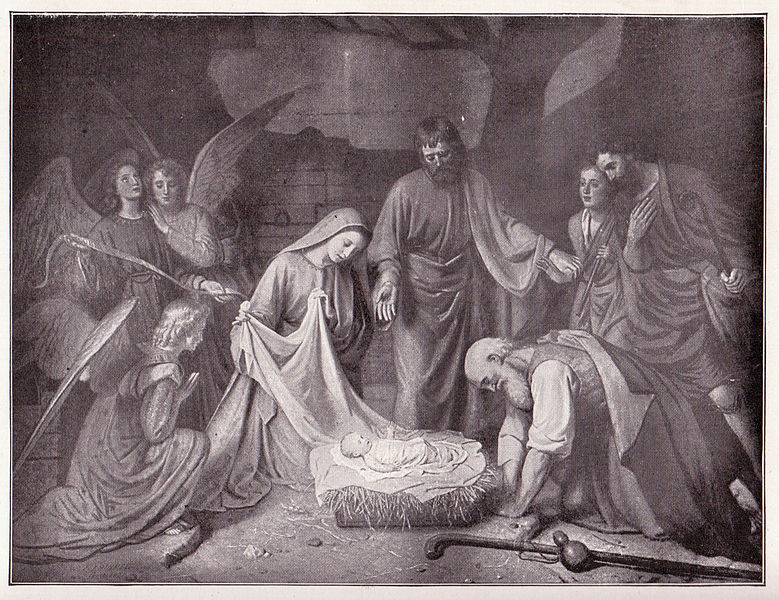
And it came to pass in those days, that there went out a decree from Donald Trump that all the world should be taxed.  2 (And this taxing was first made when American troops were pulled from Syria.)  3 And all were to be taxed, every one to help build a wall.

4 And Joseph had just bought a house in Nazareth, but had to go into the IRS office, unto the city of record, which is called Bethlehem; (because he was of the county of Northhampton:)  5 To be taxed with Mary his espoused wife, being great with child but no insurance.  6 And so it was, that, while they were there, the days were accomplished that she should be delivered at St. Luke’s. 7 And she brought forth her firstborn son, and wrapped him in swaddling clothes, and laid him under a bridge; because there was no housing for them in Bethlehem.

8 And there were in the same country soldiers abiding in their bases, keeping watch over their radar by night.  9 And, lo, drones appeared before them, and the glory of aliens shone round about them: and they were sore afraid.  10 And the ETI said unto them, Fear not: for, behold, I bring you good tidings of great joy, which shall be to all people.  11 For unto you is born this day in the city of Bethlehem a Democrat, which is the Prince of Peace.  12 And this shall be a sign unto you; Ye shall find the babe wrapped in swaddling clothes, lying under a bridge in Bethlehem. 13 And suddenly there was with the UFO a multitude of the heavenly host praising democracy, and saying,  14 Glory to the American ideal in the highest, and on earth peace, good will toward women and men.

15 And it came to pass, as the drones were gone away from them into heaven, the soldiers said one to another, Let us now go even unto Bethlehem, and see this thing which is come to pass, which the ETI hath made known unto us.  16 And they came with haste, and found Mary, and Joseph, and the babe lying under a bridge.  17 And when they had seen it, they made known abroad the saying which was told them concerning this child.  18 And all they that heard it wondered at those things which were told them by the soldiers.  19 But Mary kept all these things, and pondered them in her heart.

20 And the soldiers returned, glorifying and praising democracy for all the things that they had heard and seen, as it was told unto them.

Image credit: The Harmsworth Monthly Pictorial Magazine, Volume 1 1898-9; public domain via Wikimedia Commons

National Nightmares

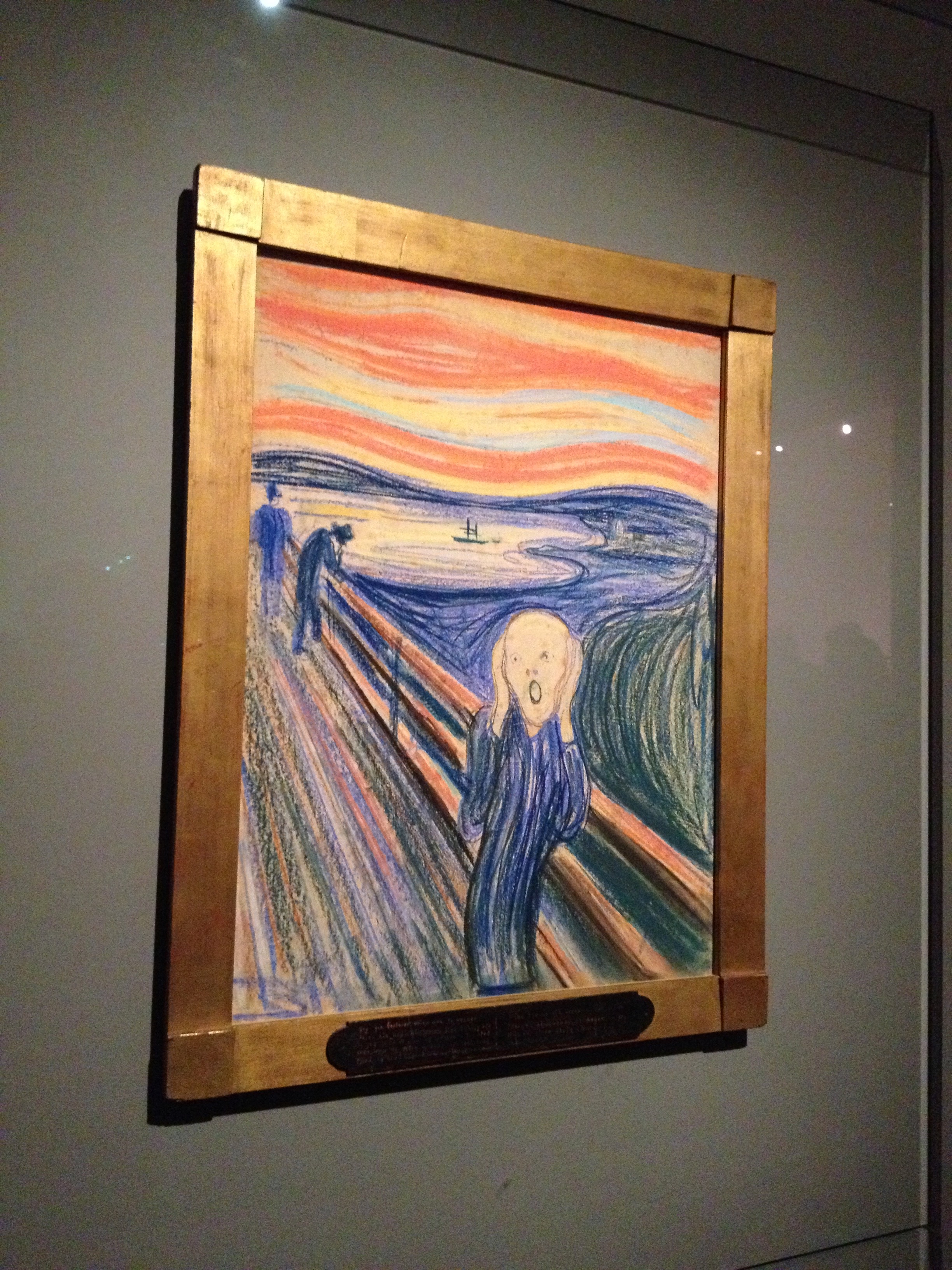
Being drawn into the dream of a madman.  Trump’s dream.  It seems like fiction, doesn’t it?  But, as they say, reality is stranger than.  I didn’t come up with this observation of being drawn into a madman’s dream myself.  It comes from Harlan Ellison via Stephen King.  When asked why he writes what is commonly called horror, Ellison pointed to the things happening at the time: Jonestown, Ayatollah Khomeini, etc., and replied something like the world was being drawn into Khomeini’s dream.  So the United States is being drawn in to the mad dream of Donald Trump.  I believe it’s because many people lack imagination.  There’s a reason I write “horror” stories in my spare time.  I prefer not to live in a madman’s dream.  Even if my stories are read by the few who frequent the journals in which they’re published, they are an attempt at viewing the world through unclouded eyes.

Entirely too much of our collective lives have been eaten up by Trump’s antics.  I was looking for an image on this blog going back some eight years and found, you guessed it, posts about Trump.  And here we are on the precipice again, all to stoke one man’s vanity.  And people ask why some of us write or watch horror?  We tend to treat insanity as if it’s rare.  Any self-aware, reflective person, when alone and honest, will admit that some things we do simply aren’t rational.  We’re not, as Silicon Valley moguls like to think of themselves, Mr. Spock.  (And even he underwent pon farr.)  The evidence of Trump’s manipulations is all over the place, but that doesn’t stop yard signs from popping up like toadstools.

We are far from a “sane” species.  We may wonder why deer step out onto the road and stare blankly into headlights, but we do the exact same thing.  Horror writers tend to be pretty clear thinkers.  I suspect it’s because many of them spend time trying to get into the heads of their irrational characters.  They can recognize the madmen and the dangerous among us.  King’s Twitter posts make no bones about his seeing through Trump.  The latter’s public speeches clearly indicate that his mental capacity isn’t sufficient to be given nuclear codes, let alone the reins of the most powerful country on the planet.  He dreams of his own greatness.  His desires are entirely for his own glorification.  Anyone can see that.  But we are creatures who dream.  And it’s difficult to wake up from a dream, even if it’s a nightmare.


Free Word

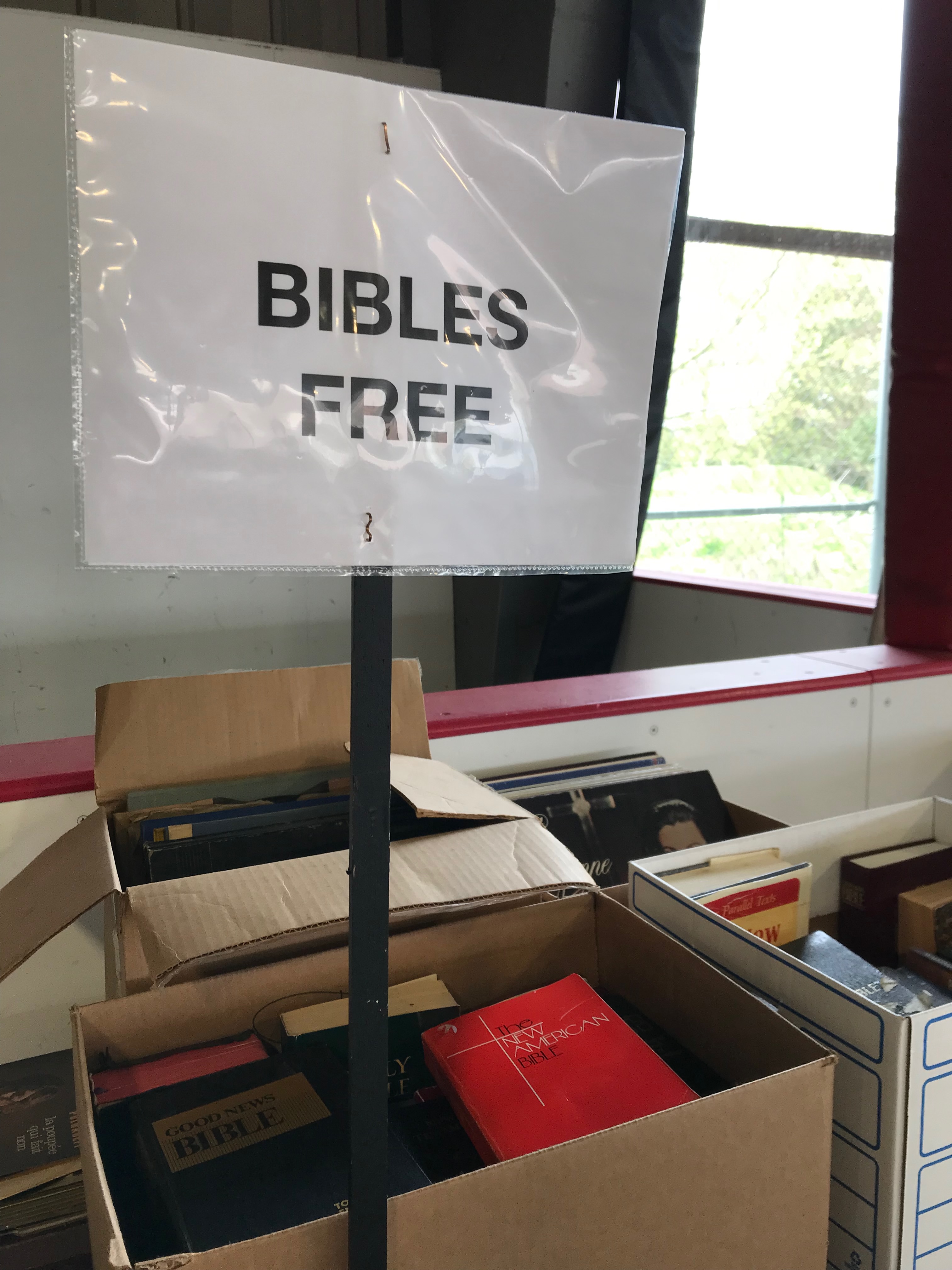
“Anything free is worth saving up for.”  That’s a line from one of my favorite movies of all time.   Free, though, can mean many things.  The “free cookie” is something good to entice you to buy more.  It often works.  Free, for a person, indicates the ability to do what we want (within the constraints of capitalism, of course).  But “free” can often mean cheap, overly abundant.  I like to decorate our lawn with rocks, which are often free, but if you want decorative rocks you’ve got to pay for even the ground beneath your feet.  So it is that when I attend book sales I marvel about the fact that Bibles are nearly always free.  It occurred to me again when I attended a spring book sale a few months back.  I always look through what’s on offer—call it an occupational hazard.

I used to attend the Friends of the Hunterdon County Library book sale in New Jersey.  I believe it is the largest I ever visited.  I used to get there early opening day to stand in line.  One year, one of the volunteer friends came out and announced that they had a really old Bible (only 1800s) that would be $100.  People do, however, tend to donate Bibles to book sales in great numbers.  I suspect organizers are reluctant to put Bibles in the trash.  They also know that people aren’t going to shell out money for them, so they try to give them away.  What does this say about being free?  Is it desirable to be so abundant that you’re left on that table in the back while everyone else is leaning over the more exciting items on offer?  There’s perhaps a message here.

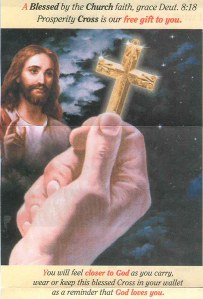
Of course, Trump is selling Bibles for $60.  That’s a bit steep, even for an academic Bible (which his is not).  It might be suggested that this $60 is cheaper than free.  Now, I work with Bibles that are sold at a profit.  One thing I’ve learned is that Bibles sold are always for profit. Those who are honest admit what they do with the lucre.  Although he’s tried to keep it under cover, the Trump Bible does funnel profits to the GOP hopeful.  Yes, he is making money off the Bible and wants to be elected.  If that happens, freedom will disappear.  He’s said as much at his rallies.  Looks like stormy weather to me.  There are organizations that give away Bibles.  Somebody, however, pays for them.  In this strange experiment of a country, anything free is worth pondering.  Nothing, it seems, comes with no strings attached.


Mapping the Apocalypse

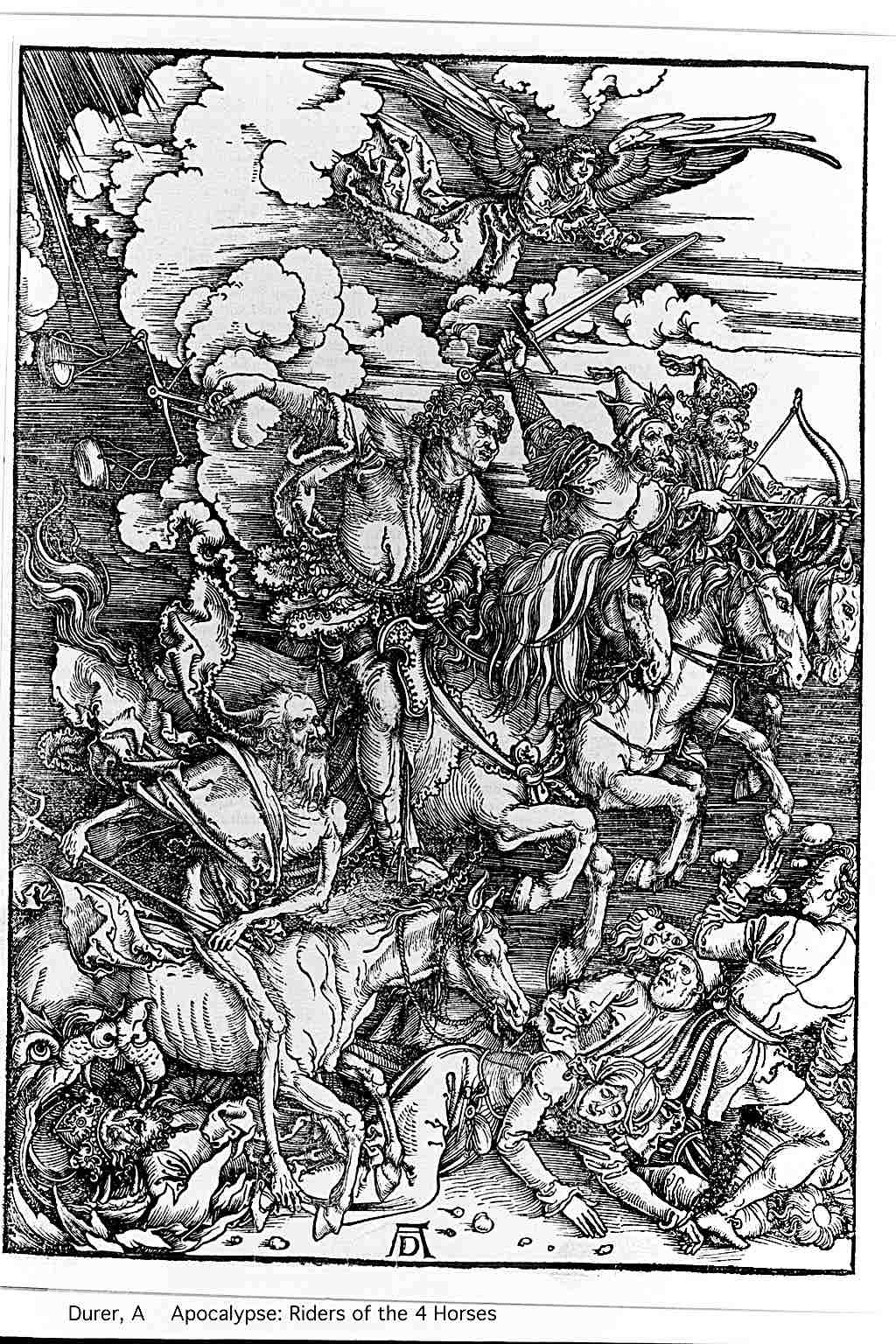
“Is this the end of the world?”  The question came up often early in the pandemic.  The end.  It’s so logical that just about every religion addresses it.  It bookends “the beginning” with the symmetry that we so covet that it’s almost impossible to think the world won’t end.  Even astronomers tell us the sun will betray us, eventually becoming a red giant and consuming our home planet.  Apart from being the greatest equalizer, however, religious speculation places the end way, way before then.  A friend sent me an article in National Geographic by Greg Miller titled “These 15th-Century Maps Show How the Apocalypse Will Go Down.”  It describes literal maps of the eschaton, and guess what?  It was right around the corner back then too.

Maps to the end of the world have been around for a long time.  With a bizarre Schadenfreude, many Christian groups eagerly anticipate the end of all this.  I grew up with charts and maps telling just how it was going to happen.  Like all of you, I’ve lived through many ends of the world.  These folks must be the strangestly optimistic bunch on the planet—when it fails to come on schedule they pencil in another date, preferably in their own lifetime.  They want to see it.  It will, after all, prove that they were right and the rest of the world was wrong.  Who wouldn’t want that kind of validation?  The apocalypse has been around since long before the fifteenth century.  It started in the New Testament, if not before.

This eagerness to end the world would be considered pathological were it not religious.  We’ve been about the closest we’ve been to a human-made apocalypse under Trump.  Make no mistake, some Christians were banking on it when they cast their ballots.  We tend to overlook this destructive way of thinking because some biblical literalists (and they don’t all agree, just put a premillennialist together in a room with a postmillennialist and watch what happens) claim that it’s what the Good Book says.  The rest of society, disinclined to look it up for themselves, accept that roadmaps to the end of the world exist in the Bible.  They don’t, but that doesn’t prevent everyone from fifteenth-century monks to present-day televangelists declaring when it will be.  That there is an end is taken for granted.  The astronomers look at their watches and sigh that we’ve got a couple billion years left, at least.  No, the pandemic wasn’t the end of the world although many Christians were hoping it just might be.


Epistle Writer

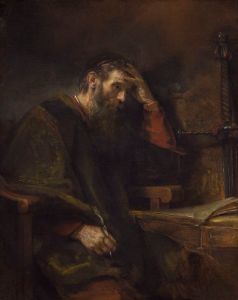
I’ve been reading about Paul.  You know, that Paul.  What has struck me from this reading is that if he weren’t in the Bible rational people would likely think Paul was writing nonsense.  Getting into the Good Book is a big score, for sure, but a close look at what this particular apostle wrote does raise eyebrows, as well as questions.  Over my editing years I’ve discovered quite a few methods of dealing with the saint from Tarsus, but what they really point to is the elephant in the room—we don’t really know what Paul was on about.  A few basic facts stand out: the Paul of Acts doesn’t match the Paul of the authentic letters, and although Paul never met Jesus he became the architect of much of Christianity.

There’s a reason that I focused my doctoral work on the Hebrew Bible rather than the New Testament.  Still, it remains fascinating to look closely at Paul’s claims.  At some points he sounds downright modern.  Like a Republican he declares that he can be tried by no human power.  Specially selected by God himself, he can’t be judged by the standards of normal people.  This is dangerous territory even for those who eventually end up in the Good Book, especially since it wasn’t written as an abstraction, but to a specific readership in a specific place dealing with specific issues.  Galatia wasn’t the same as Corinth.  The issues at Philippi weren’t the same as those in Rome.  Yet, being in Scripture makes all his musings equally inspired.

The more we learn about Scripture the more difficult it becomes.  Perceptions evolve over time, and we know nothing about how various books were selected.  There are no committee minutes.  We don’t even know the committee’s name or if it was ad hoc or standing.  With repeated and long-term use these books became Bible.  Take Paul’s letters—it’s virtually certain that we don’t have them all.  He makes reference to letters that we don’t have.  What might he have written therein?  Is part of divine revelation missing?  The discovery of other gospels and many contemporary religious texts to those that made the Bible cut raises questions that can only be resolved with the category “inspiration.”  Christianity isn’t unified enough to add any more books, although some sects do nevertheless.  Paul is very much like that—an example of not being subject to human trial.  For a founder of a major religion we know surprisingly little about him.


Cult of Paris

The cult of celebrity is dangerous. The results of both biological and psychological sciences inform us that mammals, especially primates, hold “alpha” individuals in awe. We don’t know what quality makes them irresistible to some, but in the case of humans before you know it everyone is talking about this Kardashian or that Trump. Valorizing the power of media as we do, those who appear ubiquitously on screen gain in magnitude merely by the attention paid to them. Others have vetted the details, and those who are deemed important enough for constant, widespread television exposure are worthy of our worship. Most of the time it seems banal, harmless. But when those without scruples are willing to exploit it, it is dangerous.

Paris rejecting the cult of celebrity

For example, the other day my wife and I rewatched An American in Paris. I know my wife likes the movie, but when it was over I couldn’t help noting that Jerry Mulligan chauvinistically claims his right to a woman he’s just met, and who is, moreover, engaged to a friend of his who had just lent him money. The fact that he doesn’t know about the engagement is no excuse. Lise tells him “No,” and when she gives him a false telephone number he doesn’t take the hint that she doesn’t want him to call her. He stalks her in a selfish and predatory way. Only because she laughs at his antics with some perfume bottles does she agree to meet with him later. He takes advantage of another woman who clearly has feelings for him and who sponsors him, using her money but not reciprocating her feelings. He’s aggressive and eavesdrops to get Lise’s name. He lies to her and about her (saying he knows her so her friends don’t object) and refuses to take no for an answer. Laying out my grievances, my wife politely listened and then said, “But it’s Gene Kelly.”

Like many people, I was jilted a time or two when I was younger. Losing out to a rival lover leaves a lasting scar. How can we hope that on New Year’s Eve Lise will leave Henri for the interloper Jerry? But it’s Gene Kelly. The cult of celebrity allows those on various pedestals to get away with many things. Trump was likely correct in saying he could stand in the middle of a crowded street and shoot someone and his base would not object. The cult of celebrity ’sn’twonderful, ‘sdangerous.


Redefinition

The striking thing about Evangelicalism is its protean nature. The earliest forms of this conversion-based “Christianity” began with the Reformation among Pietist Protestants. They sincerely believed in two things: the Bible and Jesus. Today Evangelicals deny both. They believe in Donald Trump. Racism and subordination of women are their two main foci. And yet, they wish to keep the brand. Daily we see the standards of traditional “Christianity” tumble: turn the other cheek, love your neighbor as thyself, if a man asks your cloak give him your coat also. All of this jettisoned like so much non-capitalist clap-trap. Thing is, it’s in the Bible. Thing is, it was said by Jesus. And also anyone who even looks at a woman with lust in his heart is guilty of adultery, let alone those who pay them off so they can grab another on the way out the door. All of that’s now “Christianity.”

The funny thing is that those who object to such behavior are what Evangelicals scornfully call “liberals.” So much for the group that just three short years ago advocated the reinstitution of biblical law. Now that 45 would have committed a capital crime according to such laws, they have changed the Good Book rather than rebuke the pastor in chief. Ironically, some of the children of famous evangelists have drunk deeply from that Kool-Aid. It’s fine to sleep around as long as you lie the right way at the right time. Bear false witness? What does that even mean? You’d think liberals were suggesting that those God loves are chasteneth by him, for goodness sake!

Many of us feel as though we woke up to an alternate reality in November of 2016. We supposed the Republican Party would show some backbone, but when they didn’t we weren’t all that surprised. What shocked us most is that the leopard has changed its spots. Those of us brought up with the Bible were led to believe this impossible. After all, who can change a hair from black to white (although some of us would rather have it go the opposite direction)? We thought that Holy Writ would guide the Evangelical heart. We thought they would remember who Jesus was. All of this is negotiable now. The only solid rock on which they build their church—those to whom they give the keys to the kingdom—are those that fall into goose-step behind a “leader” for whom the truth changes daily. Opportunist be thy name. Were Jesus alive to see all this, surely he’d weep.


Defining Evangelicals

Like most Americans I have trouble getting over the button-down image of Evangelicals that has now become so distinctive. In reality Evangelicalism has nothing to do with Jesus, but it comes down to basically two things: a conservative haircut and belief in the superiority of males. The latter point is made by Rodney Hessinger and Kristen Toby in an opinion piece on Cleveland.com. Asking the question that’s on all logical minds—how can Evangelicals stand by a president who credibly cheated on his wife just after their child was born?—they come to the conclusion that patriarchy trumps all forms of righteousness. I know this from sad personal experience. The Bible, Evangelicals claim, gives men the headship of the household. They may sin, yes, but even with that their lordship must remain intact. That is the non-negotiable fact of Evangelicalism.

I was a teenage Evangelical. I grew up in a household where my mother refused to divorce her alcoholic husband because it was against Evangelical teaching. Sexual sins were well nigh unforgivable. In fact, adultery, of which 45 has credibly been accused, was a death-penalty offense according to the Good Book. About the only thing worse than sexual sins way lying. I can’t believe I’m getting old school on Evangelicalism, but I have to say Fundamentalism isn’t what it used to be. In college I knew people who believed we should reinstitute stoning for adultery. Instead we now use it as an excuse to elect unqualified presidents. And yes, we’d like to keep the brand, thank you. Commandments have now become negotiable.

Our society is very sick. Unlike the narrative Evangelicals weave, the illness is within them. Divorce rates are higher among Evangelicals than among atheists. Evangelicals are more likely to own guns than Unitarians. Evangelicals will lie more readily than any agnostic. Some of the more extreme want to reintroduce slavery. Through it all they claim to follow the Bible. Their support of Trump has given the lie to what they claim as a religious faith. Even Jesus, meek and mild, had harsh words to say about adultery. This is something you just don’t do. Promise your faith to one woman until a porn star comes to play at your resort—I don’t recall that being in Scripture anywhere. Evangelicalism hasn’t lost its soul, it’s lost its mind. Given what they’re doing in his name, Jesus must be rolling over in his grave.


Who Can You Call?

They’re scratching their heads. The media, I mean. In this distorted world of Trumpism, newspapers have rediscovered religion. Some say Trump is the altar boy of the evangelical right with people like Franklin Graham wetting himself over the president. Others say evangelicals want to change their name to distance themselves from Trump. Everybody seems to want to know who evangelicals are, but they’re afraid to ask. The weird, or perhaps expected, thing is universities decline to help. For years now they’ve been cutting positions in religion, a topic no longer relevant or of any interest. Academics aren’t always good at seeing what’s right in front of them, of course. So it is that the media’s scratching its collective head. Is he or isn’t he? What can you say about a man who’s so clearly heathen and yet a sparkling example of Christ-like compassion and values?

It’s doubtful whether any university administrator or televangelist could finger Jesus of Nazareth in a police line-up. They have no idea of who he was or what he taught. All that matters is he was God and he protects unborn babies so that he can arm them with automatic rifles when they’re of age. Oh, and he’s definitely not a woman. Or gay. Is that about it? Just in the past week major media outlets have run stories about the evangelical relationship to the commander-in-thief who’s told more lies in his first year than all other presidents combined. Who said Jesus of Nazareth was honest? He just stood for the right causes.

Having grown up evangelical, studied religion with evangelicals, and having been fired by evangelicals, I know them well. They have a mental capacity for biblicism that’s nearly incomprehensible. The Bible is so sacred that no other book should be placed atop it. It should never be set on the floor. Memorizing chapter and verse is more important than knowing what they might mean or how to live by them. This is old-school blind faith. And proudly so. Trump doesn’t know the Bible but he says he does. His actions resemble the carpenter from Nazareth’s about as much as Joseph Stalin’s. He was a good Christian, too, wasn’t he? After all, the Bible says Russia is our ally. Reagan—another evangelical—may’ve said they were our worst enemy, but one thing we know for sure about the Good Book: it never lies. For that it takes evangelicals and politicians.