Fearsome Fish

It must be October. As I was looking up a word on Dictionary.com, I noted one of their “the hot word” features entitled, “Scientists discover a fish they name ‘dracula.’” The fish, which is native to the eastern part of Asia, was discovered in 2009 but is just now starting to draw attention. The name apparently derives from its fangs. Vampires, however, have their ancient origins in creatures that draw the life force from humans. In the ancient world the “life force” could take different forms: blood, breath, and even semen. Soon a whole array of life snatchers populated the ancient mind – incubi, succubae, Lilith, demons, and any of a number of other contenders for the human essence. The fear of being drained is a very ancient one indeed.

While in my adjunct office at Montclair yesterday I met a colleague. We discussed the visit of the exorcist to campus that I missed but he attended, and while discussing the mythology class we both teach he mentioned how vampire movies make use of mythic themes. I have been using this information from the beginning for my class, but I was fascinated that another part-time instructor would latch onto the same film motif as I did to illustrate modern myth. The vampire is such a part of our culture that people often forget its religious origins.

I attended a public performance of a two-man play at a local library this week. The play was a conversation between Edgar Allan Poe and Bram Stoker. Naturally, vampirism played a strong element in the single-act show. While Poe and Stoker were not contemporaries, they did both share an awareness of how religion tied in with the macabre. The Frank Ford Coppola movie Bram Stoker’s Dracula makes this connection explicit as an enraged Vlad Tepes stabs a cross in his chapel with his sword, starting a flow of blood that he greedily drinks.
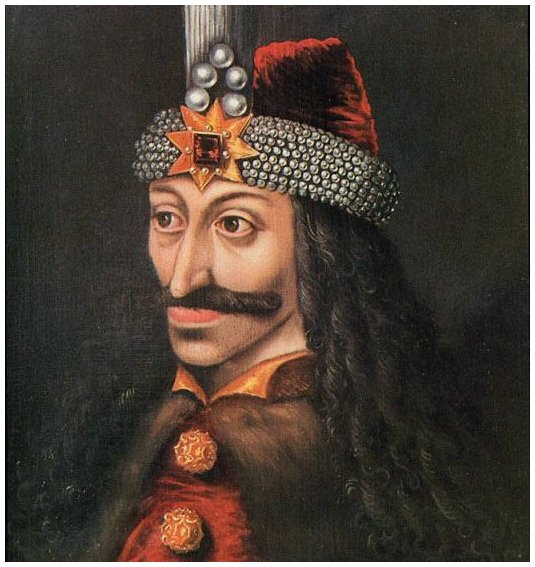
Vlad Tepes on a good day

We’ve just crossed into mid-October and I already find myself surrounded with vampires. It is characteristic of religion to deal with our deepest anxieties, and the more we reflect on vampires the deeper we find they reside in the religious sensibilities of both fish and phantom.
Sinful Moonsters

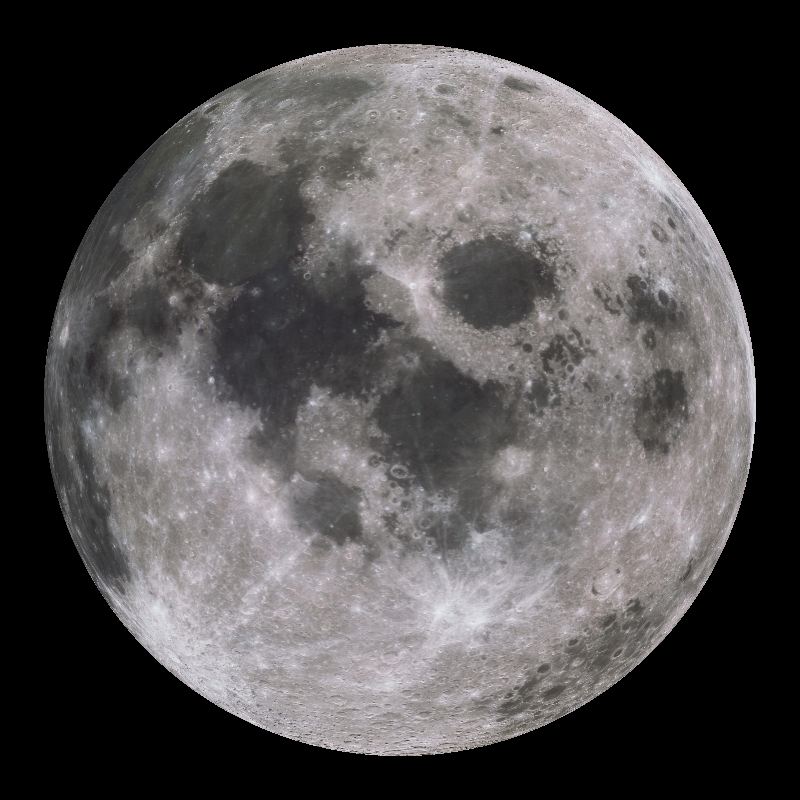
Wednesday night a student asked me about the moon god Sin. The name “Sin” has nothing etymologically in common with the usual English word for wrongdoing; they are simply homonyms. Nevertheless, when students first encounter this odd juxtaposition they often think that there must be something to it. This particular student pointed out that many activities classified as sinful take place at night, under the moon. Could they be connected? Linguistically, no; but it did get me thinking about the idea of the moon’s baleful influence on various creatures of the night.

Serious academic works seldom take vampires, werewolves and witches, some of the moon’s most infamously unholy acolytes, to be worthy of valuable research time. Meanwhile Stephanie Meyer and company are laughing all the way to the blood bank. Popular culture gives credence to the children of the night that the academic world ignores. I tried to do a little research on the moon and its mythology only to find that most moon books deal either with serious attempts at astronomy or serious attempts at astrology, neither of which I was seeking. I wanted to know when the moon had slipped from being the gentle god/goddess of the night into its role as the overseer of evil.

Evidence was scant, but it seems that in the Middle Ages, maybe influenced by late Roman ideas, scholars began to recognize the moon’s potential as a dismal influence. The moon has long been popular in folklore as a source of lunacy and luck. Lovers crave the moonlight, but so do teenage vampires and raging werewolves. This is, apparently, a concept of no great ancient pedigree. In any case, the moon here has nothing to do with sin.


Toy Story 2.1

Summer is a season for movies. When the weather gets hot, sitting in an artificially cooled dark room for a couple hours, even if it is with strangers, seems like a good idea. Generally the movies I see in theaters are family movies – I’ve never been one to go to a theater alone and my personal taste in movies is unique in my family. The more interesting flicks usually have to wait until DVD release before I see them. Nevertheless, the movies are an experience that many of us remember fondly from childhood and children deserve good movie memories. Since the movie theater was invented it has become one of the signatures of culture in many parts of the world.

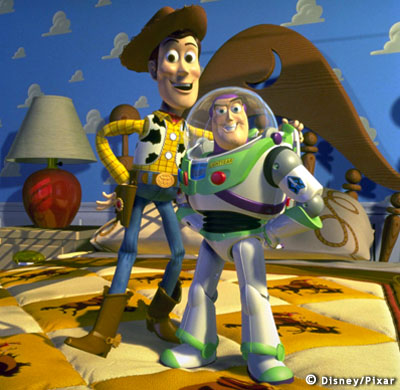
Last weekend, during the East Coast Heat Wave – a weather event so much talked about that it should have had its own theme music – we went to see Toy Story 3. In an unusual departure from my focus on religion, my comments here will focus on creativity. (Good religion is creative, after all.) Toy Story 3 opened to much critical acclaim, so my expectations ran a little high. A little too high. While I found the story to be interesting, it was a bit familiar. For those acquainted with the franchise, it felt like a remake of Toy Story 2. Both films open with the toys worried about their future because Andy is going away. In both 2 and 3 Woody is separated from his friends and has an epiphany that leads him back. Buzz gets returned to factory settings to reprise his humor in the first film. An evil toy in both movies holds the others captive against their wills. Meanwhile Woody makes new friends and with their assistance rescues the threatened toys. The evil toy ends up getting his just deserts and Andy’s toys successfully integrate.

The story line values friendship and commitment, and there is nothing to complain about there. Yet, after stepping out into the harsh sunlight, I felt like I’d just paid to see a movie I’d already seen before. Creativity – the factor that leads to truly new concepts – is not always valued in movies. This is particularly so in children’s movies. Our kids are being programmed to accept recycled stories as something new. It is not only Toy Story that has fallen into such rehashing: how many fresh ideas are shortly followed up by a 2, 3 or 4? Even if 1 wasn’t so good? I’ve even been told by publishers that publishing houses prefer to take few risks – they would rather have a product that is “like” one that has already proven a blockbuster. How many wizards and vampires have populated tween books over the last decade or so? It seems that the safe money is in the recycled story. In a society hooked on convenience, new ideas might seem just a little too dangerous. Once there was a cowboy blog…

Best friends forever and ever and ever


Hallowed Be Thy Wolfbane

Anti-pesto to the rescue!

Anti-pesto to the rescue!

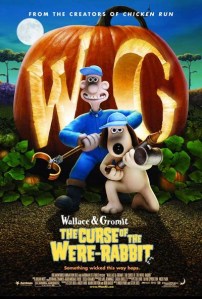
With autumn in the air and the harvest season looming near, my family recently watched Wallace and Gromit: The Curse of the Were-Rabbit. Quite apart from the inspired improbability of Aardman Studios productions, the central role of the village vicar in this film aroused my interest. Confirming an oft-cited proposition of this blog that mythical creatures burst from the same mental regions as religion, at Lord Quartermaine’s inquiry as to what might kill a were-rabbit, the vicar promptly pulls down a monster book from his shelves to reveal the secret. It is the church that knows about monsters.

In my continuing research into religious reactions to death and the afterlife, I constantly run into the name of Montague Summers. Summers was the author of the definitive books, in his period, on vampires, werewolves, and witches. He is best known for his translation of the Malleus Maleficarum, “the hammer of witches,” the main witch-hunting tome of the Middle Ages. A deacon of the Church of England before converting to Catholicism, Summers was a believer in the phenomena that he researched. Styling himself a witch-hunter (he lived from 1880 to 1948), he tried to live the fantasy world he helped to create.

The more that neurologists study the brain, the more we discover how deeply embedded religion can be. Any number of researchers have suggested various “God-shaped nodules” in the gray matter that provide for continuing religious belief in the face of advancing scientific knowledge. I would suggest, as a “religionist,” that perhaps nestled next to our mental menorahs, crucifixes, and statues of the virgin, there are also ghosts, witches, werewolves, and vampires lurking in the dark corners of the God node.