Dark Night of the Ark

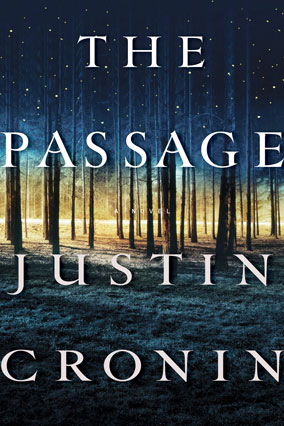
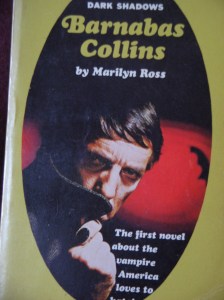
Vampires continue to be the rage of the age. My own interest began back in the days of Bram Stoker, Bela Lugosi, and Barnabas Collins. Stoker’s Dracula is one of the earliest novels I remember reading. Dark Shadows was a regular, gloomy fixture of 1960s daytime programming, and black-and-white vampire movies were often available on Saturday afternoons on commercial television. I have not kept pace with the current fetishism surrounding our toothy friends, but I did read Justin Cronin’s new novel, The Passage. I didn’t know the book featured New Age viral vampires, but they do make for a compelling story.

What particularly captured my attention in Cronin’s work, however, was the crossover between religious and monstrous themes. I have mentioned this connection previously, so I was glad to see confirmation that religion still features in monster stories. The religious element comes in the form of a virus developed by the military to create super-soldiers (a theme X-File affectionados might find familiar) that ultimately goes awry. The result is a girl who is part of a project named Noah; she lives the tremendous lifespan of the biblical hero without the debilitating effects of old age. She is also the ark by means of which humanity might survive the ordeal. The novel is apocalyptic and yet vaguely hopeful. It is also very difficult to lay aside for too many minutes at a time.

The tie-in of Noah and vampires is a novel one. The point of comparison is longevity – those who imbibe the blood of others do not age and wither as mere mortals do. Noah’s survival is a matter of grace (or science in the case of the novel). The last mortal to breech the two-and-a-quarter century mark (thank you, Terah), Noah is symbolic of those who stand out as examples of righteousness in a wicked world. It was refreshing to see the theme so creatively rendered by Cronin. The biblical flood is a kind of prepocalypse, a foreshadowing of what might recur if evil prevails. The Passage has left me strangely sentimental for both vampires and ark-builders alike.


Mournful Metaphor

Sometimes the concept is great but the results disappoint. Those who have followed this blog know that a unifying concept over the past half-year has been the often hidden relationship between religion and monsters. Certainly this fascination has its roots in my refusal to admit that I’ve grown up, but with the popular media pushing the undead into our collective consciousness on a daily basis I feel a happy vindication. I posted last week about Seth Grahame-Smith’s new book, Abraham Lincoln: Vampire Hunter. Well, now that I’ve finished the book I would say that the jarring concept of our most honored president leading a secret life was fun to wrestle with, but the book failed to win me.

Lincoln’s great contribution to our nation is still echoing through a society slow to admit the equality of all. Perhaps that fact alone would render any book trying to throw some comic relief on a deadly serious issue mute before it even begins to spin its yarn. That, and I didn’t like the portrayal of the vampires. I’m no undead purist, and I’m aware that vampires have changed form and character over the centuries, but having masses of them in one place felt like being the proverbial cat-shepherd. Giving them political ambitions, with a nod to Francis Ford Coppola’s Bram Stoker’s Dracula, was too much. The issue of slavery, clearly the metaphor being utilized by Grahame-Smith, is hard to smile about. Lincoln’s personal suffering is difficult to lighten with his career as a vampire hunter. The story just didn’t work.

I’ve had enough bumps in my own life to eschew easy categorization. Even my current career must be listed in the TBD category. Nevertheless, I wasn’t sure if what I was reading was a serious attempt at a novel or a humorous exploration of a funny idea. I found the book catalogued in humor, but its narrative seems to have the earnestness of a determined novelist. When the story ended I felt as if I’d read a dime-store novel I’d purchased at Comedy Central. And with the headlines the way they are these days, I’d been hoping for a good laugh. Instead it seems that I have been bitten by a vampire wearing shades.

Two heroes, no smiles


Feline Angels and Demons

Happy National Cat Day! Well, to you readers in the States in any case. October 29 has been declared National Cat Day, and as a blogger who has frequently posted on ancient cats, I feel a sense of duty to include our feline friends in today’s entry.

Elsewhere on this blog I have extolled the divine nature of cats. The Egyptians revered them to the point that killing a cat was a capital crime, but the evolution of domestication was probably very practical. Domestic cats appear in the archaeological record along with the advent of grain silos, also an Egyptian invention. When the grain attracted rats, the rats attracted cats, and the cats stole Egyptian hearts. Even before the Egyptians, however, archaeology points to associations of cats and humans in Neolithic Jericho, perhaps the oldest city in the world. As early as 9000 years ago, cats were stalking the allies of the city of the moon god. They have been among our most loyal companions.

The domestic cat’s spread into Europe only began in earnest, it seems, when Christianity reached the continent and the cat was no longer considered divine. Perhaps cats had to be profaned before being admitted to the church’s roster of approved animals. Nevertheless, under the influence of a predominantly Christian milieu, in the Middle Ages Europe had come to see cats as the demonic companions of witches and vampires. Did some memory linger of the divine cat of Egypt? Did those dark days of suspected sorcery glance back to the magicians of Egypt and their suspect pets? We will never know the answer as to why cats, long encouraged to join human households, became evil in superstitious Europe. Even my stepfather in the twentieth century America counted to ten after spotting a black cat, and followed the count with a solemn cuss each and every time.

I, for one, cast my vote on the side of the felines. I don’t have cats (allergies and irate landlords, and such), but I enjoy them when I visit those who do. Sure, they rip up furniture and bring unwanted gifts of dead things to you as a kind of feline worship, but with their loving nature I simply can’t see a devil in our everlasting cats.

Swiped from Dr. Jim's Thinking Shop

(Swiped from Dr. Jim’s Thinking Shop)


Jersey Vampires

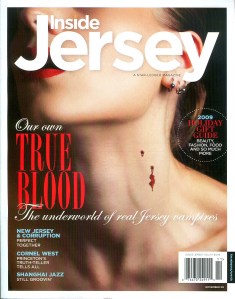
Subscribers to the New Jersey Star-Ledger receive a periodic local-interest magazine called Inside Jersey. Since I’m already inside Jersey and have too much to read as it is, I generally ignore the freebie unless a story catches my eye. Anyone who has followed this blog for long knows of my contention that what truly frightens us is related to religion, or lack thereof, including fictional movie monsters such as vampires and werewolves. Despite the claims that such interests are juvenile and immature, this month’s Inside Jersey features a story reflecting just how serious such issues can be. When my wife showed me the cover, I knew it was blog-worthy.

VampireJ

There are vampires among us. Not Bela Lugosi or Christopher Lee-type Draculas, but actual blood-imbibing vampires. Only those who have shunned bookstores like a crucifix will not be aware that the Twilight series of teen romances have dominated middle and high school female reading lists for the last few years. The vampires in this magazine story, however, are not conflicted teens, but conventional young adults. The story covers what religionists call a New Religious Movement, or NRM. It is a religion, growing in the larger New York City area (as well as in other parts of the country), where consenting adults don artificial fangs and sip blood from willing donors. According to the story these groups, which include professional people who join under pseudonyms, engage seriously in religious rituals not unlike traditional Christianity’s sacramental rites. Now before snatching up your holy water and fresh hawthorn stakes, consider for a moment that adherents to this sub-culture are actually exercising their religious freedom.

Older, established religions are often quick to judge newer religious rivals. The fact is, however, that every religion on the planet was once a new religion. Believers often attribute the origin of their species of religion to the divine: special revelation, enlightenment, or a growing-up of humanity. All other religions, therefore, must be false. The difficulty here is that there are no final arbiters who can stand outside human religious institutions to tell us which is the right one. Lessing’s three rings have reached mass production and still there is no Ragnarok so that one religion might brag “told you so” to all the others. While I’m no vampire — I’ve been a vegetarian for over a decade — I have to accept the claims of those who are that this is their religion. The article ends with a revealing quote from a member of a local Court, so I give the final say to an actual interview with a vampire: “So many people think being into a certain lifestyle, you cut yourself off from the divine. It’s quite the contrary. To me, when you become more attuned to yourself, who you are uniquely, it brings you closer to God.”


Vampires, Mummies and the Holy Ghost

One of the many quirky things I experienced in my teaching days at Nashotah House was the fascination of theological students with the (then current) Jimmy Buffett hit “Vampires, Mummies and the Holy Ghost.” Not really a Buffett fan (I must confess, however, to being strangely touched by “Margaritaville” although I’ve never had a margarita and I’ve never been to Mexico) I was nevertheless intrigued by this juxtaposition. One student confessed to being a vampire-novelist wannabe. The vampiristic connection with the Eucharist was kindergarten, but there was a more ancient tale hidden here.

With a career crashing down around me, I found myself habitually watching horror movies — something I hadn’t done since my own seminary days. One bleary-eyed morning it struck me how our nightmare-zone creatures are religious in origin. Vampires can be traced back to ancient Sumerian mythology. Mummies? Ancient Egyptian burial practice to preserve a body for the afterlife. Ghosts, apart from finding a feared spot in most cultures, are attested in the Hebrew Bible and even earlier. They are, of course, from the supernatural realm. Werewolves are a branch of the lunar worship tree, again an ancient form of religion. Even Frankenstein’s monster toys with the account of Adam’s creation, although Mary Wollstonecraft Shelley associated him with the Greek mythological figure of Prometheus. While Godzilla (apart from his apparently theophoric name) may fall outside this scheme, most of our nightmare creatures are ancient kin of the gods.

My favorite vampire

My favorite vampire

At a professional conference last year I found and purchased a book entitled Sacred Terror: Religion and Horror on the Silver Screen, by Douglas Cowan (Baylor, 2008). Given my renewed penchant for fright flicks, I was intrigued by Cowan’s contention that religion lies at the heart of horror. Indeed, one may think of them as fellow ventricles in the anatomy of fear. Perhaps ancient religionists were on to something when one of them penned “the Lord taketh pleasure in them that fear him” (Ps 147.11). Religion may be a response to fear, or to a world that for us has become natural and upon which we wish to project a human (or divine) face.