Thorough

It was a warm summer’s day, sometime in the mid-eighties.  I was living in Boston and some friends asked if I’d like to go to Walden Pond, outside Concord.  I’d read Henry David Thoreau’s Walden, so yes, please.  I knew Thoreau was an early Massachusetts Transcendentalist, mystic, and nature lover.  That particular day we were the only ones at the site where his cabin in the woods once stood.  I suspect that, being there with friends, it wasn’t as contemplative a trip as it would’ve been had I made it alone.  Still, here we were, nearing a century-and-a-half after his death, remembering him.  My wife and I recently watched the PBS three-part documentary on Thoreau, and I learned a lot about him.  He was admirable in a way that few public figures are today.  What’s more, it’s clear that he’s widely appreciated as a visionary and believer in freedom.

Image credit: Benjamin D. Maxham, public domain (via Wikimedia Commons)

Writing in the nineteenth century, it seems, got you noticed much more than it does now.  Thoreau had profound things to say.  He had strong convictions about abolition and being shuffled into an existence of work, forced from being free.  He was able to live the way he did largely because he didn’t need many things.  He also had famous friends, Ralph Waldo Emerson, for one, who gave him a place to stay when he had none of his own.  The documentary makes the point that, despite being a hero to many, we’ve gone ahead and built the world Thoreau most feared.  Few, or at least a few of us, find that work doesn’t define us.  Writing, it seems, still helps with that.  Those of us born to write do so, and long days “in the office” must be endured to come to life when writing is again possible.

If you think deeply about it you start to realize that we’ve allowed ourselves to be hoodwinked by economics.  If you have a mortgage you know this to be true.  Or if you have a medical condition—you can’t afford not to have a job without insurance.  Thoreau, it seems, lived with the tuberculosis that ultimately killed him pretty much all of his life.  And he died too young, we feel, because he had so much to say.  So much to say that was worth listening to.  Such writers are rare today because, like everything else, writing has become a business and some readers even prefer things “written” by AI.  And yet I remember that warm summer’s day and think of a placid time still earlier when one might’ve met Henry David Thoreau in the woods.
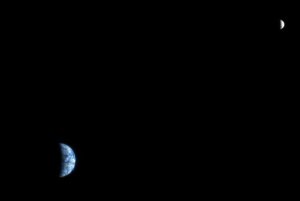

Thoroughly Earth Day

It’s difficult to say, since I don’t get outside much, but reports have come in that the earth is healing itself while we’ve been sequestered.  Rivers usually polluted have begun to run clean.  Smoke-smuggered skies have turned blue.  Animals have begun to explore human-made environments abandoned while we all shelter in place.  Could there be a more poignant statement about the reason for Earth Day?  If our worst behaviors are ceased even for a little while, the damage we do to our home planet begins to come undone.  To me that has been the most profound hope brought to light by this crisis.  Living more simply might be a virtue after all.

From NASA’s photo library

Going without can be difficult.  Every time the fleeting thought comes that I need to run to the store for this or that—and I’ve been taught that shopping is normal and natural and good for everyone—I have to stop and weigh the options.  Do I really need whatever it is?  Can I do without it?  Even bank accounts, for those fortunate enough to be able to keep working, have started to recover.  The frenzy we normally live under—earning money to keep buying things we don’t really need—is suddenly cast into perspective.  Times like this Earth Day I think of Henry David Thoreau.  Sometimes we like to laugh about our American saints, but his desire to live more simply does have appeal.  

Like many students who find themselves in Boston, I once made pilgrimage to Walden Pond.  The day I went there with some friends I believe we were the only car in the lot.  We lived simply in the way that grad students do, being under the sword of educational debts and loans, but we had come to see the place where nature had called one harried philosopher to solitude.  I knew, even as I stood by the marker of the cabin site that we couldn’t all live like this and still enjoy the benefits of medical science and technology (such as it was in the 1980s).  Perhaps it is possible, however, to reflect on better ways of living now that we’ve all been placed in a kind of enforced solitude.  I’ve begun reading more poetry.  I’ve started painting again.  Life has, in the midst of a pandemic, begun to feel more healthy.  It’s Earth Day.  Normally I’d be looking for an opportunity to join a community cleaning event, or even to go out and pick up trash on my own.  Since these are ill-advised, I stand before my bookshelf and reach for Walden instead.