Eve of Winter

“You must live like a monk!”  These were the words of one of my bosses.  I really couldn’t deny it.  I try to lead a quiet life of reading and writing and I do try to avoid extravagances.  My contemplative life suits me.  Every now and again, however, busy stretches come and distort my perspective.  Thinking back over this autumn on the eve of December, that season has been one of those times.  So much so that I haven’t been able to watch much horror, which is one of my usual seasonal avocations.  I suppose it started when a scammer emptied out our bank account in early September.  That entire month is a blur of fear, depression, and anxiety.  Those emotions have settled down, but the trauma and financial loss have remained.  

Toward the end of the month, my daughter moved.  Thankfully not too far away, but parents often feel the need to help when their only child is not yet well established in a new area.  October grew so busy that we had no time to decorate for Halloween.  We did manage to carve some pumpkins, but the weekends—the only time anything for real life actually gets done—were all eaten up and I entered November with that crowded head space that accompanies a monk lost in the secular world.  Looking back, I finished fewer books than usual and I’ve already mentioned about the movies.  This year I was pretty sure I’d be attending the American Academy of Religion and Society of Biblical Literature annual meeting in November.  I had missed the past two years, not really mourning the loss, but preparing for the trip occupied part of October.  Halloween came and went, taking the first weekend of November with it.

In November we had guests come and the second weekend disappeared.  The next weekend I had to get into high gear for my trip to Boston.  That was when I had the flu shot that wiped out a weekend.  I awoke groggily on Monday realizing that Friday I’d be on Amtrak’s Northeast Regional.  I’d never been to Metropark before and the conference itself ate up the fourth weekend in November.  After that, we turned around and spent Thanksgiving with some longtime friends in New Jersey.  Then we learned a Pennsylvania friend had spent the holiday alone and decided to make a celebration for them yesterday.  So here I find myself on the eve of winter with a fall that somehow disappeared.  Busy spells can be refreshing, even for the monkish.  But tomorrow is back to work as usual as December sets in.


Little Girl

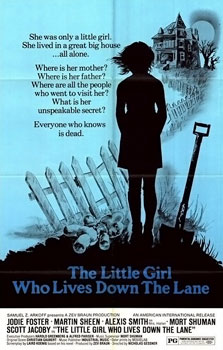
It might be inferred from the fact that I’ve mentioned it once or twice that I’ve seen The Little Girl Who Lives down the Lane before.  On a rainy autumnal afternoon it’s the horror movie that most often comes to mind.  While some find the “horror” designation overkill, it is the genre under which I bought the DVD many years ago.   Besides, it won a Saturn Award for best horror film.  I picked it up at a two-for-one sale not knowing what it was about but I was immediately taken by the atmospheric setting and weather.  A proper New England fall, after the leaves have come down.  It opens on Halloween with one of the most cringy openings ever.  Charlie Sheen plays a pedophile asking 13-year old Jodie Foster (Rynn) probing questions of where her father is when he finds her alone at home.

There will be a spoiler later in this paragraph.  Rynn lives on her own after her father dies by suicide and she murdered her mother and put her body in the basement.  Frank Hallet (Sheen), and his insufferable mother, own the Maine town where Rynn lives.  Befriended by Mario, a high school student who discovers her trying to drive, she eventually confides that Hallet’s mother was killed going down to the basement.  Meanwhile her son Frank keeps trying to insinuate himself into Rynn’s life, and, strongly implied, bed.  The story has some improbable plot elements and a few surprising moments, but not any jump startles.  It’s a slow burn, building to where Rynn attempts to poison herself, but Frank, not trusting her, drinks her tea instead.  Moody, rainy, and played out on a carpet of dead leaves, this is one of those horror movies that gets the season right.

Ironically for October nights, there aren’t a ton of horror films I know of that manage to capture this feeling.  I suppose that’s why I’ve seen this one a few times before.  I’ve gone through many lists of “October movies” and come out thinking that few people must think about this season the way that I do.  Or at least I haven’t found many horror movies that allow the season to pull its own weight.  Little Girl wasn’t welcomed with open arms when first released, but it has become a kind of cult classic.  Foster’s acting is pretty amazing considering her age at the time the film was shot.  But the autumnal weather does it for me, every time, even as we slip into November.


Learning Curve

There’s a learning curve to cold weather living.  Now, I need to define cold weather as when you have to turn on the heat.  Around these parts that generally happens mid-October.  We keep our house chilly not because we unduly enjoy shivering, but for two good reasons: it costs a lot to heat a house and it doesn’t benefit the environment to do so with too much zeal.  The cost aspect goes without saying.  It costs more to live in the colder seasons.  At night our thermostat is set to 62.  That’s fine as long as you’re in bed under tons of blankets, but I’m a habitually early riser.  Most of my writing is done before work, when the house is at its chilliest.  I bundle up with several layers of pajamas, a stocking cap, and fingerless gloves.  The part that requires relearning each year is the exercise bit.

Before going out for a pre-work jog, I do some light calisthenics.  I can’t really do these in my pajamas, though, because they can raise a sweat, even in winter.  Besides, I have to go jogging later, so I need to get my exercise clothes on.  Every year I have to remind myself, when do I make the switch?  I don’t enjoy stripping off my warm clothes to put on some chilly ones so I tend to put it off until the exercise mat starts to call loudly.  As the sun rises later and later, as the solstice approaches, jogging gets later and later (with a slight reprieve when we pointlessly end Daylight Saving Time).  There comes a point when I have to start work before my jog.  I can never remember when that happens—November?  December?  It will mean altering my routine, particularly if I have any early meetings.

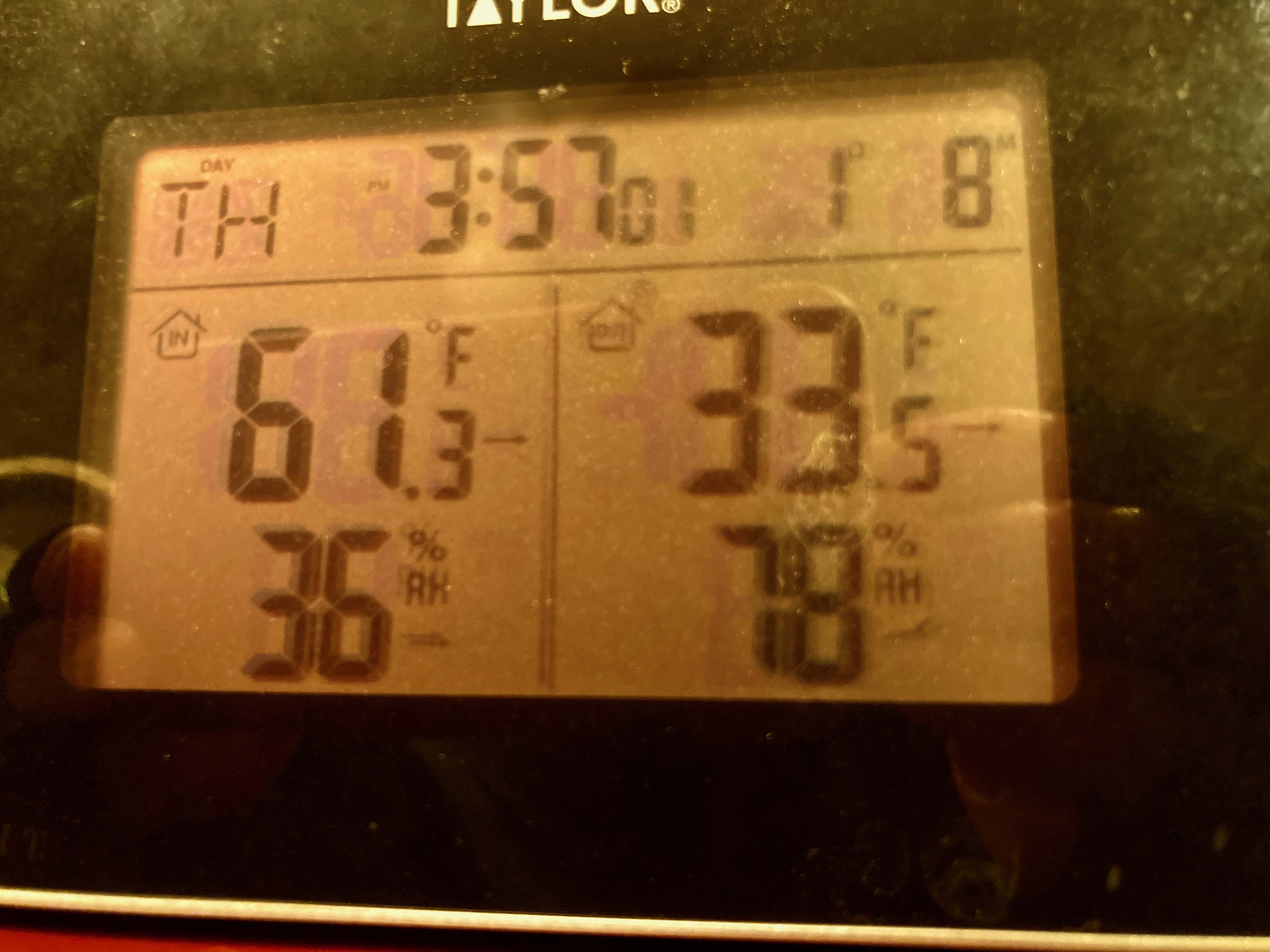
I used to wonder why, in older films, especially those set in Europe, people were shown sitting around their houses in woolen suits and vests, full-length dresses with shawls.  As a homeowner with a low thermostat, I had an epiphany.  They did it to keep warm.  Europeans often describe American houses as “overheated.”  I haven’t had any European guests lately, but I doubt they’d say that about our place.  Our daytime temperature is 64.  Outdoors, that’s getting to be jacket weather.  My European colleagues don’t mind wearing puffy vests and jackets on Zoom meetings.  Heating a house in Europe is much more expensive than it is in the colonies.  In the dead of winter it’s not unusual for me to be wearing five or six under-layers during the day, and fingerless gloves at work.  The thing is, I need to relearn this each year.  Winter’s on its way, so I’ll do my best to be a good student with my chilly lesson.


October’s Poetry

October is a beautiful, melancholy time of year.  Edgar Allan Poe died on October 7.  Two years ago today, my mother died.  This was brought home to me forcefully yesterday.  A colleague had invited me to address her class at Princeton Theological Seminary about Weathering the Psalms.  I had vacation days that have to be used up or lost, so I took the day off.  My wife and I drove to Princeton, a town we know well.  When we lived in Somerville, about 15 miles north of there, we’d visit Princeton not infrequently.  I wasn’t really familiar with the seminary grounds, however.  My colleague informed me that her class, on the Princeton Farminary (where a program in ecology and theology is housed) would be meeting in a barn so I should dress appropriately for the weather.  A cold front had come through, so I went for the tweed and turtleneck combo.

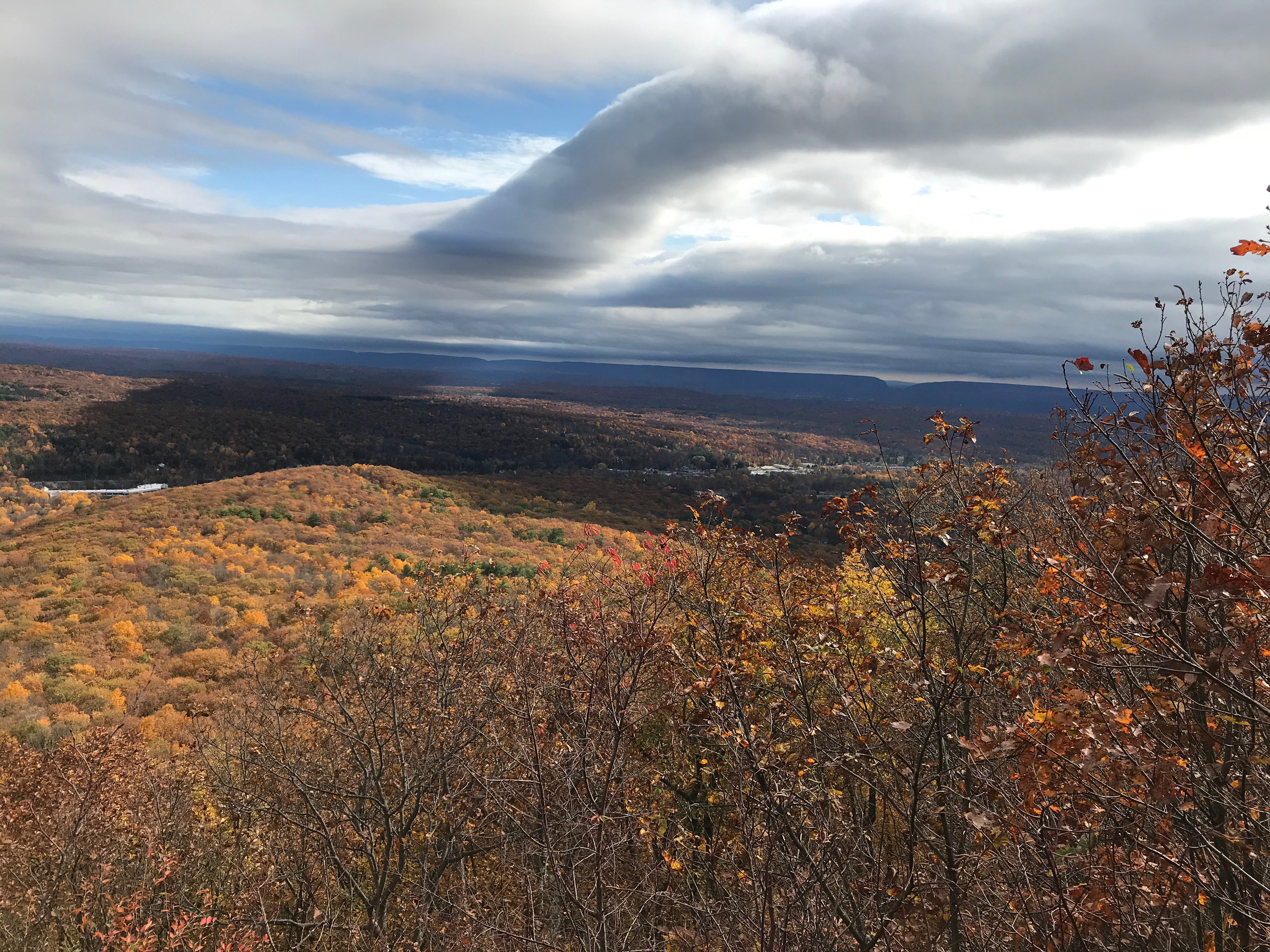
So we set off on a beautiful drive along the Delaware.  The leaves aren’t at peak yet, but there was plenty of fall color as we navigated our way toward Frenchtown, where there is a bridge across the river.  The GPS also told us this was the way to go.  On River Road, still in Pennsylvania, a flagman refused to let us on the bridge, although the signs did not say it was closed.  He impassively waved us on.  The GPS insisted we “return to the route.”  We soon found out why.  The next crossing is seven miles further down, along winding roads with a 25 mph speed limit.  The drive was beautiful, but suddenly I was going to be late for my appointment.  The new route added 45 minutes to the estimated travel time.  After uttering some choice words about unplanned bridge closures on a road where there are only a very few ways to emulate Washington’s crossing, we eventually arrived.

The weather beautiful, if a little chilly, the class decided to meet outdoors.  I hadn’t forgotten how much I love teaching.  It was brought back to me with force.  With the trees reminding us that winter is not far off, and the students eagerly asking questions, I felt at home for the first time in many years.  It was a temporary shelter, I knew, but it was a kind of personal homecoming.  Carefully avoiding the Frenchtown bridge, we drove north, crossing to River Road at Milford.  If the GPS had known that to go forward you sometimes need to go backward, it would’ve sent us to Milford that morning.  We arrived home tired but glowing from a day out of the ordinary.  As I put my tweed away that evening I found a pencil from the the funeral home where I last saw my mother in the pocket.  It had been the last time I’d worn this jacket, two years before.  October is a beautiful, melancholy time of year. 


Missing Books

I’ve written before about what we call “the flood.”  Just over seven years ago, we moved into our house.  The movers, complaining every inch of the way, lamented the number of boxes and the lateness of the hour.  Since their truck was just outside our garage, we told them that they could stack about 100 of the boxes in there and we’d haul them to the house ourselves.  This they did.  Torrential rains came a day or two later but being new to the house we didn’t realize the garage flooded in heavy rain.  Many, many books were ruined.  I started a list but haven’t had the time or heart to finish it.  Insurance didn’t cover it and most of the books were never replaced.  That’s not what I’m writing about, though.  I am writing about other missing books.  Often associated with moving.  And perhaps proof of an alternate universe.

I’ve moved a lot in my life, and if you know anything at all about me you know that I’m careful with books.  I never leave any behind.  And yet… yet some manage to disappear.  The first one I recall was my personally annotated copy of Nietzsche’s Thus Spake Zarathustra.  It disappeared between Boston and Ann Arbor, Michigan, when, no exaggeration, all of my worldly goods fit into the back of a rental car.  I unpacked, wondering where it’d gone.  Then moving back to the United States from Edinburgh, our annotated copy of Historic Scotland, the booklet describing all their sites, in which we’d written notes from when we visited, was gone.  Moving from Somerville, New Jersey to our current house, Godwired, by Rachel Wagner, disappeared.  Also, a new translation of The Odyssey that I’d received at work.

Now on this latest move there was nothing left in our Somerville apartment.  And despite the griping movers, there were no boxes left in the truck.  Every box has been opened and sorted and yet, Godwired and The Odyssey aren’t here.  The other day I was looking for Wilkie Collins’ The Woman in White.  I’m pretty sure it was lost in the flood (but it’s not on my list).  I distinctly remember buying it at a used bookstore to replace the one I purchased at Watchung Booksellers in New Jersey.  And it is not here.  I keep careful track of my books, and if one goes missing it’s like the parable of the lost sheep.  I can’t rest until I find it.  None of this helps me if there is an alternate universe that’s sucking select books every now and again.  If so, I’m sure it’s got one of the most amazing libraries in the multiverse.


Quarter Day

Some years it sneaks up on you.  The solstice, that is.  The weather remains an area of fascination for me, and not one of infrequent complaint.  The late spring (pretty much all of May and June up until Juneteenth) around here has been rainy and chilly.  Oh, we’ve had hot days sprinkled in, but even this week I had to wear a thermal shirt and fingerless gloves in the morning since there was no sun and the furnace has been off since last month.  The last couple of days, starting, ironically, at Valley Forge, have been getting hot.  And today begins astronomical summer.  I write about the seasons quite a lot.  Having been born and raised in a rainy, temperate zone climate, I grew up accustomed to four distinct seasons.  And we’re now at the longest day of the year.

The quarter days always make me reflective.  Culturally, there’s no real celebration associated with solstices or equinoxes.  The winter solstice falls relatively near Christmas and other winter holidays.  The spring equinox is close to Easter.  The start of summer, which should be ebulliently hopeful with its abundant sunshine, tends to get overlooked.  Some like to say summer is when life is easy.  It does mean mowing the lawn quite a bit.  The grass loves all the rain we’ve had this year.  Waypoints, however, are important.  We divide the year so we might anticipate.  Our agricultural roots focus on planting and harvest.  Even our hunter-gatherer forebears had to follow the food that changed location depending on the prevailing weather.  The seasons are deep within us.

The summer solstice always makes me think of Ari Aster’s Midsommar.  The underlying fear of too much light.  Even here there is a profound message for those able to excavate it.  If things are going well we tend to sabotage them.  Still, I prefer to think of this as a season of hope.  Summer illuminates.  I write this noting the sun’s chasing of twilight outside my window, even before five a.m.  There are still some clouds in the sky because old patterns are difficult to break.  But it is a season of light.  The next quarter day, when we start to realize that the darkness will be increasing until the sister solstice comes to our rescue in winter, is likewise passed over in silence.  By then many will be ready for a respite from the heat that comes with too much light.  Others of us will be thinking of cycles and how they are full of hope and anticipation.


Remembering Holidays

Memorial Day is an important stepping stone to get through the capitalistic year.  Not only does it mark the unofficial beginning of summer, it’s also the first holiday after the long, long drought of March, April, and nearly the whole month of May.  That’s a long stretch of unbroken work.  My ideal holiday may be one where I could hole up in my study with books and endless time to write, but that kind of situation isn’t really realistic.  There’s a lot to do.  Around these parts, however, getting outdoors to take care of those weeds has proven difficult.  Every day since last Tuesday (nearly a full week, as of today) it has rained at least a little.  Sometimes a lot.  And the temperatures dropped on Wednesday, back to early April levels, as if May were vying for the title of the cruelest month this year.

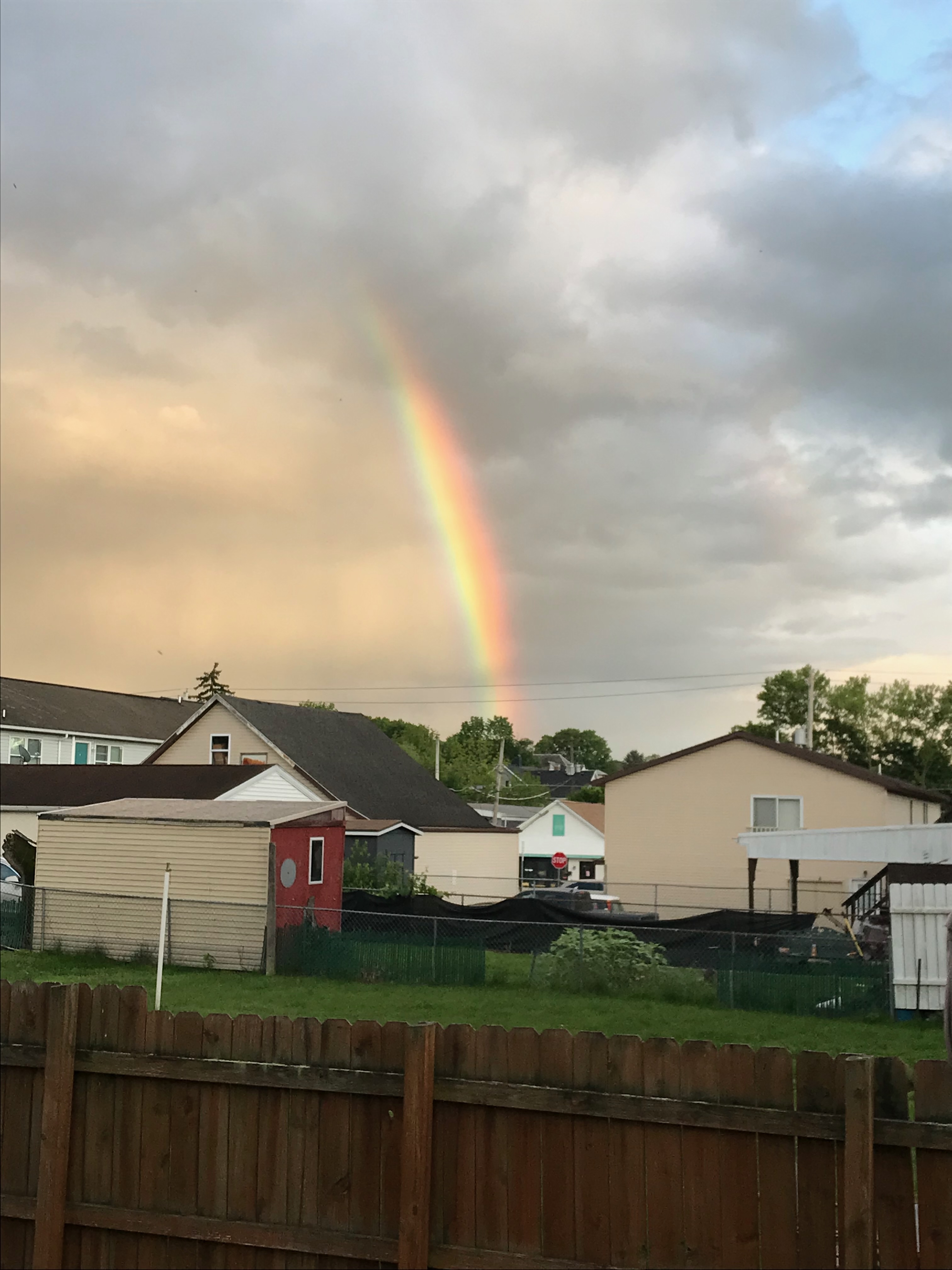
We’ve been making the best of it, getting out to see local attractions while dodging raindrops.  The weeds, I’ve noticed, love this kind of weather.  And I have a visceral reaction to putting on a heavy jacket to go out pulling weeds while watching each passing cloud for a potential downpour.  On the plus side, we have rainbows.  In fact, two nights in a row, about the exact same time, near sunset, we had a rainbow in the exact same spot in the sky.  That’s a sign of hope.  And indeed, the summer takes on a more relaxed atmosphere at work and a few holidays start creeping back in.  Until the stretch of September-October, the second annual drought.  But by then, however, off in the distance I can see the holiday season that starts in November and I know I can make it through to December.

It’s an odd way to live, isn’t it?  Experts talk about how work will be different in the future, but I have a mortgage due in the present, so I step from holiday to holiday, grateful for the time to recover.  With a government trying its best to eliminate benefits to seniors I may have chosen a bad time to reach my sixties.  At least I’m young enough to still pull weeds and push a mower.  (Once the grass dries, that is.)  The main point is not to waste this rare gift of a holiday.  There’s no rain in today’s forecast (but there is for Wednesday, every day through next weekend).  Seeing the sun buoys me up.  And if I can’t have that I can always hope that at least I can have rainbows.


Weather Bugs

In one part of my life (ahem) I’m compelled to use Microsoft Windows products.  (In my personal life I’ve used Macs since before 1990.)  On a recent update they’ve added little, frequently changing icons in the lower left end of the task bar.  It took me a few days to figure out how to stop it from sending distracting news and sports updates (I don’t need these, and they disrupt my concentration).  They also send weather updates.  I couldn’t figure out how to turn off the weather, so I let it stand.  Perhaps it’s a sop thrown to workers who now spend more hours a day on the job because commuting is becoming less of a thing, a bit of relief from staying on task.  Something to make you feel connected.  Fine and good.  But does it have to be so alarmist?

Some of us can’t ignore sudden changes on the screen (much of advertising relies on this).  When the weather icon shifts, which it does periodically, it draws my eye.  It uses the language that’s become typical to dramatize the weather.  Temperatures will “plummet” on Saturday, for example.  I looked at a more sober weather website.  The high would be ten degrees lower than it was for that day.  Hardly a “plummet.”  Or it will tell me, in rather heightened tones, that four inches of snow are coming on Wednesday.  The more sober site says possibly one inch.  An hour or so later, the icon humbly admits maybe it’ll just be one inch.  The question is, do we really need these constant updates?  With theatrical exaggeration?  I turned off news and sports, otherwise the work day would include an almost subliminal news feed that goes from boot-up to log-off.

I get through these difficult days by mostly ignoring the news.  I don’t ignore the weather—it seems more real than what’s happening in Washington.  Besides, I wrote a weather-oriented book once upon a time, and I haven’t lost the interest.  We’re going through the time of year when spring and winter are duking it out.  Every few days it snows or ices, and in-between I find wasps inside that think maybe it’s time we should just be getting on with this.  Meanwhile, each day, all day, I’m sent weather updates meant to shock and awe me.  Into what?  Yet more panic?  I’ve noted before that in some respects I have a monastic personality.  I prefer calm, most of the time, without too much extraneous stimulation.  I go for hours each day without even glancing at my phone.  And for the weather, I prefer just to look out the window.


Burn Out

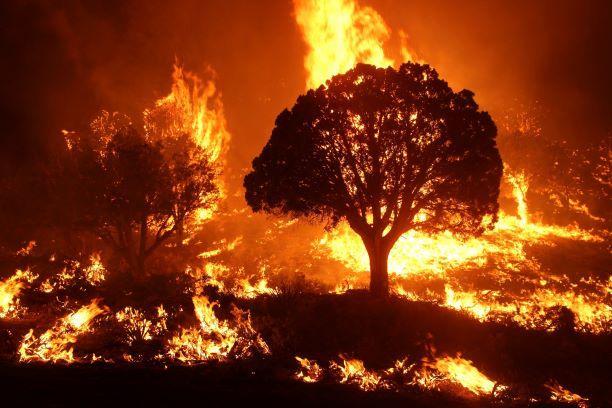
The Los Angeles fires are terrifying.  In my case, I can’t help but think of the Peshtigo, Wisconsin fire of 1871.  I read two books about it, the first because my daughter, in late elementary school in Oconomowoc, heard about the fire in class.  Embers of October by Robert W. Wells is one of the scariest books I’ve ever read.  After we’d safely moved out of Wisconsin I read Denise Gess and William Lutz’s Firestorm at Peshtigo.  Frightening stuff.  I feel for those suffering from the Los Angeles fires.  America is particularly vulnerable to such things since, according to books I read when writing Weathering the Psalms, the western half of the nation exists in, for the most part, a perpetual drought.  (Those who live in Seattle may disagree.)  Rain doesn’t fall evenly across the country.  I grew up in the relatively moist eastern part (we get a lot of rain), but even here fires are a possibility.  We had a very dry October, and a very dry May the year before.

Image credit: Mike McMillan/USFS, public domain as a work of the US government, via Wikimedia Commons

Global warming will only increase the problems, I fear.  Too long too many people in power haven’t taken it seriously enough.  The weather is a large, extremely complex phenomenon that we still don’t understand.  I sit shivering at my desk on a cloudy January day looking at weather apps that tell me it’s sunny outside.  One thing we do know about it is that if we tamper with it in one place, it affects the weather everywhere.  What if, instead of posturing and fussing with people who live in other countries, with larger entities trying to control them, we all turned our attention to that sky we hold in common?  Trying to understand its needs and temperaments?  Realizing that if crops fail in one country there will be shortages everywhere?

The fires aren’t just Los Angeles’ problem.  Large nations posturing about who has the biggest leader has proven ineffective time and again.  We need cooperators and collaborators, not nationalists.  Embers of October, especially, paints a Hell on Earth.  One that couldn’t be escaped by many of the people in this small town that was utterly wiped out by a natural disaster.  Such things should be required reading.  Instead, small-minded people ban books claiming ignorance is bliss.  Trying to avoid a metaphorical Hell, they introduce a real one here on earth.  And yet, some use even this to divide people against each other.  And people who have no will to help one another is Hell indeed.


Spirit Storm

Some time ago, we experienced quite a windstorm.  More than wind, there was a dump of rain, thunder, hail, and all that.  My wife and I were attending a Tibetan singing bowls sound-bath with some others in the cancer support community.  I’ve described this practice before, here.  In any case, the meditation is held in a large room with a tin roof—the kind of place you don’t want to be during a tornado.  We’d just got inside when the gust front hit and knocked out the power.  The instructor still went through the meditation, but the storm sounds blended with those of the singing bowls.  Afterwards my wife asked about Job.  Specifically, God speaking from the whirlwind.  I told her that was God on a bad day, but I understood what she was getting at—there’s a spirituality to the weather.  (I was going to suggest Elijah instead, but “but the Lord was not in the wind.”  Alas.

I thought of Weathering the Psalms.  My contribution to biblical studies, had I been allowed to remain in academia, would’ve been further explorations of weather terminology in the Bible.  But the Lord was not in the wind.  I wrote that book because I noticed the juxtaposition of severe weather with daily chapel at Nashotah House.  We were required to attend, no matter what the weather.  (Such is life on a fully residential campus.)  We were reciting the Psalms one day when a storm blew the power out.  It may have happened more than once, since we’re getting on past two decades hence my memory’s a touch imprecise on the point.  In any case, the spirituality of the power of the storm fascinated me.

It still does.  The next morning, out for my jog, I marveled at the number of branches down.  Thousands in the Lehigh Valley were without power.  This is probably why the ancients considered the storm god chief of the rest.  The violence of nature is something that suggests divinity.  Other primates have been observed screeching back at the sky during thunderstorms.  It’s deep in our DNA.  That doesn’t make it any less spiritual.  There’s a lot of weather in the Bible.  I only explored a tiny piece of it by trying to tackle the Psalms.  The Good Book, however, doesn’t say much about the spirituality of weather.  It’s there nevertheless.  Anything that can snap a tree a foot in diameter like a toothpick has a spiritual message for us.  I mused on the way home—we had to take a detour because of downed trees—that had the storm claimed us as victims, dying while meditating is probably not the worst way to go.  Now I wonder, what might God’s nice words from the whirlwind be?


Storming Fourth

Our founders picked a day of uncertain weather to declare independence.  One gets the sense that people were more stoic about the weather in those days.  Of course, we’ve increased global warming and made things more extreme.  Nevertheless, I can remember very few fourths of July when the possibility of storms was zero.  The weather around here has been odd this year with a suddenly hot June, with a dry spell that killed quite a few plants, followed by a cool start to July and some very intense storms.  And now, on the fourth, the possibility of rain in the forecast.  The grass hadn’t been growing in the dry spell, but I’m hoping the rain will hold off today long enough for me to get that job done.  In fact, on this secular holiday I’d been hoping to get quite a few outdoors chores checked off the list.

When I was younger and fireworks were the main draw to the day, I noticed that just about every year rain fell, or threatened to, on July fourth.  I’m sure it’s not that way everywhere, but here in Pennsylvania, where the declaration was signed, it’s a reality of life.  Of course, the modern Independence Day celebrations evolved over time to include the cookout and fireworks—outdoor activities both.  For me, apart from the outdoor chores on a day off work, a movie seems like an indoor celebratory alternative.  Perhaps Return of the Living Dead, set on the fourth.  Or I Know What You Did Last Summer.  Or Graveyard Shift.  Maybe something else.

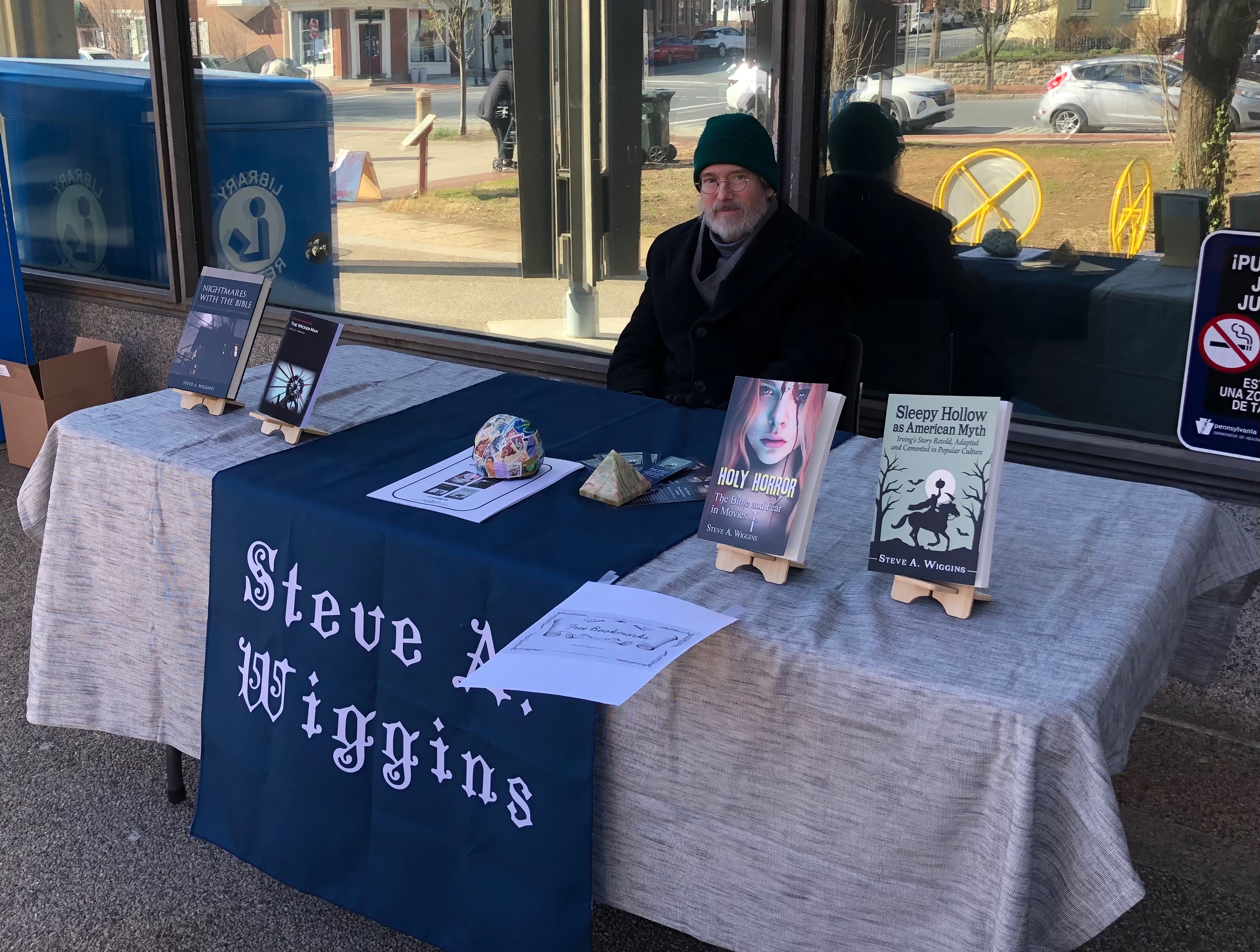
Watching the political theater unfold—and my, what a dramatic election year it’s been—perhaps a comedy horror is just about right for today.  This is going to take some thought.  Something to occupy my mind while doing those outdoor chores.  Of course, I’ve got a book to get submitted as well.  If the weeds can hold off for another day or two—is it wise to paint the porch when rain’s in the forecast?—maybe I can finish up Sleepy Hollow.  It’s a good American ghost story.  That might be appropriate as well.  You see, holidays are so rare that too many things crowd in on them.  They’re breaks from the constant earning of more money, which is the American way.  Of course, our founders were largely restless gentry.  For me a day off work is always a busy day.  Especially when the rains have returned and the grass has grown.  It must be the fourth of July.


Waiting for the Sun

Waiting.  It’s difficult in the best of circumstances.  It’s even harder when dealing with multiple sources of delay.  For example: it has been unseasonably cool around here for a few months.  Looking at the US weather maps, it looks like we’ve got just about the coolest temperatures in the lower 48.  September is usually reliably a month where you don’t need the furnace in these here parts, but that’s not the case now.  A slowly moving weather system has blocked the sun for days and our poor old house just can’t warm up.  I feel like Noah waiting for some sign of hope.  The weather apps all say, “oh, two or three more days…”  Endurance, I remind myself.  Stoicism.  Still, we need some sun about now.  But that’s not all.

In addition to wearing three heavy layers and my fingerless gloves (in September—and this will last until May!), I’m also doing my prep for a colonoscopy.  In case it’s been a while—that means a liquid diet for a day.  I need to wait until this time tomorrow to have anything to eat and my teeth are on edge because the allowable fluids tend to be sweet and I really need something salty with a bit of crunch about now.  I see I’m allowed ice pops.  But did I mention that it’s cold in here?  If it were a normal year at least one of these two things wouldn’t been an issue at this point in time.  Nobody that I know of looks forward to a colonoscopy.  I know I’ll barely sleep tonight and the whole situation ends up looking downright Dickensian.  Chilly, hungry, persistent rain.  All I really need at a time like this is just some indication that the following days might improve.  Don’t look to the Weather Channel for support.  No, rely on your Stoicism.  Endure.

The trick I usually use on myself is to dangle a small carrot—lunch will be in just three hours!—to get through a long, chilly day.  (You’ll be able to eat something hot…)  I suppose giving up caffeinated beverages a few years back (when the last colonoscopy was well forgotten), might’ve been a poor decision.  I sure could use a Thermos of coffee right about now.  And one of those solar headbands that tricks you into believing you’re getting some sun.  Hey, September’s my second favorite month, after October, so shouldn’t waiting be just a smidge easier?  I’ve been waiting for September since last November.  And still I wait.  Such is the human lot in life.  Endurance is important, I know.  But a peek of sunshine (haven’t seen anything like it for three days) in September—is that too much to ask?  Or at least a hot meal.  What would Zeno do?  (Of course, he did live in sunny Greece…)


Weathering the Winter

Although it’s been cold out, in many ways this feels like the year without a winter.  Around here we’ve had no real measurable snowfall and temperatures have generally hovered around 40 F, mostly cloudy.  I get cold easily, however, so I need to know how to dress for jogging.  During a warm spell I looked at WeatherBug.  It’s my go-to app for such things.  It told me the current temperature was 49.  Since it’d been in the sixties the day before, that was believable.  Then I glanced at our outdoor thermometer.  It read 39.  A ten-degree difference is significant for jogging, so I called in a third party.  Weather.com said it was 40, much closer to my actual feeling of things—it was chilly inside that morning.  WeatherBug also said it was cloudy, but Weather.com disagreed.  A glance outside showed thin, hazy cloud cover.

Now, I know apps can’t cater to individual needs, but it does seem that WeatherBug was using projections rather than real-time information.  Either that, or somebody was standing too close to the thermometer at the local reporting station, and perhaps breathing on it.  I’m not one of those people who rely on my phone for everything.  I do use it for navigation and snapping quick pictures, but until today I also used it for checking the weather.  I’ve been surprised how often WeatherBug tells me it’s sunny out when I can see nothing but clouds.  Sometimes looking out the window is the best way to learn what your individual weather is like.  Weather is terribly local.

The capriciousness of weather is one of the main factors that led me to write Weathering the Psalms.  Another, of course, was the hope that an academic post might actually consider a guy like me.  The weather has always been a source of personal fascination.  The threat of severe weather, particularly in the Midwest, was a source of naked awe.  I remember standing outside in Illinois with the wide, expansive horizon all around, and staring straight up to a brewing storm cloud thousands of feet overhead.  I didn’t need an app to tell me to take shelter.  Or that time in Wisconsin when a weather system led to repeated, identical cycles of storms that lasted days, leading to localized flooding with rain following a clockwork regularity.  Even then I was a jogger, and for a jogger knowing the weather in advance is important.  These days all that majestic sky drama comes via a device that fits inside my pocket.  It seems we’ve lost something, even though we’re safer this way.  At least within ten degrees.


After It’s News

We live our lives by the news cycle.  It tells us what to think about and worry about, often beyond our local, daily concerns.  And sometimes we forget about yesterday’s headliners.  If you’re curious about whatever became of actual Hurricane Ian, I can tell you.  He’s been hanging around here.  Oh, he’s a mere shadow of his former self, becoming just a low-pressure system sitting off the Atlantic coast between New York and Philadelphia.  And spinning, and spinning, and spinning.  Around here we haven’t seen the sun since last Thursday.  The rain has been intermittent, but yesterday it was pretty much all day and he’s set to continue dominating the skies here at least through today.  Your typical hurricane, if there is such a thing, just keeps moving until it reaches unpopulated areas and nobody cares any more.  This one has been a long-term guest.

With the first few days of lassitudinous rain we had maybe an inch.  Rainfall spat and sputtered and sprinkled.  Yesterday it began to really come down and as I write this it’s too dark to tell but I can hear it splashing on my windows.  The toadstools popping up in the yard are impressive.  As has been the wind and below average temperatures.  I’m wearing my winter-level protection and dodging raindrops on my morning jogs.  Some days I’ve had to delay them for the water.  Not too many other people are out taking their exercise, I notice.  The Weather Channel’s taken to calling it just a low-pressure system, but we’re on a first-name basis now.  Ian is still very much a thing.  At the end of “daylight” yesterday the rain gauge read about three inches.

The thing about these “unusual” storms is they’re becoming the norm.  Global warming has been affecting us for years now, even as we deny it exists.  Our summer around here was very hot and very dry.  The dry was okay by me, but the heat prevented any outdoor work or play for a good deal of the time.  Days when you’d stay inside and try your hardest not to move.  We had maybe one or two days of transitional weather then boom, straight to November.  The leaves around here are still mostly green although they’ve been starting to change more readily now that October’s arrived with December in it’s train.  Forecasters tell us, like Annie says, the sun will come out tomorrow.  Around here we sure hope that’s right.  I wonder what else is happening hidden behind the news?

Not Ian, but you get the picture

Is It That Time Already?

Maybe it’s just me, but August seems to be the new October.  If any of you are experiencing the heat wave that’s (oddly enough) like global warming, my apologies.  Around here—and local is what we all are—nights are cool enough to require blankets after our very hot July.  In fact, I need long sleeves and long pants in the mornings, it’s so chilly.  By mid-afternoon I’m starting to roast, but the grass is brown and that October feeling is in the air.  Or maybe it’s just that I’m awake at odd hours and the perspective from this time of day is somehow prescient.  Who knows?  As I try to sneak a jog in before work I see the walnuts have already gone yellow.  And I wonder.

We idealize the weather of our youth.  That sense of oughtness sets in early.  This is the way the weather should go.  We’ve been pouring greenhouse gasses into the atmosphere, however, for all of my life and before.  The warning signs have been around for decades but somehow liars with false hair convince us that any progress ought to be reversed.  I wonder if he’s been outside lately.  The planet is constantly changing based on the larger picture.  It has been doing this for eons, well before our species evolved.  Thinking it was created for us distorts our thinking.  The real question is whether we’ll be able to adapt.  I can’t say the prognosis is rosy, given how we’re constantly trying to kill those who live just across that mountain range, or that wide river.  We can’t seem to coexist.

I like October.  Still, I can’t help but think of all the things we didn’t get done this summer because it was too hot to be working outside.  Or we couldn’t get contractors to return our calls.  Seasons change as the atmosphere tries to adjust to all the chemicals we cough out.  October and its monsters seem to arrive earlier each year.  I’ve been feeling it for weeks already.  Seasons are really negotiations.  Around here, in this temperate zone, we spend most of the year with the furnace on, taking the edge off cold mornings and trying to keep this drafty house habitable for about six months of the year.  Everything’s constantly in flux and we simply try to adjust.  Not even the sun will last forever.  But for now I see the signs of harvest season beginning, and I feel the change in the air.  And I can sense October just around the corner. So goes August.