Spirit Storm

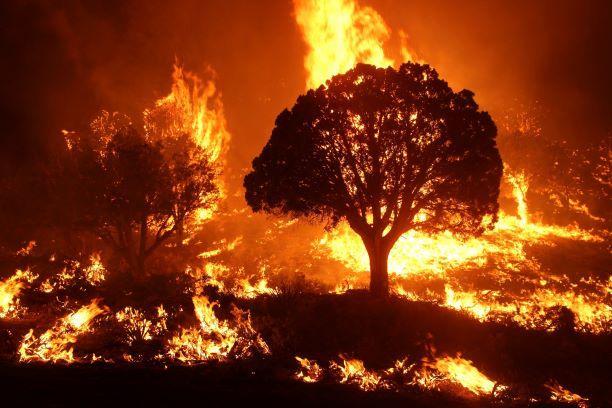
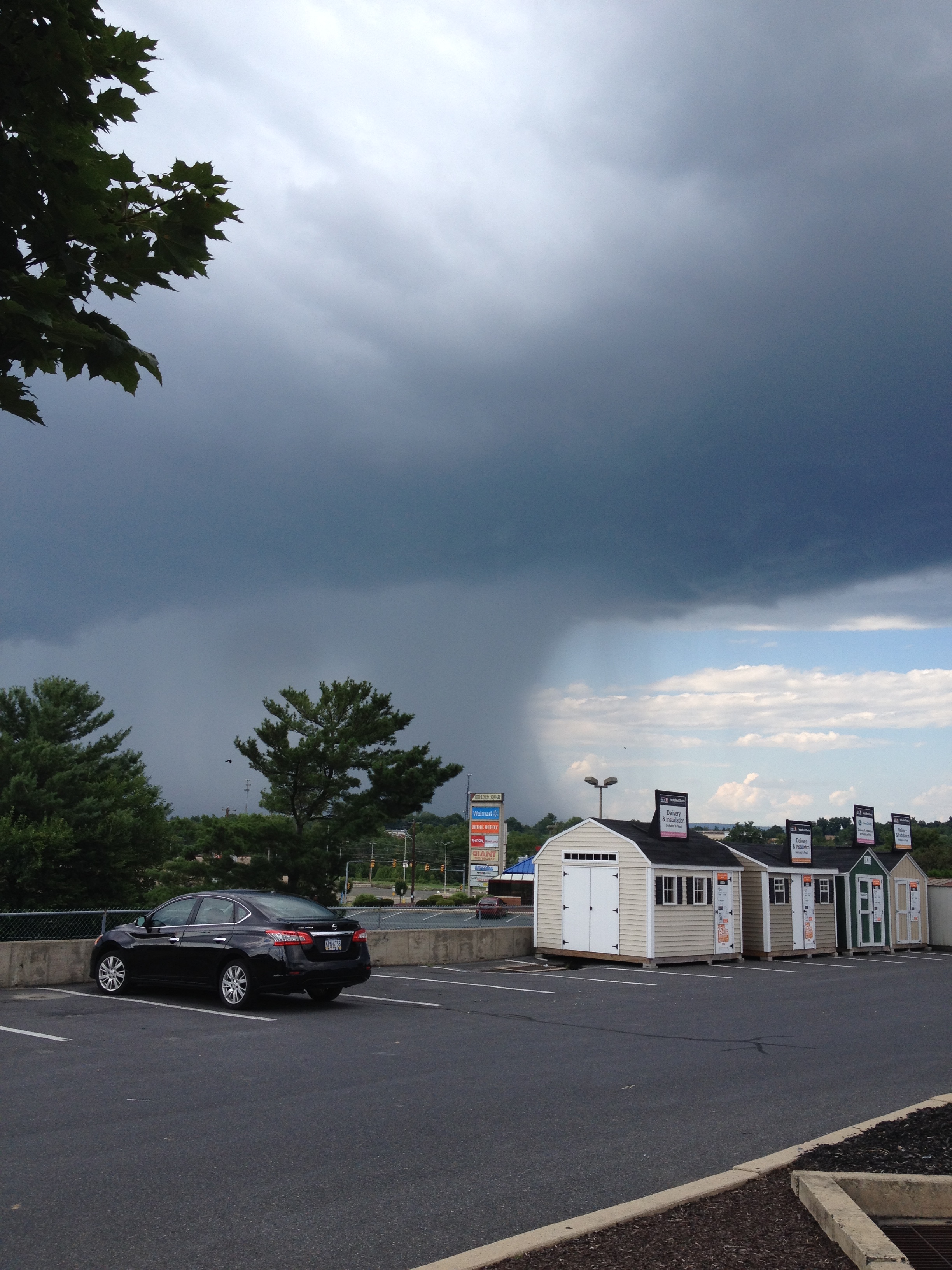
Some time ago, we experienced quite a windstorm.  More than wind, there was a dump of rain, thunder, hail, and all that.  My wife and I were attending a Tibetan singing bowls sound-bath with some others in the cancer support community.  I’ve described this practice before, here.  In any case, the meditation is held in a large room with a tin roof—the kind of place you don’t want to be during a tornado.  We’d just got inside when the gust front hit and knocked out the power.  The instructor still went through the meditation, but the storm sounds blended with those of the singing bowls.  Afterwards my wife asked about Job.  Specifically, God speaking from the whirlwind.  I told her that was God on a bad day, but I understood what she was getting at—there’s a spirituality to the weather.  (I was going to suggest Elijah instead, but “but the Lord was not in the wind.”  Alas.

I thought of Weathering the Psalms.  My contribution to biblical studies, had I been allowed to remain in academia, would’ve been further explorations of weather terminology in the Bible.  But the Lord was not in the wind.  I wrote that book because I noticed the juxtaposition of severe weather with daily chapel at Nashotah House.  We were required to attend, no matter what the weather.  (Such is life on a fully residential campus.)  We were reciting the Psalms one day when a storm blew the power out.  It may have happened more than once, since we’re getting on past two decades hence my memory’s a touch imprecise on the point.  In any case, the spirituality of the power of the storm fascinated me.

It still does.  The next morning, out for my jog, I marveled at the number of branches down.  Thousands in the Lehigh Valley were without power.  This is probably why the ancients considered the storm god chief of the rest.  The violence of nature is something that suggests divinity.  Other primates have been observed screeching back at the sky during thunderstorms.  It’s deep in our DNA.  That doesn’t make it any less spiritual.  There’s a lot of weather in the Bible.  I only explored a tiny piece of it by trying to tackle the Psalms.  The Good Book, however, doesn’t say much about the spirituality of weather.  It’s there nevertheless.  Anything that can snap a tree a foot in diameter like a toothpick has a spiritual message for us.  I mused on the way home—we had to take a detour because of downed trees—that had the storm claimed us as victims, dying while meditating is probably not the worst way to go.  Now I wonder, what might God’s nice words from the whirlwind be?


Storming Fourth

Our founders picked a day of uncertain weather to declare independence.  One gets the sense that people were more stoic about the weather in those days.  Of course, we’ve increased global warming and made things more extreme.  Nevertheless, I can remember very few fourths of July when the possibility of storms was zero.  The weather around here has been odd this year with a suddenly hot June, with a dry spell that killed quite a few plants, followed by a cool start to July and some very intense storms.  And now, on the fourth, the possibility of rain in the forecast.  The grass hadn’t been growing in the dry spell, but I’m hoping the rain will hold off today long enough for me to get that job done.  In fact, on this secular holiday I’d been hoping to get quite a few outdoors chores checked off the list.

When I was younger and fireworks were the main draw to the day, I noticed that just about every year rain fell, or threatened to, on July fourth.  I’m sure it’s not that way everywhere, but here in Pennsylvania, where the declaration was signed, it’s a reality of life.  Of course, the modern Independence Day celebrations evolved over time to include the cookout and fireworks—outdoor activities both.  For me, apart from the outdoor chores on a day off work, a movie seems like an indoor celebratory alternative.  Perhaps Return of the Living Dead, set on the fourth.  Or I Know What You Did Last Summer.  Or Graveyard Shift.  Maybe something else.

Watching the political theater unfold—and my, what a dramatic election year it’s been—perhaps a comedy horror is just about right for today.  This is going to take some thought.  Something to occupy my mind while doing those outdoor chores.  Of course, I’ve got a book to get submitted as well.  If the weeds can hold off for another day or two—is it wise to paint the porch when rain’s in the forecast?—maybe I can finish up Sleepy Hollow.  It’s a good American ghost story.  That might be appropriate as well.  You see, holidays are so rare that too many things crowd in on them.  They’re breaks from the constant earning of more money, which is the American way.  Of course, our founders were largely restless gentry.  For me a day off work is always a busy day.  Especially when the rains have returned and the grass has grown.  It must be the fourth of July.


Waiting for the Sun

Waiting.  It’s difficult in the best of circumstances.  It’s even harder when dealing with multiple sources of delay.  For example: it has been unseasonably cool around here for a few months.  Looking at the US weather maps, it looks like we’ve got just about the coolest temperatures in the lower 48.  September is usually reliably a month where you don’t need the furnace in these here parts, but that’s not the case now.  A slowly moving weather system has blocked the sun for days and our poor old house just can’t warm up.  I feel like Noah waiting for some sign of hope.  The weather apps all say, “oh, two or three more days…”  Endurance, I remind myself.  Stoicism.  Still, we need some sun about now.  But that’s not all.

In addition to wearing three heavy layers and my fingerless gloves (in September—and this will last until May!), I’m also doing my prep for a colonoscopy.  In case it’s been a while—that means a liquid diet for a day.  I need to wait until this time tomorrow to have anything to eat and my teeth are on edge because the allowable fluids tend to be sweet and I really need something salty with a bit of crunch about now.  I see I’m allowed ice pops.  But did I mention that it’s cold in here?  If it were a normal year at least one of these two things wouldn’t been an issue at this point in time.  Nobody that I know of looks forward to a colonoscopy.  I know I’ll barely sleep tonight and the whole situation ends up looking downright Dickensian.  Chilly, hungry, persistent rain.  All I really need at a time like this is just some indication that the following days might improve.  Don’t look to the Weather Channel for support.  No, rely on your Stoicism.  Endure.

The trick I usually use on myself is to dangle a small carrot—lunch will be in just three hours!—to get through a long, chilly day.  (You’ll be able to eat something hot…)  I suppose giving up caffeinated beverages a few years back (when the last colonoscopy was well forgotten), might’ve been a poor decision.  I sure could use a Thermos of coffee right about now.  And one of those solar headbands that tricks you into believing you’re getting some sun.  Hey, September’s my second favorite month, after October, so shouldn’t waiting be just a smidge easier?  I’ve been waiting for September since last November.  And still I wait.  Such is the human lot in life.  Endurance is important, I know.  But a peek of sunshine (haven’t seen anything like it for three days) in September—is that too much to ask?  Or at least a hot meal.  What would Zeno do?  (Of course, he did live in sunny Greece…)


Weathering the Winter

Although it’s been cold out, in many ways this feels like the year without a winter.  Around here we’ve had no real measurable snowfall and temperatures have generally hovered around 40 F, mostly cloudy.  I get cold easily, however, so I need to know how to dress for jogging.  During a warm spell I looked at WeatherBug.  It’s my go-to app for such things.  It told me the current temperature was 49.  Since it’d been in the sixties the day before, that was believable.  Then I glanced at our outdoor thermometer.  It read 39.  A ten-degree difference is significant for jogging, so I called in a third party.  Weather.com said it was 40, much closer to my actual feeling of things—it was chilly inside that morning.  WeatherBug also said it was cloudy, but Weather.com disagreed.  A glance outside showed thin, hazy cloud cover.

Now, I know apps can’t cater to individual needs, but it does seem that WeatherBug was using projections rather than real-time information.  Either that, or somebody was standing too close to the thermometer at the local reporting station, and perhaps breathing on it.  I’m not one of those people who rely on my phone for everything.  I do use it for navigation and snapping quick pictures, but until today I also used it for checking the weather.  I’ve been surprised how often WeatherBug tells me it’s sunny out when I can see nothing but clouds.  Sometimes looking out the window is the best way to learn what your individual weather is like.  Weather is terribly local.

The capriciousness of weather is one of the main factors that led me to write Weathering the Psalms.  Another, of course, was the hope that an academic post might actually consider a guy like me.  The weather has always been a source of personal fascination.  The threat of severe weather, particularly in the Midwest, was a source of naked awe.  I remember standing outside in Illinois with the wide, expansive horizon all around, and staring straight up to a brewing storm cloud thousands of feet overhead.  I didn’t need an app to tell me to take shelter.  Or that time in Wisconsin when a weather system led to repeated, identical cycles of storms that lasted days, leading to localized flooding with rain following a clockwork regularity.  Even then I was a jogger, and for a jogger knowing the weather in advance is important.  These days all that majestic sky drama comes via a device that fits inside my pocket.  It seems we’ve lost something, even though we’re safer this way.  At least within ten degrees.


After It’s News

We live our lives by the news cycle.  It tells us what to think about and worry about, often beyond our local, daily concerns.  And sometimes we forget about yesterday’s headliners.  If you’re curious about whatever became of actual Hurricane Ian, I can tell you.  He’s been hanging around here.  Oh, he’s a mere shadow of his former self, becoming just a low-pressure system sitting off the Atlantic coast between New York and Philadelphia.  And spinning, and spinning, and spinning.  Around here we haven’t seen the sun since last Thursday.  The rain has been intermittent, but yesterday it was pretty much all day and he’s set to continue dominating the skies here at least through today.  Your typical hurricane, if there is such a thing, just keeps moving until it reaches unpopulated areas and nobody cares any more.  This one has been a long-term guest.

With the first few days of lassitudinous rain we had maybe an inch.  Rainfall spat and sputtered and sprinkled.  Yesterday it began to really come down and as I write this it’s too dark to tell but I can hear it splashing on my windows.  The toadstools popping up in the yard are impressive.  As has been the wind and below average temperatures.  I’m wearing my winter-level protection and dodging raindrops on my morning jogs.  Some days I’ve had to delay them for the water.  Not too many other people are out taking their exercise, I notice.  The Weather Channel’s taken to calling it just a low-pressure system, but we’re on a first-name basis now.  Ian is still very much a thing.  At the end of “daylight” yesterday the rain gauge read about three inches.

The thing about these “unusual” storms is they’re becoming the norm.  Global warming has been affecting us for years now, even as we deny it exists.  Our summer around here was very hot and very dry.  The dry was okay by me, but the heat prevented any outdoor work or play for a good deal of the time.  Days when you’d stay inside and try your hardest not to move.  We had maybe one or two days of transitional weather then boom, straight to November.  The leaves around here are still mostly green although they’ve been starting to change more readily now that October’s arrived with December in it’s train.  Forecasters tell us, like Annie says, the sun will come out tomorrow.  Around here we sure hope that’s right.  I wonder what else is happening hidden behind the news?

Not Ian, but you get the picture

Is It That Time Already?

Maybe it’s just me, but August seems to be the new October.  If any of you are experiencing the heat wave that’s (oddly enough) like global warming, my apologies.  Around here—and local is what we all are—nights are cool enough to require blankets after our very hot July.  In fact, I need long sleeves and long pants in the mornings, it’s so chilly.  By mid-afternoon I’m starting to roast, but the grass is brown and that October feeling is in the air.  Or maybe it’s just that I’m awake at odd hours and the perspective from this time of day is somehow prescient.  Who knows?  As I try to sneak a jog in before work I see the walnuts have already gone yellow.  And I wonder.

We idealize the weather of our youth.  That sense of oughtness sets in early.  This is the way the weather should go.  We’ve been pouring greenhouse gasses into the atmosphere, however, for all of my life and before.  The warning signs have been around for decades but somehow liars with false hair convince us that any progress ought to be reversed.  I wonder if he’s been outside lately.  The planet is constantly changing based on the larger picture.  It has been doing this for eons, well before our species evolved.  Thinking it was created for us distorts our thinking.  The real question is whether we’ll be able to adapt.  I can’t say the prognosis is rosy, given how we’re constantly trying to kill those who live just across that mountain range, or that wide river.  We can’t seem to coexist.

I like October.  Still, I can’t help but think of all the things we didn’t get done this summer because it was too hot to be working outside.  Or we couldn’t get contractors to return our calls.  Seasons change as the atmosphere tries to adjust to all the chemicals we cough out.  October and its monsters seem to arrive earlier each year.  I’ve been feeling it for weeks already.  Seasons are really negotiations.  Around here, in this temperate zone, we spend most of the year with the furnace on, taking the edge off cold mornings and trying to keep this drafty house habitable for about six months of the year.  Everything’s constantly in flux and we simply try to adjust.  Not even the sun will last forever.  But for now I see the signs of harvest season beginning, and I feel the change in the air.  And I can sense October just around the corner. So goes August.


Free Research

I’ve lost track of how many times it’s happened, but it has been relatively few.  Someone I don’t know will approach me and ask me to post about something on my blog.  Sometimes they’ll even send me a book to highlight.  Perhaps not the most effective way to build a library, I’ll admit.  And some of the books haven’t been great.  I admire them nonetheless.  It takes great effort to write a book.  And not a small amount of faith, too.  Many books—perhaps most—never get published.  A great many are self-published.  (Those who work in publishing can be a stuck-up lot sometimes.)  Even those professionally published can use a push from time to time.  On this blog I’ve actively resisted the urge to make it about one thing.  Why?  Is life just one thing?

In a recent conversation I laid out for someone new what had been my research agenda as a young professor.  It had a direction still reflected in some of the categories you’ll find on the right column of this blog.  After writing on Asherah, I was going to give similar treatment to the other ancient goddesses attested at Ugarit.  This was perhaps ambitious for an academic waif at Nashotah House, but it was well underway.  My book on Shapshu was making good progress when the market (that dragon to every St. George) led friends to suggest turning biblical, which led to Weathering the Psalms.  A new research agenda—explore the weather terminology (the meteorotheology) of other biblical books—arose.  There were storms, after all, becalmed over lakes.  Horror entered in the jobless period and beyond.

And social justice.  I’m not a thrice-failed minister for nothing!  In fact, a recent freebie was a book on social justice.  I have a colleague as interested in monsters as me.  This particular scholar had decided to focus on the cause of the poor.  Even economists are starting to say the unequal distribution of wealth is hurting us.  While the rich fly to space on personally owned rockets, the rest of us have trouble filling up at the service station, even if we have jobs.  So it is that this blog is eclectic.  A friend told me early on that it would be more popular if I just stuck to one topic.  That’s probably true, but my mind can’t settle down like that.  And when people send me things to talk about, I’m happy to do so, if it fits somewhere in my mind.


Easter Weather

The weather doesn’t always cooperate for holidays.  Easter is, at heart, a celebration of spring—life after death.  Around here this holiday has been accompanied by fits and starts in warmer weather and instead of warmer it’s actually colder again.  Just a week ago there was snow in the air.  Life’s that way; you don’t always know what to expect.  I guess I’m still in hibernation mode.  No matter the season, there never seems to be enough time to sleep.  As a youth I always attended sunrise services on Easter.  These days I regularly rise before the sun, so as long as I’m capable it’s like every day is Easter.  But with work.  Even on what many recognize as Easter—which overlaps with Passover this year—the Orthodox feel we have it too early, what with the Julian calendar still being in effect.  It’s all a matter of how we look at time.

As much as I hate mowing, I admire the exuberance of grass.  It’s ready to welcome the longer days by stretching toward the sun.  Drinking in the plenteous rain.  The dandelions have already begun to spread, opening their yellow eyes to all and sundry passing insects.  Easter is a time to reflect on life returning after winter.  And I can’t help but think of those in the southern hemisphere for which Easter falls in the autumn.  The theology fails to match the seasons as life springs up just as winter is about to set in.  The Christian viewpoint is a northern one, keyed to our seasons.  The weather doesn’t always observe the prevailing theology.

Around here Good Friday was a fine, sunny day.  Like most of the fine, sunny days it was a work day.  Now it’s a chillier Easter, the Saturday between being a mix with some rain.  When I was young—eagerly awaking for sunrise services, which I often had a hand in designing—I marveled at how the weather often seemed to cooperate.  Now as I think back, I remember coming out of Good Friday services into the incongruous sunshine and finding many an Easter still bearing an unseasonal chill.  Weather is, of course, a local and global phenomenon.  One person’s chilly Easter is too hot for someone further away.  And for yet others the onset of autumn.  Globalism has taught us to look further, to think in terms of how others might be experiencing this world.  Easter seems an appropriate time to do just that.


Footprints in the Snow

Although my back’s grateful, many of the snowstorms rolling across the country have left just a small bit of snow here so far.  Small bits of snow create their own hazards, however.  A snow covered trail quickly becomes hazardous for jogging, so I walk.  This past week we had a little snow and temperatures low enough to dissuade many of those who normally walk or run the trail.  Those of us with desk jobs really have to make an effort to move.  When I was out I was surprised by a couple of things.  There were no other lunch-time walkers and it was above freezing.  The almost untrodden snow gave under my feet and in the patches where the sun made it through, was actually wet.  I took my usual constitutional and headed back to work.

These short, cold winter days are too treacherous for walking in the dark.  Black ice isn’t a myth unless you can slip and fall on a myth.  The next day it was bitterly cold.  Still, skipping exercise a day is a slippery slope.  I headed back to the trail.  At first my footsteps from the previous day had led to a regular set of tracks where the snow had melted down and the pea gravel had dried out.  Walking was safe here.  As I reached the further, more wooded end of the trail it was quite different.  Sheltered by the trees, my foot prints from the previous day had slightly melted and then refroze, leaving a track of ice that could easily twist an ankle.  I began to think of the concept of following.

We find those whose wisdom compels us.  We hear them in the classroom, the pulpit, or the street corner.  Or we read them in a book.  We might even see them on television or the internet.  They seem to have something we lack, so we follow them.  Their tracks often start out secure enough.  Dry patches in an otherwise slippery covering of snow.  We follow on, thinking we’ve found our way.  Somewhat further down the path, however, the tracks become icy, showing us that even the great leaders have their own hidden secrets.  The places where they too slip and fall.  The wisdom we seek is collective.  No one person has all the answers.  If that were so it should be obvious to us all.  Instead we need to strike out on that nearly unbroken snow to discover for ourselves.


Weathering the Sleep

Weather still has a tremendous, if incremental, effect on life.  Patterns where a repeating weather cycle seems stuck in place are a good example.  While not exactly uncommon in summer around here, thunderstorms develop during the hot and humid days.  Our current pattern is that thunderstorms arrive in the middle of the night.  For days in a row.  We had a few days in our current series.  Some of us can’t sleep through thunderstorms, not least because we have to get up and close the windows, pulling fans out, so that the water doesn’t invade.  This means several nights of interrupted sleep and rather unforgiving work schedules the next day.  Companies don’t often take this fact of the weather into consideration.  I’m not the only one yawning all day.

Of course, other things interrupt sleep as well.  Any parent of a newborn has those perpetually baggy eyes that we’ve come to associate with trying to get an infant to sleep through the night.  Work doesn’t smile on that kindly either.  Both of these (and many others) are very real human concerns regarding slumber.  HR, on the other hand, looks at the clock with a frown.  This sort of work ethic is particularly bad in America where work is a kind of sacred obligation (unless you’re a minor, rich, or retired).  You owe that time, no matter how sleepy you are or sloppily you may work because of it.  In my case it’s the weather that’s been causing my drowsy days.  I guess I shouldn’t have given up caffeine a few years back.

Weather, although it’s treated as a “neutral” subject, affects everything.  There are deniers, but climate change is real.  It’s measured across centuries and millennia, however, and our point of view spans only the few decades of our own lifetimes.  We come again and again to the myth that this planet was created for us rather than the more factual realization that we grew organically out of it.  Our civilization is complex and grows more so all the time, requiring less and less time in nature.  Nature isn’t predisposed to be nice to us, or to any species.  It’s a matter of balance.  So it is with the weather.  This massive atmosphere above us seeks to balance itself out but we’re making it hotter than it should be.  Many suppose that God will sort it all out, if, indeed, forcing a crisis won’t compel divine intervention.  I just hope the “man upstairs” has been getting enough sleep.


Ever-Changing Skies

The weather is something we like to think is trivial.  We’ve got more important things to do than worry about it.  Yet even our most important ways of dealing with life’s issues have to take the humble weather into account.  The fact that I was awoken by a thunderstorm at around 1:30, and, given my schedule, thus began my day, perhaps has something to do with it.  And perhaps so does a conversation I overheard on a trip to Ithaca.  Now, upstate New York isn’t known for its cooperative weather.  In fact, the alma mater of Binghamton University includes the phrase “ever-changing skies.”  I was in a public place and a conversation was being had between two men who were strangers to me.  My ears perked up when I realized they were discussing higher education.

This should surprise none of my regular readers.  Higher education has been the stand-offish lover in my life.  In any case, as one guy was explaining to the other, he worked at Cornell University—one of the Ivy League schools—and he opined that the reason it had trouble recruiting faculty was, well, the weather.  Now, I’m one to sometimes take weather personally.  (I’m still wondering what the point of last night’s thunderstorm was.  Anything that wakes me after midnight essentially personally ends my night’s sleep.)  In any case, being one of those under-employed academics I had to think about this.  I’d be glad for a university post—would I turn one down because of the weather?  Is meteorological preference really that strong?  Especially since in polite conversation the weather is considered the shallowest of topics.

Weather is vitally important.  Perhaps because of its ubiquity we tend to overlook it.  Think about rain on a wedding day.  Or a moving day.  In the latter case it can be more than inconvenient.  Sports events can be cancelled due to weather (baseball is especially prone to this).  Extreme weather (which is becoming more common) can shut everything down.  Is is just me, or does every thunderstorm now come with a “severe” warning attached?  Weather is more than just inconvenient; our lives depend upon it.  Thoughts not unrelated to these were in my mind as I wrote Weathering the Psalms.  I’ve only ever lived in rainy climates.  I realize many others aren’t nearly so lucky.  The drought in our western states is troubling.  Perhaps higher education might be able to rise above it?  Or will the most educated turn down jobs because of the inconvenience of ever-changing skies?


All Day Long

The summer solstice is always a bittersweet day.  The longest day of the year.  From now on the days will begin, almost imperceptibly at first, to get shorter.  The wheel begins its six-month roll toward the cold, dark days of winter.  Although the year whiplashes through these extremes in the temperate zones, I wouldn’t have it any other way.  The changes are slow right now.  In fact, the celebration of Midsummer doesn’t usually come until about the 24th.  These long, languorous days can be like that.  

I’ve been studying holidays for well over a decade by now.  Some have origins that are obvious, such as the solstices and equinoxes.  Although ancient peoples were quite capable of observing and marking these days, it seems their perceptions of the seasons were somewhat different than ours.  Midsummer, to us, is the official beginning of summer.  We all know, however, that we’ve had days that’ve felt like summer already.  They start to come, often in May.  “Meteorological summer” is actually June through August while “astronomical summer” begins today.  Our calendars are a matter of convention.  Not only that, but the motivation to mark special days began as a religious impulse.  Otherwise we’d have no particular reason to tell one day from another.

But think of the ancients again.  People were generally illiterate, and although the elites could mark and know the actual solstice, Midsummer marks what the weather feels like on the ground.  Seasons, in antiquity, were understood by what was happening on the ground.  For example, in Ireland February 1, the festival of Imbolc, was considered the start of spring.  Ewes were lambing and that was a sure sign winter was beginning to end.  With such and outlook, folk wisdom reckoned that summer began on May Day, or Beltane.  In such a perspective, the longest day marks midsummer.  Yes, the heat and humidity have really yet to set in, but the climate in Ireland and the British Isles is tempered by the Gulf Stream and doesn’t reach, say, Midwestern extremes.

Those of us raised in scientific worldviews have been taught from youth that summer begins today.  People haven’t always seen it that way.  Not everyone experiences the extremes of weather that temperate regions of the United States do.    In the northern hemisphere—for the global south experiences its shortest day of the year today—the days get no longer than this.  Wheels by their very nature spin.  Our round planet now gives us shorter days until the other extreme is reached.


Thoughts of Christmas

Christmas, in merry old England, used to be the day when bills were due.  There are vestiges of that still.  Just this past week, when my mind was on upcoming celebrations and family time, companies continue to email me their bills, reminding me that all celebrations are but temporary.  Money’s the real thing, and it takes no holidays.  While the holiday season may be subdued for some due to lack of travel, for me any day that I don’t need to leave the house is a good one.  We had a pretty nasty patch of weather on Christmas Eve, and one might be tempted to say that the atmospheric conditions outside are frightful.  There’s a coziness about staying indoors around the holidays.  Besides, there’s a pandemic out there too.

We’ve got a quiet day planned at home with our usual traditions.  We added a Yule log to our celebrations this year—much of what we now recognize as Christmas derived from the teutonic Yule.  Otherwise, we are quiet people with rather simple tastes.  Even if we can’t afford much, the holidays mean time off work.  Time for those close to us without constantly having to auto-correct back to earning money at work.  I frequently reflect on how distorted capitalism has made us.  Our European colleagues have far more time off work than Americans do.  They don’t seem to suffer for it.  There’s not much light outside anyway, so why not hunker down a while?  Reflect on what’s really important?

First thing this morning, after watering the tree, I fired up the computer to write a few words before the festivities began.  The first two emails in my inbox were, as if on cue, bills.  Computers have no idea this is a holiday, and our neighbor’s early morning car announcing its lock secured tells me that he’s just getting home from work.  The fiction that we all have today off, as time home with family, plays out every year.  Holidays are often the privilege of the affluent, which is why, I suppose, Saturnalia was marked by a reversal of roles for several days.  Rome wasn’t exactly a friendly empire, but it wasn’t a capitalist one either.  This Christmas I’m hoping that those who have to work today—healthcare workers, those who keep stores open for last-minute supplies, emergency workers of all kinds—will have adequate time for peace coming to them.  Even non-essential work can be wearying.  Let’s celebrate, thankful that we’ve survived these last few years at all.  The bills will wait until tomorrow.


Weathering Frights

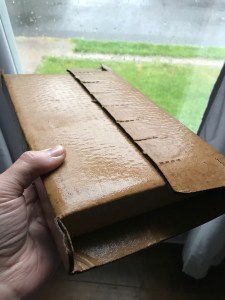
It reminded me of a nightmare.  The box, containing a book, was soaked through.  A sudden thunderstorm had come before we knew the box was even there on the porch and memories of several boxes of rain-ruined books came back uninvited.  Water and books just don’t mix.  This particular book, I knew, was Peter Thuesen’s Tornado God, which I had ordered back in December and which has just been released.  The irony wasn’t lost on me.  My own second book, Weathering the Psalms, was a rather inelegant treatment on a similar topic and I’ll discuss Thuesen’s book in further detail here once I’ve read it.  The point is that no matter how arrogant we become as a species the weather just remains beyond our control.  The rainbow at the end of this small storm was that although the packaging was soaked, I found the box before the book itself had time to get wet.

My research, ever since my first book, has largely been about making connections.  The weather is so quotidian, so common, that we discuss it without trepidation in casual conversation.  It is, however, one of the most dangerous things on our planet.  Severe storms kill both directly and indirectly.  Cyclones, typhoons, and hurricanes can do so on a massive scale.  So can their dramatic opposite, drought.  Snow and melting ice caps also threaten life, as do floating chunks of ice in chilly oceans.  It’s no wonder that the weather has been associated with gods from the earliest times.  Even today literalists will say God is in the sky although meteorologists and astronomers can find no pearly gates when they look up.  We just can’t shake the idea that weather is some kind of reflection of divine moodiness.

As weather becomes more and more extreme—it’s already a system that we’ve tipped seriously off balance—I suspect more and more people will start to assign it some kind of divine agency.  This June we’ve already gone from shivering mornings with frost on the roof to nights when sleep is impossible because it’s so warm and humid, all within a matter of a couple of days.  And this isn’t that unusual.  Wait’l the gods really get angry.  Weather is closely related to the water cycle, of course.  We can learn about such things from books.  We can’t take them out during a storm, however, and homeownership is all about keeping water out, or only in prescribed locations indoors.  When the delivery driver leaves a box on your porch, however, it remains within reach of the storm gods.


Cold Psalms

“Ne’er cast a cloot ’til May be oot,” as we heard it in Scotland, was a warning, loosely translated, to “never take off a layer until May is over.”  That bit of lowland wisdom fits this spring pretty well.  As I was donning full winter regalia for my jog this morning my thoughts naturally turned toward the weather.  Memory distorts things, of course, but I keep coming back to my youth and thinking late May used to be reliably warm.  There were chilly mornings from time to time, but yesterday held a touch of November in the air, as if the world somehow switched axes.  Even the usual animals I see—deer, groundhogs, ducks, and the occasional fox or raccoon—all seemed to be sleeping in this morning.  Who could blame them?

I postulated in Weathering the Psalms that the weather is somehow connected in our psyches with the divine.  It’s God’s big blue heaven, after all.  The weather is something we can only control in a bad way, though.  While other people are fixated on surviving the coronavirus outbreak Trump has been quietly (although well documentedly) been relaxing environmental regulations so that when this is all over the beleaguered wealthy will have further income streams.  And so global warming gets a head start on opening the doors of industry again.  Those older than even me tell me the weather is far wilder than when they were young.  Perhaps it’s just the Anthropocene hadn’t had time to settle in yet.  Or maybe environmental degradation is spitting in the face of God.

First light is beautiful.  I’ve been awakening before the sun for so many years now that I can’t recall what it’s like to stumble out of bed when blue begins edging the curtains.  When it does I pull on my sneakers and head out the door.  It’s easy to pretend out here that everything’s okay.  When I do spot a deer, statue-still until I’m mere feet away, I wonder what life was like before the koyaanisqatsi of industrialization.  When our human impact on the earth was humble, like that of our fellow animals.  Now the weather has turned.  It’s chilly out here this morning.  I’m wearing a stocking cap and gloves and I’m watching my own breath forming the only clouds in the sky.  The weather is a kind of psalm, I guess.  I should pull on another clout and consider the wisdom of my elders.