Addams Family Research

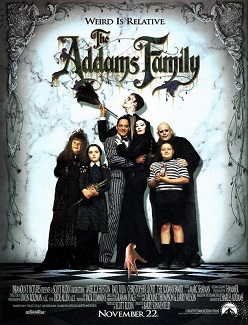
After having binged on Wednesday earlier this year, and wanting something lighter to watch, we finally saw The Addams Family.  Neither my wife nor I watched the television series too much when we were kids, but it’s probably no surprise that I watched it more.  As with Wednesday, if you didn’t see the television show, or read Charles Addams’ cartoons, you can still enjoy the movie.  After all, some of the salient aspects of the eponymous family are never explained.  Why are they so wealthy?  Things like that.  Although the movie, which is family friendly, can’t be called horror, it is a dark humor piece that scratches a certain itch.  For several years I’ve been pondering how horror has become such an amorphous genre that it really tells us little about a movie.  Taken literally, this one would be horror.

Not having grown up as a particular fan, I never really attempted to research the Addams family, but the basic idea was that they were people who lived as they liked, not caring what others thought of them.  They remain happy and cheerful in their macabre tastes.  The humor in such a situation is obvious.  The ultimate non-conformists, they are wealthy enough not to have to worry about fitting in.  Also, they tend to have some supernatural abilities.  Watching the show growing up, the character that never seemed to fit  the macabre image was Pugsley.  Often a partner in crime for Wednesday, his “monstrous” nature seldom seemed obvious to me.  Maybe it was his outfit.  In any case, not fitting in is what the show is all about.  Not fitting in and not worrying about it.

The plot of the movie is surely well known by now.  Gomez’s brother Fester is missing and a criminally minded Abigail Craven sends her lookalike son Gordon to take Fester’s place to get access to their riches.  The humor, apart from the madcap plot, often comes from subverted expectations.  A character points out a gloomy, macabre, or scary situation followed by a comment of how much they enjoy it.  As I’ve noted, taken literally such things define horror.  Horror and comedy can work well together.  In fact, I’ve reviewed many horror comedies on this blog.  I would have never thought to have watched this movie, however, without the prompting of Tim Burton’s Wednesday.  She’s an underplayed character in the series since the focus tended to be on the bizarre adults, as far as I can recall.  As Christina Ricci’s second feature film, her Wednesday laid the groundwork for the Burton series.  Maybe it’s time to do a little more research into family history.


Sunday Wednesday

Being busy people, it took us a couple weeks to watch the eight episodes of Tim Burton’s Wednesday, and I think he’s really outdone himself.  As I mentioned before, I was never a great fan of The Addam’s Family, but I watched it often enough to know the characters and their quirks.   I wasn’t quite sure what to make of the television show.  It had monsters, but nothing really scary.  It was funny but some of the humor seemed beyond me.  I watched it anyway.  I didn’t bother with the movie when it came out.  Then on a rainy weekend afternoon I watched episode 1 of Wednesday and I was hooked.  For one thing, this is dark academia personified.  Exclusive, gothic, school, dark mysteries, secret societies.  It’s all there.  And for another thing, it’s well written and the acting is very good.  And then there’s Poe.

Image credit: Chainwit. This file is licensed under the Creative Commons Attribution-Share Alike 4.0 International license.

(On a side note: I recently found another review of Nightmares with the Bible.  It is my most reviewed and least successful book.  The reviewer agreed with other reviewers that the Poe angle didn’t convince them.  As I told one critic, the Poe angle is a personal one.  Poe was a man, a sin of which I’m also guilty.  And men of a particular stripe feel protective of women.  Maybe it’s one of those biological things we should just get over, but Poe felt that it was poetic and, being a far less intelligent experiencer of that same disposition, I feel it too.  I think Tim Burton might also, for Wednesday seems full of that as well.)

At Nevermore Academy, the morbid, anti-social loner Wednesday learns to accept a kind of friendship from other outcasts.  There’s a town vs. gown aspect as the residents of Jericho don’t exactly love the academy, but they appreciate the money it brings in.  The founding pilgrim, Joseph Crackstone, was a hater of those who were different and tried to rid the world of others not like him (this is important).  Over eight episodes this backstory interrupts into the present and threatens the very existence of Nevermore.  What ties it all together, of course, is Wednesday.  Nearly as gothic as Sleepy Hollow, this Netflix series showcases the aspects of Burton’s vision that I find most compelling.  And the first season was nominated for quite a few awards.  A second season has been approved and I’ll be watching that one, down the road.  I can’t get enough dark academia these days, no matter the day of the week.


Telling Vision

My wife and I don’t watch much television.  In fact, we had very poor television reception from about 1988 (when we married), until we moved into this house in 2018.  That’s three decades without really watching the tube.  As we’ve been streaming/DVDing some of the series that have made a splash in those three decades, I’ve discovered (I can’t speak for her) that there were some great strides made in quality.  We began with The X-Files, then moved on to Lost.  We viewed Twin Peaks and started to watch Picket Fences, but the digital rights have expired so we never did finish out that series.  (Don’t get me started on digital rights management—the air will quickly turn blue, I assure you.)  Of course, we did manage to see Northern Exposure when it aired, but it should be mentioned for the sake of completion.  These were all exceptional programs.

Netflix (in particular) upped the game.  We watched the first three seasons of Stranger Things (and I’d still like to go back and pick up the more recent ones we’ve missed), and I watched the first episode of The Fall of the House of Usher (I didn’t realize until writing this up that it was only one season, so maybe I should go back and finish that one out too) and was very impressed.  Since we couldn’t finish Picket Fences, we turned to Wednesday.  Now, I was only ever a middling fan of The Addams Family.  I watched it as a kid because it had monsters, as I did The Munsters, but neither one really appealed to me.  Wednesday’s cut from a different cloth.  In these days when escapism is necessary, this can be a good thing.

Photo credit: Smithsonian Institution

Like most late boomers, I grew up watching television.  In my early memories, it’s pretty much ubiquitous.  We were poor, and our sets were black-and-white, but remembering my childhood without TV is impossible.  It was simply there.  The shows I watched formed me.  Now that I’m perhaps beyond excessive reforming (although I’m not opposed to the idea), I’m looking for brief snippets of something intelligent to wind up the day before I reboot to start this all over again.  We save movies for weekends, but an entire workweek without a break in nonfictional reality seems overwhelming on a Sunday evening.  It seems that I may be warming up to my childhood chum again.  This time, without network schedules, and limited time to spend doing it, we just may be in a golden age for the tube.