
Poltergeist horror movies are a touch difficult to make convincingly. Part of that, I suppose, is because the actual phenomenon is already scary and dramatizing it often ameliorates rather than increases the fear factor. When the Lights Went Out is a “based on a true story” movie about a poltergeist in Yorkshire in the 1970s. One of the problems is that none of the adults are really sympathetic enough to care about, with the exceptions of Rita and Mr. Price, the teacher. All of the other “grown ups” are so mired in their own problems that you just can’t empathize. Part of that is probably an attempt to show the life of the poor—it isn’t easy, I know from experience—but there are a lot of good people of humble means. Not all of them are mean, self-centered, and unsympathetic.
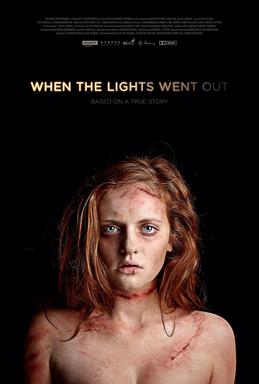
In any case, an elaborate backstory is built to set up the plot. A monk, from before Henry VIII’s dissolution of the monasteries, rapes and nearly murders a young girl. He cuts out her tongue so she can’t tell what he did. She is educated enough to write, however, and the monastery collectively hangs the monk to preserve the honor of the church. We’ve got religion and horror here, obviously, but a very poorly understood Catholicism. In the nineteen-seventies the Maynards move into a council house haunted by both the girl and the monk. The poltergeist activity begins but nobody will believe Sally, the young daughter. Instead they blame her. Until the activity happens to her parents as well. They try to get a Catholic priest to help, but he’s too busy banging his cleaning woman (and besides, he needs the bishop’s permission for an exorcism). The Maynards call in a medium who is, predictably, attacked. The priest is blackmailed into an anticlimactic exorcism.
But the evil monk isn’t gone. After life returns to normal, he attacks again but is driven off by the girl he murdered, or almost murdered. In real life, apparently, the poltergeist was much more low key. The dramatization makes it very much like other horror films we’ve all seen. I do find the lack of research on how the church operates of interest. Unfortunately, sexual abuse of the young is, and has been a problem with enforced celibacy from pretty much the beginning. The priest from the seventies is much more concerned with his reputation than plight of the family. The movie does do a good job of isolating poor Sally, and you can’t help but to feel sorry for her and her friend Lucy, who just don’t fit in. That’s where the real horror lies.

