Soulful Phantoms

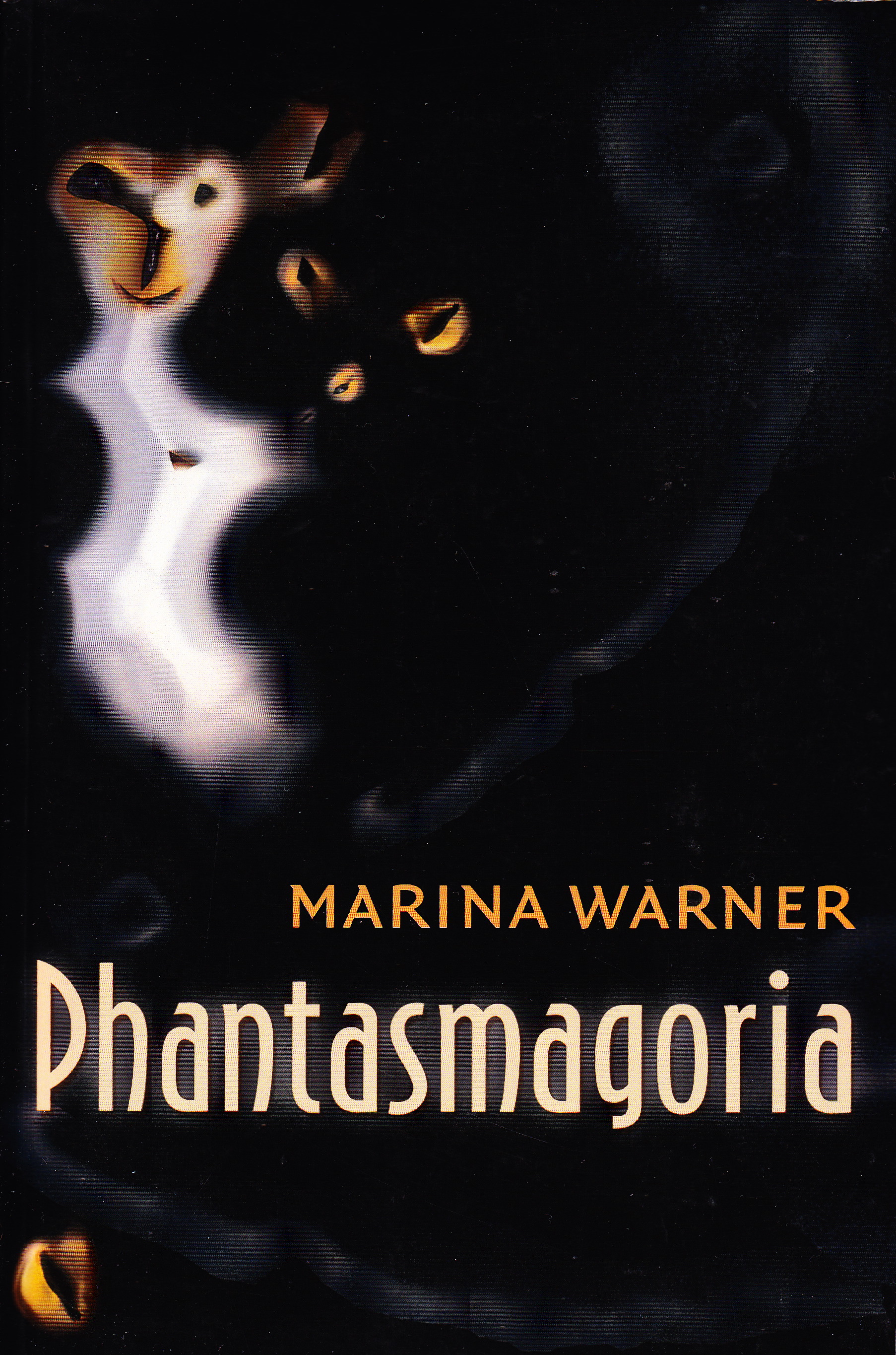
PhantasmagoriaPhantasmagoria is a most appropriate title for the book by Marina Warner that bears that single-word name. The back cover bears none of those helpful tags that give the reader a handle by which to categorize the book. The subtitle helps somewhat: Spirit Visions, Metaphors, and Media into the Twenty-first Century. The book is about ensoulment. The popular rage among many academics is the exploration of embodiment—the times and trials and wisdom of having a physical body. (We all know it, but it is the scholar’s job to think about it.) Warner asks what soul stuff is and pursues this through many media: wax, air, clouds, light, shadow, mirror, ghost, ether, ectoplasm, and film. She’s not suggesting that souls are made of these things, but rather that people have used these media to explore what a soul might be. Apart from being a fine historical resource on these different avenues of exploration, individual chapters in the book focus on various artists, psychologists, parapsychologists, writers, and Scriptures. This makes for a fascinating, if challenging, exploration to undergo.

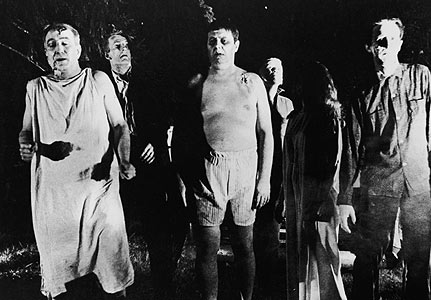
One of the topics that emerges in the discussion is how soul distinguishes itself from other unquantifiable aspects of being human: what is mind, for example. We can’t really define soul, but it is frequently differentiated from mind or personality, neither of which is particularly well understood. In an era when we’ve not so much ceased to ask these questions as sublimated them into various fictional realms, a book like Phantasmagoria is especially important. The reaction against materialistic reductionism is strong, if not empirically provable. We still flock to theaters to watch zombies on the screen, precisely because we too have become soulless. Romanticism had a place for Gothic sensibilities as well.

Along the way Warner makes a particularly apt observation that politics and entertainment have become difficult to distinguish. Thinking over the number of entertainers who’ve become policy makers, this is a particularly disturbing thought. We trust the media and it gives us entertainment. Most college professors make so little money as to be jokes when it comes to running a political campaign. Where your treasure is, as the saying goes. Media, in all the forms explored, has failed to capture the soul. The chapter on Revelation (the book) is truly spectacular, coming, as it does, in the section on film. It is the embracing of the chimera of the end of the world pieced together from various myths and nightmares that our political leaders find, in many cases, far too compelling. Someone like Warner might be a much better leader to trust, even if she is a scholar.


Underwater Zombies

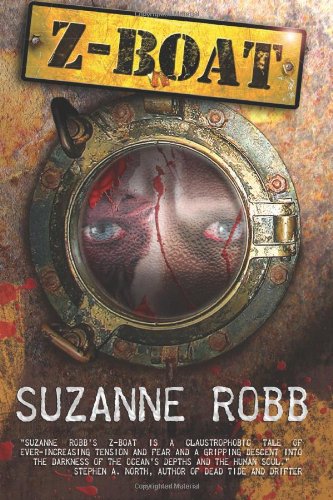
Z-BoatOne of the (many) benefits of blogging about zombies from time to time, is being sent books to read on the subject. Just as I cracked open The Zombie Bible volume What Our Eyes Have Witnessed, Permuted Press sent me an ebook of Suzanne Robb’s Z-Boat for comment. Z-Boat is an action novel with a strong female protagonist, that sets two naturally phobia-ridden subjects together: submarines and zombies. Since zombies, whether they acquire their undead status by vodou or by infection, are inherently a religious creation, they find their way onto this blog often. Unlike Stant Litore’s zombie universe, Robb’s is solidly secular, no mention of deities or demons anywhere. Set in a post-apocalyptic future (aren’t they all post-apocalyptic these days? We have difficulty envisioning anything much better), the crew of the submarine Betty Loo has to fight off a host of zombies intent on eating, and yes, converting, the living.

Zombies, whether conjured by spells and concoctions or by a contagious organism, while unthinking, always appreciate converts. The age-old human fear of being overwhelmed by swarms pertains just as well to the undead. We tend to avoid cemeteries at night, but death has a way of seeking us out in any case. I knew when my wife received a rather unsubtle flier in the mail advertising a local mausoleum that I too was likely on the list. Isn’t being a zombie all about the desire to survive, no matter what the cost? Still, it’s nice to know your custom is valued, right down to the end.

As I’ve mentioned before, zombie stories are difficult to take seriously in any rational world. Why a corpse with no stomach and no tongue would want to eat baffles the quasi-scientific mind I’ve installed. The Zombie Bible suggests that it’s hunger, and a metaphor is always appreciated in a room full of zombies. In Z-Boat the drive is more along the lines of the plot. You wouldn’t have a story without the undead. A potboiler, this is a page-turner, or, if you’re reading an ebook, a page-swiper. And although the function of a submarine is inherently like an ark—the preservation of breathing animals when overwhelmed by water—when the zombie organism eats its way into the crew, the only safety is found in escaping that ark. Robb’s tale is rollicking and rough, but her female Noah gives us all ground for hope.


Roman Undead

ZombieBibleLike most monster movie fans, I enjoy a zombie film now and then. I’ve even heard some very sophisticated people commenting positively on Shaun of the Dead. One of the standard features of the zombie is its forthright impossibility—reanimated dead are the stuff of humanity’s earliest nightmares, but in our rational minds we know that bodies missing vital organs, limbs, and blood, don’t just get up and try to eat the living. That doesn’t prevent me from watching zombie movies, and even considering participating in a zombie walk. Nevertheless, I’d not read any zombie books. That suddenly changed when I sat down with Stant Litore’s What Our Eyes Have Witnessed: The Zombie Bible. Literally the day I started reading it, a publisher sent me a copy of Suzanne Robb’s Z-Boat. I was surrounded by zombies.

I had decided to read What Our Eyes Have Witnessed because I was curious what a Zombie Bible might be. I quickly learned that it was an apologetic exercise where zombies are used as a vehicle for evangelization. It was difficult, however, to take the idea seriously. When a zombie breaks through the door of a Roman villa at the start of the book, I found the thought strangely funny. Many zombie movies go in that direction, acknowledging that they could never really happen, so they decide to give viewers a laugh or two along the way. Litore’s parsimony, however, became clear right away. This is a retelling of the martyrdom of Polycarp, but with zombies. It is a curious mix of Roman history, Christianity under persecution, torture porn, and the assurance of salvation. The premise is that Cain’s slaying of Abel resulted in zombies and their soulless souls must be put to rest. If they bite you, you become a zombie—you know the story. Meanwhile, the Roman authorities believe the Christians are to blame and decide to kill off the historical Polycarp.

The story dwells on the emotions of the Christians, in a kind of maudlin evangelicalism, as they try to avoid both flesh-eating zombies and Roman authorities. Zombies, it is said, are driven by their constant hunger and only Christianity has the true bread. This is a creative account of how the early Christian movement dealt with persecution. The zombies, however, feel somewhat superfluous in that situation, for the terror of imperial persecution was real enough. The zombies, however, aren’t after brains, and they don’t speak. They want to eat and the only thing they can digest, even if they have no stomachs, is other people. As an allegory it almost works, but zombies are a kind of fifth column in what was a very real struggle for early religious tolerance. Ironically, the undead and resurrection are never juxtaposed, although they are the most obvious way to connect the dots.


Z War to End

World_War_Z_posterWorld War Z is playing in theaters and I haven’t even had time to stock up on water and canned goods. Zombies are everywhere. And we can’t say that we didn’t see them coming. As movie critic Stephen Whitty points out, there are over 900 movies featuring zombies and the vast majority of them are recent productions. Major news corporations have been analyzing this undead interest for a few years now. No doubt the zombie is a populist monster, but why does it have such a potent effect on the modern imagination? Stepping back from the screen a minute, I think perhaps an answer is very obvious.

We live in an essentially programmed society. Philosophically we believe in free will, but economically much of our lives are predetermined. Among the happiest years—speaking strictly from the point of view of what I have been required to do for work—of my life were those of adjunct teaching. I had finally broken into the realm of the major university, and I had class after class of students who wanted to learn. Many disparage undergraduates. I never did. They come to college with what they have been taught, and that teaching comes at the behest of a society that informs them college is all about money. Who needs to really learn to not split infinitives? Or reason out that even if you know that Genesis 1-3 is a myth that evolution is not about religion at all? Who needs to learn to think when your boss will not want criticism? Do what you’re told. Be a good citizen. Be a zombie.

Our children are not stupid. I had many intelligent conversations with many bright young people at our state universities. I learned from them, and I hope they learned from me. The voice of the adjunct instructor, however, is nowhere near the decibel level of higher earnings. Is not the price of being a zombie worth having an adequate home, crippling debt, and access to wifi? The zombie, after all, is the antipode to the life of the mind. Zombies are, by definition, mindless. They carry around a carcass that does only what, in the classical sense, it is told to do. And so, if I loved that bohemian life so much, why did I hypocritically leave it? I have a family that requires healthcare. I have a child to support through college. I have a retirement fund that will not support a modest lifestyle for more than a single year. Yes, I too am a zombie. World War Z is indeed already here.


Real Life Zombies

In recent months Binghamton University has been on my mind. Binghamton has a number of videos available on YouTube which I find to be entertaining and even, sometimes, very funny. I like Bing’s style. Even though I catch myself laughing once in a while, I know that Binghamton takes higher education seriously. I watched a recent, 17 minute talk on a vital topic. It is located here, and I would recommend that you watch it too. Don’t worry, I’ll wait.

Back? Okay. The situation raised here is one that makes me shudder. Few things are as debilitating and vulnerable as an uneducated populace. Both religious and political forces have made great efforts to prevent certain orthodoxies from being challenged by what they term, as an obvious swear-word, “higher education.” The fact is, folks, higher education is nothing more than an attempt to get people—often young people—to learn how to think critically. That last word is a stumbling block sometimes. Any number of people will suppose that critical thinking is the same as criticism. It isn’t. Critical thought is the ability to approach a problem—any problem—rationally. To respond with the best that our minds have taught us to do, rather than with knee-jerk reactions. Yes, emotion and jerking knees have important places in the world, but they only work well if they are accompanied by the ability to think critically.

The video makes it pretty clear that the ability to think is rapidly eroding in our culture. Perhaps not quite zombie apocalypse, but not comfortably far from it. The death of Borders was blamed on its inability to get into the electronics markets by various pundits. I disagree. Borders fell victim to a culture that has lost the joy of challenging reading. We like spoon-feeding (otherwise much of the internet is difficult to explain). In order to exercise our brains, we have to use them to read hard things. Like my high school coach used to say, if you don’t use your muscles they’ll atrophy. Looking at my mid-section, I can see that his words were true. What Coach didn’t warn us about, though, is that the same holds true for the mind. The unchallenged intellect is a dull one. This is a threat far more insidious than any Communism, or liberalism ever was. It is the dummification of America. We are a nation that loves zombies. We are also a nation in danger of becoming them as well. Fight the zombie apocalypse—read a book. And like that baseball bat you use to swing at the undead, the harder it is, the better.

They don't write them like that anymore

They don’t write them like that anymore


Wrongful Resurrection

Re-Animator

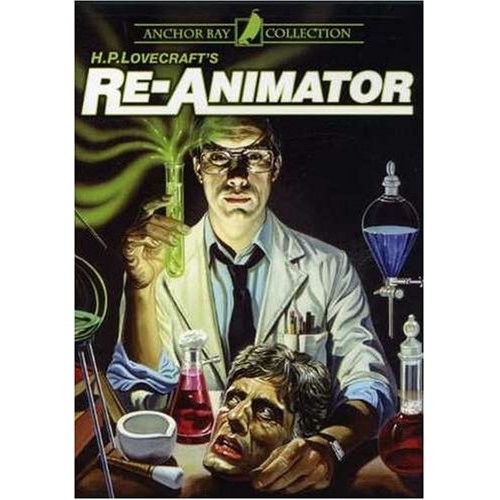
H. P. Lovecraft was a tortured man. An atheist, he saw the inevitable dilemma of human life. We want to live forever, but even the short time we have is full of suffering. Almost Buddhist in his sensibilities, Lovecraft also knew the hubris of trying to reach too far. I was reminded of that when I recently watched Stuart Gordon’s Re-Animator. Like most of Lovecraft’s stories, the translation to film is difficult. The angst and haunting lie far too deeply embedded in the original stories to show, even with the finest acting, with any degree of verisimilitude. And the tales have to be padded out to get to that magic 85-minute mark. Nevertheless, there is something of their master still in them.

Re-Animator is based on Lovecraft’s short story, “Herbert West—Reanimator.” West discovers the secret to bringing the dead back to life. In the movie version, the result is unremitting chaos. The dead are somewhat zombie-like until Dr. Carl Hill, very freshly dead, retains his consciousness and begins his insidious plan to create a cohort of more proper zombies to do his will. Like Gordon’s other interpretation of Lovecraft, the eerily moody Dagon, there is a little too much blood-lust for my liking, but a point is being made, so I watch on. The point is very much at the heart of Lovecraft’s personal dilemma. We want to live forever, despite the pain and disappointments of the life we know. Life is optimistically resilient that way.

Lovecraft died a painful, natural death at the age of 46. His writings never demanded much attention during his life—thus seems to be the fate of many of the truly original. In the 76 years since his death he’s gained an enviable following. He might almost be said to have achieved a kind of immortality. A safe immortality. As he knew in life, resurrection is a double-edged sword. We may be reluctant to give up the only life that we (most of us, anyway) have consciously known, but have we really considered the implications of going beyond the line that nature has drawn for every living thing ever animated? Our technology keeps us alive in bodies that only continue their inexorable march toward the grave.

Am I sounding a bit bleak? Blame it on the rain. Immortality, in any belief system, only comes at a great cost. H. P. Lovecraft knew that and took the risk in spite of it.


Shopping for Fear

So I decided to visit a Halloween store. These have been showing up with metronomic regularity in September for several years now and are usually good for a cheap thrill. My personal preference for Halloween is more somber than garish, but the affirmation that other people enjoy a safe scare has a way of drawing me in. Those who read this blog on a regular basis know that I frequently point out commonalities between fear and religion. They both seem to hover around the same orbit in the brain, and, in some accidentals are very similar. Horror films therefore often indulge in religious imagery, and monsters do not infrequently partake of the divine. So it is no surprise to see my thesis borne out in shops intending to capitalize on fear.

I will freely admit that there may be cultural references that I’m missing here. A movie that I’ve neglected, or some television show or graphic novel may be informing some of the images in ways I can’t comprehend. Nevertheless, we all know of the power of the crucifix when it comes to vampires. I wasn’t aware that the cross had horrific effects on other species of monsters as well. Take this guy here. I’m not sure what he’s supposed to be—perhaps a zombie? It seems a little too corporeal to be a demon. The teeth just don’t look right for a vampire. In any case, he seems to have an extreme reaction to religion, with the cross melting right into his skull. Is there a conversion message hidden here somewhere? Of course it could be just a chinzy attempt to scare a real religiophobe. The cross has become the backup weapon against all supernatural evil.

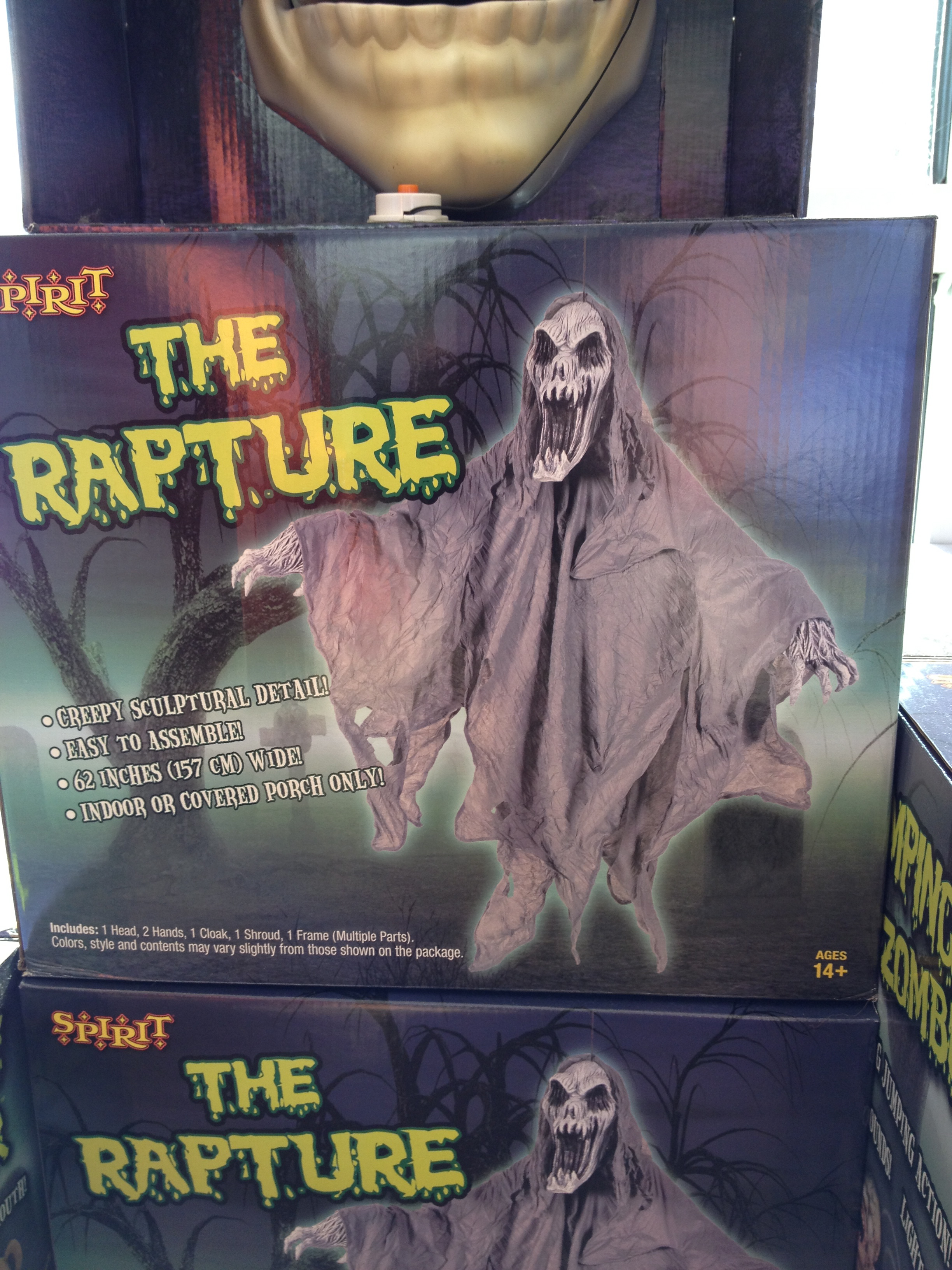
The use of a grim-reaperish ghoul rising from the grave to illustrate The Rapture was a new one on me. Last I heard only the squeaky clean and friends of the Tea Party got to go on the Rapture. (Well, the latter category might explain it.) The idea of the Rapture, as it was fabricated late in the nineteenth century, involved the chance for all the good Christians to escape before things really got rough down here for us normal folk. I would’ve thought that scary guys like this joining the heavenly crusade might take a little bit of the joy out of the occasion. Or maybe they’re being left here to haunt the rest of us. In either case it is clear that consumers respond to religious sounding language and symbolism when looking for a scare. Obviously there is plenty in the store with no religious significance at all, but finding hints of religion scattered in with the plastic scares does show a kind of Frankenstein’s monster of human sentiments and emotions. It’s only appropriate when the nights are now longer than the days.


Thinking Zombies

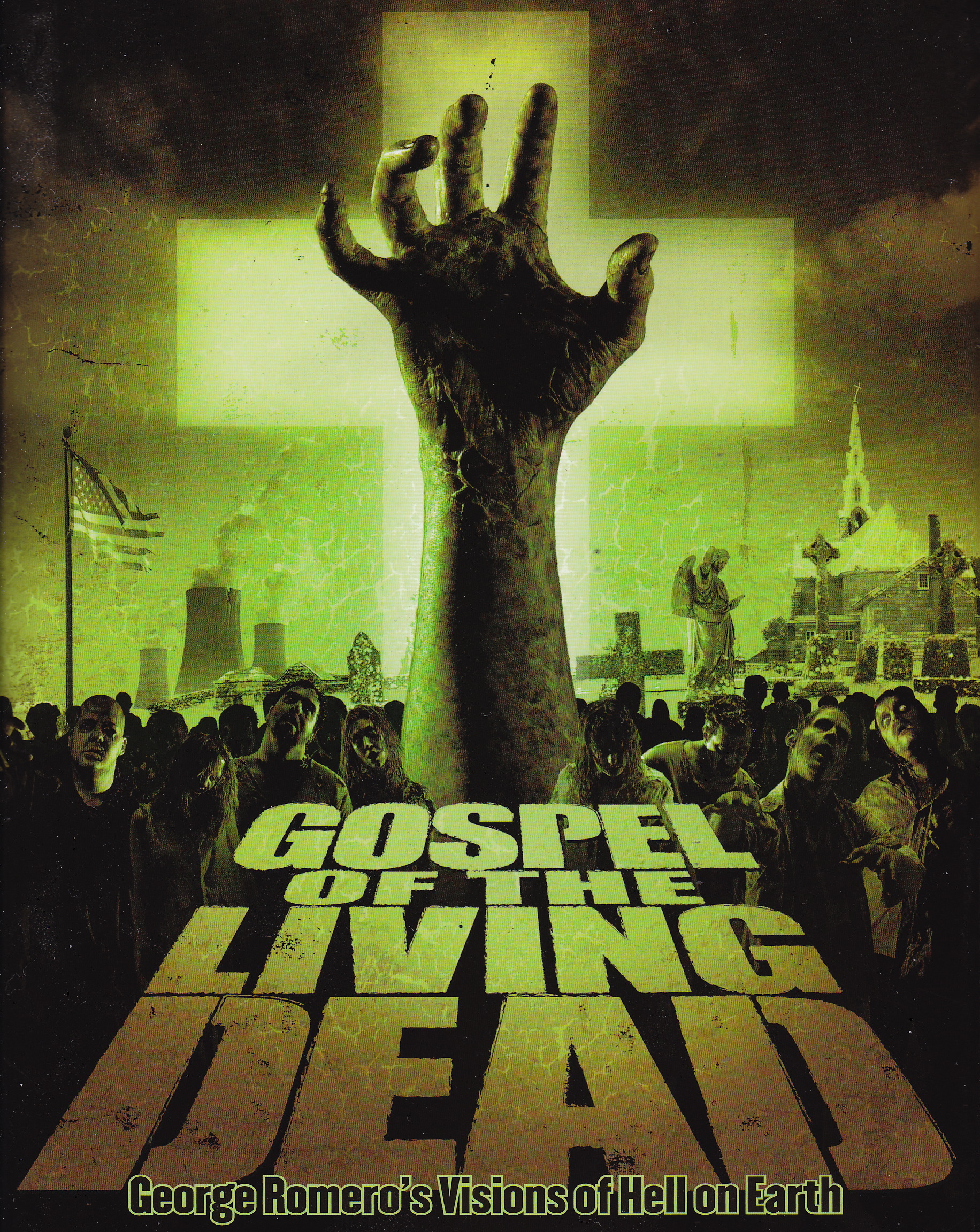
Religion seldom makes as big an impression as when it concerns itself with the undead. Popular culture has gone after zombies to such a degree that they have engaged academic discourse well beyond the field of African-Caribbean religions. In fact, religious specialists tend to shy away from the topic in a kind of first-date embarrassment. Perhaps it’s because zombies in popular culture are so much cooler than their Vodou forebears. Within the past several months, however, zombies have shown up in Time, on the Center for Disease Control website, and now in the Chronicle of Higher Education. An article this week explores the academic implications of a paper by neuroscientists Bradley Voytek and Timothy Verstynen on the zombie brain. The two took on the project as a lark at the behest of the Zombie Research Society. Science fiction writer and head of ZRS, Matt Mogk gave an interesting take on zombies. He’s quoted in the Chronicle as saying, “Zombies are rooted in science, not superstition and myth.”

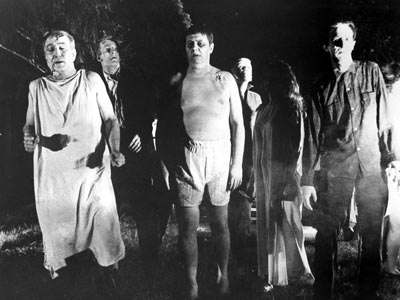
At the risk of sounding extremely uncool (one that I take rather frequently, I fear), I would point out that exactly the opposite is the case. Zombies are rooted in superstition and myth, i.e., religion. The entire idea that a person can be made to rise from the dead—originally to be made a slave—comes from that heady blend of Christianity and African religion that developed as part of slave culture. Slavers were notorious in not wanting slaves to accept Christianity because that might make slaves think that they were equal with their owners. By suppressing Christianity among slaves, the African religions in which many were raised came to blend with the Christianity that they’d garnered. One of the bi-products was the zombie. The zombie partakes of the Christian concept of resurrection, but in a twisted way. Once the new vision of the zombie presented by George Romero took off, yes, they did move into the realm of science fiction, often the forerunner of science.

A very serious issue underlies the zombie myth—the very religious concern about death. While not all religions comfort with an afterlife, they all in some way deal with ultimate issues. The end of life is about as ultimate, from our limited experience, as they come. Science loudly and repeatedly insists that death is the final frontier. We don’t cross back this way again, according to the available evidence. Scientists do not study ghosts or souls, and are very cagey about near-death experiences. The zombie, who is now threatening the careers of young scientists, is a most religious monster. Everything about the zombie points to its origin as a religious trope. Voytek and Verstynen wanted to interest people in science by taking a comic look at zombie brains. The problem is that zombie brains are brains on religion, not science.


Zombie Jesus

It must still be October. Despite a snowstorm before Halloween (one of nature’s trick-or-treats), all the signs are still there. My daughter showed me a Venn diagram yesterday, during a whole-day marathon of putting plastic around our drafty old windows, showing the intersection of three “monster” traits: resurrected from the dead, local townspeople fear and revere him, and convert as many mindless followers as possible. The creatures that inhabit this eerie universe are Dracula, Frankenstein, Zombie, and, where all three intersect, Jesus Christ. Obviously this was just for a laugh, but interestingly, one of the traits of Penn Jillette’s book, God, No!, is his rather frequent reference to Jesus as a zombie. Then I clicked over to Religion Dispatches, and the lead story is headlined, “Praying to the Zombie Jesus.” Ours is a world of mindless, quick connections where the compelling idea of resurrection has lost its appeal. Despite our religious culture—or perhaps because of it—we have come to see Christianity as just one more peddler of a wonderful, disturbing idea.

As regular readers of this blog know, I find the abuse of religious ideals inexcusable. Using one’s faith to beat another down is just plain wrong. Nevertheless, to focus on the folkloristic aspect of resurrection (or perhaps it is a metaphor) is to miss what drew the very earliest followers to Jesus. Before the idea of rising from the dead came a message that people should love each other and treat one another with respect and dignity. By the end of the first century of the common era, or perhaps as early as Paul, that idea grew to be a quasi-magical resurrection from the dead. No longer were women counted as equals among the followers of Jesus, and no longer were wealthy compelled to give it all up. Paul’s faith looked to a future world, beyond death, and was willing to consider this world, well, to be polite, crap. The reasons for this transformation are legion: the persecution that Christianity was undergoing, the failure of an apocalypse to take place, the disenfranchisement of the believers. They needed something to look forward to.

Zombies are likely a passing fad. When we start seeing books of zombie Christmas carols, zombie haikus, and zombie apocalypse survivors’ guides, we seem to be reaching the peak of the plateau. The zombie is mindless, rapacious, and entirely selfish. It will not go away. It is the perfect denizen of October. When I stare into those uncomprehending eyes, and see the disturbing lack of compassion and the desire to consume human brains, I start to make connections of my own. Analysts often describe zombies as the ghoul of the common folk. But all these characteristics taken together suggest that perhaps the month in which to expect zombies is November. Surviving another snowpocalypse, earthquake, and hurricane, the human spirit is difficult to dominate. And yet, when the polls open up in the darker season of the year, zombies will rise. The plastic on my windows does nothing to stop these chills.

Borrowed from a friend's site


Zombie Reality

The origins of zombies notwithstanding, they are the autumnal monster of choice in a post-modern society. They are the symbol of secular resurrection—no faith commitment is required, no pristine, moral lifestyle. Resurrection happens to you by accident, a chemical, a disease, cosmic radiation—whatever the cause it is not divine. And the zombie is fair game for the release of violent aggression; already dead, there is no moral imperative to keep them alive and well. Each year the mass of zombie walks increases where children and adults alike become the living dead for a day. Macabre? Indeed. It seems that the very word “macabre” may have come into English from Hebrew. Hebrew words are based (mostly) on triliteral roots, words with three unchanging consonants. The Classical Hebrew word for “grave” is based on the root q-b-r. The prefixed m is often the preposition “from.” Macabre, morphed through Latin and French, could go back to the root meaning “from the grave.” Literally, the source of zombies.

Resurrection is among the most poignant of human hopes. Religions often assure us that death is not final, but we can never know that this side of the veil. Those we love go away, we hope, to a better place than this. It is no surprise that the largest zombie walk in the country is in Asbury Park. We can imagine better. Why can’t God?

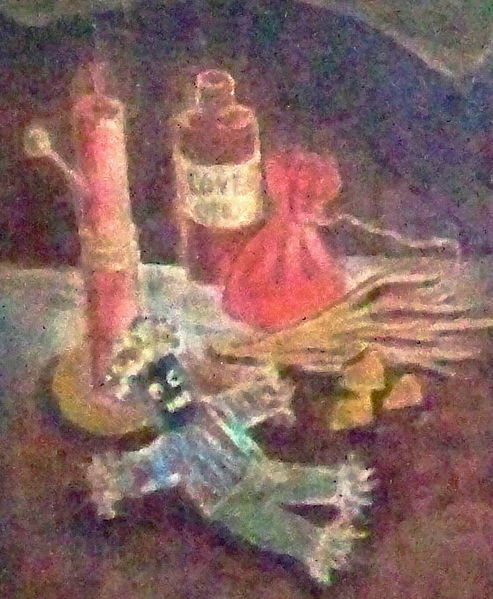
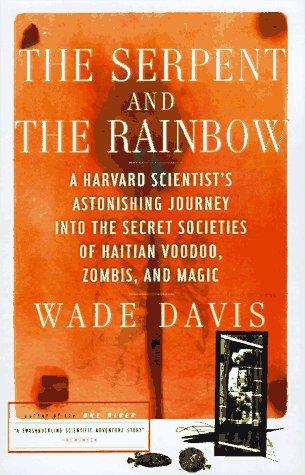
According to Wade Davis, there is a powder that vodoun priests use to zombify a person. This involuntary treatment does not actually prolong life, nor does it really resurrect the dead. It is, like many religious treatments, a show of faith. In The Serpent and the Rainbow Davis describes how psychosomatic attacks span the globe. All they require is belief. If a person believes in curses or the evil eye, the results can be physical and fatal. We create our own reality. Over the weekend I watched What the Bleep Do We Know? again. I sometimes showed this movie to my classes. Here physicists and gurus together affirm that we create our own reality moment by moment.

Zombies have migrated from the realm of religion to secular society. It is hard to imagine our modern world without them. They are cut from the same cloth as All Souls Day, reminding us of our mortality and suggesting that there might be something more. It is a reality we create ourselves.


Serpents, Rainbows, and Black Pearls

Riding on a bus with a bunch of coughing commuters may not be the best setting for reading about poisons and zombies. I am also aware that Wade Davis has come into criticism by some of his professional colleagues and that the movie based on his book, The Serpent and the Rainbow, may have led to an aneurism or two among scholars of Haiti. Nevertheless, Borders was closing down and a copy of the book remained on the shelf for an insanely low price, and October would soon be upon us. This past week I read Davis’ intriguing account of his experience with real-life zombies and the fascinating religion of vodoun. A number of issues were raised by his account, not least of which is that the feared religion of “voodoo” is a direct result of the evils of African slavery that brought indigenous gods into the realm of Christianity, and mixed them vigorously. My first “exposure” to vodoun was in the old James Bond movie, Live and Let Die. It terrified me as a child, and even with rational eyes, I’m not sure I fare much better as an adult.

No matter what one thinks of Wade Davis and his work, The Serpent and the Rainbow is a fascinating work. One of the most interesting aspects Davis raises is the continuing issue of defining death. Premature burial may sounds like the hysteria of a Poe-induced nightmare, but, as Davis shows, most methods of measuring death are susceptible to being fooled. Those who are termed “zombies,” in the vodoun sense of the word, are people declared dead by medical professionals, yet who are later found, after their burials, very much alive. Many readers will find this difficult to accept, but it is a phenomenon that goes back to Seabrook’s swashbuckling adventures of early last century and even before. If Davis is to be believed, it is thoroughly documented.

Paradigm shifts are seldom welcomed. We prefer to live within the comfort of the universe in which we grew up. Science and religion agree on this point—things are not what they seem. Zombies in the Walking Dead sense do not exist despite the fact that they are the kind most popularly known. We like them because they can’t hurt us; they lurch through the streets of our nightmares and our zombie walks, but they are not real. It could be, however, that our understanding of our world is woefully incomplete. Confronted with that which challenges our tidy universe, whether it be quantum physics or Haitian religion, we must consider the benefits of a mind kept open to the possibilities. Do vodoun priests in the hidden shadows of the Caribbean enslave the living dead? Disney answered with a resounding yes in Pirates of the Caribbean, but then, in Hollywood it is sometimes preferable to have the zombies in front of the screen.


Parsing an Exorcism

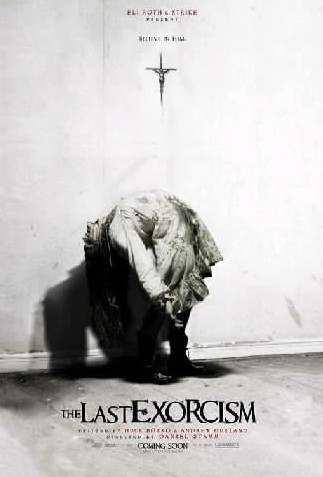
The latest in my spate of scary movie viewings is The Last Exorcism. The press when it was released last year made claims of extreme fright, but my impression was that I’d seen it all before. The “found footage” fantasy is difficult to maintain—although the camera work in the film is good—and the premise of demonic possession is frightening if the viewer is a believer. The hook for this movie, however, is that the exorcist himself doesn’t believe and becomes a victim of his own unbelief. The pattern overall follows The Exorcist, but without the creepy soundtrack and staged lighting effects, The Last Exorcism relies heavily on the viewer’s willingness to believe. The demonic possession is presented as extreme contortionism and self-destructive behavior, as well as the uncharacteristic violence by the victim. When Nell Sweetzer gives birth to a demonic child, a la Rosemary’s Baby, the role of good Christian gone occult feels a little hackneyed.

I’ve tried to analyze what scares so many people with movies of demonic possession. The core fears seem to come down to two: belief in the reality of demonic possession and the fear of being out of control. Historically the concept of possession was originally relegated to the gods with demon possession apparently arising as a pre-scientific attempt to explain epilepsy. The fact that most Christian denominations no longer recognize physical demon possession (a fact exploited by The Last Exorcism) makes it more frightening still. For a generation of media-saturated viewers convinced that cover-ups are common the credibility of the church, struggling with its own metaphorical demons, is suspect. Perhaps demons are out there—a common enough assertion on the reality show Ghost Hunters—and the church has lost control over them. When Jason and Grant explain what demons are, however, they are pretty far afield from Legion being cast into a herd of swine.

If the Internet is any kind of reliable measure of people’s fears, zombies and demons appear to be nearly on a level when it comes to belief. Both are supernatural and neither stretches credulity to the point of humans growing fangs or matted fur. Both participate in the idea that there is more to be feared beyond death. Both fail in the court of science. The Exorcism of Emily Rose raised the ambivalence of demonic possession to the level of the courtroom. One thing I learned on jury duty last week is that the truth is measured on the basis of the judgment of a quorum of rational individuals. The implications of this are frightening indeed: those who accept the reality of non-physical monsters (the jury is still out on ghosts) are fully capable, in a legal setting, of deciding the truth of the matter. The only corrective to witch-hunts and state-sponsored exorcisms would seem to be education. Today education comes via the media where zombies and demons freely roam.


Zombie Friday

New Jersey is known for its zombies. Last October Asbury Park gained admission to the Guinness Book of World Records for the largest zombie walk (exception is made, of course, for daily life in Washington, DC). The movie zombie, in its now classic form, was reborn in western Pennsylvania, but New Jersey is the place where strange afterlives appear to gravitate. Yesterday Stephen Finley was sentenced. Finley, a mortician, had been convicted of selling the healthy organs of his dead customers to earn a little extra on the side. Given that the governor, Chris Christie, might rival Vlad the Impaler in his zeal for chopping, this really does not surprise me at all. Is it not the ultimate triumph of the free market to consider human beings commodities to be packaged, used up, repackaged and resold? Moral rectitude is on the side of the strong arm.

As someone who has been on the receiving end of the chop more than once, and reduced to a zombie-like state of perpetual job-insecurity, I think I know how the undead feel. Not having a place in the normal world of the living, but not quite dead, the zombie wanders about looking to feed on brains. This idea of brain-lust seems to stem from the cult classic The Return of the Living Dead, although, not being a film specialist, I would welcome correction on this point. Nevertheless, like the modern zombie I hail from western Pennsylvania and nothing satisfies me like a good brain (metaphorically, of course).

The idea of harvesting the organs of the powerless dead also suggests the endlessly referenced Soylent Green. Here the staunch NRA promoter Charlton Heston fights against the establishment that is turning (spoiler alert) people into Soylent Green, the ultimate solution to food shortages! For, after all, are people not just commodities? America’s thirst for zombies reflects our growing sense of victimization: the zombie is primarily a creature without a will, brought back by powers beyond its control. In the original vodun context the zombie was a source of cheap labor. Is it any surprise that West African slaves brought the concept to the New World with them? Today, of course, those with the cash may simply purchase the organs they desire, cutting out the middle man and going straight to the source.


Decomposition

The following video report addresses a number of issues recently raised on this blog: apocalypses, zombies, fear, and humor. Zombies, of course, have been clawing their way to the top of the monster pile for a few years now. Media analysts have suggested that they represent the triumph of the working class—no sartorially suave vampires these—instead they are spattered with blood and gore, multitudinous, and clumsy. Having watched the most recent apocalypse come and go, and having been a victim of an unstable economy for several years of my professional life, I think zombies represent something else. Instead of being the triumphal usurpers of vampiristic free markets, zombies represent the breakdown in culture we are experiencing in the present.

If history gives us anything to go by, we know that powerful world empires ebb and flow. The Persians succumbed to the Greeks, and the Romans could not stop the Goths. The Holy Roman Empire was dissected into the nations of the modern European Union (roughly), and the sun now sets regularly on the British Empire. The United States, the capital of the zombie craze, has perhaps passed its zenith and the zombies know it. Since the 1970s we’ve watched as religious extremists have made a mockery of a political system that had already grown problematic. Like decaying corpses that won’t go away, the factors that propelled the United States to a place of prominence have been undermined so that the non-undead can continue to feather nests already stuffed with down as high as Babel. In the constant see-sawing of political parties the imperialist trends of the obscenely wealthy have rocked their way into the dominant. Is it any wonder that zombies are brainless, yet insatiably driven?

What does it feel like to watch the azimuth decline on a great empire? It is difficult to say. History, as the aphorism states, is written by the winners. Revisionist history has become quite fashionable to those who find that the facts refuse to bow to their worldview. Zombies are those who, historically, do the will of their masters without question. Instead, the zombie of the twenty-first century bows to no master. Pure selfish survival is its sole aim. Perhaps the CDC is too late, the zombies have already overrun us.

Newsy.com’s Report


Of the Zombies, By the Zombies, For the Zombies

In what is sure to be a controversial move, the Center for Disease Control has posted an official government blog post entitled “Preparedness 101: Zombie Apocalypse.” (Be warned, if you click on this link it may be considerable time before the page loads—it has been receiving a tremendous number of hits.) Written by Ali S. Khan, the Assistant Surgeon General and head of the CDC, the article is actually about hurricane preparedness, but with zombie furor being what it is, many on the Internet are taking the warning seriously. Literally even. Citing the tsunami in Japan and the concerns for leaking radiation, the article begins with a lighthearted fear-fest that then reveals the actual concern. Humor in the government? This is something we should all encourage!

The analogue with the current rapture fever was immediately obvious. I grew up in terror of the rapture, but when I began to take courses on the Bible from scholars who knew about apocalyptic literature, its context, and what it was intended to do, I realized that the rapture was invented in the nineteenth century by evangelists with no critical training, misreading the book of Revelation. As much as we like to break history into discrete units, time simply keeps flowing and the current of fear generated in the nineteenth gushed into the twentieth century culminating in the birth of the Christian fundamentalist movement. For many people in the twenty-first century, fundamentalism and Roman Catholicism are the two ancient strands of Christianity that legitimately lay claim to the title. At least half of this history is backward.

The Bible itself, when read in context, shows the errors of the rapture-hungry. The idea is a blend of obscure bits of Paul’s letters, mixed into Revelation and stirred vigorously. Then half-baked. The Bible does not give us a rapture. The CDC does not give us a zombie apocalypse. We know where the myth of zombies originates (I have posted on the topic before) and we know zombies are as fictional as griffons and centaurs. Nevertheless, faith springs eternal. Those dissatisfied with all that life has to offer turn to zombies for an equalizingly grim future for all humankind. It’s all gonna rot, baby. Except, of course, for those who’ve been raptured before it happens. When the zombies fail to show up after Saturday’s non-event, all of us will feel pretty silly just looking at each other as Ali S. Khan comes up with his next zinger.

The author, upon reading the CDC blog.