Momma Maya, Is It the Apocalypse Already?

Where have all the Maya gone, long time passing?

Where have all the Maya gone, long time passing?

While recently reading a Gorgias Press book on the Maya (Sam Osmanagich’s The World of the Maya) I couldn’t help but notice the concern of the author with the year 2012. Actually, Osmanagich is looking forward to 2012; it will be when a new era in human existence begins. Since he freely admits throughout the book that extraterrestrials provided technical support in the Mayan monumental architecture, I suppose the fixation on 2012 should not be surprising. The book is charming as a folksy travelogue and disarming in its innocent sense of wonder, but academic it is not.

Concern with the end of the world as we know it seems to have entered the Judeo-Christian tradition with Zoroastrian contact. As soon as the idea was conceived it was immediately apparent that this was going to be a very large baby, and it has not disappointed. Back in my rural Pennsylvania high school, concern that the world would end in 1980 was seriously rampant. (Considering that the Reagan-Bush years were about to begin, it makes sense in retrospect, at least on a metaphorical level.) Worry ran so high that on the stated day — noon was the confirmed hour of doom — my English teacher laid down her grammar book and had us spend our final earthly minutes writing an essay arguing why the world was, or was not, going to end that day. When the class-bell rang, other than some soiled undergarments, everyone seemed pleased still to be there.

I was at Nashotah House for Y2K. A prominent administrator insisted that we all prepare for the likely event of a societal collapse. (From my present vantage point, I’d rather have taken my chances just about anywhere else.) Yet here I am to recount the tale.

Now only a dozen years down the road from Y2K we are being told to prepare for yet another apocalypse. People I speak to seem genuinely concerned about this one, and even I had a shiver or two as Osmanagich calmly laid out how the Maya just didn’t make mistakes like that. As I see it, there are two choices: people should study the origins and rationale of apocalypticism or someone should start a business selling Apocalypse insurance (the name Four Horsemen might be catchy). People seem ready to believe that extinct civilizations knew something about our fate that we just can’t see. And if the world does end in 2012, well, you wouldn’t want to have all those premiums weighing you down by then, would you?

The Four Horsemen -- would you buy insurance from them?
The Four Horsemen -- would you buy insurance from them?

Cenobites and Angels

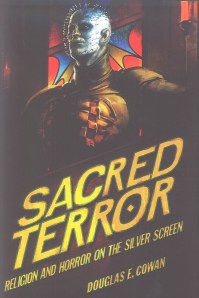
I recently became aware of Hellraiser. Actually, I’d seen images of Pinhead around for years, but never realized that he was a Cenobite until reading Douglas Cowan’s Sacred Terror (see my post on Vampires, Mummies and the Holy Ghost). In fact, Pinhead is featured on the dust jacket of the book and comprises a large part of Cowan’s evidence. Curious enough to watch the movie, I steeled myself for the macabre and terror, but although there were gory scenes it was no more disturbing than the Republican National Convention.

Pinhead for president?

Pinhead for president?

This movie draws its lifeblood from religious, particularly Christian, imagery. Cenobite, of course, is an old word for “monk” and in the movie Cenobites are interdimensional beings known as “demons to some, angels to others.” In a strange convergence of themes, I had recently viewed Dogma again after a gap of a few years. Here Loki and Bartleby are fallen angels, who, rather like myself, move from Wisconsin to New Jersey. Both of these films are pervaded with a healthy ambivalence towards those beings who have the potential for so much good but who opt for what most of us would consider evil.

Angels have a long pedigree in ancient religions, probably originally being gods who only ever achieved supporting roles. Not all gods were created equal. At Ugarit we find a whole class of deities below the power and dignity of reigning gods. Besides, in a non-scientific worldview, angels, especially fallen ones, had great explanatory value. When things unexpectedly go wrong and you’ve made all the proper sacrifices to appease the resident deity, bad angels might just be the cause. Theirs was a world of naive realism; what the eye observes is pure reality and what the eye doesn’t see is divine. Today we know this to be overly simplistic — reality is so complex that even our brightest can’t completely comprehend it. Yet when we have trouble explaining things, even in a scientific world, many are ready to point to the angels in the wings.


Religi-Religi-Religi-Religulous, That’s All Folks!

Tell me where is fancy bred,
Or in the heart or in the head? (Shakespeare, The Merchant of Venice)

Every great once in a while, a must-see movie comes out even for religion specialists. We have to lay aside our Biblia Hebraica Stuttgartensias for a while, stare at one of the talkies and scratch our heads. Last year my students asked me what I thought of Bill Maher’s Religulous, but I didn’t have a chance to see it (couldn’t afford it on the big screen, and who has time during the school year anyway?). So I finally got together with a friend to watch it on the small screen.

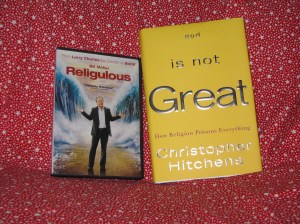
First off, the film is funny — hey, it was written by a comedian, so it’d better be funny! As Maher ticked off point after point after point where religion falls short of the mark, I felt as though I were watching Christopher Hitchens’ God is Not Great on the television.

Let's be friends

Let's be friends

Maher scores some big points for having done his homework on mythology and pointing out the mythical elements in mainstream Christian thinking, but I was left with some very basic questions: what about those who hold to religion for good reasons? What about those who don’t strap bombs on in the name of religion? What about those who promote humanitarianism for religious purposes? Can they be classed together with dangerous folk who use religion for nefarious rationales to get back at their enemies (generally anyone they don’t know)? The scenes of religion-inspired violence were extremely disturbing, but I was curious about the benign varieties of religion. Do they do any more harm than taking a toke, as Maher does a time or two in the film?

It occurred to me that religions offer a way out from what can be a very humdrum world. Evolution is certainly fact, but the long, slow process of evolving into something better fit for its environment doesn’t spur on the emotions like the Battle Hymn of the Republic. But isn’t that it in a nutshell? Religions show their flashier colors when they are in conflict, like peacocks competing for the affections of a peahen. Even those interviewed by Maher tended towards the more flamboyant practitioners of their faiths. What should really be on the docket is hatred. Religions may aid and abet those looking for excuses to harm those different from themselves, but religion is often the catalyst, not the cause. As religion goes through the long, tedious, and often painful process of evolution, it is sure to breed virulent strains that are nasty and evil, but once in a while the panda’s thumb emerges and humanity is ready for its next painful step forward.


Profit Priest and the King

As a staid academic with the internal passion of a Bruce Springsteen or Lou Reed, if I had any musical ability I’d have opted for a life on the stage. As I struggle to forge my passion into words on paper (or in electrons) I consider those who should have perhaps considered other options as well. I have never really been a fan of Christian Rock. The whole rebelliousness and sense of sticking it to the man lose something when you bow your head in submission the Sunday after and ask some ordained member of the establishment for forgiveness. It tastes even worse than Light Rock, the talc of real rock world. Nevertheless, there have emerged in the strange history of Christian Rock a few true innovators who have not only challenged Christian convention, but who have taken music itself in new directions.

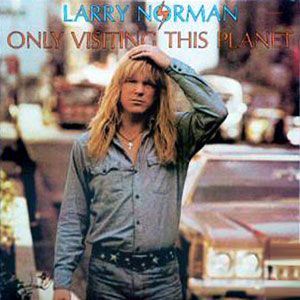
Norman's Iconic Look

Norman\’s Iconic Look

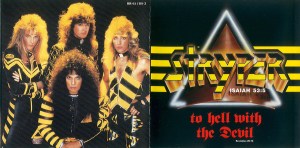
My favorite among the innovators has always been Larry Norman. The original “Jesus Freak,” Norman appeared on the San Francisco rock scene only to be rebuffed by Christian artists who held Pat Boone as a kind of icon, and rejected by mainstream rock as being some kind of Christian fanatic (he was). Norman’s music, however, was a strange blend of tradition and visionary foresight. When they saw there was money to be made, along came other artists trying hard to match Norman’s footsteps, most of them falling far short. Daniel Amos, probably one of the most unusual Christian groups ever, proved themselves way ahead of the curve, and if they’d had a good publicist might have made secular airtime based on their forays into retro and punk before they were trendy. Stryper, a hair band of heavy metal stripe, threw Bibles into the crowd at concerts.

Yes, they're dudes, Father forgive them!

Yes, they\’re dudes, Father forgive them!

They later disbanded because of their concern with hypocrisy, something a true rock-n-roller would never feel compelled to do. Meanwhile, mainstream Christian Rock rendered itself into treacle that would easily wash off with a shower of pure intentions.

Rock addresses head-on those gritty, messy, and even dangerous elements of human life — our emotions. After some 4000-plus years of organized religion we still have difficulty addressing or accounting for their insatiable pull on us. Staring out over the lecture theater and toting up the number of ipods present, I would have to guess that music still meets a need that religion might have missed.

A few years back, in a wave of nostalgia, I went to see Larry Norman in concert. I’d grown beyond any real enjoyment in the genre, but here was a true innovator, one whose name very few Christian Rock aficionados even recognized. The concert was held at a Christian college where there were maybe forty folding chairs arrayed in a depressingly small space in the gym. Norman could still rock, his acoustic guitar and spare band providing all the support he needed. I even had the chance to chat with him after the show; no security guards need apply. As I later reflected, perhaps this is what my life would have been like if I’d had some ability and taken to the stage instead of rocking the glamorous adjunct professor gig. While having my eardrums taken through their paces at an Alice Cooper concert last fall along with a bunch of other fat, balding, wannabe rebels I experienced a kind of secular epiphany. Alice had converted to Christianity some years back — seen chumming with none other than Pat Boone himself — and his music at the time suffered. Now that he’s returned to his macabre fantasy world, his ability to churn out compelling music has returned. Outside, away from the cannabis fumes and liquor-enhanced air, although I didn’t personally participate in their consumption, for a moment it felt like I’d lived my rebellious dream.


Anat, Kali and the Violent Femmes

“Women and men,” runs the chorus of the They Might Be Giants song of that same title, “… everywhere they go love will grow.” Women and men. Thus it has always been. The Sumerians seem to have speculated, on a broken tablet concerning the creation of humanity, that some six varieties of gender had been ordained by the gods. This story reminds me of just how dicey gender definition can be. Despite the howls of protestation from man + woman = marriage crowd, the concept of gender is actually complex and diverse. The lowly slime mold of the genus Physarum has a combination of multiple sex-controling genes mixed with several different types of sex-cells, leading to a bewildering 500 different sexes. You’ve got to wonder what the Physarum bar-scene is like! So the whole women and men combination seems a little tame by comparison.

The ancients did, however, toy with standard gender role concepts. The Ugaritic goddess Anat, sometimes described as a “tomboy,” was perceived as a literal femme fatale, joining her in the company of Ishtar and Kali as warrior women-goddesses. She was a proto-Amazon (before they laid aside their male-bashing and set up a very lucrative web-site). Anat wears the severed heads and hands of slain warriors and stomps in blood-puddles, laughing all the while. Where did the ancients derive such violent feminine images as Anat and Kali? Some sociologists suggest that these myths were intended to solidify gender roles, although they seem to confuse the violent male with the shy and retiring female stereotypes. Perhaps the Ugaritians and other ancient folk knew deep down that gender is only a vague attempt to classify something that is really far more complex than it seems. Just when gender is nailed down you find yourself in a bloody mess as Anat swats at you again and again.

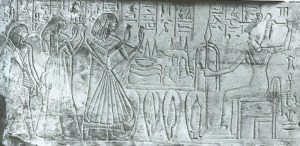
Anat ready to smite Egyptians who just don't understand the Violent Femmes

Anat ready to smite Egyptians who just don\’t understand the Violent Femmes

Nashotah is not far from Milwaukee where the folk-punk, genre-defining band the Violent Femmes started out. In college many of my overtly Christian radical friends told tales of how the Violent Femmes were a closet Christian rock group, based on some of the religious themes in Gordon Gano’s lyrics. When I listen to their CDs, however, I hear the same old angst that has plagued humankind for ages — what does a guy have to do to impress a girl (the same question may be reversed, turned upside-down, or dis-and-re-articulated, depending on whether you are female, male, or slime mold). At Ugarit they would have understood the Violent Femmes — listen to “to the kill” and tell me it’s not so! I would suggest that Gordon and the guys aren’t as much closet Christians as closet Ugaritians, struggling with the Anats and other violent femmes of their world and trying to make sense of it all.


Ghosts of Nashotah House

A recent search for “Nashotah House” + ghost (not unsurprisingly) brought up my blog. Perhaps I was being bated, but I’ll bite anyway. Who can resist a good ghost story?

A wee history lesson will help to set the scene. Nashotah House is/was a seminary of the Episcopal Church nestled in the woods of what had been the frontier in Wisconsin. Established in 1842, it was originally conceived of as a monastery — an ethos it has tried to maintain ever since. It is a residential campus with both students and faculty required to live on the school grounds. I taught there from 1992 to 2005, long enough to see some strange things.

I admit up-front that I don’t know what to believe about ghosts. Very nearly ubiquitous as a cultural phenomenon (and firmly related to religion), ghosts permeate the human imagination. It is not at all unusual that ghost stories should thrive in a gothic setting like Nashotah; a simple web search will bring out the traditional hauntings of the place, especially those of the black monk. When I made my first visit to campus there were some distinctly creepy vibes that I wrote up as being non-priestly jitters amid the secretive life of the black-robed clergy. For my first two years I would be there for just part of the week, so instead of the usual faculty house to reside in, I was assigned to live in an apartment in Webb Hall. Known simply as “the Fort” for the solidity of its limestone block construction, Webb Hall had been built for a former dean, Rev. Dr. Azel Cole, as a grand three-story residence for the priest and his wife, Betsy. (Episcopal priests can marry, creating a steady siphoning of Roman Catholic priests who love both the liturgy and the ladies.) My apartment was on the third floor of the Fort, the highest point on campus. As the living dean showed me around, I had that oppressive, “something’s not right” feeling, despite the fact that the living room had been newly furnished and had a spectacular view across campus.

The dean pointed out the amenities of the spacious apartment, but when we reached the kitchen/dining area, we found something unusual. In the very center of the floor was a single dining plate, shattered. The dean muttered something about how the cleaning lady must have missed it on her rounds when she had prepared the apartment for my arrival. Otherwise the apartment was spotless. There was a door leading to a private chapel that Dean Cole had constructed. I was told it was no longer used since the only access was through the apartment, but the dean supposed I would be interested in seeing it. We stepped inside and it was coated with cobwebs and a thick layer of dead black-flies covered the floor, especially near the windows. The dean informed me that it was kept locked to prevent clandestine, unapproved Masses from being performed there by renegade priests on the faculty.

The creepiest room, however, was my bedroom. A spare room (for sleeping only, no doubt), furnished with only a new bed and side-table, it nevertheless felt crowded. When something finally did happen in that room it was after I had moved to a regular faculty residence.

[For the rest of the story please see the Full Essays page]


Assyrian Dreams

All through my formal education I had learned about the Assyrians. My first introduction to them was as the evil empire that destroyed the chosen nation of Israel, inspiring countless myths of the ten lost tribes. Upon further study they appeared in a more positive light — they were one of the great, formative Mesopotamian peoples who had gone through considerable trouble inventing much of our culture for us. They also had a penchant for over-running smaller and weaker nations, but then, everyone has their foibles. When I saw their striking bas-reliefs in the Boston Museum of Fine Arts, and later in the British Museum, I was deeply impressed by their ability to project hostility. Bulging biceps, braided beards, dreadlocks and attitude enough to be the envy of any gangsta, these guys could subdue you with just a solemn nod in your direction.

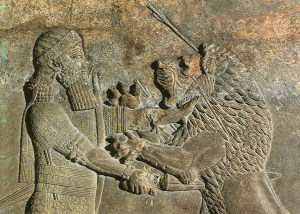
A good day for Assurbanipal, not so good for the lion.

A good day for Assurbanipal, not so good for the lion.

But the Assyrians over-extended themselves. Conquering further and further from the homeland, they couldn’t keep a stony eye from Egypt and Anatolia all the way to Persia. Media (not the paparazzi) eventually tumbled Nineveh and Babylonia stepped in to take on the burden of predominant empire. The United States hadn’t been invented yet, so somebody else had to dominate the Middle East. With the influx of Arameans and the machinations of the Persians, Mesopotamian culture became a cherubic mix of peoples. Assyria ceased to exist as a separate nation, and once the Arabian tribes launched into the region, all genetic bets were off. Racial purity was a dream of the past. So the Assyrians dissipated, joining their neighbors in a happy, amorphous Mesopotamian culture.

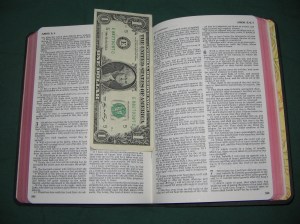
In Shamash we trust.

In Shamash we trust.

Then, after procuring a doctorate in Ancient Near Eastern studies, I took a job at Gorgias Press. Suddenly the Assyrians were back! That was one on the other end of the telephone! Visions of dreadlocks and skewered lions came to mind, and in my confusion I asked my colleagues if I’d slept through that lecture. No, it turns out, the Chaldo-Assyrians are a relatively new incarnation. Named Assyrians by nineteenth-century European missionaries, this predominantly Christian people has adopted and tried to assimilate the heritage of the ancient Assyrians. They still exist today, I’m told. Instead of swords and lion hunts, they wear camouflage and hunt with automatic rifles. But their flag hearkens back to their ancient, pre-Christian religion. That flag, their rallying point with high antiquity, bears the emblem of the eight-rayed Assyrian sun. Jesus, meet Shamash. Son versus sun. I guess it is time for me to go back to school again and see if I can get it straight this time.


Currying Divine Favor

The name Kerala leapt out at me from a stunning newspaper article that reeked of indulgences and simony just this week. Kerala, a southern region of India, is home to a large number of Syriac Orthodox Christians. In my time at Gorgias Press I often heard their industry praised and was informed how cheaply fellow “Christians” would work. I even saw the position of a great fellow worker at Gorgias evaporate as his duties were “outsourced” to India. Ah, Outsourcing, thy name is Greed.

I recall the days when Greed was considered one of the seven deadly sins. Apparently now it is an acceptable means of replenishing ecclesiastical coffers. An article on Thursday’s New Jersey Star-Ledger front page bore the headline “Recession hits Indian churches offering outsourced prayer”(!). The article explains that Catholic churches in the United States, hard-pressed for priests, have been outsourcing Mass intentions (dedicatory prayers) to their colleagues in India. The mind spins — American families, wanting a Mass intention dedicated to dear departed Aunt Bertha, sells the option to India where prayer is cheaper. As the headline declares, the Recession has cut into the profit margin of the Indian Catholic Church. I’m no mathematician, but it seems that a degree in accounting might help to sort all this out: Americans sell prayer intentions to priests in Kerala, who (when they aren’t working for Gorgias Press in their spare time) send them along to a God who is supposed to be omniscient anyway? And money changes hands for this? In Kali we trust!

Organized religion requires financial upkeep; only a blind naked mole rat can’t see that. Nevertheless, when religions gain enough financial leverage to become power brokers, it seems that they have slipped their moorings. I have watched hypocritical “prosperity gospel” believers benefit from the hard work of the poor, and I have seen the coffee-table books touting the immeasurable wealth of the Vatican, and I have witnessed the homeless curled up on urban church doorsteps on a cold Sunday winter morning. And I remember what Amos wrote, “For I know how many are your transgressions, and how great are your sins — you who afflict the righteous, who take a bribe, and push aside the needy in the gate…” (5.12). And I wonder who might be the safer bet, Yahweh or Kali?

WWAD?

WWAD?


The Dark Light

Like many Americans, last year I was fascinated by Christopher Nolan’s gripping and gritty Batman film, The Dark Knight. Admittedly, the untimely death of Heath Ledger added to the poignancy of the film, but his unfaltering performance as the Joker was no laughing matter. I was transfixed. Not only was this vision of the character previously immortalized by Cesar Romero and Jack Nicholson a sea-change, it was also an epiphany.

In attempting to understand ancient religion, you can’t get far without having to address priests and prophets. Priests appear at the dawn of civilization, the establishment’s religious functionaries. They had (have) a vested interest in the continuation of the reigning power structures. Priests make their living from a population settled enough to tax. Prophets, however, have a far older pedigree. Israel recognized prophets as we all know from the Hebrew Bible, but other ancient religions also had their prophets too. Prophets were religious functionaries from outside the established power structures — they challenged conventions, demanded radical changes, and caused migraines for more than one priest. The prophet seems to have evolved from the shaman.

Not a Joker! An Amazonian shaman

Not a Joker! An Amazonian shaman

The shaman was what anthropologist call a “liminal character,” an outsider. They simply do not play by society’s rules, but they are feared and respected by society. The shaman may see or hear things that are beyond the perception of your average citizen. The shaman may be dangerous. This is what I saw in Heath Ledger’s Joker. A disturbing character who challenges and yet at the same time brings focus and resolution to a fractured society. A wounded healer. He represents a fossil, a shaman in twenty-first century Gotham. The other Jokers, Romero and Nicholson, didn’t quite attain this level of spiritual catharsis. Although I knew Batman was the good-guy, the Joker, laughing when he should have been crying, the agent of chaos, was the most religious character in the movie. He was the Dark Light to Batman’s Dark Knight.


Ortho-right or Ortho-wrong?

As a child reared in a seriously religious household far, far away from anything with even a whiff of orthodoxy about it, my first encounter with this traditional form of Christianity involved more curiosity than fear. What was this religion that claimed to go back to the very earliest apostles? Did Jesus wear one of those unusual hats? I never recalled seeing paintings of Peter, or Mark, or even Thomas wearing a medallion of the theotokos. Apparently I’d been routinely misinformed. The haunted, deeply spiritual grimaces on the faces of orthodox students my age were almost intoxicating. It was all new and exotic to me.

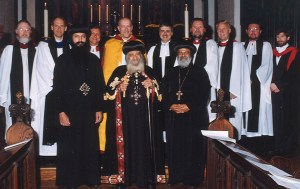
Several years later I find myself having been subjected to a variety of orthodoxies and the only thing they seem to have in common is the conviction that all the others are wrong. I once had a boss who was enamored of Greek Orthodoxy. (I later learned that this is the gateway orthodoxy, leading to more foreign strains.) Presently his interest shifted to the Russian variety and I eventually found myself cowering in the glare of the Coptic Pope Shenouda III’s eminence. How had a kid from humble beginnings come so far? A couple jobs and a few hundred miles later, my new boss turned out to be Syriac Orthodox. Phone calls to the office would come in languages I’d never even heard before. Being a northern European mutt, maybe I was simply jealous of the pride of ethnic purity. No fancy traditional dress to haul out for exotic dances at annual celebrations of mutthood (Lederhosen and stuffy tweed, anyone?)

Basking in the eminence of the Coptic Pope

Basking in the eminence of the Coptic Pope

All of this exposure to orthodoxy has led to heterodox thoughts in my heretical brain. It seems that the basic premise of orthodoxy is that the final truth was revealed just once, up front, and it left no room for growth. The expectation that Jesus would shortly be back didn’t leave much space to consider what complications would set in once people developed nuclear weapons, landed themselves on the moon, or devised genetic engineering. Complexities and complications that early Christianity could never have foreseen chaw like ravenous beavers on the stilts propping up this edifice. I am a firm believer in religious freedom and have never urged anyone to change her or his personal faith. But I do seriously wonder how any religious system, in the light of our limited brains, could ever expect anyone to believe that it had comprehended the whole of all truth for all time. It is all too wonderful for one condemned by a birth outside of ethnic Christianity.


Man and Womandrakes

With the recent release of Harry Potter and the Half-Blood Prince in theaters, young minds (or at least juvenile ones!) turn once again toward things magical. Anthropologists find difficulty in distinguishing between magic and religion, and many kids have been introduced to religious themes through this series of books and movies. I admit to having read the books and even having seen some of the films, and one of the memorable mythical sub-supporting characters that captured my attention was the mandrake. My first exposure to this herbological wonder was, naturally, the Bible. (Well, after Mandrake the Magician, of course.)

The tale of Reuben’s mandrakes in Genesis 30 shows a hint of that old white magic. Rachel bargains sex for mandrakes and the next time she is mentioned she becomes pregnant. Mandrake roots are often claimed to have anthropomorphic qualities – just how anthropomorphic depends on the imagination and how many the viewer has ingested. In the Middle Ages, the roots were classified as mandrake and womandrake!

Womandrake and Mandrake from a 12th-century manuscript

Womandrake and Mandrake from a 12th-century manuscript

Even in ancient times they were revered as aphrodisiacs. The Bible has plenty of these quasi-magical moments, often explained away as “folk beliefs” by literalists with a nervous laugh. To me they are part of the charm of a Bible unashamed of its roots.

The mandrake (mandragora officinarum) is a Mediterranean plant that had medicinal, and likely “religious” usages in the ancient world. A natural narcotic, the plant is poisonous in sufficient dosages, and it was used as an ancient kind of anesthetic, having been available long before whiskey. When a mandrake was uprooted, its humanesque tuber was thought to emit such a horrendous cry so as to drop the uprooter dead. Dogs were therefore tied to mandrake roots and prodded or urged to run, extracting the plant and dying in the process. Before calling the good folks at PETA, please note that no dogs were harmed in the writing of this post! Although this legend has a distinctly medieval bouquet, it is a method of mandrake hunting actually cited as long ago as Josephus. The mandrake has long arrested the human imagination. From Rachel to Pomona Sprout, the mandrake has not lost its potency for mystical mischief.
"Man"drake, 'nuff said (from Sibthorpe's Flora Graeca, 1808)


More Biblical Cats

In the Bible there are no cats. This silence is odd since cats have been associated with humans for over 9,000 years. Large felines, of course, appear in the Bible; lions and leopards prowl sacred writ, but nary a housecat. In a world of subsistence farmers, the concept of a “pet” is also absent — an animal as part of the household is yet another mouth to feed. The closest we get to biblical pets is in Nathan’s parable to David about Bathsheba. Here the “pet” is a lamb — a potential source of wool and almost certainly a funeral involving roasting and possibly mint sauce.

The Israelite view on animals is difficult to assess fully. Clean and unclean classifications seem to relate to predatory behavior and “fitness” for an environment. As a notorious but useful predator, cats could have been somewhat of a religious embarrassment. Having tamed feral cats, I know that the key is to make repeated offerings to a cat (by the way, this is the advice of Old Deuteronomy in Cats). Being quite self-sufficient, cats can find what they need without human, or divine intervention, thank you. Perhaps feline behavior resembles that of the gods a little too much for people inclined towards henotheism?

In the beginning was the cat

In the beginning was the cat


The problem with predators is no one knows what they’ve been eating. Predation involves bloodshed and blood pollutes. Look at what the cat dragged in! Biblical cats are victims of argumentum ex silentio — we can never know why they don’t merit a mention. As carnivores they are necessarily unclean. By the Middle Ages, for reasons still unclear, the church and superstition rendered cats as the familiars of witches. Ironically the associated killing of cats likely helped to spread the Black Death because of the removal of the flea-bearing rodents natural predators. In most ancient cultures cats are credited with supernatural powers. Since the Bible strictly guards this privilege, perhaps cats stepped just a little too close to divine prerogatives to merit a mention in the Good Book.


Graven Images

Religious statuary was ubiquitous among the ancients. That which the eye can perceive is so much better for focusing the attention than the amorphous unknown. In methods reminiscent of my days of toy soldiers and action figures (not dolls!), priests of Near Eastern temples would dress their statues, offer them refreshment, and take them for a public parade to reassure the populace that they were still being cared for. Citizens didn’t regularly “go to church” or synagogue, the temple was the work-space of the priesthood. So regularly scheduled public jaunts with the goods, or gods, on the shoulders helped to reassure ancient folk that all was well. If a city-state or nation lost in battle, their statuary was taken captive by the victors — what could you do if they’d taken your gods? Even in the Bible the ark is taken as spoils of war by the Philistines. They knew the drill.

Monotheism and aniconic religion go hand-in-glove. If there is only one god, then multiple images only cause confusion. Although the ancients were more sophisticated than we often suppose — they knew the statues were not the actual gods, thank you Second Isaiah — when monotheism took hold in emergent Judaism, the divine images had to go. Early Christianity shared this antipathy for graven images, for a while. Soon paintings in catacombs represented Jesus and an industry in religious art was about to boom. If the image represents a holy person, the image itself must be holy. It’s a hard idea to shake.

In the paper the other day, an article explained how a couple of people stole Jesus in Hackensack, New Jersey. “2 charged in theft of Jesus” the headline read (in part). Our would-be godnappers tried to sell a 200-pound bronze statue of Jesus for scrap metal. Even with advanced training in religious studies, and a skepticism borne of too many years as a professional religionist, I wouldn’t try to scrap Jesus for cash. The image might have some ark-of-the-covenant-type power! Once while jogging through a church parking lot, a pagan bug flew into my mouth.

An ethical morass

An ethical morass

This posed a serious ethical dilemma — if I swallowed it my decade-long clean record as a vegetarian went down the drain; on the other hand, expectoration on consecrated ground surely posed a potentially personal apocalypse with The Landlord! As I forcefully released the confused (and slightly gooey) insect back into nature, I had a moment of Kierkegaardian aangst that the job I’d recently applied for would now go to someone else. I had defiled a church parking lot with a little spittle! Religious symbols indeed have power. It takes a brave thief to sell a stolen divinity into the hands of sinners. And I didn’t get that job after all.