Awaiting the Evolution

My daughter’s taking the mandatory New Jersey high school biology tests this week. Probably designed to ensure that basic health risks are factored and understood, it is one of the few bulwarks of the correct teaching of evolution in the United States. As anyone who follows my college Michael Zimmerman’s blog in the Huffington Post realizes, Creationism is a constant menace to our country. Although many simplistically assume that the threat is gone, it is, alas, sleeping but not dead. Perhaps quiescent under the administration of a moderate president, the Creationists have not gone away. I fear an imminent backlash along with popular apocalyptic hype for the year 2012. The Creationists are out there, just beyond the perimeter fence. I can feel it.

Having grown up under the umbra cast by the Creationists, I know their resiliency well. In a high school current events class, I participated in a Creationist-Evolution debate that classmates still remember some three decades later. It would be a situation laughable if it weren’t such a serious threat. While society has continued to evolve since Scopes, most Americans are still convinced that there is something insidiously evil about evolution, as if the devil generated the first simple cells and set the entire process running. In a society where Creationists daily benefit from the advances of science – as any search for evolution on the internet will demonstrate – they hold their feet firmly on the brakes nevertheless, awaiting a snow-white stallion at the parting of the literal clouds overhead.

I am not alone in foreseeing this whiplash that’s about to come. Many analysts who know the radical Evangelical camp share my fits of nerves and jitters. The educated elite suppose they’ve been eliminated, but those of us who know the world of the uneducated faithful tremble with a fear not inspired by the Maya. Sarah Palin is one of the most popular people in this country right now, and the Creationists, I assure you, are already staring at their watches and counting each passing tick.

Neo-Cons marching straight to the polls


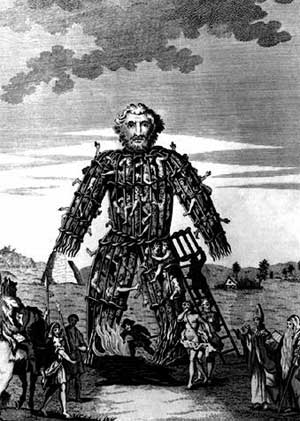
Wicker or Wicked?

While I continued officially unemployed I keep to a strict regimen of not watching television except on the weekends. Since we don’t have cable or even a digital conversion box, my viewing is limited to grainy VHS tapes or DVDs. Many of them I’ve watched over and over. Last night I picked out one of perennial favorites, The Wicker Man (1973, of course!) for late-night viewing. Although classified as a horror film, the only terror comes at the very end in a scene that I always find difficult to watch. What keeps me coming back to this film is its unrelenting criticism of religious hypocrisy. (That and the longing evoked by the footage of a Scotland I left many years ago.)

Briefly told, a Highland police sergeant, Neil Howie, is lured to a fictional Summerisle in a mouse-and-cat game where he ends up the victim of a neo-pagan cult. The stunned Christian constable cannot believe the superstition evident on the island could still exist in modern Britannia, leading to one of the highlights of the film. Questioning Lord Summerisle, played by a striking Christopher Lee, Howie accuses him of paganism. “A heathen, conceivably,” Summerisle concedes in a tight shot, “but not, I hope, an unenlightened one.” Howie is shown growing increasingly rude and unsympathetic, forging a makeshift cross to lay over a Druidic burial. He threatens Lord Summerisle with being investigated by the authorities of the Christian nation under whose aegis he falls. The tensions between religions grow until the final scene.

The constant interplay between control and conviction raises again and again what the true nature of religion is. Summerisle reveals that the neo-paganism began as an expedient way to encourage the locals in growing new strains of crops. The images of palm trees in the Hebrides may seem unwarranted, but having strolled among them on the Isle of Arran nature itself belies the orthodoxies of convention. Does religion rule by force of law, depth of conviction, or pure expediency? The makers of the film were wise enough to leave that to the viewer to decide. No wonder that on many a bleary-eyed weekend night, ousted from my once stable career by the overtly religious, I choose to watch, yet again, The Wicker Man.


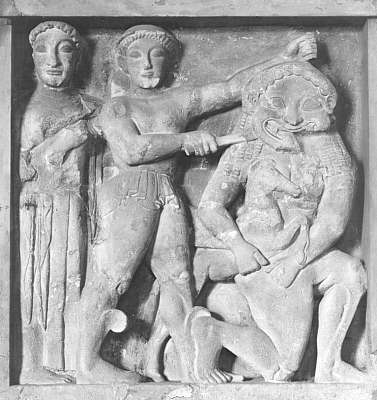
Medusa’s Legacy

Having just finished my Mythology course at Montclair, I’ve picked up a few books to delve once again into a sublimated childhood interest. I was first introduced to Greek mythology back in Mrs. MacAlevy’s fifth-grade class in Rouseville Elementary. The story of Perseus, in particular, has stayed with me ever since. Of course, being taught in serious religion classes that this was all silly nonsense, what with the multiplicity of overly amorous deities whimsically whipping thunderbolts at humanity (everyone knew there was really only a single celibate deity whimsically spreading pestilence among humanity), I drifted away. Mythology continued to be an interest, but the Greek variety went the way of the dodo. The occasional Pauline reference to Artemis fanned the old flames, but just a little. I had more serious religion to comprehend.

So now, decades later, I find myself needing to catch up on the classics. To rejuvenate my interests, I once again turned to Perseus. My brother and I forked out the extra cash for 3-D to see the remade Clash of the Titans this spring, and I found myself even watching the 1981 version in a Harryhausen-induced haze to refresh my memory. The original movie realized the deficiencies of the classic story on the big screen and embellished shamelessly to wow the critics. One of the most memorable scenes was Perseus in the lair of Medusa. So I found myself reading Stephen Wilk’s Medusa: Solving the Mystery of the Gorgon.

Wilk is a physicist and a member of a prominent optical society. He brings the fresh insights of a non-classics specialist to the story of Medusa (I should know, since I too am a non-classics specialist). This study raised my limited level of awareness in several respects, particularly in the repeated emphasis on eyes in the book. What really struck me the most, however, was how it became clear that Medusa was yet again an embodiment of female power ruthlessly struck down by a virile young man with nothing better to do than slay her. Medusa is the victim in the story, cut down for simply being what she is – a strong female figure. I could not agree with all of Wilk’s assessments, but this provocative book brought many interesting concepts to light.

Medusa, like Lilith, is the symbol of fear for a threatened manhood; women who are true femmes fatale – preying on male pretensions for sport. Until society willingly accords true equality, such figures will remain necessary to remind us that gender should never be the factor by which an individual’s contribution is to be judged. I suspect Mrs. MacAlevy knew something that the Greeks had also realized: repression only increases the ferocity of the repressed.

Perseus asserting the male prerogative


Giving Lilith Her Due

Lilith Fair has announced its 2010 tour dates and excited fans are already purchasing tickets. Lilith Fair is a collection of women artists who share a stage to showcase the female contribution to contemporary music and donate a considerable share to charity. The event name, of course, is taken from the mythological character of Lilith. Popularized as a rare example of “Hebrew myth,” Lilith is a character who likely derives from ancient Mesopotamia, although her origins are obscure. Best known as “Adam’s first wife,” her somewhat sexy story in Judaic tradition evolved into Lilith being the original woman. Unlike Eve she was created simultaneously with Adam. Things were fine until she wanted to be on top during intercourse – males were not made to be dominated, according to patriarchal old Adam, and Lilith ships out to shack up with Satan. She is demonized (literally and figuratively) and becomes the “night hag” that snatches babies and claims the first right of intercourse with every male (an etiology for nocturnal emissions). She becomes the mother of demons.

This story shows all the traits of a late development, but the idea of a strong female figure in Eden is an appealing one. Lilith has come to represent the empowered female, and the modern trend towards accepting her as an icon of feminine independence is apt. Long ago I was intrigued by the female side of the story. Perhaps because I was raised primarily in a single-parent family for my formative years, I have always wondered about the disparity in our “advanced” culture that still considers the male as the “default” model with the female as kind of an adjunct after-thought. This fascination led me to the study of goddesses in the first place, culminating in a doctorate on Asherah. In the Bible men have Adam, Noah, Moses, David, and countless other role-models – even God himself according to standard interpretation. Why not admit the goddess?

It is telling that when Lilith becomes too powerful she is presented as evil. Anthropological explanations have little to offer by way of adequate explanations for such a development. Not to blame biology (or to lay claim to an excuse), but Frans de Waal’s Inner Ape demonstrates that males are hopelessly paranoid about showing weakness. Female primates tend to express their power by group cohesiveness while males try to blunder their way to the top with brute individualism. Adam had nothing to fear from Lilith. To those who perform in Lilith Fair, I only have to say, “Rock on!”


Expect a Miracle

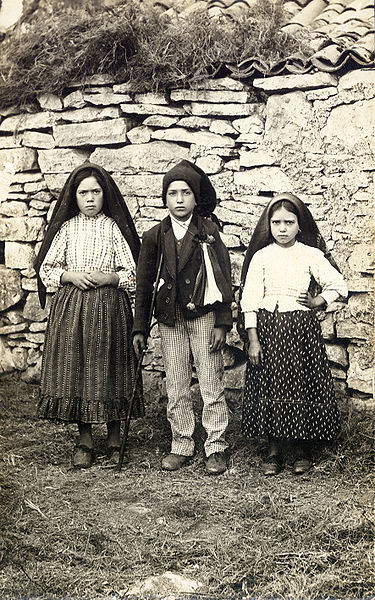
The Pope has been in Portugal. No visit to Portugal would be complete without a stop at the shrine of Fatima. Named for one of the most fascinating characters in Muslim history, Mohammed’s strong daughter Fatima, this small, centrally located town had no claims to fame until 1917. Suddenly three children declared that the Virgin Mary had appeared to them while tending their sheep. The story is about as eerie as the canonical photograph of the unsmiling youngsters. Their sincere proclamations were met with acceptance by many war-weary Europeans and predictions began to emerge from these visions. On October 13 that year some 70,000 pilgrims alleged that the sun itself danced, twirled, and took on new colors. Astronomers reported no solar anomalies at the time.

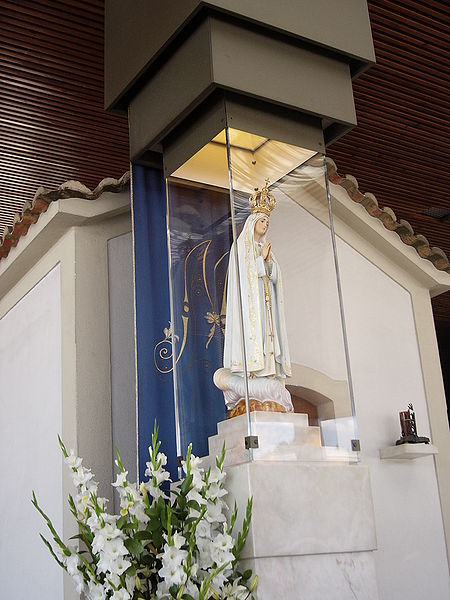
The events at Fatima have fascinated both religious and secular explorers of the supernatural. The religiously devout claim nothing shy of a miracle while those seeking more dramatic non-theistic explanations claim that aliens were behind the show. Whether or not a physical event transpired, something out of the ordinary occurred in Fatima that day. Now a permanent shrine graces the location. If the apparition appears again, she will be comfortably housed in doors, out of the elements. She might even see one of the bullets fired at Pope John Paul II during the famous assassination attempt. Many believe the Pope’s survival was itself a miracle.

Gnu version of Virgin under Glass

Now Pope Benedict XVI has visited the shrine where heaven once touched earth. Afterwards he climbed into the Popemobile, the motorized bullet-proof reliquary that allows papal viewing by the faithful while protecting Rome’s most valued asset. The message is clear: it is wonderful to believe in miracles, but it is prudent never to trust in them. Two of the three children (Jacinta and Francisco) died before they reached twelve, felled by the famed Spanish Influenza. The miracle that could have preserved their young lives never occurred. Lucia alone survived to 97. Expect a miracle? The odds are hard to predict on that one.


And With Perfect Teeth

This week drug stores across the country will begin offering a testing product that will help assess genetic predispositions to various diseases and weaknesses. Potential parents might learn what debilitating illnesses could plague their children. Who wouldn’t want to eliminate needless suffering and create a world involving less pain and wasting away? Who wouldn’t want to know in advance? Ethicists are up in arms for such knowledge is surely a dangerous thing, just like an overcrowded lifeboat.

Ancient peoples had their own way of dealing with such dilemmas – blame the gods. Disease was not the result of genetic predisposition or even microbes. Illness, plague, pestilence and degeneration were the punishing weapons in the arsenal of ill-tempered deities who didn’t really understand what it was to be mortal. In Ugarit the archer-god Resheph was the divinity who brought pestilence. Shooting from afar with his fiery arrows he could topple cities and nations. Yet few prayers to him are recorded. Better to appeal to a higher power, an outranking deity who might overturn random suffering.

With the loss of many gods comes the loss of the right of appeal. Should the one God be the one who sends disease, to whom can prayers be offered? For many prayers to Jesus or even to Mary are made to circumvent the sad lot poured out upon a destitute humanity by an implacable father. People now recognize genetics and microbes, but still talk to the spirit world about woes and fears. Starting on Friday, however, there will be a product locally available that might provide relief in advance. Who’s willing to take on the gods and give Pathway Genomics a try?


Lessing Down Your Kierkegaard

The Jehovah’s Witnesses stopped by again yesterday. They were very friendly and polite, and even remembered my name from the last visit. One of the missionaries was new to me, and she assured me that God’s name is Jehovah. She said the Bible proved this. The missionary who’d spoken to me before knew I was a former professor of religion. Nevertheless, they both worked at trying to get me to see the light. I extended to them the courtesy I extend to my students and blog readers, namely, of not revealing my own personal religious convictions. It must be really frustrating to try to convert someone when you don’t know what they already believe!

The point I never have the heart to bring up is God’s name. In fact, no one is certain as to what the divine name is in the Judeo-Christian tradition. “Yahweh” is the closest approximation, based on present conventions of transliterating Hebrew and reconstructing vowels that were never recorded. The word “Jehovah” is historically well understood. It begins with the Jewish reticence to speak God’s name aloud during the second temple period. In order to assure that a reader didn’t accidentally blurt out the divine name when reading Scripture, the Masoretes took the convention of writing the consonants of Yahweh (yhwh – Hebrew has no capital letters) with the vowels for the epithet “lord,” adonai in transliterated Hebrew. The initial J comes from the fact that to get a “y” sound in German a “j” is used. So we get the “J” from yhwh, the “a” from adonai, and alternate from there “h-o-v” (again, because of the Germanic origin of the word, a “v” was used instead of “w”) and finally, “a-h.” All together, this word, which was never used in biblical times, becomes Jehovah, a new name for God.

I admire the conviction of those who stop by a stranger’s house and present their views. When pressed to accept, however, I threw them Lessing’s rings. Gotthold Lessing once suggested that God gave humanity three golden rings: Judaism, Christianity, and Islam. What God did not give was the answer to which religion was the true one. I placed this conundrum before my earnest guests, but they already had the answer that had flummoxed Lessing. I suggested that if one’s conviction is strong, now borrowing from Kierkegaard, then one must follow that conviction. No, I was told, for the Bible reveals the whole truth. I mentioned that not all religions utilized the Bible in that way. I was told the Bible reveals the whole truth. About that time I had to run off to administer a final exam in a Bible class. The exam covered Ezekiel. And I knew, with a shudder, that Ezekiel had been told to look out from the watchtower!

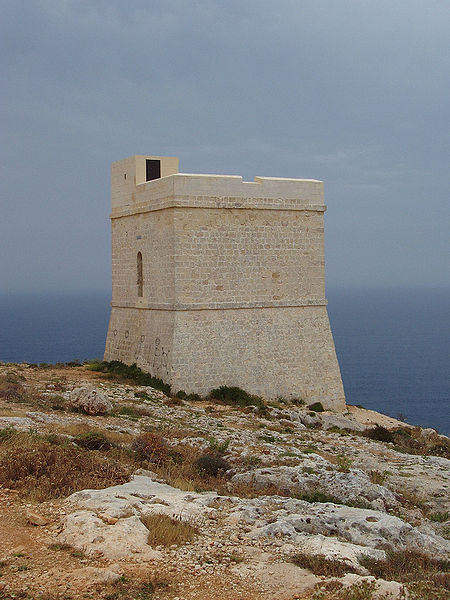
Ezekiel or Charles Taze Russell's watchtower?


Monday Morning of the Soul

Western society is much indebted to the Hebrew Bible and the culture it has engendered. Nowhere is this more evident than the now hallowed concept of the weekend. Most of our time increments are determined by the movements of celestial bodies – the sun marks our days and years, the moon keeps our months rolling along. But the seven-day week is a bit of an anomaly. We know that the ancient Babylonians experimented with the seven-day idea, but it was the Hebraic concept of the Sabbath that provided us with a regular day off.

Ancient agrarian societies knew no “days of rest.” The old saying, often attributed to nineteenth-century American farmers, states that your cows require milking, even on the Lord’s day. Life in ancient times, for most individuals, was a daily slog, repetitive, long, and repetitive, of struggling to survive. The idea that you could take a break from survival to relax and not work simply did not equate. A break from survival is the same as death. When ancient priests – city-dwellers, no doubt – decreed that Saturday was a special day because even the Almighty needs a little Miller-time, well, the idea caught on. Society, once it had become sufficiently urbanized, could allow one day off a week.

Fast forward to the Christian contribution. Early followers of Jesus were Jewish and therefore already sold on the Sabbath concept. The resurrection, they asserted, took place on Sunday, so it was appropriate to worship on that day as well. A two-day worship minimum had been established. To many ancient folks this looked like laziness with a religious blush. Nevertheless, it caught on. Now many of us in a leisure-based society, with white-collar work that usually can handle being put off a couple days without immanent starvation or over-lactation, live for the weekend. Constraints of doing it for “the man” are off, we are free to be who we really are. Two-sevenths of the time, anyway.

Religions have given the world special gifts. As another dreadful Monday morning forces us out of bed early and focuses our eyes on a distant Friday afternoon, we should remember to thank Judaism and Christianity for their combined worshipful sensitivities. If it weren’t for them, we would have endless weeks of Mondays.


The Death of an Art

In most ways, I enjoy progress. Having electronic communication has spared the lives of many innocent trees, information may be had quicker, and ideas can be freed from the sometimes narrow constraints of staid publishers. (On the other hand, it has given internet users way TMI, some of it not worth the double-click.) There is, however, no comparison to holding a book in your hands. I grew up with cheap paperbacks with their brittle, brown-edged pages and their cadre of book-mites, but many happy memories have accrued to those hours of reading. I never much cared if the books were pristine, as long as they were legible. As intensive reading became a major part of my career aspirations, I started to notice the quality and longevity issues of books. Hardbacks were more durable, but less portable. Some were artworks in themselves.

I was disappointed, therefore, when I recently ordered an Oxford University Press book and I discovered that it had been done Print on Demand. Having worked nearly three years for Gorgias Press, pretty much a strictly Print on Demand publisher, I immediately recognized the hallmarks of this quick and easy way of keeping books in print – inferior print quality and image replication were dead giveaways. The truly disappointing part of the scenario was that this particular book has an intensive discussion of artifacts shown in their grainy, low resolution PoD reproductions. I realize that even large publishers save immense warehousing costs by supplying on-demand titles after an initial print run sells out, but when it compromises the quality, in part the raison d’être of a book with illustrations, some troubling issues are raised.

It seemed when I was young that no matter which copy of a book – barring obviously defective tomes – I picked up, the contents were virtually identical. The industry standard, offset printing provided many identical copies of good quality relatively cheaply. With Print on Demand, books can be outsourced to different vendors and interiors can vary considerably. I saw this all the time while checking proofs at Gorgias Press. PoD also means that little changes can be made between “print runs” resulting in different copies of the same book having variable text. The compulsive footnoter in my veins starts clutching his little chest. When books move from a print run that can only be altered by a new edition to a PDF that can be adjusted between each individual copy, I begin to wonder about the stability of the written word. I’m still enjoying my OUP book, despite the uneven printing and the grainy pictures. But deep inside I fear that rewriting history has become much, much easier.


What’s in a Name?

Two of my readers sent me an article yesterday about Lord Jesus Christ, the Massachusetts man who was hit by a car. Lord Jesus survived the brush with death this time. Clearly the angle on this story is the human interest aspect instead of the courtroom precedent or the political scope of its ramifications. In our minds, if we’re honest, we’ll admit that we’ve already come up with a profile for a man named “Lord Jesus Christ.” We’ve already judged him and determined his motives in legally taking such a name. This is a book to be judged by its cover.

From a purely semantic point of view, the victim’s name would probably have more impact with the definite article: The Lord Jesus Christ. As it is, the name differs only in degree from the thousands of Chrises out there, of either gender, or the many Hispanic men named Jesus, or those Anglos with the surname Lord. Not to mention all those Joshuas. Our names are the labels that others immediately use to prejudge us, although mostly our names come from our parents, or sometimes spouses. We are known through life by tags branded on us by parents who have no idea who we will become. As the non-adopted step-son of a second father I changed my name and I know the baggage that goes with such a change. The burden became so great that I reverted to my birth-name after college. I felt like I had been living a lie for much of my youth. What’s in a name?

Our injured man with the newsworthy name has not yet become the savior of the world. Some religious folk are offended by his appellation, yet most of us would be flattered by someone naming their child after us. Why not aim high when it comes to names? If we are to be judged by our verbal moniker, why not select one that states our point of view? With religiously motivated terrorism on the ascendant, however, it gives me pause to think about Lord Jesus Christ being run down. A man was injured here, while crossing the street. It could have been anyone. If it hadn’t been for his epithet, the story would not be national news. More than anything else, this may reveal the significance of the name.

A message from on high?


Not My Daddy!

They spy each other across a crowded room. He sure is big: barrel-chested and even a bit brutish. She’s cultured and refined, but there’s no denying that spark…

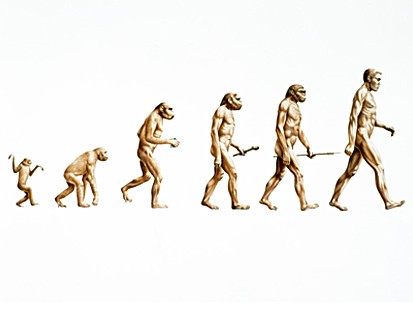
Today’s issue of Science announces the startling news that Neanderthals and Homo sapiens once interbred. The theological implications are enormous. I used to tell my students that the earliest evidence of religion falls not only among the artifacts of the Cro-Magnon branch of the hominid tree, but also among the remains of Neanderthals. If they had religion, and if they weren’t “human,” what happened to their souls when they died? I received a lot of puzzled looks from seminarians and more than one or two angry stares. The Bible, after all, claims that each was made according to its own kind. Seems like Adam and Eve might have been sleeping around with the non-Eden set. Looks like we’re in for another theological conundrum!

Neanderthals and Homo sapiens diverged once the human lineage left Africa, but once they met in a smoky Paleolithic bar, well, nature took over once again. And if these two hominid species interbred, who is to say what went on back in the days of Lucy? What happened in prehistory stays in prehistory, religions must needs proclaim. If we are honest with the evidence, our bonobo cousins share ancestors so do they share souls?

Some of the present human race, according to the DNA evidence, is walking around with Neanderthal blood, while others are not. I suppose gene sequencing might reveal which camp you are in. Will there be a Church of the Neanderthals? And will non-Neanderthals be allowed to share communion? And were the founders of the world’s great religions all Cro-Magnon or not? If they were of a slightly differences species, can I still join? Theologians, it is time to grab your pencils!

Maybe your dad, but not mine!


Thus Spake Zarathustra

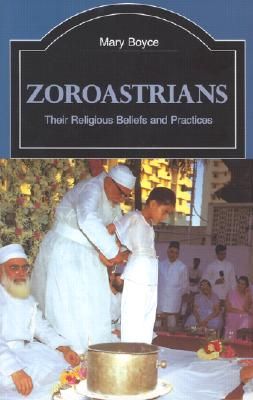
Preparing for another round of my annual course on Ancient Near Eastern Religions, I have been brushing up on Zoroastrianism. For this I generally first turn to Mary Boyce’s standard introduction, Zoroastrians: Their Religious Beliefs and Practices. The book was written in the 1980s and is showing its age a bit, but it remains a seminal introduction to a religion whose humble position among world belief systems belies its overwhelming impact. A strange fact about the religion is that many of its main tenets have been summarily dismissed by the more politically influential religions of antiquity while its secondary features have been dramatically embraced. The classic example is dualism.

Zoroastrianism was founded on a dualistic principle: Ahura Mazda was the entirely beneficent, good creator, while Angra Mainyu was the powerful principle of evil. This cosmic struggle tapped deeply into all aspects of life, leading to the beliefs in two afterlife realms (which evolve into Heaven and Hell), two very powerful entities (that become the God versus Satan paradigm), and two dispensations (present age as opposed to future age, the ultimate source of the apocalypse). Indeed, it would be difficult to recognize Christianity without Heaven and Hell, the Devil, or the final judgment. Boyce carefully traces the earliest evidence for Zoroastrianism back to its formative period and offers detailed explanations for each aspect. Beyond this, however, Zoroastrianism became a forgotten faith, an abandoned parent.

It is a fact that religions evolve. Many believers like to trust that they have the straight information directly from the founder’s mouth and that their brand is the authentic brand of faith. All religions, however, if they survive long enough, change to meet the needs of present-day adherents. Again, Zoroastrianism is instructive. Believing in the sacred nature of fire, during the industrial revolution the use of fire for profane work, such as running a steam engine, was considered inappropriate. How were Zoroastrians then to keep up with society without softening their stance on the secular use of fire? The struggle was real and has never been fully resolved. The same exercise could easily be applied to other religions as well. Until the Zoroastrian-inspired apocalypse arrives, religions will have to adjust to continual societal change and accept that quantity of belief does not affect quality.


Holy May Days

The first few weeks of May are peppered with holidays, some religious, some secular. As my regular readers know, I’ve been working on a book about holidays for kids, so I showcase a few pieces on this blog, on occasion. Instead of providing several posts on May’s holidays, I’m combining the first three special days into a holiday compendium for early May.

May Day (May 1) is, in origin, a religious holiday. It is an ancient, pre-Christian Celtic holiday called Beltane, it celebrates fertility, and it is a day that workers throughout the world fight for fair treatment. Sometimes it is associated with Communism. So, where do we begin to unpack all that? To start with, May Day is a cross-quarter day (Groundhog Day and Halloween are two others). Cross-quarter days fall halfway between the solstices and equinoxes – the days that mark the change of seasons. Ancient Europeans believed that cross-quarter days allowed spirits of the dead and other supernatural beings into the human world, as can be seen in the Germanic Walpurgis Night (April 30-May 1). Although named after a saint (Walburga, d. Feb. 25, 779) Walpurgis Night has deep pre-Christian roots in northern Europe. It celebrates the coming of May, or summer, with huge bonfires lit at night. It Germany it was also called Witches’ Night (Hexennacht) because it was believed that witches gathered on Brocken mountain to await the coming of May. The Celtic May 1 is Beltane. For the Celts Beltane marked the start of summer and it was one of their two major holidays (the other comes around Halloween). Like the Germanic tribes, the Celts lit bonfires on Beltane. Druids would light two fires to purify those who would pass between them. In Ireland people would dress their windows and doors with May Boughs and would set up May Bushes. These were signs of the returning fertility of the earth. This tradition survives in parts of the United States in the form of the May Basket. May Baskets are filled with treats and are left at someone’s door. The tradition is to knock and run, but if you get caught, the gift recipient gets to kiss you! These days, however, an unexpected basket at the door is more likely to result in a call to the bomb squad, so let your sweetie know ahead of time if you plan to give a May Basket!

Today is Cinco de Mayo, and like most things Hispanic, it is misunderstood by many Angelos. Frequently Cinco de Mayo is represented as Mexico’s day of independence. What it actually commemorates, however, is a historic battle. Napoleon III’s French Army was in Mexico in 1862. These guys were in the state of Puebla where an outnumbered Mexican force under 33 year-old General Ignacio Zargoza actually beat them on May 5. In the States, Cinco de Mayo is becoming a day to showcase Mexican culture, kind of like St. Patrick’s Day is for Irish culture. The Battle of Puebla is not Mexico’s independence day – that falls on September 16 and often escapes notice in the United States.

And, of course, Sunday is Mother’s Day. People around the world celebrate their mothers at various times of the year, but many don’t realize that this holiday goes back to the ancient Near East. Cybele was an ancient goddess associated with all things motherly. Originally from the Levant, the Greeks and Romans believed her to have been from Turkey (Phrygia). She had a festival day at the vernal equinox. Although there is no direct connection with the date or form of our Mother’s Day, it is possible that this annual recognition of an exceptional mother gave people the idea for Mother’s Day. Whatever it ancient origins may have been, Mother’s Day as we know it started in the United States as a protest against the Civil War. Many women believed war to be wrong. During the Civil War Anna Jarvis organized Mothers’ Work Days (as if they didn’t already have enough to do!) to improve sanitation for both armies. Julia Ward Howe wrote the Mother’s Day Proclamation, which was a document calling for the end of the war. The idea was to unite women in protest and bring the conflict to a close. After the war ended Anna Jarvis’ daughter (who had the same name as her mother) campaigned for a memorial day for women. Because of her efforts, a Mother’s Day was celebrated in Grafton, West Virginia in 1908. After that various states began to observe Mother’s Day, and President Woodrow Wilson made it a national holiday in 1914, ironically the year the First World War began. It is celebrated on the second Sunday in May.

For whatever spirits, political ideals, or goddesses you admire, May is the appropriate time to celebrate.

The Return of the Goddess

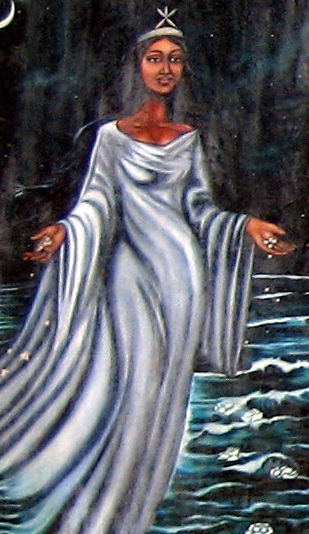
When the coalescence of events points in a single direction, it is worth paying attention. Goddesses, it seems, are once again on the move. Not Asherah this time, although she seldom sits still, but the creator goddesses. The notion that creation is a female prerogative seems only natural, and the concept is in the ascendant. In a local setting, the Alvin Ailey American Dance Theater troop is performing “Dancing Spirit,” a piece by Ronald K. Brown. The dance features a move that Brown attributes to Yemaya, the Yoruba goddess of creation.

WikiCommons' Yemaya

Now I have to confess to knowing little of Yemaya and Yoruba – African mythology beyond ancient Egypt has fallen outside my limited scope – but from the little I know I can see that she represents a fascination with feminine power. A dance to celebrate the power of the creatrix feels appropriate. Worlds created by masculine deities always go awry. Perhaps the power struggles built into images of strength and domination will always lead to conflict and suffering. The mother is here to protect.

Despite its flaws, Avatar also shares in this image of the protecting mother. Eywa may be a fictional deity devised to give the Na’vi a central focus, but her mythological profile is sound. It is the mother who gives life and protects that life. The father disciplines and starts wars. These are not universal archetypes, but rather coalescences. Religions involve worship and worship may derive from fear or from love. I suspect that the goddesses engender the latter. I suggest that we could learn much from the creator goddesses.