
Pilgrimage. The concept that certain places are special is deep-rooted in the human psyche. So deeply rooted that we consider it a religious behavior. Even as scientists recognize the need of many animals to return to their birthplaces or areas that they sense beyond the range of human perception, as human beings they feel it too. Even scientists have the urge to revisit that special spot. Otherwise the travel industry would be in great trouble. Pilgrimage is considered a religious behavior, and the sacredness of place has been noticeably in the news this week. MSNBC reported on the find of a skeletal pilgrim to Stonehenge from 1550 BCE. Yesterday the New Jersey Star-Ledger ran a story about a temple/mosque dispute in Ayodhya, India. Both of these stories center on the sacred geography of the region.
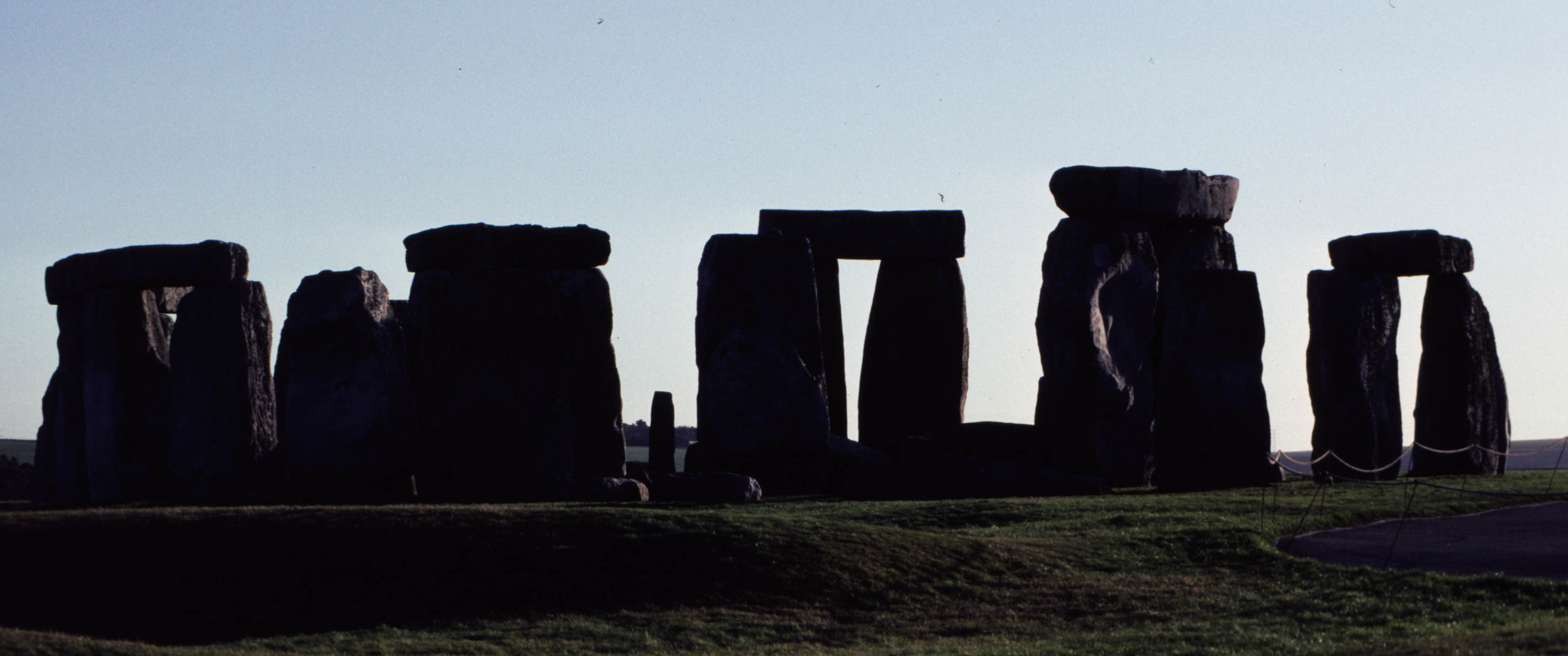
Stonehenge has been a magnet not only for Druids and New Agers, but for anyone with a sense of connection to European prehistory. In the winter of 1990, under a chilly British sky and gusty winds across Salisbury Plain, my wife and I made our pilgrimage to Stonehenge. The low angle of the sun in the sky in a dusky British December only enhanced the experience of standing near a monument that has become an icon of the mysterious and the transcendent for modern domesticated citizens of a straightforward, technological world. The news story states that the skeleton unearthed was of a Mediterranean teenager, far from home, in the shadow of what was already a famous landmark. Even over two decades on, I can still feel the inarticulate sense of longing I felt at Stonehenge, so near the winter solstice, and I understand why that young boy went there to die.
Meanwhile in Ayodhya, the site of a mosque has been declared two-thirds under the ownership of Hindu plaintiffs who claim the site as the birthplace of Lord Ram, a Hindu god. Naturally objecting is the Muslim population that currently has a mosque on the site. Sacred sites raise emotions and tempers readily. Humans want access to their holy places – this is the power of sacred geography. It is certainly palpable in the Bible, and was obviously present the last time I was in Jerusalem. Whether it is hardwired in our biology or simply born of whimsy, sacred geography will never go away. Either we can learn to share it or fight to the bitter resolution, but no matter how much blood might be shed the site will only grow more and more significant because of that very blood.
 Steve A. Wiggins