Father Abraham’s Faith

Okay, so this is the scene: Abraham is old and he has just one son to whom a promise has been made (this is the biblical version, by the way). God had promised him that he’d have as many descendants as the stars in the sky, so it seem that Isaac has a long way to go. And the boy’s not married yet. Abraham calls in his trusted servant and gives lengthy, detailed instructions on how to go back to ancestral Iraq and find a wife for Isaac. Just to make sure the servant understands just how serious this is, Abraham says, “Put, I pray thee, thy hand under my thigh,” (I can’t help thinking he added a big wink) and instructs him to swear to obey the instructions precisely. Readers of the Bible since at least the Middle Ages have recognized that “thigh” here really means genitals. The more we’ve learned of the ancient world the more we’ve discovered that men touching each other’s privates was a sign of a most serious oath—it’s a touch that can’t be taken back, and any promises made in this way must be kept.

I’ve been reading about monkeys. More precisely, about evolution. When reading about how baboons show intent to form an alliance, I was surprised to learn that males utilize scrotum-grasping. Since all’s fair in love and war, when baboons fight ripping off another guy’s jewels is considered perfectly acceptable. That means that allowing another male to fondle your testicles is a sign of ultimate trust. Baboons, it seems, have been doing it long since before Abraham showed up on the scene. I wonder if this then is a case of convergent evolution of whether Abraham’s oath goes back to nature in its most basic form. Once castrated, especially in antiquity, a man had no choice about going back. To invite another man to put his hands “down there” was a serious matter indeed.

The only requirement really given to Abraham by God was circumcision. Again, from what we know of ancient times this was not unique to Israel, but the theological freight associated with it was. For a man who’s been promised as many descendants as the sand on the sea shore, allowing another man to cut away part of your reproductive organs is a sign of ultimate trust. This is a behavior that seems not to go back to nature, however. Not even chimpanzees have quite figured out how to make knives or use them to carve up sensitive areas. This has none of the marking of evolution. An act like that seems to have come directly from the gods. Abraham, in a way most modern believers would find incomprehensible, was the paragon of faith.

Contemplating the ineffable

Longer Nights

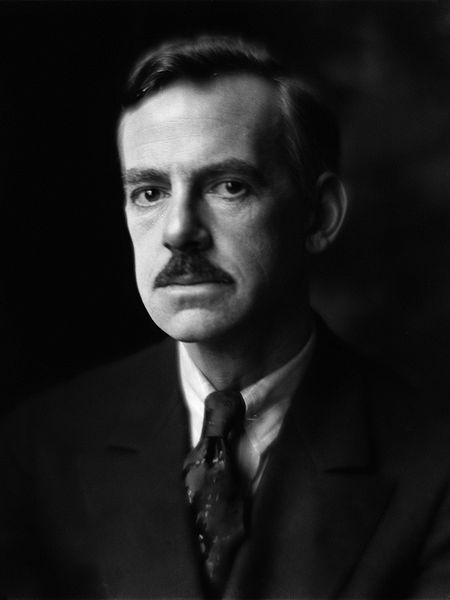
Those who write put part of themselves into every piece. Sometimes that tiny fragment of the author is nearly invisible, while at other times fiction becomes difficult to separate from biography. One of my daughter’s assigned summer readings is Eugene O’Neill’s Long Day’s Journey into Night. Since I use the opportunity of her assigned readings to catch up on what I should’ve read long ago, I recently sat down to see what the play was about. A dysfunctional family. Alcoholism, tuberculosis, and self-loathing are the unholy trinity of much writing from the nineteenth and turn of the twentieth centuries. But God also comes into the mix. Perhaps the divine was nearer to the surface back in the days when you might assume every other American had been raised in a Christian household. O’Neill’s dark and disturbing Tyrone family might be considered good candidates for irreligion were it not for the fact that being Catholic was so much a part of Irish identity in those days. Perhaps in some quarters it still is.

In Act Two, Scene Two James Tyrone is discussing his wife’s as yet unrevealed addiction with his two sons. Edmund, the scholar (and in reality bearing the family position of O’Neill himself), has rejected belief in God. He asks his father if he prayed for Mary in the days when her difficulties began. “I did. I’ve prayed to God these many years for her,” James Tyrone declares. Edmund responds, “Then Nietzsche must be right.” The debate is the classic issue of theodicy—where is God when things go wrong? Mary, the wife/mother believes she was bound for a convent, having been raised in Catholic school. When her life spirals in unexpected directions, she chooses morphine over faith in God, and the men, soused in whiskey, wonder who’s to blame. James, the father, declares atheism to be the culprit.

I found this an interesting study. Characters either unthinkingly accept the religion with which they were raised, or reject religion altogether. Edmund follows up his declaration by quoting Thus Spake Zarathustra: “God is dead: of His pity for man hath God died.” Nietzsche is never simple to comprehend, but even in the declaration of the divine death is an implicit indication of the existence of deity. The subtle nuances here are often lost in family debates where God’s abstract existence is far less important than the human suffering that raises the question in the first place. O’Neill was writing not only in the shadow of Nietzsche, but also of Karl Marx and other theorists whose nails had been pounded into the heavenly coffin over the past two centuries. So Mary, in her morphine vision, returns at the end of the play to state, “I went to the shrine and prayed to the Blessed Virgin and found peace again because I knew she heard my prayer and would always love me and see no harm ever came to me so long as I never lost my faith in her.” The reader, however, along with Karl Marx, knows that this is really the opiate of the people finding voice through one of the faithful.


Coexistence

Sometimes I think I’m a punching bag. Not uncommon among scholars of religion, I suppose. I have read my fair share of overt attacks on religion: Hitchens, Dawkins, and even Jillette, and sometimes limp out of the ring wondering why I even bother. Still, science doesn’t completely explain the universe I inhabit either. Thus is was with some glimmer of hope that I read a story in Monday’s Chronicle of Higher Education entitled “Does Religion Really Poison Everything?” There can be no doubt that religious behavior has a track record of some execrable atrocities—some very bad behavior has been engendered by fervent religious belief. At the same time, those who despise religion have a hard time explaining it. As the Chronicle piece points out, religion is likely an evolved trait. There is some survival value in it, otherwise it would, by natural selection, disappear. Religion is seldom a rational enterprise. That doesn’t mean that it can’t be rationally studied, but rather that religion is primarily experienced as an emotional phenomenon. We find ourselves motivated by feelings, although reason will often drive us to do things we don’t feel like (like going to work). And emotion is necessary to be truly human.

It is often difficult to respond to those who castigate religion as an evil or poison, not for lack of reason, but because of feelings. Having spent most of my life with religion, it is not surprising that attacks on it often leave me feeling ashamed. But ah, that is an emotional response! It seems rational on the surface, but really, shame and embarrassment are typical emotional responses. This is the realm of religion. Reason may indeed indicate with great accuracy the way the universe works—of this I have no doubts. At the same time, I’m not sure the entire universe is something that humans can adequately comprehend. I have a hard time remembering what’s on a short shopping list if I accidentally leave it at home. Our brains aren’t equipped to the task of comprehending universes. Feel overwhelmed when facing a physics test? That overwhelmed feeling is an emotional response. With considerable cheek, might I suggest it might even be a little bit religious?

The Chronicle is a high-profile source for academic rectitude. I am pleased to see Tom Bartlett pointing out that the line-drawing in the sand between religious Fundamentalists and pro-science New Atheists will not solve anything. Religion is often guilty as charged. It is not, however, pure evil. There is enough evidence out there to suggest that religion is a tremendous coping mechanism for billions of people. And coping is not a bad thing, all things considered. Wisdom that is often attributed to the Greeks suggests that “all things in moderation”—the golden mean as it’s known—is the way to human happiness and success. The idea is older than the Greeks, and indeed, can even be found in the Bible for those who are willing to look. One need not be religious to see that, like most human inventions, religion has both good and evil uses. Evolution gave us religion, and it gave us science. It also gave us brains divided down the middle and strong reasoning that must dance with creative emotion in a tango that frequently makes abrupt shifts of direction. Our job, as humans, is to learn the steps to the dance.

Different, but equal.


Zongfu’s Ark

While riding the elevator up to work last week, I glanced at the little LCD screen that plays single-page news stories for those who only have the seconds in an elevator to catch up in what is happening outside the world of commerce. That’s where the really creative stuff occurs. The picture on the screen appeared to be a large, orange, smashed ping-pong ball. I caught the words “Noah’s Ark” in the caption before the busy screen flashed onto a new and more pertinent story, such as who is winning what in the Olympics. I remembered the odd image when I got home and tried an Internet search and discovered only a small bit of information. This ark is in China, which may account for the lack of full coverage. Here in God’s own America, stories that potentially validate biblical myths are sure to attract readers and/or watchers, so there must be more to the story than I can find.

The details I’ve been able to locate note that Yang Zongfu, a Chinese inventor, designed an improvement on Noah’s ark. His ark is a sphere and really doesn’t have much room for animals beyond the occasional tapeworm or wayward spider. “Noah’s Ark of China” is a six-ton ball that costs nearly a quarter of a million dollars to build. Five people can live for ten months inside, sheltered from heat, impact, and, of course, water. Like a latter day bomb shelter, this is the place you would go to survive a disaster. The odd number of survivors, however, made me wonder about the repopulating of the earth part. Even in the Bible God made sure that instead of any individuals the ark was populated with couples. The more I thought about attempting to survive in a world with only four other people, the more frightened I became.

This is old school ark building.

Our lives are intricately inter-connected. Most of you reading these words will never have met me, yet here we are, sharing the same cyber-head-space. Movies like I Am Legend make it seem that a single man, whether Vincent Price, Charlton Heston, or Will Smith, could survive for a great length of time alone. This is pure science fiction. With the exception of Vincent Price, I doubt that any of our omega men could have successfully planted and raised a garden, let alone survived more than a few weeks. We need each other. The picture of Yang Zongfu popping triumphantly from his ark fills my head with a strange vision. A post-apocalyptic world in which the toxic runoff of our irradiated rivers will have a jumble of orange balls at their deltas and a bunch of confused, somewhat nauseous millionaires inside. As I stare out over this valley of dry balls, I think to myself, Who’s winning ping-pong at the Olympics?


NDEs

I love science. Like many young boys, I was probably enticed to science through science fiction. While I didn’t follow science to a career, I used it to study religious texts. Those who’ve never undertaken the challenge of trying to figure out what something written thousands of years ago—on clay!—really says may be surprised to learn just how much science is involved. Nevertheless, as comforting as reductionism may be, something just doesn’t feel right about it. Science is how we explain and understand our world, and it does a spectacular job of it. The problem arises when science becomes what Stephen Jay Gould called a “magisterium.” Magisteria have all the answers. Yes, science explains how matter and energy work and interact, but it has yet to explain satisfactorily what it feels like. Most days I feel like the person I’ve become accustomed to show to the world. That person is very much like every other—being born, eating, breathing, dying. Medical science can explain most of it, but what about the parts it can’t?

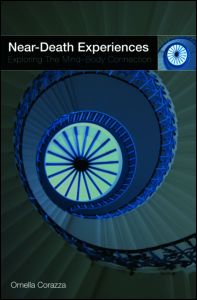
I just finished reading Ornella Corazza’s Near-Death Experiences: Exploring the Mind-Body Connection. I remember when the craze about this hit in 1981 with the release of the movie Life After Life. I was fascinated and terrified by it. Since a materialistic view of science dismisses anything that has the residue of spirits or souls, the phenomenon of the resuscitated dead reporting seeing their bodies from above, shooting through tunnels into the light, and sometimes meeting the dead (or God), were explained as last nano-second hallucinations as the brain prepared to shut down or reboot (upon resuscitation). That’s that. The answer, however, didn’t satisfy everyone. What about those cases where the dead person reported, in detail, what happened in other rooms, or things they couldn’t have seen in their own room, had they been conscious? Corazza takes these considerations seriously and tries to understand what may be going on. Obviously, her explorations will not convince a reductionist, but they may give pause to some of us.

What makes her approach so interesting is that Corazza takes into account an alternative way of looking at consciousness. While the facts of science are, by definition, universal, the contexts within which those facts are viewed are not. Having spent considerable time with Japanese scientists exploring consciousness, eastern ideas of the body inform her research. In the western world we have an easy familiarity with the Cartesian dualism of body and soul that does not fit into other worldviews. Corazza takes the interesting step of asking what if we apply an eastern paradigm of the body (one that understands soul as body, and not just in a materialistic sense) and apply it to the question of Near Death Experiences. The results are mind-stretching. I feel as if my consciousness got up from months of laziness and ran a marathon (or at least a 5-K). It’s a bit winded and parts of it are starting to ache a little. No reductionists need worry, however, because in that worldview none of this exists.


Isaiah Thwarted

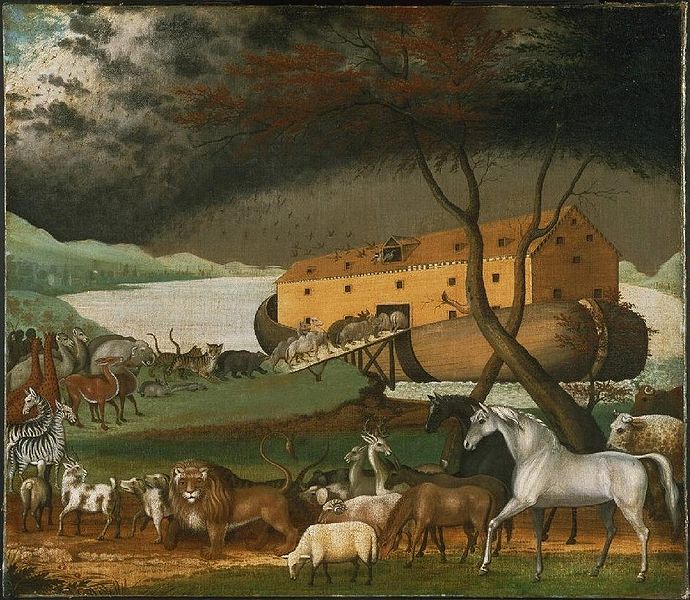
Back in January, out of a sense of curiosity on a number of points, I began tweeting the Bible. I wondered how long it would take, at 140 characters a day, to type the King James Bible into Twitter. Since that time, I have not missed a day. Until this week. International travel and business travel with uncertain Internet access have been overcome as I flew with Bible in hand to keep it going. On Monday I was just wrapping up the flood story. Clearly this was going to take a long-term commitment. Then early this week a message popped up on my Twitter account stating, “You cannot send messages to users who are not following you. Learn more,” so naturally, I learned more. Unfortunately I am not now, nor have I ever been, a techie. Just a sentence in and words I don’t understand begin to flummox me, building confusion on confusion. What it appears to be telling me, in layman’s language, is that I can no longer post to Twitter.

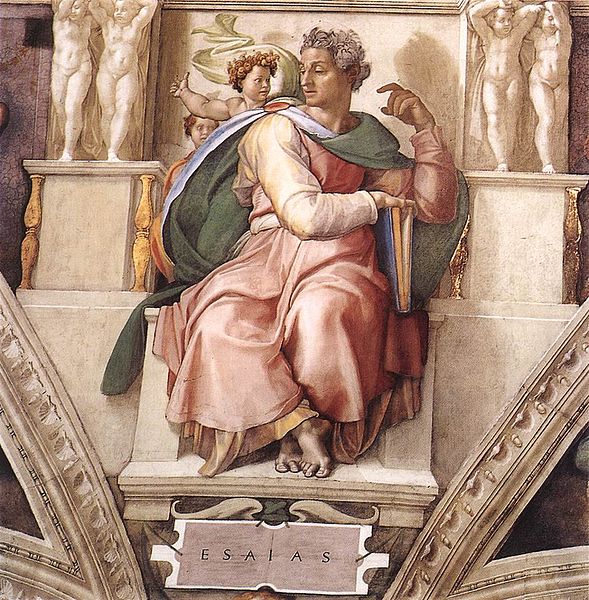
Apart from the personal rejection such impersonal messages inevitably engender, this development brought to mind the famous verse from Isaiah 40.8, “The grass withereth, the flower fadeth: but the word of our God shall stand for ever.” Hath the Lord been stopped by Twitter? Technology changes rapidly, and those of us who’ve never had any formal training in it sometimes feel like we’re driving a car on a dark country road at night with no headlights. I’m not really sure how this all works, but I try to send daily thoughts out into cyberspace and, yes, what you say can and will be used against you. And I wonder about old Deutero-Isaiah sitting there in Babylon peering into an indefinite future.

Our abject dependence on the Internet has changed us as a species. I’ve recently read about how technological innovations have become the evolution of the human species. This collective brain we refer to as the Internet has revolutionized the way we do business, but it has also introduced a component of fragility into the equation. Electronic information is untested in the long term. Some of my earliest writing projects now exist only on three-and-a-half inch floppies, most of which are tucked away in some musty corner of the attic. And what if the earth passes through a comet’s tail or a nasty solar flare jets out our way? Doomsday scenarios have been based on such things (just remember Y2K and smile). So maybe Second Isaiah was onto something after all. Printed books have been known to survive for at least half a millennium, and in rare instances, a couple thousand years. And the pagan sources on which parts of the Bible are based, written in clay, last even longer. And one of the earliest stories recorded was that of a worldwide flood.


Strawberry Meatloaf

Strawberry ice cream. It tastes like summer in a waxed cardboard carton. While having a small dish of it recently it occurred to me that strawberry is my favorite flavor of ice cream. This was the first time I’d had any in perhaps twenty years. I am not diabetic, but I am extremely phobic. I avoid the things I like out of fear. There always seems to be plenty of bad to go around, but I’m always afraid the good will run out. Waiting two decades for something I like is a small price to pay. This same phenomenon accompanies my musical tastes. When I listen to music, generally, I listen to music. I’m not a background music personality. Life has been so busy lately, however, that I don’t have the time for music that I would like. I bought a CD (yes, they still make them) of Meat Loaf’s Hell in a Handbasket shortly after it was released. I just listened to it over the weekend. (It has been that busy.)

Since I had a lot to accomplish last weekend I listened to the CD as background music, violating my own standards. That meant that I had only impressions of what was going on rather than the full impact. Immediately, however, I was struck at how socially conscientious this album is. I realize that Meat Loaf is primarily a singer, performing songs written by others. Nevertheless, it seems that a singer must have some investment in the songs they perform to put the kind of empathy into them that Meat Loaf does. The theme that seems to be running through these selections is that violence and greed have become our paradigms, and we are heading to, well, Hell in a handbasket.

I’m old enough to miss album art. I don’t miss the hiss, skips, and pops of vinyl, but the square foot of album art was often a gift. The album art is part of the message of the music. Inside the back cover of the Hell in a Handbasket CD, behind where the disc is mounted, is a gothic photo of Meat Loaf holding a skull, Hamlet-like, before a large cross. Around his neck is a chain that holds another skull, and, with a bit of imagination, perhaps a small crucifix. (Like most people who still remember album art, my eyes aren’t what they used to be.) Something is happening here that I can’t quite define. Jim Steinman is not on this album, and my fear seems to rise. Then I listen and I hear my social consciousness being in some small way affirmed. It may not be Wagnerian rock, which I fear is rapidly running out, but it is worth another listen when I’m able to set aside the world for maybe an hour or two.


Charon’s Obol

One of the concomitants of spending time with religion is a non-morbid fixation on death. As a college student I was surprised to learn that other people my age did not think about death nearly every day. Perhaps with a typical college student’s obsession with the other end of the life cycle this is only natural. Ever since I was a child, however, I felt frustrated by the lack of permanence that characterized all of the striving involved with life. We work very hard and then we die. I suppose that is one of the reasons religion appealed so strongly to me—it had an answer to this dilemma. Science, as I began to experience it about the same time, suggested a radically different conclusion: we have no souls, and so it is best to accept the fact that death is the end and get on with life. No wonder Ecclesiastes has always been my favorite book of the Bible.

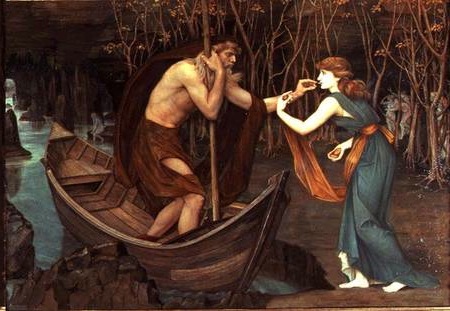
While reading about–shhh!–death recently, I came across an interesting tidbit. Pope Pius IX was buried with a coin. I’ve read that even John Paul II was buried with coinage, but I’ve not been able to find credible sources on that. What is fascinating about this practice is that no matter how it is vested, burial with money is a form of Charon’s obol. With movies like Clash of the Titans, many modern people are aware of the need to pay Charon to cross the River Styx. (Back in the radical days of traditional education just about everyone would’ve learned this in the course of studying the classics. In any case…) The gifting of the dead with money represents the survival of a pagan custom that likely stretches back well before ancient Greece. Even before money was invented people buried the dead with goods that the living would never be able to use again. They may not have considered this payment to a ferryman, but the principle is the same.

This idea has a strong grip on our psyches. Not one of my favorite movies, I have watched Ghostship a time or two. What initially brought me to the movie was the fact that it is a horror-movie built around the character of Charon. The mysterious stranger who lures the crew of the Arctic Warrior onto the Antonia Graza laden with gold is named Ferriman. The salvage crew quickly forget the tons and tons of metal that they came for in exchange for the a few dozen bars of gold. Of course, a sole survivor lives to tell the tale. The thing about Charon’s obol is that once he is paid, death is inevitable. Thus death and money are inextricably twined like earbuds carelessly tossed into a backpack. It seems that no matter how you measure it, the only winner is Charon. Maybe the Greeks have something to teach us yet.

Charon’s got ahold of our Psyches


Traces in Between

I first discovered Edgar Allan Poe as an adolescent who believed monster movies actually represented physical malefactors. By the time I was writing high school term papers, Poe had become my favorite author, and I delved a bit into his sad life story. It has taken a few decades for me to realize that no lives really fit into the prepackaged paradigms that we’re sold. We think of Poe as a writer, but he was also a man who wandered from place to place, dying in Baltimore and nobody really knows why he was even there at the time. Sure, he had lived in Baltimore fourteen years earlier, but his fractured career had taken him many places in between. Having nothing but his published writings and gut feelings to go on, it seems to me that Poe was a man who felt unconnected to any single place. His view of the world made others uncomfortable, as even a cursory reading of his obituary demonstrates. He may have been attempting to find a place to belong. Maybe that’s why I’m standing here in Baltimore next to his burial place.

In a world characterized by xenophobia, having a sense of place can be a matter of life and death. I often wondered, as a child, at the fact that I was born in a different state than either of my parents, and that my mother was born in a different state than either of hers. Where was my place? I really didn’t start to travel until attending seminary, and since then I’ve lived in many places. At times I think of Poe and his peregrinations—not that I would dare compare myself to him; Poe was a genius in a world that couldn’t understand him. I am merely a disciple.

On a recent college-visiting trip, I found myself in Charlottesville, Virginia, where Poe spent a few weeks as a student before being forced out by his debts. Later that day I was in Baltimore, and I could not neglect a stop to pay my profound respects. Throughout my life I have felt a connection with writers whose work I admire. Perhaps as an erstwhile dabbler in the literary arts I feel as though I might somehow connect to the guild. The sense of knowing, I realize rationally, is entirely one-sided. Standing here in Westminster Cemetery, however, feels like being in the presence of a friend. Even had I lived in the nineteenth century I would unlikely have ever met Poe, just as I am unlikely to meet most of the authors I read who still walk among us. Maybe I just feel no fear of rejection—call it a sense of place—among the deceased, unquiet spirit who is Edgar Allan Poe.


The Price of Tolerance

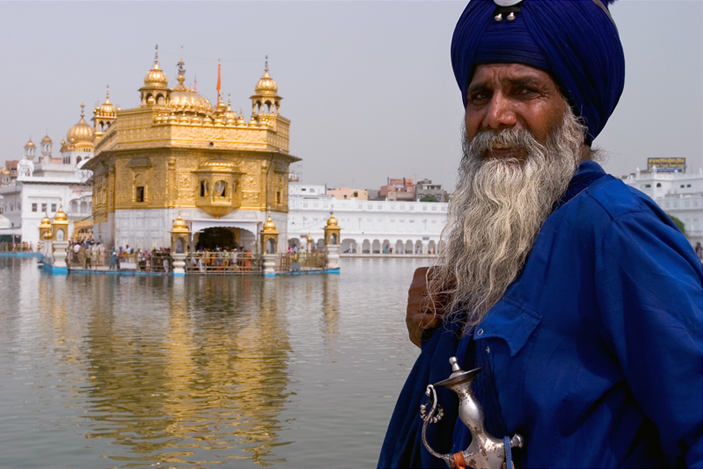
While on a trip to New England recently, my family had taken an exit to look for a bite of lunch. We followed one of those innocuous dinner-plate symbols that often grace roadside signs next to a stylized hotel bed and a gas pump that looks like a suicidal robot. This particular exit, however, seemed unwilling to deliver on the food part. As we wound down an unfamiliar road, we came across the golden cupolas of a Sikh temple. This was the first Sikh temple I’d ever seen, and my daughter asked why she’s never heard of Sikhs before. “Because they never cause problems,” was my reply. Of the major world religions, Sikhism is notable for its lack of overt violence even though a sword is one of the religion’s symbols. Unfortunately, over the weekend, violence found some innocent Sikhs.

As of the moment, no one is able to identify the motives of the man who gunned down four Sikhs preparing to worship in Wisconsin. For many Americans the religion is a mystery. We hear of Hinduism and Buddhism in the course of many historical and literary ventures. Sikhism is somewhat newer on the world religious scene, but it still predates regular European trade with India during the “age of exploration.” Although the classification of religions is always disputed, Sikhism is generally considered around the sixth largest world religion in terms of numbers, and they have avoided the limelight in the western world, showing that a religion can rest on its principles. One of the truly praiseworthy principles of Sikhism is toleration, an idea that his held in very high regard.

From WikiCommons

Toleration often clashes with gun ownership in the United States. Just weeks after twelve people were murdered for going to the movies, we have more headlines of private citizens (some mentally disturbed) with ready access to firearms. And more innocent people are dead. Even the shooter is dead, so we will never likely know whether this was simply a case of mistaken identity or hideous intolerance at work. In my time in Wisconsin I came across many Christians who were extremely intolerant of any viewpoint other than their own. Fortunately, they were the vast minority among the people that I knew. Still, the paradigm that I see emerging disturbs me to the core: we claim it is our right to own guns while identifying with a deity who let himself be tortured to death rather than harm anyone. I wonder if a culture can spell schizophrenia?


The Power of Magic

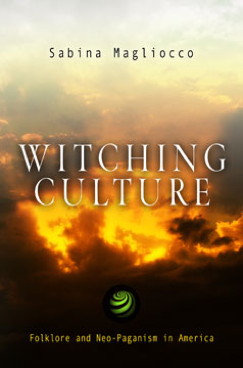
Open-minded academics are somewhat hard to find much of the time. This stands to reason when jobs are already rare and having a reputation for thinking outside the box frequently equals thinking outside the academy. I am always pleased, therefore, to find unconventional works by credentialed authors. I just finished reading Sabina Magliocco”s Witching Culture: Folklore and Neo-Paganism in America. Magliocco takes head on the dilemma that non-empirically verified experiences sometimes do happen. Of course, Paganism accepts that as a matter of course, and Magliocco notes that many Pagans hold advanced degrees in the sciences and some even have university posts. Experiences have a way of defying the rules. Most of us have had a bizarre coincidence or uncanny occurrence or two transpire in our lives. We are trained, via our scientific worldview, to shake our heads and try to dismiss it. Magliocco pauses to wonder if we’re perhaps being too hasty.

Sabina Magliocco is an anthropologist with a legitimate doctorate and a university post. Witching Culture is largely an analytical study of Paganism, but it also allows for the possibility that experiential knowledge might complement academic knowledge. This remains a debated issue among specialists: who can really know a phenomenon objectively? Many argue that empirical data reveal the truth of the matter, but truth remains a slippery concept. At the opposite debating table sit the smaller coterie that argue that you can’t study magic until you’ve experienced it firsthand. The debate does not divide along even lines and this is reflected in society at large. We accept the utility of science, but many still pray for divine intervention. Specialists in religion fear to take sides—after all, jobs are hard to find and increasingly harder to keep.

Fully aware that the modern Pagan movement is a revival movement following the hiatus of Christendom in Europe, Magliocco nevertheless admits to being a practitioner. Fascinating her readers with first-hand accounts of mystical experiences, she draws back to try to analyze what has just happened. And she tells us so. Years ago, as part of a seminary assignment, I attended an Al-Anon meeting as an observer. I am, however, the adult child of an alcoholic and when the circle came around to me I confessed to being both an observer and a person seeking healing. It was a difficult place to be, so I respect what Sabina Magliocco is offering us here. Anthropologists increasingly doubt the possibility of pure objectivity, and even physicist Werner Heisenberg realized that to observe is to be part of the experiment. And so are we all.


Evil Living

Maybe it was just the lack of rationality that comes with driving 700 miles in two days, or just plain glaikitness, but I watched Evil Dead II a couple nights back. I had read on an Internet site (probably already a warning) that it was very scary, but I’ve been a slave to logic for many years. Supposing this to be a sequel, I was confused when the first few minutes replayed the plot from the first movie with just two characters instead of the original five. Budget cuts (literally, as I later learned) meant leaving out characters and supposing that the viewers would catch on. In the first Evil Dead, the catalyst of the evil spirits in the woods was “Sumerian” spells recorded by an ill-fated professor in the cabin in the forest. Playing the recording (still in the first film), the kids release the evil spirits and one-by-one become possessed until Ash has to kill off all his companions. The campiness in both films tends to ameliorate the over-the-top violence and blood, and you know that the film isn’t taking itself at all seriously.

Once I figured that out (it was, after all, a very long drive), I settled in to watch a familiar story unfold. New characters are added in the form of the professor’s daughter, and traveling company, who show up with more pages from the Book of the Dead that will help to dispel the evil. When the characters encounter a ghost of the dead professor, he says something that may be the point of this blog post. He urges his daughter to seek salvation in the pages of the book. So here was a distinctly Judeo-Christ-Islamic theme playing out: salvation comes through obeying a book. It is an example of what I would have called “the Bible as a magical book” back in my teaching days. Movies, both good and bad, tend to portray “Bibles” as books that have the ability to affect the world around them in beneficial ways. Demons are cast out, illnesses are healed, lives are restored.

My fondness for B movies, in the end, is all that redeemed this domestic cinematic experience. I have spent many nights in the woods and I have read and reread sacred books. The two, however, seem to be worlds apart. Nature often feels like a redemptive experience. After many weeks of experiencing the outdoors only in the guise of New York City, a truth that can only be called sacred occurs—people are creatures of nature and nature can still feel sacred to us. Here is a simple reason that environmental integrity must be maintained against those who would exploit the earth for fossil fuels, timber, or drainage of lakes for irrigation. Nature may be our last chance to find something truly sacred. Once one person, company, or government destroys it, it will be gone for a lifetime or more, for everyone. That, in my book, is evil.


Pack on the Back

One of the joys of corporate culture is receiving office memos. Of course, memos are now electronic and our environment hopefully benefits from that. A couple weeks back a memo announced Operation Backpack, a charitable cause. Fully employed for the first time in what feels like an eternity, I signed up to contribute. When I read the memo through, however, I was shocked. In New York City 11,000 children attend public schools from homeless shelters. Eleven thousand. The number is still large enough to boggle my blue-collar brain. That is over eleven times the size of the town in which I grew up. And that’s just the children. Urban culture has become the predominant paradigm of capitalism, but it comes with a considerable price tag. I see homeless people foraging through garbage for food—a more degrading example of picking berries and nuts in the woods, I suppose. What’s worse, nobody seems to think this is unusual or distressing.

A frequent visitor to university campuses, I am familiar with urban troubles. The low land values around tax-free campuses mean that many universities abut the harder neighborhoods in our cities. The city is considered the epitome of civilized living—humanity removed from the dirtiness and wildness of unpredictable nature. When did it become okay to forsake those who came to cities to make a living? How can one of the most affluent cities in the world let 11,000 children live in homeless shelters while others in the same city have far too much to satisfy any individual’s needs? We send troops to other countries to liberate them from oppressive regimes, mistaking free trade for freedom. We need to help those who cannot help themselves.

The biblical ideal of a just society is not one without wealth, but one where wealth comes only after everyone has enough. Yes, there will be some who take advantage of the system. I wonder, however, if not working is any different from taking advantage of the system on the other end—to “succeed” in a culture driven by the market, you must take advantage of the system. One kind of taking advantage means getting by with basic needs and services met, the other kind of taking advantage means living the life of royalty in a democracy. One we excoriate, the other we emulate. I don’t have the answer, but I do hope that a backpack of school supplies will make a difference in a young idealist’s life.

Still so far away…


Danger de Nuit

I am on a boat—maybe it’s the Titanic. Far from land. For some reason, vaguely unclear, the ship is sinking. There’s panic—people are running and flailing, trying to save themselves. I’m frozen with terror as the icy water encroaches. I can’t swim. I prepare to die. So goes a nightmare I had several times in association with a former place of employment. Nashotah House felt traumatic to me with forced liturgies and daily reminders of my inferior status. The terror of the nightmares was very real, and the day I was fired did nothing to improve them. As a child I was plagued with phobias and frequently experienced horrific nightmares. They still come once in a while, but since I’ve left the employment of the church, they have become, gradually, less frequent. Nightmares are just dreams gone bad, and I’ve always been a dreamer.

Last month Time ran a story on nightmares. The subject of nightmares has now caught the attention of the military because of cases of Post-Traumatic Stress Disorder. When the military decides to show its humane side, it doesn’t fear backing it with big bucks. Soldiers confess to frequent nightmares after witnessing the atrocities of war. (One psychologist said that many at Nashotah House seemed to be suffering from a similar phenomenon.) Theorists now suggest that nightmares might lead to mental illness, and sleep deprivation, as we all know, can lead to bad judgment. Not a good thing on the battlefield. Or behind the wheel of a car. Or, in a recent real-life nightmare, while flying a jet.

In many ways nightmares seem like minor annoyances—they don’t physically hurt anyone, and they end when you wake. Time probably wouldn’t have reported on them if it hadn’t been for the military angle. This seems a paradigmatic situation. A common problem goes ignored until it affects the military, then it is deemed worth research funded by tax-payers. I am well acquainted with nightmares. As a child they became part of my identity. I am heartened that serious research is considered worthy of federal money. It seems, however, that perhaps a better way to end battle-induced nightmares would be to stop the horrors of warfare. When war ends, some nightmares will cease. Of course, I’ve always been a dreamer.

Is all that we see or seem
But a dream within a dream?
-Poe


High Aspirations

I’m not a fan of the Olympic Games. It’s not that I have a problem with the passion and dedication of these (mostly) young people who’ve trained themselves to perfection in various physical skills, but the Games have tended toward jingoism a little too often. They may be intended to bring the world together, but often they become the focus of international tension. And, of course, television shows us only where our own nation makes a good showing. In my more somber moments I wonder if there isn’t someone even better at this or that sport/event whose circumstances make it impossible for her or him to make an international showing. Olympic Games are for those who can afford personal trainers and who can manage to make it to tryouts on schedule. Again, I don’t demean the ability of the competitors; when I find myself in front of a television I often stare in awe at what they accomplish.

A certain disconnect always attends the opening ceremonies. I have to confess to having glanced at the screen in our hotel room once or twice during the London extravaganza, but what became clear is that culture is what’s celebrated here. Athletics are the same internationally, if we take the Olympics at their word, but culture in region specific. Figures from Harry Potter and Mary Poppins, and other British contributions to the world of art and literature, filled the arena with a sense of national pride. Even the queen deigned to parachute down to the level of the commoner, in the company of James Bond of course (Sean Connery, why did you have to age?). This is what the commentators called the “rebranding of the royals.” What is it that we really value about ourselves? Can we not truly overcome xenophobia?

Xenophobia has a reach far beyond nationalities. It is rampant between social classes, political parties, and language groups. We distrust the other, for those like us are the best. The best swimmers, the best gymnasts, and the best shooters.

To look down on the world.

Just days ago I stood atop one of the peaks of Mount Mansfield, the highest mountain in Vermont, with my daughter. As we looked out over the panorama that included New Hampshire and New York, and maybe even Quebec, it seemed as if the world could be one. Maybe the things we value could lead us to share instead of selfishly claim everything for ourselves. I think of Mount Nebo and I shudder. And I think if I knew how to ski and if it was winter, maybe I could be the best.