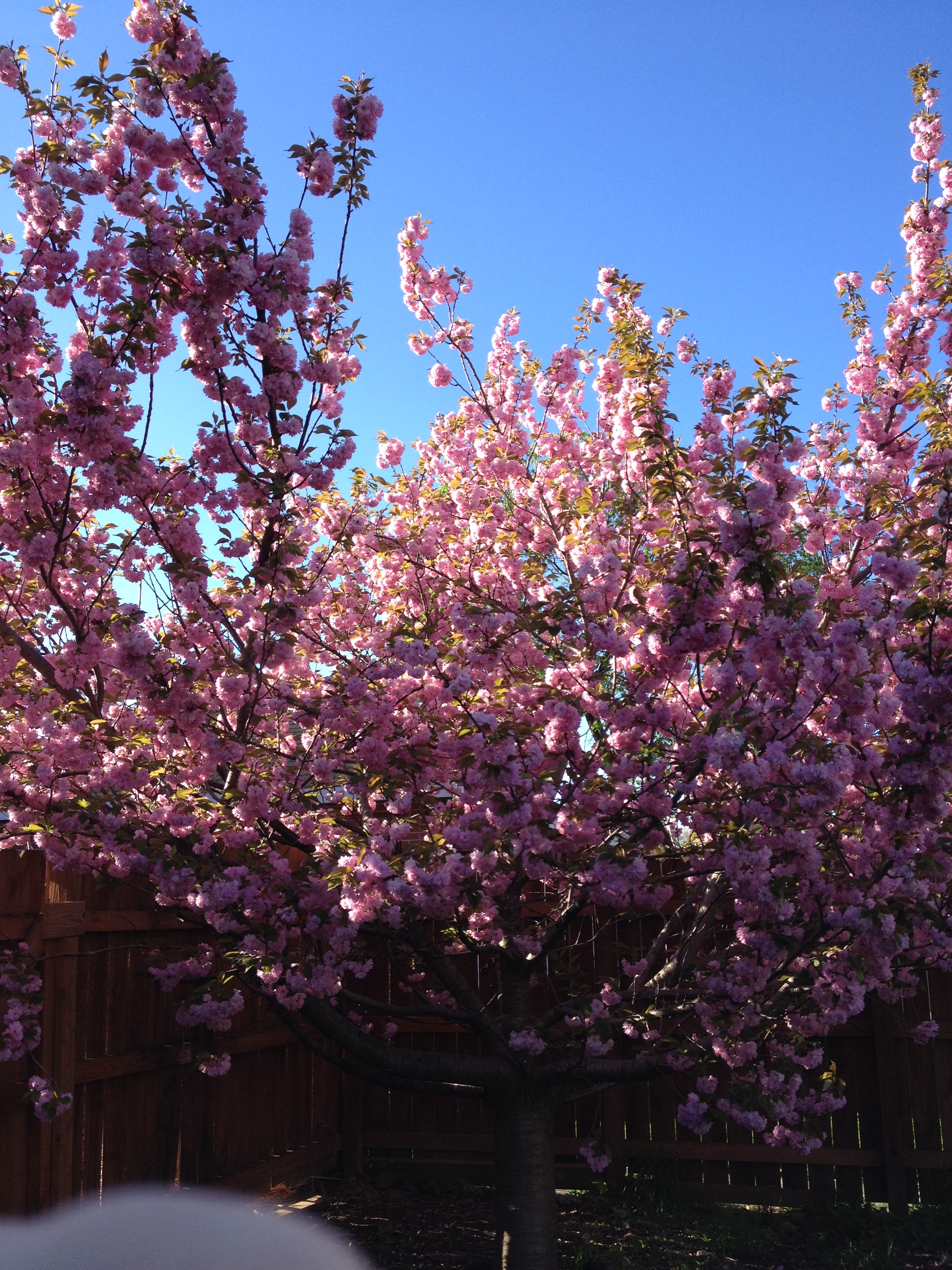
Cherry Trees

Today is the predicted peak blooming of Washington’s famous cherry blossoms.  Although the trees were a gift from the mayor of Tokyo (before the United States bombed two Japanese cities into oblivion) they perhaps reinforce the myth of a boy George Washington chopping down a cherry tree.  I’m sure you know the story: Georgie cut down the tree and when his aristocratic father asked about it, knowing that he’d get in trouble, our founding father nevertheless confessed.  The incident never happened, as historians have long assured us, but it is part of American lore.  And perhaps a key to understanding American gullibility.  We like things that make us look great.  If a story shows that we’ve been honest even well before independence from Britain, well, we must be honest now.

Perhaps this is why so many people believed Trump, a president with a well-established and fully documented lifetime of lies.  The biggest one being, of course, that he cares about anyone other than himself.  Not content to accept facts, such as a closely monitored and fairly lost election, he espoused lies that are still causing shudders through the nation.  I, like many Americans, live in a “purple” town.  A few doors down from our house is that of a rabid Trump supporter.  Just two days ago I had to walk to the drug store about half a mile from here.  I walked past this house that had hung huge Trump banners right on the siding, in addition to one phallically jutting out from a flag bracket.  Now the house has huge American flags upside down.  Such things never happened, I’m pretty sure, when Bush lost to Clinton.  Or ever before.

Nobody with the ability to read can doubt Trump’s actual record of deceit and lies.  It is fairly well documented that he ran for president to help his business and promote his image rather than out of any concern for any other human being.  After sentencing over half-a-million Americans to death with Covid (about which he simply couldn’t be bothered to do anything), his followers (who numbered high among the victims) still clung to the lies.  Today the cherry trees, it is said, are blooming in Washington.  I believe it because I can check the facts and see if it’s so.  When I do I know that I’ll be thinking of George Washington and his fictional cherry tree.  I know it never happened.  Instead, I’ll focus on the beauty right before my eyes.

Found and Lost

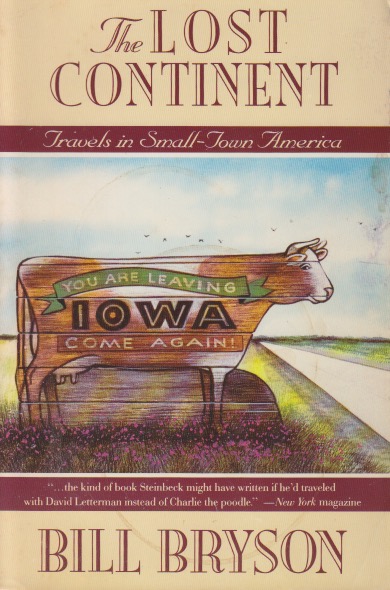
After the year that was 2020, I decided that I needed to read some books that might make me laugh.  That can sometimes be pretty difficult, just as finding books that scare me (unless they’re nonfiction) can be.  Turning to the internet (where else can we turn in these days of rare vaccinations?) Bill Bryson’s The Lost Continent came up more than once.  I think I may have read some of his other work, but this is one of his earliest books.  Perhaps it’s a sign of the times, but much of the humor seemed a bit cruel.  No doubt in America there are lots of things at which fun would be easy to poke, but we’ve become sensitive to others—perhaps overly so—perhaps to the point that even using the word “others” can leave you open to criticism. But still.

Bryson’s book is a classic travelog.  It’s the kind my family kept when we were able to travel.  We’ve still got a printed out copy of our journeys to significant places, stuck in an ersatz binder, awaiting notice perhaps.  We tried to keep it funny.  There’s something about travel that’s great for your sense of humor.  Bryson set out on two wings of a country-wide trip while back from England.  Starting at his home in Des Moines, Iowa, he drove south and east then up north and back to his starting point.  The second half of the trip, obviously, went west, to the south west before angling up through the high plains and back home.  

The book is hard to classify.  The cover on my copy says he was looking for the perfect small town, but mostly it just seemed to be driving around.  And hitting some big cities as well.  There were a few laugh-out-loud moments even for this dour reader, but mostly there were some smiles and a bit of sadness.  I had to keep reminding myself that this was the late 1980s.  In fact, I was living in the United Kingdom when the book came out, which is probably why I never really heard of it before.  I do, regardless of how well the humor works, enjoy a travelog.  You can learn a lot that way.  Many of the places Bryson visited I’d also been, but my impressions were somewhat kindlier.  As a kid I didn’t get to travel much (kinda like now) and seeing new places I was always awash in wonder.  Not everywhere is pristine, of course, but keeping notes always seems like a good idea.  And if you can get them published, you might even be able to make a living out of it. We all remember the freedom of the open road.


Whose Holiday?

I write a lot about holidays.  One of the reasons is that even long before capitalism, societies took breaks right in the middle of things.  One of the major seasons of celebration was the vernal equinox.  Easter is tied to Passover, of course, but since nobody knows the year of Jesus’ crucifixion the actual date can’t be determined.  Passover is a moveable feast and since the lunar calendar is essential in setting Passover’s date, Easter is calculated as being the first Sunday after the first full moon after the vernal equinox.  There has been talk of the three major branches of Christianity—Catholic, Orthodox, and Protestant—agreeing on a set date for Easter but even if that happened there would be splinter groups who liked it the old way and the confusion would only grow.

Since astronomical observation has grown so mathematical, the date of Easter can be calculated far into the future.  We know just when the vernal equinox will occur, and we know when the full moon will come around.  All that’s needed is some calendars and a whole lot of patience (and maybe a calculator).  Despite society’s obvious preference for Christmas, Easter has its own array of attendant holidays for some Christians.  (Not all Christians celebrate Easter.)  For instance, for some today is Maundy Thursday.  Tomorrow most will recognize as Good Friday.  Nobody’s quite sure what to call Saturday, and many Christians will begin to celebrate Easter at midnight even before Sunday wakes up.  Easter does last more than a single day, in some traditions, but it’s not quite as developed as the twelve days of Christmas.

Lately I’ve been considering that how these holy days are sacred for some and secular for others.  One of the realizations that globalization has wrought is that not everybody shares the same concepts of how universal events—such as the vernal equinox—should be commemorated.  Although on the equator every day’s not quite an equinox due to the earth’s tilt, it isn’t as dramatic as the changes that occur in temperate zones.  Christianity was custom-built for European holidays, which is what it tends to keep.  The history of the holidays is more complex than it might seem at first.  Add to that widespread disagreement around the world as to both religion and to when certain events should be calculated and you’ll need more than a slide-rule to figure it out.  So as we begin the Catholic and Protestant Easter season (Orthodox Easter is about a month away yet), it may be helpful to remind ourselves that what day it is might just be a matter of perspective.

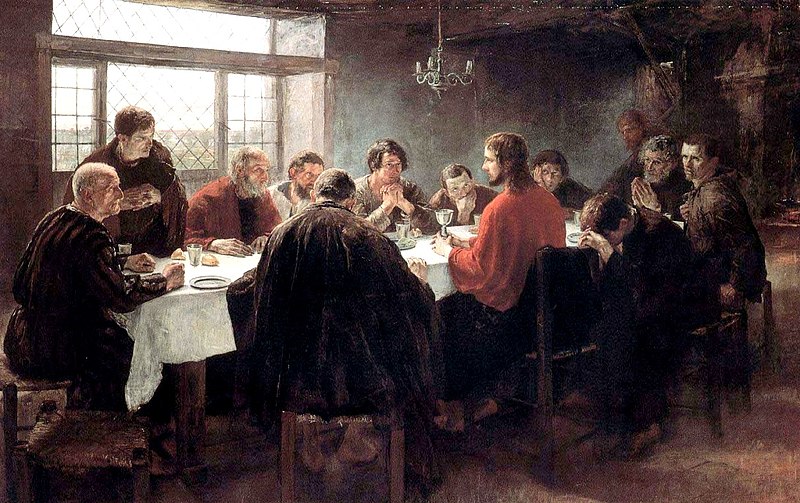
Stiftung Gertrud Schnürle 1975, Fritz von Uhde, The Last Supper, via Wikimedia Commons


Story Over

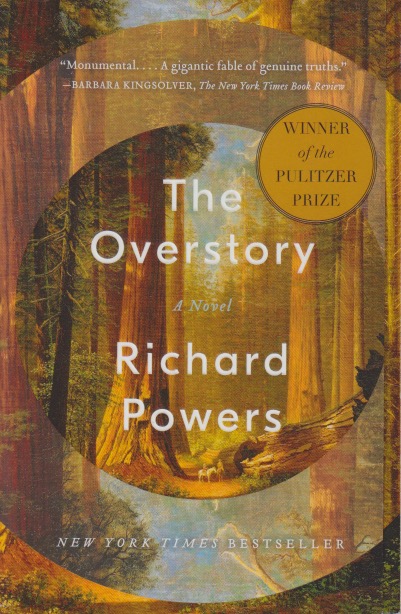
Despite my penchant for speculative fiction I tend to read a lot of what’s usually categorized as literary fiction.  These tales don’t fit into any genre and are often colored with realism.  More than one person had recommend Richard Powers’ The Overstory, not least the Pulitzer Prize committee.  In the style of novels these days it’s pretty long and that meant I had to build up the courage (and time) to get to it.  I support the environment.  I have a great respect for trees and try to support conservation any way I can.  The Overstory is, however, a bleak vision of what we’re doing to the planet and to other living beings.  It certainly helps to have read Peter Wohlleben’s The Hidden Life of Trees first.  It helps to know the main premise of the novel is based on non-fiction.  There may be spoilers below.

The first part of the book, Roots, introduces us to the various characters—most of whom will interact in the remaining pages.  Most of them are marked by tragedy in their lives and come to realize the longevity of trees has a perspective that can make sense of what, to our lifespans, seems inexplicable.  Several, but not all, of them end up in a conservation group trying to defend old growth redwoods from the insatiable greed of lumber companies and politicians.  The novel ends happily for none of them.  Trees, however, have the ability to outlive us.  While we cause real damage, they have the ability to regenerate, but in ways that none of us will live to see.  Trees see beyond the short, tragic lives we lead, into what may be a more hopeful future.

The other sections of the book, Trunk, Crown, and Seeds, follow events chronologically as the people age.  Some notable deaths among the group have a great impact on the small coterie of those protecting trees.  An unfeeling state and the corporate nature of laws are clearly on display.  They serve the will of those who can’t, or won’t, think differently about the world and our place in it.  Although the novel doesn’t ever cite the source, one of the eco-heroes finds a verse from Job to be of tremendous consolation: “For there is hope of a tree, if it be cut down, that it will sprout again, and that the tender branch thereof will not cease.”  I was glad to see the connection made, but the book left me emotionally exhausted.  With speculative fiction at least you can escape the real problems of this world for awhile.


Seussical Thoughts

It seems that Dr. Seuss has fallen on hard times.  His estate is pulling six of his books from production because of hurtful race representations.  This has, of course, sparked the debate between period pieces and the clearly necessary reeducation that has to take place regarding race itself.  I don’t have a solution here, but children raised on these books are among those who realize the dangers of racial stereotypes.  In fact, even those of us who try to keep a weather eye on our own thinking process can at times get caught in the trap of thinking that “white” is “normal” and everyone else is a “variation.”  The truth is we are all variants and political power, with its not-so-subtle adjunct money, have embedded racist thinking throughout our society.

Photo credit:
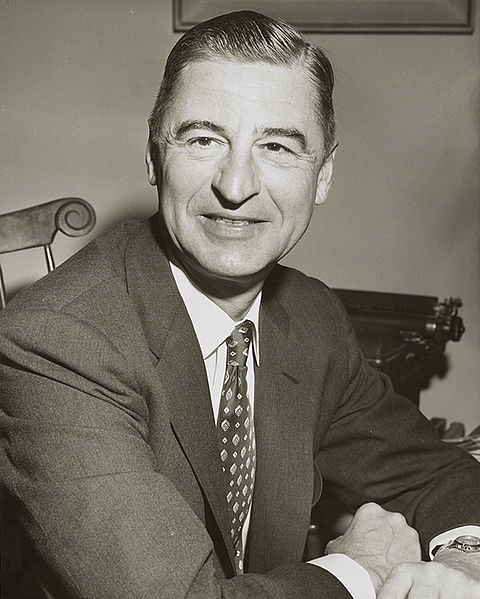
Photo credit: Al Ravenna, via Wikimedia Commons

Theodore Geisel was a broad-minded individual.  His works often advocate for inclusion.  He was also a product of his time, even as we are.  The struggle to do right in the midst of a corrupt world is constant.  None of us, I fear, have risen to perfection.  The roots of racist thinking run deep and they re-sprout if just a fragment of a rhizome left behind.  We should all know by now that slavery was evil and that a system that devalued other humans for money was clearly wrong.  We should know that government policies that keep American Indians repressed and do so secretly are unethical.  We should know that people from Asia have as much right to opportunity as those whose ancestry lies in Europe.  Why is this so hard to learn?  Why do we still have to fight to dismantle systemic racism in this “land of the free”?

Dr. Seuss has taught generations of kids that “a person’s a person” and that persons deserve fair treatment.  He did it in the language and idiom of his own era.  Those making the decisions for his estate are not trying to destroy his legacy.  They are, however, asking us to look forward and to try to figure out where we go from here.  Half a century ago we knew that civil rights were the only fair way to live.  We’ve experienced globalization since then and we’ve been made better for having done so.  Yet we are mired in preconceptions that can only damage our collective sense of justice, often falling along party lines.  Dr. Seuss taught us well—shouldn’t we implement what we’ve learned?


one of many

It’s been some time since I’ve read about the Jehovah’s Witnesses.  There are so many religions that I need to refresh my study on them periodically.  So it was that I received a mailing from the local Kingdom Hall.  You see, the very last people at my front door before the pandemic was declared were bearing the Watchtower and telling me the end is nigh.  We knew about Covid-19 at that point and were being urged to keep social distance, although the authorities were still dithering about masks.  They knocked nevertheless and we stood several feet apart on the porch as they tried in vain to convince me of their truth.  So now, a year later, they’ve reached out by mail.

You’ve got to have a soft spot for a religion that has its origins in Pittsburgh.  Well, maybe that’s the case for those who grew up where it was the nearest big city.  And I do admire that pioneering spirit that says “established religions just aren’t doing it for me.”  The great swath of NRM—New Religious Movements—shows that you shouldn’t feel lonely if this applies to you.  Even today’s Christianities bear little resemblance to the teachings of the carpenter of Nazareth.  He who said even to look upon a woman lustfully was to commit adultery, but whose followers support a president who recommends grabbing them by the, well, where the originator said not to look….  Religions evolve.  The literalism many associate with Christian belief is really only about a century old.  We have no business castigating religions just because they’re recent.

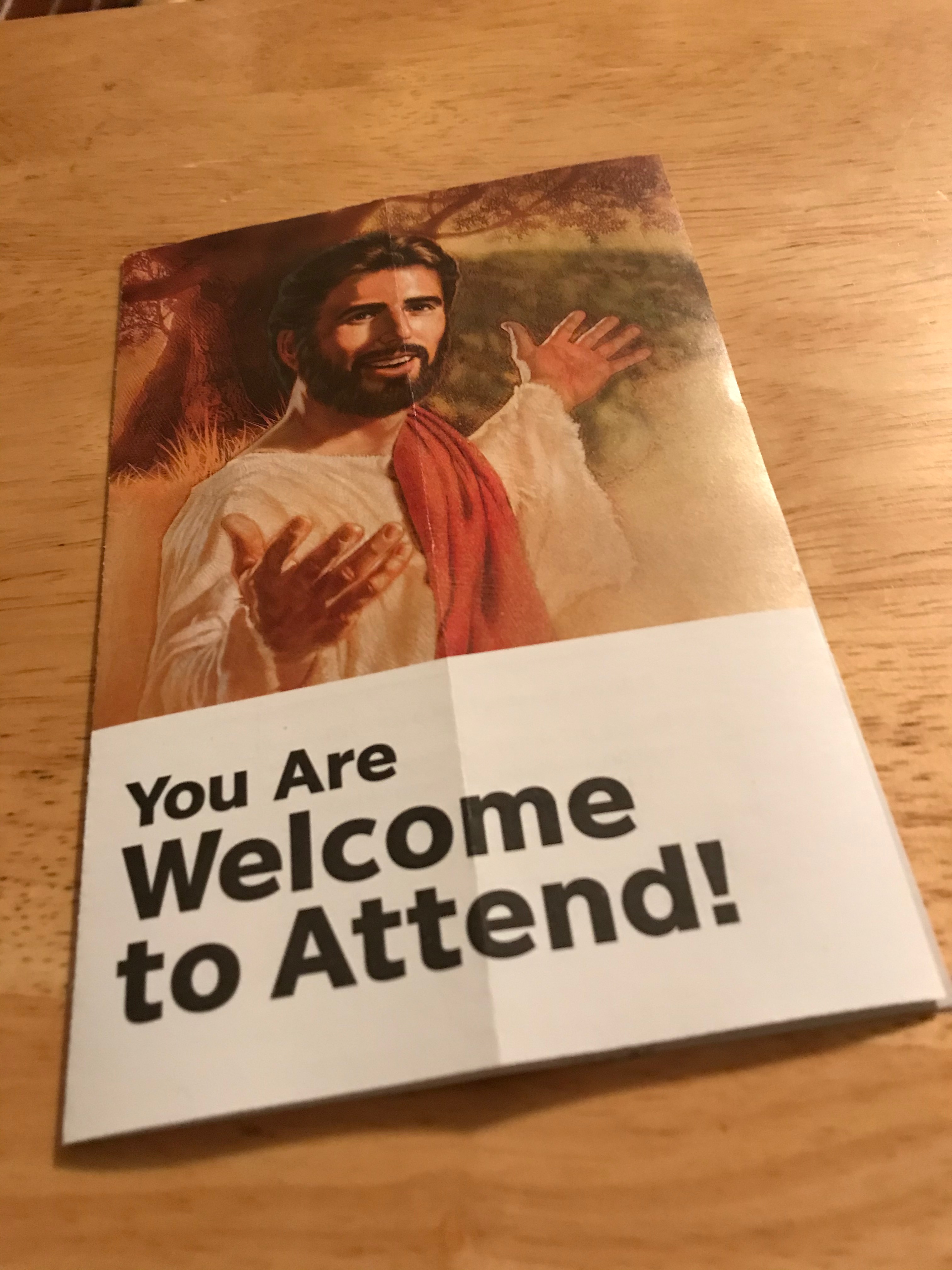
My mailing from the Witnesses included a personalized (somewhat) letter inviting me to a virtual commemoration of Jesus’ death.  Due to the pandemic it’ll be held on Zoom, of course.  The expected flyer with its Anglo-Jesus contains the details.  I did attend a Witness service back when I was in college.  Those days of heady explorations never really ended for me.  You have to settle into a tradition to get to know people, of course, but there’s a world full of ways of looking at our spiritual side and there’s more being propagated just about every year—even Jehovah’s Witnesses have splinter groups.  I suppose missionaries are something we’ll always have to put up with as long as people are convinced that their way is The Only Way.  Trust that others have perhaps quietly, perhaps deliberately, perhaps with a great deal of thought and reflection, have found their own way seems never to be good enough.  Still, an invitation is an invitation and those have been rare during a pandemic.


worth a mention

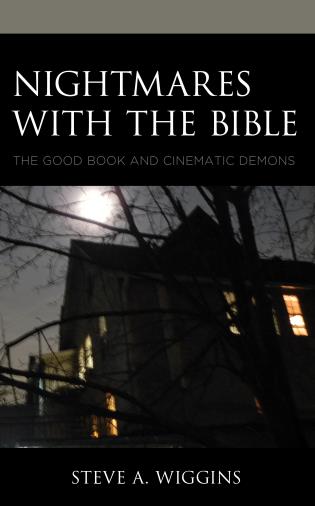
It is always gratifying to see a review of a book you’ve written.  This is one area where I’ve struggled since I tend to write between categories.  Outside the discipline itself religion is a pretty suspect topic, treated with some embarrassment among academics.  Combine that with another subject (meteorology, horror movies) and journals that specialize in either discipline tend to ignore it.  Horror Homeroom, however, has proven a collegial place to explore the connections between horror and religion.  A review of Nightmares with the Bible, by John Morehead, has appeared there, and I’m honored by the attention.  When you write books between discipline boundaries you wonder what people think of them.  When they’re priced stratospherically you will wonder a long time.

Long ago I started to notice how often religion came up in horror contexts.  I’ve also been aware for a considerable time that although horror has lots more fans than religion does, the discipline hasn’t been considered a “respectable” one.  (Yes, scholars are open to prejudices as well.)   I’ve tried to keep up as well as I can with books written about horror and I’ve done my homework on the religion side, I think (although I continue to study).  The two crowds (horror and religion fans) tend to be about as opposite as you can find.  I’m learning the wisdom of publishers firsthand—if you do interdisciplinary work instead of broadening your reach you’ll find that neither discipline will touch it.  Especially if one of those disciplines happens to be religion.

Nevertheless, this is a celebratory post.  Rarely do my books get written up.  Holy Horror has been out for over two years now and not one academic review has appeared, not even in Reading Religion, where readers can request review copies.  McFarland, my publisher for that particular volume, doesn’t do much with religion and apparently doesn’t send review copies.  So I’m thrilled that Horror Homeroom has published a review.  I am genuinely curious as to what others think about my ideas.  Not only has the internet thrown a kind of lifeline to those of us without academic libraries, it has also given a voice to those the academy would rather not recognize.  Does religion have anything to do with horror?  It most certainly does.  Does horror fear anything?  Yes, it fears religion!  And so the two have much to learn from each other.  My thanks to Horror Homeroom for putting the review out there and I hope some may comment upon it.


Who Says Suez?

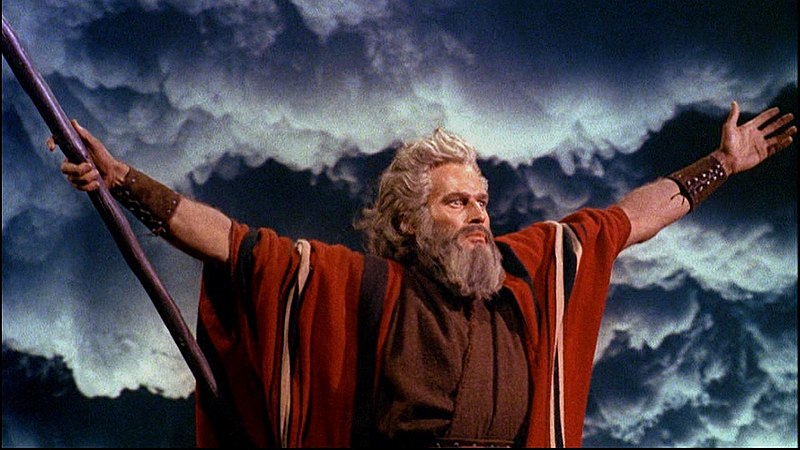
“Where was Moses when the lights went out?”  That’s one of the few sayings I remember from my grandmother.  She lived with us when I was a child and she’d say that when someone came in too late to help with something.  I always thought it a strange expression since Moses didn’t do miracles on demand, but I still remember it—kind of a miracle in its own right.  The expression came back to me when hearing about the MV Ever Given in the Suez Canal.  This massive cargo ship, buffeted by high winds, has choked the canal that links the Red Sea to the Mediterranean for days.  This shortcut means ships don’t have to round Africa to get to European and American ports.  While the problems of this one ship play out, over 150 others are waiting to pass through and goods could be delayed for weeks around the world.  I’m glad we have toilet paper.

Image credit: Ten Commandments trailer, via Wikimedia Commons.

Now Moses was known for have a role in the dividing of the Red Sea.  Of course, the name of the body of water is debated.  The Good Book actually says “Reed Sea” and nobody’s really sure where that is.  Besides, the miracle isn’t really credited to Moses.  God did the deed through, well, a strong wind.  If the waters could be divided perhaps present-day crews could figure out how to free the ship.  Photos of a bulldozer that looks like a Tonka next to the colossal freighter give an idea of the scale of the problem.  People building things so large that they can’t control them.  And the forces of nature seem happy to remind us that we’re not in control, right, Moses?

And everything, we assume, will go smoothly if left to its own devices.  How often do we really worry about the Suez Canal?  Or large ships, for that matter?  Theses things should go just as clockwork, we suppose.  Until our order from Amazon is inexplicably delayed.  The pandemic, Post Office troubles, and unexpected bad weather have caused major shipping delays around here over the past several months, and now we have no Moses when we need him.  According to Exodus, God lives right next door on the Sinai peninsula.  That’s where Moses first met him.  If we had a true prophet these days (let the reader apply wisdom here) there would be no concerns for something as simple as a wedged ship.  But we can’t even find Moses when the lights go out. 


Holy or un?

It’s either brave or stupid.  Maybe both.  Writing about a movie you haven’t watched, I mean.  Multiple people (do I have a reputation, or what?) have pointed out to me that Good Friday (for some) is the release date for The Unholy.  Since Good Friday’s a week away I guess we’re getting an early start this year.  The Unholy is a new horror movie and although I try not to watch trailers before seeing a movie—too many of them show too much in advance—I already have a sense of what it’s about.  This post isn’t really about the movie, however.  It’s about the bigger issue.  The concern many have is that it’s being released on Good Friday.  One thing I’ve learned is that to get attention you have to shock people, no, Donald?  Getting noticed is difficult and outrage generally works.

Friday, for many, is movie night.  Good Friday is, for some Christians, a day for church.  I’ve yet to have an employer (other than Nashotah House) that recognized it as a special day at all.  Easter always falls on Sunday so there’s no need to give time off work, at least in this capitalist, Christian culture.  But if you try to release a horror movie that day, people notice.  Mel Gibson knew that crucifixion could make the basis of a horror film, and people noticed.  Sitting over here in the backwaters just outside academe, I took to horror as a means of keeping my book writing active.  One reason was that horror gets people’s attention.  (It also helps if your books are reasonably priced.)

As a young man I used to spend a good deal of Good Friday in church.  Since I was serious about school I’m thinking we probably had the day off in my district.  Attending a Christian college, followed by seminary, I suspect these also paid attention to the liturgical year.  Then in the real world I learned the truth—it’s just another day.  A day for going to work and increasing the profits for whatever company may have hired you.  When the day’s over you’ll be inclined to relax, and perhaps watch a movie.  Right now going to a theater opens the possibility for horror itself so I won’t be there on opening night for The Unholy, but I think there was some savvy thinking going on, in any case.  And it may just be that the movie was titled specifically to fit the occasion.


Free Knowledge

I was struck with an idea.  Not just any idea—an academic one.  I find myself out of practice, and wondering where to find sources when I have no access to an academic library.  I’ve spent my precious writing time for the past several days trying to bang out a respectable academic article.  It represents an area that my personal library does not cover adequately.  The fully employed academic has a library and interlibrary loan to support ideas that won’t let go.  It’s a bit more tricky for the independent scholar.  I’ve contacted local schools but during these pandemic times there is no public access.  Nor electronic access—thanks to all the fancy deals publishers make to try to keep the industry profitable.

The past few academic publications I’ve had were difficult to write, particularly the footnotes. Something the garden-variety academic doesn’t understand is that the university library is a privilege.  I read a lot.  Probably more now than when I was a professor.  Still, research leads you in directions you’d never anticipate.  It’s quite a wild ride, actually.  So with my current project (I can’t tell you what it is because someone with library access would easily be able to scoop it) I’ve had to buckle up.  As I was reading an obvious connection became clear.  It reminded me of the thrill of discovery.  The researcher has a drive for new knowledge—a treasure-hunter of the mind.  It is wonderful to be reminded that there’s more out there still to be discovered.

I’d almost forgotten how an insistent idea can push other projects out of its way.  I have any number of projects going simultaneously.  They get a few minutes’ attention before the work day starts and some of them mature enough to be sent for publication.  At any given time there’s a lot more standing behind those ideas that actually show up on this blog, or in a journal, or even in the fiction venues in which I publish.  But that idea just won’t let me go.  Even while I’m at work it lurks in the back of my mind.  The professorate, for all its limitations, doesn’t pin you down to a nine-to-five schedule even when the time would be better used otherwise.  The thing is, you can’t tame ideas.  Who would want to live in a world where you could?  So I keep working away, hoping to find a library or at least electronic access.  It’s just an idea I have.


Horror Story

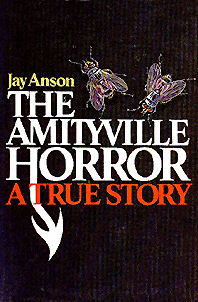
Last week, according to an article a friend sent, Ronald DeFeo died in prison.  DeFeo was made infamous by the Amityville murders in 1974 that led to the Amityville Horror franchise, a series that I covered in Nightmares with the Bible.  Many of the other individuals in that famous haunting/possession have also passed away, including both George and Kathy Lutz, the owners who bought the house and brought it to the public notice.  Controversy still surrounds the story with some claiming it was all a hoax and others suggesting that the hoax doesn’t add up to the sum of what happened there.  DeFeo and the Lutzes were all considered unreliable narrators—DeFeo because he was mentally unstable and the Lutzes because they made money out of their misfortune.  If anything can complicate truth, it’s money.

Academics, of course, won’t touch the story.  Claims and counterclaims, all swirling around lucre, fog one’s vision.  The story illustrates just how difficult it can be to get at the truth.  Even allowing for exaggeration, it seems something happened there.  A worldview that dismisses any possibility of spiritual entities—however defined—will necessarily come up negative.  No doubt, considerable money changed hands.  The franchise is still going with no less than four movies being released last year with Amityville in their titles.  Getting at the truth involves decided which human beings you trust.  The one Lutz child that has been willing to talk, Daniel, has continued the claims.  How can we ever know?

I object to those who claim that such inquiry is a waste of time.  If such things as claimed in Jay Anson’s book do happen (even if exaggerated), it may be that they’re exceptionally rare.  Rarity of objects in the physical world is seldom in doubt.  Ask any auctioneer.  Getting into the accounts around the events, however, betrays a list of money-seeking individuals.  Just about anyone making a counter-claim had a book deal in mind, and given the phenomenal success of Anson’s original the possibility of getting to the truth after that would always involve wading through greed.  No wonder politicians so easily become crooked!  Money makes people do strange things.  Not surprisingly, those left with questions regarding the truth of the matter are left hungry.  It’s clear that Ronald DeFeo killed his family.  It’s a matter of record that the Lutz family moved into the house just over a year later and moved out without their belongings less than a month after that.  Beyond this what happened is less and less likely ever to be known.


Clearly Conspiracy

What an odd place to find ourselves in.  Some evangelical Christians, who used to be guardians of decency and moral human behavior, now have to have their clergy explain to them why Trump wasn’t the messiah he’d been touted as for the last four years.  A piece in the Los Angeles Times recently described the struggles of one such minister with his congregation that had fully bought into the conspiracy theories Trump promulgated in order to mask his own lack of care for his country and its citizens.  Conspiracy theories have become big business in academia with faculty from many departments exploring them.  I haven’t seen much in the way of religion departments participating in the discussion, but I think they should.  Why?  Religions are all about getting people to believe and act in prescribed ways.

Image credit: Johann Lund, Wikimedia Commons

Not that religions alone can explain this.  Psychologists and sociologists must have some important insights as well.  I used to tell my students that not all religions are about beliefs.  Some have to do with behaviors—acting in a certain way, regardless of belief, is to be part of it.  Certainly that explains part of the membership in the cult of Trump.  Many who follow it must know in their consciences that a man who defrauds the government he “governs,” who actively womanizes, and who displays overt racism can’t be the ideal evangelical.  Ah, but the conspiracy theories explain it!  Pay no attention to the man behind the curtain, right?  You can sure get away with a lot that way.

Religions have a lot to teach us about both strange behaviors and strange actions.  Many years ago someone pointed out to me as I was enumerating what I considered odd beliefs of a New Religious Movement just how odd Christianity looks from the outside.  When I stopped to think about it, this made sense.  The unconventional aspects of the faith had become naturalized because I’d been taught all my life that they were true—unlike all other religious beliefs.  Not only that, but I had been taught that accepting them without question was the only way to avoid Hell.  Over the years the strangeness became normal.  Trump and his conspiracy theories had their way smoothed by an evangelical narrative of unquestioning belief instead of an examined faith.  Now many ministers, awaking sober, are having to try to convince their flocks that they’d accepted lies for truths.  It’s an uphill battle, unfortunately.  Religions, after all, have been about getting followers to believe without questioning, or, apparently, considering the source.


Werewolves Not Forgotten

Copyright is a strange thing.  Without it there would be no making a living as a writer or artist or even music composer (or so I’m told).  The idea is straightforward enough—someone comes up with a “marketable” idea (how marketable varies widely), and therefore owns the exclusive rights to the expressed form of that idea.  If, for instance, the idea becomes a published book the publisher (generally) owns the rights and pays the writer royalties for the use/ownership of those rights.  Copyright, however, like fresh food, expires.  Written work or music or art becomes part of the public domain and can be reproduced by any with the gumption to do so.  There are publishers, such as Gorgias Press, that got their earlier starts by doing just that—finding public domain material, scanning it, and republishing it for a price.  All above board.

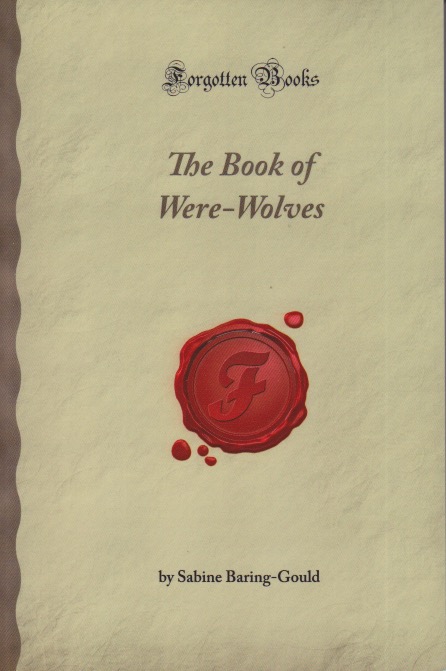
Back before I worked long in publishing I was going through a werewolf phase.  No, I am not a lycanthrope, but I was reading about werewolves.  I knew one of the main sources of folklore was Sabine Baring-Gould’s The Book of Were-Wolves.  Being strapped for cash (some things never change), I bought a copy published by Forgotten Books.  They’re rather prevalent on Amazon.  Although the content is free online, some of us prefer to have a book in our hands and leave the devices aside.  I soon discovered why my Forgotten Books version was so inexpensive.  It is simply a printout of the scanned book, apparently with optical letter recognition software utilized.  No serious formatting or proofreading required, a book is produced, covered, and sold.  It is a disorienting experience reading such a book.

Readers look for landmarks just as surely as a hiker or traveler of any sort.  Old books have layout and typesetting to help the reader navigate.  My copy has “Error! Bookmark Not Defined” instead of notes.  First editions of Baring-Gould, it turns out, sell for upwards of $6000.  So I continued reading.  A lack of italics and the occasional optically misread word make me wonder just how much of Baring-Gould I’m really ingesting.  Any book that begins with a disclaimer regarding possible errors should’ve been assigned a copyeditor.  SBG likes to use lots of foreign words.  They may be spelled correctly or not.  I have no notes to check.  Caveat emptor, n’est-ce pas?  The technology that allows scanned, unread by human eyes products to be sold as books makes me wonder.  No, I haven’t forgotten books.


Horror and Theology

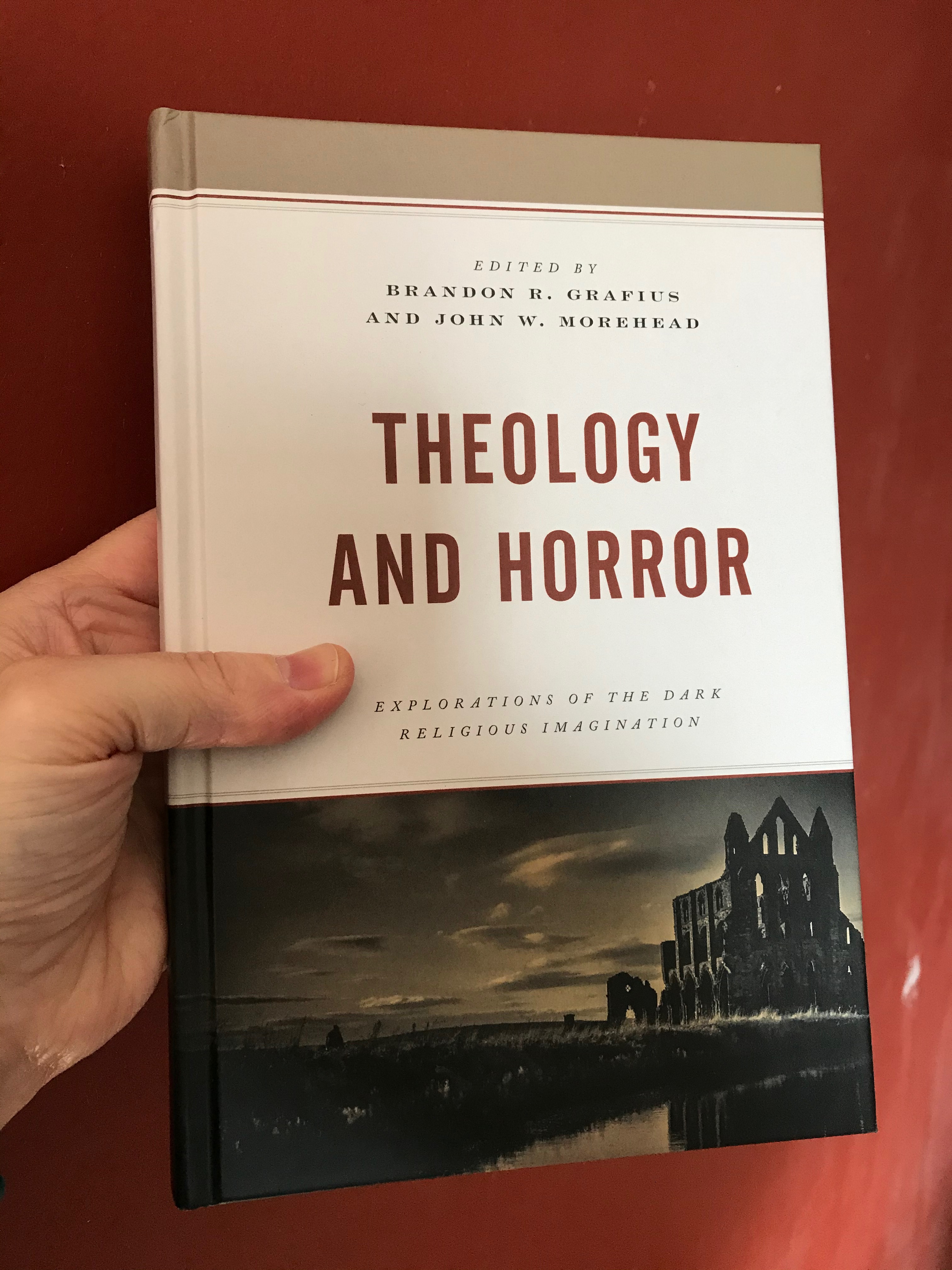
The idea may be catching on. The idea I mean is that horror and religion have something to do with one another. I have to confess that I’ve been one of the (non-academic) explorers of this approach and I was flattered to have been asked to contribute an essay to the just released volume Theology and Horror: Exploration of the Dark Religious Imagination, edited by Brandon R. Grafius and John W. Morehead. My article looks at the origins of horror in biblical (and perhaps pre-biblical) storytelling. In fact it is one of the oldest forms of exploring what it means to be human. Perhaps it began its life as an evolutionary fight or flight response, but it eventually came to represent a way of dealing with the human condition. Horror is generally traced to the gothic novel tradition, but I suggest it goes back much further.

This volume contains twelve essays on a variety of topics, along with an introduction by the volume editors. Since my copy only just arrived in Friday’s mail I haven’t had the opportunity to explore it yet, but I’m looking forward to it. Ironically, it’s an area that I began probing only after the academy no longer required my services. As I reflect on that ubiquitous “why” question I often come back to that fact. Nothing like having your career yanked out from under you makes you consider horror as a kind of therapy. Things could be worse. Besides, horror frequently demonstrates coping skills. And change is constant. Learning to adjust when the monsters of capitalism loom can make you think of religion—trust me.

Individual scholars have examined the connection between religion and monsters before—there’s a pretty obvious connection in that case—but sustained discussion of how horror informs religion is new. The developments are sometimes edgy, but I get the sense that they’re honest. It goes back to that flight or fight response. What happens if you hang around to look? Might not something become clear that was only viewed through a blurred lens before? And the goal isn’t to cause fright. Indeed, it’s just the opposite. Frights will come, and if you’ve anticipated them you might have coping skills at hand. Besides, the frisson can be enticing in its own way. Receiving a new publication can be its own source of thrills. I guess I knew this volume was coming but I’d been busy enough to have shoved the thought aside. I’m delighted it decided to interrupt the mundane, just like monsters often do.


Being Equal Again

Things creep up on you.  Like the equinox.  It really should be a holiday, but then again today’s already Saturday.  And from today, for the next six months, there will be more light than darkness.  It was an occasion ancient cultures marked and celebrated.  For us, unless it happens to fall near Easter (it’s still a couple weeks away this year), it’s an item in the news feed and nothing more.  It is, however, an opportunity to celebrate our place in nature.  The temperatures are beginning to warm just a bit around here, despite the flecks of snow in the air just three days ago.  The more tenacious of the spring perennials have already begun to shine green.  Things have begun to come back to life.  That’s why Easter is always in the spring.

Today it will be light as much as it is dark.  Balance.  Our old wobbly earth strikes this metaphorical fulcrum twice a year, giving us a glimpse of what lies ahead.  Birds, those great prognosticators, have been showing up to let us know things are about to change.  Finches, robins, starlings, and mourning doves have been conspicuous the last few days.  Even as the dirty, icy snow piles continue to hold on in their private mountains, they too seem to know time has come to be moving on.  Change is the way of nature.  This just happens to be the half of the year when we can see what we’re doing.  At this great balancing point of the year we should take the opportunity to ask if we like where we’re heading.  Do we welcome the light?

Soon enough we’ll begin to take it for granted.  Life will continue its busy ways even as we tell ourselves summer is the time for vacations.  Perhaps so.  But let’s linger in this moment.  Take a few minutes to ponder what it means to be in balance.  Equality.  It feels like something worth celebrating.  Corporate American parsimoniously counts days that might be considered grudging respites from trying to cop a profit.  Although we’re given Christmas off it can’t abide that moving target called Easter, which always comes on a Sunday anyway.  Here in that calendrical holiday barren zone between Presidents’ and Memorial days, we’ll always find spring, if we look for it.  It’s evident in the changing of the light, even if there’s still a chill in the air.  Even as our bosses ignore it, the red buds begin to appear on the trees.